



















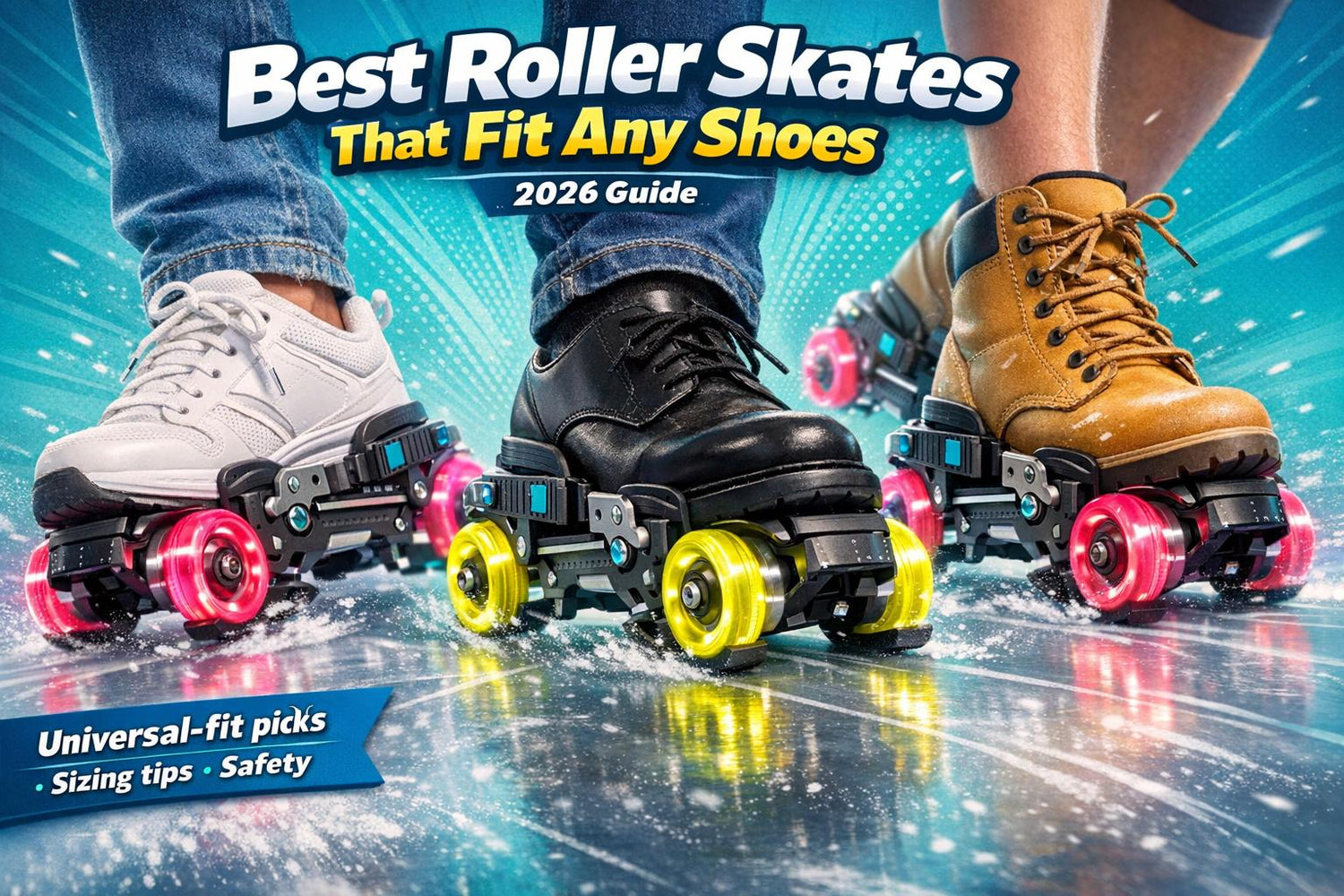
Looking for roller skates that work with your everyday shoes? Universal-fit skates are the solution. These skates strap onto sneakers, trainers, or boots - no need for specialized boots. They’re lightweight, portable, and perfect for both beginners and seasoned skaters.
Why Choose Universal-Fit Skates?
- Convenience: Use your own shoes. No extra footwear needed.
- Portability: Compact design fits in a backpack.
- Ease of Use: Beginner-friendly with a smoother learning curve. Once you're set up, you'll need to learn to start and stop safely.
- Versatility: Switch between walking and skating effortlessly.
Types of Universal-Fit Skates:
- Strap-On Frame Skates: Adjustable straps for most shoe types.
- Clip-On Heel and Toe Skates: Clamps for shoes with defined edges.
- Modular Systems: Detachable bases for quick attachment/removal.
Top Picks for 2026:
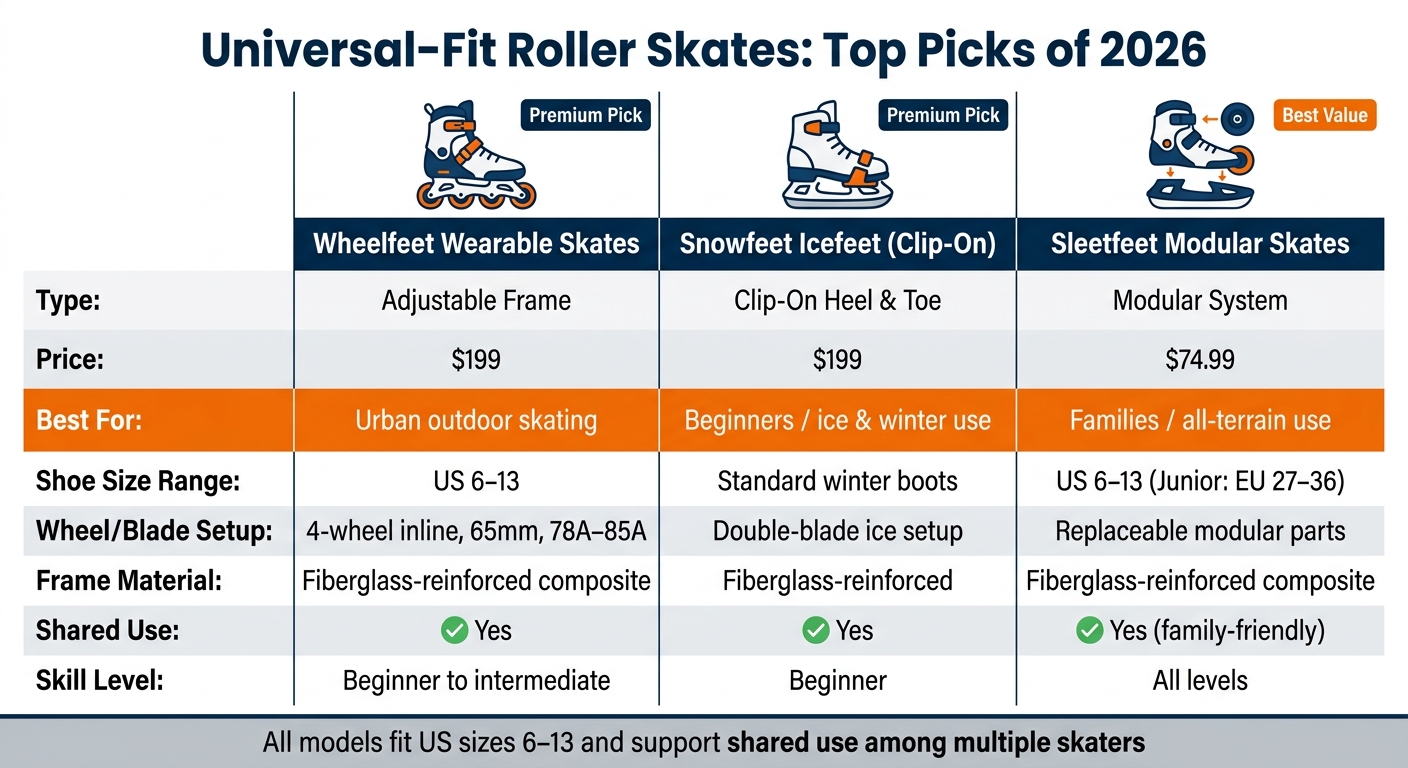
- Wheelfeet Wearable Skates: $199, urban-friendly, fits US sizes 6–13.
- Snowfeet Icefeet (Clip-On): $199, great for beginners.
- Sleetfeet Modular Skates: $74.99, ideal for families.
Pro Tip: Pair these skates with firm-soled shoes for better control.
Universal-fit skates make skating easier, more accessible, and fun for everyone. Whether you’re cruising in the city or enjoying outdoor adventures, they’re a smart choice for all skill levels.
How Universal-Fit Roller Skates Work
Main Design Types
Universal-fit skates come in three main styles: strap-on frame skates, clip-on heel and toe skates, and modular systems.
- Strap-on frame skates: These feature a frame with adjustable straps that wrap securely around your shoe, locking it in place.
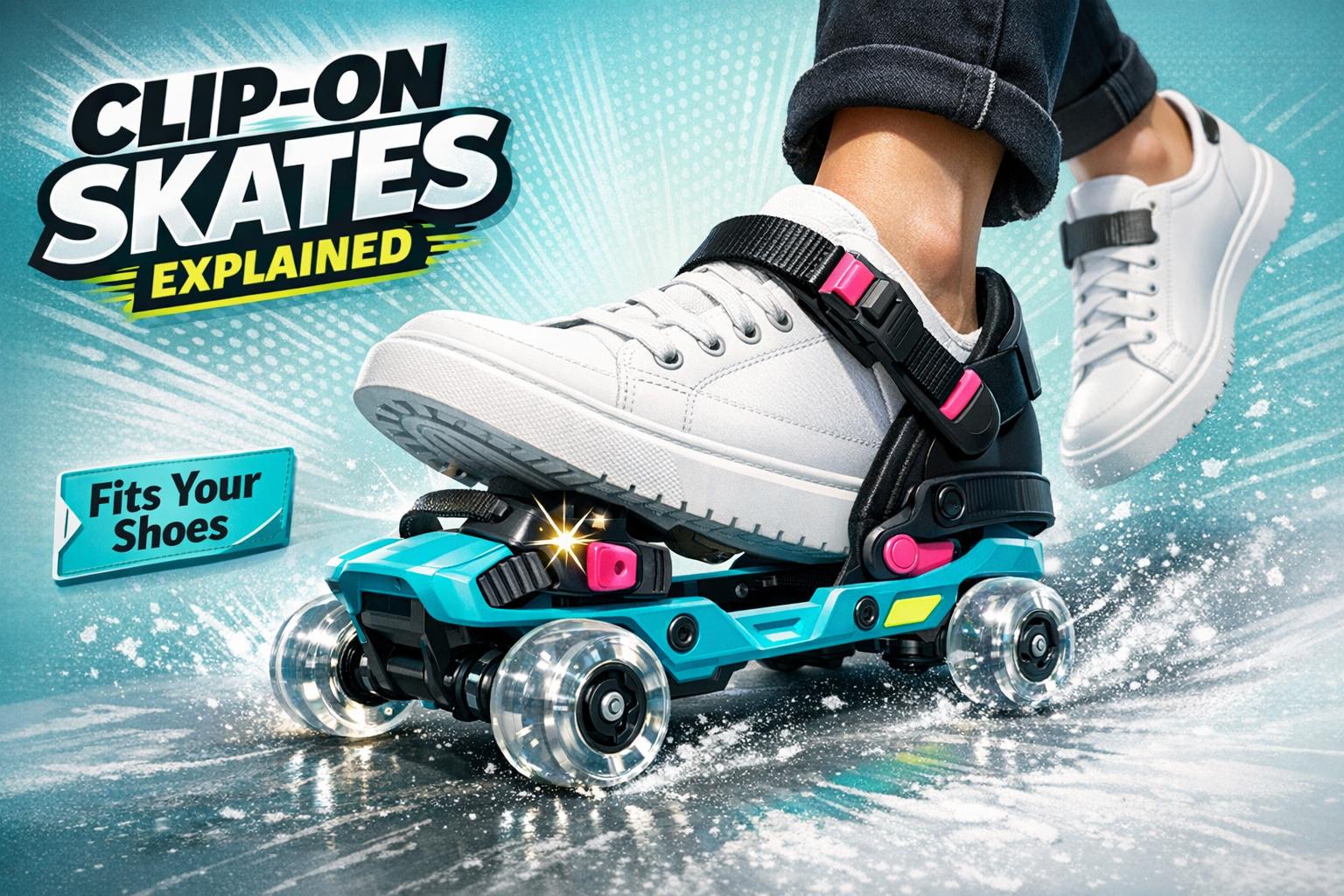
- Clip-on heel and toe skates: These use clamps to grip the front and back of your shoe sole, working similarly to how ski bindings hold a boot.
- Modular systems: A system like Slades uses a detachable base that snaps onto a compatible shoe, allowing you to quickly attach or remove the skating platform.
Each type has its perks. Strap-on frames are versatile and work with almost any shoe. Clip-on systems provide a snug fit for shoes with well-defined edges. Modular systems are all about speed and convenience, especially when paired with compatible footwear. These designs highlight the variety in universal-fit skates and set the stage for a closer look at how they work.
Key Components and Fit Principles
At the core of universal-fit skates is the binding system. Most models feature adjustable straps made from reinforced webbing, which tighten securely around your shoe without causing any damage. The frames are typically constructed from fiberglass-reinforced composite materials, offering a balance of strength and lightness - perfect for portability.
One thing to note: everyday shoes are different from skate boots. Skate boots often have a slight heel that shifts your weight forward, reducing the chance of falling backward. Regular shoes, with their flat and flexible soles, don’t offer the same stability. To address this, some universal-fit systems incorporate a subtle forward pitch into the frame. If yours doesn’t, using a firm custom insole can help stabilize your foot and create a better grip for the binding hardware.
This concept isn’t unique to roller skating. Snowfeet* applies the same "attach and go" idea to their winter gear. Their adjustable bindings attach directly to standard winter boots, eliminating the need for stiff, specialized ski boots or rentals. It’s the same principle, just for snow instead of pavement. For those new to this style of gear, learning how to use hybrid snow skates can help bridge the gap between pavement and slopes.
Advantages Over Standard Roller Skates
Universal-fit skates bring some clear perks compared to traditional roller skates. Let’s break it down:
| Advantage | Universal-Fit Skates | Standard Roller Skates |
|---|---|---|
| Portability | Fits in a backpack | Requires a separate bag |
| Shared Use | One pair fits US 6–13 | Fixed size per person |
| Comfort | Uses your own broken-in shoes | Boots need a break-in period |
| Support Level | Variable (depends on your shoe) | High (rigid boot design) |
| Sizing Flexibility | Adjustable for most adults | Specific size required |
One standout feature is the sizing flexibility. Universal-fit skates can accommodate shoe sizes ranging from US 6 to 13 (EU 38–47). This means a single pair can be shared among family members or friends, saving money compared to buying multiple pairs in different sizes. Snowfeet* takes a similar approach with their snow gear, allowing one set of ski skates to adjust for whoever’s using them that day. This shared-use approach is a big reason why universal-fit skates are so practical, especially for families or groups. Plus, the convenience of skating in your own shoes adds a layer of comfort that standard skates can’t match.
sbb-itb-17ade95
These roller skate shoes are my new favorite 😆
Top Universal-Fit Roller Skates of 2026
Universal-Fit Roller Skates Compared: Top Picks & Key Features (2026)
Adjustable Frame Skates for Everyday Shoes
One of the top picks in adjustable frame skates is Wheelfeet Wearable Skates. These 4-wheel inline skates attach securely to your everyday sneakers, fitting US sizes 6–13. Designed for urban environments, they handle cracked sidewalks and rough pavement better than traditional small-wheeled skates.
"Wheelfeet are innovative 4-wheel skates designed for efficient, human-powered skating... transforming any paved surface into your personal playground." - Wheelfeet
Priced at $199, they cater to early adopters, but users often highlight how their wider stance and enhanced stability make them easier to learn than roller skates or inline skates. The frames are built with larger, softer wheels - around 65mm with a 78A–85A durometer - which glide over debris and cracks more smoothly than the harder wheels often found on rink skates.
A quick tip: pair these skates with firm-soled athletic shoes rather than soft running shoes. A rigid sole ensures the strap binding holds your foot securely, giving you better control.
Many novices wonder if quad skates help beginners more than inline skates when starting out. Next up, let’s explore how clip-on designs improve stability for beginners.
Heel and Toe Clip-On Skates
Clip-on skates are best suited for shoes with a well-defined sole edge, which allows the clamps to grip effectively. The standout feature of high-quality clip-on designs is a slight forward pitch in the frame. This mimics the heel lift of traditional skate boots, helping to keep your weight centered and reducing the risk of falls - a common issue with flat-soled shoes.
Snowfeet* leads the way here, offering their Icefeet double-blade ice skates, which clip onto standard winter boots. These skates are built with beginners in mind, featuring a double-blade setup that provides a much wider base of support compared to single blades. Snowfeet* describes them as ideal for "immediate enjoyment" rather than requiring extensive practice.
"Tired of the steep learning curve or uncomfortable rental skates? Snowfeet* Ice Skates are groundbreaking double-blade ice skates built for immediate enjoyment." - Snowfeet*
The takeaway for roller skates? Stability-focused frame designs are more important than the clamp mechanism itself. A raised heel geometry in clip-on skates will always provide better performance and safety, especially for beginners.
For those seeking even more versatility, modular systems might be the perfect solution.
Modular and Convertible Skate Systems
Modular systems are a great choice for households where multiple people want to use the same skates. These systems adapt to a wide range of sizes, making them practical for families or shared use. Instead of buying separate skates for everyone, a single set can serve a teenager, a parent, and even a friend.
One of the key strengths of modular systems is their flexibility. Users can swap out toe stops for jam plugs, adjust wheel hardness for various surfaces, and upgrade bearings as their skills improve. Most beginner setups come with ABEC-5 bearings, which work well for starters, but upgrading to ABEC-7 bearings can noticeably boost speed and smoothness.
Snowfeet* applies this modular approach to their snow and ice gear too. Their Sleetfeet ski-skates, rated 4.6/5 from over 257 reviews, feature fiberglass-reinforced frames with replaceable parts and fit US sizes 6–13. There’s even a Junior version for EU sizes 27–36, making them a practical choice for families. This kind of adaptability makes modular systems a smart investment compared to fixed-size skates.
| System Type | Best For | Starting Price |
|---|---|---|
| Wheelfeet (Adjustable Frame) | Urban outdoor skating | $199 |
| Snowfeet* Icefeet (Clip-On) | Beginners, ice/winter use | $199 |
| Sleetfeet (Modular) | Families, all-terrain use | $74.99 |
How to Choose the Right Universal-Fit Roller Skates
Matching Skate Bindings to Your Footwear
Getting the right skate bindings is key to making the most of universal-fit skates. Snowfeet* has fine-tuned this feature to go beyond the limits of traditional gear, but the biggest mistake people make is overlooking sole rigidity. Regular sneakers tend to flex too much, which causes the bindings to shift and reduces control. Medusa Skates explains it best:
"While wearable skates offer style, they underperform without a rigid support system. Skate boots are rigid, supportive and have hard soles that are necessary for distributing your weight across your plate."
Snowfeet* bindings tackle this issue with a custom-reinforced insole, solving the instability problems often seen in other clip-on designs. If you're using regular sneakers, make sure they have a firm nylon insole and meet the minimum sole thickness requirements - 7mm at the toe and 13mm at the heel. This helps maintain control and keeps your foot secure in the frame. Avoid shoes with chunky lugged soles or overly cushioned midsoles, as they often don't fit well in the bindings. If you have wider feet or high insteps, look for bindings with larger strap openings to prevent uncomfortable pressure points.
Once your footwear is sorted, the next step is choosing the right frame and wheels for a balanced ride.
Wheels, Frame Length, and Learning Curve
Just like Snowfeet*’s short-ski systems focus on stability and a low center of gravity, the right frame length and wheel size are essential for a smooth skating experience. Frame length is more important than many people realize - it affects your balance and how easily you transition between skating and walking. A frame that’s too short for your shoe size can feel unstable and "tippy", which isn’t something you can fix with technique alone.
"A size EU47 boot paired with a frame optimized for EU42 creates instability."
For US size 11+ (EU 45+), go for frames at least 275–280mm long. Smaller feet can use frames around 243mm, but these may feel unstable for larger sizes.
When it comes to wheels, 80mm wheels are a great starting point for beginners. They keep your center of gravity low and provide solid grip, which helps with weight shifts. Larger wheels (90mm or more) might seem tempting because they offer more speed, but they also raise your center of gravity, making balance trickier. This is similar to the principle behind Snowfeet*’s short-ski designs: shorter, lower platforms are more forgiving when you're still learning.
If you’re debating between materials, aluminum frames are worth the extra money compared to composite plastic. Aluminum doesn’t flex under pressure, offering better energy transfer and more consistent handling - especially important for skaters over 220 lbs.
Safety Gear and Protective Equipment
Wrist injuries are one of the most common issues for beginners, so wrist guards are a must. A good 6-pack pad set - including wrist, elbow, and knee pads - from brands like Moxi or 187 costs between $89.95 and $96.99. These sets are designed to handle the hard impacts that come with the occasional fall.
Before buying, check if your skates are compatible with brakes. Many modular and freeskate frames don’t come with brakes by default, and not all frames support aftermarket brake attachments. If you’re planning to skate on hills or busy sidewalks, make sure the frame can accommodate a standard toe stop or heel brake. It’s also smart to invest in a multipurpose skate tool (around $25). This handy tool helps you tighten axle nuts and adjust toe stops on the go, keeping your gear secure during use.
With the right gear and careful choices, you’ll enjoy a safer and more fun skating experience while exploring the versatility of universal-fit skates.
Maintaining Your Skates for Long-Term Use
Routine Checks and Maintenance
Taking care of your skates isn't just about keeping them looking good - it’s about safety and performance too. Regular maintenance can turn a one-season wonder into a pair of skates that last for years. One habit you absolutely can’t skip? Checking your axle nuts before every session. As LowPriceSkates.com puts it:
"Check your axle nuts before every single roll. If they are too tight, your wheels won't spin; if they are too loose, your wheels might go on an adventure without you."
For bearings, give each wheel a spin by hand. If you feel grinding or resistance, it’s time for a cleaning. A quick inspection every month, paired with a deeper check every two months, can help you catch problems early.
| Component | Check Frequency | Action |
|---|---|---|
| Axle Nuts | Before every use | Tighten so wheels spin freely without wobbling |
| Wheels | Monthly | Check for coning or traction loss; replace every 6–12 months |
| Bearings | Monthly | Clean with mineral spirits and re-lubricate if needed |
| Bindings/Straps | Monthly | Wipe down and inspect for cracks or fraying |
| Toe Stops | Monthly | Check tightness and adjust to your preferred height |
Storage Tips and Off-Season Use
Once your skates are clean and checked, storing them properly is the next step to keeping them in top shape. Always dry your skates thoroughly before putting them away - moisture can lead to rusted axles and weakened straps over time. Store them in a skate bag in a cool, dry spot. Avoid hot cars or damp garages, as extreme temperatures and humidity can break down the materials faster.
If you’re a Snowfeet* user, the off-season is a great time for cross-training. Many winter sports enthusiasts use roller skates in the summer to keep their skills sharp since the balance and lateral movements mimic those needed on snow. Use this downtime to inspect your bindings for cracks, replace frayed straps, and have any damage professionally repaired before winter. Regular care ensures your Snowfeet* gear - and other universal-fit skates - perform at their best all year long.
Replacing Parts and Upgrading Components
When wear and tear start to show, replacing parts promptly is key. Wheels, for example, typically need replacing every 6–12 months, and even more often if you’re skating outdoors. When choosing new wheels, think about where you’ll be skating: soft wheels (around 78A durometer) are great for rough pavement, while hard wheels (88A to 101A) are better for smooth indoor surfaces.
Bearings also need regular attention. Clean them every few months with mineral spirits or a dedicated cleaner, then re-lubricate for a smooth ride. If you’re looking for a reliable option, Bones Reds Bearings are known for their consistent, low-friction performance.
For those getting more serious about skating, upgrading from a nylon plate to an aluminum or metal plate can make a big difference. These materials offer better durability and improved energy transfer, which is especially helpful for aggressive skating. As Francesca Gold, a competitive figure skater, points out:
"If you're skating outside, you'll need to do a little bit more skate maintenance than if you're skating indoors."
Upgrades like these can help you get the most out of your skates, aligning with Snowfeet*’s focus on dependable, long-lasting design.
Conclusion
Universal-fit skates have come a long way, transforming from quirky gadgets into a practical choice for skaters of all kinds. Whether you're gliding through busy city streets, spending quality time with your kids, or keeping active between winter sports seasons, these skates remove one of the biggest hurdles: having to buy or wear special footwear. Now, skating is easier to try and enjoy for urban commuters and families alike.
What sets universal-fit skates apart in 2026 is their portability, adjustability, and ease of use. These features make them a solid alternative to traditional skates, no matter your skill level. As SkateHut aptly puts it:
"Roller skating isn't just a great way to stay active; it's also a creative outlet, a confidence booster, and a chance to express your own unique style on wheels."
Leading the charge in this space is Snowfeet*. Their designs focus on simplicity and ease of use, standing in stark contrast to the bulky, gear-heavy approach of traditional ski and snowboard brands. Instead of requiring specialized boots, costly rentals, or lengthy lessons, Snowfeet* keeps it simple: strap on your everyday shoes and start skating. Their skates are lightweight, adjustable, and designed for practical, everyday fun.
FAQs
Will universal-fit skates work with my shoes?
Universal-fit skates are made to securely attach to most types of shoes, letting you skate while wearing your favorite footwear. This design offers a simple and flexible way to enjoy skating without needing dedicated boots.
What’s the safest way to stop on universal-fit skates?
The best way to stop on universal-fit skates is by using the built-in brake, if your skates have one. If not, you can try techniques like the T-stop or plow stop, depending on the skate design. Start practicing in a flat, open area to reduce the risk of falling. Always wear protective gear and take your time learning these stopping methods to improve both safety and control.
How do I know if the frame length fits my shoe size?
To figure out if the frame length matches your shoe size, compare the skate frame length (like 44cm, 50cm, 65cm, or 99cm) to your shoe size. Longer frames usually work better for larger shoes. Start by measuring the length of your shoe and check the product's recommended size range. For a more accurate fit, check out Snowfeet's sizing guide or reach out to their customer support - they can help you find the right frame length for your shoes.











Zostaw komentarz
Ta strona jest chroniona przez hCaptcha i obowiązują na niej Polityka prywatności i Warunki korzystania z usługi serwisu hCaptcha.