



















Yes - short skis are often cheaper overall, but not always cheaper at the shelf.
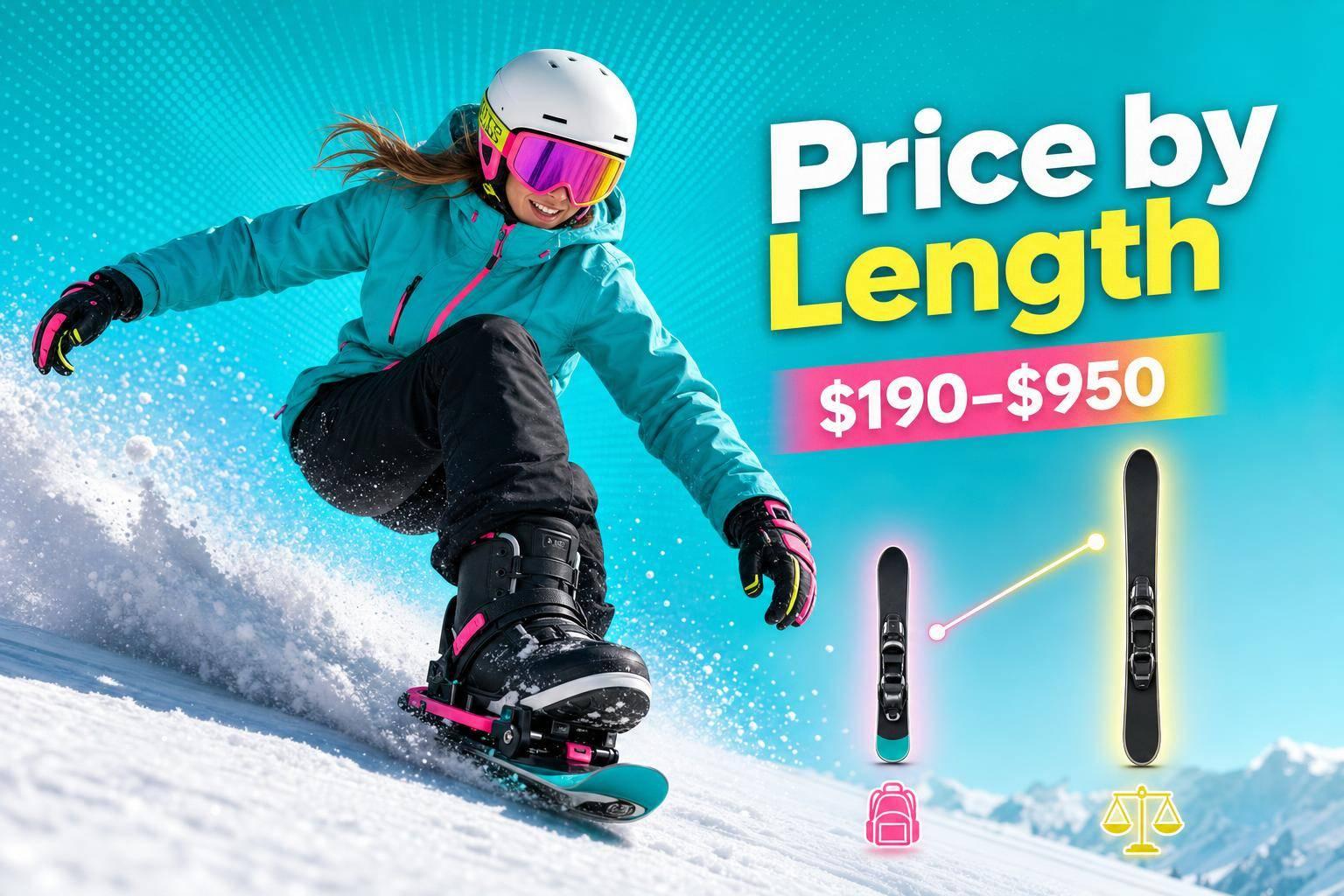
If I compare the full setup, short skis often cost less because you may skip $200–$600+ boots, separate $80–$300 bindings, and even some travel or storage costs. A regular ski setup often lands around $700–$1,600, while many short-ski setups start much lower, from about $190 to $950, depending on the model and what boots you already own.
Here’s the plain answer:
- Regular skis can look cheaper at first if you only compare skis
- Short skis often win on total cost once I add boots, bindings, poles, bags, racks, and tuning
- Biggest money saver: using winter shoes or snowboard boots you already own
- Regular skis still make sense if you ski fast, chase deep powder, or want race-style control
So, if you’re a beginner, casual rider, parent buying for kids, or someone who doesn’t want to haul giant gear around, short skis can save you a solid chunk of money. If you’re after high-speed performance, regular skis may still be worth the higher bill.
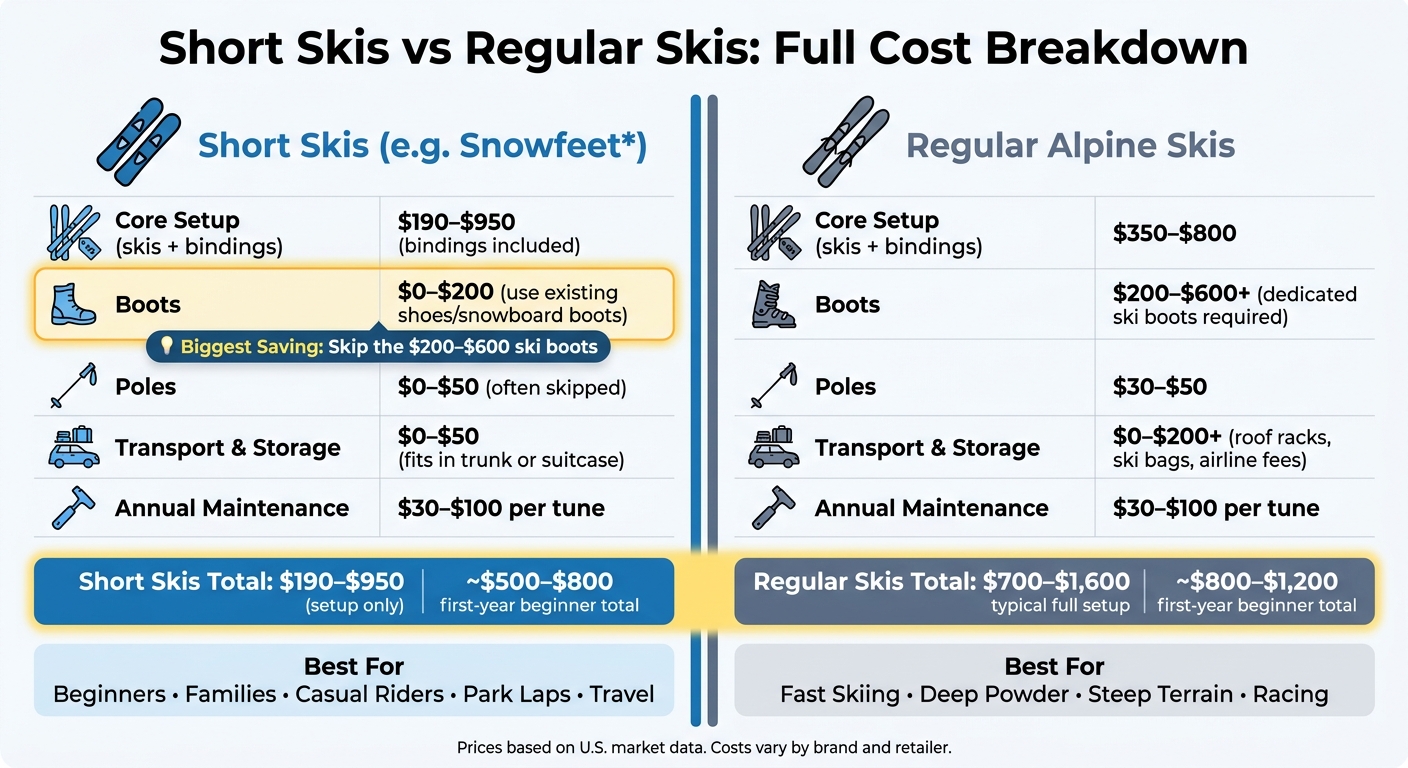
Short Skis vs Regular Skis: Full Cost Breakdown
Snowfeet* Review: Are Skiskates Worth It? | Mini Ski | Skates for Snow | Skating Ski | Short Ski
Quick Comparison
| Setup | Upfront Cost | Extra Gear Needed | Best For | Main Cost Catch |
|---|---|---|---|---|
| Short skis / skiskates | $190–$950 | Sometimes none beyond shoes or boots you own | Beginners, casual riders, park laps, travel | Some models still need ski or snowboard boots |
| Regular skis | $700–$1,600 total for many setups | Boots, poles, sometimes bindings, transport gear | Fast skiing, powder, steep terrain | Boots and add-ons push the price up |
My take: if you care about the total bill, not just the ski price, short skis often come out cheaper. And for a lot of riders, that’s the part that hits the wallet hardest :)
If you want, I can also turn this into a full rewritten article intro + meta description + FAQ section.
Upfront Cost: Short Skis vs Regular Ski Packages
Here’s what the first-day price gap looks like between short skis and a full alpine setup.
Snowfeet* Model Range and Prices
Snowfeet* comes in below many standard ski setups. The lineup starts with simple ski skates that work with winter shoes and moves up to longer skiblades made for ski or snowboard boots. A nice bonus: most Snowfeet* models already include bindings, so you’re not hit with a separate mounting charge.
What a Regular Ski Package Costs in the U.S.
A new alpine setup can get expensive fast. Entry-level skis and bindings usually run $450–$800. Boots add $200–$350, and poles tack on another $80–$150.
That puts a new beginner setup at about $600–$800. Mid-range gear usually lands around $900–$1,400. If you move into performance gear, you’re looking at $1,500–$2,500+.
Where Short Skis Cut Costs From the Start
The biggest savings usually come from skipping alpine ski boots. Some Snowfeet* models work with regular winter shoes. Others pair with snowboard boots you may already have. So you might not need to spend that extra $200–$350 on alpine boots.
That one change can erase a big chunk of the price gap.
There’s another thing here. Other short-ski brands like Salomon Snowblades, Bigfoot, Figl, and ODR Skis sit in a similar price range to Snowfeet*. But they still need ski boots, which cuts into the value pretty fast.
Upfront price is only one part of the story. The next gap shows up in boots, carrying gear around, storage, and upkeep.
| Product | Price (USD) | Included | Required Footwear | Best For |
|---|---|---|---|---|
| Snowfeet* Mini Ski Skates (Basic) | From $190 | Skates + strap binding | Regular winter shoes | Beginners, casual riders |
| Snowfeet* PRO Mini Ski Skates | From $299 | Skates + adjustable binding | Regular winter shoes | Beginners, casual riders |
| Snowfeet* Skiskates (44 cm) | From $460 | Skates + binding | Ski or snowboard boots | Intermediate, park riders |
| Snowfeet* Skiblades (65 cm) | From $590 | Short skis + binding | Ski or snowboard boots | Beginners to intermediate |
| Snowfeet* Skiblades (99 cm) | From $690 | Short skis + binding | Ski or snowboard boots | Intermediate riders |
| Snowfeet* Short Skis (120 cm) | $950 | Short skis + binding | Ski or snowboard boots | Advanced casual riders |
| Regular alpine package (budget) | $600–$800 | Skis + bindings + boots + poles | Alpine ski boots | Beginner skiers |
| Regular alpine package (mid-range) | $900–$1,400 | Skis + bindings + boots + poles | Alpine ski boots | Intermediate to advanced skiers |
sbb-itb-17ade95
Total Ownership Cost: Boots, Bindings, Transport, and Maintenance
Once you add boots, transport, and tuning, the price gap looks a lot different. The sticker price of skis alone doesn't tell the whole story. The real cost comes from the full setup: boots, bindings, transport, and tuning.
Boots and Bindings: Where Regular Ski Costs Add Up
With a regular alpine setup, boots and bindings are two separate buys, and yeah, that adds up fast. Entry-level ski boots usually cost $200–$300, while performance models can hit $600+. Bindings are sometimes bundled with skis at the entry level. But if you buy them on their own, you're looking at $80–$300 for the hardware, plus about $65–$100 in shop labor for mounting and testing.
Snowfeet* cuts out those separate binding and boot buys. Bindings come included, and if you already have compatible boots, your boot cost can drop to $0.
Short Skis Are Easier and Cheaper to Transport and Store
This is one of those costs people forget about until they're wrestling gear in a parking lot.
Snowfeet* short skis fit in a trunk, closet, or even a suitcase. That can help you skip roof racks, bulky ski bags, and a lot of airline fees. It also makes storage way less of a headache. No awkward corner in the garage. No giant bag stuffed behind a door.
Maintenance Costs Are Similar, but Snowfeet* Still Wins on Total Spend
Maintenance is pretty close for both setups. Tune shops usually charge by the pair, so short skis often cost the same to service as regular skis. A wax and edge service usually runs $30–$45, and a full tune with base work, edges, and wax usually falls between $50–$100 at most U.S. shops.
So the upkeep isn't where the big gap shows up. The bigger issue is the full gear bill and whether the setup matches how you ride.
The table below lays it out:
| Cost Item | Snowfeet* Short Skis | Regular Alpine Skis |
|---|---|---|
| Core setup | $460–$950 (bindings included) | $350–$450 (skis + bindings only; boots and poles still needed) |
| Bindings | Included | $80–$300 if bought separately |
| Boots | $0–$200+ (use existing snowboard boots, or buy new compatible boots) | $200–$600+ (dedicated ski boots) |
| Poles | $0–$50 (often skipped) | $30–$50 |
| Transport & storage | $0–$50 (fits in a trunk, closet, or suitcase) | $0–$200+ upfront for racks/bags, plus possible oversize fees |
| Annual maintenance | $30–$100 per tune | $30–$100 per tune |
For a first-year beginner, a regular alpine setup can land in the $800–$1,200 range once you add boots, transport, and at least one tune. A similar Snowfeet* setup can come in closer to $500–$800, especially if you already own compatible snowboard boots. Add travel and storage costs, and the gap can get even bigger.
So, the value call isn't just about ski length. It's more about how you ride, what gear you already own, and how much extra stuff you want to haul around :)
Which Option Gives Better Value for Your Riding Style?
Value comes down to one thing: what kind of ride you get for the money.
For U.S. buyers, Snowfeet* often costs less once you factor in boots and bindings. So the big question isn’t just price. It’s who the gear is for.
Best Value for Casual Riders, Beginners, and Families
If you're new to snow sports, or you're buying for a family, this is where the math gets easy.
Short skis tend to give you more for less. They’re easier to learn on, easier to carry, and the full setup usually costs less. Snowfeet* PRO Ski Skates start at $299, and depending on the model, they work with regular winter shoes, snowboard boots, or ski boots. That kind of boot flexibility matters, especially for families. Fewer extra purchases. Less hassle. More time on snow.
Shorter Skiblades also make a lot of sense here. The 65 cm model starts at $590 and gives beginners more of that ski-like feel, without the “whoa, these things are huge” factor. They turn fast and feel more forgiving than full-length skis. That can help a new rider build confidence without getting tossed around.
A Strong Option for Park and All-Mountain Riders
If you like a playful ride on groomers, in the park, or across mixed conditions, Snowfeet* has a lot going for it.
The Snowfeet* Skiskates 44 cm (from $460) and Skiblades in 65 cm, 99 cm, and 120 cm work well for riders who want quick turns and a setup that doesn’t feel like hauling around fence posts. They’re compact, responsive, and just plain fun.
For casual all-mountain riding, the 99 cm and 120 cm Skiblades land in a nice middle zone. You get more stability than the shorter models, but they still turn much faster than full-length alpine skis. And the total cost often stays far below what you’d pay for a similar standard ski package.
When Regular Long Skis Are Worth the Higher Price
This is where long skis still earn their keep.
If you ski fast, chase deep powder, race, or spend time on steep, technical lines, full-length skis still have the edge. They do better at speed, float better in deep snow, and give you more support in demanding terrain. For that kind of rider, the higher price can make sense. A complete mid-range setup often runs $900–$1,400+, but if top-end performance is the goal, that spend may be worth it.
That said, Snowfeet* still covers some stronger-use cases without pushing you into full long-ski costs. The POWDER 99 cm (from $690) and the Short Skis 120 cm ($950) can handle off-piste riding and tougher terrain while keeping total cost lower than a specialized long-ski setup.
| Rider Type | Best Fit | Upfront Cost Level | Main Benefit | Where Long Skis Win |
|---|---|---|---|---|
| Beginner / casual | Snowfeet* Mini Ski Skates, PRO Ski Skates | Low | Easy learning, boot flexibility | Not a major factor |
| Family / occasional | Snowfeet* Skiblades 65 cm | Low–Mid | Fun, compact, lower total cost | Not a major factor |
| Park / all-mountain | Skiskates 44 cm, Skiblades 99 cm | Mid | Nimble, carving-capable, portable | High-speed stability |
| Advanced / powder | POWDER 99 cm, Short Skis 120 cm | Mid–High | Versatile, lower total cost than full setup | Deep powder flotation, racing |
| Expert / racer | Traditional alpine skis | High | Max speed, stability, precision | Best at this use case |
Conclusion: The Cheaper Choice Depends on the Full Setup
Short skis often cost less once you look at the whole package: boots, travel, storage, and upkeep.
The Bottom Line for U.S. Shoppers
Here’s the plain-English version. A standard ski setup often lands between $700 and $1,600, while Snowfeet* PRO Ski Skates start at $299. And since many models work with boots you may already have, you can often avoid buying alpine ski boots. That alone can save a chunk of cash.
Then there’s upkeep. Regular skis add more to the bill over time. For casual riders, beginners, and families, that price gap isn’t small. It’s money you’ll notice.
Snowfeet* also helps on the day-to-day stuff. The smaller size makes them easier and cheaper to carry, stash, and store. For most casual skiers, Snowfeet* costs less to buy, move around, and keep at home.
When Paying More for Regular Skis Makes Sense
There’s one clear case where regular skis still win. If you ski fast, charge steep or icy runs, or want race-level precision, long skis are still the better tool. In that case, a $900–$1,400+ setup can make sense.
That’s a narrower use case. For weekend riders, families, and park skiers, Snowfeet* gives you more for less. For most riders, the cheaper pick is Snowfeet*.
FAQs
Do short skis work at most ski resorts?
Yes. Short skis work at most ski resorts.
Snowfeet models with metal edges are usually allowed on groomed runs, in terrain parks, and on moderate resort terrain. That makes them a solid fit for a normal day at the mountain, not just some side-hill experiment.
That said, resort rules can change from one place to the next. Most ski areas in the U.S. and Europe allow them, but it’s still smart to check with your specific resort before you go. A two-minute look at the resort site or a quick call can save you a headache at the lift :)
Can I use my regular winter boots with short skis?
Yes - Snowfeet short skis are made to work with regular winter boots. Their adjustable bindings can also fit hiking boots or snowboard boots, which is a big shift from standard ski setups that need ski boots.
That can save you money and make the walk to and from the slopes a lot more comfortable. For better control and stability, go with waterproof winter boots that have firm ankle support.
Are short skis good enough for adults, or just beginners?
Short skis and Snowfeet* products work well for adults and beginners. Their small size and skate-like feel make the learning curve less steep. And for riders with more time on snow, they’re a fun, nimble, and easy-to-carry way to enjoy the mountain.
The 99 cm and 120 cm Skiblades give you more stability and control. Shorter models lean more toward tricks, moguls, and laid-back cruising.











Zostaw komentarz
Ta strona jest chroniona przez hCaptcha i obowiązują na niej Polityka prywatności i Warunki korzystania z usługi serwisu hCaptcha.