



















If your backyard snow is packed, go with Snowfeet. If it’s soft and deep, go with snowshoes. That’s the short answer.
I’d break it down like this:
- Snowfeet are for gliding, turning, and small backyard hills
- Snowshoes are for walking through drifts and soft snow
- In many U.S. yards, snow changes fast: 2–6 inches of packed snow in one spot, deeper piles by the driveway, and icy patches near the patio
- Snowfeet start to lose their edge in deep snow, while snowshoes start to make more sense around 4–6 inches of soft snow
So, if you want fun in a short 20–30 minute backyard session, I’d pick Snowfeet for packed snow and snowshoes only when your yard stays soft and uneven.
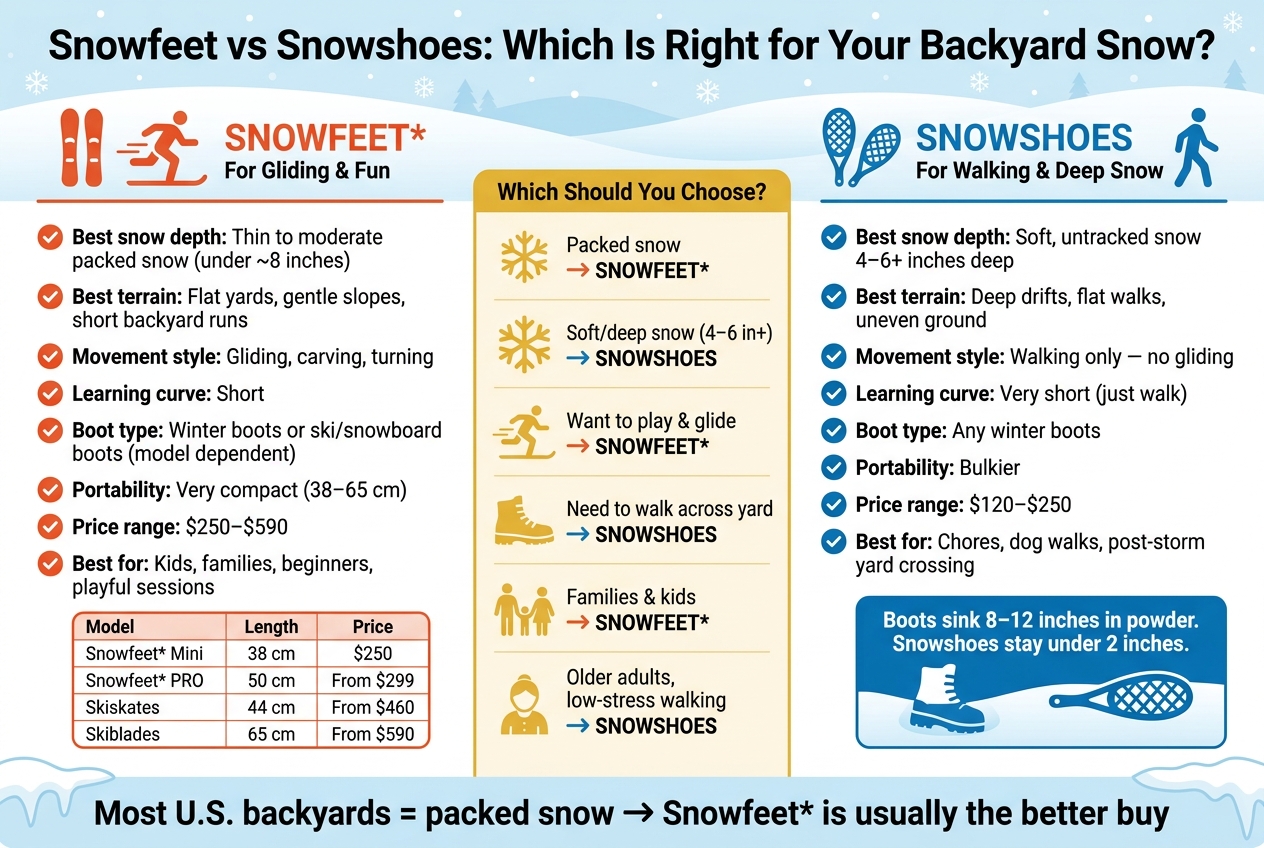
Snowfeet vs Snowshoes: Which Is Right for Your Backyard?
Snowboarder tries Snowfeet* | Which Snowfeet* Short Ski is the Best? | Snowblades 44, 65, 99 Review
Quick Comparison
| Option | Best For | Snow Type | Feel | Boots | Typical Price |
|---|---|---|---|---|---|
| Snowfeet 38 cm | Small yards, kids, tight turns | Thin, packed snow | Fast, playful | Winter boots/hiking boots | $250 |
| Snowfeet PRO 50 cm | Gentle slopes, beginners | Shallow to moderate packed snow | More stable glide | Winter boots/hiking boots | From $299 |
| Skiskates 44 cm | Adults who want more control | Packed snow | Precise, strong grip | Ski or snowboard boots | From $460 |
| Skiblades 65 cm | Longer backyard runs | Moderate packed snow | Smooth glide, more stable feel | Ski or snowboard boots | From $590 |
| Snowshoes | Deep drifts, yard walking | Soft, untracked snow | Walking only | Any winter boots | $120–$250 |
Here’s how I’d think about it:
- Choose Snowfeet if you want to play
- Choose snowshoes if you need to get across the yard without sinking
- For families, packed lawns, and tiny sled-style hills, Snowfeet usually make more sense
- For chores, dog walks, and storm-day drifts, snowshoes are the safer call
A good video if you want to see short skis in action:
So, this comes down to one simple thing: do you want to glide, or do you want to walk?
Snowfeet* for Backyard Snow: Packed Snow, Small Slopes, and Quick Fun
Snowfeet* models range from 38 to 65 cm, so they’re a lot easier to use in a backyard than full skis. That shorter size also makes them easy to stash in a closet, carry outside, and use in spots where space is tight.
How the Main Snowfeet* Models Compare
The right pick depends on your yard. Shorter models work better in small, flatter spaces. Longer ones give you more stability on little hills.
Here’s how the main Snowfeet* models stack up for packed paths, small slopes, and quick backyard sessions:
| Model | Length | Feel | Best Backyard Use | Price (USD) |
|---|---|---|---|---|
| Snowfeet* Mini Ski Skates | 38 cm | Agile, skate-like, quick turns | Small yards, short driveways, gentle slopes - great for kids | $250 |
| Snowfeet* PRO | 50 cm | More stable, better edge control | Slightly steeper hills, longer short runs - good for beginners | From $299 |
| Skiskates | 44 cm | Stable, precise, strong edge grip | Packed snow, carving, reliable stops - suits adults who want control | From $460 |
| Skiblades | 65 cm | Smoothest glide, most stability | Larger yards, short backyard runs - best for adults with room to move | From $590 |
Once you’ve got the model figured out, the next thing is simple: how well does it work in a real backyard?
Why Snowfeet* Work Well Around the House
Setup is fast. Some models work with winter boots, while others need ski or snowboard boots. Either way, you can get outside in a minute or two. That’s a big plus when you’ve only got a little daylight left or a short break between errands.
They also help people learn the basics of skiing without much pressure. You can practice balance, edging, and weight shift in a small, familiar space. Kids can start with short glides, then move up to tiny downhill runs once they feel steady.
Where Snowfeet* Are Not the Best Fit
Snowfeet* work best when the snow is packed enough to glide. In deep, soft snow, they start to sink and lose that smooth feel. That’s where snowshoes have the edge, since they move through soft snow more easily.
sbb-itb-17ade95
Snowshoes for Backyard Snow: Deep, Soft Snow and Slow Walking
Snowshoes are made for soft snow. They spread your weight out, so you don’t sink as much with each step. In a backyard, that makes them handy for plain old getting around, like reaching the shed, walking the dog, or crossing drifts after a fresh snowfall. They’re a walking tool, not a toy.
Where Snowshoes Clearly Win
Once snow gets to about 4–6 inches deep, snowshoes start to make a clear difference. That’s where regular boots can turn a short walk into a mini leg workout.
One comparison found that boots sank 8–12 inches in powder, while snowshoes stayed under 2 inches. That gap matters. It means less effort, less stomping, and a much easier trip across a drifted yard or out to the woodpile.
For backyard use, you also don’t need anything fancy. Entry-level recreational snowshoes often come with traction features that help on uneven or icy ground. And if your yard is flat, models at the lower end of the roughly $120–$250 range are usually enough.
Why Snowshoes Fall Short for Backyard Fun
Here’s the catch: snowshoes help you walk, but they don’t help you play. They don’t glide. They don’t give you a downhill ride. And they won’t make a small hill or packed path feel like much of anything.
They’re also a bit clunky to store compared with compact snow-sliding gear. So, on packed snow, you end up with more bulk and not much fun. Kind of like bringing hiking boots to a skate park.
That’s the real split here: snowshoes work best for soft snow you need to walk through; Snowfeet* fit packed snow and fast backyard fun. You can see that difference fast when you compare packed snow, soft snow, and mixed backyard terrain side by side.
Snowfeet* vs Snowshoes: Side-by-Side by Snow Depth, Terrain, and User Type
Use this quick chart to match your backyard snow, terrain, and boots to the best fit.
| Snowfeet 38 cm* | Snowfeet PRO 50 cm* | Skiskates 44 cm | Skiblades 65 cm | Snowshoes | |
|---|---|---|---|---|---|
| Best snow depth | Thin, packed snow | Shallow to moderate packed snow | Shallow packed snow and short bumps | Moderate packed snow on small slopes | Soft, untracked snow and deeper drifts |
| Best terrain | Flat yards, tight turns | Gentle slopes, paths | Short steeper bumps | Longer small slopes | Deep drifts, flat walks |
| Movement style | Skate-like gliding | Mini-ski gliding | Hybrid ski-skate feel | Carving turns | Walking, not gliding |
| Stability | Moderate | Moderate–High | Moderate | Moderate–High | High |
| Learning curve | Short | Short–Moderate | Moderate | Moderate | Very short |
| Boot compatibility | Winter boots or hiking boots | Winter boots or hiking boots | Ski or snowboard boots, depending on configuration | Ski or snowboard boots, depending on configuration | Any winter boots |
| Portability | Very compact | Compact | Compact | Compact | Bulkier |
Packed Snow, Flat Yards, and Small Hills
On packed snow and short runs, the pick is often obvious. The 38 cm model lets you glide, pivot, and snake through tight spots. It feels a bit like a snow skate for your driveway. The PRO 50 cm gives you more length, which helps on gentle hills and makes runs feel smoother without taking up much more room.
The Skiblades 65 cm also work well on a small backyard slope. They let you link carved turns and make a modest hill feel like a mini ski area.
Snowshoes, on the other hand, feel clunky on packed snow. You can walk in them, sure, but there’s no glide. It’s more stomp than swoop.
Deep Snow, Uneven Ground, and Simple Walking
Once the snow gets soft and deep, the answer changes fast. Soft, untracked snow leans toward snowshoes. Packed backyard snow leans toward Snowfeet*.
Snowshoes are built for this job. Their big decks spread your weight across the snow, so you stay closer to the top instead of sinking with each step. For adults in the 140–200 lb range, a 25-inch recreational snowshoe works for most winter hikes. If the snow is deeper or the user is heavier, 30–36-inch models are often the better move.
Snowfeet* aren’t made for deep powder. One report says they become impractical in snow deeper than about 8 inches, where stopping and balance both get tougher. So, if your yard has soft drifts, unshoveled patches, or a fluffy side area, snowshoes are the safer bet.
Best Pick for Kids, Beginners, and Families
For families who want to play on a packed lawn or scoot down a small hill, Snowfeet* are the fun pick. The 38 cm and Skiskates 44 cm are light enough for many kids to carry on their own, which, let’s be honest, matters a lot after ten minutes outside :) Their short size also feels less scary to beginners than full skis.
The split is simple:
- Snowfeet* are for play, gliding, and turns
- Snowshoes are for walking through snow with less fuss
For cautious users, older adults, or anyone who just wants to walk instead of slide, snowshoes are the lower-stress choice. There’s almost no technique involved beyond walking with a slightly wider stance.
Next, match the right Snowfeet* model to your yard and how much glide you want.
Which Snowfeet* Model to Buy - or When to Choose Snowshoes
Matching Each Snowfeet* Model to Your Backyard Setup
Pick based on snow depth, yard layout, and how much glide you want.
If your yard has a bit of everything - packed paths, soft drifts, and a few short slopes - this quick guide makes the choice a lot easier.
- Snowfeet* 38 cm - The easiest way to start. Best for tight, flat, packed yards.
- Snowfeet* PRO 50 cm - Gives you more stability on gentle slopes and fits winter boots in U.S. sizes 6–13.
- Skiskates 44 cm - A great match for inline skaters and hockey players since the stance and balance feel familiar.
- Skiblades 65 cm - Best for longer, firmer backyard runs.
- Snowshoes - Pick snowshoes only for deep, soft snow.
Final Recommendation
If your yard is mostly packed, Snowfeet* are the better pick. If the snow stays soft and deep, snowshoes make more sense.
For most U.S. backyards, Snowfeet* are the better buy. They’re more fun, easier to learn, and work better on packed snow. Go with snowshoes only if you deal with deep, soft snow all the time and walking matters more than gliding.
FAQs
Can I use Snowfeet* in mixed backyard snow?
Yes - Snowfeet* are a good fit for mixed backyard snow. They’re small, easy to move around in, and work with waterproof winter boots or snowboard boots, which makes them handy for quick sessions close to home.
They do best on packed snow. And if your yard has uneven spots or small bumps, the metal edges help you keep better control.
For backyard use:
- The 38 cm Mini Ski Skates are the most flexible all-around pick.
- The 50 cm PRO gives you more stability.
- In powder deeper than 4 inches, shorter models can sink more easily.
So, if your snow is packed down or a bit choppy, Snowfeet* should handle it just fine :)
Which Snowfeet* model is best for beginners?
For beginners, the 38 cm Mini Ski Skates are the best place to start. They’re light, easy to handle, and simple to learn. Most people can get the basics down in about five minutes.
The short length helps prevent crossed tips, which makes those first runs feel a lot less awkward. They also work with waterproof winter boots or snowboard boots you already have, so you don’t need to buy a whole new setup.
That’s what makes them such a fun, low-stress pick for backyards, local parks, or sledding hills :)
Do I need special boots for Snowfeet*?
No. You don’t need special or expensive ski boots for Snowfeet*.
For casual backyard fun, regular waterproof winter boots work just fine. If you want more support and flex, go with snowboard boots.
Some of the larger models also work with ski boots. And because the bindings are adjustable, they fit a wide range of boot sizes.
That means you can skip the hassle - and the extra cost - of buying gear just for this.











Legg igjen en kommentar
This site is protected by hCaptcha and the hCaptcha Privacy Policy and Terms of Service apply.