



















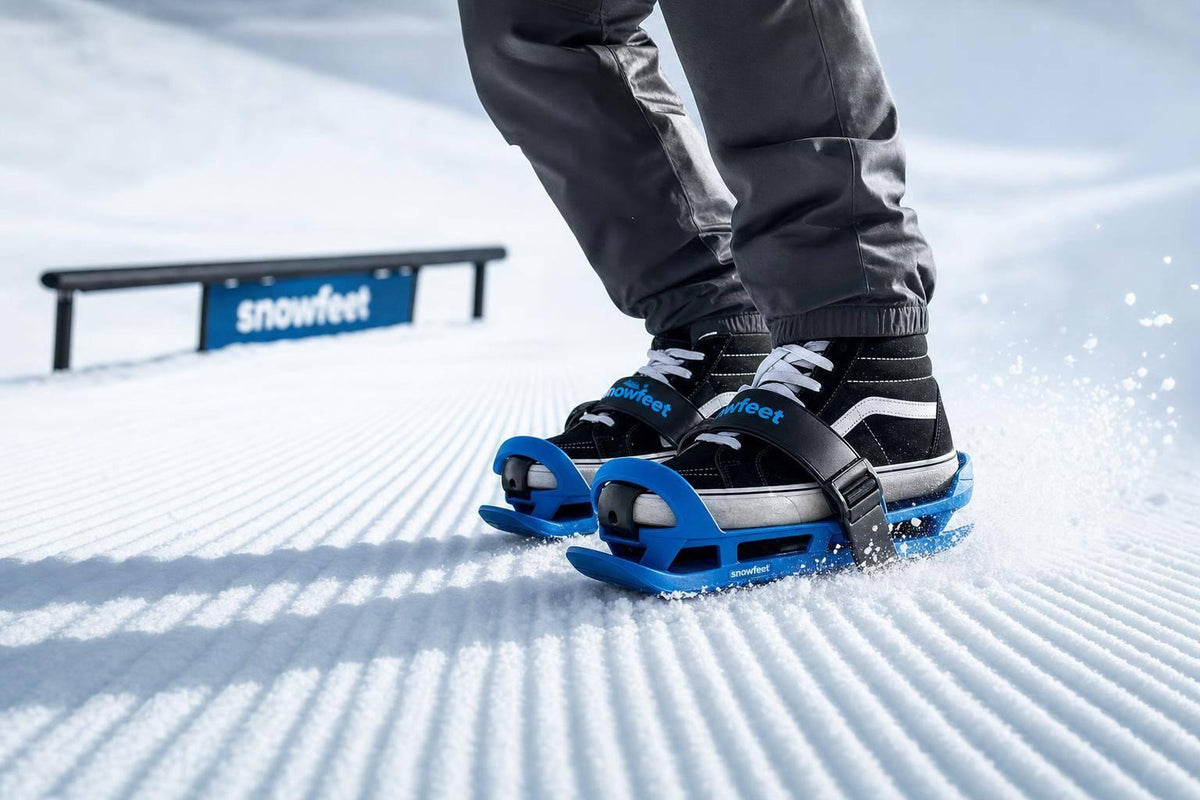
Yes - you can skate on snow with gear that straps onto your shoes. Snowfeet are short mini skis, usually 15 to 20 in. long, built for groomed runs, parks, local hills, and packed trails. I’d sum it up like this: if you want less gear, less setup, and a skate-like feel, Snowfeet make a lot of sense.
Here’s the short version:
- Snowfeet strap onto winter shoes or snowboard boots
- Most adult models fit U.S. sizes 6–13
- The main lengths are 38 cm, 44 cm, and 50 cm
- Snowfeet PRO weighs 3.64 lb
- They work best on firm, groomed snow
- They’re not the right pick for deep powder
- Prices in this lineup start at $190 and go up to $460
So, what’s the big idea here?
Snowfeet sit between skiing and skating. You make short turns, move with a side-to-side feel, and stop more like you would in hockey than on long skis. That short base makes them easier for many first-timers, but it also means less stability at high speed and less float in soft snow.
If I were helping a friend pick one, I’d keep it simple:
- New rider? Go with the 38 cm model
- Want a bit more calm underfoot? Look at the 50 cm model
- Want more locked-in control? Pick PRO 50 cm
- Skater or park rider? 44 cm Skiskates make the most sense
- Buying for a kid with feet under U.S. 6? MINI KIDS is the fit
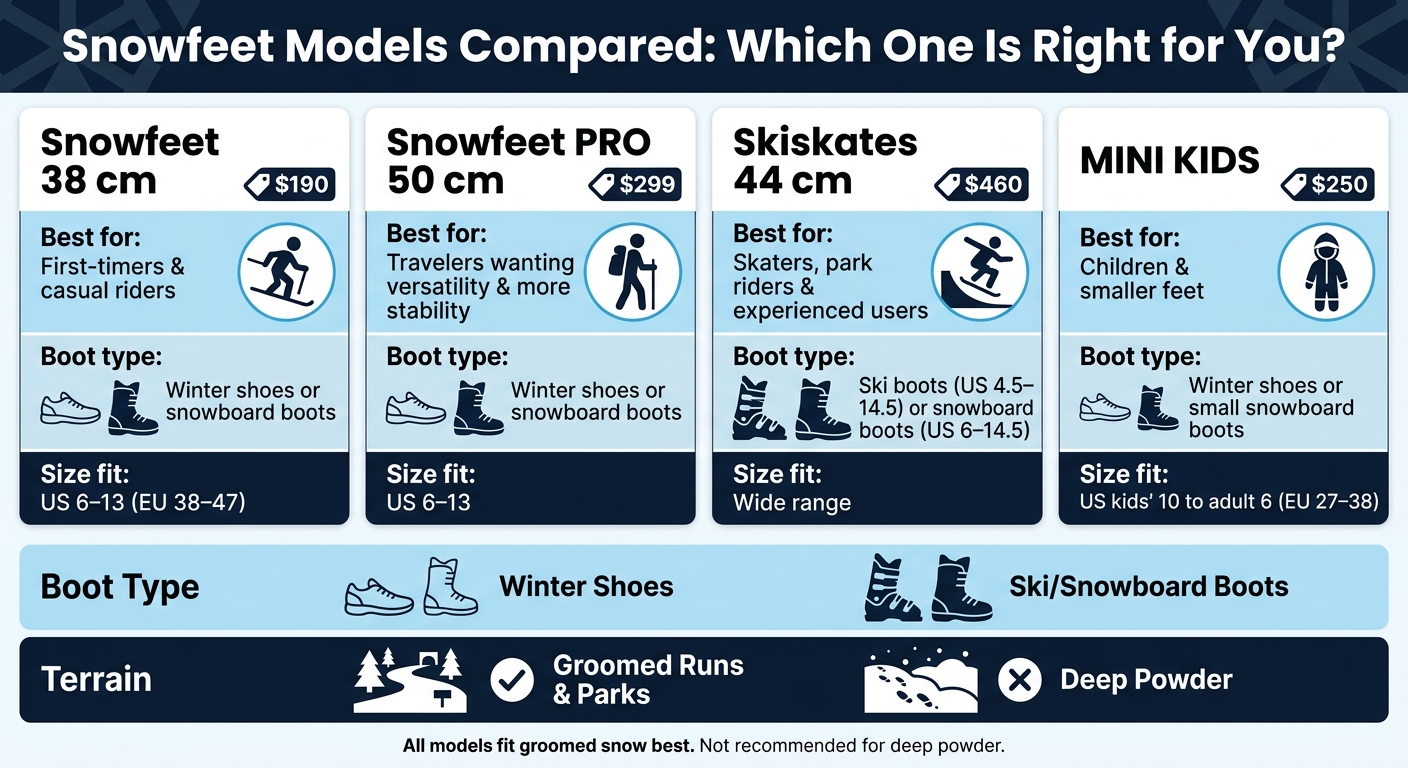
Snowfeet Models Compared: Which One Is Right for You?
Snowfeet* - Skates For Snow - Mini Skis | Next Big Winter Sport | Official
Quick comparison
| Model | Best for | Boot setup | Size fit | Starting price |
|---|---|---|---|---|
| Snowfeet 38 cm | First-timers, casual laps | Winter shoes or snowboard boots | U.S. 6–13 | $190 |
| Snowfeet 50 cm | Riders who want more balance than 38 cm | Winter shoes or snowboard boots | U.S. 6–13 | Varies |
| Snowfeet PRO 50 cm | Travel, more control | Winter shoes or snowboard boots | U.S. 6–13 | $299 |
| Skiskates 44 cm | Skaters, park riders, more skilled users | Ski boots or snowboard boots | Ski: U.S. 4.5–14.5 / Snowboard: U.S. 6–14.5 | $460 |
| MINI KIDS | Kids and smaller feet | Winter shoes, some small snowboard boots | U.S. kids’ 10 to adult 6 | $250 |
A few things stood out to me from the full piece:
- Portability is the main selling point. These fit in a backpack. No roof rack circus.
- Boot choice matters a lot. Some models work with shoes. Some don’t.
- Terrain matters just as much. Packed snow? Fun. Deep powder? Nope.
- Daily waxing helps. A small job, but it keeps the glide from turning into sticky snow misery.
If you want a fast mental picture, think of Snowfeet as snow skates with edges and a brake. They won’t replace full skis for speed or powder days. But for quick trips, local hills, family use, and messing around in the park, they can be a smart pick.
A couple of useful YouTube searches if you want to see them in motion:
- Snowfeet skiskates review on YouTube
- How to ride Snowfeet on YouTube
- Snowfeet vs snowblades on YouTube
Bottom line: if you want a small, packable, shoe-friendly way to glide on snow, Snowfeet are worth a look. If your goal is high speed, steep runs, or powder, stick with longer skis or a snowboard.
Let’s get into what each model is like, who it fits, and where it works best.
Snowfeet* Models Explained: Which One Is Right for You
Once you’ve picked your boot type and length, the big choice gets pretty simple: do you want easy and playful, or more control under your feet?
Snowfeet 38 cm and 50 cm: Strap-On Mini Skis for Winter Shoes or Snowboard Boots
The 38 cm Snowfeet is the easiest way in. It’s short, light, and quick to turn. You can strap it onto regular winter shoes or snowboard boots, and it fits adult shoe sizes US 6–13 (EU 38–47).
The 50 cm model gives you a bit more stability than the 38 cm version. So if you want a ride that feels a little calmer without switching boot types, this is a nice step up.
Snowfeet PRO 50 cm and Skiskates 44 cm: More Control, Sharper Snow Feel
The Snowfeet PRO 50 cm has a firmer, more locked-in feel than the standard 50 cm model. It uses durable, adjustable bindings and makes sense for riders who want more precision from a small setup.
The Skiskates 44 cm sit in a different lane. They use a wood core, steel edges, and a sintered base, which gives them a more ski-like ride. They need ski or snowboard boot bindings, not regular shoes. Ski boot bindings fit US sizes 4.5–14.5, while snowboard boot bindings cover US sizes 6–14.5.
These are a good match for park riders and skaters who want a more technical feel without hauling around full-length skis. The next section gets into how that ride plays out on different types of terrain.
MINI KIDS: The Family Option for Shoe Sizes Under US 6
MINI KIDS ($250) is made for riders under US 6 and keeps the same shoe-first setup as the adult models. It fits about US kids' sizes 10 through adult 6 (EU 27–38), with room for some smaller snowboard boots in that range.
At this length, falls are often less harsh, which helps kids work on balance and basic gliding without getting too beat up. That said, on steeper slopes and in ski school, traditional kids' skis still do a better job teaching edge control.
Next, see where Snowfeet works best on snow and what the ride feels like.
sbb-itb-17ade95
How Snowfeet* Feels on Snow and Where It Works Best
Once you’ve figured out which model fits your boots, the next thing people want to know is simple: what does Snowfeet actually feel like on snow?
It feels a lot like skating on snow. You push, glide, and pivot the way you would on ice skates or inline skates, just on a slope. The short platform makes turns fast and tight. And stopping feels more like a hockey stop, with a heel brake there for extra control.
Best Terrain: Groomed Runs, Parks, Local Hills, and Narrow Trails
Snowfeet work best on groomed resort runs, terrain parks, packed trails, and narrow paths where quick turns matter more than top speed. The metal edges grip well on firm, groomed snow and help you carve smooth turns. That’s a big plus on busy slopes, where long skis can feel clunky.
There’s one clear trade-off: Snowfeet are not a good match for deep powder or steep, ungroomed terrain.
That quick, nimble feel is also why first-time riders and skaters tend to notice the ride style right away.
What Beginners and Experienced Riders Usually Notice First
Most beginners can get moving within minutes. If you skate already, the learning curve often feels shorter because the side-to-side push is familiar. Skiers who switch over usually notice that Snowfeet feel less stable at higher speeds. But on groomed snow at a moderate pace, they feel quick and responsive.
One small upkeep habit matters: wax the base daily to keep the glide smooth and stop snow from sticking.
That mix of control and ease leads straight into the next comparison: Snowfeet versus skis and snowboards.
Snowfeet* vs Traditional Skis, Snowboards, and Other Short Skis
Snowfeet* vs Skis and Snowboards: Convenience and Fun vs Speed and Float
Traditional skis and snowboards still have the edge in speed and deep powder. That part’s pretty simple. Long skis feel steadier when you’re moving fast, and full-size skis and snowboards float much better when the snow gets deep.
Snowfeet are built for a different kind of ride. They’re made for simple, shoe-first riding with less gear and less hassle. You give up some top-speed stability, but you get easier handling, easy packing, and snappy turns.
That’s the trade. And for a lot of people, it’s a good one.
| Feature | Snowfeet* (38–50 cm) | Traditional Skis / Snowboards |
|---|---|---|
| Portability | Backpack-ready | Roof racks or large gear bags often required |
| Boot requirement | Winter shoes or snowboard boots | Dedicated ski or snowboard boots |
| Learning curve | Very short | Moderate to steep; lessons recommended |
| High-speed stability | Lower at top speed | High; built for speed and carving |
| Powder performance | Not recommended | Excellent float |
This trade-off stands out even more when you line Snowfeet up against other short skis.
Snowfeet* vs Snowblades and Other Short Skis
Once you get that Snowfeet are all about convenience, the next step is seeing how they stack up against other short skis.
Snowblades and skiboards are still short skis, but they usually need ski boots. Snowfeet skip that whole step. That’s the big thing. It’s why they make so much sense for beginners, travelers, and families.
Now, to be fair, snowblades and skiboards do have a few strong points. Their extra length helps with carving on steeper groomed runs. They also feel steadier at top speed and have a better shot at dealing with light powder or snowpark landings. If you used to ski and want something compact that still feels closer to skiing, longer skiboards can be a solid pick.
| Feature | Snowfeet* (38–50 cm) | Snowblades / Skiboards |
|---|---|---|
| Boot type | Winter shoes or snowboard boots | Ski boots |
| Portability | Backpack-ready | More portable than full skis, but bulkier than Snowfeet* |
| Ride feel | Skate-like feel | Ski-like carving |
| Learning curve | Very short | Short to moderate |
| Trick / park use | Good for casual park play | Better for carving and snowpark landings |
| Boot flexibility | High - no ski boots needed | Low - ski boots typically required |
For most casual riders, the choice comes down to gear. Snowfeet* are easier to pack, easier to bring, and easier to use on the fly. You don’t need to rent boots. You don’t need a ski bag. You can head to local hills, trails, or resort runs without dragging around full-size gear.
Snowfeet* fit more situations with less stuff.
Next: which Snowfeet model fits your riding style and budget.
How to Pick the Right Snowfeet* Model
Quick Picks by Rider Type and Budget
Start with your boot type. That’s the big filter. After that, think about what matters more to you: easy setup or more control.
| Rider Type | Best Model | Starting Price |
|---|---|---|
| First-timer / casual rider | Snowfeet 38 cm | $190 |
| Traveler wanting versatility | Snowfeet PRO 50 cm | $299 |
| Skater / snowboarder / experienced rider | Skiskates 44 cm | $460 |
| Child or smaller foot | MINI KIDS | $250 |
Here’s how that plays out on snow.
The 38 cm model is the easiest way in. It’s short, light, and works with winter shoes or snowboard boots. If you’re new and don’t want to mess with a tricky setup, this is the simple pick.
The PRO 50 cm gives you more stability but still stays easy to pack. It also fits bulkier snowboard boots with less hassle, which is nice if your gear runs big.
Skiskates 44 cm are made for a sharper, more precise feel. They use a wood core and come with ski or snowboard boot bindings, so you get more control and a tighter ride. If you skate, snowboard, or already know your way around snow gear, this one will likely feel more natural.
MINI KIDS is the better fit for smaller shoe sizes and a setup that feels less awkward for younger riders.
Key Points to Remember Before You Buy
Before you buy, check two things: what boots you’ll use and where you plan to ride.
Those two answers will steer you to the right model almost every time. Nice and simple :)
FAQs
Do I need ski boots to use Snowfeet?
No - most Snowfeet* options don’t need ski boots. Snowfeet* mini skis and skiskates are made to work with winter boots you already own, so you can strap them on and ride without special footwear.
That said, some models - like Skiskates (44 cm) - are built for ski or snowboard boots, based on the bindings you pick.
Are Snowfeet hard for beginners to learn?
No - Snowfeet are made for beginners. Their short, skate-like design makes turning and stopping feel more natural, with less edge-catching than full-size skis or snowboards.
A lot of people get the basics fast - often in about 5 minutes. If you’ve skated or played inline hockey, it can feel even more natural.
If you want a bit more confidence, the longer PRO model at about 50 cm gives you more stability. The 38 cm option is the easiest to carry and works well for mellow, casual snow.
Which Snowfeet model should I choose?
Choose based on your experience, the terrain you ride, and how easy you want your setup to be to carry.
- 38 cm: best if you want max portability and easy, casual fun
- 50 cm Snowfeet PRO: the best all-around pick for most riders
- 44 cm Skiskates: best for experienced riders who want a precise, skate-like feel
- 65 cm or 99 cm Skiblades: best if you want a more classic ski feel, plus more stability and edge control











Legg igjen en kommentar
This site is protected by hCaptcha and the hCaptcha Privacy Policy and Terms of Service apply.