




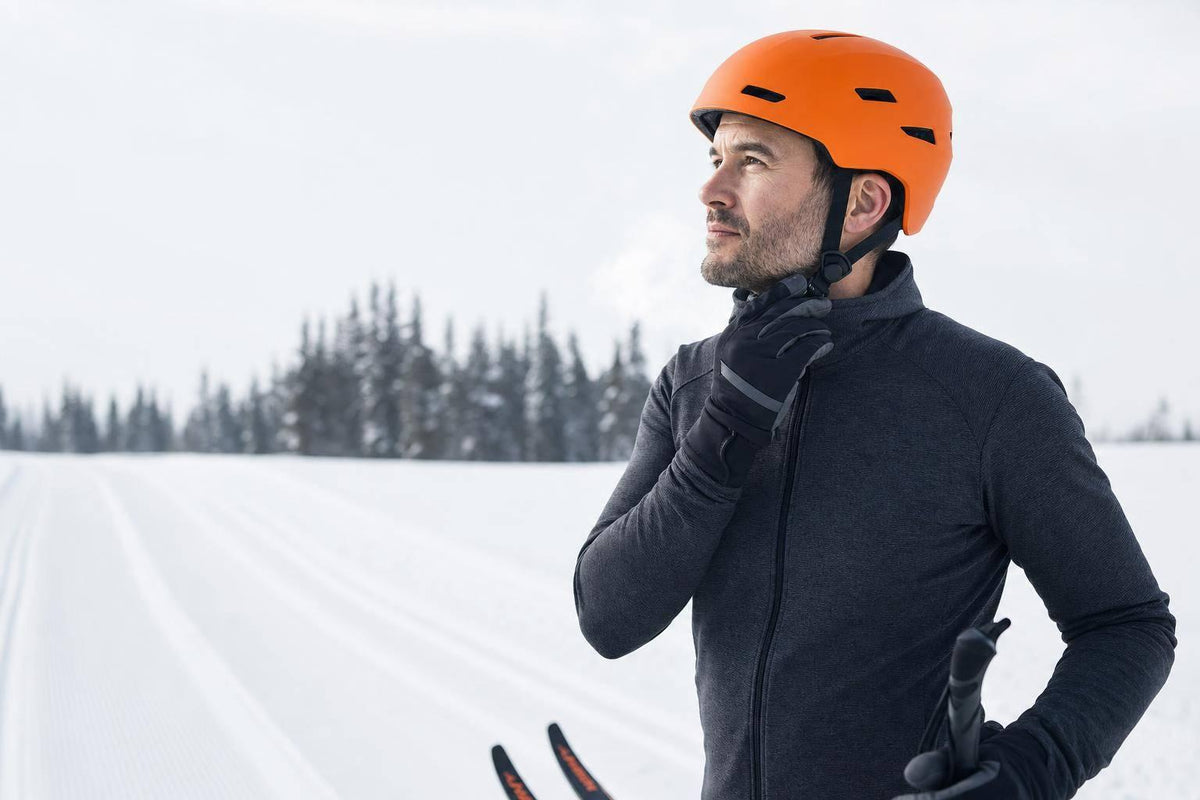
Yes - I’d wear a helmet every time I skiskate. One bad edge catch on hard snow can turn into a head hit fast. And the risk isn’t just for park riders or beginners.
Here’s the short version:
- Wear a certified snow-sports helmet for skiskating
- Look for ASTM F2040 in the U.S.
- Make sure it fits snug, sits level, and stays buckled
- Helmets lower head-injury risk, but they don’t erase it
- The risk goes up on icy runs, crowded slopes, jumps, rails, and at higher speed
- For kids and first-time riders, a helmet is not optional in practice
A few numbers make the point fast:
- 74.1% of snow-sports head injuries in one U.S. data set came from hitting the snow
- 10.0% came from collisions with other skiers
- 13.1% came from fixed objects
- A CDC-cited study estimated 78,538 youth snow-sports head injuries treated in U.S. ERs over 14 years, and 77.2% were traumatic brain injuries
So, yeah - snow may look soft, but it can hit like a parking lot in winter. :)
If I’m riding Snowfeet* Skiskates 44 cm, Snowfeet PRO 50 cm, or Snowfeet* Skiblades 65 cm, I’d keep the rule simple: helmet on, strap buckled, speed under control.
If you want a fast visual on helmet fit, this is the checklist I’d use:
| Check | What I’d look for |
|---|---|
| Certification | ASTM F2040 or another snow-sports standard |
| Fit | Snug, with no sliding or rocking |
| Position | Level on the head, about 1 inch above the eyebrows |
| Strap | Buckled and snug; 1–2 fingers under the chin strap |
| Condition | No cracks, no missing padding, no hard-impact history |
| Goggles | Good match with little or no forehead gap |
Bottom line: Yes, you need a helmet for skiskating. Not because it makes you invincible. Because falls happen fast, and your head doesn’t get a second try.
Helpful videos if you want to check fit before your next run:
That’s the whole answer up front. The rest of the article backs it up with when helmet use matters most, how to choose one, and what to check before you ride.
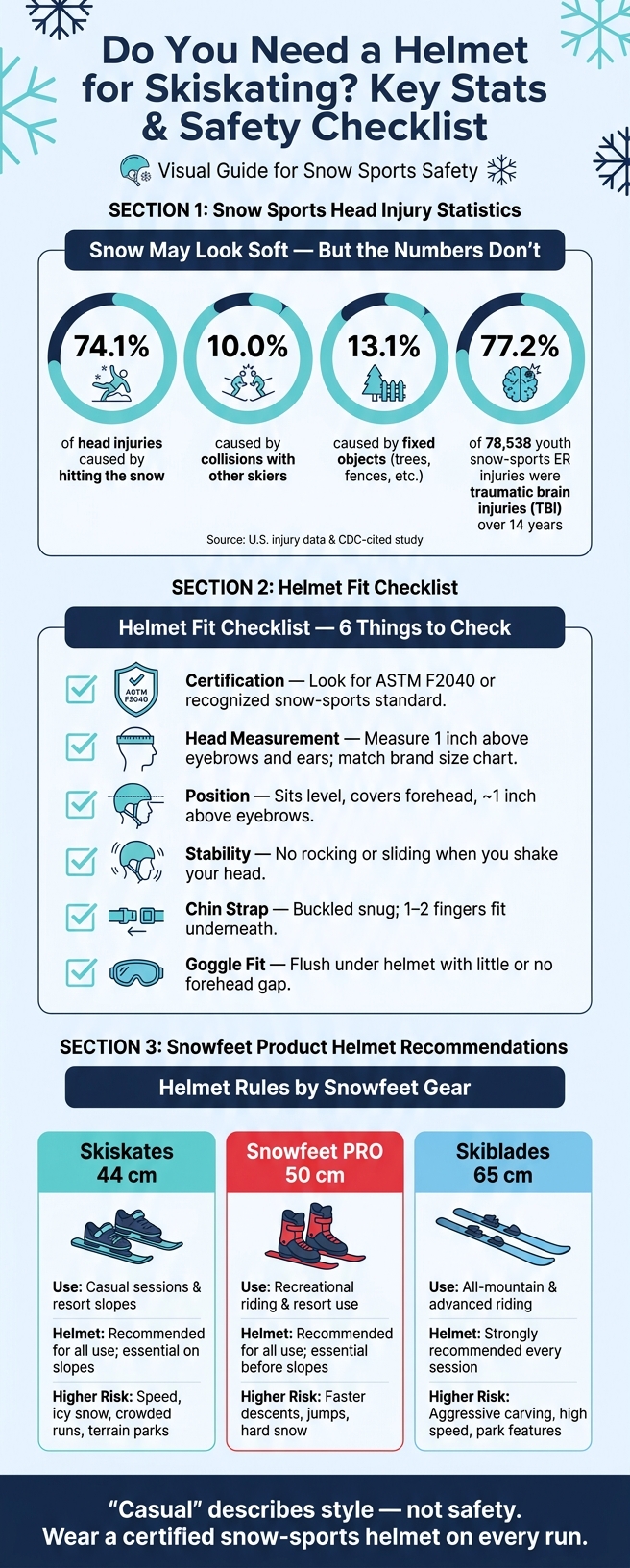
Snow Sports Head Injury Stats & Helmet Safety Checklist
When a Helmet Is Clearly Necessary
Beginners, Kids, and First-Time Snowfeet* Riders
New riders fall more while they learn. That’s just part of the deal. If you’re still working on balance, stopping, and turning on Snowfeet* Skiskates 44 cm or Snowfeet PRO 50 cm, one small edge catch can put you on hard-packed snow in a split second. And snow doesn’t move out of the way. Neither do fences, trees, rocks, vehicles, or other people.
That risk climbs fast for kids and first-time riders.
For children, the danger is higher. A CDC-cited study estimated 78,538 snow-sports head injuries in kids and teens treated in U.S. emergency departments over 14 years. Of those, 77.2% were traumatic brain injuries. That’s a number worth taking seriously.
The American Academy of Pediatrics recommends helmets for all skiers and snowboarders and says young children need direct adult supervision. For parents, the basics matter:
- The helmet should sit level
- It should cover the forehead
- It should stay put when the child shakes their head
- The chin strap should be adjusted and snug
A loose helmet is like a loose ski boot. Technically it’s on, but it’s not doing the job.
Slopes, Speed, Icy Snow, and Obstacles
Short skiskates may feel light and easy to handle, but speed still hits hard. And icy snow? It gives you almost no cushion. When things go wrong, the ground wins.
U.S. injury data show that 74.1% of documented snow-sports head injuries came from hitting the snow, 10.0% from collisions with other skiers, and 13.1% from fixed objects. So even if you never hit a tree or another rider, the snow itself is still the main threat.
If you’re on a marked ski run, building speed on a groomed trail, or riding near other people, a helmet isn’t some extra add-on. It’s the normal, common-sense move.
Terrain Parks, Jumps, and Rails
Terrain parks are no-joke helmet zones. Jumps, boxes, rails, and hard landings mix speed, height, and odd impact angles. That’s a rough combo. Research shows terrain-park injuries are more severe and more likely to involve the head or back than injuries on standard runs.
A helmet helps, but it doesn’t make a jump or rail safe by magic. Match features to your skill level. Check the approach and landing before you drop in. Follow posted resort rules.
If you can’t stop and turn with control on a groomed run, skip the terrain park for now.
Once you know when a helmet matters most, the next step is picking one that fits well and stays secure.
All you need to know - Snowfeet* | Skiskates | Skiboards | Snowblades | Skiblades FAQ
How to Choose a Helmet for Skiskating
Now that the helmet question is settled, let’s get into the part that matters on the hill: picking the right one.
For skiskating, use a helmet made for skiing or snowboarding. Skip the bike, skate, and climbing helmets on snow. They’re built for different kinds of impacts and use. You want a helmet certified to ASTM F2040, which is the U.S. standard for nonmotorized recreational snow-sports helmets. Other recognized standards include CE EN 1077, Snell RS-98, and CSA Z263.1.
Fit, Sizing, and Chin-Strap Checks
Start with a soft tape measure. Wrap it around the largest part of your head, about 1 inch above your eyebrows and just above your ears. Write down the number in inches, then match it to the brand’s size chart. That part matters more than the small/medium/large label, because those size names can vary a lot from one brand to another.
When you put the helmet on, it should sit level on your head and cover your forehead. The front edge should land about 1 inch above your eyebrows. Not way back on your head like a baseball cap - that’s a no-go.
Then do a simple movement check:
- Shake your head side to side
- Nod up and down
The helmet should stay put. It shouldn’t rock, slide, or shift around.
Next, buckle the chin strap. Adjust it so you can fit one to two fingers between the strap and your chin. Then open your mouth wide. The helmet should pull down a bit on your head. If nothing moves, the strap is too loose and needs a tweak.
Goggle Fit, Helmet Condition, and When to Replace
Always try the helmet on with the goggles you’ll actually use. A helmet can feel fine by itself, then turn into a headache once the goggles go on.
Your goggles should sit flush under the helmet with little or no forehead gap. The helmet also shouldn’t shove the goggles down into your face or mess with your vision.
Before every season - and before every outing - give the helmet a quick once-over. Check the shell, liner, vents, buckle, adjustment system, and padding. Don’t use a helmet that is cracked, loose, missing padding, or has taken a hard impact, even if the outside looks okay. Snow gear can be sneaky like that.
If you’re borrowing a helmet, only use it if you know its fit, age, certification, and impact history. If that history is a mystery, pass.
Helmet Fit-Check Table
| Fit point | What to check | Why it matters |
|---|---|---|
| Certification | Look for ASTM F2040 or another recognized snow-sports standard | Confirms the helmet is designed and tested for recreational snow sports |
| Head measurement | Measure around the largest part of the head, about 1 inch above the eyebrows and ears | Helps match the helmet to the manufacturer's size chart |
| Position | Helmet sits level and covers the forehead without blocking vision | Helps maintain protective coverage and a clear view |
| Stability | Helmet stays in place when the rider shakes their head and does not rock front to back | Reduces shifting during a fall |
| Chin strap | Strap is centered and allows one to two fingers underneath | Helps keep the helmet secured without excessive tightness |
| Goggle interface | Goggles sit flush under the helmet with little or no forehead gap | Prevents exposed space and avoids pressure on the goggles |
| Condition/history | No cracks, loose parts, missing padding, or hard impacts | Damaged or unknown-history equipment may not provide intended protection |
These same fit rules apply to Snowfeet* Skiskates, Snowfeet PRO, and Skiblades.
sbb-itb-17ade95
Helmet Use With Snowfeet* Gear
Once fit is dialed in, the next thing to look at is how helmet use changes across Snowfeet* models. It’s pretty simple: the more speed, edge hold, and park use you add, the less room there is for skipping a helmet.
Snowfeet* Skiskates 44 cm and Snowfeet PRO 50 cm
Both the Skiskates 44 cm and the Snowfeet PRO 50 cm mount to your shoes. A lot of riders say they feel easy to pick up for casual use. That’s great. It does not mean falls stop being a risk.
Wear a certified snow-sports helmet on slopes, in crowds, on icy snow, and anywhere speed or obstacles come into play. For beginners and kids, treat helmet use as non-negotiable from the first run.
And as speed goes up or turns get more aggressive, that rule matters even more.
Snowfeet* Skiblades 65 cm and More Aggressive Riding
The Skiblades 65 cm use adjustable ski or snowboard boot bindings and support a more ski-like riding style. That longer platform gives you more stability than the 44 cm or 50 cm options, while staying much easier to carry than full-length skis. But there’s a catch: more stability can lead to more speed, and more speed means harder hits when things go wrong.
For Skiblades, wear a certified snow-sports helmet on slopes, especially during aggressive carving and park riding. If you’re heading toward rails, boxes, or jumps, put the helmet on before you start riding.
The table below shows the simplest helmet rule for each Snowfeet* product.
Snowfeet* Product Use and Helmet Recommendation Table
| Snowfeet* product | Typical use | Helmet recommendation | Higher-risk situations |
|---|---|---|---|
| Skiskates 44 cm | Casual sessions and resort slopes | Recommended for all use; essential on slopes and around obstacles | Speed, icy snow, crowded runs, and terrain parks |
| Snowfeet PRO 50 cm | Recreational riding and resort use | Recommended for all use; essential before moving to slopes | Faster descents, jumps, and hard snow |
| Skiblades 65 cm | All-mountain and advanced recreational riding | Strongly recommended for every session; especially important on slopes and in parks | Aggressive carving, high speed, and park features |
"Casual" describes style, not safety. Wear a certified snow-sports helmet on every run.
Safe Skiskating Habits and Final Answer
Simple Habits to Lower Risk Before Every Run
Once your helmet fits right, the last piece is how you ride.
Before every run, check your Snowfeet* straps, bindings, and footwear. Make sure everything feels snug and secure. Loose gear can turn into a problem before you even get going. Then keep the whole run under control from start to finish. Look uphill before entering a run, yield to riders ahead of you, and only stop where people can see you and where you’re not blocking the trail.
Start on wide, gentle terrain before you move to steeper slopes, firmer snow, or more speed. Short Snowfeet* setups react fast, so small mistakes can get big in a hurry. The NSAA's Responsibility Code says riders must stay in control and be able to stop or avoid people and objects at all times.
Fatigue also matters more than people think. The NSAA specifically advises riders to stop when tired. If your balance starts to feel off or your reaction time slips, that’s your cue to take a break - not squeeze in “just one more run.” Keep children under direct adult supervision the whole time, and stick to terrain they can handle right now.
And yes, the helmet matters. But think of it as backup, not a free pass to go faster. A helmet lowers risk. It does not replace speed control, awareness, or plain good judgment.
Conclusion: Wear a Certified Snow-Sports Helmet
Put it all together, and the answer is still simple.
The direct answer: yes, wear a helmet for skiskating. That goes for beginners, kids, slope users, terrain-park riders, and casual Snowfeet* riders too.
In the U.S., look for a helmet certified to ASTM F2040, the standard for nonmotorized recreational snow sports. It should sit level on your head, cover your forehead, stay put when you move, and have the chin strap actually buckled. If a helmet doesn’t fit right, it can’t do its job. And if it takes a hard hit, replace it - even if the shell looks fine from the outside.
Snowfeet* gear is small and easy to carry. That’s a big part of the draw. But small gear still means real falls, on real snow, at real speed, around real people. So, wear a certified snow-sports helmet, buckle it, and stay in control on every run.
FAQs
Can I use a bike helmet for skiskating?
No. For skiskating, use a certified snow sports helmet made for skiing and snowboarding.
Look for standards like ASTM F2040 or CE EN 1077. Snow helmets are made for impacts on snow, cold days, and the higher speeds that come with mountain use. The fit should be snug, and the helmet should sit level on your forehead.
How do I know if my ski helmet fits right?
Measure your head just above your eyebrows and ears to find the right size. Then set the helmet so it sits level, about two fingers’ width above your eyebrows.
It should feel snug and stay put when you gently shake your head. No wobble. No sliding. The chin strap should fit close, with no more than one to two fingers between the strap and your chin. And don’t size up so someone can “grow into it” - that’s a bad fit from day one.
When should I replace my snow-sports helmet?
Replace your snow-sports helmet right away after a hard hit, even if the outside still looks okay. The inner material can be damaged, and that damage isn’t always easy to spot.
You should also swap it out if you see wear like cracks, worn liner foam, or busted straps that keep it from fitting snug and secure. Give it a quick check before every ride on your Snowfeet Skiskates or Skiblades.











Legg igjen en kommentar
This site is protected by hCaptcha and the hCaptcha Privacy Policy and Terms of Service apply.