




















Hvis du er lei av å håndtere lange ski eller klumpete snowboard, kan korte ski som Skiblades og Skiskates være den perfekte løsningen. De er lette, enkle å bære og lett å lære. Men hvilken passer for deg? Her er en rask oversikt:
- Skiblades (65–120 cm): Flotte for carving, fart og allsidig terreng. De fungerer med ski- eller snowboardstøvler og gir mer stabilitet i høyere hastigheter.
- Skiskates (44 cm): Kompakte og lekne, disse er perfekte for freestyle-triks, preparerte løyper og uformell moro. Bonus - de festes over vanlige vintersko.
Rask sammenligning
| Egenskap | Skiblades (65–120 cm) | Skiskates (44 cm) |
|---|---|---|
| Lengdevalg | 65 cm, 99 cm, 120 cm | 44 cm |
| Fottøy | Ski-/snowboardstøvler | Vanlige vintersko |
| Best for | Carving, fart, all-terrain | Freestyle, smidighet, casual bruk |
| Stabilitet | Høyere | Lavere, mer leken |
| Bærbarhet | Passer i en ryggsekk | Ultra-kompakt |
| Prisklasse | $635–$775 | Fra $575 |
Hvis du vil ha allsidighet og ytelse, gå for Skiblades. Hvis bærbarhet og smidighet er dine prioriteringer, er Skiskates et morsomt og enkelt valg. Begge alternativer gjør vintersport mer tilgjengelig og problemfri. Klar til å bestemme deg? La oss dykke ned i detaljene!
Snowboarder prøver Snowfeet* | Hvilken Snowfeet* Short Ski er best? | Snowblades 44, 65, 99 anmeldelse
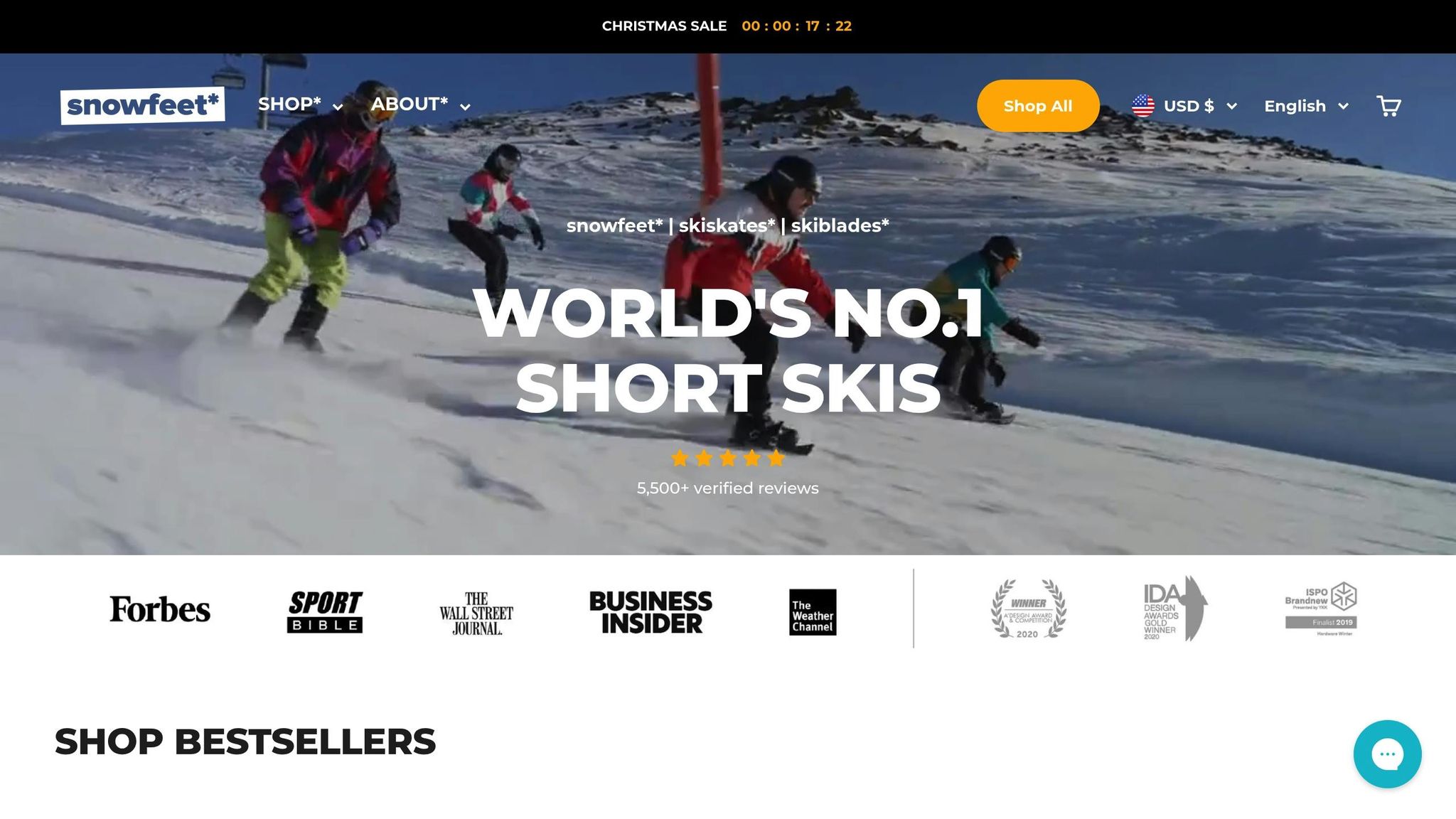
Skiblades vs. Skiskates: Funksjonssammenligning
Når det gjelder å velge mellom Skiblades og Skiskates, handler det om hvilken type kjøring du ønsker. Hver har sine fordeler, tilpasset forskjellige stiler og preferanser. La oss bryte det ned.
Skiblades: Design og funksjoner
Tenk på Skiblades som mini ski. De er korte, men fulle av funksjoner som metalldeler for grep, en bredere overflate for stabilitet, og et design som er perfekt for carving og cruising. Snowfeet* tilbyr tre lengder for å passe ulike stiler og ferdighetsnivåer.
- 65 cm Skiblades (fra $635): Disse er smidige og flotte for triks eller raske svinger i snøparker. De gir deg også mer overflate enn Skiskates, noe som hjelper i mykere snø.
- 99 cm Skiblades (fra $675): Disse balanserer godt, og tilbyr solid ytelse på preparerte bakker og lett pudder. I tillegg er de stabile nok for høyere hastigheter.
- 120 cm Short Skis ($775): Hvis stabilitet og fart er din greie, er disse dine favoritter. De håndterer brattere bakker og variert terreng med letthet, samtidig som de er kompakte nok for enkel transport.
En av de beste tingene? Snowfeet* Skiblades fungerer sømløst med skistøvler eller snowboardstøvler, og gir deg ankelstøtten du trenger for mer aggressiv kjøring. Bygget for å tåle bakker, parker og til og med turstier, er de et holdbart alternativ uten den høye prisen til tradisjonelle ski. Og i motsetning til klumpete skigear, er disse kompakte, men presterer som mestere.
Nå, la oss se hvordan Skiskates bringer en freestyle-vri til bordet.
Skiskates: Design og funksjoner
Skiskates handler om smidighet og moro. Med bare 44 cm lengde (fra $575) er de det mest kompakte alternativet der ute. Bygget med en trekjerne for lettvekts holdbarhet, gir deres ultrakorte design deg en opplevelse som føles mye som is-skøyting.
Her er det geniale: du trenger ikke skistøvler. Bare fest dem over dine vanlige vintersko, så er du klar. Dette gjør dem til et enkelt valg for casual kjørere som ikke vil ha bryet med et komplett skioppsett.
Snowfeet* Skiskates er laget for freestyle moro. Enten du spinner, vender eller bare leker, er de perfekte for preparerte bakker, terrengparker eller til og med løyper. Deres lette konstruksjon betyr mindre tretthet, så du kan holde på lenger. Og glem klumpete utstyr – Skiskates passer rett inn i en vanlig ryggsekk, noe som gjør dem til det ultimate innen bærbarhet.
Ytelse på ulikt terreng
Forskjellene i design gjenspeiles direkte i hvordan de presterer på ulike terreng. Slik står de seg:
- Preparerede bakker: Skiblades gir stabilitet for carving i høyere hastigheter, mens Skiskates er mer lekne og rettet mot moderate hastigheter.
- Terrengparker: 65 cm Skiblades balanserer stabilitet og smidighet for hopp og triks. Men Skiskates stjeler showet for freestyle-bevegelser, med raske vendinger og snurrer som er perfekte for kreative manøvrer.
- Fjell og løyper: Skiblades skinner med sin bredere flate og metalldeler, og takler skorpet snø, preparerte løyper og til og med lett pudder. Skiskates, som er flotte på preparerte løyper, kan slite i dypere snø, men er superlette å bære på lange turer.
- Brukervennlighet: Skiskates er nybegynnervennlige, med en kort lengde som gjør læringen enkel. I tillegg senker muligheten til å bruke vanlige vintersko terskelen enda mer. Skiblades, som er litt mer utfordrende, tilbyr fortsatt en allsidig og tilgjengelig opplevelse.
Her er en rask sammenligning for å oppsummere:
| Egenskap | Skiblades (65–120 cm) | Skiskates (44 cm) |
|---|---|---|
| Lengdevalg | 65 cm (≈26 tommer), 99 cm (≈39 tommer), 120 cm (≈47 tommer) | 44 cm (≈17 tommer) |
| Prisklasse | $635–$775 | Fra $575 |
| Fottøy | Skistøvler eller snowboardstøvler | Vanlige vintersko |
| Ideell for | Carving, all-terrain, fart | Freestyle, smidighet, uformell moro |
| Stabilitet | Høyere (spesielt med 99–120 cm modeller) | Lavere, mer leken |
| Bærbarhet | Passer i en ryggsekk | Ultra-kompakt |
| Læringskurve | Lett til moderat | Veldig lett |
| Terrengallsidighet | Preparerte bakker, parker, friluftsområder | Preparerte bakker, parker, løyper |
| Hastighetsytelse | Utmerker seg ved høyere hastigheter | Best for moderate hastigheter |
Skiblades er det foretrukne for allsidighet og ytelse på tvers av terreng, mens Skiskates fokuserer på bærbarhet og brukervennlighet, perfekt for en avslappet, freestyle opplevelse. Uansett gir begge alternativer en frisk vri på snøkjøring som tradisjonelle ski bare ikke kan matche.
Hvorfor Snowfeet* produkter overgår tradisjonelle ski
Snowfeet* korte ski bringer en frisk tilnærming til vintersport ved å kombinere bærbarhet, allsidighet og brukervennlighet – alle områder hvor tradisjonelle ski ofte kommer til kort. Her er en nærmere titt på hvorfor Snowfeet* produkter skiller seg ut.
Enkle å bære og oppbevare
La oss være ærlige: å slepe på tradisjonelle ski kan være en plage. Du trenger store bager eller takstativer, og de er rett og slett ikke praktiske for reise. Snowfeet* produkter endrer spillet. 44 cm Skiskates er små nok til å få plass i en vanlig ryggsekk, noe som gjør dem perfekte for flyreiser eller kollektivtransport. Selv 120 cm korte ski passer komfortabelt i de fleste bilbagasjerom, og eliminerer lagringsproblemer som følger med tradisjonelt skiutstyr.
Takler ulikt terreng med letthet
Tradisjonelle ski fungerer ofte best under spesifikke forhold, men Snowfeet* korte ski er laget for å takle ulike terreng. Enten du kjører carving ned preparerte bakker, besøker terrengparker, glir gjennom lett pudder eller utforsker preparerte løyper og områder utenfor løypene, er disse skiene klare for utfordringen. Deres allsidighet betyr at du får mer bruk for dem, uansett hvor vintereventyrene dine tar deg.
Enklere å lære
Tradisjonelle ski kan føles skremmende, spesielt for nybegynnere – de er lange, tunge og vanskelige å kontrollere. Snowfeet* korte ski, derimot, er lettere og mer kompakte, noe som gjør dem mye enklere å håndtere. Kjørere kan stoppe raskt og få kontroll raskere, noe som bygger selvtillit på kort tid. De fleste føler seg komfortable etter bare én dag. Og hvis du bruker Skiskates, blir det enda enklere – de fungerer med vanlige vintersko, så det er ikke behov for spesialiserte støvler. Med priser fra $575 til $775 tilbyr Snowfeet* en tilgjengelig måte å dykke inn i vintersport uten å sprenge budsjettet.
sbb-itb-17ade95
Hvordan velge mellom Skiblades og Skiskates
Snowfeet* utstyr skiller seg ut med sin bærbarhet og brukervennlighet, men å velge riktig alternativ avhenger av kjørestil og ferdighetsnivå. Hver har sine styrker, så la oss bryte det ned.
Tilpass etter aktivitetstype
Hvis du liker raske svinger, triks eller den skate-lignende følelsen på preparerte løyper, er Skiskates (44 cm) ditt valg. De er kompakte og smidige, perfekte for en leken tur. På den annen side tilbyr Skiblades mer allsidighet:
- 65 cm Skiblades: Flotte for carving og parkøkter.
- 99 cm Skiblades: Et solid valg for variert terreng.
- 120 cm Skiblades: Bygget for stabilitet i brattere bakker og høyere hastigheter.
Så hold deg til Skiskates for parker og preparerte løyper. Hvis du beveger deg ut i variert terreng eller ønsker mer fart, er Skiblades veien å gå.
Tilpass etter ditt ferdighetsnivå
For nybegynnere er Skiskates en drøm. Deres ultrakompakte design og kompatibilitet med vanlige vintersko gjør dem veldig enkle å kontrollere. Er du på mellomnivå, tilbyr Skiblades bedre carving og fartskontroll. Avanserte kjørere? 120 cm Skiblades gir stabiliteten du trenger for aggressive bevegelser og brattere løyper.
Tenk på transport og oppbevaring
Når det gjelder reise, er Skiskates vanskelig å slå. De er små nok til å passe i en vanlig ryggsekk, noe som gjør dem perfekte for fly, togturer eller eventyr. Selv om Skiblades er større (fra 65 cm til 120 cm), er de fortsatt mye mer kompakte enn tradisjonelle ski, noe som gjør oppbevaring og transport enkelt.
Kort sagt, Skiskates er ideelle for nybegynnere og alle som ønsker en bærbar og morsom opplevelse. Hvis du jakter på ytelse og stabilitet på ulike terreng, er Skiblades ditt beste valg. Snowfeet* gjør det enkelt å finne den perfekte passformen for din stil.
Konklusjon: Velg riktig kortski for deg
Valget mellom Skiblades og Skiskates handler om kjørestil og hvilken type terreng du liker. Hvis du ønsker et kompakt og smidig alternativ, er Skiskates (44 cm) et flott valg. De er perfekte for preparerte bakker, triks i parken eller bare en enkel og nybegynnervennlig introduksjon til vintersport. I tillegg passer de med vanlige vintersko og er superportable – ideelle for spontane turer.
På den annen side, hvis du ser etter mer allsidighet og fart, er Skiblades verdt å vurdere. Med størrelser designet for carving, håndtering av variert terreng og stabilitet i høyere hastigheter, er de et solid valg for mellomliggende til avanserte kjørere som vil ta ferdighetene sine til neste nivå.
Det som gjør Snowfeet* -utstyret unikt, er hvor enkelt og bærbart det er sammenlignet med tradisjonelle ski. I motsetning til mer klumpete alternativer fra merker som Rossignol eller Salomon som ofte krever mer tid å mestre, er Snowfeet* -produktene designet for å være enkle å bruke og lette å bære med seg. Enten du skal til en fjellsti, kjører ned preparerte løyper eller besøker terrengparken, passer dette utstyret perfekt inn i planene dine uten bry.
Så, enten du er nybegynner eller har mer erfaring, finnes det en Snowfeet* -løsning for deg. Skiskates handler om moro, bekvemmelighet og reisevennlig design, mens Skiblades leverer ytelse og allsidighet for de som ønsker fart og variasjon. Begge alternativene gjør vintersport enklere og mer tilgjengelig enn noen gang.
Klar til å finne din perfekte passform? Sjekk ut snowfeetstore.com for å utforske hele utvalget og gjøre deg klar for en vinter full av moro, frihet og eventyr.
Ofte stilte spørsmål
Hva er enklest for nybegynnere å lære: Skiblades eller Skiskates?
Skiskates, med sin kompakte størrelse på bare 44 cm, kan være litt mer utfordrende for nybegynnere. Deres lille størrelse krever god balanse og kontroll. Når det er sagt, hvis du allerede har erfaring med aktiviteter som rulleskøyter eller hockey, vil du sannsynligvis finne dem lettere å mestre.
Skiblades, derimot, varierer fra 65 cm til 120 cm i lengde. Denne ekstra størrelsen gir mer stabilitet, noe som gjør dem til et solid valg for nybegynnere som er nye i kortski-verdenen.
Både Skiskates og Skiblades gir mye moro og fleksibilitet i bakken. Det beste valget avhenger egentlig av ditt komfortnivå og hvilke ferdigheter du allerede har.
Hvilket terreng passer best for Skiblades kontra Skiskates?
Skiblades skinner på preparerte bakker og er kjempegøy for park-skiing. De gir utmerket kontroll, noe som gjør dem flotte for carving eller triks. Med sin litt lengre lengde finner de en fin balanse mellom stabilitet og smidighet, perfekt for tradisjonelle skiturer.
Skiskates handler derimot om raske, lekne bevegelser. De er designet for kompakte, preparerte løyper og er superlette å bære takket være sin kortere lengde. Dette gjør dem til et lett og morsomt alternativ, spesielt for uformelle turer eller når du vil ha noe mindre klumpete enn vanlige ski.
Begge er fantastiske for vintereventyr – det handler bare om hva du er ute etter. Hvis du vil ha stabilitet og ytelse, gå for Skiblades. Hvis bærbarhet og enkel bruk er viktigst, er Skiskates veien å gå.
Kan Skiskates håndtere dypere snø, eller passer de bedre for preparerte løyper?
Skiskates er et fantastisk alternativ for alle som elsker å ta bakken med en vri. Deres kompakte størrelse gjør dem perfekte for raske, smidige bevegelser – enten du står på ski, skater eller til og med tar et hopp. De er ideelle for preparerte løyper og lett til moderat pudder, og gir deg mye fleksibilitet til å utforske ulike terreng. Når det er sagt, hvis du skal ut i dyp snø, kan tradisjonelle ski eller snowboard være et bedre valg siden de gir mer flateareal for å holde deg oppe. Skiskates virkelig skinner når bærbarhet og en morsom, energisk tur er det du er ute etter.












Legg igjen en kommentar
This site is protected by hCaptcha and the hCaptcha Privacy Policy and Terms of Service apply.