



















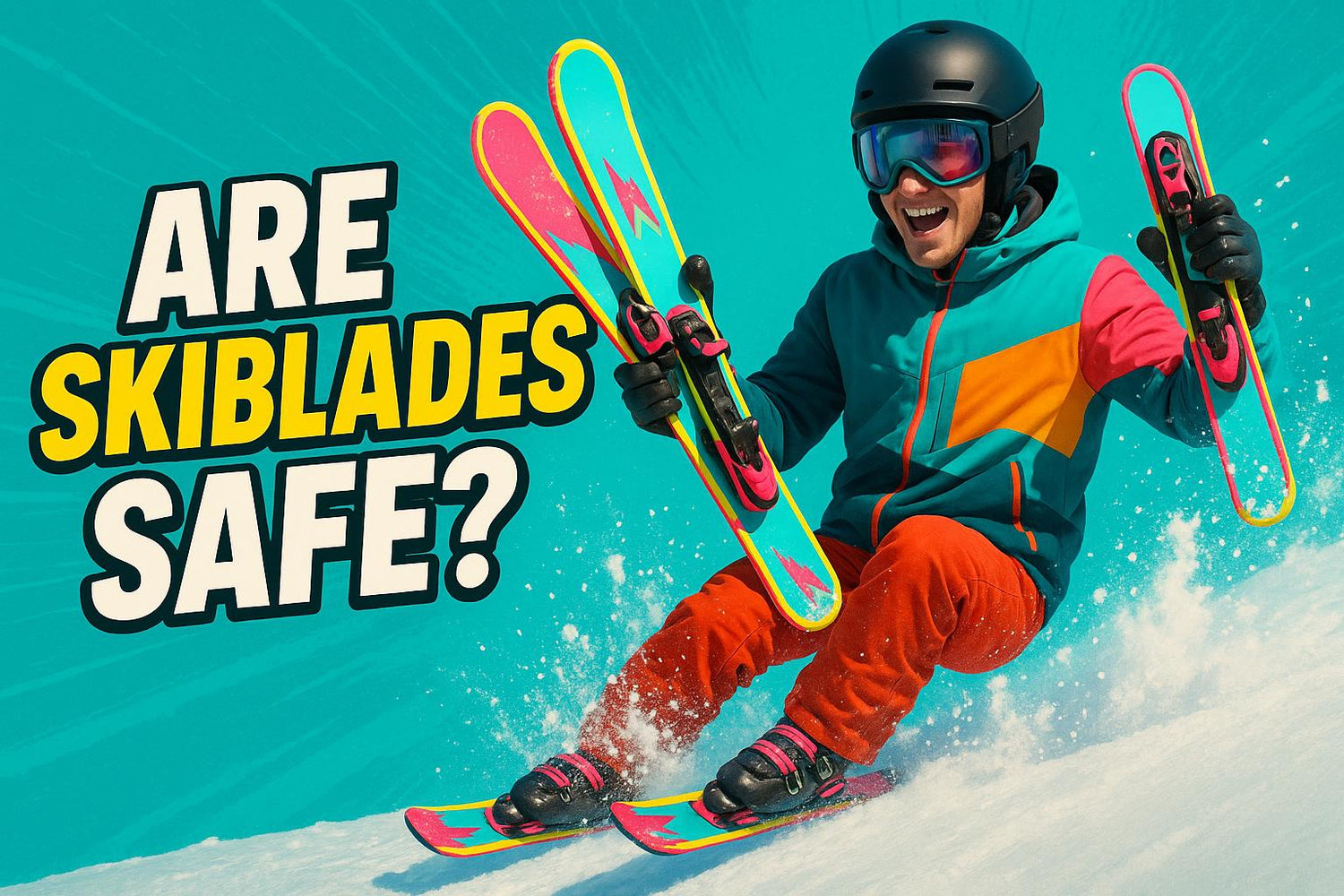
Skiblades er på vei tilbake, og hvis du lurer på om de er trygge, er svaret kort: Ja, det er de – men bare hvis du bruker dem riktig. Disse kortere, lette alternativene til ski er flotte for nybegynnere og tilbyr noen unike fordeler, som bedre kontroll og enklere håndtering. Men, som med alle vintersporter, avhenger sikkerheten av riktig teknikk, riktig utstyr og å kjenne dine egne grenser.
Her er en rask oppsummering:
- Nybegynnervennlig: Kortere lengde gjør dem lettere å balansere og kontrollere.
- Sikkerhetsfunksjoner: Lavere hastigheter, bedre manøvrerbarhet og redusert fallpåvirkning.
- Terrengallsidighet: Flott for preparerte bakker, men ikke ideelt for dyp pudder.
- Viktige tips: Bruk hjelm, sjekk utstyret ditt, og start i lette bakker.
Hvis du er nysgjerrig på skiblades eller vurderer å prøve dem, vil denne guiden hjelpe deg med å skille fakta fra fiksjon og gi deg praktiske tips for å komme deg trygt og selvsikkert ned bakkene.
Er skiblades farlige? - Vinteridrettseksperten
Vanlige myter om skiblades
Det er mye prat om skiblades – hva de kan eller ikke kan gjøre, hvor trygge de er, og hvem de egentlig er for. La oss kutte gjennom støyen og ta tak i de tre største mytene om skiblades direkte.
Myte 1: Skiblades er bare for eksperter
Nei, det stemmer ikke. Faktisk er skiblades ofte perfekte for nybegynnere. Modeller som de fra Snowfeet* er mye kortere enn tradisjonelle ski, noe som gjør dem enklere å håndtere. Tenk på det: når du akkurat har begynt, kan det å håndtere lange ski føles som å bryte med en blekksprut. Skiblades, derimot, er kompakte og hjelper deg med å finne balansen raskere. Det betyr at du kan fokusere på å mestre de grunnleggende svingene og vektforskyvningene uten å føle deg overveldet av klumpete utstyr. De er en flott måte å komme i gang med sporten på uten den bratte læringskurven som lange ski kan gi.
Myte 2: Skiblades er mindre sikre enn tradisjonelle ski
Her er en annen misforståelse som ikke holder vann. Noen bekymrer seg for at den mindre størrelsen eller lettere vekten på skiblades kan gjøre dem mindre stabile eller til og med mer risikable. Men sannheten er at designet deres faktisk gir noen sikkerhetsfordeler. For det første begrenser skiblades naturlig din maksimale hastighet og momentum, noe som kan være en stor fordel i bratt terreng. Tradisjonelle ski, derimot, kan bygge opp mye mer fart – og hvis du ikke er forsiktig, kan det føre til problemer.
En annen bonus? Skiblades er superportable. Å slepe rundt på lange ski i trange områder kan være tungvint – og potensielt farlig hvis du ikke er forsiktig med hvor de svinger. Skiblades, som er lette og kompakte, er mye enklere å bære og håndtere. I tillegg senker det kortere designet tyngdepunktet ditt, noe som kan gjøre fall mindre kraftige. Selvfølgelig, som med alle vintersporter, er riktig teknikk og litt forsiktighet alltid viktig.
Myte 3: Skiblades takler ikke ulike snøforhold
Denne er rett og slett feil. Selv om det er sant at tradisjonelle ski og snowboard er flotte for dyp pudder, er skiblades overraskende allsidige. Snowfeet* tilbyr skiblades i tre størrelser – 65 cm, 99 cm og 120 cm – hver tilpasset ulike forhold og kjørestiler. 65 cm-størrelsen er ideell for trangt, utfordrende terreng. 99 cm-alternativet gir en balanse, og er flott for allsidig ytelse. Og 120 cm skiblades gir ekstra flate, som gir deg mer flyt i dypere snø.
For de fleste rekreasjonsskiløpere som holder seg til preparerte løyper, er skiblades mer enn gode nok. De skjærer jevnt gjennom pakket snø, griper isete partier med letthet, og går sømløst over i forskjellige snøteksturer. Hvis du liker terrengparker, gjør deres kortere lengde spinn og triks mye mer håndterbare – så du kan legge til litt stil på turene dine.
Det er rettferdig å si at skiblades kanskje ikke er det beste valget for dyp pudder i villmarken. Men for den gjennomsnittlige skiløperen som tilbringer dagen på godt preparerte løyper, er de et morsomt, tilgjengelig og praktisk alternativ. I tillegg er de et fantastisk valg for nybegynnere som ønsker å bygge selvtillit og kontroll mens de har det gøy på fjellet.
Fakta om sikkerheten til Skiblades
Nå som vi har ryddet opp i noen vanlige misforståelser, la oss dykke inn i hva som gjør skiblades til et trygt og pålitelig valg for å ta bakken.
Innebygde sikkerhetsfunksjoner i Skiblades
Skiblades er designet med sikkerhet som høyeste prioritet. Deres kortere lengde gir raskere stopp og skarpere svinger, noe som gir deg bedre kontroll og respons. Snowfeet* skiblades er kompatible med standard skistøvler og bindinger, som gir solid ankelstøtte og inkluderer effektive utløsningsmekanismer for å minimere skader ved fall. I tillegg bidrar deres lette konstruksjon til å redusere tretthet, slik at du kan holde kontrollen lenger. Disse gjennomtenkte funksjonene gjør skiblades til et fremragende valg sammenlignet med tradisjonelt skiutstyr.
Skiblades vs. tradisjonelle ski og snowboard
Når du sammenligner skiblades med tradisjonelle ski og snowboard, blir forskjellene i ytelse og praktisk bruk tydelige. Skiblades er langt mer bærbare, noe som gjør dem enklere å bære og håndtere, enten du navigerer i travle skihytter eller tar offentlig transport. Deres kompakte størrelse betyr også strammere kontroll og skarpere manøvrerbarhet, noe som kan være spesielt nyttig for nybegynnere. I kontrast krever tradisjonelle ski ofte bredere svinger på grunn av lengden, og snowboard kan være vanskelig å mestre på grunn av fast posisjon og brattere læringskurve. For alle som verdsetter bekvemmelighet og enkel bruk, er skiblades et utmerket valg.
Riktig bruk og vedlikehold av utstyr
Selv de best designede skibladene må brukes riktig og vedlikeholdes jevnlig for å opprettholde sikkerhet og ytelse. Bruk alltid hjelm - å beskytte hodet er ufravikelig i enhver vintersport. Hvis du nettopp har begynt, vurder å legge til håndleddsbeskyttere eller knærbeskyttere i utstyret ditt for å redusere risikoen for mindre skader ved fall.
Regelmessig vedlikehold er like viktig. Før hver tur, sjekk bindingene, stroppene og andre komponenter for tegn på slitasje eller skade. Å holde skibladene i topp stand betyr også periodisk voksing for å sikre en jevn gli og skarpt kantgrep. Riktig kantpleie er spesielt viktig for å opprettholde kontroll på isete underlag. Hvis du er usikker på vedlikehold, rådfør deg med en profesjonell. Når sesongen er over, oppbevar skibladene på et kjølig, tørt sted borte fra direkte sollys for å unngå skade. Litt omsorg går langt for å holde skibladene trygge og klare for action.
sbb-itb-17ade95
Hvorfor Snowfeet* Skiblades fungerer godt for nybegynnere

Hvis du nettopp har begynt med vintersport, kan Snowfeet* skiblades være ditt perfekte utgangspunkt. De er designet for å forenkle læring og gjøre håndteringen av utstyret ditt enkel - ideelt for alle som er nye i bakkene.
Enkel å lære og kontrollere
Snowfeet* skiblades handler om å gjøre ting enklere for nybegynnere. Deres kompakte størrelse er en revolusjon. 65 cm (26-tommers) modellen er superresponsiv, og hjelper deg med raske svinger og stopp, mens 99 cm (39-tommers) versjonen gir litt mer stabilitet uten å føles klumpete. I motsetning til tradisjonelle ski, som kan virke skremmende med sin lengde og vekt, lar disse kortere skibladene deg fokusere på å bygge selvtillit. I tillegg er deres kortere svingradius en bonus, spesielt når du navigerer på travle nybegynnerbakker. Du trenger ikke den benstyrken eller utholdenheten som langrennsski ofte krever, noe som gjør din første gang i bakken mye mindre skremmende.
Lette og enkle å transportere
En av de store fordelene med Snowfeet* skiblades er hvor lette de er. Tradisjonelle ski kan føles som en treningsøkt bare å bære rundt på, men disse skiblades er designet for å være mye lettere. Det betyr at du kan øve lenger uten å bli utslitt. Og når det er tid for å pakke sammen, gjør deres kompakte størrelse livet mye enklere – de passer fint i bagasjerommet på en bil eller til og med i en stor ryggsekk. Enten du bærer dem fra parkeringsplassen til hytta eller tar en pause mellom turene, vil du sette pris på hvor problemfrie de er. Deres bærbarhet betyr også at du ikke er begrenset til bare én type terreng.
Ytelse på ulike terreng
Bekymret for å bli sittende fast i barnebakken? Snowfeet* skiblades har deg dekket. Både 65 cm (26 tommer) og 99 cm (39 tommer) modellene er flotte for preparerte løyper, og gir deg selvtillit til å gå fra grønne nybegynnerløyper til mer utfordrende blå løyper.
Hvis du føler deg eventyrlysten, åpner 120 cm (47 tommer) modellen enda flere muligheter. Den er laget for å takle turstier og terreng utenfor løypene, slik at du kan utforske vinterlandskap som ville vært utfordrende med tradisjonelle ski. Disse skiblades er tilgivende, så du kan fokusere på å forbedre teknikken i stedet for å stresse med utstyret. Og når du har fått grunnleggende ferdigheter på plass, gjør deres smidighet det enkelt å prøve små hopp eller park-elementer – noe som gir litt ekstra moro i læringsprosessen uten ekstra forpliktelser eller risiko med tyngre, lengre ski.
Praktiske tips for trygg skiblading i 2026
Å starte med skiblades kan virke litt skremmende, men med riktig forberedelse og innstilling vil du suse ned bakkene trygt og selvsikkert på kort tid. Her er en rask guide for å hjelpe deg i gang.
Velge riktig Snowfeet* modell
Å velge riktig Snowfeet* skiblades er nøkkelen til en god start. Hvis du er ny på dette, er 65 cm (26 tommer) modellen et flott valg. Pris $635, den er perfekt for preparerte løyper og snøparker, og tilbyr rask respons som nybegynnere vil sette pris på.
Hvis du allerede er ganske atletisk eller har lett for å plukke opp nye idretter, kan 99 cm (39 tommer) modellen være et bedre valg. Til $675 gir dette alternativet deg mer allsidighet og stabilitet i moderate hastigheter, samtidig som det fortsatt er håndterbart for en som akkurat har begynt. Det er et solid valg som kan vokse med ferdighetene dine.
For de som er mer erfarne og ønsker å ta fatt på turstier eller brattere bakker, er 120 cm (47 tommer) Short Skis - priset til $775 - veien å gå. Men å starte med disse som nybegynner kan føles som å hoppe inn i en racerbil før du har lært å kjøre, så det er best å bygge opp ferdighetene dine først.
Tenk også på kroppsbygning og komfortnivå når du velger. Snowfeet* skiblades er designet for å forenkle valgprosessen, så du slipper å stresse med kompliserte størrelsesguider. Når du har riktig modell, er det på tide å gjøre deg klar for en trygg og morsom opplevelse.
Nødvendig utstyr og forberedelser
Sikkerhet starter med riktig utstyr. En sertifisert hjelm (se etter ASTM F2040 eller CE EN 1077 standarder) er ufravikelig. Kombiner den med vinter- eller snowboardstøvler som gir god ankelstøtte. En av fordelene med Snowfeet* skiblades er at de fungerer med vanlige vintersko, noe som sparer deg for de 1500–4000 kr du vanligvis bruker på spesialiserte skistøvler. Bare sørg for at skoene dine er vanntette og solide.
Lag-på-lag er nøkkelen, men unngå noe for klumpete. Et fukttransporterende innerlag, et isolerende mellomlag og en vanntett ytterjakke holder deg varm og bevegelig. For nybegynnere kan håndleddsbeskyttere være smart siden fall er vanlig, og instinktet ditt kan være å ta imot med hendene.
Beskytt øynene dine med skibriller eller solbriller som blokkerer UV-stråler. Snø reflekterer mye sollys - opptil 80 % - så riktig øyebeskyttelse er et must. Briller beskytter også øynene mot vind og snøsprut når du får opp farten.
Før hver tur, gjør en rask sjekk av utstyret. Se etter løse skruer, hakk eller rust på bindinger og kanter. Vedlikehold er enkelt og rimelig - erstatningsstropper starter på 60 kr, og en voksbehandling koster omtrent 120 kr. Å holde utstyret i god stand sikrer en jevnere og tryggere tur.
Grunnleggende teknikker for førstegangsbrukere
Når du har riktig utstyr og skiblades, er det på tide å ta fatt på bakkene. Start i en grønn sirkel-løype, som er det mildeste terrenget. Bruk de første 30 minuttene på å venne deg til følelsen av skiblades. Gå rundt på flatt underlag, løft en fot av gangen, og kjenn hvordan vekten din skifter.
Når du er klar til å ta din første nedfart, hold knærne bøyd og vekten sentrert. For å svinge, flytt forsiktig vekten til innsiden av den motsatte skiblade-kanten - altså, for å svinge til høyre, flytt vekten til innsiden av venstre skiblade. Det kortere designet til Snowfeet* skiblades gjør dem superresponsive, så små justeringer har stor effekt.
Å stoppe er en avgjørende ferdighet å mestre tidlig. Bruk plogstilling eller "pizza"-posisjonen: pek tærne innover slik at tuppene på skiblades berører hverandre, og la bakenden flares ut i en V-form. Press innsiden av kantene inn i snøen for å bremse. Takket være det lette og kompakte designet til Snowfeet* skiblades, er denne teknikken enklere og mindre slitsom sammenlignet med tradisjonelle ski. Øv på å stoppe hver 6–9 meter til det føles naturlig.
Hvis du begynner å få fart og føler deg nervøs, motstå trangen til å lene deg bakover - det vil faktisk gjøre at du mister kontrollen. Bøy heller knærne mer og hold vekten fremover. Det responsive designet til skiblades gjør raske korrigeringer mulig, så riktig kroppsstilling er din beste venn.
Ta pauser hver 45.–60. minutt. Tretthet kan ødelegge teknikken din og øke risikoen for fall. Heldigvis er Snowfeet* skiblades lette å bære, så det er enkelt å gå tilbake til hytta eller hvile på sidelinjen. Mens du hviler, se hvordan andre navigerer bakkene – du kan plukke opp noen ekstra tips.
Til slutt, vurder å ta en nybegynnerleksjon. For 80 til 120 dollar kan en to-timers gruppetime lære deg viktige ferdigheter som vektfordeling, kantkontroll og hvordan du håndterer ulikt terreng. Det er en verdifull investering som kan fremskynde læringsprosessen din.
Hold deg til å øve i samme bakke til du har bygget opp selvtillit og muskelminne. Med Snowfeet* skiblades er læringskurven kortere enn med tradisjonelle ski, men tålmodighet er fortsatt nøkkelen. Ta deg tid, og du vil se merkbar fremgang selv i løpet av en enkelt økt.
Konklusjon
Skiblades er et morsomt, trygt og tilgjengelig alternativ – spesielt hvis du starter med Snowfeet* produkter. Ideen om at de er risikable eller bare egnet for eksperter holder ikke når du ser på fakta. Deres kortere lengde gjør dem enklere å håndtere, noe som hjelper deg å bygge selvtillit og forbedre deg raskere sammenlignet med tradisjonelle ski.
Snowfeet* skiblades tar disse fordelene til neste nivå med sine smarte design og praktiske funksjoner for nybegynnere. Enten du velger den kompakte 65 cm modellen for preparerte løyper, den tilpasningsdyktige 99 cm varianten, eller 120 cm Short Skis for å takle mer avansert terreng, velger du utstyr som er laget for å yte. I tillegg er bærbarheten en revolusjon. Kast skiblades i en ryggsekk, ta stolheisen eller gå til et område utenfor løypene – prøv å gjøre det med lange, klumpete ski!
Hvis du har vært usikker på om du skal prøve vintersport, er dette det perfekte tidspunktet å kaste seg ut i det. Skiblading har aldri vært mer tilgjengelig, med forbedret utstyr, et voksende fellesskap og mange muligheter til å nyte bakkene eller lokale løyper. Start med de riktige Snowfeet* skiblades for ditt ferdighetsnivå, ta på deg en sertifisert hjelm og solide støvler, og ta det rolig i milde bakker for å mestre det grunnleggende. Før du vet ordet av det, vil du skjære svinger og føle deg trygg på snøen.
Vintersport trenger ikke å være overveldende eller koste en formue. Snowfeet* skiblades viser at kortere ski kan bety mer moro, mer frihet og en enklere måte å nyte bakkene på. Denne friske tilnærmingen til vinterutstyr åpner sporten for nykommere, og gjør det tryggere og mer spennende for alle å komme seg ut i snøen.
Ofte stilte spørsmål
Er skiblades tryggere og enklere for nybegynnere sammenlignet med tradisjonelle ski?
Skiblades er et flott alternativ for nybegynnere fordi de er enklere å håndtere og gir en tryggere læringsopplevelse enn tradisjonelle ski. Deres kortere lengde gjør svinging lekende lett og hjelper deg med å mestre grunnleggende skiteknikker uten å føle at du er over hodet på det.
Tradisjonelle ski kan føles klumpete og vanskelige å håndtere, spesielt for nybegynnere. Skiblades, derimot, er lette og enkle å bære, noe som gir deg mer frihet til å bevege deg i bakken. For nybegynnere betyr dette at du kan bygge selvtilliten raskere og begynne å nyte moroa med ski uten den bratte læringskurven som følger med lengre ski.
Hvordan kan jeg vedlikeholde skiblades for å holde dem trygge og i topp stand?
For å holde skiblades i toppform og yte som en drøm, her er noen enkle vedlikeholdstips å følge:
- Sjekk dem før hver tur: Gi skiblades en rask sjekk før du bruker dem. Se etter dype riper, løse skruer eller bindinger som kan være slitt. Å oppdage problemer tidlig kan spare deg for trøbbel senere.
- Hold kantene skarpe: Skarpe kanter betyr bedre kontroll og tryggere svinger. Bruk fil eller stein for å vedlikeholde dem regelmessig.
- Voks dem opp: Et ferskt lag med voks hver 4.–6. dag i bakken holder skiblades glidende jevnt og beskytter basen mot slitasje.
- Still inn bindingene: Sørg for at bindingene er justert slik at de sitter tett og sikkert på støvlene dine. Det er en liten detalj som gjør stor forskjell.
- Oppbevar dem riktig: Når du ikke er i bakken, oppbevar skiblades på et kjølig, tørt sted uten direkte sollys. Hvis du skal legge dem bort en stund, påfør et tykt lag med voks for å hindre at basen tørker ut.
Litt omsorg går langt. Med disse tipsene holder du skiblades i topp stand og får jevnere, tryggere turer i fjellet!
Kan skiblades takle forskjellige snøforhold, og hvilke typer terreng passer de best for?
Skiblades er laget for å takle ulike snøforhold, og ytelsen avhenger i stor grad av lengden. Hvis du sikter på 65 cm skiblades, er disse dine go-to for preparerte bakker og hardpakket snø. De er et solid valg for nybegynnere eller alle som elsker presisjon og tett kontroll.
Et steg opp, 99 cm skiblades er et allsidig mellomvalg. De er flotte for carving på preparerte løyper, cruising gjennom moderat pudder, og til og med for å gjøre hopp og triks i terrengparken. Hvis stabilitet er det du er ute etter, spesielt i lett til moderat pudder eller på brede, åpne preparerte løyper, gir 120 cm skiblades en jevn og balansert tur.
Sammenlignet med tradisjonelle ski er skiblades enklere å håndtere, lettere å bære, og gir nybegynnere et selvtillitsløft med bedre kontroll. Takket være deres kompakte størrelse og lette konstruksjon er de et morsomt og praktisk valg for å utforske ulike terreng uten å føle seg tung.











Legg igjen en kommentar
This site is protected by hCaptcha and the hCaptcha Privacy Policy and Terms of Service apply.