



















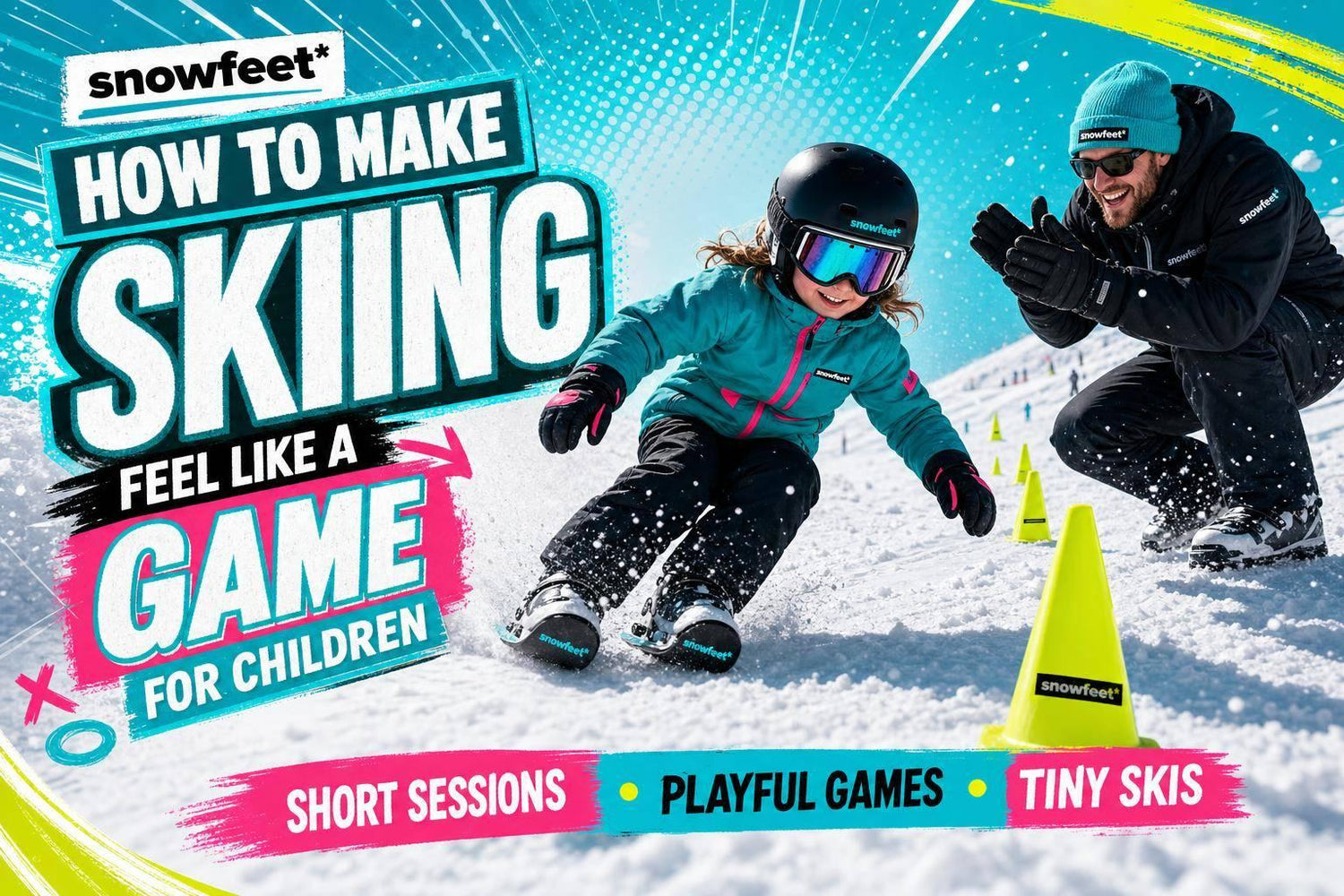
Kids learn skiing faster when it feels like play. If I want a child to enjoy the slope, I keep sessions short, use easy games like Red Light, Green Light and follow-the-leader, and put them on short gear they can control without a fight.
Here’s the short version:
- Games beat long instruction for young kids
- Short snow gear is often easier for beginners to turn, stop, and carry
- Practice at home first so boots and stance don’t feel weird
- Warm, dry kids last longer on snow
- Short sessions work best - a common rule is one run per year of age
- Simple rewards and clear rules help keep the day on track
A few points stood out to me:
- Play-based ski learning helps kids work on balance, stopping, and turning one step at a time
- First lessons should stay short, often 1–2 hours max
- Helmet use, green runs, and rest breaks should be non-negotiable
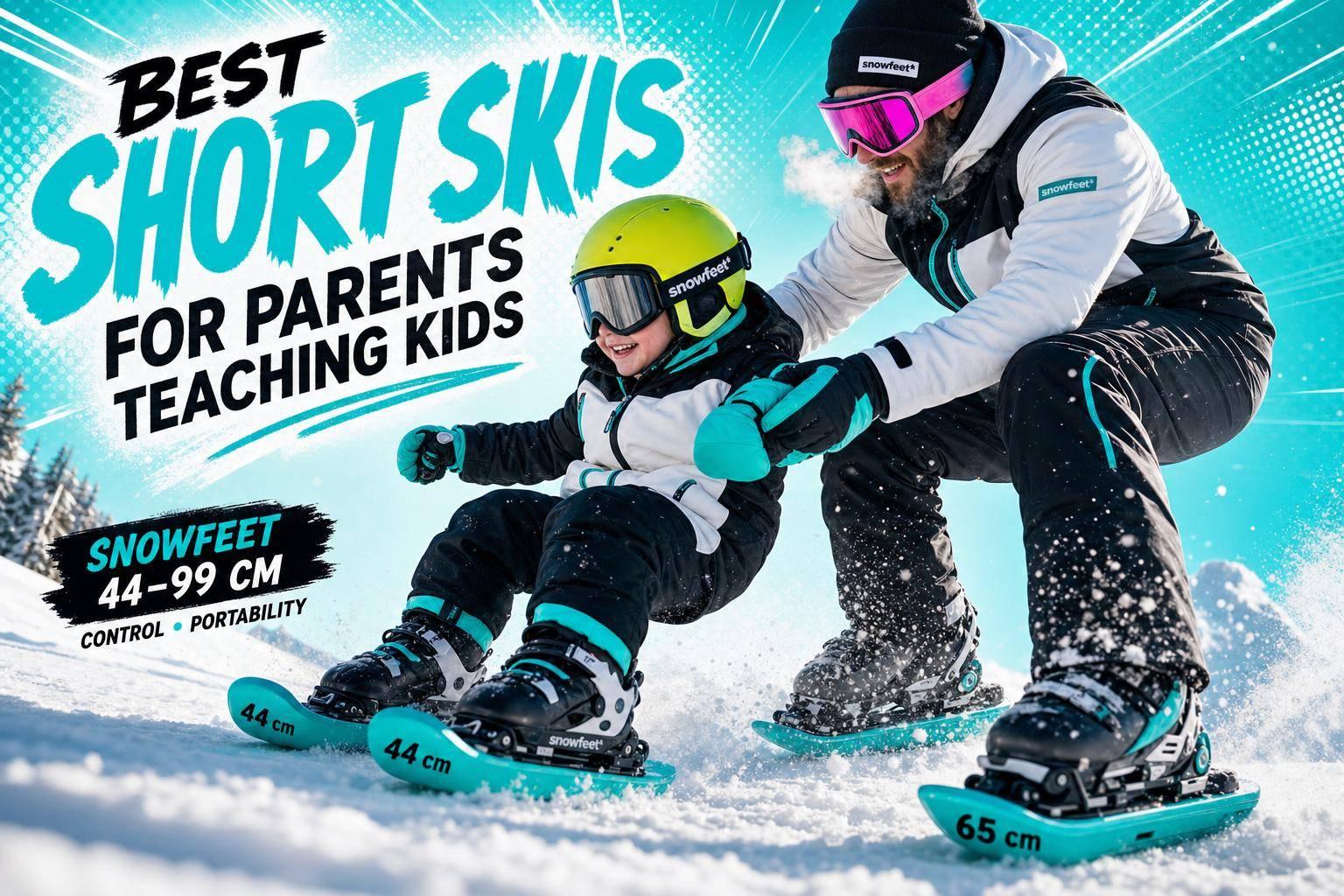
- Snowfeet* models range from MINI KIDS to 65 cm Skiblades, with each one fitting a different age and comfort level
If you want skiing to feel less like school and more like a snow-day mission, the formula is simple: light gear, tiny goals, lots of smiles, and stop before the meltdown starts :)
For a fast visual guide, these videos can help:
So, if I had to sum up the whole article in one line, it’d be this: make the hill feel like a playground, and kids are far more likely to learn well and want to come back.
How to Choose the Best Skis for Kids
Get Kids Ready for Snow Games Before You Hit the Slope
A little prep at home goes a long way. It helps kids settle in faster because their gear, movements, and snow games already feel familiar. The goal isn’t formal teaching. It’s just helping everything feel normal before the hill comes into the picture.
Next, help kids get used to their gear before they ever touch the snow.
Build Excitement at Home Before the Trip
Skip the word “lesson.” Frame it like an adventure instead. Kids usually respond much better to games, small challenges, and playful names.
Use simple, kid-friendly terms for moves. Call the snowplow stop “Magic Pizza” and the glide position “Fries.” It sounds silly, sure, but that’s kind of the point. Kids remember fun names way faster than stiff ski terms.
Practice Gear and Movement Indoors First
Keep practice short and light. A few fun minutes is plenty.
Let kids stomp around in their boots on carpet or flat ground so the weight and clunky sound don’t feel weird later. Then have them try a basic ski stance on carpet or another soft surface: knees bent, weight a bit forward. Nothing fancy. Just enough to make the position feel less strange.
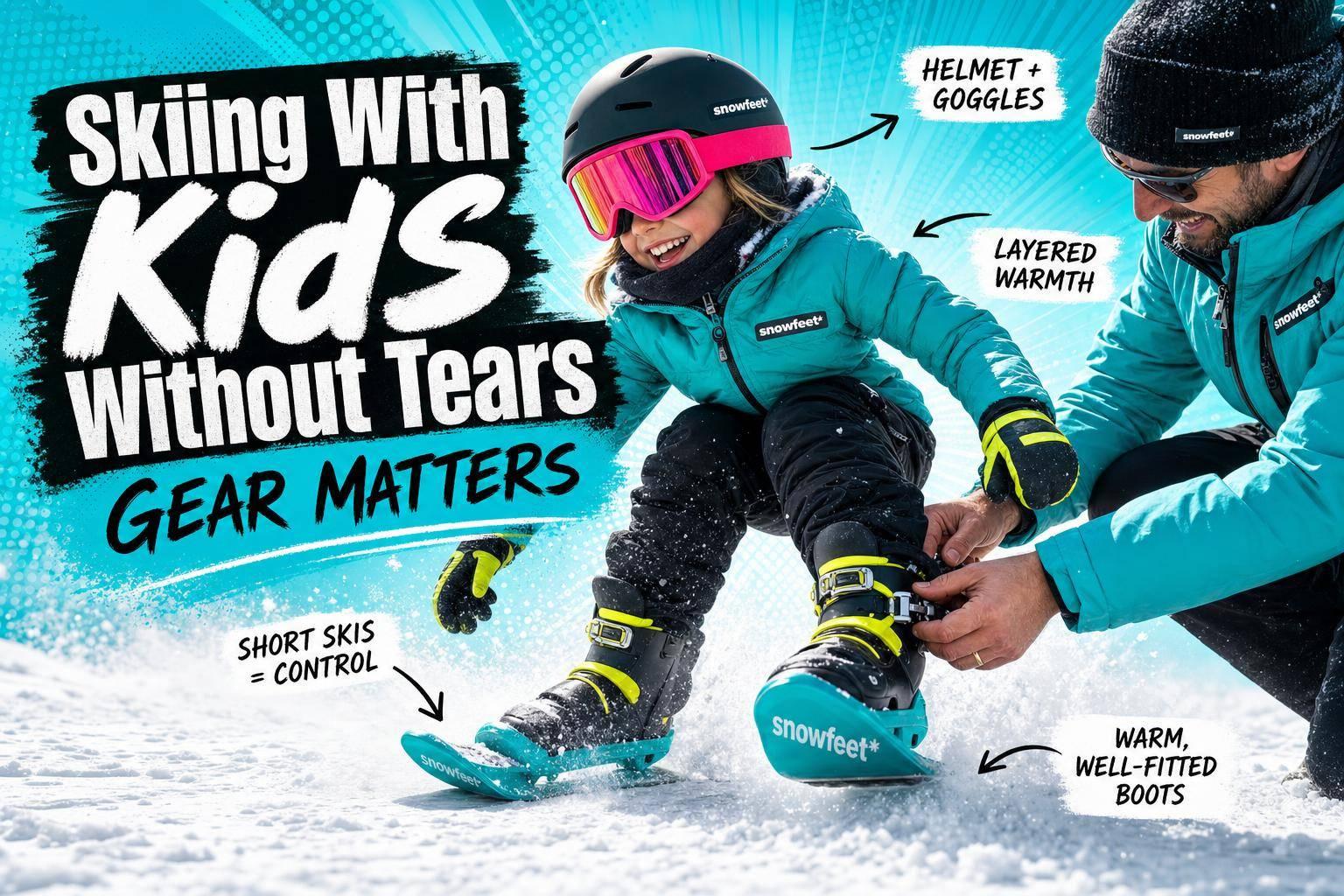
Snowfeet* works well here because kids can practice in the same winter or snowboard boots they’ll wear on the hill. That lighter setup can make sliding feel more natural than bulky long skis.
Once the gear starts to feel normal, the next job is simple: keep them warm and dry so the fun doesn’t crash after ten minutes.
Dress for Comfort in Typical US Winter Conditions
Cold toes and wet mittens can end a ski day in a hurry. If kids are cold, the games are over. No pep talk on earth beats dry gloves and warm hands :)
Pack the basics that help them stay out longer:
- Extra mittens
- A moisture-wicking base layer
- An insulating mid-layer
- A waterproof shell
- Hand warmers
- A warm snack
For beginners, fit and comfort matter more than a stiff feel.
With gear on, bodies warm, and expectations kept simple, you can head straight into easy slope games.
Pick Gear That Makes Games Easier, Safer, and More Fun
Snowfeet Kids Gear Guide: Best Model by Age & Skill Level
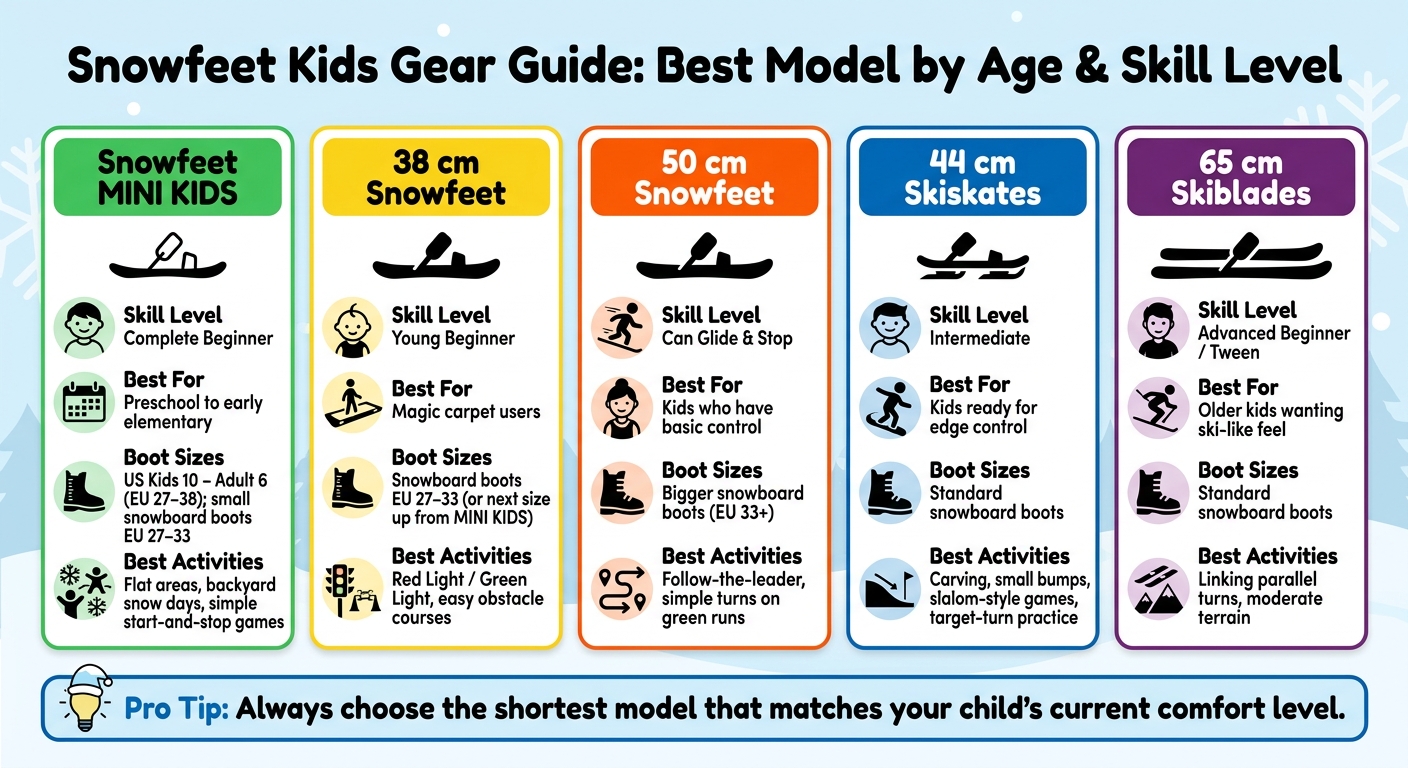
Short gear makes ski games easier, safer, and, honestly, a lot more fun. It’s easier to handle, less awkward to carry, and tends to feel less scary for kids. Once you’ve got that part dialed in, the next move is simple: match the model to your child’s age, comfort level, and the kinds of games they like best.
Best Snowfeet* Options by Age and Skill Level

Picking the right model for your child can make a big difference.
- Snowfeet MINI KIDS - best for preschool to early elementary beginners. Great for flat areas, backyard snow days, and simple start-and-stop games.
- 38 cm Snowfeet - a good fit for young beginners using magic carpets. Works well for Red Light, Green Light and easy obstacle courses.
- 50 cm Snowfeet - for kids who can already glide and stop. Nice for follow-the-leader games and simple turns on green runs.
- 44 cm Skiskates - a smart next step after basic balance and stopping. They give more edge grip for carving, small bumps, and slalom-style games.
- 65 cm Skiblades - a better match for older kids and tweens who want more of a ski-like feel. Good for linking parallel turns on moderate terrain.
Snowfeet* vs. Kids' Skis and Snowboards
Kids' skis and snowboards can be tougher to turn, carry, and use in games. That’s where Snowfeet* stands out. These models are lighter and shorter, so kids can react fast. Quick pivots, sudden stops, and fast direction changes feel much easier.
That matters more than it may seem. If you’re setting up an obstacle course or a treasure hunt, gear that turns without a fight makes the whole thing run better. Less wrestling with equipment, more actual fun :) It also makes the slope games in the next section much easier to set up.
Boot Compatibility and Basic Sizing Guide
The MINI KIDS model fits waterproof winter shoes from US Kids size 10 up to Adult size 6 (EU 27–38). Small snowboard boots in EU 27–33 also work with MINI KIDS. Bigger snowboard boots need the 38 cm or 50 cm Snowfeet models.
The 44 cm Skiskates and 65 cm Skiblades are better for kids who are ready for more speed and stronger edge control. As a rule, go with the shortest model that still matches your child’s current comfort level.
Once the gear starts to feel natural, it’s time to use it in simple slope games that build balance and turning.
sbb-itb-17ade95
On-Slope Games That Teach Real Ski Skills
Once the gear feels good, the slope turns into a playground. And that’s where a lot of the learning starts to click. These games are easy to set up on beginner terrain, but they do more than keep kids busy. They teach actual ski skills like balance, stopping, and turning. With short, easy-to-handle gear, kids can learn by doing instead of standing around listening to a long speech.
Balance and Starting Games for Flat Ground
Start on flat snow. No downhill yet. Just let kids get used to moving around.
Have them see who can make the most prints in a row by stomping through the snow. It sounds silly, but it gets them moving, helps with balance, and builds comfort before any sliding begins.
Then try Red Light / Green Light. Call out "green light" when it’s time to glide and "red light" when it’s time to stop with a wedge stop, with tips together and tails apart. This gives kids a simple way to practice starting and stopping without overthinking it. The 38 cm and 50 cm Snowfeet* make this easier on flat ground.
Once they can start and stop with some control, you can move into easy turning games.
Turning Games and Target Practice
On a gentle slope, Follow-the-Leader is a solid pick. A parent or instructor goes first and uses slow, exaggerated movements while the child copies the path. Think big, clear motions. One idea at a time works best here, so kids don’t get overloaded.
For target-turn practice, put something easy to spot in front of them, like a bright mitten, a stuffed animal, or a trail sign, and say, "Turn toward the green frog." That cue helps in a simple way: kids usually go where they look. Use 44 cm Skiskates or 65 cm Skiblades for easier turn practice.
After that, it helps to keep things playful with treasure hunts and easy obstacle runs.
Treasure Hunts and Obstacle Courses
Scatter soft items like mittens or small stuffed animals on a gentle slope and ask kids to pick them up while gliding slowly. It keeps them moving and gets them making small balance fixes on the fly.
You can also set up a basic obstacle course with cones or mittens as targets and ask kids to turn toward each one in order. It’s simple, fun, and sneaks in a lot of practice without stopping for a full lesson every 30 seconds.
Keep the runs short and upbeat; next comes rewards and safety rules.
Keep Kids Motivated With Short Sessions, Rewards, and Clear Safety Rules
Keep sessions short. A good rule is one run per year of age, then call it a day while kids still want more. That little trick works because it keeps skiing fun instead of turning it into a grind. If you stop before they’re wiped out, there’s a much better shot they’ll be excited to come back.
Once the run count stays short, rewards can help each try feel like a win.
Simple Rewards That Work on the Mountain
Reward the effort, not just the end result. Say things like, "You kept trying that turn" or "You slowed down with your pizza." That kind of praise shows kids that trying counts. And yep, small treats still work like magic: hot chocolate, a sticker, or a warm snack after a good moment can go a long way.
After motivation is rolling, set a few clear rules so the fun doesn’t drift into chaos.
Set Clear Safety Boundaries on Beginner Terrain
Set a few non-negotiable rules. Simple boundaries help the day stay fun longer.
- Use a ski helmet certified for snow sports.
- Stay on green runs and flat practice areas until stopping and turning are consistent.
- Have bindings set by a ski shop for the child’s weight and skill.
Check hands, feet, and energy levels often. Cold toes and tired legs can end the party fast. Keep first lessons to 1–2 hours at most, with frequent breaks.
The 38 cm and 50 cm Snowfeet* models are easier to carry and manage during breaks than long skis. Short Snowfeet* gear also makes short sessions easier to repeat. That matters, because when gear feels less awkward, kids usually stay more relaxed.
Conclusion: Small Games and Short Gear Build Better Ski Days
Play beats pressure. Short sessions, clear rules, and small rewards help kids stay into it. Pair that with short, easy-to-control gear like Snowfeet* Mini Ski Skates, Skiskates, or Skiblades, and skiing feels much less intimidating from the start.
FAQs
What age can kids start skiing this way?
Kids can often start with this game-based, gear-focused style as early as age 3.
For ages 3–6, Snowfeet MINI KIDS keeps things light, easy to handle, and fun. The best part? Kids can use them with regular winter boots.
As they gain confidence from ages 6 to 10, they can step up to bigger, steadier options like Snowfeet PRO or Skiblades.
How do I know which Snowfeet* model fits my child?
Pick the model that matches your child’s age, weight, and skill level.
- 38 cm Snowfeet MINI KIDS: best for ages 3–6 and 22–44 lbs
- 44 cm Skiskates: a good fit for kids ages 6–10 or kids who feel more confident on snow
- 65 cm Skiblades: the next step if your child wants more speed, steeper terrain, or extra stability
One of the nicest parts? Unlike old-school ski gear, all Snowfeet* models strap onto your child’s existing winter boots.
What should I do if my child gets scared or frustrated?
If your child gets scared or frustrated, back off right away. Head to a flatter, easy area and swap drills for light, playful sliding games.
A lot of the time, the cause is simple: cold toes, hunger, or gear that just feels off. Take a snack or hot chocolate break, warm up, and if needed, call it a day while things still feel good. Then try again another day.
Light, easy-to-handle gear like Snowfeet can also help cut down on exhaustion.











Legg igjen en kommentar
This site is protected by hCaptcha and the hCaptcha Privacy Policy and Terms of Service apply.