



















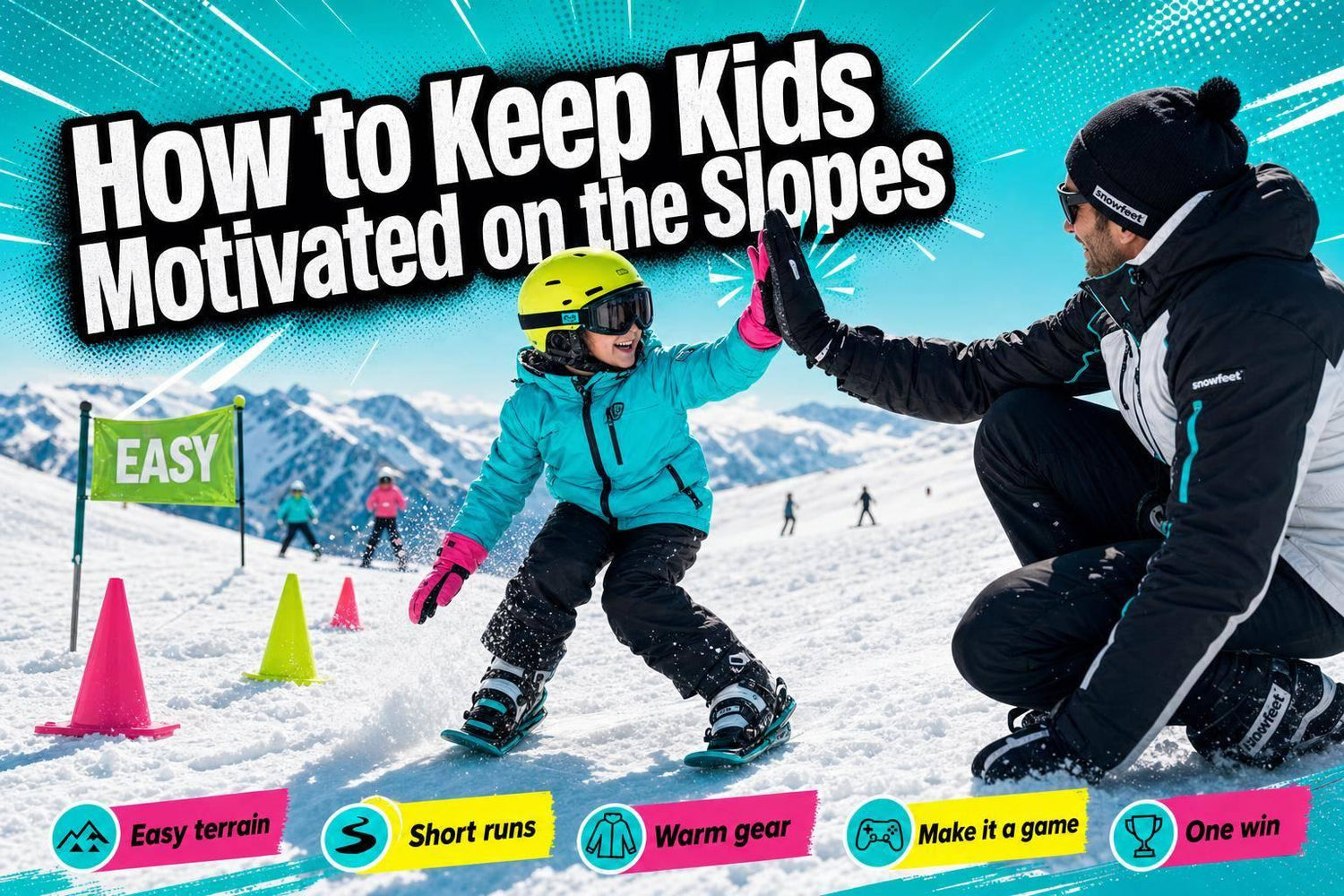
If I want kids to enjoy ski days, I keep it simple: easy terrain, short runs, warm gear, fun games, and one small win at a time. That’s what keeps fear low and confidence up.
Here’s the short version:
- Start on easy, quiet beginner terrain
- Use short sessions and plan breaks before kids crash
- Turn practice into mini-games, not long lessons
- Praise one clear thing they did well each run
- Pick gear that feels easier to control
- End the day while they still want one more run
A lot of kids don’t quit because they’re worn out. They quit because they feel cold, stuck, or nervous. So, I’d focus less on perfect form and more on making the day feel fun, safe, and doable from run one.
If I were helping a parent at the ski shop, that’s the playbook I’d hand over. Nice and simple. No drama. Fewer mitten-related crises :)
The ultimate fun skis for kids. 🎿
Quick Comparison
| Setup | Feel for beginners | Turning | Learning pace | Best fit |
|---|---|---|---|---|
| Snowfeet* Skiskates 44 cm | Easy to control | Tight, playful turns | Fast | Kids with hockey, ice skating, or inline skating background |
| Snowfeet* Skiblades 65 cm | More stable than skiskates | Smooth, short carving turns | Fast | Kids who want a ski-like feel with less bulk |
| Standard skis | Harder at first | Longer turns | Slower | Kids who plan to stay with full ski setup |
| Snowboard | Tough at the start | Needs edge control | Slower at first | Kids set on snowboarding |
A couple of helpful video ideas if you want a visual before your next trip:
Bottom line: if the first day feels easy, kids are much more likely to want day two.
Make the first runs feel easy
Start on terrain that feels easy and predictable.
Lower fear with simple terrain and clear expectations
Use a magic carpet instead of a chairlift. Pick a quiet beginner slope, not a crowded one. The idea is simple: cut down surprises before the first run even begins.
Tell kids what’s coming next. One easy run, then a break. That kind of clear, calm plan helps kids feel more in control, which can keep fear from taking over.
And here’s a good move: end the first session while they still want more.
Once they feel safe and settled, move right into playful practice.
Stop discomfort before it becomes a meltdown
Cold hands and wet socks can wreck motivation in a hurry. So before you head out, do a fast comfort check:
- Warm, waterproof mittens
- Properly fitted goggles
- Dry socks
- A bathroom stop before the lift
Pack a spare pair of dry gloves in your bag too. Small item, big save for the day.
Bring a small snack for a fast energy boost. Use the lodge or the car for warm, short breaks. If a kid gets quiet, starts shivering, or looks low on energy, that’s your sign to warm up.
With comfort handled, the next step is keeping runs short and fun.
sbb-itb-17ade95
Turn practice into games instead of drills
Turn each skill into a game, and kids will usually ask for one more run instead of checking out. That simple switch makes skiing feel fun, safe, and doable. The goal becomes the game itself, not the lesson hiding behind it.
Use mini-challenges on each run
Give kids one short challenge per run - about 30 seconds to 3 minutes - so they stay locked in and don’t get worn out.
Use one game per run, not a full lesson. Keep it light and simple.
| Mini-Challenge | What It Builds | How to Play |
|---|---|---|
| Red Light, Green Light | Stopping & speed control | Call out red light and have kids stop on command |
| Human Slalom | Turning & agility | Weave around cones or poles |
| Mirror Game | Balance & body position | Kids copy your movements - lean, crouch, reach - while gliding |
| Speed Zones | Speed regulation | Mark slow and fast zones |
| Cross the River | Gliding & weight shift | Glide across a marked lane |
Let the child pick the game or choose the movement you mimic. That bit of control matters. It puts them in the driver’s seat, takes some pressure off, and makes them more willing to give it a shot.
Celebrate one small win at a time
After each run, point out one specific win. Say what got better in plain words. Specific praise helps kids see what worked.
For example:
- “You stopped right when I said red light.”
- “Your turns looked smoother that run.”
- “Nice job staying balanced across the lane.”
Start with the movement you want to see, then build a simple game around that instead of trying to squeeze a skill into some random game. That keeps things clear for you and for the kid. And when they know what went right, they’re more ready for the next run.
If a child still feels stuck, easier-to-control gear can help the next game click faster.
Choose gear that helps kids feel in control faster
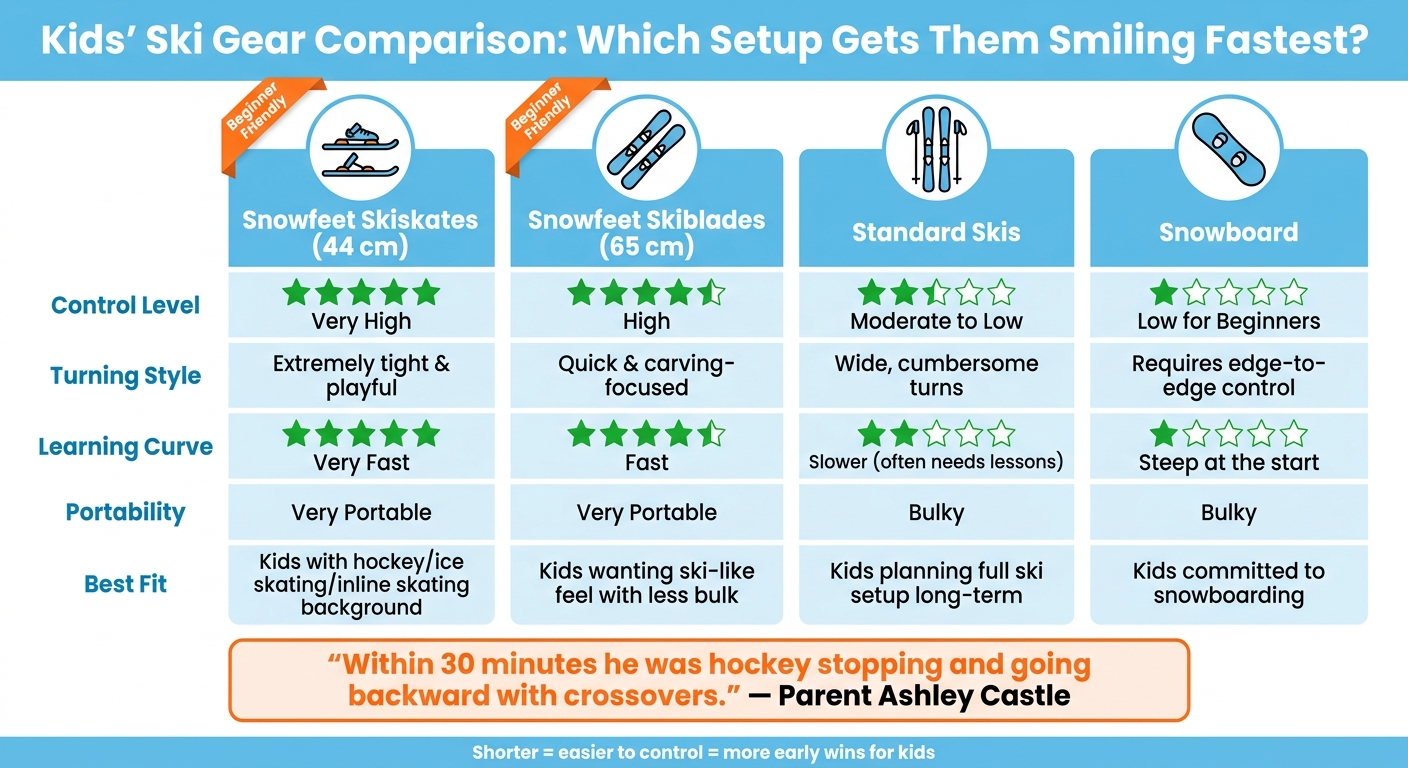
Kids' Ski Gear Comparison: Skiskates vs Skiblades vs Skis vs Snowboard
If games still feel hard, the gear may be the part that’s holding things back. When kids can turn and stop with less effort, they get those early wins fast. And those wins matter a lot. They keep kids smiling, trying again, and wanting one more run.
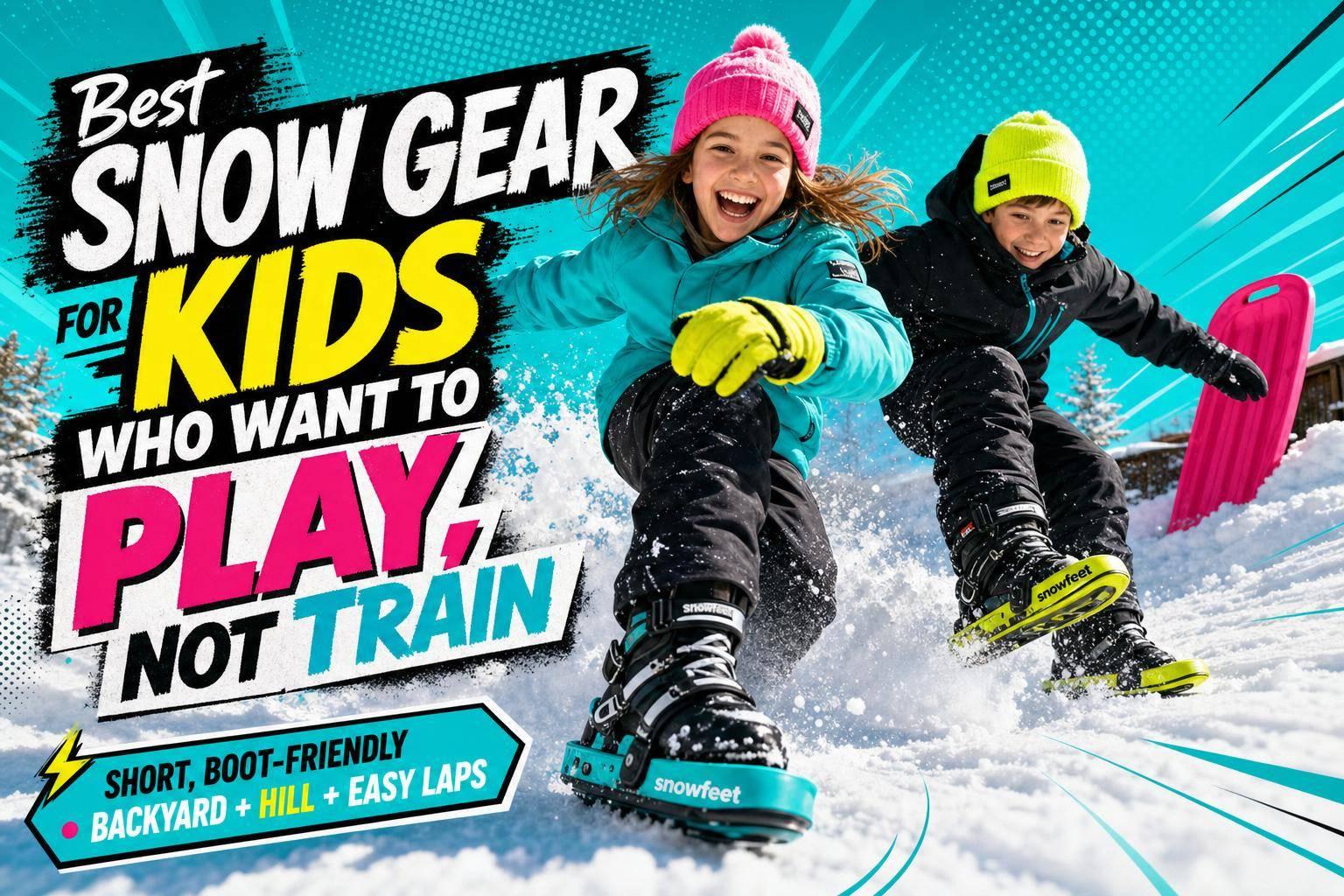
Why Snowfeet* can be more motivating than standard skis or snowboards

Long skis can feel tough for beginners. They’re harder to manage, and those big turns can make a simple run feel like work. Snowboards can be even rougher at the start. A lot of kids spend more time fighting for balance than having fun.
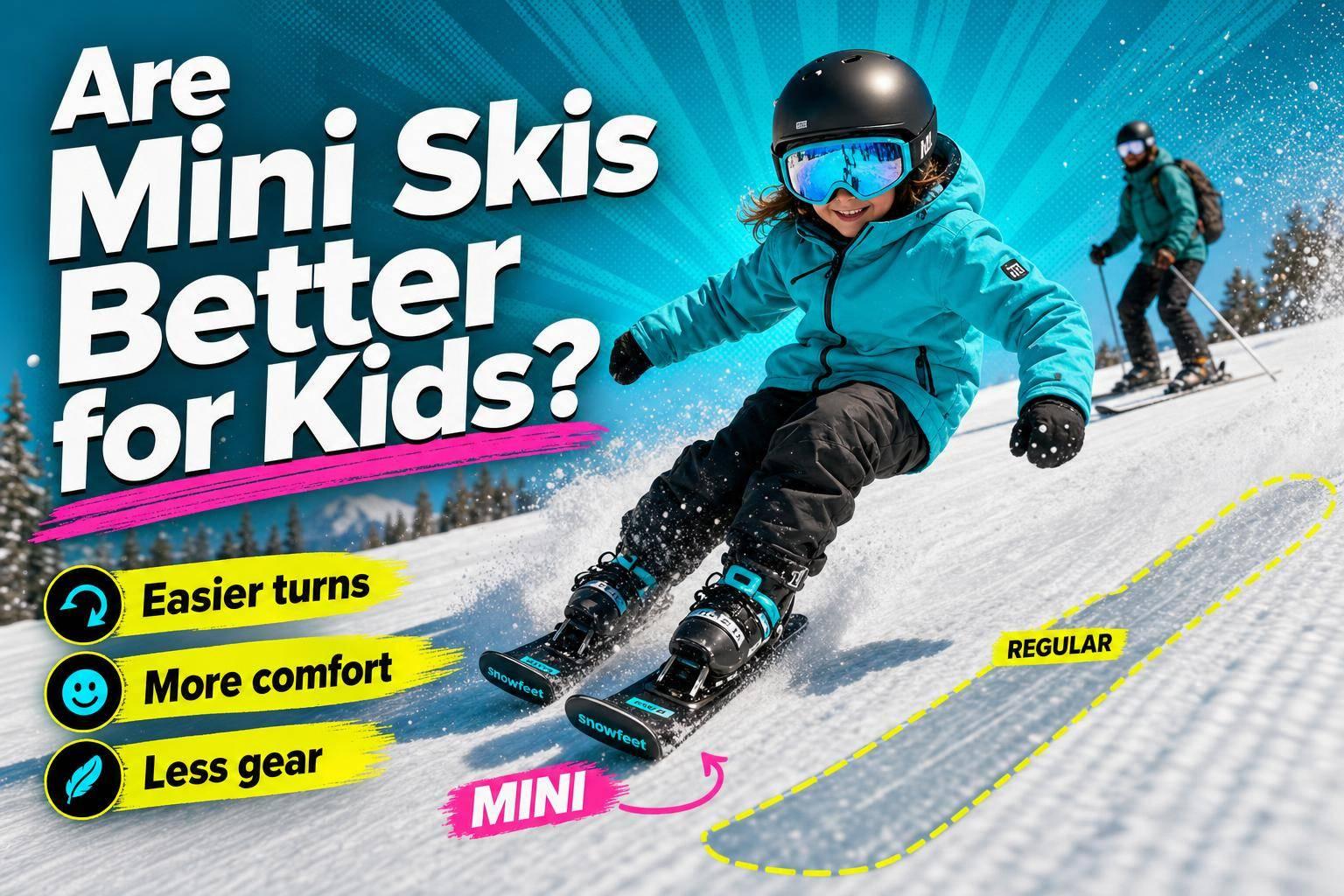
Snowfeet* Skiskates (44 cm) and Skiblades (65 cm) go the other way. They’re short and light, so kids can turn, recover, and stop with less fuss. That means fewer long, awkward arcs and more “Hey, I did it!” moments.
The movement also feels closer to ice skating or inline skating, which many kids already know. That familiar feel can cut down fear fast. Falls tend to feel less clumsy too. And both models come with metal ski edges and easy stopping.
Snowfeet* Skiskates 44 cm, Snowfeet* Skiblades 65 cm, and standard setups compared
Here’s a simple side-by-side look at control, learning speed, and kid appeal.
| Feature | Skiskates 44 cm | Skiblades 65 cm | Standard Skis | Snowboards |
|---|---|---|---|---|
| Control | Very high | High | Moderate to low for beginners | Low for beginners |
| Turning | Extremely tight and playful | Quick and carving-focused | Wider, more cumbersome turns | Requires edge-to-edge control |
| Learning Curve | Very fast | Fast | Slower; often requires lessons | Steep at the start |
| Portability | Very portable | Very portable | Bulky | Bulky |
Parent Ashley Castle shared what happened when her 10-year-old hockey player tried them:
"Within 30 minutes he was hockey stopping and going backward with crossovers."
Match the gear to the child's confidence level
Skiskates 44 cm make the most sense for kids who already skate, like hockey players, ice skaters, or kids who’ve spent time on inline skates. The front-to-back balance feels familiar right away, and the quick, playful feel keeps things fun.
Skiblades 65 cm are a better pick for kids who want something closer to skiing, but without the bulk of standard skis. They give more stability for carving and can help kids feel in charge sooner, even if they don’t come from a skating background.
If a child hates stiff ski boots, there’s good news. Both Snowfeet* models can be used with snowboard boots, which may feel better for younger kids. Less foot pain usually means more energy, fewer complaints, and a better shot at ending the day on a high note.
Once the gear starts to feel natural, keep the day short and set one goal for the next run.
Break the day into short goals and end on a high note
Once the gear feels easier to control, the next step is pacing the day so kids stay sure of themselves. Keep the day manageable. Short goals and planned breaks help stop frustration before it starts and keep kids into it. When the gear is easy to handle, these small goals tend to click faster.
Set one small goal for the next run
Skip the long lesson. Give your child one goal before each run: three turns, a stop before the lift line, or a landmark to reach. Each run should feel like one winnable mission, not a big test.
Small, easy-to-see targets make progress feel real. Kids can tell when they did the thing, and that matters. A lot. It keeps the mood light and gives them a reason to want one more run.
Plan breaks before kids ask for them
Don’t wait for the meltdown. Plan rest stops before your child asks for one, then stick to that plan instead of waiting for things to go sideways.
Call the break before tired legs turn into frustration. A short stop, a snack, or a few quiet minutes can save the whole day. Honestly, this is one of those little parenting moves that pays off fast :)
Conclusion: Keep snow days fun, simple, and worth repeating
End with a small win, and kids leave tired in a good way - ready to come back tomorrow.
FAQs
What if my child is scared to ski?
If your child feels scared to ski, keep the focus on comfort and fun. That’s the whole game.
Start on flat ground or a very gentle slope. Let them get used to sliding a little without that big, “uh oh, this is fast” feeling. Small wins matter a lot here.
Make sure they’re warm, comfortable, and feel safe. Cold kids don’t want to learn. They want hot chocolate :)
Keep things playful. Turn it into a game, take short breaks, and don’t push if fear pops up. If they get nervous, slow it down and move to easier terrain. There’s no prize for rushing.
Kid-friendly gear can help too. Snowfeet* Skiskates or Skiblades may feel less scary and easier to control than standard skis or snowboards, which can make those first runs feel a lot more doable.
How long should a ski session be for kids?
A typical ski session for kids should last about 2 to 3 hours.
Most of these sessions happen in the morning. That timing tends to work well because kids usually have more energy early in the day.
It also helps to build in short breaks for rest and snacks. A quick pause can go a long way. It keeps kids fueled, comfortable, and ready to get back out there with a smile.
Are Snowfeet* easier for beginners than skis?
Yes. Snowfeet* are usually easier for beginners than skis.
Why? They feel more natural right away. The movement is closer to ice skating or inline skating, so many new riders find their balance faster and feel less awkward on snow.
They’re also lightweight and much less bulky than ski gear. That matters a lot when you’re just starting out. Skis can feel long, heavy, and a bit clumsy at first. And, yeah, they take more time to get used to because of the extra size and the technique involved.











Legg igjen en kommentar
This site is protected by hCaptcha and the hCaptcha Privacy Policy and Terms of Service apply.