




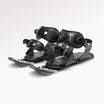
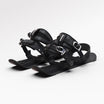
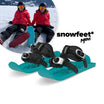
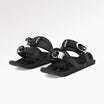
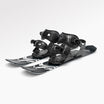
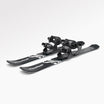
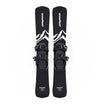
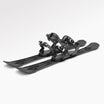
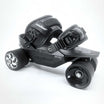
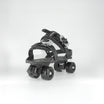
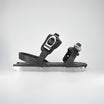
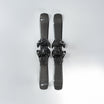
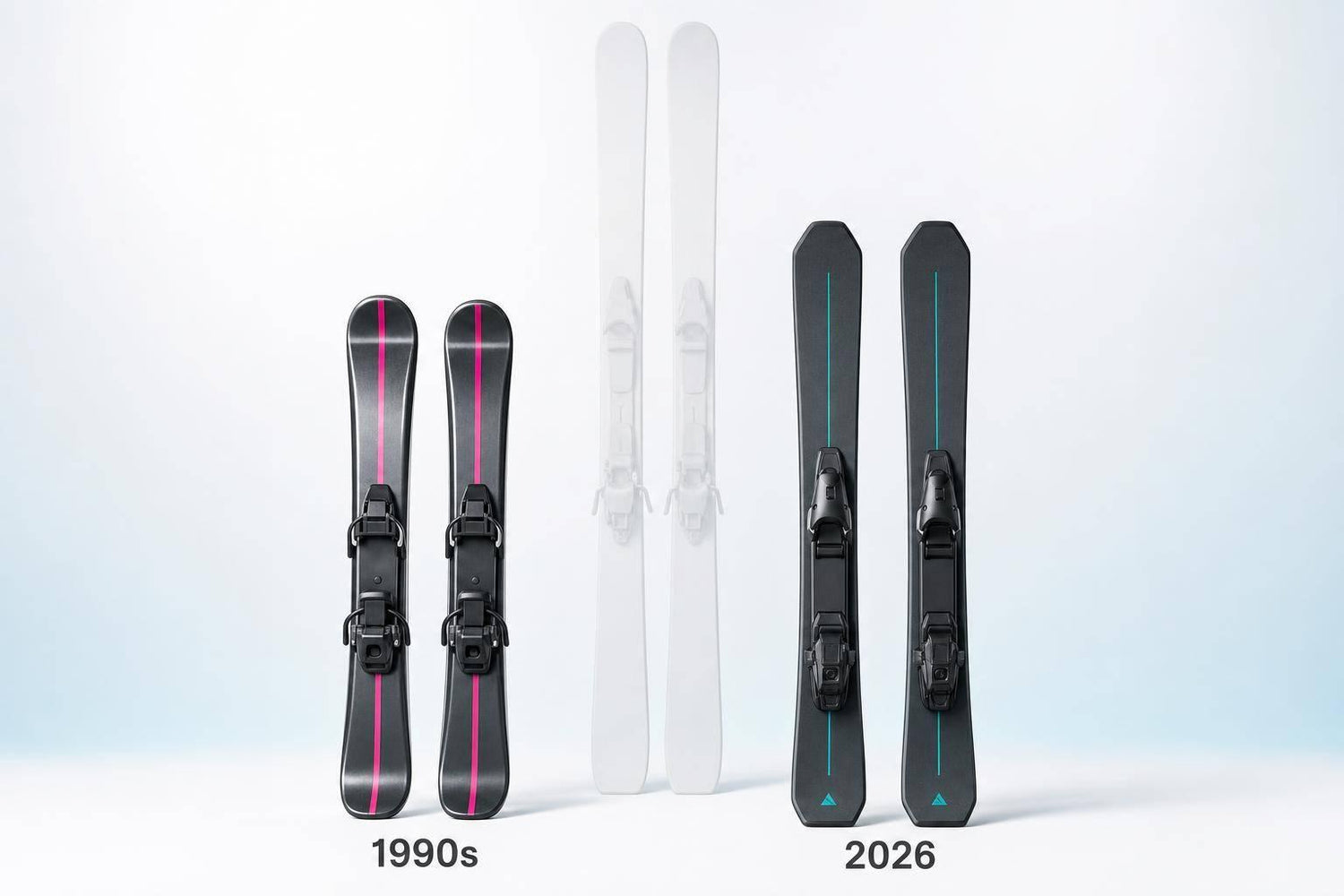
Yes - short skis are worth a look in 2026. If I wanted the fast answer, I’d put it like this: 44 cm is best for tricks and travel, 65 cm is the best first pick for most people, 99 cm gives the best mix of fun and control, 120 cm feels closest to a normal ski, and full alpine skis still win for speed, ice, and deep powder.
Winter sports participation was up 2.4%, even while skiing and snowboarding slipped. That helps explain why short skis are back: people want gear that’s easy to carry, easy to learn, and still fun on groomers and in the park.
If you’re choosing, here’s the short version:
- Buy 44 cm if you want backpack-size gear and tight tricks
- Buy 65 cm if you’re a beginner or a snowboarder crossing over
- Buy 99 cm if you want the best middle ground
- Buy 120 cm if you want a short ski that feels more like a normal ski
- Stick with full skis if you ski fast, ride icy terrain, or chase powder
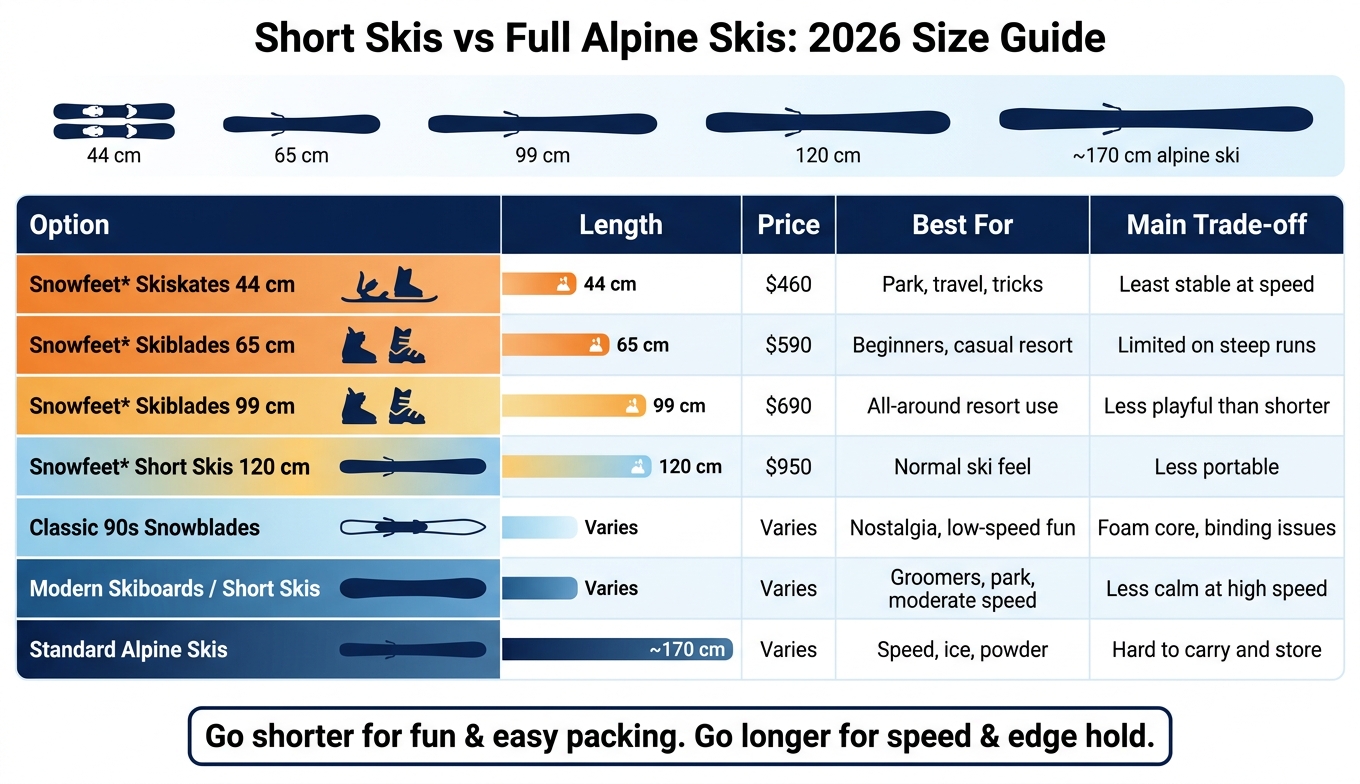
Short Skis vs Full Alpine Skis: 2026 Size Guide
Snowboarder tries Snowfeet* | Which Snowfeet* Short Ski is the Best? | Snowblades 44, 65, 99 Review
Quick Comparison
| Option | Price | Best for | Main trade-off |
|---|---|---|---|
| Snowfeet* 44 cm | $460 | Park, travel, tricks | Least stable at speed |
| Snowfeet* 65 cm | $590 | Beginners, casual resort laps, snowboarders | Limited on steep, fast runs |
| Snowfeet* 99 cm | $690 | All-around resort use | Less loose and playful than the short ones |
| Snowfeet* 120 cm | $950 | Riders who want a more normal ski feel | Costs more, less easy to pack |
| Classic 90s snowblades | Varies | Nostalgia, low-speed fun | Old binding and build issues |
| Modern skiboards / short skis | Varies | Groomers, park, moderate speeds | Not as calm at high speed |
| Standard alpine skis | Varies | Speed, ice, powder, all-mountain use | Harder to carry and store |
So, this comeback is real. But it’s not one-size-fits-all. I’d treat it like this: go short for fun and ease, go long for speed and grip :)
If you want a quick visual before you buy, these help:
1. Snowfeet* Skiskates 44 cm
Starting price: from $460
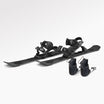
This is the shortest and most portable setup in the lineup. If you want something that feels playful and easy to toss in a bag, this is the one.
Quick Turns and Tricks
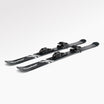
At 44 cm (17.3 in) long, these are made for fast pivots, spins, switch riding, and park tricks. Think of that fun snowblade feel, but in a lighter and easier-to-carry package.
That short length is a big part of the fun. You can move them around fast, slash turns, and play on features without feeling like you're hauling around a full ski.
Speed Limits
Here’s the plain truth: shorter means less stable at speed. Skiskates work best at moderate speed on groomed runs and in snowparks, and they’re not meant for aggressive carving or deep powder.
Compared with alpine skis, they feel less planted when you pick up speed. Hard carving also isn’t their strong suit. So, if your idea of a good day is bombing steep runs flat-out, these will feel a bit twitchy.
Boot Compatibility
Skiskates come in ski-boot and snowboard-boot versions, with sizes 4.5–14.5 US / 36–49 EU for ski boots and 6–14.5 US / 38–49 EU for snowboard boots.
That snowboard-boot option is a nice bonus for snowboarders. It makes the jump over to skiskates feel pretty easy. The bindings are adjustable and non-release, which helps keep setup simple.
That makes the 44 cm model a strong pick for:
- park riders
- travelers
- snowboarders who want an easy crossover
Easy to Carry
These fit in a standard backpack, which is a huge plus for travel and day trips. Compared with older snowblades, the 44 cm size is much easier to pack, carry, and bring along without a fuss.
At about 1.8 lb per ski, they stay light on your shoulder and out of your way. Nice perk if you’re walking through parking lots, hopping on a shuttle, or stuffing gear into a crowded car.
| Spec | Detail |
|---|---|
| Length | 44 cm (17.3 in) |
| Weight per ski | about 1.8 lb |
| Ski boot sizes | 4.5–14.5 US / 36–49 EU |
| Snowboard boot sizes | 6–14.5 US / 38–49 EU |
| Price | from $460 |
| Best terrain | Groomed runs, snowparks |
If you want more stability and still like the short-ski vibe, the next lengths give up a bit of agility for more control.
2. Snowfeet* Skiblades 65 cm
Starting price: from $590
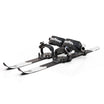
If the 44 cm Skiskates feel a bit nervous underfoot, the 65 cm Skiblades give you more control while still keeping that short-ski vibe. They hit a nice middle ground: playful and easy to toss around, but with enough composure for mixed resort days.
Turning Agility
At 65 cm, with a 4-meter sidecut radius and dimensions of 11 / 9.5 / 11 cm, these skiblades move fast from edge to edge on groomers and small park features. That quick feel is a big part of the appeal.
This is Snowfeet*'s most agile mainstream skiblade, so it makes a lot of sense for park riders and skiers who like tricks but want more control than the 44 cm model gives. It also has a 5.0/5 rating from 77 verified reviews.
Stability and Speed
These aren't made for bombing steep runs at high speed. On groomed green and blue runs, at a moderate pace, they feel calm and in control. Start pushing harder or laying into deeper carves, and you'll notice they feel less locked in than the 99 cm or 120 cm models.
That said, they're still a big step up from old-school '90s snowblades if you want more control in 2026. If your day looks like cruising, slipping through traffic, and popping off side hits, the 65 cm length fits the job well. For steep, icy, or powder days, longer skis are the smarter pick.
Boot and Binding Setup
Snowfeet* sells the 65 cm Skiblades with bindings for both alpine ski boots and snowboard boots.
- The ski-boot setup fits about US 4.5–14.5 / EU 36–49.
- The snowboard-boot setup fits about US 6–14.5 / EU 38–49.
The bindings adjust without tools, which makes swaps simple if more than one person will use them. For snowboarders, this version gives a more stable short-ski feel. The build uses a wood core, metal edges, and graphite bases. That's a nice step past what old '90s snowblades used to offer.
Travel Portability
They stay small enough to travel with, but feel more planted than the 44 cm Skiskates. At 26 in, they're still compact enough for trips. And yeah, that's a lot less annoying than hauling full-size skis through an airport.
| Spec | Detail |
|---|---|
| Length | 65 cm (26 in) |
| Sidecut radius | 4 m |
| Tip / waist / tail width | 11 / 9.5 / 11 cm |
| Ski boot sizes | US 4.5–14.5 / EU 36–49 |
| Snowboard boot sizes | US 6–14.5 / EU 38–49 |
| Price | from $590 |
| Best terrain | Groomed runs, snowparks |
| Buyer rating | 5.0/5 (77 verified reviews) |
For riders who want more speed and stronger edge hold, the 99 cm model is the next move.
3. Snowfeet* Skiblades 99 cm
Starting price: from $690
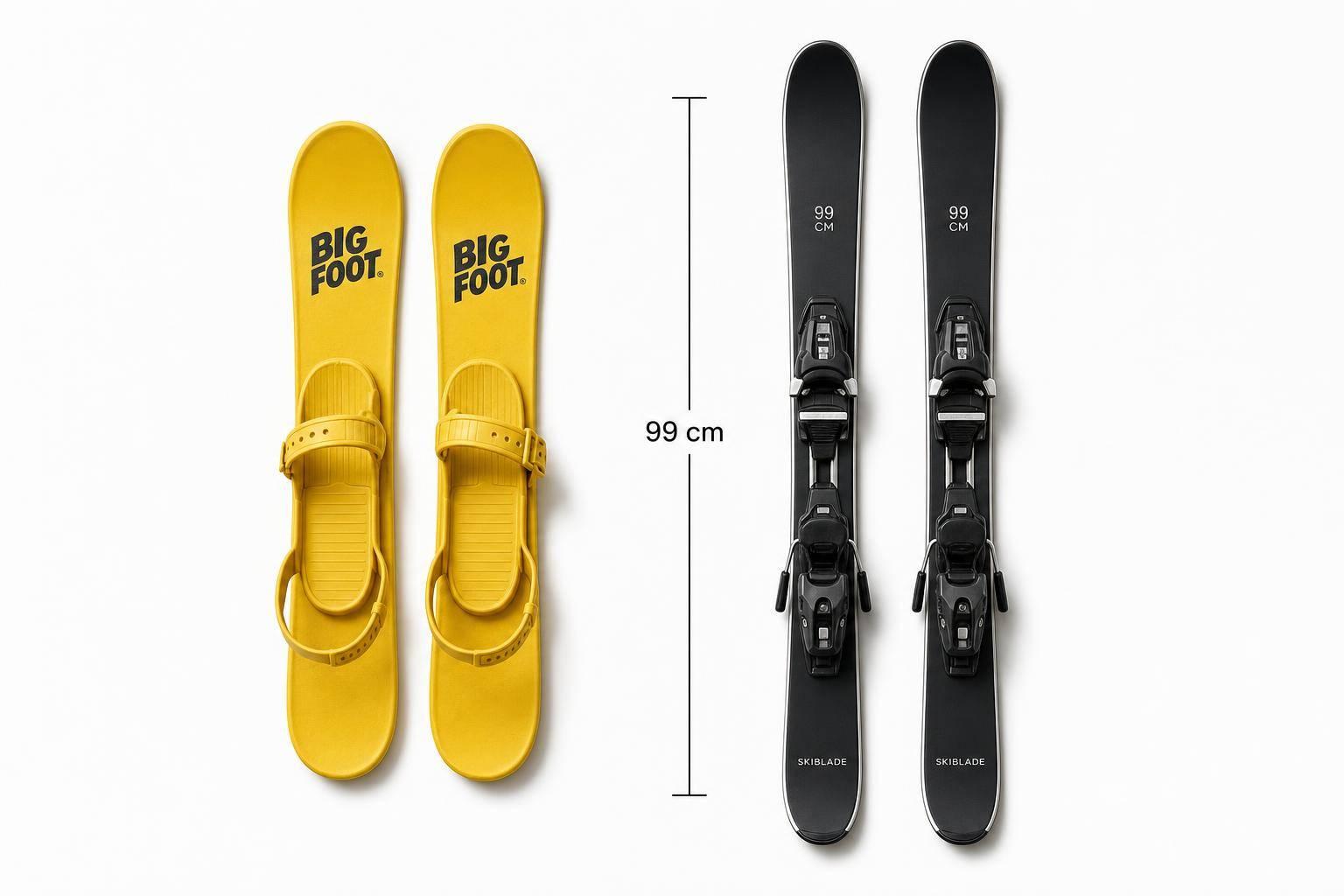
After the ultra-compact 65 cm option, the 99 cm version is where Snowfeet* starts to feel like a do-it-all ride. At 99 cm (39 in.), these skiblades land right in Snowfeet*'s sweet spot: the quick feel of short skis, with enough stability for day-to-day resort use. That’s a big reason short skis are back in 2026. You still get the fun, but with more control than older snowblades had.
Turning Agility
The 99 cm Skiblades use a 6 m sidecut radius, while most full-length alpine skis sit around 15–25 m. That means they turn a lot faster and feel easier to guide from edge to edge. On snow, that pays off in tight spots like moguls, trees, park features, and when you're working on parallel turns.
Stability and Speed
These skiblades use a wood core, durable cap build, graphite bases, and metal edges. On groomers, they feel stable at normal resort speeds and work well for playful cruising, side hits, and moderate-speed park laps. If your style is more full-send on icy black runs, or you like charging as fast as possible, full-length skis still have the edge.
For most casual resort riders, this model gives the best mix of fun, stability, and easy carrying in the lineup. Put simply: if a tiny snowblade feels too loose, but full skis feel like too much, this is the middle ground that makes a lot of sense.
Boot and Binding Setup
The 99 cm Skiblades come in three binding setups: simple ski-boot bindings, pro ski-boot bindings, and snowboard-boot bindings.
- The simple ski-boot bindings are tool-free and adjustable. They fit about US 4.5–14.5 / EU 36–49, which makes them easy to share with friends or family.
- The pro ski-boot bindings are a better match for riders who want a tighter connection and more aggressive carving feel.
- The snowboard-boot bindings fit about US 6–14.5 / EU 38–49, so snowboarders can ride in the boots they already own.
That last option is pretty handy. No need to buy a whole new boot setup just to try skiblades.
Travel Portability
At 39 in., these are much shorter than standard adult alpine skis, which are often 63–71 in. long. They’re compact enough to fit in a standard checked ski bag, which makes travel a lot less annoying.
| Spec | Detail |
|---|---|
| Length | 99 cm (39 in.) |
| Sidecut radius | 6 m |
| Binding options | Simple ski-boot, pro ski-boot, snowboard-boot |
| Ski boot sizes | US 4.5–14.5 / EU 36–49 |
| Snowboard boot sizes | US 6–14.5 / EU 38–49 |
| Price | from $690 |
| Best terrain | Groomers, park, trees, moderate-speed runs |
If you want more planted carving, the 120 cm model is the next step.
4. Snowfeet* Short Skis 120 cm
Starting price: $950
At 120 cm, these are the longest Snowfeet* skis in the lineup. They feel closest to a full-size alpine ski. If the 99 cm model sits in the middle, the 120 cm version takes a clear step toward a more classic ski feel.
This is also where short skis start going head-to-head with standard skis, not just old-school snowblades.
Turning Agility
These skis have a strong sidecut and a narrow waist of about 7.8 cm, so getting into a turn feels easy. Edge-to-edge moves are also smoother than on the 65 cm or 99 cm models.
They carve with more flow than the 65 cm or 99 cm versions, but they don’t pivot as fast. So, you give up a bit of that snappy, almost toy-like quickness in exchange for a steadier ride.
Stability and Speed
This is where the 120 cm model starts to shine.
The certified sustainable wood core, metal edges, and graphite bases help it grip well on hardpack and icy patches, which are common at U.S. resorts. It also uses camber underfoot with tip-and-tail rocker. That mix helps the ski hold an edge through turns while staying forgiving when the snow gets chopped up later in the day.
In light powder, the added length gives it better float than the shorter Snowfeet* models. Still, it’s not made for deep powder days.
Put simply, the 120 cm is the top short-ski option in the Snowfeet* lineup for carving and hardpack grip.
That focus on downhill performance also makes the binding setup matter more here than it does on the shorter models.
Boot and Binding Setup
The ski-boot setup is the most downhill-focused option. The Pro Ski Boot Bindings fit a wide range of mondo sizes, about 26–36.1 MP, which covers most adult ski boots.
This setup is built for precise power transfer, steady edge hold, and release safety. It’s aimed mostly at skiers who want a more standard downhill feel.
Twin tips come included, so switch riding and park-style tricks are still part of the deal.
Travel Portability
At 47 in., these are still easier to fit into compact ski bags, car trunks, and small storage spots than full-length skis. They’re also lighter to carry through parking lots and base areas, and less of a pain in rideshare cars or rentals.
That said, if packability is your main goal, the 65 cm or 99 cm models are still easier to stash away.
| Spec | Detail |
|---|---|
| Length | 120 cm (47 in.) |
| Waist width | ~7.8 cm |
| Core | Certified sustainable wood core |
| Edges | Metal |
| Base | Graphite |
| Profile | Camber + tip/tail rocker |
| Tips | Twin tip |
| Binding option | Pro Ski Boot Bindings |
| Boot size range | ~26–36.1 MP |
| Price | $950 |
| Best terrain | Groomed runs, light powder, park |
Next, compare that modern feel with the original 90s snowblades.
sbb-itb-17ade95
5. Classic 90s Snowblades
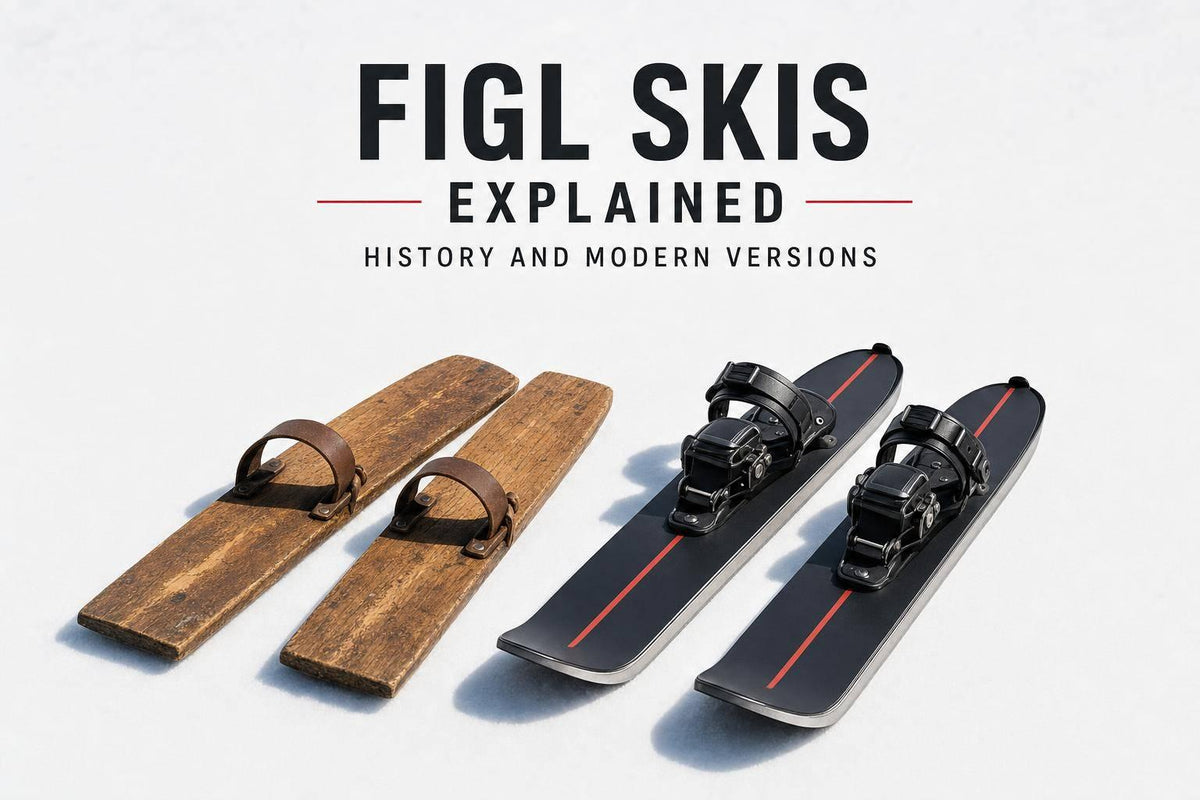
Classic 90s snowblades were short, playful, and dead simple to turn. But once speeds went up, the cracks started to show. The 2026 comeback lands because newer models keep the fun part and clean up many of the old headaches.
Turning Agility
Most classic 90s snowblades were 63–99 cm long, with deep sidecuts that made them quick and playful on groomers. The Kneissl Big Foot had a sidecut radius of about 4 meters, while Salomon Snowblade 90 and 99 models were closer to 6 meters.
On low- to moderate-speed runs, they felt almost skate-like - loose, quick, and fun. That “just mess around and have a good time” feel is the big thing newer short skis build on.
Stability and Speed
This is where the old stuff ran into trouble.
Many classic models used foam cores, which could lose stiffness and start to feel chattery at medium to high speeds. Add in less edge contact on icy or steep terrain, and they could feel nervous and a bit all over the place.
Modern short skis deal with a lot of that by using better build quality and stronger edge hold. Same playful idea. Less sketchy when things speed up.
Boot and Binding Setup
Most classic snowblades came with non-release bindings made for standard alpine ski boots. That was a clear safety downside. In a fall, those bindings didn’t release the way standard alpine bindings do, which led to safety concerns.
For casual riders, that’s a tough sell. Short skis are supposed to feel easy and low-stress, not like a throwback with extra risk.
Travel Portability
At 63–99 cm, they were much shorter than the 160–180 cm alpine skis that were common at the time. So yes, they were easier to carry and stash in a car.
The catch? You still needed bulky alpine boots. So the skis were compact, but the whole setup still wasn’t all that light or simple.
That old formula sets up the key comparison: what modern short skis keep, and what they finally improve.
| Spec | Classic 90s Snowblades |
|---|---|
| Typical lengths | 63–99 cm |
| Sidecut radius | ~4–6 m |
| Core construction | Often foam; some wood-core models existed |
| Binding type | Mostly non-release |
| Boot compatibility | Standard alpine ski boots |
| Best terrain | Groomed runs, low- to moderate-speed riding |
| Weak points | High-speed stability, icy slopes, powder, binding safety |
6. Modern Skiboards and Short Skis
Modern skiboards are a different animal from the 90s snowblades. They’re safer, stronger, and way more dialed-in. Brands like Summit and Elan show how far this category has come, with wood cores, ABS sidewalls, and better bindings. That said, Snowfeet still has the edge for portability and all-around flexibility. So the main thing to sort out is simple: which setup gives you the best mix of fun, control, and easy travel?
Turning Agility
This is where short skis still shine.
Their short length and deep sidecut make them fast edge-to-edge, which feels great on groomers, moguls, and tight resort runs. If you like quick turns and a playful feel, they deliver. They’re the kind of skis that make a narrow run feel less like work and more like a game.
Stability and Speed
At moderate speeds, modern skiboards do just fine. They feel planted enough for cruising, carving, and park laps.
Push harder, though, and longer skis still have the calmer ride. That’s the trade. Short skis feel snappy and loose. Full-length skis feel more settled when speed climbs or the snow gets rough.
Boot and Binding Setup
The biggest step forward here is binding choice.
Release bindings, like the Salomon M11 (DIN 3.5–11) found on the Summit Bamboo Pro, work with alpine ski boots and release in a fall much like standard ski bindings. For a lot of riders, that’s a big plus.
Non-release bindings are lighter and give a more direct feel. That’s one reason park and freestyle riders like them. But they stay locked in during a fall. Some setups also work with snowboard bindings by using risers.
If you’re new to this, or you care a lot about fall safety, release bindings are the better fit.
Travel Portability
These skis are easier to travel with than full-length alpine skis. No surprise there. But they still don’t match Snowfeet’s smallest models when pure packability is the goal.
That’s the heart of the trade-off. You get more ski under you, but you give up some of that toss-it-in-a-bag convenience.
| Spec | Modern Skiboards / Short Skis |
|---|---|
| Typical lengths | 65–150 cm |
| Turn radius | ~6–8 m on 99–110 cm models |
| Core construction | Wood core, ABS sidewalls, twin-tip profiles common |
| Binding options | Non-release, release (DIN-rated), snowboard-compatible |
| Boot compatibility | Alpine ski boots; some non-release setups can work with hard-shell snowboard boots |
| Best terrain | Groomed runs, terrain parks, moderate-speed carving |
| Weak points | Less stability at high speeds and in icy/variable snow |
7. Standard Alpine Skis
After modern short skis, full-length alpine skis feel like the baseline. They’re longer, steadier, and less playful than today’s short-ski options. Most fall in the 150–215 cm range, based on the event or riding style. Slalom skis are usually 150–165 cm, giant slalom skis land around 195–210 cm, and downhill skis stretch past 210 cm. That extra length helps when speeds climb and the snow gets choppy.
Turning Agility
Standard skis make wider, slower turns. Their sidecut radius usually sits in the 15–35 m range, depending on the ski type. So, yeah, they won’t feel as snappy as Snowfeet* Skiblades.
But on open runs, they feel calmer and more planted. That’s also why the Snowfeet* 120 cm model feels closer to standard skis than the shorter versions.
Stability and Speed
This is where full-length skis pull ahead. They do better at high speed, in rough snow, and on steeper terrain. Snowfeet* short skis feel more playful and easier to toss around, but they give up some calm when things get fast.
For most casual riders, that trade-off leans toward Snowfeet* unless top speed is the main goal.
Boot and Binding Setup
Alpine ski bindings use the ISO 11088 standard, and adult DIN settings often range from 3 to 14. Those settings are based on your boot sole length, weight, height, age, and skier type.
Standard alpine bindings are DIN-rated and made for specific ski boots. It’s the setup most skiers know well. Still, it’s not as simple or grab-and-go as what Snowfeet* offers.
Travel Portability
Full-length alpine skis are a pain to pack compared with short skis. They’re harder to carry, tougher to store, and more annoying for flights or road trips to the mountain.
Snowfeet* 65 cm and 99 cm models are much easier to pack, carry, and stash at home. And that sets up the next thing to figure out: which short-ski length fits each rider best?
| Criterion | Standard Alpine Skis |
|---|---|
| Typical length | 150–215 cm |
| Turning radius | 15–35 m |
| Stability at speed | Excellent |
| Binding system | ISO 11088, DIN-rated release bindings |
| Travel portability | Poor - harder to pack and carry |
| Best use case | Speed, variable snow, steeper terrain, longer runs |
Which Length Fits Which Rider
Here’s the fast version. If you want the shortest path to a good pick, start here and sort out the trade-offs after that.
If you want the easiest first option, beginners should choose the 65 cm Skiblades. They’re easier to control than full skis, and the 99 cm is the next move once your confidence starts to build.
Park riders should choose the 44 cm Skiskates or 65 cm Skiblades. The 44 cm model is the fastest for spins and tight tricks. The 65 cm gives you more confidence on landings.
Travelers should choose the 44 cm Skiskates. They pack small, carry with no fuss, and fit in a backpack. That’s hard to beat.
For snowboarders, the easiest switch is the 65 cm Skiblades. The 99 cm starts to make more sense once you want more stability at speed.
Advanced riders should choose the 120 cm Short Skis. They’re the closest Snowfeet model to standard skis.
| Rider Type | Recommended Length | Trade-off | Price From |
|---|---|---|---|
| Beginners | 65 cm | Less high-speed stability; much easier to learn and control | $590 |
| Park / freestyle riders | 44 cm | Less stable on fast inruns; far more agile for tricks | $460 |
| Travelers | 44 cm | Gives up powder float; gains maximum portability | $460 |
| Snowboarders crossing over | 65 cm | Less edge grip on ice; easier and faster skill transfer | $590 |
| Advanced riders | 120 cm | Closest to standard skis; less playful than shorter models | $950 |
Next, it helps to look at the main pros and cons before you decide whether the 2026 comeback matches your riding style.
Pros and Cons
The 2026 comeback makes sense for one big reason: short skis keep the goofy, playful fun of 90s snowblades, but they fix a lot of the stuff that used to annoy people. Less chatter. Better build quality. More control. That balance is what separates the best 2026 pick from the pack.
| Option | Pros | Cons |
|---|---|---|
| Snowfeet* 44 cm Skiskates | Most portable; easy to carry; great for spins and tight tricks; works with ski or snowboard boots | Least stable at speed; can vibrate above about 30 mph; sinks in powder over a foot deep |
| Snowfeet* 65 cm Skiblades | Easiest learning curve; very playful and maneuverable; great for beginners | Less stable at higher speeds than longer options; not ideal for fast groomer runs |
| Snowfeet* 99 cm Skiblades | Better edge hold and carving than shorter blades; smoother on intermediate terrain; still compact for travel and storage | Loses some of the skate-like feel of the shortest blades; less capable than full-size skis in powder and off-trail snow |
| Snowfeet* 120 cm Short Skis | Closest to standard ski performance; better edge hold on groomers; more confidence on steeper intermediate slopes; good for progressing beginners, park riders, and travelers who want an all-around short ski | Less portable than shorter models; still less stable at very high speed than longer alpine skis; not as strong in deep powder as 170–180 cm freeride skis |
| Classic 90s Snowblades | Fun, accessible, trick-friendly | Foam-core, basic construction; vibration at speed; durability issues |
| Modern skiboards and short skis | Easier to learn than standard skis; more maneuverable; good for park play and beginners | Less base length means less float and less calm in deep snow; less versatile in steep terrain and high-speed conditions |
| Standard Alpine Skis | Best stability at high speed; superior float in powder; most versatile across all-mountain terrain | Heavier and harder to travel with; steeper learning curve; less playful and maneuverable than short skis |
A simple way to think about it:
- Go shorter if you want tight turns, tricks, easy packing, and a fun first day on snow.
- Go longer if you want more edge hold, more confidence, and something that feels closer to a standard ski.
- Stick with full-size alpine skis if your main goal is deep powder, fast carving, or serious all-mountain laps.
Standard alpine skis are still the right call for serious all-mountain skiing, deep powder days, or high-speed carving. No dancing around it. But if you want something lighter, easier, and more playful, short skis make a strong case in 2026. Next comes the final verdict on which short-ski setup is actually worth buying in 2026.
Verdict: Is the 2026 Short-Ski Comeback Worth It?
Yes - for most casual riders, the 2026 short-ski comeback is worth it.
The old 90s snowblades were a blast, but they had clear limits. Snowfeet* solves most of them with stronger build quality and four size options from 44 cm to 120 cm. So you still get that playful, quick-turn feel, but with better stability, better construction, and more boot choices.
That’s the big shift here. Modern short skis keep the fun part of 90s snowblades and clean up the weak spots that used to hold them back.
The main exception? Speed and ice.
If you spend a lot of time on icy hardpack, ski fast, or ride steep big-mountain lines, long skis are still the better tool. No surprise there. But for beginners, park riders, travelers, casual resort skiers, and snowboarders making the jump, Snowfeet* makes a lot more sense.
Here’s the short path to the right pick:
| Rider Profile | Best Pick | Why |
|---|---|---|
| Tricks, spins, and tight park riding | Skiskates 44 cm (from $460) | Most portable; works with ski or snowboard boots |
| Beginner or casual resort rider | Skiblades 65 cm (from $590) | Easiest learning curve; compact and playful |
| Intermediate groomers and light park | Skiblades 99 cm (from $690) | Good mix of range and durability |
| Progressing beginner | Short Skis 120 cm ($950) | Best all-around short ski; closest to a standard ski feel |
Pick based on how you ski right now:
- 44 cm for tricks
- 65 cm for easy control
- 99 cm for balance
- 120 cm for the closest full-ski feel
FAQs
Are snowblades safe for beginners?
Yes. Snowblades are generally safe and beginner-friendly.
Their short length, usually 65–120 cm, makes them easier to turn and control than long skis. That can help new riders feel more at ease and start linking turns sooner.
They’re also light and less awkward to handle. And since there aren’t long tips sticking out in front, beginners are less likely to cross them. That’s a nice little win when you’re still getting your snow legs :)
For the best first ride, beginners should start with shorter, forgiving models, usually in the 65–99 cm range. Stick to groomed runs and follow normal safety habits. That means staying in control, watching your speed, and giving other riders space.
Can I use snowboard boots with Snowfeet*?
Yes - snowboard boots work with most Snowfeet* models, including the 44 cm Skiskates, 65 cm Skiblades, and 99 cm Skiblades.
Just pick the binding option for snowboard boots when you buy. Nice and simple :)
The 120 cm Short Skis are the one exception. They use standard release ski bindings, so they need traditional ski boots for support and safety.
Which Snowfeet* length should I choose?
Pick the length that fits your skill level and the way you like to ride. For most resort riders, the 99 cm Skiblades hit the sweet spot. They give you a nice mix of stability, agility, and control.
Here’s the quick breakdown:
- 44 cm Skiskates: easy to carry and super playful, with more of a skate-like feel
- 65 cm Skiblades: a good fit for beginners, park laps, and tight, quick turns
- 99 cm Powder: better float when the snow gets deep
- 120 cm Short Skis: more stability at speed and a feel that’s closer to regular skis











Legg igjen en kommentar
This site is protected by hCaptcha and the hCaptcha Privacy Policy and Terms of Service apply.