



















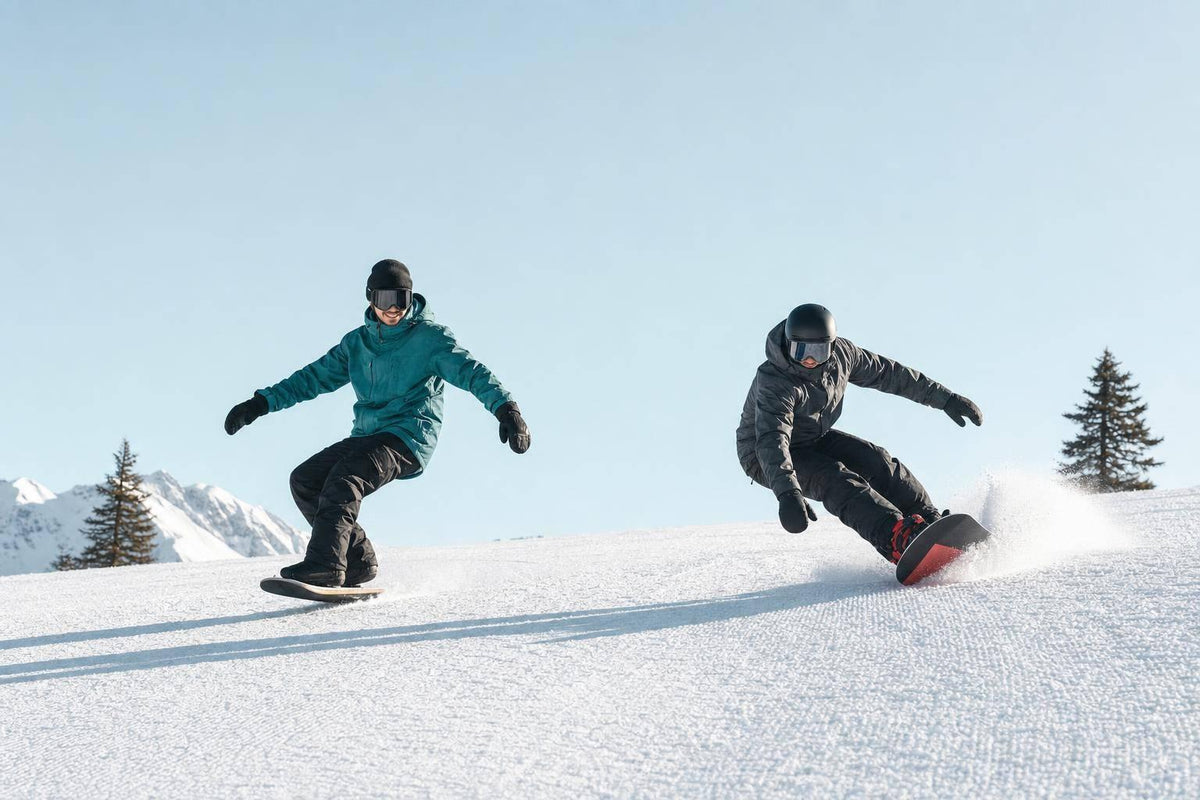
If you want fun on day one, I’d pick snowskates. If you want more range later, I’d pick snowboarding.
Here’s the short version: snowskates are easier to learn, easier to carry, and easier to pack. Snowboards take more time, more gear, and more patience. But they do better in powder, on steep runs, and at higher speed.
If I had to boil it down, this is what matters most:
- Beginners: snowskates usually feel better right away
- Casual riders: snowskates are often more fun on short laps and local hills
- Travelers: snowskates win because they fit in a backpack
- Park riders: snowskates work well on small and medium features; snowboards do better on big jumps
- Powder and steep terrain: snowboards still lead
The price gap matters too. In this article, the compact options start at $299 for Snowfeet* PRO (50 cm), $460 for Skiskates (44 cm), and $590 for Skiblades (65 cm). A full snowboard setup often costs more once you add boots + bindings + board.
My take: if you ride a few times a year and want less hassle, snowskates give you more smiles per session. If you want long-term progression and more mountain range, snowboarding has the bigger ceiling.
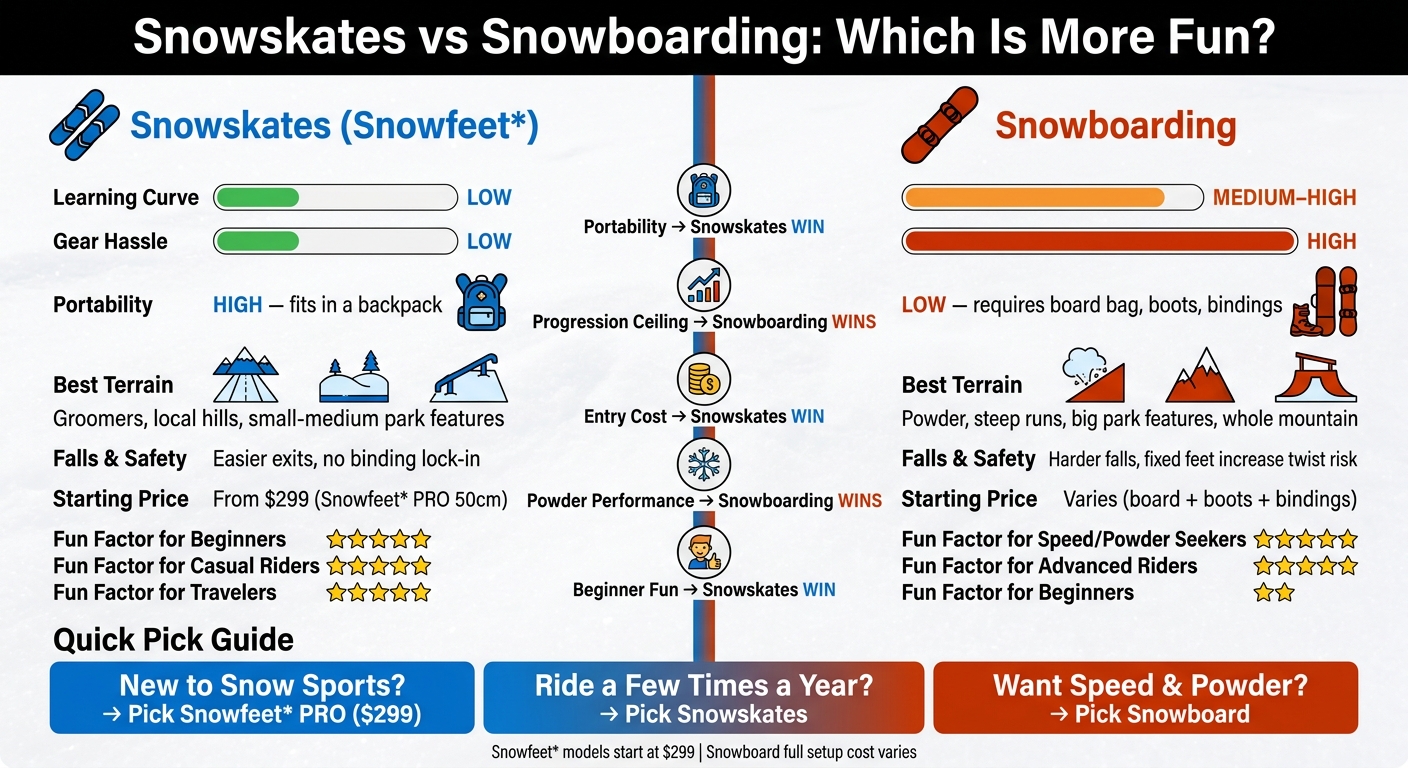
Snowskates vs Snowboarding: Side-by-Side Comparison
Snowfeet* vs. Skiskates Comparison | First Time Review by Snowboarder
Quick Comparison
| Option | Best For | Learning Curve | Gear Hassle | Best Terrain | Starting Price |
|---|---|---|---|---|---|
| Snowfeet* PRO (50 cm) | New riders, mellow laps | Low | Low | Groomers, local hills, small park | $299 |
| Skiskates (44 cm) | Skate-like feel, short runs | Low to medium | Low | Groomers, side hits, tight turns | $460 |
| Skiblades (65 cm) | More support, carving, park | Medium | Low | Groomers, park laps | $590 |
| Snowboard | Speed, powder, steep runs | Medium to high | High | Whole mountain, powder, big park | Varies |
So, if you want a simple answer: snowskates are more fun for most people most of the time. Snowboarding wins when your goal is speed, powder, and bigger terrain.
If you want a quick feel check before you buy, these videos can help:
How Snowskates Feel on Snow
Agile, Quick, and Easy to Control
Snowskates feel light, loose, and easy to move around on. Since there are no bindings holding your feet down, quick pivots and tight turns feel natural. That easygoing feel is a big part of why snowskates are such a blast on short, casual runs.
They shine on groomed runs, moguls, small park features, and local hills. Deep powder? Not their thing. Steep terrain at high speed? Also not their lane. In those spots, a snowboard has better edge hold and a steadier ride. That’s why model choice matters. Each Snowfeet* version gives up a bit of stability in exchange for a different type of ride.
Snowfeet* Models for Different Riding Styles
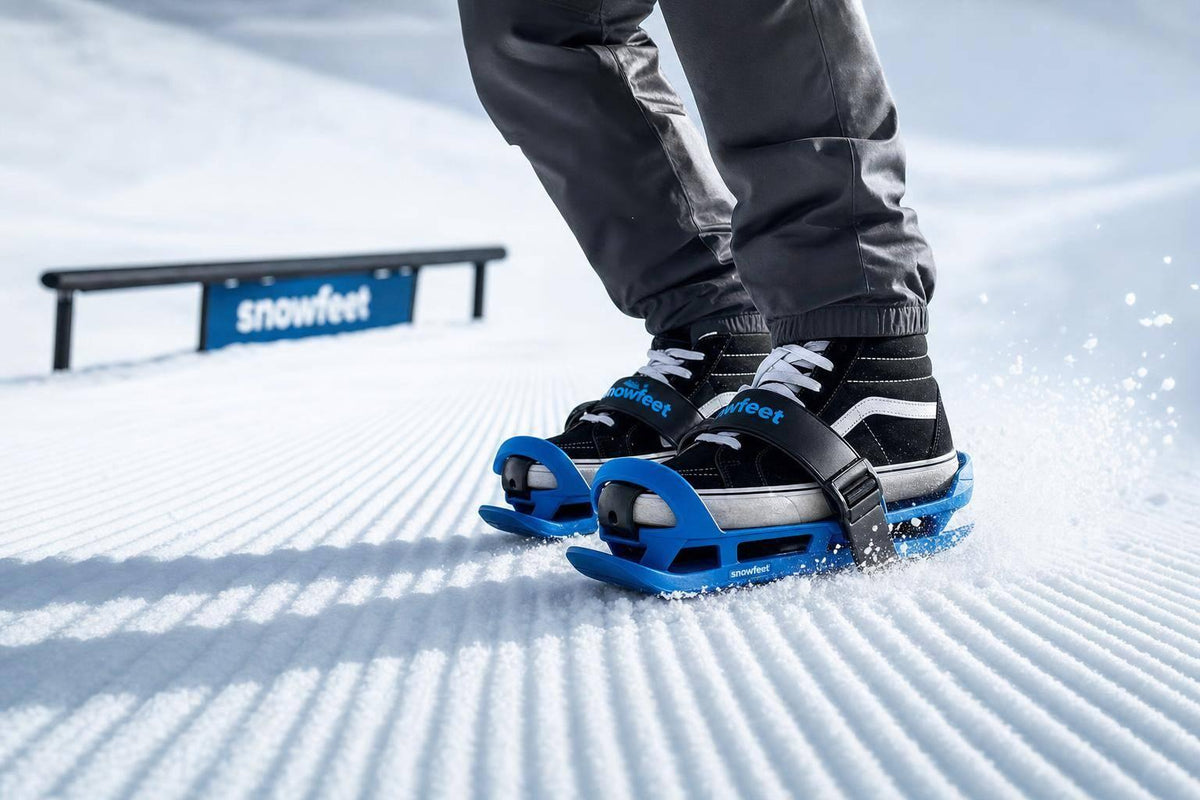
Snowfeet* PRO (50 cm, from $299) is the easiest way in. It’s light, simple to strap on, and a good match for beginners and mellow resort laps.
Snowfeet* Skiskates (44 cm, from $460) feel the most like skating, with a wood core and steel edges that help them carve cleanly on groomers.
Snowfeet* Skiblades (65 cm, from $590) give you more platform and more stability for carving and park play.
| Model | Length | Starting Price | Best For |
|---|---|---|---|
| Snowfeet* PRO | 50 cm | From $299 | Beginners, easy resort laps |
| Snowfeet* Skiskates | 44 cm | From $460 | Skate-style carving on groomers |
| Snowfeet* Skiblades | 65 cm | From $590 | Carving support and park play |
How Portability and Boot Options Add to the Fun
A lot of Snowfeet* models work with regular winter boots or snowboard boots. That means you don’t have to buy a separate pair of stiff snowboard boots just to start. Less gear hassle means more time on snow. Simple as that :)
Snowboarding goes the other way. More gear, more setup, and more payoff once you’re all in.
sbb-itb-17ade95
How Snowboarding Feels on Snow
Fixed Stance, Flow, and Stability
Snowboarding feels more locked-in from the start. Both feet are fixed to one board, so the ride feels stable, connected, and planted. You get strong edge hold and a direct feel under your feet, like the board and snow are talking to each other without much static.
Once you pick up speed, that feeling gets even better. A snowboard tends to feel predictable, and you can lean into a carve and trust it to stay on line. That gives snowboarding a more controlled feel when you're moving fast, even if it doesn't always deliver that instant hop-on-and-go fun.
A Harder Start, a Bigger Payoff Later
Let’s be blunt: snowboarding is harder to learn. Most beginners spend their first few sessions falling a lot while they figure out how to balance sideways on snow. It’s a bit like learning to dance in ski boots after someone spins the floor under you.
But if you stick with it, the payoff is bigger later on. Once the basics click, snowboarding opens up the whole mountain in a way that feels smooth and rewarding. Snowfeet* gets you to the fun part faster, while snowboarding tends to reward riders who are okay with a slower climb and want more room to grow.
Where Snowboarding Still Wins on Fun
There are a few spots where snowboarding still has the edge, and yeah, this is where it starts to shine:
- Deep powder days - Snowboards float through soft snow better than snowskates.
- Steep terrain - The edge hold and precision of a snowboard give riders more confidence on steep slopes.
- Big park features - Snowboards handle large jumps and advanced park lines better.
The catch is commitment. You need boots, bindings, a full board setup, and some patience during the learning phase. For casual riders, that can make snowboarding feel less spontaneous than Snowfeet*. So the real question is pretty simple: is that bigger payoff worth the slower start for the way you like to ride?
Side-by-Side Comparison: Which Is More Fun for Your Riding Style
Here’s the practical breakdown: where each one feels like a blast, and who tends to like it more.
| Feature | Snowskates (Snowfeet*) | Snowboarding |
|---|---|---|
| Feel on Snow | Agile, loose, and playful | Stable, connected, and powerful |
| Learning Curve | Intuitive; quick path to control | Steeper; usually takes longer |
| Falls & Confidence | Easy exits; less rotational force on ankles and knees | Harder falls; fixed feet can twist more on bailouts |
| Gear & Portability | Compact; fits in a backpack; uses winter boots | Board bag, bindings, and dedicated boots required |
| Terrain & Speed | Best for short runs, local hills, creative laps | Best for speed, groomers, and steep lines |
| Terrain Park Use | Excellent for small-to-medium features and rails | Better for large jumps and advanced park lines |
| Travel Convenience | Easy to pack; fits in a backpack | Usually needs a board bag and extra travel space |
Beginner Fun, Control, and Confidence
For first-timers, fun often comes down to one thing: how fast you start to feel in control.
That’s where snowskates have a big edge. They strip away a lot of the early hassle, so the first session feels less intimidating. Most riders pick up basic turns faster on snowskates than on a snowboard.
No bindings also changes the fall experience in a good way. Bailouts feel less awkward. And because your feet aren’t locked in, there’s less strain when you go down. That helps riders stay loose, laugh it off, and try again. Honestly, that’s half the battle when you’re new.
Tricks, Short Runs, Park Laps, and Local Hills
Once turning starts to click, the gap gets more obvious. This is where the ride feel starts to matter.
The Snowfeet* Skiskates 44 cm are short enough to feel quick on small side hits and narrow trails. They don’t fight the terrain, which makes them fun on short laps. The Snowfeet* PRO 50 cm keeps that fast, skate-like feel on small-to-medium park features, boxes, and rails.
Snowboards still have the edge on large jumps and advanced park lines. No surprise there. But for a laid-back park lap or a quick session on a local hill, snowskates feel more spontaneous. Less setup, more messing around, more “let’s do one more lap” energy.
Gear Cost, Packing, and Travel Convenience
Fun isn’t just about the ride. It’s also about how easy the gear is to own, carry, and bring along.
A full snowboard setup costs more up front. The Snowfeet* PRO 50 cm starts at $299 and works with standard winter boots. That’s a simple setup. No separate snowboard boots. No bulky board bag. No hauling a ton of gear through the parking lot like you’re moving apartments :)
Snowskates fit in a backpack, which makes a big difference for spur-of-the-moment riding days. And for a lot of people, that ease matters more than max speed or big-mountain power.
Final Verdict: Snowskates or Snowboarding - Which Should You Choose?
After looking at control, portability, and terrain, the answer is pretty clear. For most casual riders, snowskates are the better pick. They’re easier to learn, lighter to carry, and just more fun on the kind of terrain most people ride most often.
Best Pick for Beginners, Casual Riders, and Travelers
If you’re new to snow sports, only ride now and then, or like to travel light, Snowfeet* is the stronger pick. You can use it with regular winter boots, and it fits in a backpack. That’s a big deal if you don’t want to haul a full setup through a parking lot like a pack mule :)
Here’s the quick breakdown:
- Snowfeet* PRO 50 cm: the easiest place to start
- Skiskates 44 cm: best for short, quick, skate-like runs
- Skiblades 65 cm: give you more stability for carving and park laps
If your goals point in a different direction, though, snowboarding still has its lane.
Best Pick for Serious Snowboarding for Speed and Progression
Snowboarding still comes out on top for speed, powder, steep terrain, and bigger park features. Once you get past the early learning phase, a snowboard gives you more edge control at high speeds and better float in fresh snow than any snowskate can match.
Choose Snowfeet* if you want easy, playful, everyday fun. Choose a snowboard if you want speed, powder, and bigger progression.
FAQs
Can I use snowskates at any ski resort?
Yes, Snowfeet skiskates are allowed at most ski resorts. They have metal edges and secure bindings, which line up with the safety rules many U.S. resorts look for.
In most cases, you can use them on groomed trails and in terrain parks. That said, each resort makes its own call. So, before you head out, check the resort’s equipment policy online. It’s a small step that can save you from annoying lift-access problems later.
Are snowskates safe for complete beginners?
Yes. Snowfeet snowskates - especially the shorter models like the 44 cm Skiskates and PRO 50 cm - are beginner-friendly. They’re easier to balance on, simpler to stop, and fast to get used to.
A lot of first-timers start to feel pretty good after about 15 to 60 minutes or just a few runs. That’s a nice little win early on :) They also tend to lead to softer, lower-speed slips than snowboards, which can make those first attempts feel less scary.
Which Snowfeet* model should I start with?
It depends on your skill level and the kind of ride you want.
Beginners usually do best with the 65 cm Skiblades. They give you a nice mix of stability and control, which makes the learning curve a lot less punishing.
Here’s the quick breakdown:
- 44 cm Skiskates: best if you want a playful, skate-like feel and the easiest option to toss in a bag
- 99 cm Skiblades: the best all-around pick for casual resort riding
- 120 cm model: best for steeper slopes and the most stability in a compact setup
Short version: if you want something easy to learn on, go with 65 cm. If you want more of a fun, snappy ride, the 44 cm stands out. And if you want extra confidence on steeper terrain, the 120 cm model is the move :)











Laat een reactie achter
Deze site wordt beschermd door hCaptcha en het privacybeleid en de servicevoorwaarden van hCaptcha zijn van toepassing.