



















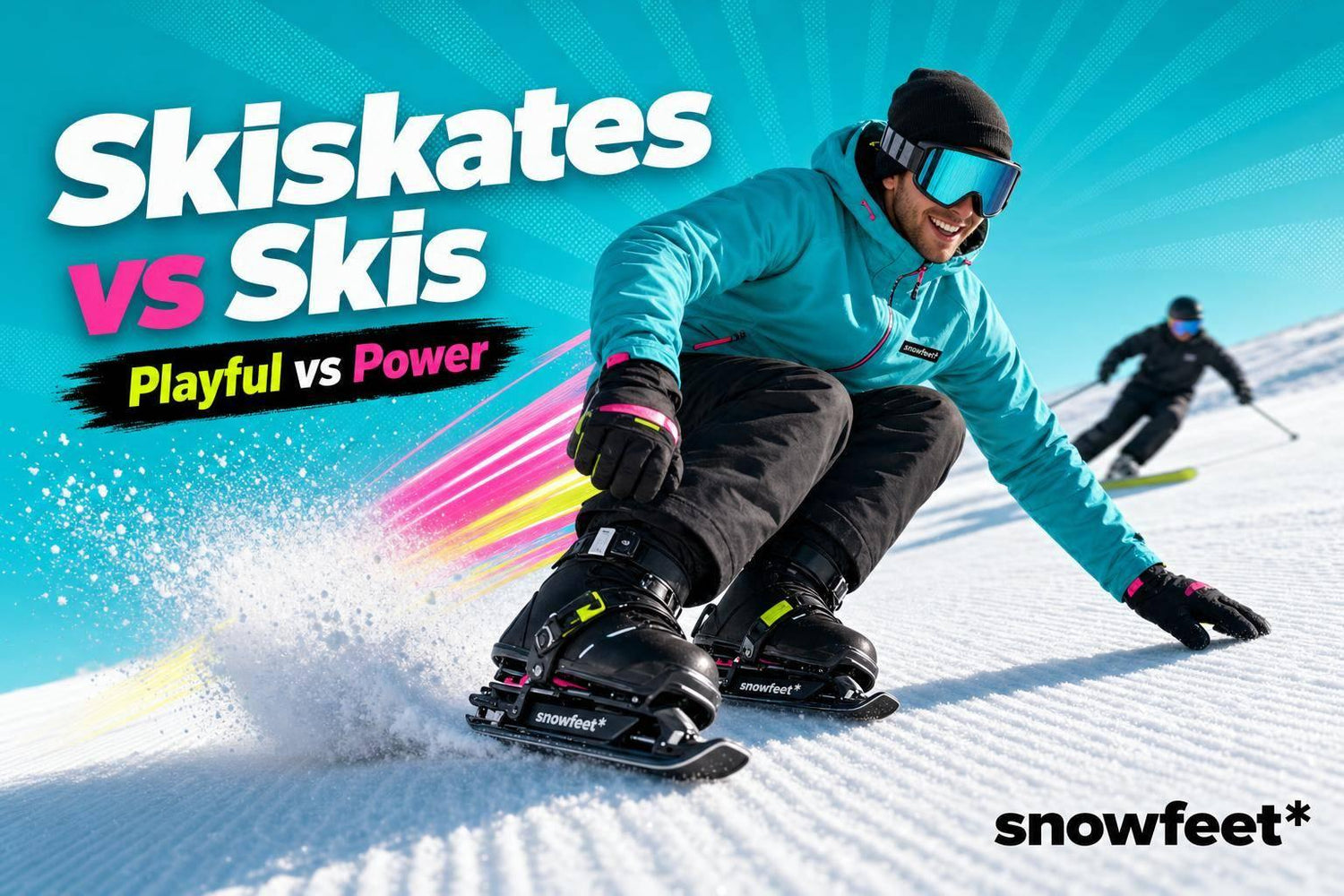
Yes - if you ride at relaxed to mid speeds, stay on groomers, and want gear that’s easy to learn, easy to carry, and costs less than many full ski setups. If you want deep powder, high speed, and long carved turns, go with full-length skis.
I’d sum it up like this:
- Skiskates (44 cm / 17 in.) are the most playful and easiest to toss in a backpack.
- Skiblades (65 cm, 99 cm, 120 cm) sit between skiskates and full skis.
- Full-length skis (150–180 cm / 59–71 in.) still win for speed, edge hold, and rough snow.
- Price matters: Snowfeet* starts at $460, while a basic ski setup often lands at $600–$800 before extras like poles.
- Boots matter too: full skis need alpine ski boots, while some Snowfeet* setups can work with ski boots or snowboard boots.
If I were helping a casual U.S. resort rider in a ski shop, I’d say this: buy for how you ride, not for what looks “serious.” A lot of people don’t need long skis. They need something fun, simple, and less annoying to haul from the parking lot :)
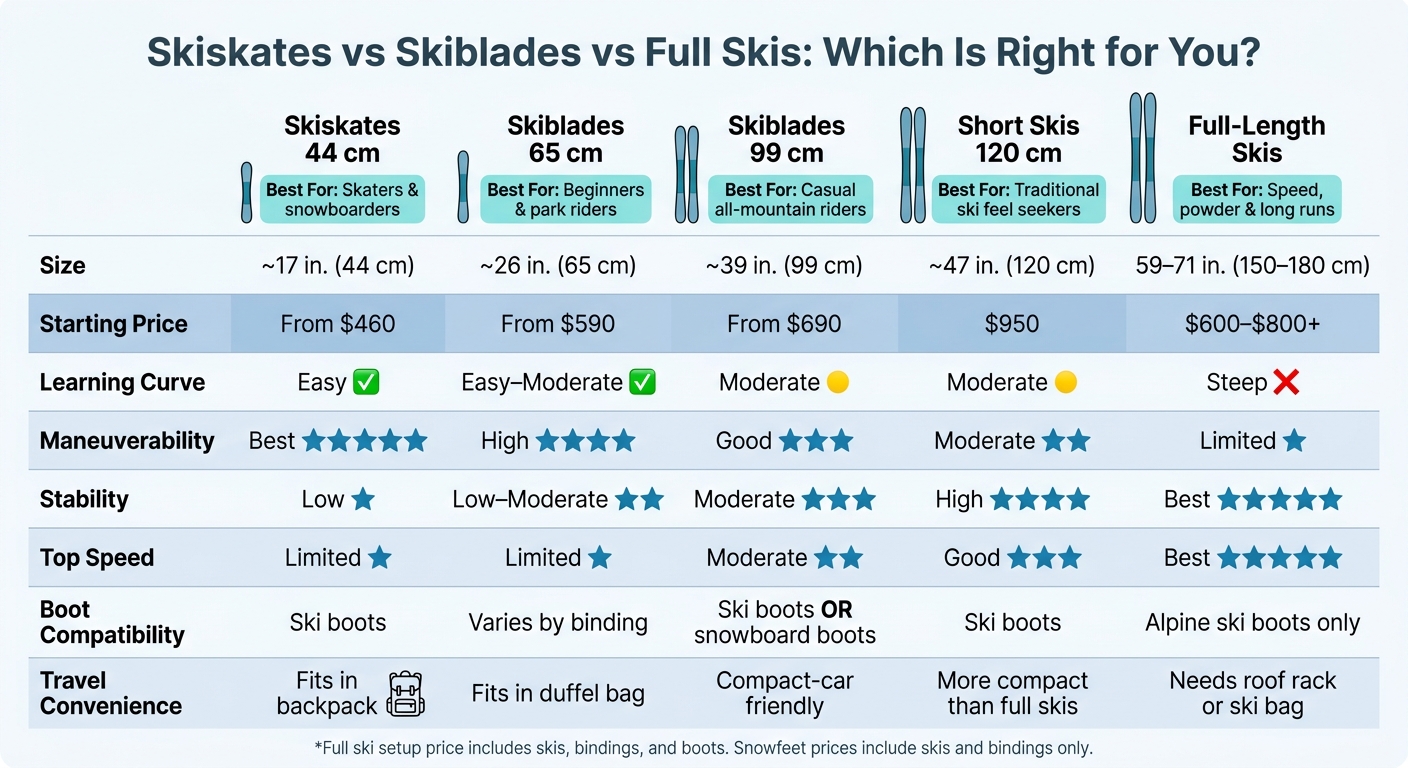
Skiskates vs Skiblades vs Full Skis: Side-by-Side Comparison
Snowfeet* Review: Are Skiskates Worth It? | Mini Ski | Skates for Snow | Skating Ski | Short Ski
Quick comparison
| Option | Best For | Main Upside | Main Tradeoff | Starting Price |
|---|---|---|---|---|
| Skiskates 44 cm | Skaters, snowboarders, short fun laps | Tight turns, small size, easy to carry | Less stable as speed builds | $460 |
| Skiblades 65 cm | Beginners, park riders | Easy turning, simple to use | Less support in rough snow | $590 |
| Skiblades 99 cm | Casual all-mountain riders | Better balance of control and play | Still not a powder or speed tool | $690 |
| Short Skis 120 cm | Riders who want a ski-like feel | Closest short option to full skis | Costs more than entry short models | $950 |
| Full-Length Skis | Fast groomers, powder, long runs | Best stability and edge hold | Harder to learn, bulkier gear | $600–$800+ |
Here’s the bottom line: for many casual riders, skiskates or short skis are worth it. Not because they beat full skis at everything. They don’t. They’re worth it because they match how many people actually ski.
Skiskates vs skis: how they actually ride on the mountain
For most resort riders, the main thing isn’t top speed on paper. It’s simple: what feels easiest and most fun to ride all day?
Here’s how each setup stacks up on a normal resort day:
| Factor | Skiskates 44 cm | Skiblades 65 cm | Skiblades 99 cm | Short Skis 120 cm | Full-Length Skis |
|---|---|---|---|---|---|
| Learning curve | Easy | Easy–Moderate | Moderate | Moderate | Steep |
| Maneuverability | Best | High | Good | Moderate | Limited |
| Stopping | Quick at low–moderate speed | Quick | Good | Good | Most stable at speed |
| Stability | Low | Low–Moderate | Moderate | High | Best |
| Top speed | Limited | Limited | Moderate | Good | Best |
| Fun factor | Playful, skate-like | Nimble, fun | Balanced | Ski-like | Fast, carvy |
Learning curve, control, and stopping
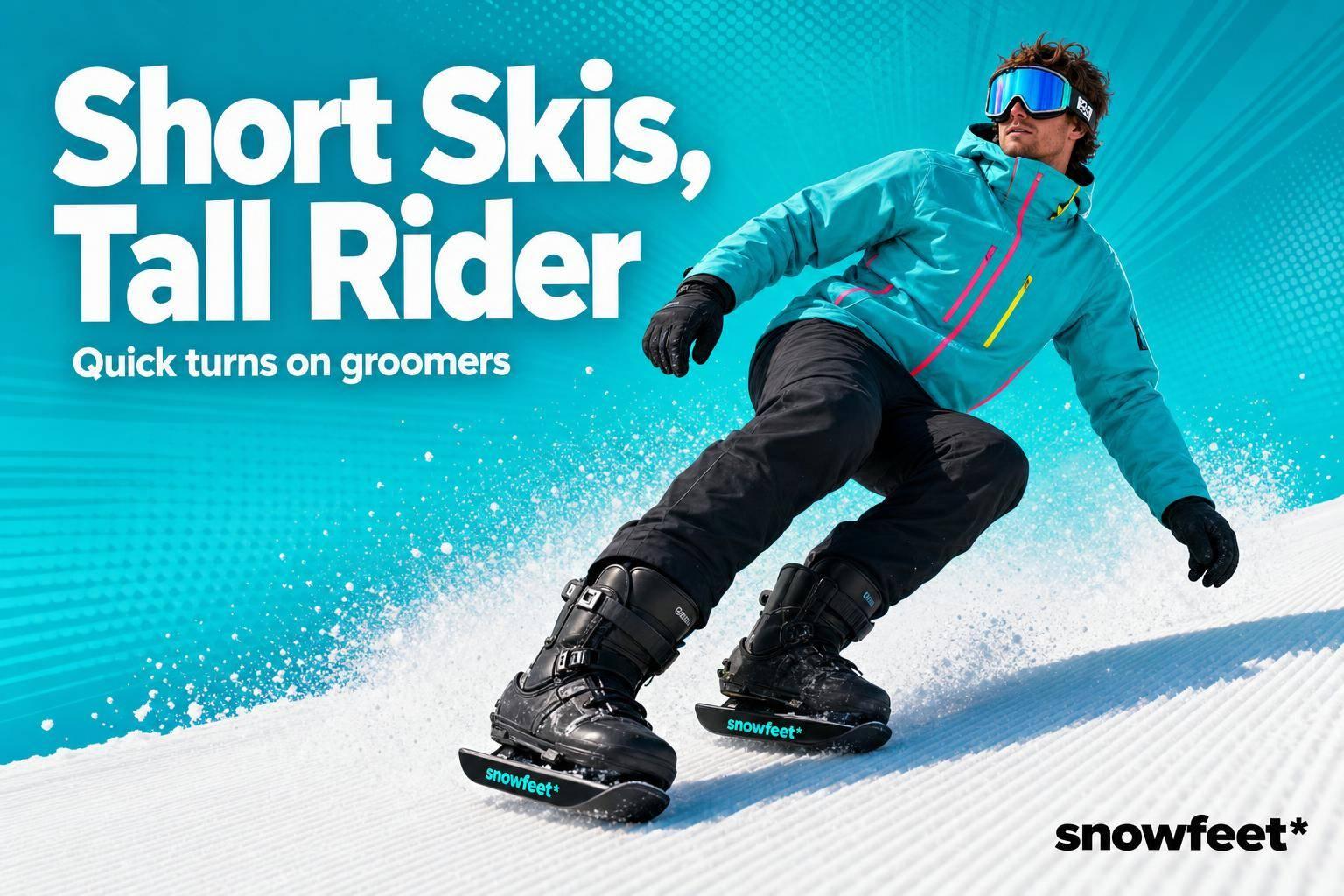
Skiskates are worth a look if you care more about quick control and easy fun than going fast. The 44 cm Skiskates have a very short turning radius, so small corrections happen fast. That makes them easier to handle than full-length skis, which ask for more deliberate turn input and edge control.
For a casual rider, that difference is huge. You can get the hang of the shorter Snowfeet* options much sooner, without feeling like you need a few days of lessons just to relax and enjoy the hill. Full-length skis still hold an edge better at speed, no question. But at moderate speeds, stopping on the shorter setups feels quicker and more natural because there’s less weight to move around.
Fun factor, carving, and speed limits
The 44 cm Skiskates feel the most playful and the most skate-like. They’re the “mess around and have a blast” pick. The 65 cm Skiblades give you a bit more stability, while the 99 cm Skiblades hit a nice middle ground between agility and control.
The 120 cm Short Skis feel closest to regular skis. They carve cleaner arcs on groomers, track better when speed picks up, and give you more confidence on steeper runs. If you want a setup that still feels familiar but not as long and demanding, this is the closest match.
Full-length skis still win when the trail opens up and you want fast groomer laps with big, sweeping carves. That’s their home turf. Shorter setups feel more playful and forgiving. Longer skis feel faster and more precise.
And that ride feel doesn’t just matter on snow. It also affects what happens off it: how easy the gear is to carry, pack, and pair with your boots. That’s where portability, boot fit, and terrain start to decide whether that quick, playful feel works for you day to day.
sbb-itb-17ade95
Portability, boots, comfort, and terrain fit
Portability and boot compatibility
Ride feel matters. But so does how easy your gear is to pack, carry, and bring to the mountain.
Size makes a big difference both on snow and in transit. Full-length skis usually run 59–71 in. (150–180 cm), so you’ll often need a ski bag or roof rack. Skiskates are just 44 cm, which means they fit in a backpack. The 65 cm and 99 cm Skiblades are still small enough to toss into a compact car or slide onto a closet shelf without setting up a wall rack. Nice and simple.
Weight plays a part too. Short Snowfeet* gear is much lighter than a full ski-and-binding setup. That makes the walk from the parking lot to the lift a lot less annoying. It also helps in airports, where bulky gear can feel like you’re hauling lumber through Terminal B.
Boot fit is another big split. Snowfeet* gives you choices that full-length skis just don’t.
Full-length skis require alpine ski boots. The 44 cm Skiskates use ski boots and fit EU 36–49 (US 4.5–14.5). The 99 cm Skiblades come with ski-boot bindings for EU 36–49 (US 4.5–14.5) and snowboard-boot bindings for EU 38–49 (US 6–14.5). For snowboarders, that can mean skipping a second boot purchase, which is a pretty nice break for your wallet.
| Option | Size | Boot Compatibility | Session Comfort | Travel Convenience |
|---|---|---|---|---|
| Skiskates 44 cm | ~17 in. | Ski boots | High for short, playful sessions | Fits in a backpack or carry-on |
| Skiblades 65 cm | ~26 in. | Varies by binding | High | Easy to pack in a duffel or small car |
| Skiblades 99 cm | ~39 in. | Ski boots or snowboard boots | Moderate–High | Compact-car friendly |
| Short Skis 120 cm | ~47 in. | Ski boots | Moderate | More compact than full-length skis |
| Full-Length Skis | 59–71 in. | Alpine ski boots only | Lower | Usually needs a roof rack or ski bag |
Which terrain suits each option
Once portability and boot fit are sorted out, terrain is what tells you which length makes the most sense.
The 44 cm Skiskates work best on groomed runs and park laps. They’re made for tight, playful movement, not big-mountain charging. The 65 cm Skiblades give you a bit more edge contact, so they fit well on green and blue groomers or for park riders who want something very easy to turn.
Move up to the 99 cm Skiblades and POWDER 99 cm, and you get more surface area. That helps in mixed conditions and gives you some float in light powder. They’re still shorter and more playful than full-length skis, but they cover more ground than the shorter models.
The 120 cm Short Skis sit closest to regular skis. They handle mixed terrain, hold an edge on moderate steeps, and feel more settled when the snow gets choppy. If you want a shorter ski without giving up too much of that normal ski feel, this is the middle lane.
Full-length skis still have the edge in deep powder, fast groomers, and rough variable snow. That’s where extra length pays off.
That terrain split leads straight to the next part: whether the lower upfront cost of Snowfeet* makes sense for what you get.
Price, maintenance, and total ownership cost
Snowfeet* prices vs a full ski setup
Once ride feel and terrain fit are clear, price and upkeep are the next things to look at.
A new beginner ski setup in the U.S. usually costs $600–$800 for skis, bindings, and boots. If you step up to performance gear, that price can go past $1,500. Poles add another $30–$50.
Snowfeet* sits in an interesting spot. Some models come in below a basic ski package. Others land right in the same range. So, if you ride now and then, the math can look a lot friendlier.
Here’s the side-by-side view:
| Option | Price | What's Included | Compared to Full Ski Setup |
|---|---|---|---|
| Skiskates 44 cm | From $460 | Skiskates + bindings | Below a typical entry-level ski package |
| Skiblades 65 cm | From $590 | Short skis + bindings | Close to the low end of a beginner setup |
| Skiblades 99 cm | From $690 | Short skis + bindings | In the middle of the typical entry-level range |
| POWDER 99 cm | From $690 | Wider short skis + bindings | In the middle of the typical entry-level range |
| Short Skis 120 cm | $950 | High-performance short skis | Above entry-level, below many premium ski packages |
| Full Ski Setup (entry-level) | $600–$800 | Skis + bindings + boots | Baseline comparison |
| Full Ski Setup (higher-performance) | $1,500+ | Skis + bindings + boots | Significantly more expensive |
For occasional riders, Snowfeet* can be easier to justify than buying a full ski kit. And if you already own boots that work with the setup, that upfront cost drops even more. That’s a pretty nice little win.
Maintenance, durability, and long-term ownership
Snowfeet* still needs the same basic care as skis:
- Wax
- Edge care
- Binding care
But there’s less gear to store, carry, and keep track of. That matters more than people think. Fewer pieces usually means less hassle in the car, less clutter at home, and less stuff to maintain.
So the main call comes down to a few simple things: how often you ride, what boots you already own, and whether you want a simpler setup or more top-end speed.
Which one should you buy?
Best Snowfeet* option by rider type
Pick the model that fits how you ride, what boots you already own, and how fast you want to go.
Here’s the quick version:
| Rider Type | Best Snowfeet* Option | Starting Price |
|---|---|---|
| Skaters, snowboarders trying slopes | Skiskates 44 cm | From $460 |
| Beginners, park riders | Skiblades 65 cm | From $590 |
| Casual all-mountain riders | Skiblades 99 cm / POWDER 99 cm | From $690 |
| Riders wanting the closest to a traditional ski | Short Skis 120 cm | $950 |
If you already have ski or snowboard boots, Skiskates 44 cm are a nice move. You can hit the slopes without buying a whole second boot setup. That’s less hassle, less gear, and less money flying out of your wallet.
Here’s the simple match-up:
- Skater or snowboarder trying the slopes for the first time? Go with Skiskates 44 cm.
- Beginner or park rider who wants an easier learning curve? Go with Skiblades 65 cm.
- Casual all-mountain rider who wants a more versatile short-ski feel? Go with Skiblades 99 cm or POWDER 99 cm.
- Want the closest feel to a traditional ski? Go with Short Skis 120 cm.
The 99 cm Skiblades and POWDER 99 cm use wood-core construction, steel edges, and sintered bases for durability. If you want something that feels more like a standard ski, the 120 cm Short Skis are the most ski-like option in the lineup and the closest bridge to a full-length setup.
When full-length skis are still the better choice
Full-length skis still make more sense for high-speed carving, race-oriented skiing, and long, fast runs. They tend to feel smoother at speed because they need fewer corrections.
For most casual riders, though, Snowfeet* gives you a fun mix of ease and value. If your goal is to enjoy the mountain without going full race mode, that’s where Snowfeet* starts to make a lot of sense.
FAQs
Are skiskates hard to learn?
No. Skiskates are much easier to learn than long, old-school skis, which often take a few lessons and a full season before they start to feel normal.
Most riders get comfortable on Snowfeet products within a few runs, or even five minutes. That short, skate-like shape makes balance and turning feel more natural, which is a big plus for beginners.
Can I use my snowboard boots with Snowfeet*?
Yes - Snowfeet* products work with snowboard boots, and many models also fit regular waterproof winter shoes.
That’s a big part of the appeal. You don’t need to squeeze into stiff ski boots just to get on the snow.
The adjustable bindings are made to fit snowboard boots with no fuss, so you can ride in gear you may already own. On longer models, you’ve got two binding options:
- Snowboard bindings for a more comfortable, freestyle-style ride
- Ski bindings for added precision and release
So if you want a looser, surfy feel, go with snowboard bindings. If you want more control underfoot, ski bindings may be the better pick.
Which Snowfeet* size is best for me?
Choose based on your experience and how you like to ride.
- 44 cm Skiskates or 65 cm Skiblades are best for total beginners, skaters, and anyone who wants max portability and easy, quick turns.
- 99 cm Skiblades are a good fit for intermediate riders who want a nice mix of stability and agility.
- 120 cm Skiblades make the most sense if you want more speed and stronger performance in deeper snow.











Laat een reactie achter
Deze site wordt beschermd door hCaptcha en het privacybeleid en de servicevoorwaarden van hCaptcha zijn van toepassing.