



















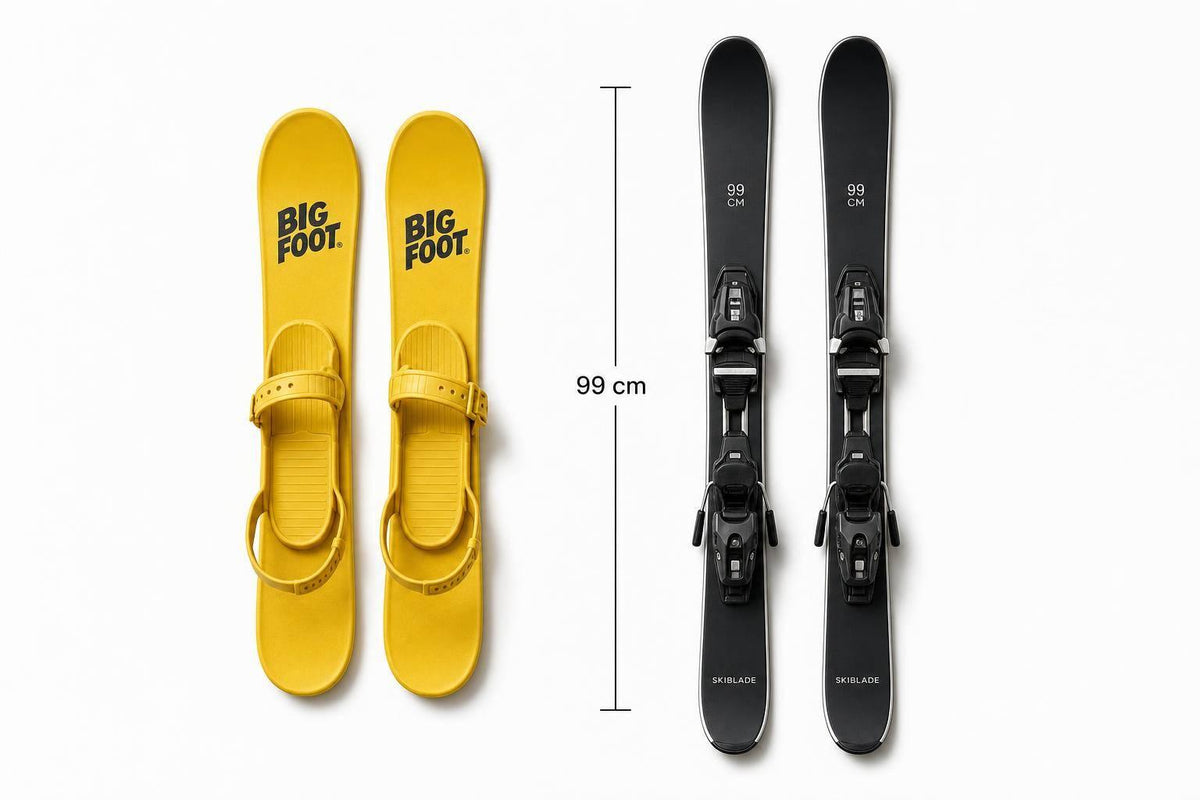
If I had to say it in one line: Big Foot skis are a retro toy, while modern skiblades are the better pick for most riders today.
Here’s the short answer:
- Big Foot skis were made by Kneissl, ran about 65 cm (26 in.), and stopped production around 2007
- They used fixed, non-release bindings, which is a big red flag by today’s resort standards
- Modern skiblades still come in 65 cm, 99 cm, and 120 cm
- They have steel edges, more boot options, and a more stable ride
- 65 cm is best for park laps and tight turns
- 99 cm is the best middle-ground for most people
- 120 cm feels closer to a ski and handles speed better
- Long skis still win for deep powder and fast carving
So, if you want a wall-hanger, a throwback setup, or a weird little slice of ski history, Big Foot still has charm. But if you want gear for actual resort days, I’d go with modern skiblades every time. Same short-ski spirit. Much less drama for your knees :)
Big Foot Skis vs Modern Skiblades: Side-by-Side Comparison
Snowfeet* Snowblades | Skiboards | Skiblades | Short Skis - Complete Guide | All you need to know
Quick Comparison
| Option | Best For | Main Upside | Main Downside |
|---|---|---|---|
| Big Foot (Kneissl) | Collectors, retro fans, mellow short runs | Fun old-school feel | Non-release bindings, hard to find, low stability |
| Skiblades 65 cm | Park riders, trick laps, very short turns | Super nimble, easy to carry | Less stable at speed |
| Skiblades 99 cm | Beginners, families, mixed resort days | Best all-around balance | Not as planted as longer skis |
| Skiblades 120 cm | Riders who want more support and a ski-like feel | More stable, better for longer runs | Less playful than shorter lengths |
A few numbers tell the story fast: Big Foot and the shortest skiblades share the same 65 cm length, but modern models add metal edges and more current binding setups. That changes grip, control, and day-to-day use in a big way.
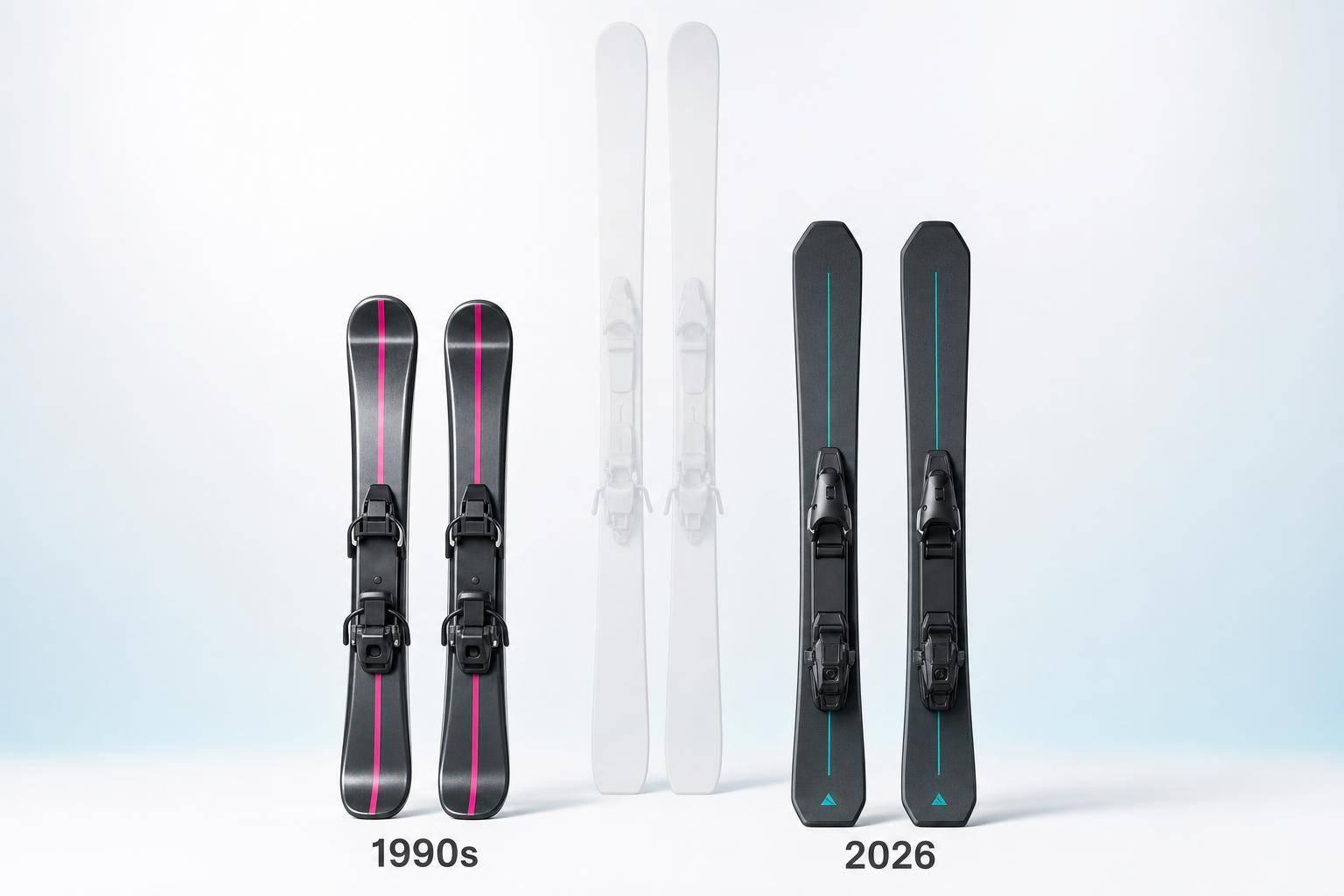
If you want a quick visual before you buy, these can help:
From there, I’d keep it simple: Big Foot for nostalgia, 99 cm for most riders, 120 cm for more stability, and 65 cm for park fun.
Big Foot skis vs Snowfeet* skiblades: core differences
At a glance, the main differences come down to edges, bindings, boot options, and stability.
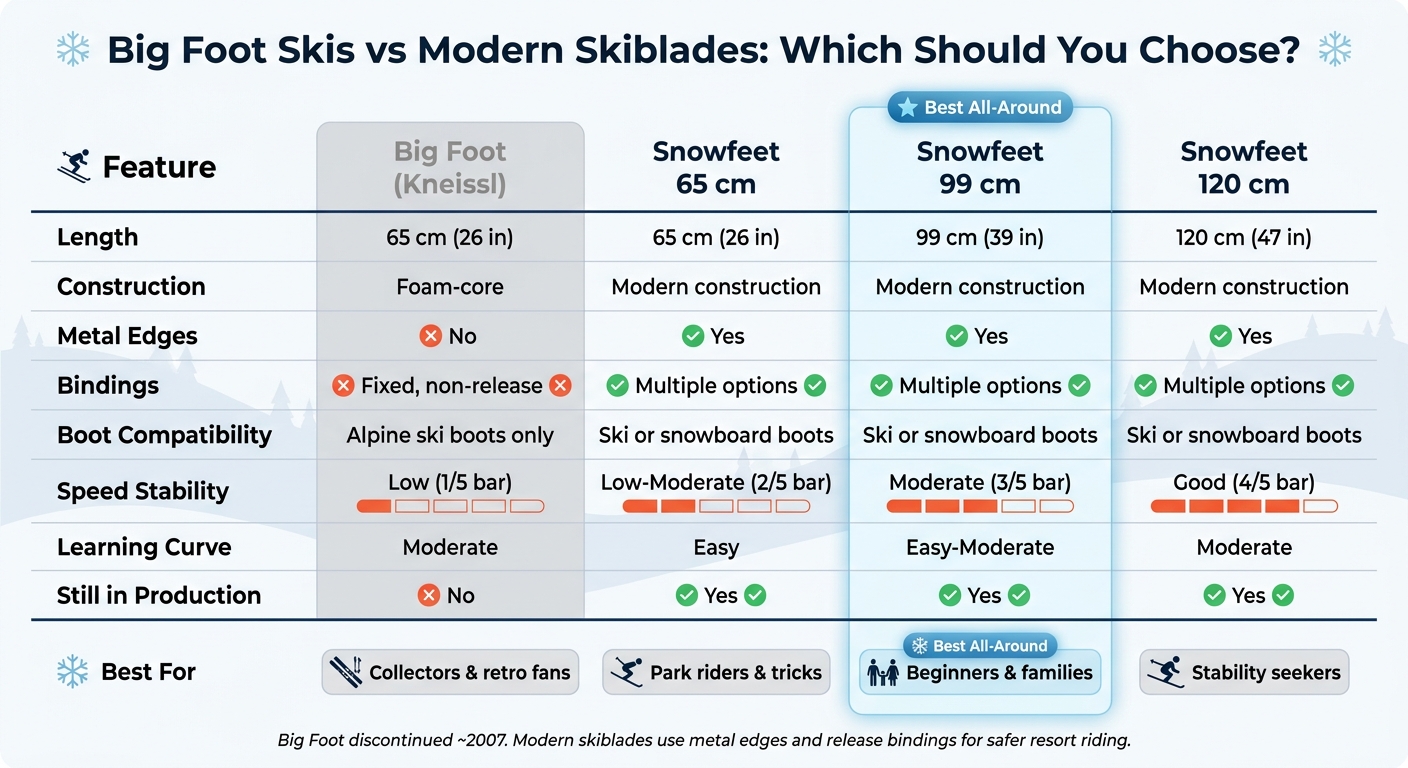
| Feature | Big Foot (Kneissl) | Snowfeet* 65 cm | Snowfeet* 99 cm | Snowfeet* 120 cm |
|---|---|---|---|---|
| Length | 65 cm (26 in) | 65 cm (26 in) | 99 cm (39 in) | 120 cm (47 in) |
| Construction | Foam-core | Modern construction | Modern construction | Modern construction |
| Metal edges | No | Yes | Yes | Yes |
| Bindings | Fixed step-in, non-release | Multiple options | Multiple options | Multiple options |
| Boot compatibility | Alpine ski boots only | Ski boots or snowboard boots | Ski boots or snowboard boots | Ski boots or snowboard boots |
| Speed stability | Low | Low–moderate | Moderate | Good |
| Learning curve | Moderate | Easy | Easy–moderate | Moderate |
| Portability | High | High | Moderate | Moderate |
| Still in production | No | Yes | Yes | Yes |
Specs are useful. But the real gap shows up once you get on snow.
Length, shape, and construction
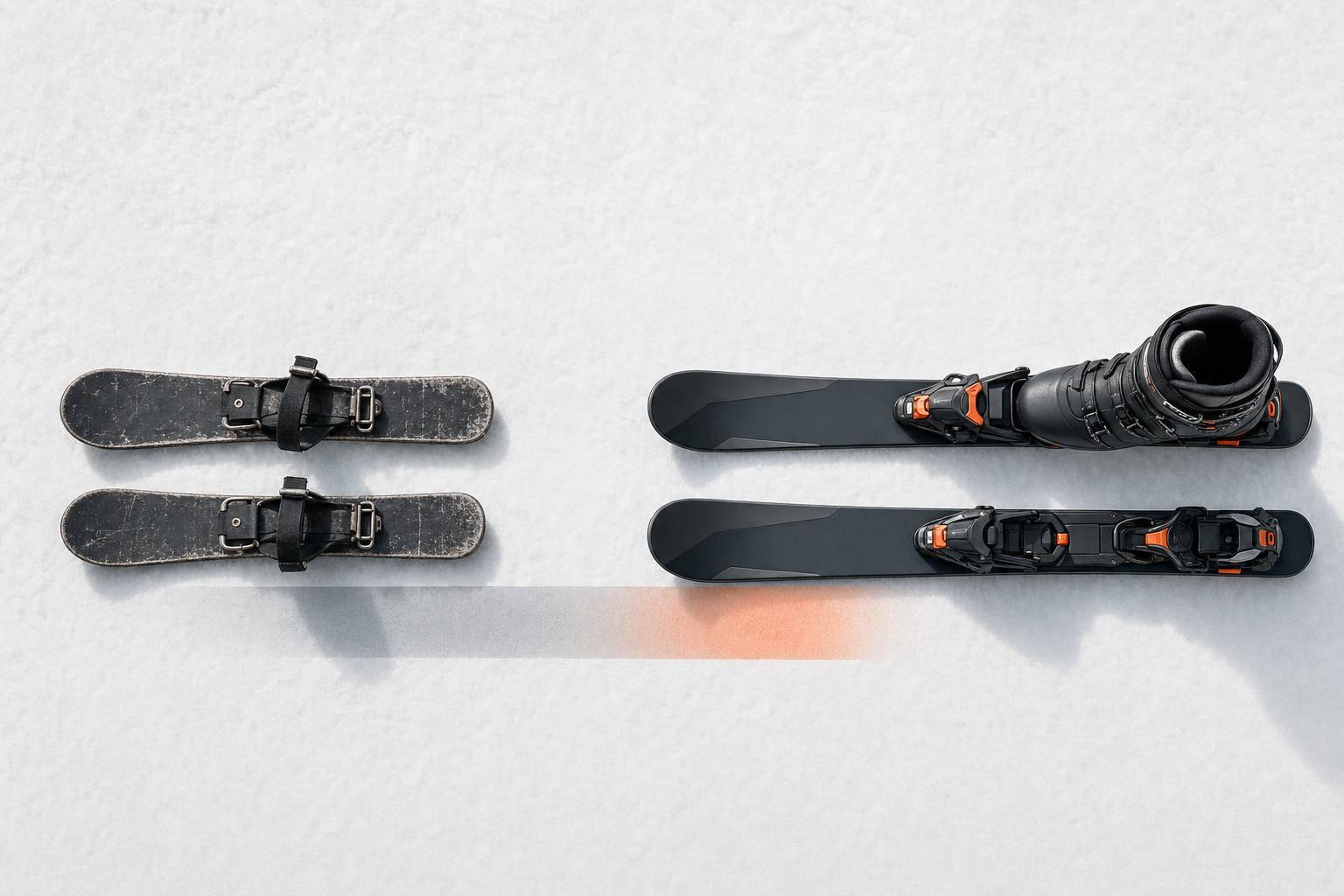
Big Foot and Snowfeet* 65 cm are the same length at 65 cm (26 in). But they don't ride the same.
Snowfeet* uses modern construction and adds metal edges, which gives you better control on firm snow. That's the big thing here. Big Foot didn't have metal edges, while Snowfeet* does. On groomers, hardpack, or icy patches, that extra grip can make a big difference. Less sketchy. More control. More confidence when the snow gets tough.
Stability, turning feel, and learning curve
Big Foots turned hard and fast thanks to their 130/102/130 mm sidecut and about a 4-meter turn radius. That super-short carve is part of the fun. It also makes them twitchy once speed picks up and less at home in bumps or mixed snow.
Snowfeet* 65 cm is the shortest and most playful of the bunch. It's a good fit for parks, quick cuts, and tight turns.
The 99 cm sits in the sweet spot. It still turns fast, but feels calmer at speed.
The 120 cm gives the most ski-like ride of the three. It also brings the most stability, while still being way easier to throw around than a standard long ski.
Bindings, boots, and everyday convenience
Big Foot used fixed step-in, non-release bindings made only for standard alpine ski boots, and they didn't release in a fall. That's a big drawback.
Snowfeet* uses modern binding options instead. You can set them up for ski boots or snowboard boots, depending on the binding you pick. That's handy if you want to use gear you already have instead of buying a whole new setup.
There's also the travel angle. Snowfeet* is easier to pack, and the shorter models are a lot less awkward than hauling around full-length skis. Toss them in the car, stash them in a bag, and go. Much less of a headache.
Those differences matter most when you're riding actual resort snow.
sbb-itb-17ade95
Where each option works best on snow
Terrain matters more than novelty. Each short-ski length fits a different kind of day.
Short groomers, parks, and local hills
Mellow groomers and local hills are where Big Foot makes the most sense. It’s a fun retro toy for easy runs and laid-back laps. Think less "all-day setup" and more "let’s mess around and have a good time."
For parks and quick freestyle laps, Snowfeet* 65 cm is the better pick. It works better for actual day-to-day riding, not just novelty. It’s quick to spin, easy on boxes, and simple for small jumps. If your day looks like park laps, side hits, and short runs, this is the one that fits.
As soon as the runs get longer or the snow gets choppier, the best length starts to shift.
Mixed resort conditions and family skiing
For family ski days on green and blue runs, Snowfeet* 99 cm is the best all-around choice. It’s short enough to turn with little effort, but long enough to stay calmer when the snow gets rough. That makes it a nice middle ground for mixed resort days.
If you ski a bit faster and want more support underfoot, the 120 cm steps in well. You get more stability without giving up the easy feel that makes short skis fun in the first place. It’s kind of like moving from a go-kart to a small rally car - still nimble, just less twitchy.
Powder days and where long skis still win
Full-length skis still win in deep powder, high-speed carving, and big-mountain terrain. That’s still the line in the snow.
Snowfeet* POWDER 99 cm and 120 cm do better in soft snow than standard skiblades, but they still can’t match a true powder ski. If the plan is face shots, big lines, or fast carved turns, long skis are still the better tool. If the day is mixed, playful, and less serious, short skis can still be a blast :)
That terrain split makes the next question pretty simple: who should choose which setup?
Which riders should choose Big Foot skis or Snowfeet* skiblades
Now that the terrain side is clear, the next part is simple: who should actually ride each one?
Beginners, casual riders, and families
For most new riders, Snowfeet* 99 cm is the easiest all-around short-ski option. It works well for family laps on short groomers and for people who are just getting used to being on snow.
If you want a bit more calm under your feet, go with Snowfeet* 120 cm. It's a better fit for riders who plan to pick up a little more speed or who feel uneasy on very short skis. You get more stability, but it still keeps that short-ski vibe.
Big Foot, on the other hand, is mostly for people who want vintage gear. It’s not the best fit for a modern family setup.
Park riders, snowboarders, and crossover users
For tricks and fast direction changes, shorter is better. Snowfeet* 65 cm is the clear choice for park riders. It turns fast and has a skate-like feel, which makes it a strong match for spins, boxes, and side hits.
Snowboarders also tend to click with Snowfeet* because the setup gives them more freedom with boots. Big Foot is less handy for riders who want to use snowboard boots.
Travelers, collectors, and retro fans
If packing light matters most, this one’s pretty easy. Snowfeet* is the simple pick for travel and storage. They’re compact, easy to bring on a weekend trip, and easy to tuck away between resort days.
Big Foot makes more sense as a collector’s piece for retro fans. It’s got that throwback charm, sure, but it’s not the setup most people want to travel with.
| Rider Type | Best Pick | Why |
|---|---|---|
| Beginners & families | Snowfeet* 99 cm or 120 cm | Modern bindings, predictable on short groomers, still sold today |
| Park riders & trick-focused | Snowfeet* 65 cm | Fast turns, skate-like feel, park-ready |
| Snowboarders & crossover users | Snowfeet* 65 cm or 99 cm | Flexible boot setup, intuitive for crossover riders |
Conclusion: Snowfeet* is the better choice for most riders today
Big Foot skis matter in the story of short skis. They left a mark. But on today’s slopes, they’re more of a collector’s piece than something most people should click into. The big issue is simple: fixed, non-release bindings and the fact that they’re no longer made. That’s a tough combo for modern resort riding.
Snowfeet* takes the short-ski idea and brings it into the present with gear that gives most riders a safer, more flexible option. If you want the most playful feel, go with the 65 cm. If you want the best pick for most days and most riders, the 99 cm hits the sweet spot. If you want more stability, the 120 cm is the better bet.
Short skis still aren’t magic, though. They give up some float in powder and they don’t feel as planted at high speed as long skis. That part hasn’t changed.
So the breakdown is pretty clear:
- Retro collectors = Big Foot
- Most riders = Snowfeet*
- Powder and race-style carving = long skis
FAQs
Are Big Foot skis still safe to use today?
Vintage Big Foot skis can still work, but these days they’re more like collector pieces than gear you’d want to count on for regular riding.
The big issue is simple: their older build and dated bindings just don’t stack up against modern equipment. You’re dealing with weaker safety, poor boot fit with today’s setups, and a ride that can feel pretty far behind what current gear offers.
And since most Vintage Big Foot skis are bought used, it’s often a bit of a gamble. You may not know how they were stored, how hard they were ridden, or what shape the bindings are in. That’s a lot of guesswork for something attached to your feet on snow.
For most riders, modern options like Snowfeet* skiblades make more sense. They’re safer, easier to use, and a much better fit for people who want gear they can trust on the mountain.
Which skiblade length should I choose?
Choose based on your experience, terrain, and goals:
- 99 cm: the best all-around pick for most casual resort riders
- 65 cm: a great fit for beginners, park laps, and max maneuverability
- 120 cm: best if you want more speed, stronger edge hold, and a feel closer to regular skis
- 44–50 cm: best for ultra-portability and a fun, skate-like feel
Can I use snowboard boots with skiblades?
Yes. Many Snowfeet* skiblades work with snowboard boots. They use tool-free, adjustable bindings built for that setup.
That includes Snowfeet* models under 100 cm:
- 44 cm Skiskates
- 65 cm Skiblades
- 99 cm Skiblades
The 120 cm models are different. They use standard release ski bindings, so they’re only for ski boots.
When you order, make sure you pick the snowboard-boot-compatible version.











Laat een reactie achter
Deze site wordt beschermd door hCaptcha en het privacybeleid en de servicevoorwaarden van hCaptcha zijn van toepassing.