



















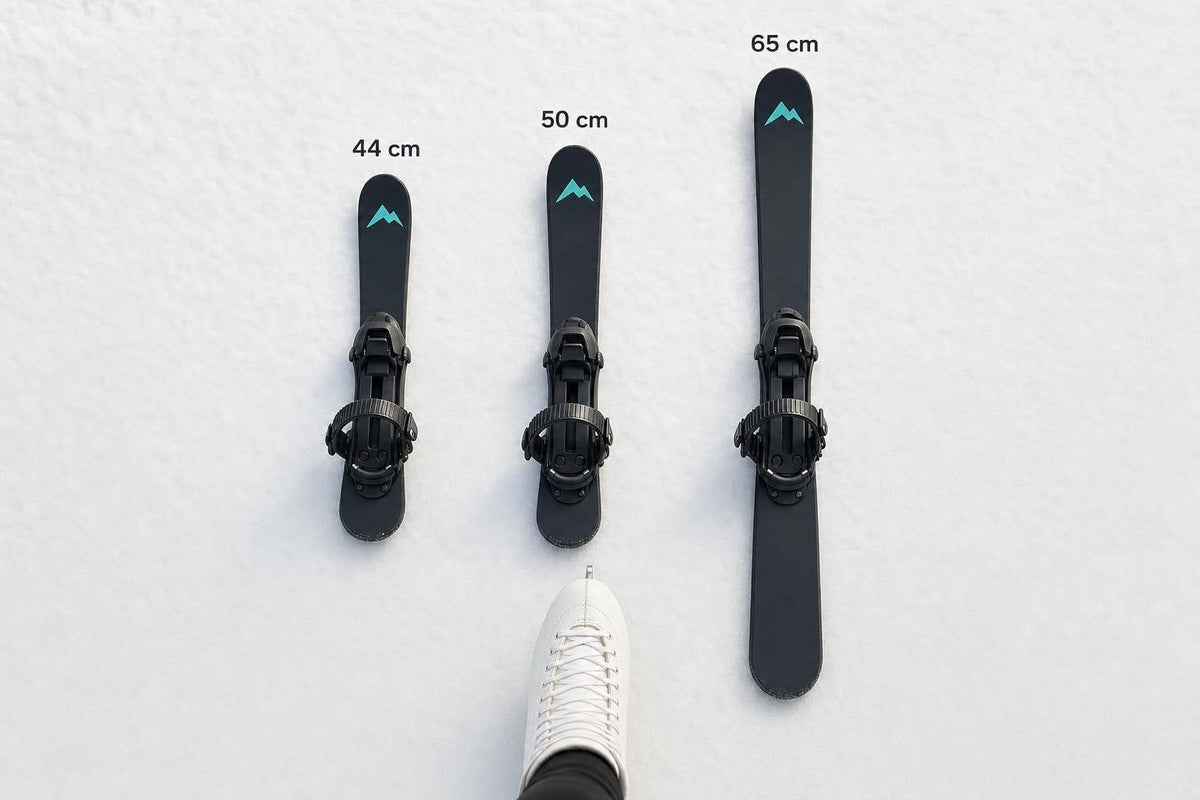
If I were helping a figure skater pick snow gear for day one, I’d keep it simple: go 44 cm for the most skate-like feel, 50 cm for more balance at a lower price, and 65 cm for the steadiest first run. Full-length skis still do better at higher speed and in deeper snow, but they usually feel less natural at first.
Here’s the short version:
- Snowfeet* Skiskates 44 cm: closest to ice skating, sharp edge feel, fits in a backpack, starts at $460
- Snowfeet PRO 50 cm: smoother ride, more fore-aft support, lower starting price at $299
- Snowfeet* Skiblades 65 cm: easiest platform for first-timers, more planted on groomers, starts at $590
- Full-length skis: better once speed builds, but more gear to carry and a steeper learning curve for many skaters
A few things matter most:
- Feel on snow: skate-like vs more ski-like
- Stability: short and lively vs longer and calmer
- Boot setup: ski boots for a firmer feel, snowboard boots for more comfort
- Where you ride: groomed green/blue runs, park laps, or faster resort skiing
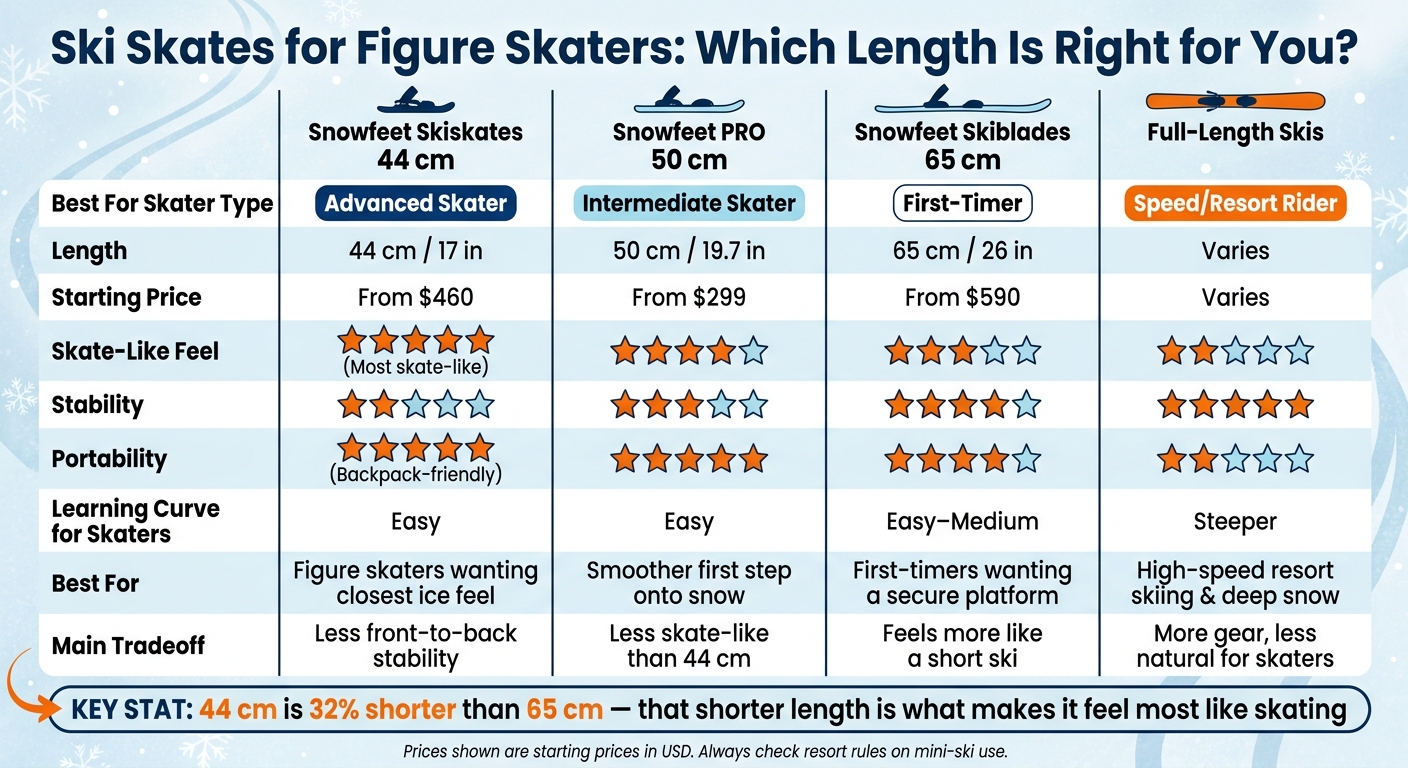
Ski Skates for Figure Skaters: Side-by-Side Comparison
How to Use Snowfeet* Skiskates 44 CM | Skates for Snow | Mini Ski | Snowblades | Snowskates
Quick Comparison
| Option | Length | Starts At | Best For | Main Tradeoff |
|---|---|---|---|---|
| Snowfeet* Skiskates | 44 cm / 17 in | $460 | Figure skaters who want the closest match to ice | Less stable front-to-back |
| Snowfeet PRO | 50 cm / 19.7 in | $299 | Riders who want a smoother first step onto snow | Less skate-like than 44 cm |
| Snowfeet* Skiblades | 65 cm / 26 in | $590 | First-timers who want more support | Feels more like a short ski |
| Full-length skis | Varies | Varies | Higher-speed resort skiing and deeper snow | More gear, less natural for many skaters at first |
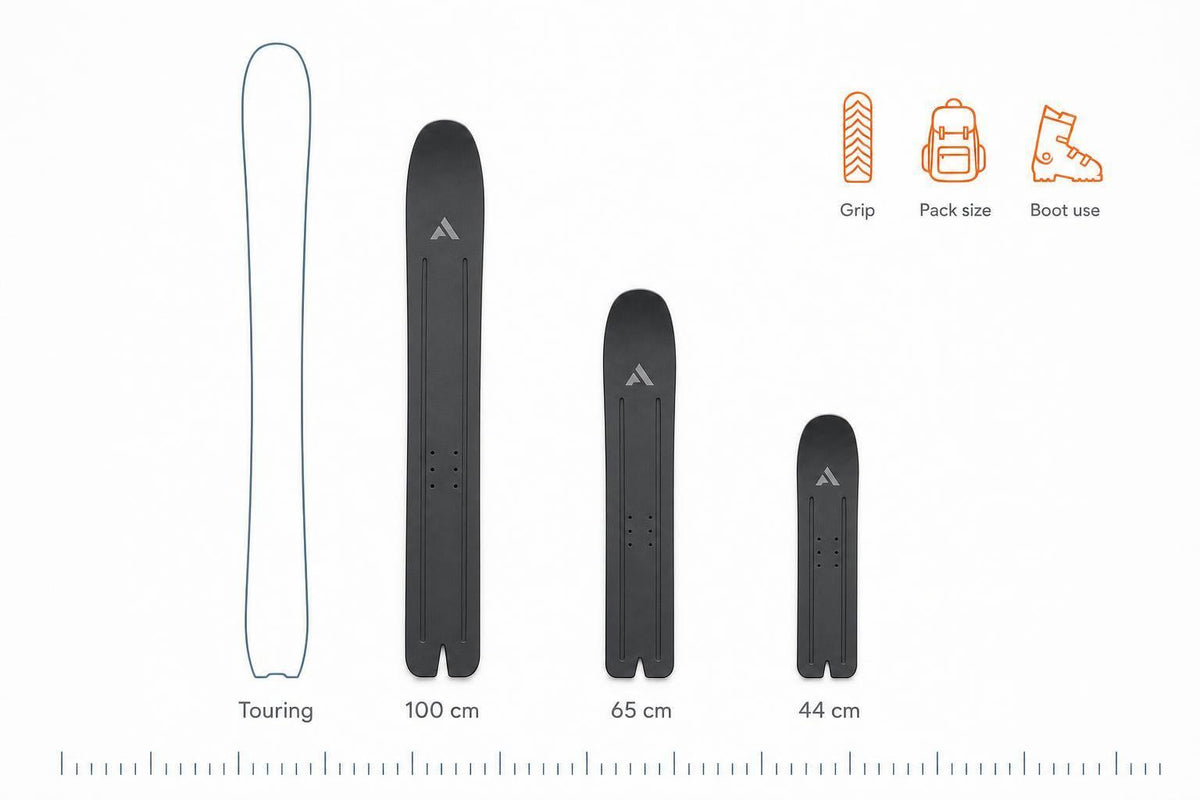
One stat stands out: the 44 cm model is about 32% shorter than the 65 cm model, and that shorter length is a big part of why it feels more like skating. On the flip side, that extra 21 cm on the 65 cm setup gives you more support when the snow starts pushing back. So, yeah, the best pick comes down to what you want your first day to feel like: sharp and playful, smooth and balanced, or steady and calm.
Snowfeet* Skiskates 44 cm vs Snowfeet PRO 50 cm
These are the two best starting points for figure skaters: the 44 cm if you want a faster, skate-like feel, and the 50 cm if you want more stability. Nice and simple.
| Feature | Skiskates 44 cm | Snowfeet PRO 50 cm |
|---|---|---|
| Length | 44 cm (about 17 in) | 50 cm (about 19.7 in) |
| Starting Price | From $460 | From $299 |
| Edge Response | Very snappy, skate-like | Smoother, easier to control |
| Fore-Aft Stability | Lower | Higher |
| Portability | Fits in a backpack | Highly portable |
| Boot Compatibility | Ski boots (EU 36–49 / US 4.5–14.5) | Multiple boot types |
Why Many Figure Skaters Start with the 44 cm Skiskates
The 44 cm Skiskates come with a parabolic shape, metal edges, wood core, and graphite base. That setup plays well with the kind of precise edge pressure figure skaters already know by feel.
On snow, the edge-to-edge response feels quick and direct. If you're used to tight turns, clean edge changes, and that sharp "I meant to do that" feeling from the rink, this will likely click fast. That’s the big draw here: they react in a way that can feel familiar right away.
At 17 in, they also fit in a backpack or carry-on. So, yeah, they’re easy to travel with and easy to toss in the trunk for a last-minute mountain day :) If that sounds a bit too lively for your first run, the PRO offers a calmer ride.
When the Snowfeet PRO 50 cm Is the Better Choice
The Snowfeet PRO 50 cm gives you more fore-aft stability and a smoother, more forgiving turn shape. In plain English: it’s easier to settle into, especially if you’d like a bit more margin for error.
At $299, it’s also the lower-cost way to get started. That makes it a smart pick for cautious skaters, groomed runs, and moderate speeds.
If you want a little more length and a bit more forgiveness after that, the 65 cm Skiblades are the next step up.
sbb-itb-17ade95
Snowfeet* Skiblades 65 cm vs the Shorter Snowfeet* Models
The 65 cm model is the next move for skaters who want more stability without going all the way to full-length skis.
| Feature | Skiskates 44 cm | Snowfeet PRO 50 cm | Skiblades 65 cm |
|---|---|---|---|
| Turning Feel | Extremely nimble, snappy | Smooth and forgiving | Easy carving, 4 m sidecut |
| Stability | Lower | Moderate | Most stable |
| Ski-Like Feel | Most skate-like | Middle ground | Most like a short ski |
What the 65 cm Length Adds for First-Time Snow Skaters
The 65 cm Skiblades pack a wood core and steel edges into a 26-inch setup, so they feel more planted and more ski-like than the shorter models. That added length gives you a bit more support underfoot, which can feel like a nice safety net on groomed runs.
Their 4 m sidecut also makes tight turns easy. Tip them on edge, and the ski helps finish the turn for you. That’s a big deal when you’re still getting used to sliding on snow. At higher speed, the extra length helps calm things down and keeps the ride steadier. So if your main goal is confidence, the 65 cm Skiblades are the strongest pick of the three.
Who Should Still Choose the 44 cm or 50 cm Instead
The rule here is simple:
- 44 cm if you want the closest feel to skating
- 50 cm if you want a middle option
- 65 cm if you want more stability and a ride that feels more like a short ski
For skaters comparing short skis with full-length skis, the next part is where Snowfeet* still comes out ahead for many casual riders. That leads to the bigger issue: when is a short Snowfeet* setup enough, and when do full-length skis start to make more sense?
Snowfeet* vs Full-Length Skis for Figure Skaters
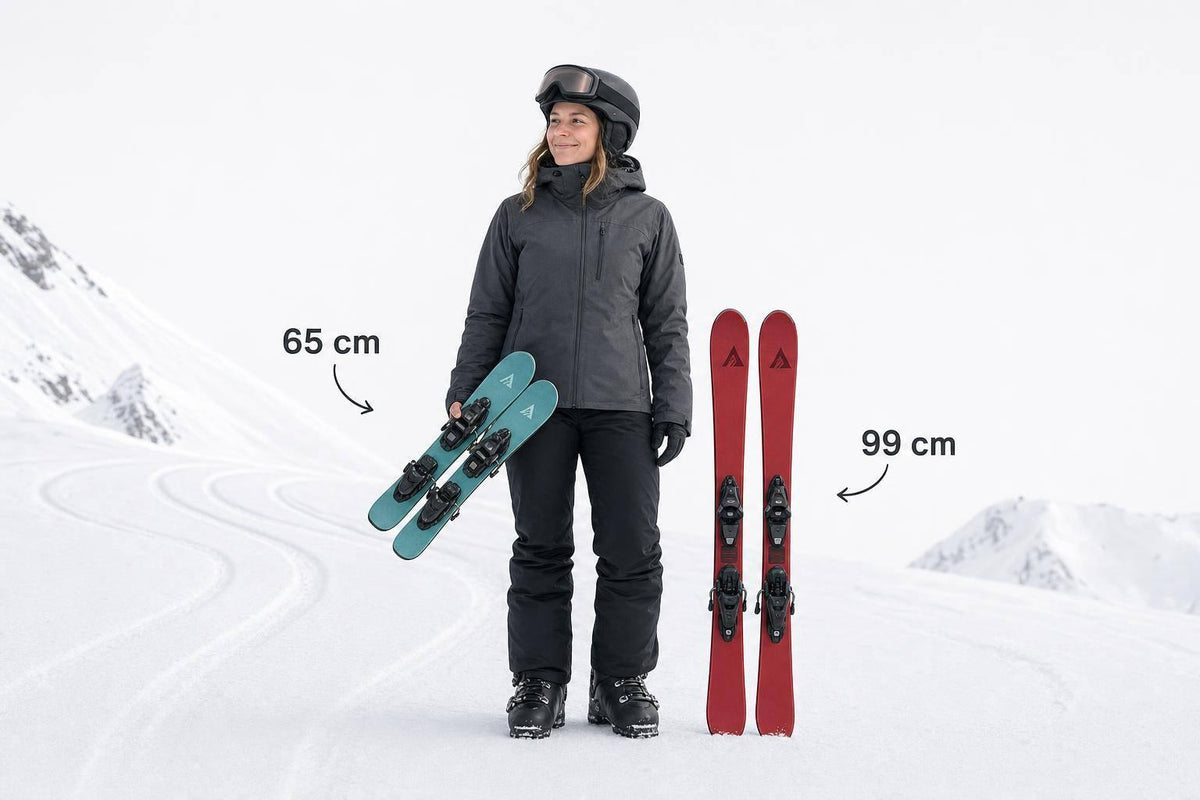
Full-length skis still win in a few key spots, mostly speed and stability. That shows up fast when you stack the shorter Snowfeet models next to standard skis.
| Feature | Skiskates 44 cm | Snowfeet PRO 50 cm | Skiblades 65 cm | Full-Length Skis |
|---|---|---|---|---|
| Turning feel | Most skate-like and quickest | Smooth and forgiving | More stable, still nimble | Long-turn, high-speed ski feel |
| Learning curve | Fast for skaters | Fast for skaters | Easy, with a little more stability | Steeper for first-timers |
| Portability | Very compact | Very compact | Compact | Less portable |
| Boot setup | Ski or snowboard boots | Ski or snowboard boots | Ski or snowboard boots | Dedicated ski boots and release bindings |
| Best use case | Skate-style resort fun | Easy groomer laps and parks | A more stable first-day option | High-speed resort skiing and deeper snow |
Where Full-Length Skis Still Have a Real Edge
If you like to go fast on groomers, full-length skis have a clear edge. They feel calmer and more planted once speed builds.
A Swiss safety organization warns that:
"the shorter the skis, the more difficult they are to control at high speed."
There’s also the binding issue. Traditional skis use standard release bindings, and some resorts want that setup. In fact, some resorts ban mini-skis and boot-skis unless they use standard release bindings.
Why Snowfeet* Fits Figure Skaters and Other Edge-Focused Riders Better
This is where Snowfeet starts to make a lot of sense for skaters. The models are small, easy to carry, and work with snowboard boots or ski boots. That means less hassle on day one. Less stuff to haul, less stuff to store, and less fumbling in the parking lot. Always a win :)
For figure skaters, the feel is often closer to the rink. You get quick edges, tight turns, and a setup that feels less like learning a whole new sport from scratch. Instead of wrestling with long skis, you can focus on balance, edge control, and flow.
From here, the choice comes down to which Snowfeet length fits your skating background and boot setup.
Which Snowfeet* Model to Buy Based on Your Skating Background
Best Pick for Skate-Like Feel, Added Stability, or an Easy First Day
Now that the trade-offs are clear, the last step is simple: match the length and boot setup to your skating background. Think about two things:
- How confident you feel on snow
- How close you want the ride to feel to skating on ice
| Rider Type | Confidence on Snow | Terrain | Ideal Model | Price (USD) |
|---|---|---|---|---|
| Advanced figure skater, strong edge control | Medium–High | Groomed runs, parks | Skiskates 44 cm | From $460 |
| Skater wanting smoother transitions, more stability | Medium | Groomed runs, parks | Snowfeet PRO 50 cm | From $299 |
| First-timer or skater who wants a secure platform | Low–Medium | Groomed green and blue runs | Skiblades 65 cm | From $590 |
If you want the closest thing to ice skating on snow, go with the 44 cm Skiskates. They react fast and make tight turns with ease. For figure skaters, that quick edge response feels familiar in a good way.
The 50 cm PRO gives you a bit more length underfoot, which helps with balance and makes transitions feel smoother. It has a softer learning curve, but still keeps that skate-like vibe.
If your main goal is to feel steady from the start, the 65 cm Skiblades are the easiest platform on day one. A little less twitchy, a little more forgiving. Kind of like trading a race car for something that still turns well but won’t punish every small mistake.
After length, boot setup is the next big choice.
Boot Setup: Ski Boots vs Snowboard Boots
Boot choice changes the feel more than the brand name. That’s the part a lot of people skip past, but it matters.
The 44 cm Skiskates and 65 cm Skiblades come in ski-boot and snowboard-boot versions. The 50 cm PRO works better with ski boots and firmer edge control.
Here’s the simple breakdown:
- Ski boots give you a stiff, direct feel on the edge. If you’re used to the firm ankle support of figure skates, this will probably feel more natural.
- Snowboard boots feel softer and more forgiving, more like a supportive sneaker than a locked-in skate boot.
So, if you like that snug, planted feel and want sharp control, ski boots are likely your lane. If you want a bit more comfort and room to move, snowboard boots may feel less demanding.
Conclusion: The Clearest Choice for Most Figure Skaters
That makes Snowfeet* the better fit for most figure skaters. For the closest match to ice, the 44 cm Skiskates stand out. Pick the 50 cm PRO if you want more balance, or the 65 cm Skiblades if you want the most forgiving first day on snow.
FAQs
Which length should I choose for my first day on snow?
For a first day on snow, the Snowfeet Skiblades 65 cm are the safest default. They feel stable and forgiving on groomed runs, but they still turn with ease, so they won’t feel awkward to a figure skater.
If you want something that feels closer to skating and you trust your balance, the 44 cm Skiskates are a great pick. They’re more agile and easier to carry, but they ask a bit more from you on balance.
Do I need ski boots or snowboard boots?
With most Snowfeet models, you don’t need ski boots. That’s a big plus. You can use your own waterproof winter boots or snowboard boots, which makes the setup more comfortable and easier on your wallet.
For resort slopes, snowboard boots are often the best pick. They give you solid ankle support and better stability, which helps with edge control.
If you like a stiffer feel, some models also work with ski boots, including the 44 cm Skiskates and 65 cm Skiblades.
Are ski skates easier than regular skis for figure skaters?
Yes. For figure skaters, ski skates are often easier than regular skis.
Why? Their short length - like 44 cm - feels a lot closer to a skate blade under your foot. That means edge control, balance, and turning habits tend to carry over with less of a learning curve.
Regular skis are a different animal. They usually ask for a wider stance and better front-to-back balance. New skiers also often learn with a wedge stop, which can feel clunky and awkward if you’re used to the cleaner feel of figure skates.
Snowfeet short gear is built to make that switch feel more natural and, in many cases, faster.











Laat een reactie achter
Deze site wordt beschermd door hCaptcha en het privacybeleid en de servicevoorwaarden van hCaptcha zijn van toepassing.