



















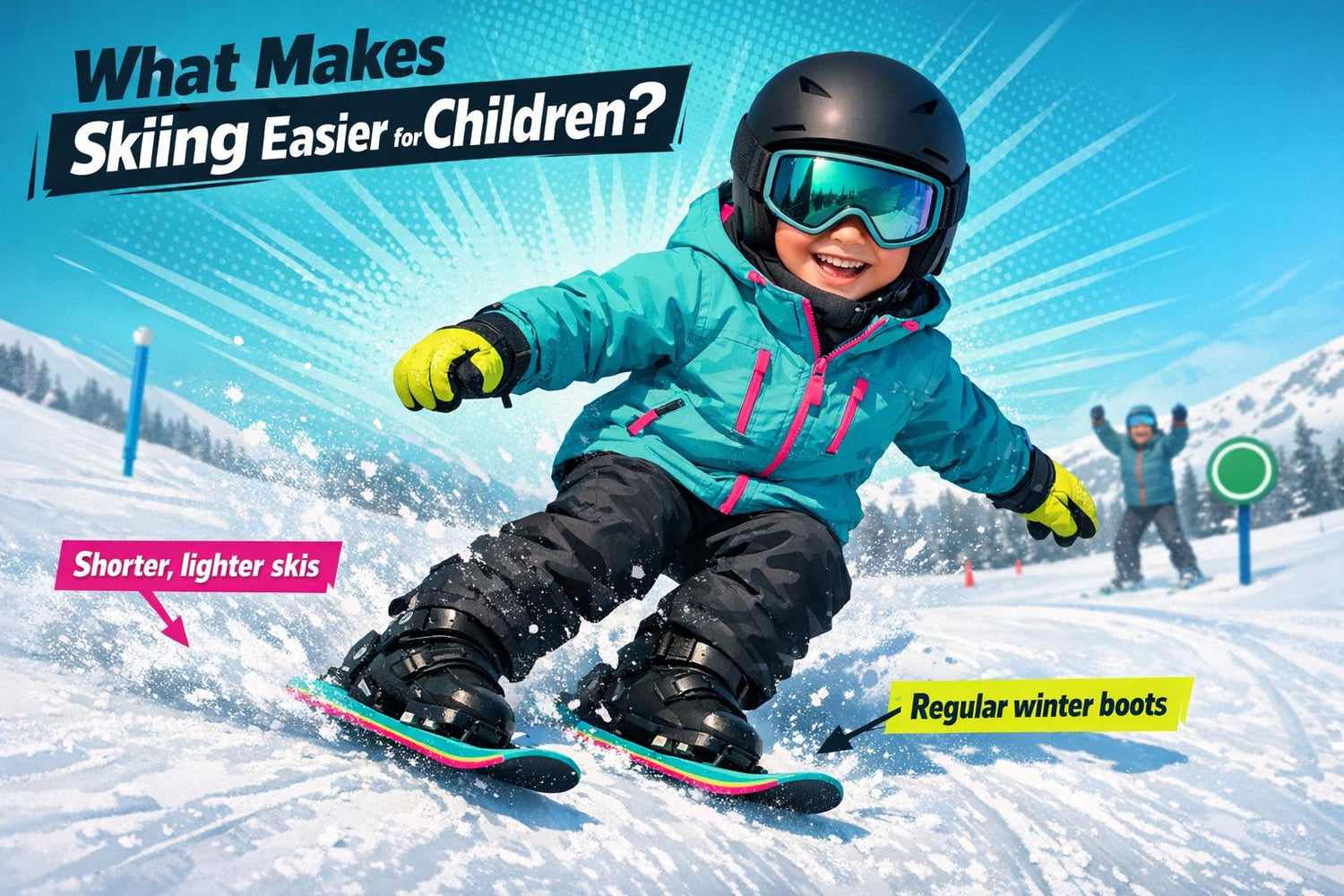
Learning to ski can be tricky for kids, but the right gear makes all the difference. Long, heavy skis often overwhelm young beginners, leaving them frustrated and ready to give up. That’s where shorter, lighter options like Snowfeet* Skiblades and Skiskates come in.
Here’s why they work:
- Shorter skis = better control: Snowfeet* Skiblades (65–120 cm) and Skiskates (44 cm) are easier to turn and balance on, helping kids learn faster and fall less.
- Lightweight gear = less fatigue: Made with ultra-light materials, Snowfeet* gear is easier to handle, letting kids ski longer without getting tired.
- Regular boots = more comfort: Snowfeet* works with winter or snowboard boots, skipping the hassle of stiff, bulky ski boots.
- Safety-first design: Features like built-in brakes and adjustable bindings keep kids secure and confident on the slopes.
With over 5,800 positive reviews and a 4.9/5-star rating, Snowfeet* gear is a game-changer for families. Whether your child is starting out on a backyard hill or a bunny slope, this gear helps them have fun while learning the basics.
Want the details? Keep reading to learn how Snowfeet* makes skiing simple and fun for kids.
Skiing with Kids! Tips from a ski instructor on how to help your children ski better
Shorter Skis and Skates for Better Control
Shorter skis and skates make a big difference for young skiers who are just starting out. Adult skis typically measure between 59 and 73 inches (150–185 cm) - way too long for a child to handle. Snowfeet* Skiblades and Skiskates are designed to match the sizes recommended by ski instructors and sizing guides for young, cautious beginners.
Easier Turning and Steering
Shorter skis have less material extending in front of and behind the boot, which makes turning much easier. With longer skis, kids have to work harder to change direction - something that requires strength and technique they’re still developing. Snowfeet* Skiblades, on the other hand, let kids pivot with just a small shift in body weight. This responsiveness eliminates a lot of the frustration that beginners often face. The result? Turning feels natural and smooth, setting them up to learn faster.
Faster Learning Curve
Many ski schools choose shorter skis for kids’ first lessons because they make teaching basic skills like wedge turns and stopping safer and quicker. Short skis respond immediately to even small movements, giving kids instant feedback that helps them learn balance and control faster. Most sizing guides suggest skis at or below chin height for beginners, and Snowfeet* gear checks that box perfectly for younger skiers. This immediate feedback speeds up the learning process and builds confidence.
Better Balance and Stability
Shorter skis help keep a child’s weight centered over the boot, making it easier to correct small balance mistakes. On longer skis, leaning just a bit too far forward or backward can send the tips or tails out of control, often leading to a fall. Snowfeet* gear, with its shorter length, allows kids to recover quickly from missteps. Fewer falls mean more confidence, and when kids feel confident, they’re more likely to enjoy skiing and stick with it.
Why Properly Sized Boots and Bindings Matter
Shorter skis like Snowfeet* Skiblades and Skiskates give kids better control - but only if their boots and bindings fit just right. Surprisingly, boot fit is one of the most overlooked aspects of a child’s skiing experience. Many ski instructors even say it’s one of the top reasons kids struggle or give up skiing altogether.
A Comfortable and Secure Fit
A properly fitted boot does more than just keep feet warm - it keeps the heel locked in place and prevents the ankle from wobbling. This ensures every movement translates directly into the skis for better precision and control. Here’s a quick test: have your child wear a single thin, moisture-wicking ski sock, secure the boot snugly, and ask them to bend their knees slightly. Their heel should stay firmly planted, toes should lightly touch the front, and there shouldn’t be any painful pressure points. If your child can’t explain discomfort, check for red marks after removing the boot - these often signal fit issues that need fixing.
Works with Multiple Footwear Options
Snowfeet* gear is designed to work with various footwear options. The adjustable strap-based bindings on Snowfeet* Skiblades and Skiskates attach to winter, snowboard, or ski boots without requiring a rigid shell. This flexibility makes it easier for kids to adapt to the slopes while cutting down on rental costs and the hassle of swapping footwear during breaks. For the best experience, go with waterproof winter boots that provide strong ankle support. Avoid overly soft or floppy boots, as they can reduce control when edging. On the flip side, oversized gear can disrupt this secure connection, making it harder to maintain balance and control.
"I love how easy it is to put snowboard boots on and walk with them, they don't hurt like ski boots, and I feel more flexible during the ride." - Snowfeet* Store
Why Oversized Gear Holds Kids Back
Using oversized boots can seriously impact a child’s skiing. Extra space allows the foot to slide and the ankle to wobble, weakening the connection between their movements and the skis. This often forces kids to lean back for stability, making it harder to master wedge control. Snowfeet* bindings solve this problem with an adjustable system that fits the exact shoe size your child wears now - no need to size up for “room to grow.” As their feet grow, you can easily readjust the bindings to maintain a snug, responsive fit. This adjustability gives Snowfeet* gear a big advantage over traditional setups, keeping kids comfortable and confident on the slopes.
How Lightweight Gear Reduces Fatigue
Heavy skis and clunky plastic boots can quickly tire kids out, turning a fun day on the slopes into a struggle. Snowfeet* gear flips the script by being lighter and easier to handle, letting kids focus on fun instead of fighting their equipment.
Less Strain on Legs and Muscles
Snowfeet* products use ultra-light carbon fiber, which makes them far easier to manage than traditional ski gear. The short, lightweight skis combined with regular winter boots mean kids can turn and move with less effort, avoiding the exhausting bulk of heavy boots and long skis.
"No more heavy ski boots or complicated gear - just strap these ultra-light carbon mini skis onto your child's regular winter boots and let them glide with ease." - Snowfeet*
Easy to Carry and Handle
Thanks to their compact design, Snowfeet* gear fits neatly into a standard backpack. Kids can carry their own equipment without needing extra help. Compare that to traditional long skis, which often require roof racks and a second pair of hands just to transport.
"Far more portable and affordable than traditional skis or snowboards." - Uncrate
More Energy for Longer Sessions
Lightweight gear means less energy wasted on lugging and managing equipment, leaving more fuel in the tank for skiing itself. That extra energy translates into longer, more enjoyable sessions on the slopes. Parent Ashley Castle shared her experience:
"Within 30 min he was hockey stopping, and going backwards with crossovers... They don't feel like they're going to break and they're easy to put on as well." - Ashley Castle
With lighter gear, kids can focus on learning, playing, and making the most of their time on the snow.
sbb-itb-17ade95
Simple Teaching Methods for Young Skiers
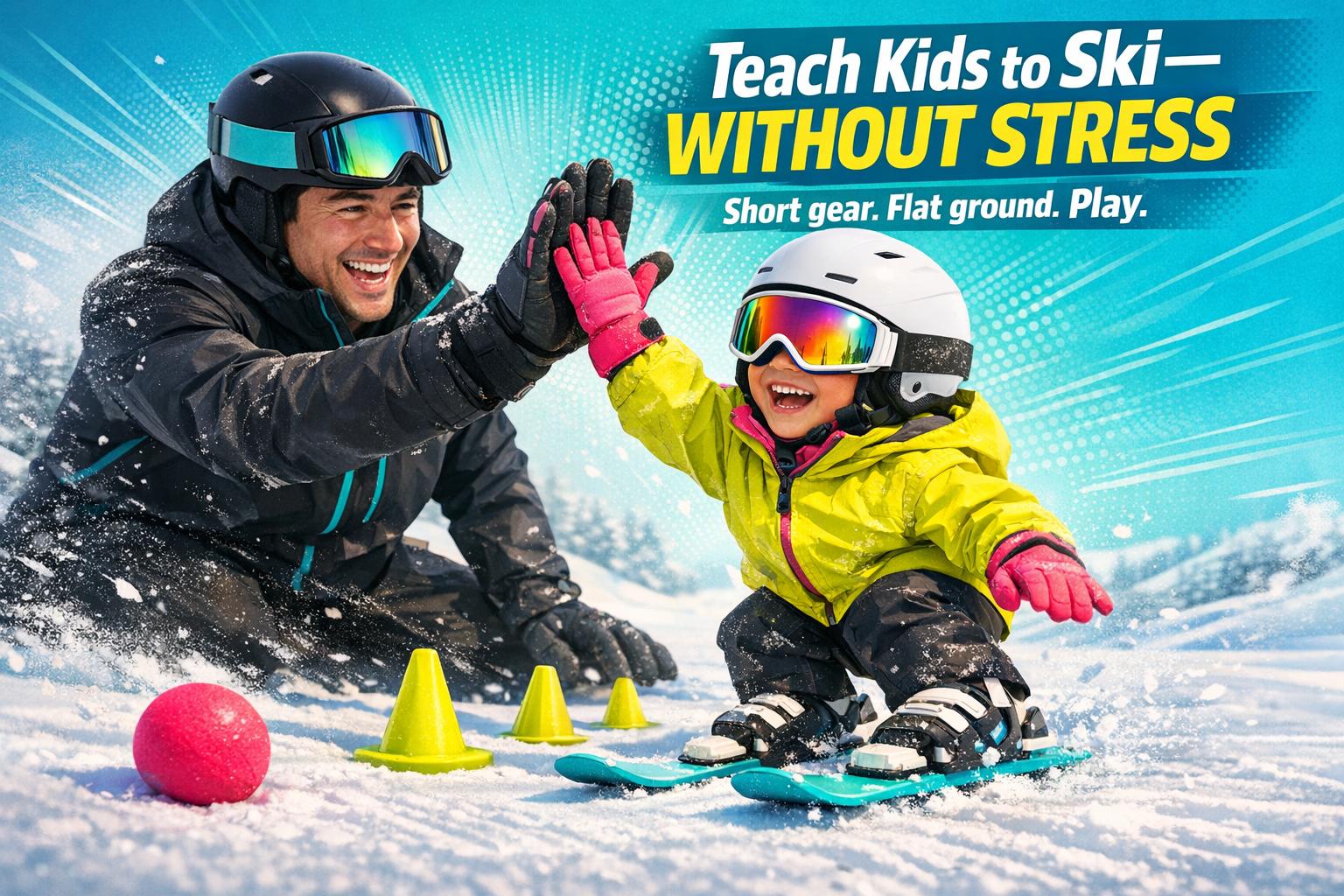
Teaching kids to ski doesn’t have to mean expensive lessons or dealing with crowded bunny slopes. With Snowfeet*'s clever design, kids can smoothly transition from standing still to sliding confidently. A little preparation, the right gear, and some easy-to-follow techniques can make this process fun and stress-free.
Teaching Basic Sliding and Stopping
Skip the busy ski resorts and start somewhere familiar, like a sledding hill or a gently sloped backyard. These low-pressure spots help kids get used to the feeling of sliding without the overwhelming environment of a mountain. Once they’re comfortable moving, you can introduce stopping techniques. Start with the snowplow (the classic "pizza" shape) and then progress to the hockey stop, which involves turning both feet sideways and evenly distributing weight across the skis.
Snowfeet* gear makes learning these moves easier. The shorter length of their skis gives kids instant feedback and better control. As Snowfeet* explains:
"Long enough to ski, short enough to skate. Easy to Learn and Use. Strap in and ride - no lessons needed." - Snowfeet* Store
For added safety, models like the Snowfeet* MINI KIDS come with a built-in heel brake, offering a reliable way to stop for kids who need extra time to master the basics. Once sliding and stopping are under control, the next step is all about balance.
Starting with Balance First
Before introducing speed or turns, focus on front-back balance. This is the foundation for skiing, and it’s surprisingly easy for kids to pick up, especially with Snowfeet*. Unlike traditional long skis, which can feel bulky and hard to manage, Snowfeet* gear reacts naturally to body movements. Kids who have tried ice skating or inline skating will find the balance and motion very familiar.
The double-blade design of Snowfeet* provides a stable base, giving beginners extra confidence as they practice. Plus, using regular winter boots instead of stiff ski boots makes a big difference. With more ankle mobility and better "foot feel", kids can make quicker and more natural adjustments as they learn.
Fun Drills to Build Confidence
Once your child feels balanced, it’s time to make practice fun with some engaging drills. The "skate and glide" drill is a great starting point. Have them shift their weight from one foot to the other while gliding on both, similar to how they would on ice skates. This helps them understand momentum and reinforces balance.
From there, let them explore! Encourage small turns, gentle carves, or even simple tricks. Snowfeet* gear works on groomed slopes, hiking trails, and backyard hills, giving kids the freedom to practice wherever there’s snow. It’s all about making skiing enjoyable and building confidence step by step.
Safety and Comfort Tips for Kids on the Slopes
When it comes to kids on the slopes, safety and comfort aren’t just nice-to-haves - they’re must-haves. With the right gear and setup, skiing can be a fun and secure adventure for young ones.
Wearing the Right Protective Gear
Let’s start with the basics: a well-fitted helmet is non-negotiable. Add waterproof gloves and warm, layered clothing to keep them cozy and dry. For footwear, opt for waterproof winter boots that provide strong ankle support. These work perfectly with Snowfeet* products, offering stability without the stiffness of traditional ski boots. With the right gear, every movement feels supported, making skiing safer and more enjoyable.
Picking the Right Terrain
Choosing the right slope can make or break a beginner’s experience. Gentle, groomed slopes or even local sledding hills are ideal for starting out. Hard-packed snow gives kids a consistent surface to practice on, while deep powder (anything over 4 inches) and rough, bumpy terrain should be avoided until they’ve gained some confidence. As their skills improve, they can gradually tackle more challenging areas. The compact design of Snowfeet* gear also allows for unique, beginner-friendly options like backyards or lightly snow-covered hiking trails. These environments are perfect for learning control and building confidence.
How Snowfeet* Gear Keeps Kids Safer
Snowfeet* gear is designed with safety in mind, offering features that reduce the chances of injury. Unlike traditional skis or snowboards, the shorter length of Snowfeet* minimizes the force during a fall, making it less risky. The built-in heel brake and metal ski edges give kids immediate control, making it easier to stay balanced. For added stability, the kids’ models include a double-blade design, which is a game-changer for beginners.
Take it from Ashley Castle, a verified customer, who shared her experience with the Snowfeet* MINI KIDS:
"Within 30 min he was hockey stopping, and going backwards with crossovers. I [love] how sturdy these are. They don't feel like they're going to break and they're easy to put on as well." - Ashley Castle, Verified Customer
When kids feel in control, they’re less likely to panic or make risky moves. That means fewer falls, more confidence, and a whole lot of fun on the slopes! Snowfeet* gear helps make skiing both safer and more enjoyable for young adventurers.
Snowfeet* Products vs. Long Skis: A Direct Comparison
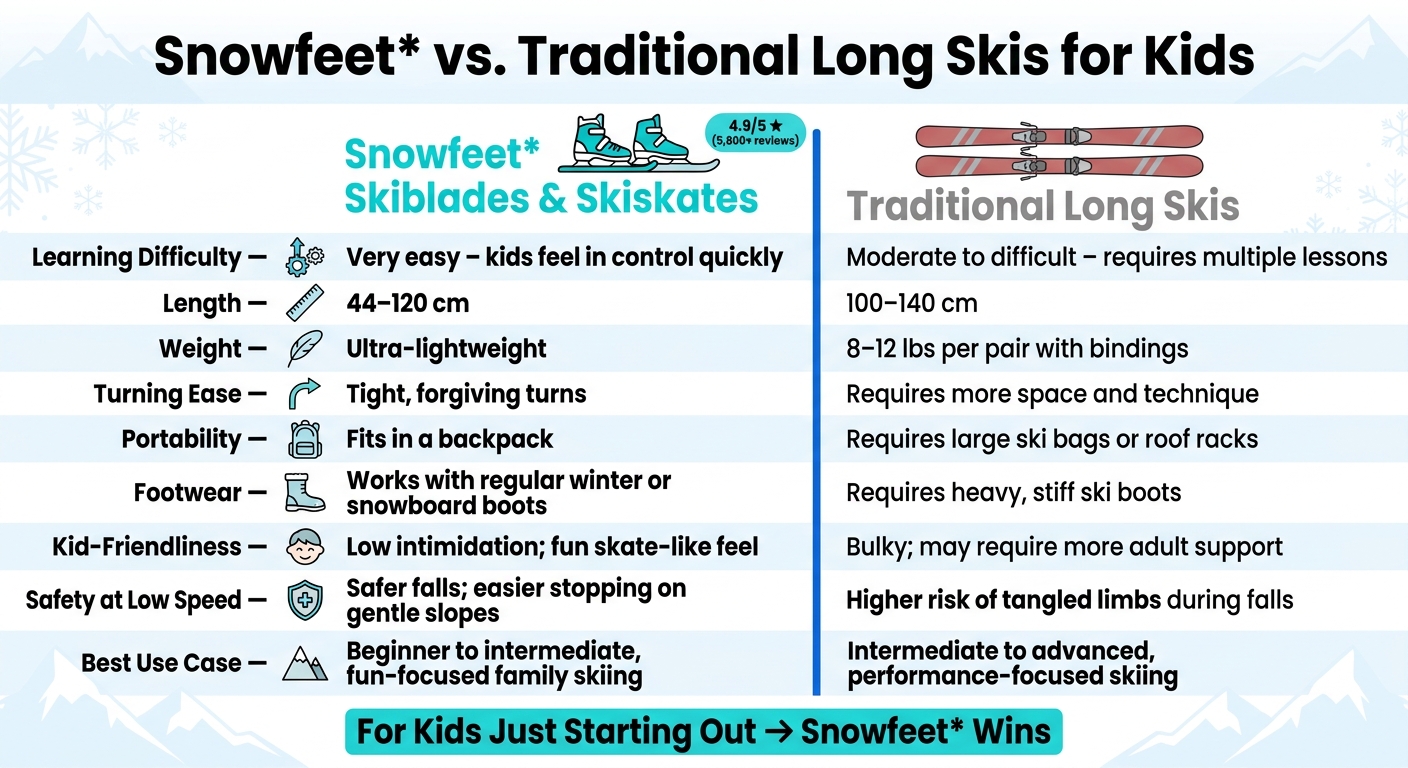
Snowfeet vs. Traditional Skis: Which Is Better for Kids?
Snowfeet* gear has a clear edge over traditional long skis when it comes to young beginners. It's not just about the smaller size - it’s about better control, reduced fatigue, and a more enjoyable experience.
With lengths ranging from 44 to 120 cm, Snowfeet* gear is more agile and lightweight compared to traditional skis, which typically measure between 100–140 cm and weigh 8–12 pounds. That smaller size makes a big difference: it allows for tighter turns, reduces the risk of tip-crossing, and makes learning to ski much easier. Snowfeet* are designed to make turning and stopping more intuitive for beginners.
Another bonus? The compact size of Snowfeet* gear makes transportation a breeze. Kids can easily carry their own gear from the car to the lift - something that’s almost impossible with full-length skis.
Now, traditional long skis do have their perks, especially for more advanced skiers or those tackling higher speeds and variable terrain. They offer greater stability at speed, making them a solid choice for teens progressing toward competitive skiing. But for kids just starting out on simple groomed slopes, that extra stability isn’t as useful. For early learners, Snowfeet* gear is hard to beat.
Comparison Table: Snowfeet* vs. Long Skis
Here’s a quick look at how Snowfeet* stacks up against traditional long skis:
| Feature | Snowfeet* Skiblades & Skiskates | Traditional Long Skis |
|---|---|---|
| Learning Difficulty | Very easy; most kids feel in control quickly | Moderate to difficult; typically requires multiple lessons |
| Length | 44–120 cm | 100–140 cm |
| Weight | Lighter; easier for kids to handle | 8–12 lbs per pair with bindings |
| Turning Ease | Tighter, more forgiving turns | Requires more space and technique to turn; tips cross more easily |
| Portability | Fits in a backpack; no special bags needed | Often requires large ski bags or roof racks |
| Footwear | Compatible with regular winter or snowboard boots | Needs heavy, stiff ski boots |
| Kid-Friendliness | Low intimidation; a fun, skate-like feel | Can appear bulky and may require more adult support |
| Safety at Low Speed | Safer falls and easier stopping on gentle slopes | Higher risk of tangled limbs during falls |
| Best Use Case | Ideal for beginner to intermediate, fun-focused family skiing | Suited for intermediate to advanced, performance-focused skiing |
Conclusion: Why Snowfeet* Works Well for Kids
Snowfeet* stands out because it’s designed to match how kids naturally move, making the learning process much smoother. With lengths ranging from 44 cm (Skiskates) to 120 cm (Skiblades), this gear is tailored to suit kids’ shorter legs, limited strength, and shorter attention spans. Instead of fighting against these natural limitations, Snowfeet* works with them, helping kids learn the basics faster and keeping them excited to keep going.
What makes Snowfeet* different from traditional long skis isn’t just the size - it’s the thoughtful design. They’re lighter, easier to control, and compatible with regular winter boots. That means kids can skip the bulky, uncomfortable ski boots, carry their own gear, and get back up after a tumble without needing help. These small conveniences can make a big difference in how much fun they have on the slopes. And this isn’t just theory - customers back it up with their experiences.
With over 5,800 verified reviews and an impressive 4.9/5-star rating, Snowfeet* has won over families and even caught the attention of outlets like Mashable and Uncrate for making snow sports more approachable.
For kids aged 5 to 15, Snowfeet* offers an excellent way to dive into snow sports. The Mini Kids model is priced at $250 (fits EU shoe sizes 27–38), while the Skiblade lineup for older kids starts at $635. It’s a smart investment in making their time on the slopes more fun and frustration-free.
FAQs
Which Snowfeet* size is best for my child?
The right Snowfeet size for your child is based on their shoe size. The Snowfeet Mini is designed for US sizes 10–6 (EU 27–38), making it ideal for smaller kids. For older children or those with larger feet, the standard Snowfeet fits US sizes 6–13 (EU 38–47). If you're shopping for younger kids, go with the Mini to guarantee a snug and comfy fit.
Do Snowfeet* work at most U.S. ski resorts?
Yes, Snowfeet products can be used at most ski resorts across the U.S. They're lightweight, easy to carry, and work with standard winter boots, which makes them a practical choice for different snowy terrains and slopes. Whether you're just starting out or have years of skiing experience, their flexibility and convenience make them a solid option.
What boots should my child wear with Snowfeet*?
For your child to use Snowfeet* safely and comfortably, make sure they wear waterproof shoes with solid ankle support. Options like winter boots or snowboard boots with bindings work best. The right footwear helps keep them stable and secure while skiing.











댓글 남기기
이 사이트는 hCaptcha에 의해 보호되며, hCaptcha의 개인 정보 보호 정책 과 서비스 약관 이 적용됩니다.