




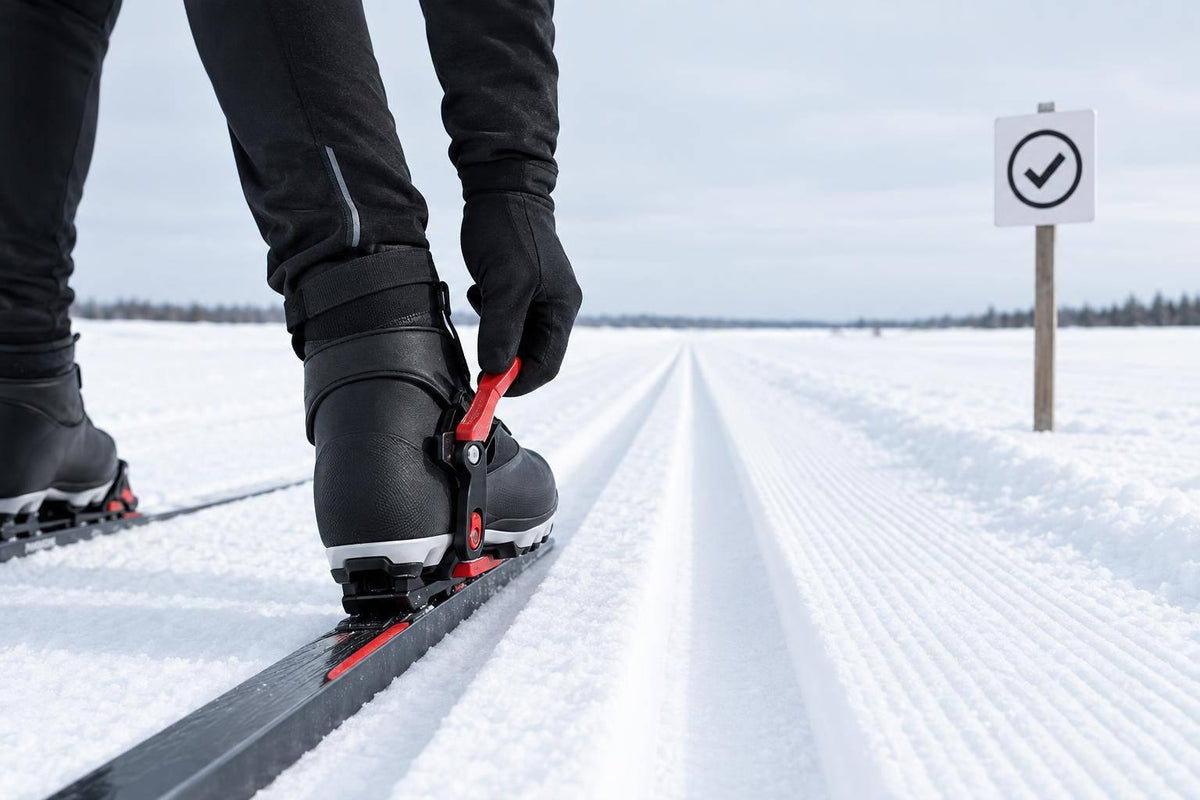
Yes - WALKSKI can work on flat groomed trails, but only where the trail operator allows it. I’d choose its 100 cm (about 39-inch) length for short, casual trips - not long-distance training.
Here’s what I’d check before heading out:
- Trail rules: Groomed paths aren’t all open to WALKSKI. Stay out of classic tracks unless the operator permits it and the skis fit without scraping the edges.
- Boot fit: Check your binding version, secure your boots, and use Walk mode. Don’t force a boot to fit.
- Snow and control: Start on firm, level snow. Use short steps and light pole pushes, then practice stopping. Ice means less grip.
- Grip versus glide: Built-in skins help with traction but add drag. Expect more steps than on Nordic skis.
<u>My pick depends on the trip:</u> WALKSKI for short outings and easy turns; classic skis for track skiing; skate skis for skating lanes; metal-edge backcountry skis for ungroomed snow.
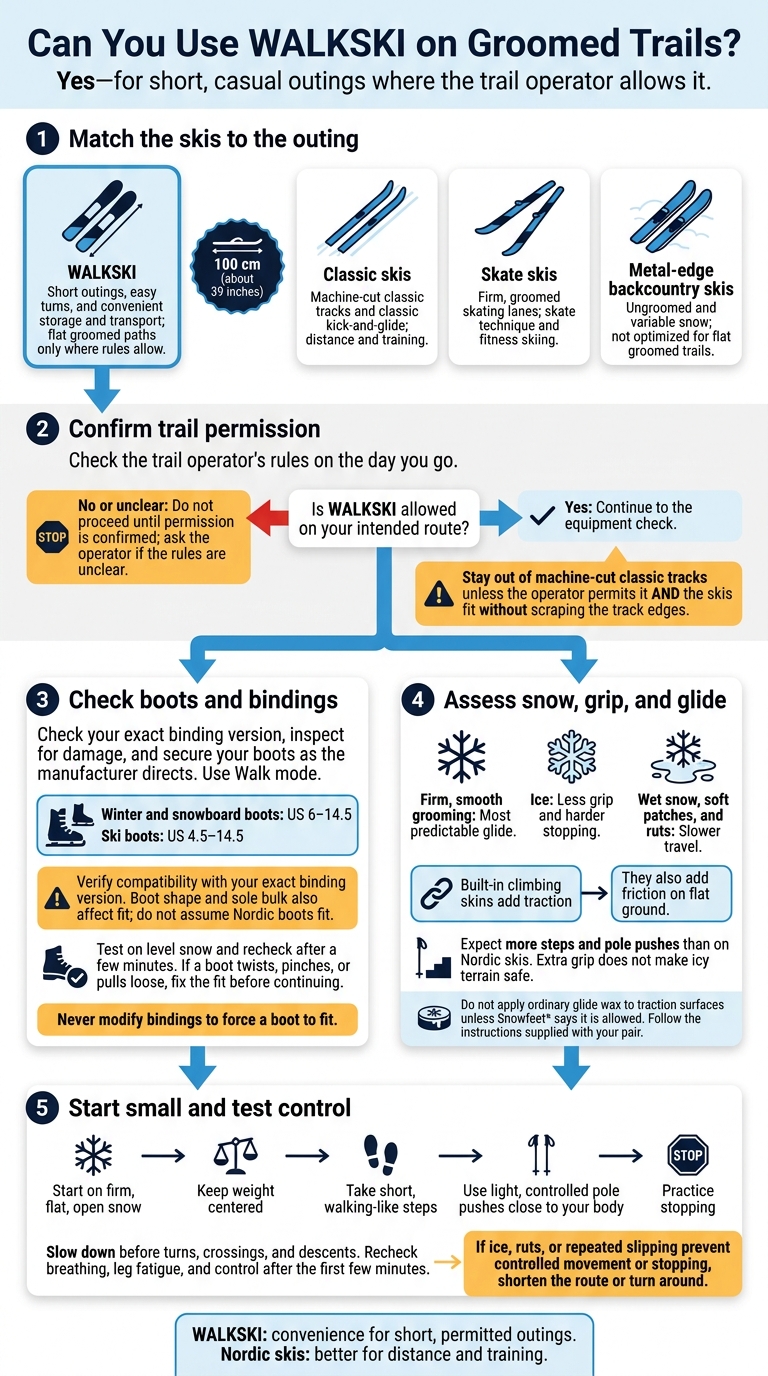
Can You Use WALKSKI on Groomed Trails? Pre-Trip Checklist
Check Trail Rules and Boot Fit
Groomed Paths vs. Nordic Tracks
Check the trail operator’s rules on the day you go. Groomed snow doesn’t mean WALKSKI is allowed. Multi-use paths may allow short touring skis, while Nordic lanes may be limited to cross-country gear. Ask the operator if the rules aren’t clear. Once you’ve confirmed WALKSKI is allowed, check your setup before stepping in.
Keep WALKSKI out of machine-cut classic tracks unless the operator gives permission and the skis fit without scraping the track edges.
Check Boots, Bindings, and Poles
Check which boots and sizes your exact binding version accepts, including whether it works with Nordic boots. Snowfeet* lists US sizes 6–14.5 for winter and snowboard boots and US sizes 4.5–14.5 for ski boots. Boot shape and sole bulk also affect how the bindings close.
Inspect the bindings for damage, then secure your boots as the manufacturer directs. Test the fit on level snow and check it again after a few minutes. If a boot twists, pinches, or pulls loose, fix the fit before you continue. Never modify bindings to force a boot to fit. Adjustable poles help with balance and propulsion, but they won’t fix loose boots or poor stopping control.
After checking the fit, focus on how WALKSKI glides and grips on flat snow.
Snowfeet WALKSKI | Backcountry Skiing in Georgia
What to Expect From Glide, Grip, and Effort
WALKSKI can work on flat groomed trails for short outings where use is permitted. At 100 cm (about 39 inches), it favors quick turns over long glide. Expect more steps and pole pushes than on Nordic skis, which glide farther with less effort. Snow conditions also affect how much grip and glide you get.
How Snow and Skins Affect Glide and Grip
Firm, smooth grooming gives the most predictable glide. Ice reduces grip and makes stopping harder. Wet snow, soft patches, and ruts slow you down. Don’t apply ordinary glide wax to traction surfaces unless Snowfeet* says it’s allowed.
Skins add traction, but they also add friction on flat ground. Snowfeet* describes WALKSKI as having built-in climbing skins, so use the setup supplied with your pair and follow the attachment instructions. Extra grip doesn’t make icy terrain safe.
Move With Short Steps and Pole Pushes
Start on a flat, open section with firm snow where use is permitted. Keep your weight centered, take short, walking-like steps, and push with your poles close to your body. Keep those pushes controlled. If you slip, shorten your stride. On gentle rises, take small uphill steps.
Practice stopping on a flat, open section first. Slow down before turns, crossings, and descents. After the first few minutes, check your breathing, leg fatigue, and control. If ice, ruts, or repeated slipping keep you from stopping or moving with control, shorten the route or turn around.
sbb-itb-17ade95
WALKSKI vs. Cross-Country Skis
Choose based on terrain and how you plan to ski. WALKSKI makes turning and transport easier; Nordic skis work better for longer trips. On flat groomed snow, the trade-off is efficiency versus convenience.
| Feature | Snowfeet* WALKSKI | Classic touring skis | Skate skis | Metal-edge backcountry skis |
|---|---|---|---|---|
| Intended terrain | Short outings on mixed snow; flat groomed paths where rules allow | Machine-cut classic tracks and groomed trails | Firm, groomed skating lanes | Ungroomed and variable snow |
| Flat-trail glide | Less efficient than Nordic skis | Efficient kick-and-glide travel | Efficient with skate technique on firm grooming | Varies; not optimized for groomed trails |
| Climbing grip | Climbing skins; follow manufacturer instructions | Wax, scales, or skins | Skate pushes; no classic kick zone | Scales or skins |
| Maneuverability | Short length makes tight turns easier | Longer skis need more turning room | Built for controlled edge-to-edge movement | Less nimble on flat groomed tracks |
| Classic-track fit | Not a default fit; check local rules and dimensions first | Intended for tracks, subject to dimensions and rules | Use skating lanes, not classic grooves | Width and local rules determine fit |
| Best user | Casual riders who want convenience and use across mixed terrain | Distance skiers and classic-technique learners | Skate-technique and fitness skiers | Off-trail touring users |
Nordic skis usually win for distance. For short, casual outings, WALKSKI’s compact setup may matter more.
Choose Nordic Skis for Distance and Training
For regular mileage, match your skis to the grooming. Use classic skis for machine-cut classic tracks and classic kick-and-glide. Choose skate skis for skating lanes. Metal-edge backcountry skis suit ungroomed snow but aren’t optimized for flat groomed trails.
Nordic skis need matching Nordic boots and bindings. An NNN boot won’t work with an SNS binding. Don’t assume either boot system fits WALKSKI.
Choose WALKSKI for Short, Mixed-Terrain Outings
Snowfeet WALKSKI is a better fit for casual riders* who care more about easy storage, transport, and turning than training pace - as long as the route allows it and the boots fit.
WALKSKI works with several compatible boot types, so you may not need dedicated Nordic boots. For occasional use on flat groomed trails where it’s allowed, it offers a simpler setup and easier turns.
Conclusion: WALKSKI Works for Occasional Permitted Outings
Choose Snowfeet* WALKSKI for short outings on broad, groomed paths only if the trail operator allows it - not in dedicated classic tracks. Nordic skis remain the better choice for distance and training.
Check the binding fit before you head out. Start on firm, level snow, using short steps and light pole pushes. For casual outings on permitted trails, WALKSKI offers easy handling and a simpler setup than Nordic skis.
FAQs
How can I confirm WALKSKI is allowed on my local trails?
Check the trail rules before you head out. Look at state park websites, multi-use greenway guidelines, or Nordic center policies. WALKSKI is often allowed where snowshoes or cross-country skis are permitted, but rules vary - especially on dedicated cross-country tracks.
If you’re visiting a managed facility, call or check its website to confirm whether it allows backcountry or short-ski equipment.
How do I check whether my boots fit WALKSKI bindings?
WALKSKI’s adjustable bindings fit winter and snowboard boots in US sizes 6–14.5 and ski boots in US sizes 4.5–14.5. To check the fit, place your boots in the bindings and tighten them until they’re secure.
Snowfeet recommends boots with firm ankle support for better control and comfort on the snow.
How far should my first flat-trail WALKSKI outing be?
For your first flat-trail outing with Snowfeet WALKSKI, aim for 1 to 3 miles on packed snow. At 100 cm (about 39 inches) long, these skis offer less glide than longer touring skis, so covering more ground takes more effort.
That starting range helps keep the trip fun without wearing you out. On routes beyond 3 to 4 miles round trip, you may notice the shorter glide more than you would with full-length skis.











댓글 남기기
이 사이트는 hCaptcha에 의해 보호되며, hCaptcha의 개인 정보 보호 정책 과 서비스 약관 이 적용됩니다.