



















If I can’t inspect used skiboards with care, I’d buy new. That’s the short answer.
Here’s why: used skiboards often cost 20% to 40% less, but that lower price can disappear fast if the bindings are old, the edges are worn, or the flex is dead. New skiboards cost more up front, but I know their history from day one, and that cuts down on risk.
If I were making the call today, I’d weigh these five things first:
- Price
- Condition
- Binding safety
- Ride feel
- Warranty
For me, the pattern is simple:
- Buy used if the discount is big, the gear passes inspection, and I know what I’m looking at
- Buy new if I’m a beginner, I ride a lot, or I don’t want surprises halfway down the hill :)
Skiboards, skiblades, and short skis usually run about 65 cm to 120 cm long, or about 2 to 4 feet. That short length makes them easier to move around than many standard skis, but it also means worn bindings or a tired flex can show up fast in how they ride.
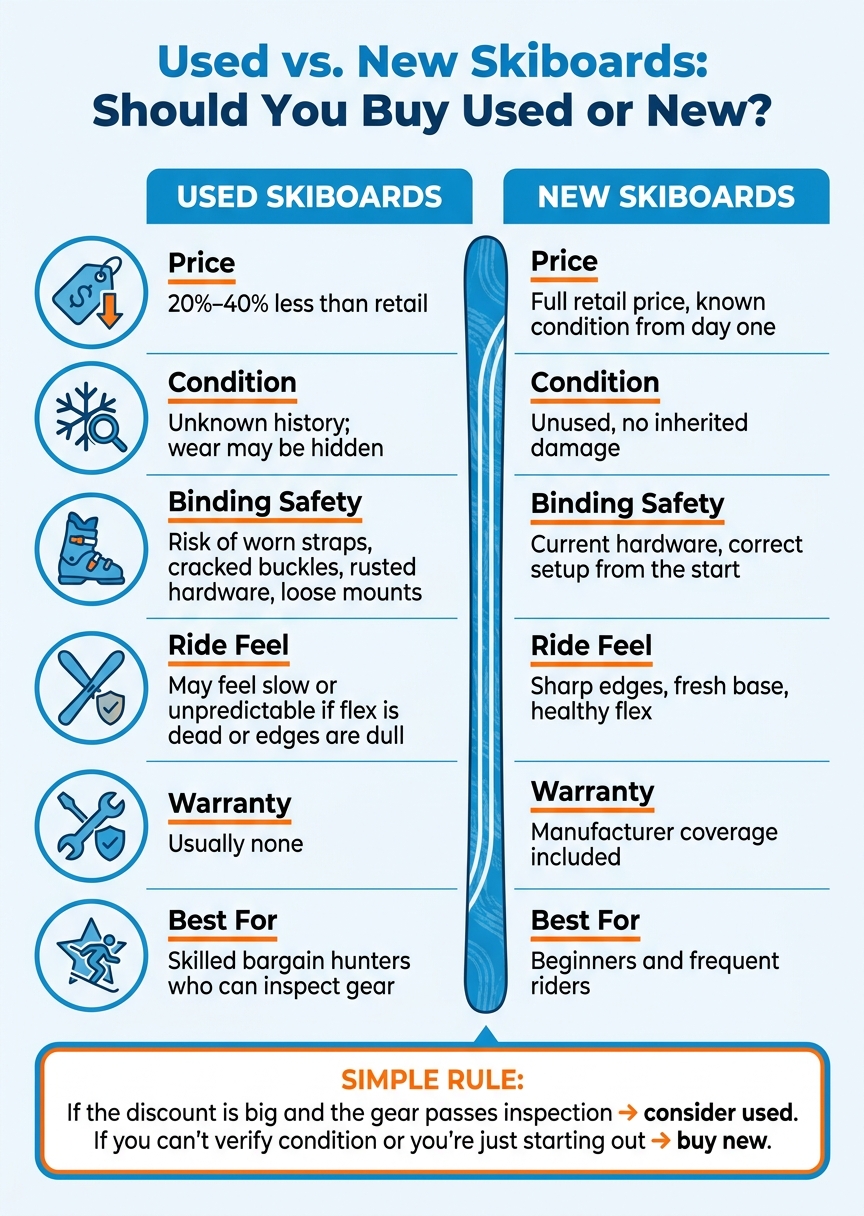
Used vs. New Skiboards: Key Buying Factors at a Glance
All you need to know - Snowfeet* | Skiskates | Skiboards | Snowblades | Skiblades FAQ
Quick Comparison
| Factor | Used Skiboards | New Skiboards |
|---|---|---|
| Price | Lower up front | Higher up front |
| Condition | Unknown history | Unused |
| Safety | More binding risk | Lower binding risk |
| Performance | May feel worn | More predictable |
| Warranty | Often none | Usually included |
| Best for | Skilled bargain hunters | Beginners and frequent riders |
What I’d tell a friend at the ski shop is this: used can work, but only when the savings are clear and the gear is clean. If not, new is the safer call and often the better deal over a few seasons.
Used vs. New: 6 Buying Factors to Compare
Use these six factors to compare used and new skiboards. Most of the gap comes down to condition and safety.
| Factor | Used Skiboards | New Skiboards |
|---|---|---|
| Upfront price | Usually 20%–40% less than retail | Full retail, but you know the condition from day one |
| Condition & expected lifespan | Wear is unknown; deep base damage or a flattened flex can shorten life | Known condition and no inherited wear |
| Binding safety & compatibility | Worn straps, cracked buckles, stripped screws, rusted hardware, or sloppy mounts can create boot retention problems | Current hardware and a correct setup from the start |
| Ride feel & performance | Can feel slower to respond if the flex is gone or the edges are dull | Sharp edges, a fresh base, and healthy flex |
| Warranty & support | Usually little to no recourse if something fails after purchase | Manufacturer coverage and easier access to replacement parts |
| Long-term value | Worn gear may need early replacement; repair costs can erase the upfront savings | Holds original ride characteristics longer, reducing replacement costs over multiple seasons |
Price, Condition, and Expected Lifespan
Used skiboards can save you money, but only if the base, edges, sidewalls, and flex are still in good shape. That’s the whole game. A cheap pair stops being cheap fast if it has deep gouges, rounded edges, cracks, or soft flex.
Start with the base and edges. That’s where the truth usually shows up. A clean topsheet can look nice on a listing, but it can also hide a lot of miles.
Safety, Bindings, and Warranty
This is where used skiboards get a bit sketchy. Bindings are the biggest risk area. Check the straps, buckles, screws, rust, and how solid the mounts feel. If the skiboards use release bindings, make sure the DIN range is right and the brakes still work.
On a shorter model like the Snowfeet* 65 cm, give the strap system a close look. If that setup is worn out, your boot retention can get sloppy fast. And yeah, that’s not the kind of surprise you want halfway down a run.
New Snowfeet* gear cuts out that guesswork. The setup is current, parts are still available, and you’re not taking on someone else’s maintenance habits.
Performance and Long-Term Value
Fresh edges and healthy flex make skiboards easier to control. They feel more alive under your feet. When the edges are worn or the flex is flattened, turns can feel less predictable, and the usable life gets shorter.
That’s why the sticker price doesn’t tell the whole story. Used gear may look like a deal at first, but repair costs or early replacement can wipe out those savings pretty fast. If a used pair still seems worth a look, the next section covers when buying used makes sense.
When Buying Used Skiboards Makes Sense
Used skiboards can make sense for some people. But they’re not a slam dunk for everyone.
It comes down to one thing: does the lower price make up for the risk of hidden damage? Sometimes yes. Sometimes it’s a hard no.
Rider Profiles That Fit Used Gear
Used gear tends to fit a few types of buyers best:
- Occasional adult riders
- Growing kids
- Experienced riders who can spot wear fast
If you’re buying your first pair, new is usually the safer move. Why? Because it’s easy to miss stuff like delamination, dead flex, or binding damage. And, well, those are the kinds of problems that can turn a “deal” into a money pit.
What to Check Before You Buy Used
Ask about the board’s age, how it was used, and whether it’s had any inspections. That part matters more than most people think.
Rental and park boards are the sneaky ones. They often look fine at a glance, but they can hide the most structural damage.
The table below works as a simple stop-or-go filter. If you see anything in the right column, walk away.
| Part | Acceptable Wear | Walk Away |
|---|---|---|
| Base | Shallow scratches, light scuffs | Core shots or deep gouges exposing the core |
| Edges | Minor surface rust, light dulling | Separation, cracks, or paper-thin spots |
| Topsheet | Small chips at tip/tail | Delamination, bubbling, or lifting sections |
| Sidewalls | Light scuffs | Cracks, chunks missing, or structural splits |
| Flex | Slight softening with age | Dead, flat, or uneven flex with no rebound |
| Mounting holes | Snug, flush hardware | Re-drilled, stripped, or loose holes |
| Bindings | Clean operation, tight hardware, under about 10 years old | Cracked housings, stripped screws, rusted metal, or age over about 10 years |
| Boot fit | Secure entry, lock and release with your actual boot | Sloppy fit or incompatible sole shape or size range |
Bindings over 10 years old often can’t be serviced safely, so treat them as a major risk.
The simple rule is this: surface wear is usually okay; anything that affects structure, bindings, or boot retention is not.
If you ride often or want less guesswork, the next section shows why new Snowfeet* skiboards are the stronger buy.
sbb-itb-17ade95
When New Snowfeet* Skiboards Are the Better Buy
When price, condition, and safety all start flashing warning signs, new Snowfeet* is the simpler call. Yeah, it costs more up front. But sometimes that’s the smarter buy.
With new skiboards, you know what you’re getting: fresh edges, intact flex, and bindings you can trust. No guessing. No hidden damage. No “well, maybe this weird feeling is just me.”
Why Beginners and Frequent Riders Get More from New
Once you’ve decided you want lower-risk gear, the next step is picking the right model for the kind of ride you want. For beginners, steady gear makes a big difference. It lets you work on technique instead of wondering if worn-out equipment is messing with your turns.
For frequent riders, it’s a different math problem. A used pair may cost less today, but if it’s already partway to retirement, you get less out of each season. A new pair starts at day one, which gives you more time before replacement becomes a thing.
| Rider Type | Why Used May Fall Short | Why New Snowfeet* Fits Better |
|---|---|---|
| First-timer | Hidden wear can make the gear feel inconsistent | Predictable performance makes learning easier |
| Frequent rider | A used pair may already be closer to replacement | Fresh gear gives you a clean start and longer value |
| Anyone buying older bindings | Older bindings can be harder to service safely | New bindings are easier to trust and maintain |
Snowfeet* 65 cm, 99 cm, and 120 cm: Which Model Fits This Decision
The right Snowfeet* length shapes how much you get out of buying new. And as you move up the Snowfeet* line, buying new matters even more.
The 65 cm Skiblades (from $590) have the easiest learning curve. Buying new here means you’re not starting out on worn gear that could shape your first rides in all the wrong ways.
The 99 cm Skiblades and POWDER 99 cm (both from $690) sit in that sweet spot for all-around use. Buying new gives you steady performance in different conditions without rolling the dice on tired edges or unknown flex.
The 120 cm Short Skis ($950) are the most stable option. At this level, clean construction from day one helps protect both ride quality and long-term value.
Why Snowfeet* Beats Older Used Snowblades
Older short-ski listings often hide the stuff that causes problems later, like binding wear and edge damage. Snowfeet* cuts out that gamble with current construction and easier upkeep.
Depending on the model, Snowfeet* works with ski boots, snowboard boots, and even regular winter shoes. You can also get replacement parts like wax, straps, and edge tools, which helps keep the gear going for longer.
That leaves one last call: who should still buy used, and who should stick with new.
Conclusion: Who Should Buy Used and Who Should Buy New
Used gear only makes sense if the buyer knows how to inspect risk and feels okay checking bindings, edges, and flex before handing over cash. For most casual riders, beginners, and anyone who wants a setup that just works, new Snowfeet* skiboards are the better buy.
The 65 cm, 99 cm, and 120 cm models each give you predictable performance, easier progression, and a cleaner ownership experience over time. When reliability matters more than saving a few bucks, new wins.
A Simple Rule for Choosing Used or New
If you can inspect the gear well and the price matches the wear, used can still make sense. If you can’t verify condition, or you’re just getting started, new Snowfeet* is the lower-risk buy and the one more likely to pay off over a few seasons.
Conclusion: Who Should Buy Used and Who Should Buy New
After looking at price, condition, safety, and lifespan, the call is pretty simple: it comes down to price vs. proven condition. Used gear only makes sense when the discount is big enough to make the risk worth it. If the savings are small, or you can’t check the gear with confidence, new is the safer bet.
Bindings are the biggest red flag. Many ski shops won’t service or adjust bindings that are more than about 10 years old because manufacturers stop supporting them after that point. And even if a used setup looks fine at first glance, binding wear can still hurt release and retention. That’s not something a cheap price fixes.
| Rider Type | Best Choice | Why |
|---|---|---|
| Occasional rider, budget-conscious, can inspect gear | Used | Low use days; savings justify risk |
| Beginner or first-time skiboarder | New | Known history; safer to learn on |
| Frequent rider (many days per season) | New | Better cost-per-season; longer life |
| Can't confidently inspect bindings or base | New | Uncertainty has a real cost |
For most U.S. riders, that points to new Snowfeet*. The 65 cm works well for compact play. The 99 cm gives you more all-around use. The 120 cm leans toward more stability. And each one starts unused, with no hidden wear.
A Simple Rule for Choosing Used or New
If the discount is big and the gear passes inspection, used may be worth a look. If the savings are small or you can’t verify condition, choose new. For beginners and frequent riders, new Snowfeet* skiboards are the safer, more reliable pick.
FAQs
How much can I save buying used?
Used skiboards can cost less up front. But that lower price often comes with more risk: weaker safety, no warranty, and older design.
And here’s the thing: with Snowfeet* models starting at around $150 to $250, the savings from buying used often just don’t justify giving up reliability and support.
When you buy new Snowfeet* gear, you get a factory-backed warranty, modern durable materials, and customer support that used sellers simply can’t offer.
Can a ski shop inspect used bindings?
Usually not.
Most ski shops won’t inspect or service used skiboard bindings, especially aftermarket or non-standard setups. They’re usually set up to mount and test certified alpine bindings for standard ski boots. That’s their lane.
Snowfeet* bindings are different. They don’t need shop mounting or any fancy testing. So if you’re buying used gear, you’ll want to give it a careful once-over yourself.
Check for:
- frayed straps
- loose screws
- cracks or worn parts
- overall binding integrity
It’s a simple check, but it matters. If something looks sketchy, trust your gut and pass :)
Which Snowfeet* length is best for me?
The right Snowfeet* length comes down to three things: your experience, the terrain you ride, and the feel you want on snow.
- 38 cm or 44 cm: best for beginners and for max portability. Small, light, and easy to toss in a bag.
- 65 cm: great for park tricks and agile carving on groomed runs. Think quick turns and a playful feel.
- 99 cm: a nice middle ground between stability and control.
- 120 cm: best for advanced riders who want more speed, more stability, and better performance in deeper snow.











댓글 남기기
이 사이트는 hCaptcha에 의해 보호되며, hCaptcha의 개인 정보 보호 정책 과 서비스 약관 이 적용됩니다.