



















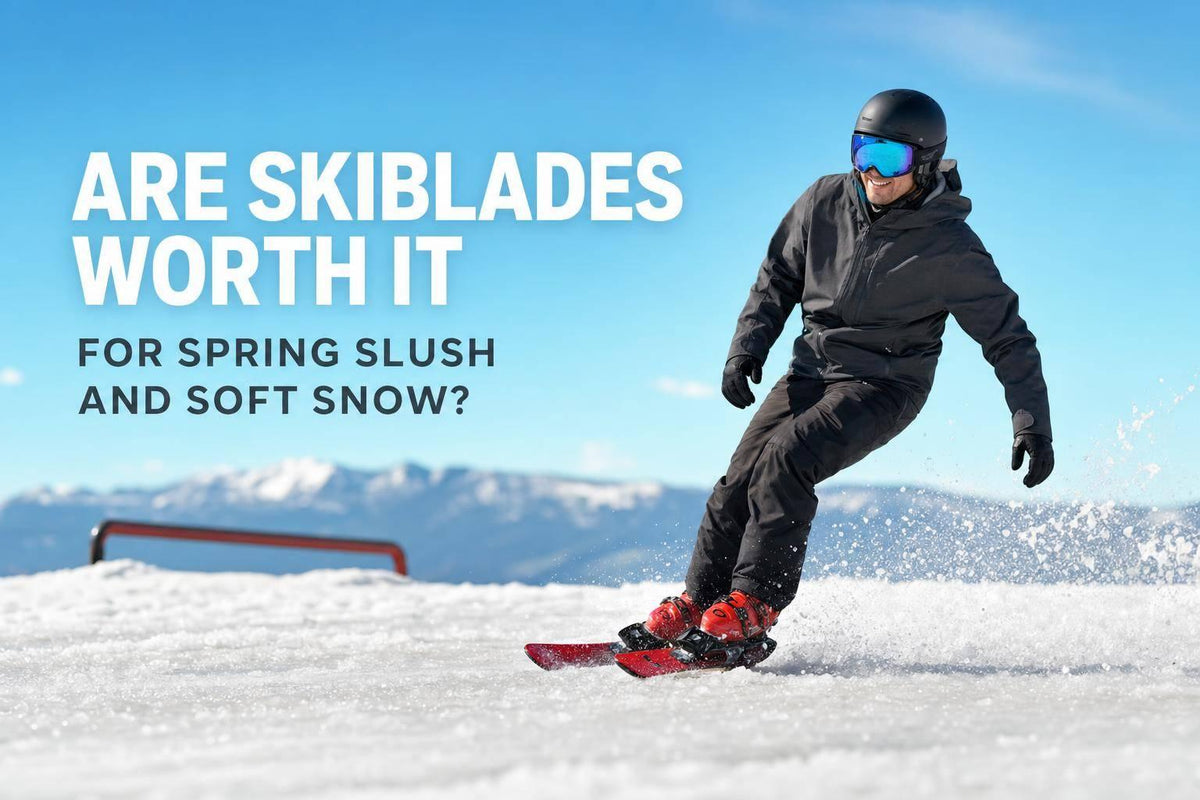
Yes - if you ski slushy groomers, park laps, and mellow resort runs. From what I see, 99 cm to 120 cm skiblades make sense in spring when you want easy turns, low effort, and a fun ride. But if you ski fast, hit deep afternoon mush, or spend a lot of time off-piste, full-length skis still do a better job.
Here’s the short version:
- Best for slush groomers: Snowfeet* Skiblades 99 cm
- Best for softer, deeper snow: Snowfeet* POWDER 99 cm
- Best for more support at speed: Snowfeet* Short Skis 120 cm
- Best for deep slush and rough snow: full-length skis
What matters most in spring snow?
- Float: short skis have less surface area, so they sink more in wet snow
- Stability: longer skis track better when slush gets cut up
- Turn feel: skiblades feel easier and more playful
- Wax: spring snow is slow without warm-temp wax, often around 32–50°F
- Use case: skiblades shine on casual laps, not hard charging
My take: if you want a simple, playful setup for late-season resort days, skiblades are worth a look. If you want top speed, deep slush support, and more room for error, stick with longer skis.
Snowfeet* Snowblades | Skiboards | Skiblades | Short Skis - Complete Guide | All you need to know
Quick Comparison
| Option | Best For | Float | Stability | Turn Feel | Price From |
|---|---|---|---|---|---|
| Snowfeet* Skiblades 99 cm | Slushy groomers, park, casual laps | 3/5 | 3/5 | 5/5 | $690 |
| Snowfeet* POWDER 99 cm | Softer snow, light off-piste | 4/5 | 3/5 | 4/5 | $690 |
| Snowfeet* Short Skis 120 cm | Mixed spring terrain, more speed | 4/5 | 4/5 | 4/5 | $950 |
| Full-length skis | Deep slush, fast runs, off-piste | 5/5 | 5/5 | 3/5 | Varies |
A few fast facts:
- The POWDER 99 cm is much broader than the standard 99 cm, which helps it stay up in heavy snow.
- The 120 cm model gives more front-to-back support than the 99 cm options.
- In spring, dirty wet snow can wear wax fast, so many riders rewax every 1–2 ski days.
- Light tip-and-tail detuning - about 1–3 inches - can help reduce that grabby feel in slush.
If you want a short answer: skiblades are worth it for playful spring resort skiing, but not for deep, rough, high-speed slush days.
For a quick visual rundown, I’d also watch a few spring-skiing setup clips on YouTube:
So, if your spring day looks more like slash, smear, cruise, repeat than straight-line through mashed potatoes, skiblades can be a smart buy :)
The problem: how soft spring snow exposes the limits of short skis
Spring slush is heavier and stickier than groomed snow. So, surface area starts to matter a lot more. A short ski sinks deeper, loses glide, and gets knocked around by ruts with less effort. That shifts the main question. It’s not whether short skis can work. It’s where they stop working.
Flotation, stability, and maneuverability in wet snow
In spring snow, these trade-offs pull against each other. Flotation helps you stay on top. Stability helps you hold your line. Maneuverability helps you stay quick. Short skis win on agility, but they give up some flotation and stability to get it.
As the snow gets heavier, short skis tend to feel less settled and easier to push off line. Width helps. A wider short ski floats better than a narrow one, so shape matters just as much as length. That’s why Snowfeet* models with more width or more length stay more usable as the snow turns softer.
As Ski Magazine instructor Todd Casey put it, spring conditions can be "firm bordering on icy in the morning, and mashed potatoes in the afternoon". That’s the whole game, honestly. The best pick depends on how soft, how deep, and how fast your spring runs usually get.
Where full-length skis still have a real edge
Longer all-mountain skis still have a clear edge when speed goes up, when afternoon snow piles get heavy, and when you head into deeper off-piste snow. They track better, float better, and give you more room for error when the surface gets messy.
More surface area helps a ski plane and float in soft snow. A wider waist also adds stability where short skis start to fall behind. That trade-off is what decides when skiblades make sense and when longer skis are the better call.
Next, we’ll pin down when skiblades are worth buying for spring slush - and when they’re not.
sbb-itb-17ade95
The solution: when skiblades are worth it and when they are not
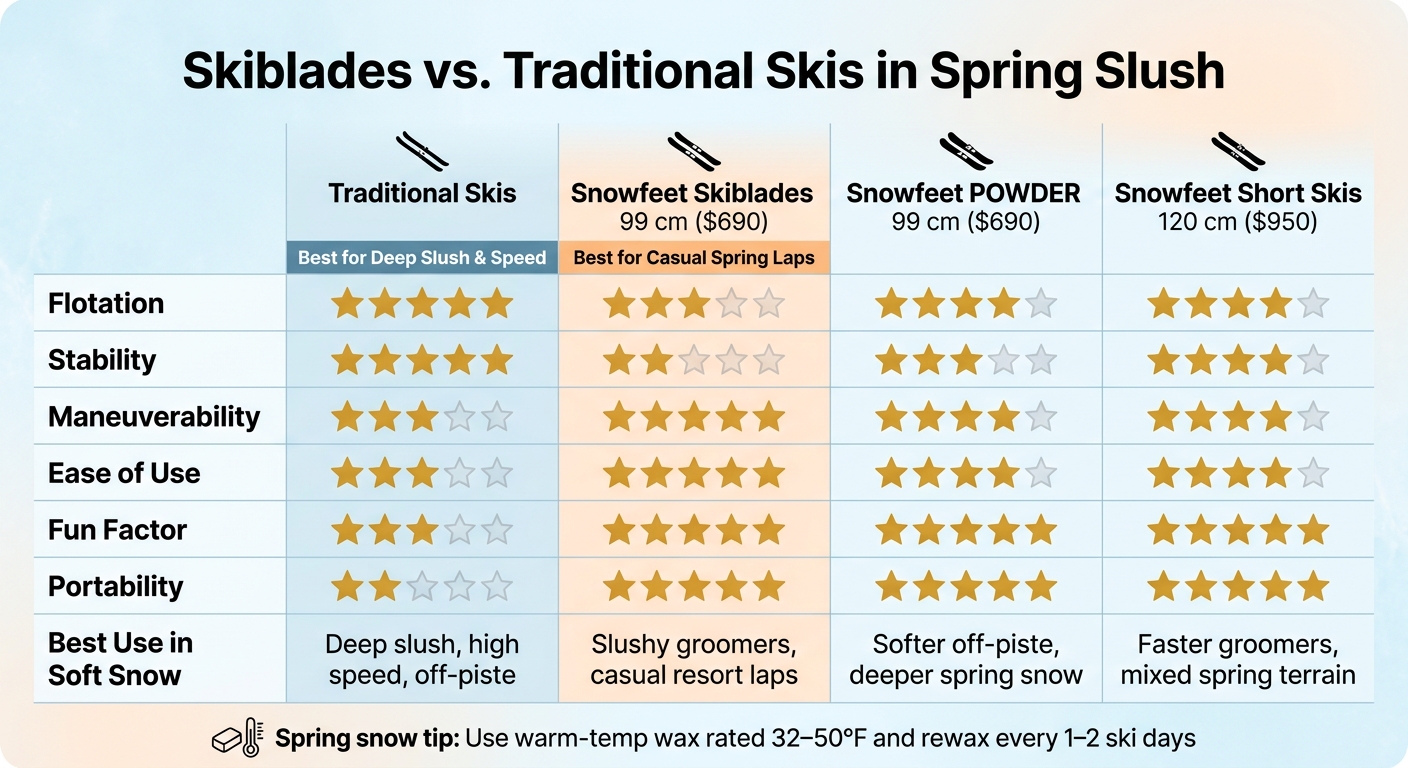
Skiblades vs. Traditional Skis in Spring Slush: Full Comparison
When skiblades make sense in spring conditions
Spring slush changes what matters on the mountain. In soft snow, float and stability start to matter more, but that doesn’t mean skiblades stop making sense.
They work best on slushy groomers, mellow resort laps, park runs, and side hits. That’s where quick turns, easy handling, and low leg burn matter more than top-end speed or big float in deep snow.
They’re also a nice match for:
- Beginners and intermediate riders
- Travelers who want gear that’s easy to carry
- Occasional riders who want simple control in soft spring snow
If your goal is to cruise, mess around a bit, and keep things light and fun, skiblades fit the job well :)
When longer skis are the smarter buy
Longer skis start to win when spring snow gets deeper, rougher, and faster.
If your days usually mean deep afternoon slush, chopped-up off-piste, or fast open runs, longer skis are the better pick.
That goes double for aggressive skiers and off-piste riders. Short skis hit their limit sooner in rough snow: less stability, less tracking, and less room for error.
So, if you like to charge hard instead of surf around, longer skis are the safer bet.
Comparison table: skiblades vs. traditional skis in spring slush
| Traditional Skis | Snowfeet* Skiblades 99 cm | Snowfeet* POWDER 99 cm | Snowfeet* Short Skis 120 cm | |
|---|---|---|---|---|
| Flotation | ★★★★★ | ★★★☆☆ | ★★★★☆ | ★★★★☆ |
| Stability | ★★★★★ | ★★★☆☆ | ★★★☆☆ | ★★★★☆ |
| Maneuverability | ★★★☆☆ | ★★★★★ | ★★★★☆ | ★★★★☆ |
| Ease of use | ★★★☆☆ | ★★★★★ | ★★★★☆ | ★★★★☆ |
| Fun factor | ★★★☆☆ | ★★★★★ | ★★★★★ | ★★★★☆ |
| Portability | ★★☆☆☆ | ★★★★★ | ★★★★★ | ★★★★☆ |
| Best use in soft snow | Deep slush, high speed, off-piste | Slushy groomers, casual resort laps | Softer off-piste, deeper spring snow | Faster groomers, mixed spring terrain |
Next, the choice comes down to which Snowfeet* length fits your spring terrain and how fast you like to ski.
Which Snowfeet* model fits your spring skiing style
Now that the trade-offs are out in the open, it’s time to match each Snowfeet* model to how and where you ski.
Snowfeet* Skiblades 99 cm: the top pick for slushy groomers
If your spring days are mostly about slushy groomers and easy resort laps, Snowfeet* Skiblades 99 cm is the easiest call. It starts at $690 and gets strong buyer feedback for easy control and quick turns.
That 99 cm length works well in soft spring snow. It’s short enough to smear, pivot, and slash through slush without a fight, but still gives you enough platform to feel steady on soft resort runs. For a lot of riders, that’s the sweet spot.
Snowfeet* POWDER 99 cm and Short Skis 120 cm: better for deeper or faster soft-snow days
When spring snow turns heavier, or you want to head past the groomers, two other models make more sense.
The Snowfeet* POWDER 99 cm, also starting at $690, is wider than the standard 99 cm model - about 15–12–15 cm tip/waist/tail versus roughly 11.5–8.5–11 cm on the standard version. That extra width helps a lot in deeper slush piles, soft bumps, and off-piste mashed-potato snow. It gives you more float and helps keep the tips from diving. The downside? It’s a bit less snappy on firm morning corduroy than the narrower 99 cm.
The Snowfeet* Short Skis 120 cm, starting at $950, leans more toward stability. If you ski faster or want something that feels closer to a standard ski, this is the better fit. You get more stability and less playfulness. It also handles firm mornings and afternoon slush better than either 99 cm option.
Comparison table: best Snowfeet* model by rider type
| Rider Type | Best Model | Main Benefit in Slush | Notes |
|---|---|---|---|
| Casual groomer rider | Skiblades 99 cm | Easy turns and a forgiving feel | Best for slushy groomers at moderate speeds |
| Park / playful rider | Skiblades 99 cm | Quick edge changes and a light feel | Good for spins, switch, and tricks on soft spring snow |
| Traveler | Skiblades 99 cm | Easy to pack | Convenient for trips and people who already own ski or snowboard boots |
| Beginner / intermediate | Skiblades 99 cm | Low learning curve | Easier to manage than full-length skis |
| Off-piste rider | POWDER 99 cm | Better flotation in heavier slush | Wider platform helps in mashed-potato snow |
| Faster / mixed-terrain rider | Short Skis 120 cm | More stability at speed | Better if you want a more traditional feel |
One more nice touch: all three models use adjustable ski or snowboard boot bindings, so you can use the boots you already have. That makes packing and setup a lot easier - always a win when spring ski days already come with enough mess from the snow :)
Setup, technique, and final verdict
How to get more out of skiblades in spring slush
If you're bringing skiblades out in spring, setup and technique make a big difference. Slush can feel fun one run and like mashed potatoes the next, so a few small tweaks help a lot.
Wax matters more in spring slush than in midwinter. Use a soft, warm-temperature wax rated around 32–50°F when the snow gets wet. Cold or all-temperature wax can make slush feel sticky and slow. And yeah, spring snow is messy. It's dirtier and more abrasive than mid-winter snow, so plan to rewax every 1–2 ski days. If your bases start to feel sluggish, a quick warm-weather wax refresh can bring the glide back.
Edge tuning also deserves a quick check. Keep the edges underfoot clean, and lightly detune the tips and tails about 1–3 in. from the contact points. On short skis, that can help a lot. You get smoother release in rutted slush and less of that grabby, hooky feel.
Then comes technique. Stay centered, with your hips over the blades. Think short, controlled turns with a slight skid instead of big, hard carves. In spring slush, that usually works better. Stick to groomed runs and moderate pitches when you can. Try to avoid the deepest piles near the trail edges, since that's where skiblades tend to bog down first.
Final verdict: who should buy skiblades for spring and who should not
With the right tune and a centered stance, skiblades can handle spring slush a lot better than many people expect. But model choice still matters, especially once terrain and speed enter the picture.
Skiblades are worth it if you're a casual, playful, park-oriented, or travel-focused rider who spends most of your time on slushy groomers at moderate speeds. Use the comparison table above to match the model to your terrain. For most riders, the 99 cm options hit the sweet spot. If you want more support for speed and mixed conditions, the 120 cm model is the step up.
Skiblades are not the right call if you ski steep terrain a lot, charge hard at speed, or spend long stretches in very deep, heavy slush. That's where full-length all-mountain or freeride skis still do a better job with flotation, stability, and fore-aft support. For everyone else, short skis have a lot going for them: they're easy to carry, easy to use, and just plain fun. And in that lane, Snowfeet* is the better buy.
FAQs
Can beginners handle skiblades in spring slush?
Yes. Snowfeet* skiblades are usually easier to learn than long skis. A lot of beginners can get the basics down in just a few runs or within a day. The short length helps a lot. Turning feels simpler, and stopping tends to feel more natural too.
For spring slush, 65 cm can work on mellow terrain. But 99 cm is often the better pick for beginners because it gives you more stability in chopped, wet, uneven snow.
How deep can slush get before longer skis work better?
When spring slush is just a soft top layer, short skiblades can still be a blast. But once that snow turns deep, heavy, or piles up into chunky mounds, regular skis start to make more sense.
Snowfeet* 99 POWDER and 120 cm models do better in soft, chopped-up snow than 65 cm blades. That said, they still don’t give you the same surface area or float as full-length skis. And in slush, that extra platform matters. A lot.
Once slush gets past 6 inches deep, or the snow stays soaked and full of ruts, longer skis are the safer bet. Look for skis with an 85–100 mm waist if you want better stability, smoother glide, and straighter tracking through the mess. Spring snow can get wild fast, and this is where more ski under your feet pays off :)
Do skiblades need special wax for wet spring snow?
No. You don’t need special wax for skiblades in wet spring snow. Snowfeet* models handle most day-to-day mountain conditions just fine.
In sticky spring slush, the bigger thing is picking the right model, not hunting down some magic wax. The POWDER 99 cm has a wider waist and rockered tips, which helps it float better and feel easier to steer in soft, wet snow. The 99 cm and 120 cm can work well too.












댓글 남기기
이 사이트는 hCaptcha에 의해 보호되며, hCaptcha의 개인 정보 보호 정책 과 서비스 약관 이 적용됩니다.