




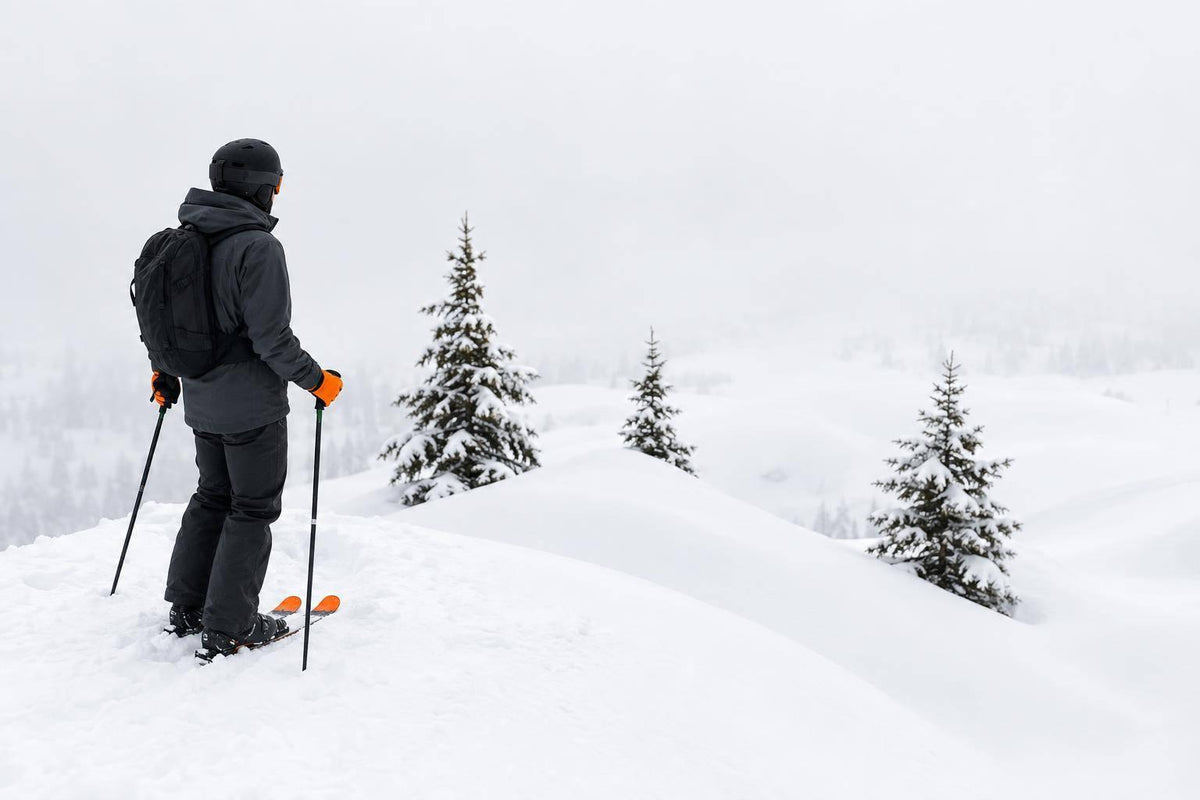
Yes - short skis can work off-piste in a few inches of soft snow over a firm base. I’d start on an open, gentle slope where you can turn and stop with control. For deep powder, crust, or steep runs, I’d choose full-length powder skis.
Here’s how I’d narrow down your gear:
- 65 cm (26 in) skiblades: Tight turns on groomers and shallow soft snow.
- 99 cm (39 in) POWDER: The Snowfeet* pick for all-around soft-snow use.
- 120 cm (47 in) short skis: More steadiness on soft, uneven snow - not a promise of more float.
- Full-length powder skis: Better suited to deep snow and long freeride runs.
My rule? Match the skis to the snow - not the snow to the skis. Stay centered, make smooth turns, and head back if your tips keep diving or you can’t stop well.
<u>Good control doesn’t make avalanche terrain safe.</u> Check the local forecast, resort rules, and slopes above your route. Slopes around 30° or steeper, plus connected terrain and runouts, call for avalanche training, partners, and rescue gear. Tracks aren’t a safety stamp.
These guys tried Snowfeet* Snowblades for the first time | Watch what they think | Short Ski Review
Choose Snowfeet* Skis for the Snow Conditions
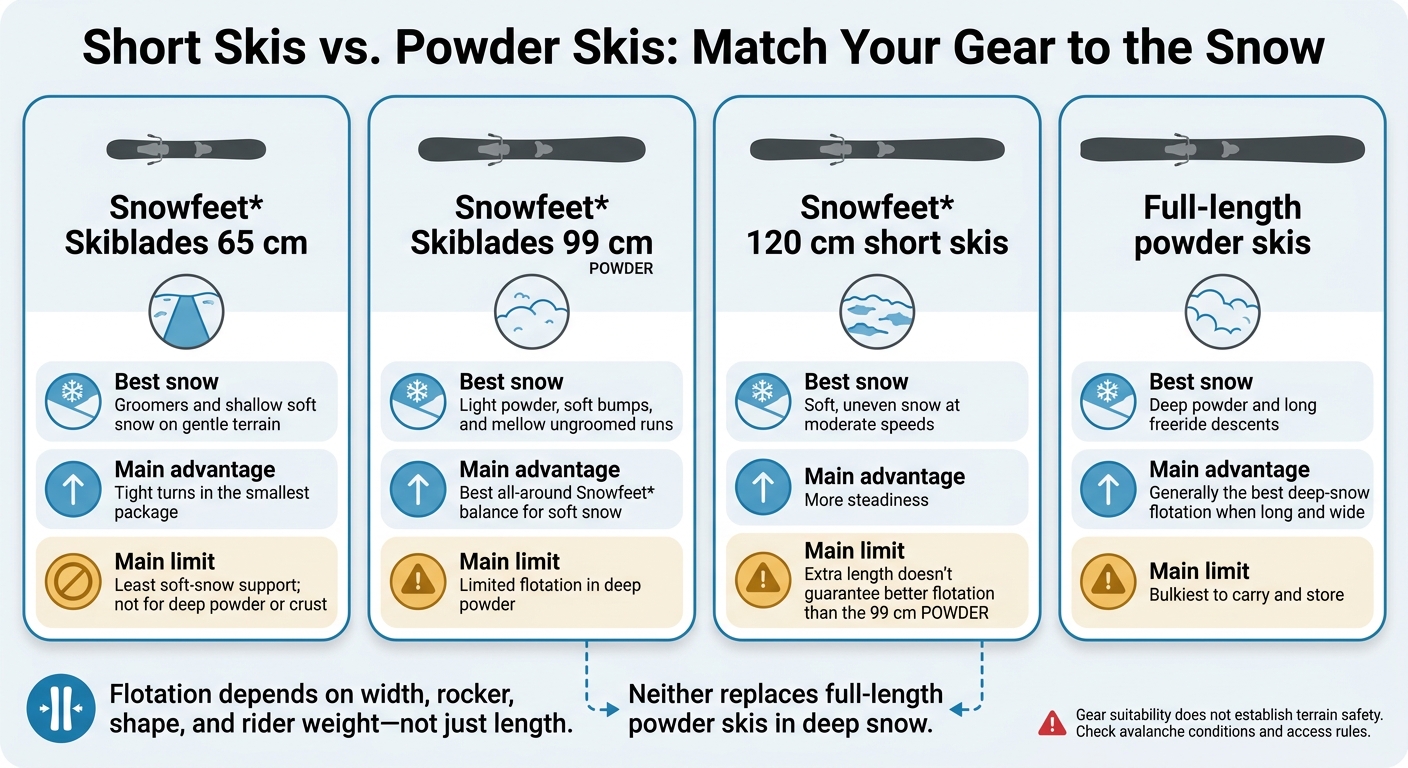
Short Skis vs. Powder Skis: Match Your Gear to the Snow
Short skis can handle shallow powder and soft, uneven snow. Deep powder needs more flotation. Choose your ski length for the snow you expect, not the other way around.
| Model | Best snow | Main advantage | Main limit |
|---|---|---|---|
| Snowfeet* Skiblades 65 cm | Groomers and shallow soft snow on gentle terrain | Tight turns in the smallest package | Least soft-snow support; not for deep powder or crust |
| Snowfeet* Skiblades 99 cm POWDER | Light powder, soft bumps, and mellow ungroomed runs | Best all-around Snowfeet* balance for soft snow | Limited flotation in deep powder |
| Snowfeet* 120 cm short skis | Soft, uneven snow at moderate speeds | More steadiness | Extra length doesn’t guarantee better flotation than the 99 cm POWDER |
| Full-length powder skis | Deep powder and long freeride descents | Generally the best deep-snow flotation when long and wide | Bulkiest to carry and store |
Flotation depends on width, rocker, shape, and rider weight - not just length.
65 cm Skiblades: Tight Turns in Shallow Snow
Pick the 65 cm if you’ll spend most of your day on groomers, with a few detours into shallow soft snow. They’re not for deep powder, breakable crust, or steep off-piste routes.
99 cm POWDER and 120 cm: More Soft-Snow Support
The 99 cm POWDER is the best all-around Snowfeet* option for soft snow. Choose the 120 cm if you want more steadiness at moderate speeds on soft, uneven snow. Neither replaces full-length powder skis in deep snow.
Full-Length Powder Skis: Deep Snow and Long Descents
Long, wide powder skis give you more surface to support your weight. Rocker helps the tips ride over deep snow. For resort runs with suitable soft snow, Snowfeet* 99 cm POWDER or 120 cm balance compact gear with playful turns.
Once you’ve matched your skis to the snow, check the terrain, avalanche risk, and access rules to see whether the route is suitable.
How to Control Short Skis in Soft Snow
Once you’ve matched ski length to the snow, these basics will help you keep short skis steady and easy to steer. Start on a gentle slope with firm snow at the exits and conditions you know you can handle. Avoid slopes below avalanche terrain or in avalanche runout zones.
Stay Centered With Both Skis Engaged
Keep your hips over the bindings, your hands forward, and your knees bent. Stay relaxed with your feet hip-width apart. Keep pressure even on both skis, then let it shift gradually as you turn. If the tips dip, adjust at your ankles and hips - don’t sit back.
Make Smooth Turns and Slow Down Early
Use rounded turns, steer smoothly with your legs, and keep your upper body quiet. Your edges have less grip in soft snow, so don’t force them into hard turns. Finish each turn across the slope. Slow down before rough snow or terrain changes you can’t see past, and avoid long, straight runs.
Snowfeet* 99 cm POWDER and 120 cm offer more support in soft snow than 65 cm skiblades, but good technique won’t remove their limits. If your skis keep diving or get hard to steer, head back to firmer or shallower snow. Technique helps you stay in control, but it doesn’t replace avalanche awareness or checks on local access.
sbb-itb-17ade95
Check Avalanche Risk, Gear, and Access Rules
Good control is just the start. Terrain and avalanche conditions determine whether a run is worth taking.
An open, avalanche-controlled resort run differs from uncontrolled terrain beyond the boundary. A lift, gate, or existing tracks don’t mean a slope is safe.
Check the Forecast and Avalanche Warning Signs
Read the official avalanche forecast for your zone, date, elevation, and aspect. Look at the avalanche problems and travel advice - not just the danger rating.
Treat slopes of about 30° and steeper, connected slopes, and runouts as avalanche terrain. Stay clear of cornices and terrain traps, including gullies, creek beds, and cliffs. Turn back if you see recent slides, shooting cracks, wind loading, or heavy snowfall - or hear whumpfing or notice rapid warming. Any one of these signs is enough.
Carry the Right Gear and Ride With Partners
In avalanche terrain, each person needs a transceiver, probe, shovel, and practiced rescue skills. Check that each transceiver works before you leave.
Bring a helmet, suitable layers, navigation tools, a way to communicate, first-aid supplies, and emergency gear. Check boot and binding compatibility for your specific Snowfeet* model.
Ride with partners whose skills match yours, and share your route and return time. On slopes with serious avalanche or fall hazards, expose only one person at a time. That limits exposure, not risk.
Follow Access Rules and Know When to Hire a Guide
Check resort skiblade rules, terrain status, gate procedures, and public-land closures or restrictions. Never duck ropes or cut across a slope to ‘test’ it.
Hire a qualified local guide if the avalanche terrain is unfamiliar, conditions are complex, or your training is limited. Cancel or reroute if conditions exceed your group’s skills, or if rescue gear and communication plans are incomplete. If the slope, forecast, or access rules don’t pass the check, stay on controlled terrain or choose another route.
Conclusion: Match Your Skis to the Route
For a route within your skill level and shallow snow, the choice is simple: Snowfeet* 65 cm Skiblades for shallow soft snow, 99 cm POWDER for all-around soft-snow use, or 120 cm for more steadiness in uneven snow. Check the current Snowfeet* specs for binding options.
Full-length powder skis still make more sense for deeper snow and long, steep descents. For most casual riders who want easy transport and quick turns, Snowfeet* remains the better choice.
Pick the shortest ski that comfortably suits the route - not the shortest ski available. Turn back if snow depth, crust, slope, visibility, or avalanche risk exceeds your skills or your gear’s limits. Follow access rules, too. If the route no longer fits your skis, turn back.
FAQs
How does my weight affect short-ski flotation?
Your weight affects how well short skis float on snow. They have less surface area than long skis, so heavier riders sink deeper. Keep your stance centered and make small, precise forward-and-back adjustments.
Snowfeet* 99 cm POWDER (about 39 inches) and 120 cm skiblades (about 47 inches) use broader shapes and rocker to help them float while staying compact. For heavier riders in deep or heavy powder, these models offer the best balance of agility and flotation.
How can I practice off-piste skills safely?
Check the weather, travel with a partner, and plan your route. Pack an avalanche transceiver, probe, shovel, helmet, layers, food, water, and a charged phone. Learn how to use your avalanche gear before heading out.
Snowfeet* 99 cm POWDER (about 39 inches) or 120 cm (about 47 inches) models offer a playful, nimble ride. For deep powder, slopes over 35 degrees, or breakable crust, long touring skis are safer and more stable. Follow local access rules, and seek a guide if you’re unsure.
How can I spot avalanche terrain above my route?
Check slope angles, the snowpack, and the terrain above your route. Avoid slopes steeper than 35°, and watch for wind-affected slabs, heavy wet snow, or breakable crust.
Snowfeet* short skis provide less flotation and stability than long touring skis. Skip steep lines, deep snow, and routes where a fall or slide could have severe results.
Outside resort boundaries, carry a transceiver, probe, and shovel - and get training to use them. Travel with a partner, have a plan, and seek a guide when needed.











댓글 남기기
이 사이트는 hCaptcha에 의해 보호되며, hCaptcha의 개인 정보 보호 정책 과 서비스 약관 이 적용됩니다.