



















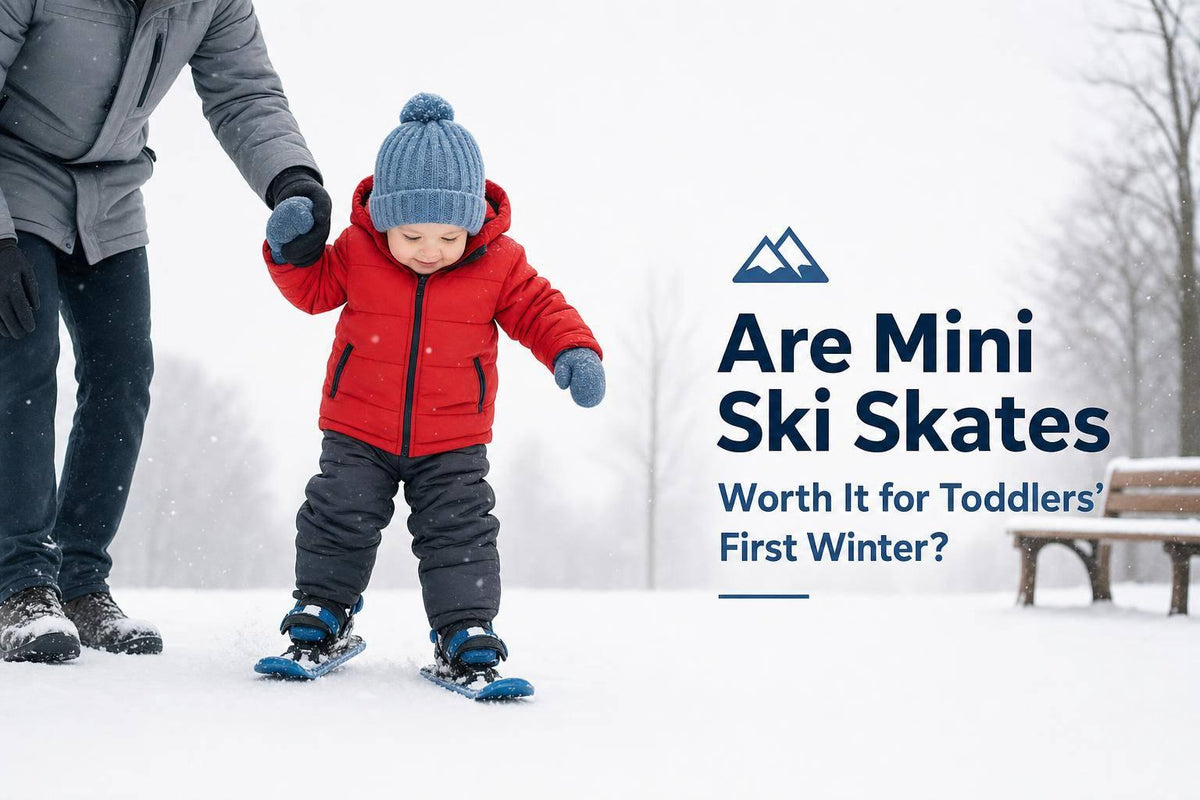
Yes - but only for simple, supervised snow fun. If your toddler is ages 2–4, walks well, and you want short backyard or park sessions, mini ski skates can make sense. If you want ski lessons, resort days, or long-term ski skills, I’d skip them and go with rented toddler skis instead.
Here’s the short version:
- Mini ski skates fit regular winter boots, weigh 2.52 lb per pair, and cost $250
- They work best on small hills, packed snow, and flat areas
- They need close adult supervision and a helmet every time
- They can pay off after about 5–6 outings if rentals in your area run $40–$60 per day
- They are not the best tool for learning standard ski technique
So, if your goal is play, they’re a fair buy. If your goal is progression into ski school, they’re not.
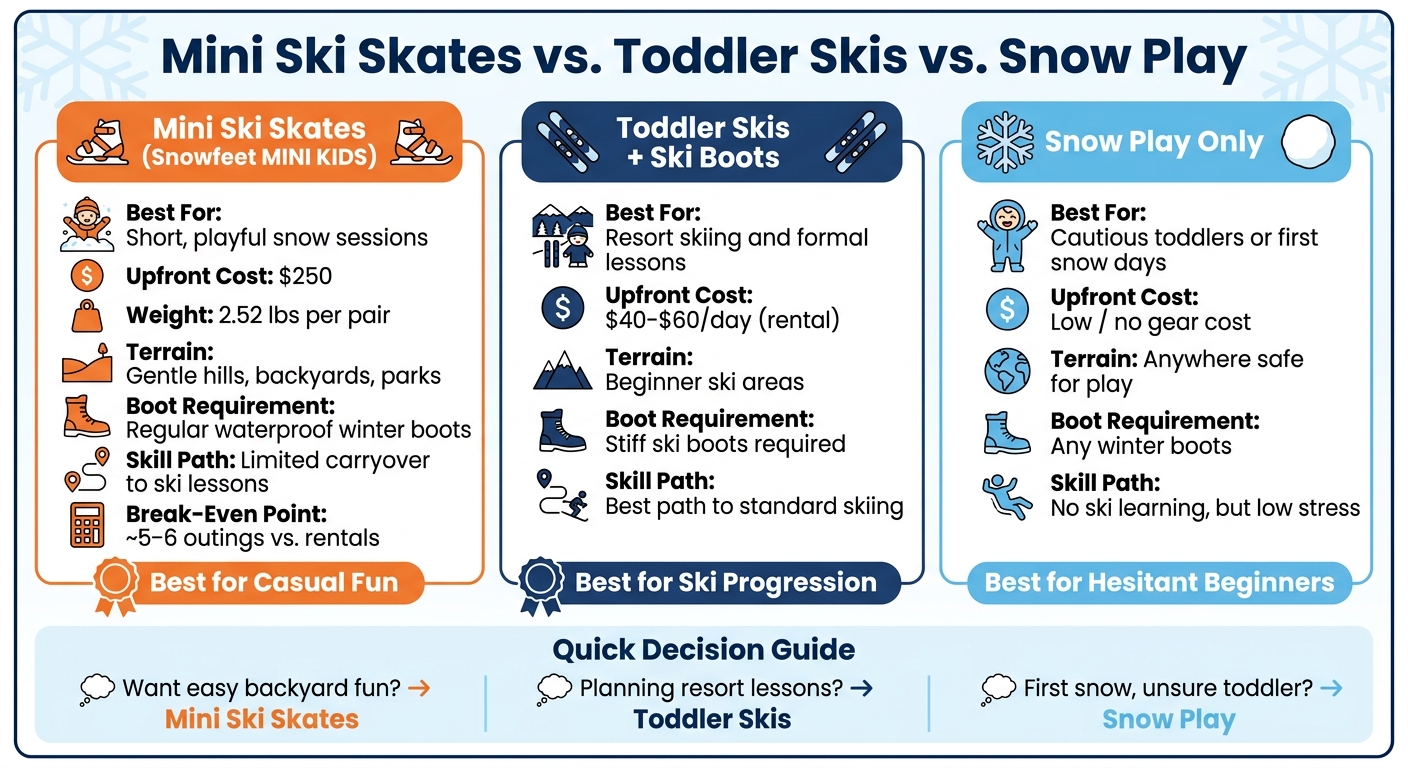
Mini Ski Skates vs Toddler Skis vs Snow Play: Which Is Right for Your Toddler?
Snowfeet* Review: Are Skiskates Worth It? | Mini Ski | Skates for Snow | Skating Ski | Short Ski
Quick Comparison
| Option | Best for | Upfront cost | Terrain | Skill path |
|---|---|---|---|---|
| Mini ski skates | Short, playful snow sessions | $250 | Gentle hills, backyards, parks | Limited carryover to ski lessons |
| Toddler skis + boots | Resort skiing and lessons | Rental: $40–$60/day | Beginner ski areas | Best path to standard skiing |
| Snow play only | Cautious toddlers or first snow days | Low | Anywhere safe for play | No ski learning, but low stress |
What I like here is simple: less gear, less hassle, faster setup. What gives me pause is also simple: less ankle support, more limits, and more need for hands-on supervision.
If I were helping a parent in my ski shop, I’d say this: buy mini ski skates only if you want a fun first glide, not a first ski system :)
Why Mini Ski Skates Can Work Well for Some Toddlers
Short and Light: Less Intimidating for a First Sliding Experience
For toddlers who are ready to slide but aren’t ready for a full ski setup, mini ski skates keep things simple. That matters a lot.
The smaller size is easier to handle and often feels less scary for a first slide. And with toddlers, less gear usually means fewer meltdowns, fewer tangles, and less stuff to trip over.
If you want a low-pressure way to let a little kid test balance and sliding on snow, these can be a good match for the toddler age range.
Works with Regular Winter Boots, No Ski Boot Purchase Needed
Stiff ski boots can feel heavy, awkward, and plain unfamiliar for toddlers. Snowfeet MINI KIDS strap onto regular waterproof winter boots and adjust easily for small feet.
That means your child can wear boots they already know. Simple, right? That can help them stay calm, warm, and more open to trying again after the first wobble or butt-slide. For a lot of parents, that ease is the big selling point compared with toddler skis.
Easy to Pack and Ready for Backyard Use in Minutes
Snowfeet MINI KIDS are light enough to fit easily into a standard backpack. Toddler skis take up more room and are more of a hassle to carry.
And that’s not a small thing. Gear that’s easy to grab tends to get used. When setup takes only a few minutes and everything fits in one bag, short snow sessions in the backyard or at a small hill become much easier to pull off.
That makes them a solid pick for short, casual snow sessions.
The same simplicity also creates limits, especially on steeper terrain and for very young children.
sbb-itb-17ade95
The Real Trade-Offs: Safety, Comfort, and Learning Limits
Safety Requires Gentle Terrain, a Helmet, and Close Adult Supervision
Mini ski skates can work for toddlers. But the setup has to be very controlled.
Stick to gentle, predictable terrain like:
- backyards
- small park hills
- beginner areas with a short, clear run-out
A simple rule helps here: if you wouldn’t walk down that slope in boots, it’s too steep for a toddler.
Skip icy or hard-packed resort runs. On slick snow, stopping gets tough fast, and a small fall can turn into a long slide. Deep, heavy snow isn’t much fun either. Mini ski skates can sink, twist little feet, and make movement clumsy.
A fitted helmet is required. And yes, stay within arm’s reach on every run. No drifting off for “just a second.”
Some official Snowfeet product listings also say certain models are not suitable for children under 7 years old. So for toddlers, mini ski skates are a conditional option, not something that works for every child across the board.
That puts terrain first. After that, comfort and learning value matter just as much.
Comfort and Ankle Support: Winter Boots vs Ski Boots
Even on the right hill, boots make a big difference.
Winter boots are easier and more comfy. That’s the good news. The catch is ankle support. Compared with ski boots, winter boots let the ankle move more. On uneven snow or firmer patches, that can mean more wobble and a higher chance of rolling an ankle.
So, the trade-off is pretty plain:
- Winter boots: easier to wear, less support
- Ski boots: more support, less comfort for little kids
As Snowfeet says:
"We recommend waterproof shoes that fix your ankle firmly."
A waterproof, high-top winter boot with solid structure will work better than a soft snow boot. Floppy boots and shaky snow are not a great combo.
Early Balance Practice vs Long-Term Ski Progression
Mini ski skates can help toddlers get used to sliding on snow. That’s where they shine. Kids can start to feel how balance shifts, how edges bite a bit, and how their weight affects movement.
But there’s a limit.
They don’t set kids up as well for formal lessons or faster resort skiing. Most ski schools want children on standard skis and boots for consistency and safety. And the way kids stop on mini ski skates is different too. Usually, they step out of the fall line or let mellow terrain slow them down on its own, instead of using the wedge, or “pizza,” that ski school teaches.
So if a child starts asking for longer runs, group lessons, or full resort days, toddler skis and proper ski boots make more sense.
That brings up the next point: which toddlers are actually a good match?
Who Mini Ski Skates Are Best For and When They Are Worth Buying
Best Fit: Confident Walkers Ages 2–4 on Small Hills and Casual Snow Days
Snowfeet MINI KIDS work best for toddlers who are already steady on their feet. If your child walks or runs with confidence, does fine in boots, and likes the idea of sliding, gliding, or skating, this is where these little skates make a lot of sense.
They’re an especially nice match for kids who already like ice skating or inline skating. That skating-style movement tends to carry over in a pretty natural way. In plain English: some kids hop on and kind of “get it” fast.
Snowfeet MINI KIDS fit US Kids size 10 up to US Adult size 6 (EU 27–38). That range covers a lot of toddlers in the 2–4 age group. Still, if your child is at the very small end, check the boot fit with care. Some users say there can be a 1.5"–2" gap between a smaller shoe and the front of the skate footbed. For a tiny kid, that’s not a small detail.
The easiest places to start are simple, low-stress spots:
- Backyards
- Small hills at local parks
- Flat snowy fields for walking, shuffling, and short glides
- Beginner zones at small regional resorts with mellow terrain
That’s the sweet spot. Not steep runs. Not deep powder. Just easy snow where a toddler can move around and have fun without a big production.
When Snowfeet MINI KIDS Are Worth the $250 Price
At $250, Snowfeet MINI KIDS are worth it most for families who will use them a lot. If you live near snow, or you take regular trips to snowy places, the math starts to look pretty good.
Compared with typical U.S. toddler ski rental rates of $40–$60 per day, they can pay for themselves after about five to six outings. That’s a solid deal if your family does lots of short, playful snow days. A few quick sessions here, a park visit there, maybe a weekend trip - it adds up fast.
Portability is another big win. At 2.52 lbs per pair, they’re light enough to fit in a backpack. That means less gear to drag around and less chaos in the parking lot. No rental line. No trying to get a toddler into stiff ski boots while everyone gets colder and grumpier. And since they work with regular waterproof winter boots, the whole setup feels a lot easier on both kids and parents.
Honestly, for some families, that convenience is half the sale.
When Toddler Skis or Simple Snow Play Make More Sense
Mini ski skates aren’t the right pick for every family. Sometimes toddler skis are the better call. Sometimes the best move is to skip the gear and just let your kid stomp around in the snow and toss a few snowballs. No shame in that.
| Family Scenario | Toddler Traits | Recommended Choice | Rationale |
|---|---|---|---|
| Multiple resort days with formal ski lessons planned | Motivated and comfortable with structured instruction | Toddler skis + ski boots (rented) | Better for lesson-based skiing and long-term progression |
| Casual backyard play, local parks, or frequent short snow sessions | Steady walker, curious, tolerates gear | Snowfeet MINI KIDS | Uses regular winter boots and is easy to pack and put on |
| Child with ice skating or rollerblading experience | Already comfortable with edge or glide movement | Snowfeet MINI KIDS | The skating motion transfers directly, so the learning curve is very short |
| First snow trip for a cautious toddler who dislikes gear | Gear-averse, tires quickly, uncertain about snow | Simple snow play | Lets the child build positive snow experiences without pressure |
| Deep snow or off-trail outings | Adventurous but fatigues easily | Simple snow play | Mini skates are better on packed or groomed surfaces, not deep powder |
The biggest reason to hold off is pretty simple: if your child is heading into formal ski lessons, or if you’re not even sure they’ll like ski-style gear, mini ski skates may not be the best first buy. In that case, rented toddler skis or a low-pressure snow day usually makes more sense.
Conclusion: Are Mini Ski Skates Worth It for Toddlers' First Winter?
After looking at safety, comfort, and how toddlers learn, the answer is pretty simple: mini ski skates are worth it only for supervised, casual snow play - not as a toddler ski training tool.
If your family wants easygoing snow fun, MINI KIDS can be a solid first-glide pick for backyard hills and small park slopes. That’s where they make sense. They’re fun for play, but they’re not the right fit for serious ski progress.
If your goal is resort skiing and lessons, toddler skis are the better buy.
And if you want the lowest-pressure first winter, plain old snow play is often the best call. Sometimes a sled, some boots, and a few laughs in the snow do the job just fine :)
At $250, MINI KIDS are worth buying for families who plan to use them on several casual snow days. Snowfeet also treats MINI KIDS as supervised play gear, not independent ski gear. So, gentle terrain, a helmet, and a parent close by are non-negotiable.
Choose MINI KIDS for casual gliding. Choose toddler skis for lessons. Choose snow play for hesitant beginners. For most toddlers in their first winter, MINI KIDS are worth it only when the goal is simple, supervised fun.
FAQs
Can my 2-year-old use mini ski skates safely?
Yes, a 2-year-old can use mini ski skates if you stay close and keep things calm.
Stick to flat, groomed snow or a very gentle, uncrowded bunny hill. At that age, balance is still a work in progress, so your child will need steady hands-on help to keep speed from picking up. Use a properly fitted, certified helmet, plus snug winter boots with firm ankle support.
What boots work best with Snowfeet MINI KIDS?
Snowfeet MINI KIDS work best with regular insulated winter boots, like kids’ snow boots, as long as the fit is snug and the ankle support is firm. That matters because the foot shouldn’t slide around inside the adjustable bindings.
Snowboard boots can work too, if they fit well and aren’t too bulky or too soft in the sole. The main thing is a snug fit around the heel and ankle so the boot stays locked in place.
Are mini ski skates allowed at ski resorts?
Yes, mini ski skates like Snowfeet are usually allowed at most ski resorts in the United States. You’ll most often see that in learning zones, on bunny hills, and on green runs.
Why? They have metal edges, just like standard skis. That means they usually fit the basic gear rules most resorts use.
That said, every resort has its own playbook. Some are chill. Some are picky. So, before you head out, check the resort’s policy first. It’s a small step that can save you a lot of hassle at the lift.











댓글 남기기
이 사이트는 hCaptcha에 의해 보호되며, hCaptcha의 개인 정보 보호 정책 과 서비스 약관 이 적용됩니다.