



















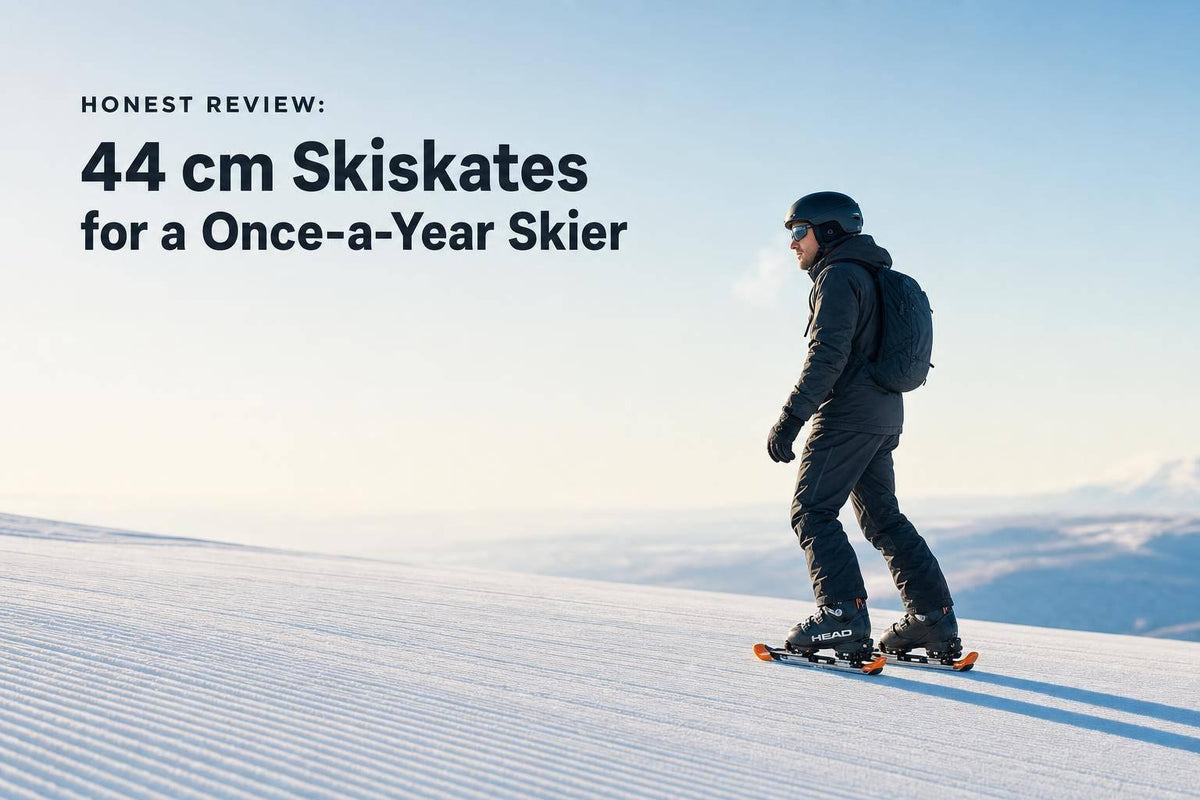
Short answer: yes - if you ski groomers, keep your speed in check, and want less gear hassle. From what I see in this review, the Snowfeet* 44 cm Skiskates make the most sense for a once-a-year skier who wants easy turns, simple travel, and less time in rental lines.
Here’s the plain-English version:
- Price: about $460–$480
- Rental math: one day of rentals can run $80 to $115
- Best for: green and blue groomers, short turns, small side hits
- Not great for: powder, rough snow, icy steeps, or going fast
- Big trade-off: easy to learn at low speed, less steady at higher speed
- Boot choice: ski boots = more control, snowboard boots = easier to walk in
- Best fit: casual skiers who want fun, packable gear and don’t need full-size skis
If I only skied once a year, I’d look at these as a fun travel tool, not a do-everything ski. They seem much less annoying to carry than long skis, but they also ask for better balance once snow gets messy. So, if your day is mostly smooth groomers and lodge laps, they look like a smart pick. If you want powder days or high-speed carving, I’d stick with full-size skis.
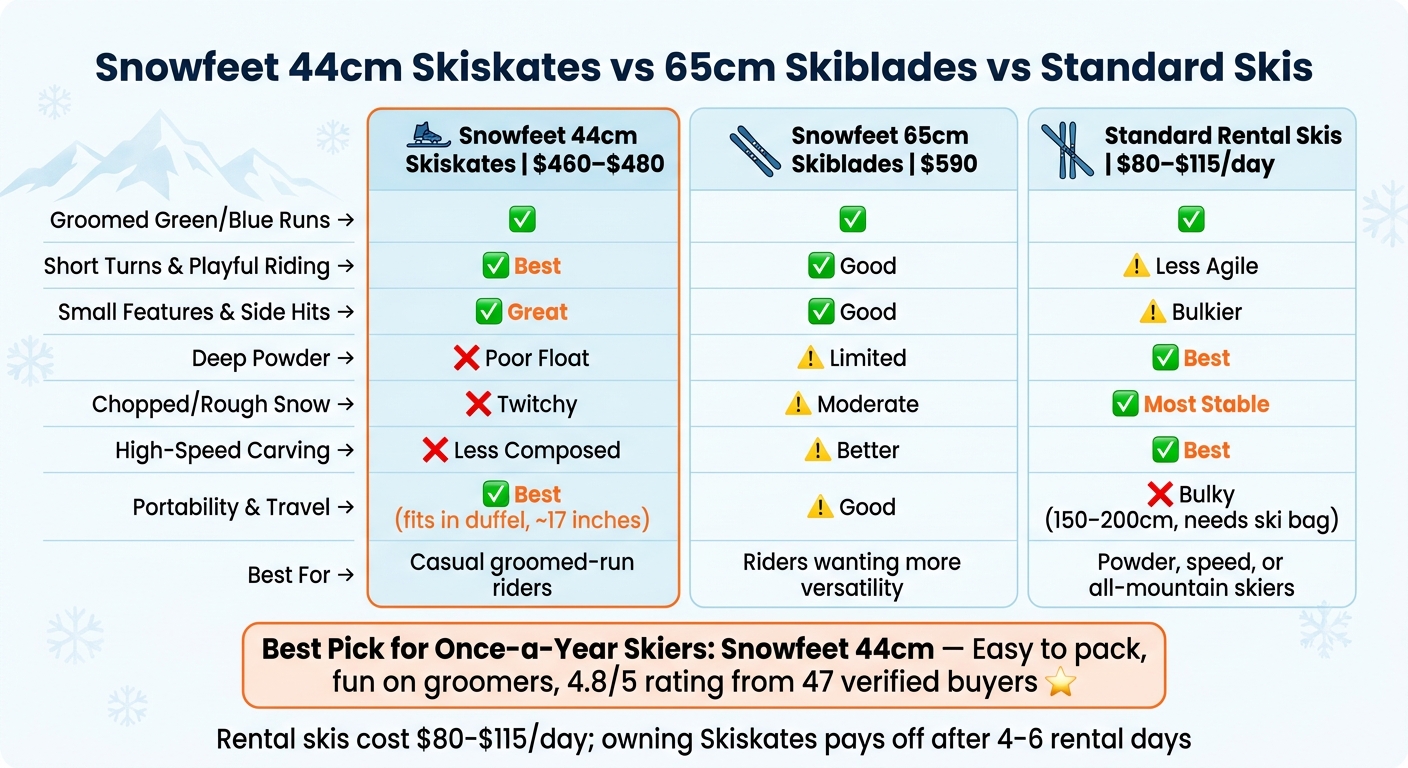
Snowfeet 44cm Skiskates vs 65cm Skiblades vs Standard Skis: Full Comparison
The Best Skates for Slopes: Snowfeet* 44 CM
Quick Comparison
| Option | Best Use | Main Upside | Main Downside | Price |
|---|---|---|---|---|
| Snowfeet* 44 cm Skiskates | Groomed green/blue runs | Small, playful, easy to pack | Less steady in rough snow and at speed | $460–$480 |
| Snowfeet* 65 cm Skiblades | Groomers with a bit more range | More stable than 44 cm | Not as compact | $590 |
| Standard rental skis | Mixed resort use, speed, rougher snow | More calm and planted | Bulky, rental cost adds up | $80–$115/day |
So, this review points to a simple takeaway: 44 cm Skiskates are a good match for low-stress resort days, but only if you stay in their lane :)
First Day on Snow: Learning Curve, Control, and Stability
What Feels Easy in the First Hour
At 44 cm, these feel a lot less intimidating than full rental skis. They’re easier to step into and start using, which helps a lot on day one.
On smooth groomers at a moderate pace, they react fast to small weight shifts. So short turns come fast too. That’s a big deal when you’re still getting your snow legs. On easy green runs, the learning curve stays short, and that can help you feel in control sooner.
Stay centered, keep your knees bent, and make short, deliberate movements.
Where They Feel Less Forgiving Than Long Rental Skis
Here’s the trade-off: the same short length that makes them nimble at low speed also makes them less stable once you pick up speed.
With long rental skis, you can often relax more and let the skis smooth things out. On 44 cm skiskates, that doesn’t work as well. If your stance gets lazy, they can feel twitchy fast.
Back-seat position is where things start to go sideways. If your weight drifts back, the skiskates react in ways that make control harder, not easier. Choppy afternoon snow, icy spots, and rough patches turn that up even more. These reward active riding and attention. They’re not built for hands-off cruising.
Snowfeet* 44 cm vs Rental Skis: Control and Confidence Compared
The table below shows how both options stack up on the stuff that matters most on your first day.
| Factor | Snowfeet* 44 cm Skiskates | Long Rental Skis |
|---|---|---|
| Low-speed turning | ✅ Very easy, quick edge changes | ⚠️ Longer arc, more effort to initiate |
| Stopping on groomed runs | ✅ More approachable, less inertia to manage | ⚠️ More length to manage |
| High-speed stability | ❌ Less stable, more sensitive | ✅ More stable, smoother tracking |
| Forgiveness on rough snow | ❌ Smaller margin for error | ✅ More buffering from terrain changes |
| Beginner confidence on greens | ✅ Faster to feel in control | ⚠️ Can feel overwhelming at first |
So, if your main goal is easy low-speed control and getting that first “okay, I can do this” feeling, Snowfeet* have a clear edge. If you want more calm at speed and more room for sloppy form, long rental skis still have the upper hand.
After first-day control, the next piece is simple: do the boot setup and sizing make these easy to use on actual trips?
sbb-itb-17ade95
Comfort, Boots, and Travel Practicality
For an occasional skier, the best gear is the gear that feels easy before you even click in.
Ski Boot vs Snowboard Boot: Which Version to Choose
Snowfeet* makes the 44 cm Skiskates in two versions: one for ski boots and one for snowboard boots.
Ski boots give you more precise edge control on snow. If you already own ski boots or plan to rent them at the resort, the ski-boot version is the simple pick. The downside? Ski boots are rough to walk in. Anyone who’s clomped through a lodge in them knows the deal.
Snowboard boots are softer and a lot nicer for walking around the resort all day. If your trip includes both skiing and hanging out at the lodge, that comfort gap starts to matter. You give up a bit of precision, but you get a setup that’s much easier on your feet.
So, the choice is pretty simple:
- Choose ski boots for control
- Choose snowboard boots for comfort
The next question is whether that easy setup still feels fun once the snow gets messy.
Why the Compact Size Matters on Short U.S. Ski Trips
For an occasional skier, less gear hassle usually means more time on snow.
At 44 cm (about 17 inches), they pack easily into a duffel or suitcase and are easy to carry from car to lift. That’s a big shift from standard skis, which are usually 150–200 cm (roughly 5 to 6.5 feet) and often need a ski bag or roof rack. And, yeah, that can also mean extra airline baggage fees.
Owning Skiskates can also help you skip the rental line and head straight to the lift. If you only ski one or two days a year, that time savings feels pretty nice.
That convenience matters most when you look at how they perform on snow.
Best and Worst Conditions for Snowfeet* 44 cm Skiskates
Once the setup feels easy, the next thing that matters is simple: where do the 44 cm Skiskates shine, and where do they struggle?
Where They Work Well: Groomers, Small Features, and Moderate Speeds
The 44 cm Skiskates do best on groomed, packed snow. Think fresh corduroy on green and blue runs. That’s their happy place.
Because they’re so short, they react fast to small body movements. So linking turns feels easy and smooth. You don’t have to wrestle them around. On mellow terrain, they feel fun instead of demanding.
They’re also a good match for:
- small side hits
- mellow park features
- moderate-speed cruising
At those speeds, the short length stays easy to steer and easy to trust. It’s more “mess around and have fun” than “charge hard down the hill.”
Where They Fall Short: Deep Powder, Rough Snow, and Fast Skiing
Here’s the trade-off. The same short length that feels playful on groomers becomes a weak spot once the snow gets rough.
In deep powder or chopped-up afternoon snow, 44 cm just doesn’t give you the float or stability that longer skis can offer. They get knocked around more, and for casual riders, that can feel a bit sketchy. As speed goes up, the short platform also gives you less shock absorption and less directional stability than longer skis.
Snowfeet* says the same thing. It advises against extremely steep slopes and ungroomed terrain full of bumps and holes.
So, plain and simple: these are built for groomed runs. They are not the tool for aggressive speed or rough, technical terrain.
That sets up the practical comparison pretty well: 44 cm for groomed fun, 65 cm for more range, and standard skis for the most stability.
Snowfeet* 44 cm vs 65 cm Skiblades vs Standard Skis: Terrain Breakdown
| Terrain / Factor | Snowfeet* 44 cm | Snowfeet* 65 cm Skiblades | Standard Skis |
|---|---|---|---|
| Groomed green/blue runs | ✅ Excellent | ✅ Excellent | ✅ Excellent |
| Short turns, playful riding | ✅ Best option | ✅ Good | ⚠️ Less agile |
| Small features | ✅ Great | ✅ Good | ⚠️ Bulkier |
| Deep powder | ❌ Poor float | ⚠️ Limited | ✅ Best |
| Chopped snow | ❌ Twitchy | ⚠️ Moderate | ✅ Most stable |
| High-speed carving | ❌ Less composed | ⚠️ Better | ✅ Best |
| Portability | ✅ Best | ⚠️ Good | ❌ Bulky |
| Best fit for casual riders | ✅ Yes (groomed days) | ⚠️ If more versatility is needed | ⚠️ If powder or speed matters |
The 65 cm Skiblades ($590) sit in the middle. They give you more stability and better all-around confidence than the 44 cm model, while still being much easier to travel with than standard skis.
For a once-a-year skier who cares most about easy packing and simple fun on groomed runs, the 44 cm Skiskates ($460) are the most dialed-in pick for that job.
Verdict: Are Snowfeet* 44 cm Worth Buying for a Once-a-Year Skier?
After the control, comfort, and terrain breakdown above, the call is pretty simple: yes, for the right rider. If you spend most of your time on groomed green and blue runs and want gear that's easy to pack, the Snowfeet* 44 cm Skiskates at $460 make a lot of sense.
For a once-a-year skier, the big win is convenience. You get repeatable fun, less hassle, and a setup that feels familiar without dragging around full-length skis.
Who They Suit Best
These fit best for casual, travel-focused resort riders who like cruising groomers, popping off small side hits, and keeping things playful. That's the lane.
Pick them for fun and convenience, not for all-mountain use.
That same trade-off is also why they aren't a great match for powder, steep ice, or skiers who care most about speed.
Who Should Stick With Standard Skis
If your main goal is powder, steep terrain, or fast carving, standard skis are still the better tool. Same story for total beginners who still feel shaky on basic balance. In that case, a full-size rental ski or a lesson may be the smarter first step before trying a shorter, more reactive platform.
Key Points Before You Buy
The Skiskates have a 4.8/5 rating from 47 verified buyers. That's a strong sign that most people who buy them end up happy.
A few things to know before you buy:
- Boot choice matters. The snowboard-boot version feels better for all-day comfort. The ski-boot version gives you tighter control. Go with the one that matches what you already own.
- They're built for groomed runs. That's not a flaw. It's just the honest use case. Stay on blue and green groomers and they'll do the job well. Take them into deep powder or fast, icy steeps, and you'll hit the limits fast.
- The value is strongest if you use them for more than one season and already own compatible boots. If not, the upfront cost can take more time to feel worth it.
For a once-a-year skier, the 44 cm version is the best Snowfeet* pick if your top goals are groomed-run fun and easy travel.
FAQs
Do 44 cm Skiskates need lessons?
No. You don’t need formal lessons to use 44 cm Skiskates. Most riders can get the basics down in 5 to 15 minutes.
Their compact 17-inch design feels natural, a lot like ice skates or inline skates. That’s why they’re often easier to learn than skis or snowboards, and you can start riding almost right away :)
Can I use them all day without getting tired?
Yes. Snowfeet Skiskates are light, and they work with flexible snowboard or winter boots instead of stiff, heavy plastic ski boots. That can mean less foot pain and less leg fatigue, which is a big deal after a long day on snow.
Their small, skate-like shape helps off the slopes too. It’s much easier to walk around the lodge or resort, so you skip that awkward, tiring shuffle that comes with standard ski gear. In plain English: less clunky gear, less hassle :)
How many ski days make them worth buying?
For the 44 cm Skiskates, buying usually starts to make more sense than daily resort rentals after about 7 days of use.
If you're heading out for one short trip, renting may still cost less. But if you plan a few trips, or you spend about a week on the snow each season, buying starts to look like the smarter move.
Here’s why: rentals can run about $70 per day, so that upfront rental cost stacks up fast.











댓글 남기기
이 사이트는 hCaptcha에 의해 보호되며, hCaptcha의 개인 정보 보호 정책 과 서비스 약관 이 적용됩니다.