



















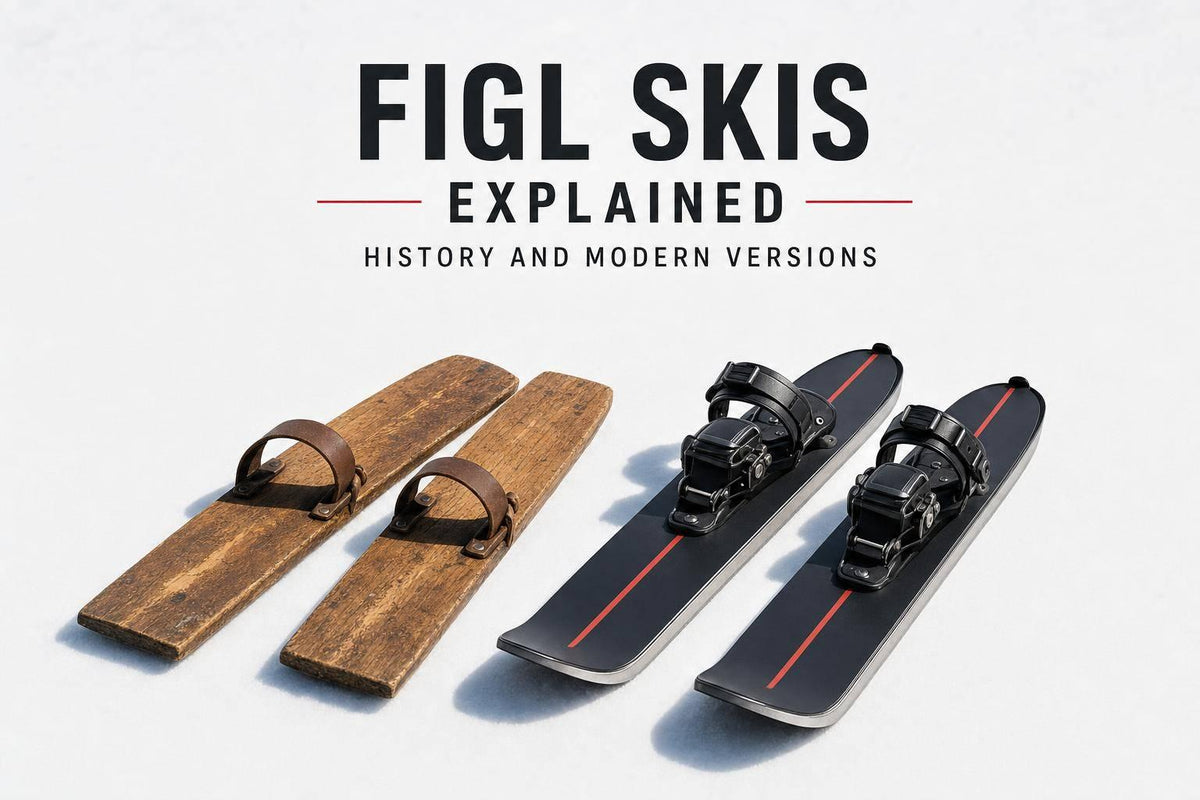
Figl skis are a niche tool, not an all-mountain ski. If you ride soft spring snow on alpine tours, classic Figl still make sense. If you want short skis for groomers, parks, and mixed resort snow, modern options like Snowfeet* make more sense.
Here’s the short version:
- Figl came from Austria in the 1930s, with a patent in 1946
- Classic Figl are usually 20 to 26 in. (50–66 cm) long
- They were built for firn, which is dense spring snow from freeze-thaw cycles
- Old models often used rear-mounted bindings, no steel edges, and heel-drag braking
- Modern short skis moved to centered bindings, steel edges, and carving turns
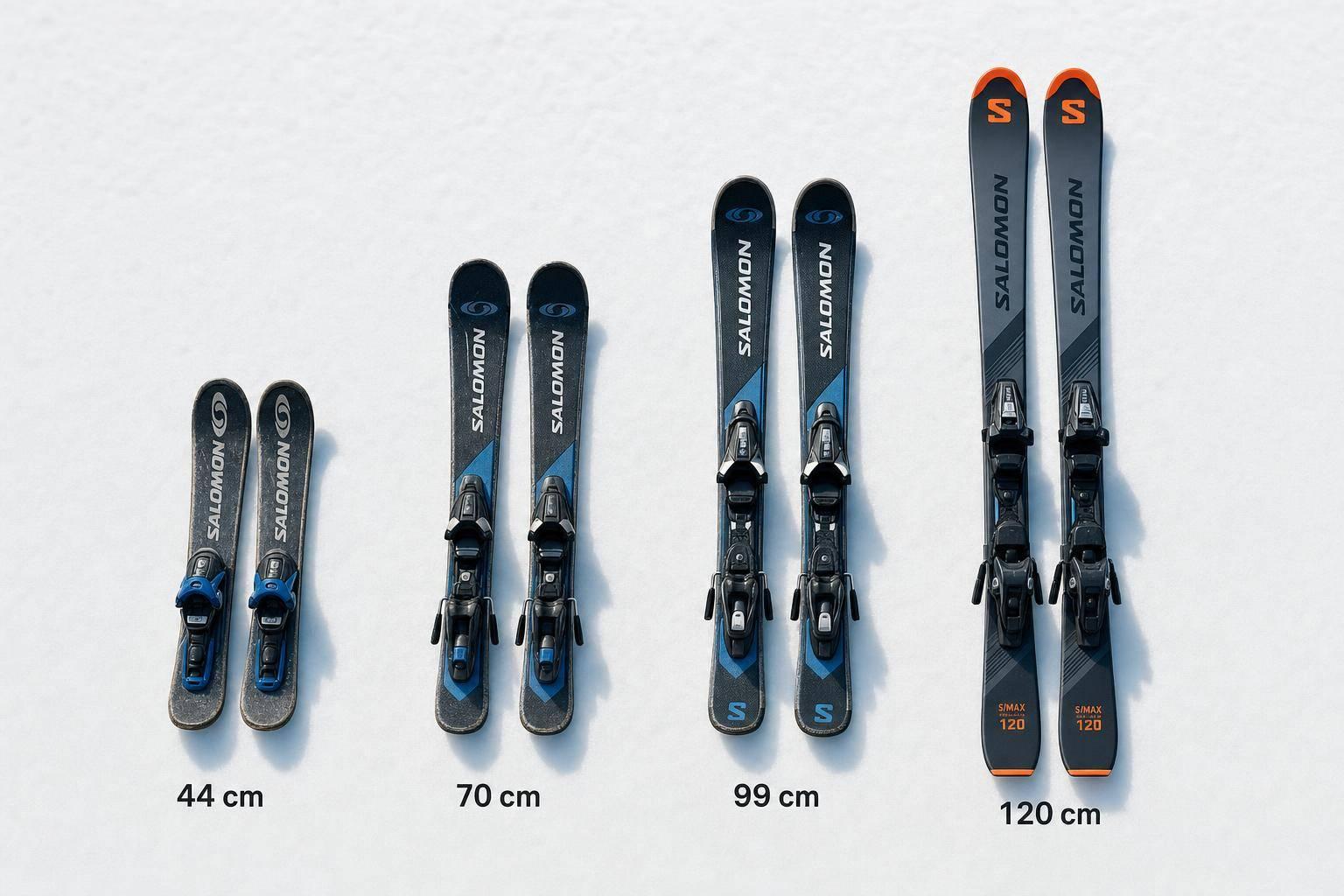
- In today’s short-ski lineup, you’ll see sizes like 17 in. (44 cm), 26 in. (65 cm), 39 in. (99 cm), and 47 in. (120 cm)
If I had to sum it up in one sentence: Figl helped start the short-ski idea, but modern short skis are easier to use in more places.
Quick Comparison
| Model | Length | Best Snow | Binding Position | Best Use |
|---|---|---|---|---|
| Classic Figl | 20–26 in. (50–66 cm) | Spring firn | Rear | Alpine spring descents |
| Skiskates | 17 in. (44 cm) | Groomed snow, park | Centered | Skate-like riding, tricks |
| Skiblades | 26 in. (65 cm) | Groomed snow | Centered | Tight turns, playful laps |
| Skiblades | 39 in. (99 cm) | Groomed + mixed resort snow | Centered | Best all-around pick |
| Short Skis | 47 in. (120 cm) | Groomed runs | Centered | More stability, more speed |
So, if you’re choosing between old-school Figl and modern short skis, it comes down to one thing: Do you want a spring-snow specialty tool, or do you want something you can ride on a normal resort day?
Snowfeet* Snowblades | Skiboards | Skiblades | Short Skis - All you need to know
The History of Figl Skis: From Alpine Firn Gliders to a Niche Sport
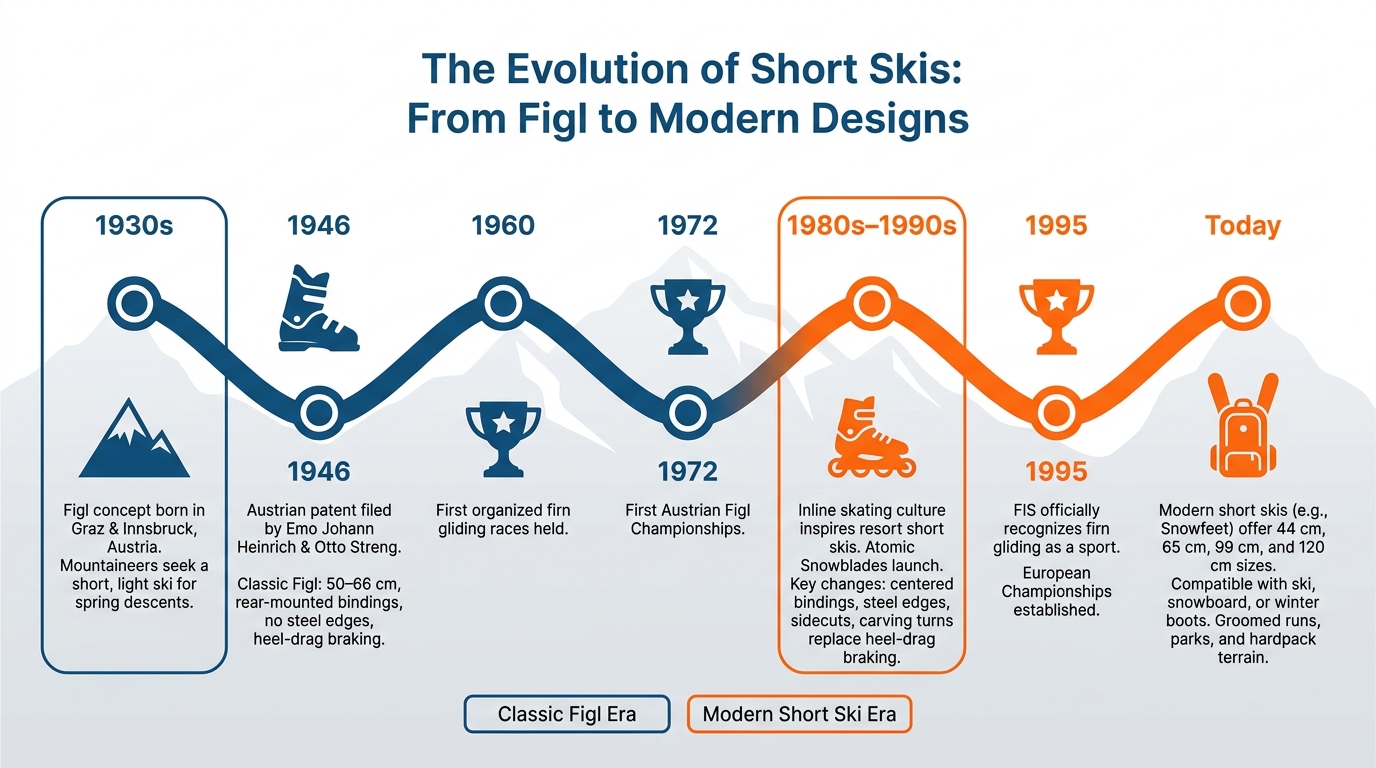
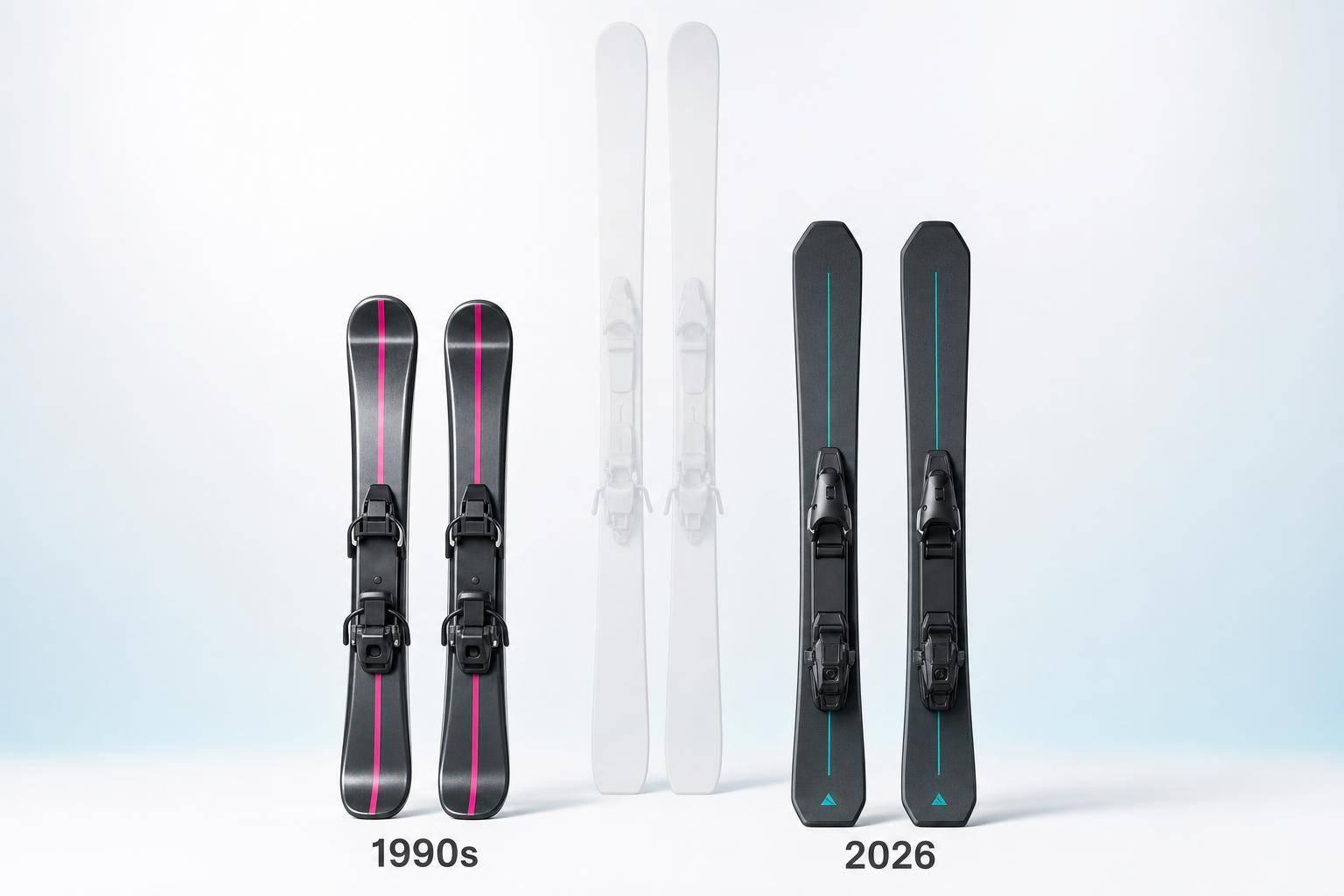
Figl Skis to Modern Short Skis: Evolution Timeline
Early Origins in the 1930s and Postwar Patent Development
In the 1930s, mountaineers in Graz and Innsbruck wanted a simple way to get down after summit climbs. Long skis weren’t always the best fit for that job. So the idea behind Figl was pretty straightforward: make something short, light, and easy to handle.
In 1946, Innsbruck engineer and alpinist Emo Johann Heinrich, working with Otto Streng, patented the design in Austria.
Classic Figl were often made from lightweight metal or wood. That made them slower and easier to control than full-length skis. They also used simple lace-up bindings that worked with hiking or mountaineering boots, so riders didn’t need ski boots. That alone tells you a lot about the original goal. These weren’t built for resort laps or high-speed carving. They were built to make spring descents simpler.
The skis ended just behind the heel, which let riders brake by shifting their weight backward. It’s a clever setup, almost like built-in humility: the design encouraged control over speed. That short, rear-weighted shape later became the model for many other short-ski designs.
How Figl Became Part of Spring Skiing Culture
The sport side came later. The first organized firn gliding races were held in 1960. The first Austrian Championships followed in 1972. Then, in 1995, the International Ski Federation (FIS) officially recognized firn gliding as a sport, and European championships came after that.
As more people used them, the pros and cons of the design came into focus. Figl were fun, simple, and well suited to certain snow conditions. But they also had limits, which pushed later short-ski designs in new directions.
Today, Figl are closely linked with Tyrolean spring skiing, especially on Innsbruck’s Nordkette. Each March, locals still take these short skis into slushy gullies and head downhill the old-school way. There’s something great about that. It feels part sport, part spring ritual, part mountain tradition.
Over time, competition models moved toward shorter versions built more for carving. Still, the classic recreational Figl stuck around as a seasonal Alpine niche. Figl were the starting line for short-ski design, not the final version. And that same layout helps explain both how classic Figl move over snow and why later short skis changed the recipe.
Classic Figl Design: How They Work on Snow
Short Length, Rear-Mounted Bindings, and Soft-Snow Control
Classic Figl don’t work like modern short skis. They’re much shorter - usually 50 to 66 cm - and they were built for controlled travel on firn.
The big twist is the binding position. On classic Figl, the binding sits toward the rear, which puts the rider in a back-weighted stance. That changes how you move. Instead of depending on sharp edge hold, you guide the ski by shifting your weight forward and back. Lean forward to get moving. Press your heels into the snow to slow down or brake.
A lot of classic aluminum Figl also have no base and no steel edges. So, well, they’re not trying to bite into the snow like a normal ski. They depend on balance and pressure changes instead of edge grip.
Best Terrain and Key Limits of Classic Figl
Classic Figl are at their best in firn - old, dense snow that has thawed and refrozen many times. That kind of snow often shows up on steep south-facing slopes and in high-alpine terrain. In those spots, Figl can feel right at home.
But there’s a catch. They’re less suited to spring snow with rocks, rough patches, or debris mixed in, where edge grip matters more. That tight snow window is a big part of the story. It helps explain why later short-ski designs took the basic idea and pushed it in a broader direction.
sbb-itb-17ade95
From Figl to Modern Short Skis: Snowblades, Skiboards, and Skiskates
How Snowblades and Skiboards Changed the Short-Ski Concept
In the 1980s and ’90s, short skis started to move past that narrow original use case and into day-to-day resort riding. That’s the big reason modern short skis no longer follow Figl’s rear-weighted setup made for spring snow.
Inline skating helped push that change. Brands leaned into a more skate-like feel on snow, and products like Atomic Snowblades brought that idea onto groomed runs.
The gear changed in a few key ways:
- Bindings moved from the rear to a centered spot, which gave riders a more balanced stance
- Steel edges and sidecuts added grip, carving control, and better hold on hardpack
- Braking changed too. Instead of heel-drag braking in soft snow, riders could slow down with carving turns and hockey stops
Once the binding position, edges, and stance changed, ski length became the next big call.
Why Snowfeet* Works Better for Most Riders Today
Snowfeet* carries that idea forward for casual riders. The lineup comes in 44 cm, 65 cm, 99 cm, and 120 cm lengths, so you can pick a size that fits your skill level and the terrain you like most. Depending on the model, you can use ski boots, snowboard boots, or winter boots. And yeah, one of the nice parts is how easy they are to haul around - they’re light enough to toss in a backpack.
Pricing starts at $460 for the 44 cm Skiskates, $590 for the 65 cm Skiblades, $690 for the 99 cm Skiblades, and $950 for the 120 cm Short Skis.
The differences stand out fast when you line them up side by side.
| Feature | Classic Figl | 1990s Snowblades/Skiboards | Snowfeet* (Today) |
|---|---|---|---|
| Binding Position | Rear-mounted | Center-mounted | Centered |
| Primary Terrain | Soft firn | Groomed runs, parks | Groomed runs, parks, hardpack |
| Braking Method | Heel-drag braking in soft snow | Carving, hockey stops | Carving, skating motions |
| Boot Compatibility | Hiking or ski boots | Ski boots | Ski, snowboard, or winter boots |
| Portability | Packable, lightweight | Lightweight, portable | Backpack-friendly |
Next, the article compares Figl directly with Snowfeet* Skiskates and Skiblades by size and riding style.
Figl vs Snowfeet* Skiskates and Skiblades: Which One Should You Buy
Now let’s put the old spring-snow idea next to modern short skis made for resort days.
Snowfeet* Skiskates 44 cm vs Figl for Agile, Skate-Style Riding
Figl was built to deal with one job: spring snow. Snowfeet* goes after a much broader use case at the resort.
The 44 cm Skiskates use a centered stance and a skate-like feel. That makes them a better fit for groomed runs and terrain parks. They keep the fun part of the short-ski concept, but without locking you into a tiny weather window.
So, if Figl feels like a niche tool, Snowfeet* Skiskates feel more like something you can grab for a normal day on the mountain.
If 44 cm sounds a bit too twitchy for you, Snowfeet* Skiblades give you more room to dial in stability.
Snowfeet* Skiblades 65 cm, 99 cm, and 120 cm: Which Size Fits Your Skill Level and Terrain
Each Skiblade size suits a different kind of rider:
- 65 cm: fast turns, tricks, and easy carrying
- 99 cm: the best all-around pick for most riders
- 120 cm: the closest feel to a standard ski, with the most stability at speed
| Model | Length | Stability | Best For | Price |
|---|---|---|---|---|
| Classic Figl | 50–66 cm | Poor outside soft spring snow | Spring slush, Alpine tours | Used/vintage only |
| Skiskates | 44 cm | Low | Groomers, parks, skate-style riding | From $460 |
| Skiblades | 65 cm | Moderate | Tricks, quick turns | From $590 |
| Skiblades | 99 cm | High | All-mountain resort, beginners | From $690 |
| Skiblades | 120 cm | Highest | Speed, groomed runs | $950 |
Key Differences and the Best Pick for Most Riders
Figl still has one clear lane: going down slushy spring snowfields on an Alpine hiking tour. Outside that lane, it depends too much on the snow. That’s a tough sell at most resorts.
Long skis still beat short skis if you care most about backcountry powder or fast, technical carving. That’s just the tradeoff. Short skis are fun, nimble, and easy to manage, but they don’t do every job.
For casual riders, beginners, and anyone who wants gear that’s fun and easy to carry, Snowfeet* covers the range well. For most people, the 99 cm Skiblades are the safest place to start. They hit that sweet spot between control and stability without feeling like a lot of ski.
Pick based on three things: length, terrain, and stance. Get those right, and the choice gets a lot easier :)
FAQs
Are Figl skis still used today?
Yes. Figl skis are still around today, mostly in the Austrian Alps. People often call them firn gliders, and they’re still part of spring skiing on the Nordkette in Innsbruck. You can even rent them through local ski schools.
The original design lives on as a niche pick for mountaineers and die-hard fans. But for everyday resort skiing, modern short-ski options like Snowfeet* skiblades have taken their place in most cases.
Who should choose Figl over Snowfeet*?
Choose Figl over Snowfeet* only if you want a niche spring firn glider ride on soft, steep spring snow. These are usually about 20–26 in. (50–65 cm) long and rely on weight-shift braking and turning.
That setup can be fun in the right snow. But it’s a narrow use case.
Figl is less suited to regular resort riding, hardpack, ice, and mixed conditions. The main issues are:
- limited edge grip
- older, simpler bindings
- sometimes non-release bindings
For most casual riders, Snowfeet* is the better choice.
What Snowfeet* size is best for beginners?
The best Snowfeet* size for beginners comes down to the kind of ride you want.
- 44 cm Skiskates: the most playful option, with a skate-like feel
- 65 cm Skiblades: a nice middle ground for agility and stability on groomed runs
- 120 cm Skiblades: the most forgiving and stable pick, especially if you’re coming from traditional skis
Overall, Snowfeet* tends to offer a faster, easier learning curve than traditional long skis.











댓글 남기기
이 사이트는 hCaptcha에 의해 보호되며, hCaptcha의 개인 정보 보호 정책 과 서비스 약관 이 적용됩니다.