



















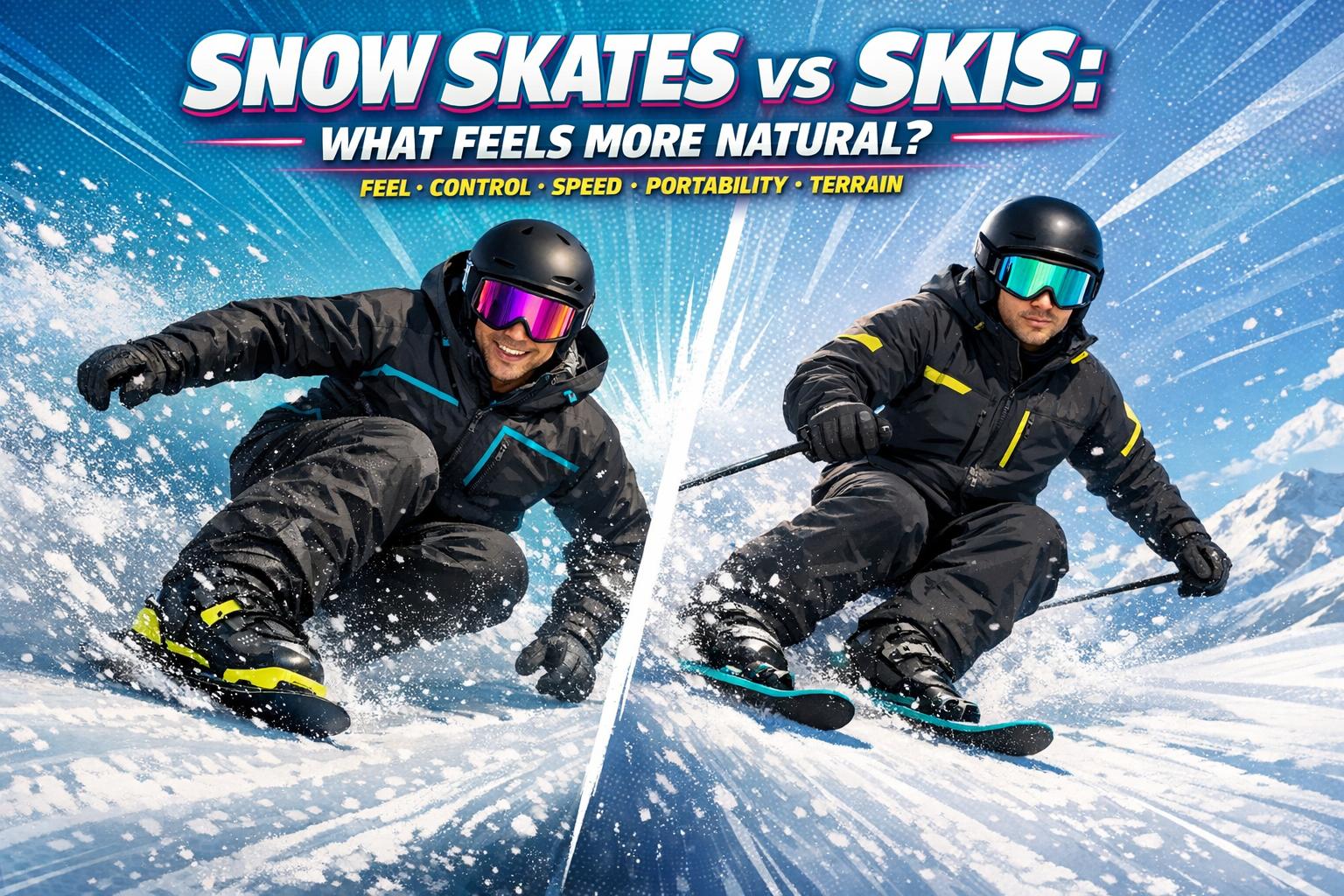
Learning to ski as an adult can feel daunting, but the right equipment makes all the difference. Shorter skis, like those from Snowfeet, are designed to help beginners gain control, confidence, and comfort on the slopes. Unlike long skis, which are harder to turn and manage, these compact options are lighter, easier to handle, and even fit in a backpack. Here's a quick breakdown of the top picks:
- Skiskates (44 cm): Super short and easy to carry, ideal for those with skating experience.
- Skiblades (65 cm): A great middle ground between short skis and skates, offering easy turning and comfort.
- 99 cm Skiblades: Perfect for beginners seeking stability and smooth carving.
- 120 cm Short Skis: Closer to the feel of regular skis but far easier to manage.
If you’re new to skiing or returning after a long break, Snowfeet’s shorter skis keep things simple and fun. Most models even work with snowboard boots, which are way more comfortable than stiff ski boots. Whether you're 25 or 65, these skis make learning less intimidating and more enjoyable. 😊
Are Short Skis Better for Beginners?
1. Snowfeet* Skiskates (44 cm)
At just 17.3 inches, Snowfeet* Skiskates are the shortest skis you can find, making them an appealing choice for adult beginners.
Learning Curve and Confidence
Long skis, typically over 150 cm, can be tricky for beginners, often leading to crossed tips and frustration. But with their compact 44 cm design, Skiskates eliminate this issue entirely. They feel more like inline or ice skates, making them easier for adults to pick up. A review from GearJunkie highlighted how even less experienced skiers were able to link turns and stop comfortably after just a few runs. Sunshine Straiges, a 59-year-old verified user, summed it up perfectly:
"I'm 59 so if I love these, anyone will!"
This ease of use helps build confidence and control right from the start.
Control and Maneuverability
Once you get the hang of it, controlling Skiskates feels natural. Their short length makes them super responsive to even small weight shifts. Lean a little, and you’re turning. For stopping, you can use the heel brake or even pull off a hockey stop. This level of precision is perfect for crowded slopes or for anyone focusing on fine-tuning their skills rather than speeding down the mountain.
Portability and Storage
Forget about roof racks or oversized ski bags. Skiskates are so compact they can fit in a standard backpack or even checked luggage. This not only saves space but also spares you from extra ski-bag fees. A verified user, heyjerz, shared their experience:
"A lot easier to haul around the hills & on vacation than traditional skis!"
Their portability makes them ideal for travel or quick trips to the slopes.
Physical Comfort and Impact
Skiskates attach to regular winter or snowboard boots, so you can skip the stiff, heavy ski boots altogether. Plus, their lightweight and shorter design mean less strain on your knees, especially during falls. One user explained the added comfort:
"I had no muscle soreness after using these because I can change my leg position, unlike the snowboard which is set."
This flexibility is a game-changer for older adults or anyone dealing with joint issues, offering a more comfortable and forgiving experience compared to traditional skis.
| Feature | Snowfeet* Skiskates (44 cm) | Traditional Skis |
|---|---|---|
| Length | 17.3 in (44 cm) | 59–71 in (150–180 cm) |
| Boot Requirement | Winter or snowboard boots | Rigid plastic ski boots |
| Portability | Fits in a backpack | Requires roof rack or large bag |
| Learning Time | Few runs to basic control | Multiple lessons |
| Weight per Pair | ~3–4 lb | 10–15 lb or more |
| Starting Price | From $575 | $850+ (skis + bindings + boots) |
2. Snowfeet* Skiblades (65 cm)
Snowfeet* Skiblades (26 in) are a middle ground between compact Skiskates and traditional skis, offering the carving ability of skis with the agility of skates. Designed with adult beginners and returning skiers in mind, these skiblades aim to make skiing more approachable and enjoyable.
Learning Curve and Confidence
According to Snowfeet*, these skiblades can be mastered in as little as 5 minutes. Tripp, a customer from Manitou Springs, shared his experience:
"The learning curve was quick. They maneuver as easily as skates, but are fast down the mountain. The most fun was weaving through the woods."
This quick adaptability allows users to explore narrow trails and tree runs that would be challenging with longer skis. For those returning to the slopes, the ease of learning and control can help rebuild confidence.
Control and Maneuverability
The 65 cm blades are designed with a parabolic shape, a 4-meter turning radius, and metal edges for better grip. With a slim 9.5 cm waist, they make turning effortless while reducing strain on the knees. Snowfeet* highlights this benefit:
"Little skis are lighter on your knees, and easier to control for any older skier, whose strength, knees and reflex speed is not what it once was."
This combination of features makes them a great choice for skiers looking for better control and less physical stress.
Portability and Storage
These skiblades are not only easy to use but also incredibly portable. Weighing just 3.79 lbs with ski bindings (or 5.89 lbs with snowboard bindings), they can fit in a standard backpack. While slightly heavier than Skiskates due to added features, they remain much easier to carry than traditional skis. As Uncrate puts it:
"Far more portable and affordable than traditional skis or snowboards."
Physical Comfort and Impact
Unlike traditional ski setups that require stiff plastic boots, the 65 cm Skiblades can also be paired with snowboard bindings. This allows users to wear softer, more comfortable boots, which reduces fatigue and improves walking ease. Their lightweight design further minimizes stress on the knees, making them ideal for adults with joint concerns.
| Feature | Snowfeet* 65 cm Skiblades | Traditional Long Skis |
|---|---|---|
| Length | 26 in (65 cm) | 150–180 cm |
| Weight per Pair | 3.8–5.9 lbs | 10–15+ lbs |
| Learning Curve | ~5 minutes | Days to weeks |
| Turning Radius | 4 m (13 ft) | Much larger |
| Storage | Fits in a backpack | Requires a ski bag or roof rack |
| Starting Price | From $635 | $850+ (skis, bindings, boots) |
Specifications sourced from product details.
3. Snowfeet* Skiblades (99 cm)
If you're looking for a bit more of that classic ski sensation compared to the 65 cm model, the 99 cm Skiblades are a great next step. At 39 inches long, they hit a sweet spot - long enough to carve with ease but still short enough to feel approachable and fun. They offer a mix of skate-like agility and skiing stability, making them versatile for a variety of slopes.
Learning Curve and Confidence
Snowfeet* sums it up perfectly: "long enough to ski, short enough to skate". This extra length boosts stability, letting you tackle green and easy blue runs with confidence. They're much easier to handle than traditional long skis, which is especially reassuring for adults who might feel daunted by longer gear. Verified user MindySue shared her experience:
"I had a lot of fun with the 99s. They are easier to turn than skis... Highly recommend."
The added surface area helps you stay steady and progress your skills throughout the season. It's a design that encourages confidence and control while keeping the experience fun.
Control and Maneuverability
The 99 cm Skiblades come packed with features that make turning and carving a breeze. With a deep parabolic sidecut, metal edges, a graphite base, and a tailored camber, these skiblades are built for quick, responsive turns. This is especially handy when navigating crowded slopes or weaving through tight spots. Mike E., another verified user, highlighted their ease of use and comfort:
"SUPER comfortable, easy to control, very agile, easy on the knees and ankles because they are so light, great for beginners."
While these skiblades shine on groomed runs, they’re best enjoyed at controlled speeds for optimal performance.
Portability and Storage
One of the standout perks of the 99 cm Skiblades is their portability. Their compact size makes them easy to fit in most cars or carry through airports - no need for roof racks or oversized ski bags. This convenience is perfect for weekend skiers or those traveling to resorts, keeping things simple and stress-free.
Physical Comfort and Impact
Shorter skis mean less strain on your body, especially your knees and hips. If you catch an edge or take a tumble, the reduced twisting forces can make a big difference. For adults getting back into skiing, this can be a game-changer. Verified user Brad Tolin summed it up well:
"These ski blades are a blast to use. Super easy to control, quick to turn, and way more forgiving than traditional skis."
Plus, the option to use snowboard bindings means you can wear softer, more comfortable snowboard boots instead of stiff ski boots. That added comfort can make long days on the slopes much more enjoyable.
| Feature | Snowfeet* 99 cm Skiblades | Traditional Long Skis |
|---|---|---|
| Length | 39 in (99 cm) | 150–180 cm |
| Learning Curve | ~5 minutes | Days to weeks |
| Maneuverability | High; quick, responsive turns | Lower; wider arcs required |
| Boot Compatibility | Ski boots or snowboard boots | Ski boots only |
| Storage | Fits in most cars; no roof rack needed | Requires ski bag or roof rack |
| Starting Price | From $675 | $400–$700+ (skis + bindings) |
Specifications sourced from product details.
sbb-itb-17ade95
4. Snowfeet* Short Skis (120 cm)
The Snowfeet* 120 cm Short Skis are a perfect blend of agility and stability, offering a skiing experience that's approachable yet satisfying. At just 47 inches long, these skis are much shorter than standard adult skis, which usually range from 170 to 190 cm. This shorter length makes them easier to handle, while still providing enough stability for carving on groomed trails and tackling light powder up to 4 inches deep.
Learning Curve and Confidence
These skis are designed with adult beginners in mind. The wood core gives them a lively and responsive feel, while the soft flex helps absorb minor mistakes, making them more forgiving for those still mastering their technique. Unlike traditional skis that can feel intimidating, the 120 cm Short Skis offer a more approachable learning experience. As Snowfeet* states:
"Short skis as an adult can make skiing easier and more enjoyable. They are lighter and more maneuverable, making turns simpler and helping you maintain better control."
One standout feature is the inclusion of standard release pro ski bindings, the same type used on traditional skis. These bindings not only ensure a secure fit but also release during a fall, adding an extra layer of safety for beginners. This combination of features builds confidence and control, especially on varied terrain.
Control and Maneuverability
The shorter length of these skis provides a tighter turning radius, making them ideal for navigating moguls and narrow trails. The wood core, metal edges, and soft flex work together to make carving feel natural and less technical. Verified user Andrew B. sums it up nicely:
"These short skis are so much fun and easy to control. Never going back to regular skis."
Once you're comfortable on groomed slopes, the 120 cm skis are versatile enough to handle more challenging terrain, offering better performance on moguls and tight trails compared to some of the shorter Snowfeet* models.
Portability and Storage
At just 47 inches, these skis are easy to transport. They fit comfortably in most standard SUVs and mid-size car trunks, so there's no need for bulky roof racks or oversized ski bags.
Physical Comfort and Impact
The lightweight design of these skis doesn't just make them easier to carry - it also reduces physical fatigue. With less ski to control, there's less strain on your legs and hips. For adults who are new to skiing or returning after a long break, this reduced weight also lessens the rotational stress on your knees during falls, making the overall experience more forgiving.
| Feature | Snowfeet* 120 cm Short Skis | Traditional Adult Skis |
|---|---|---|
| Length | 47 in (120 cm) | 67–75 in (170–190 cm) |
| Core Material | Wood core | Varies (wood, composite, metal) |
| Bindings | Standard release pro ski bindings | Standard release ski bindings |
| Primary Benefit | Easy turning, maneuverability | High-speed stability |
| Physical Impact | Lightweight, reduced joint fatigue | Heavier, higher physical demand |
| Starting Price | $775 | $450–$750+ (skis + bindings) |
Specifications sourced from product details.
Pros and Cons
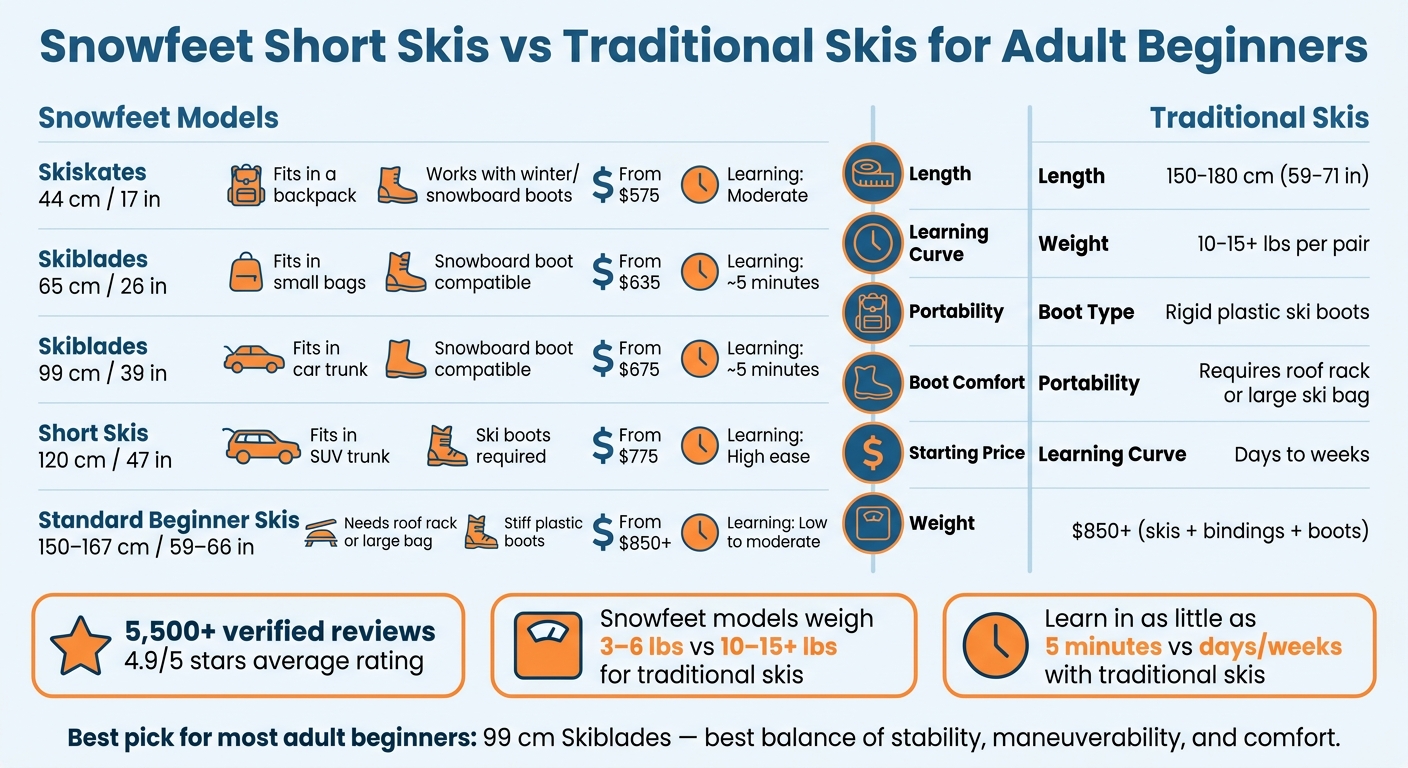
Snowfeet Short Skis vs Traditional Skis: Which Is Best for Adult Beginners?
Let’s break down how Snowfeet* stacks up against traditional skis, especially for adult learners. Here’s a quick comparison of Snowfeet* models versus standard beginner skis and snowboards:
| Product | Length | Ease of Learning | Portability | Comfort & Impact |
|---|---|---|---|---|
| Skiskates (44 cm) | 17 in | Moderate (requires skate balance) | Excellent – fits in a backpack | High – works with winter or snowboard boots |
| Skiblades (65 cm) | 26 in | High – very easy to turn | Excellent – fits in small bags | High – snowboard boot option available |
| Skiblades (99 cm) | 39 in | Very high – best balance and stability | Good – fits easily in a car trunk | High – snowboard boot option available |
| Short Skis (120 cm) | 47 in | High – offers traditional feel with easier control | Fair – more portable than standard skis | Moderate – designed for ski boots |
| Standard Beginner Skis | 59–66 in (150–167 cm) | Low to moderate – requires edge control lessons | Poor – needs roof racks or large bags | Low – stiff plastic boots can be uncomfortable |
Snowfeet* shines in two key areas: portability and comfort. Unlike traditional skis, which often require roof racks or bulky bags, Snowfeet* models are compact enough to fit in a backpack or car trunk. This makes them incredibly easy to transport. And when it comes to boots, Snowfeet* bindings are compatible with snowboard boots or winter boots, offering a much more comfortable alternative to the rigid plastic ski boots most skiers dread. As Snowfeet* puts it:
"If you own a pair of snowboard boots or you just hate the uncomfortable plastic ski boots, which most skiers do, these bindings are right for you."
This makes a big difference for adult learners who might be spending long hours on the slopes.
That said, shorter skis do come with some trade-offs. They can feel less stable at higher speeds and may vibrate more ("chatter") on hard or uneven snow. Standard beginner skis, with their wider waist widths (typically 86–104 mm), provide better float in powder and are more suited for off-piste terrain. For example, the 44 cm Skiskates are perfect for groomed trails and snow parks but fall short in backcountry or deep powder conditions. And if your goal is to progress to high-speed carving or backcountry skiing, the shorter models might start to feel limiting.
Conclusion
For adults new to skiing, traditional full-length skis can feel like a tough challenge. They’re harder to turn and stop, which can make those early days on the slopes more frustrating than fun.
That’s where Snowfeet* steps in with a smarter solution. Here’s a quick breakdown of their models and who they’re best suited for:
| You are... | Best Pick | Why |
|---|---|---|
| A complete beginner | 99 cm Skiblades | Offers the perfect mix of stability and easy turning |
| A former skater or hockey player | 44 cm Skiskates or 65 cm Skiblades | Uses balance skills you already know |
| Someone who dislikes stiff ski boots | 65 cm or 99 cm with snowboard bindings | Works with comfy, walkable boots |
| Wanting a traditional ski feel | 120 cm Short Skis | Mimics standard skis but easier to handle |
This guide makes it simple to find the right fit, ensuring your time on the slopes starts smoothly - whether you’re a total beginner or just getting back into the sport.
For most adult learners, the 99 cm Skiblades are the top choice. They combine stability with easy maneuverability and let you use comfortable, flexible boots. Brad Tolin puts it best:
"These ski blades are a blast to use. Super easy to control, quick to turn, and way more forgiving than traditional skis."
With over 5,500 verified reviews scoring an average of 4.9 out of 5 stars, Snowfeet* has earned its reputation as a go-to option for beginners. Whether you’re starting fresh or returning to skiing at 45 or 65, Snowfeet* takes the stress out of learning - letting you enjoy the slopes right from the start. Say goodbye to the steep learning curve of traditional skis and hello to a smoother ride with Snowfeet*.
FAQs
Which Snowfeet* length should I choose for my first day skiing?
For those new to skiing with Snowfeet*, the 65 cm length is a solid pick. Its shorter size makes it easier to control, simpler to maneuver, and perfect for adults starting their ski journey later in life. It's a great way to build confidence while nailing the basics.
Do I need ski lessons if I use Snowfeet* instead of long skis?
Snowfeet* Skiblades and Skiskates are a great option for beginners. Their shorter length and lightweight build make them easier to control and more intuitive than traditional skis. Many people find they can start enjoying Snowfeet* with little to no instruction. That said, whether you need lessons really depends on how comfortable you are with snow sports. While lessons can help improve your technique and boost safety, the user-friendly design of Snowfeet* often means you can skip formal training, especially compared to the learning curve of long skis or snowboards.
Are Snowfeet* safe at higher speeds or on icy snow?
Snowfeet* skiblades and skiskates are designed with safety in mind, especially for icy slopes. They provide outstanding grip, precise edge control, and effortless maneuverability. These qualities ensure a dependable and secure experience, even when you're cruising at higher speeds.











댓글 남기기
이 사이트는 hCaptcha에 의해 보호되며, hCaptcha의 개인 정보 보호 정책 과 서비스 약관 이 적용됩니다.