



















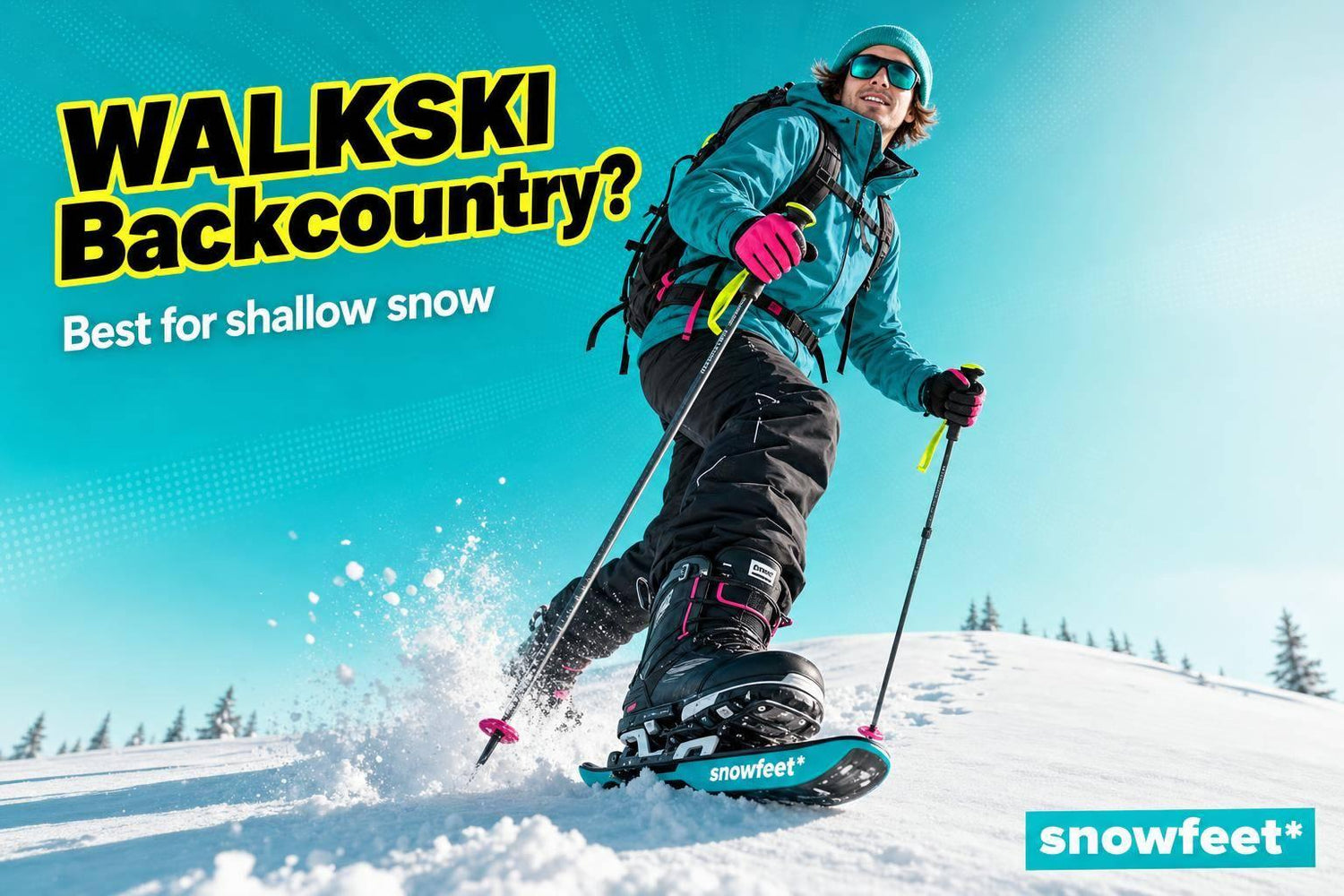
_Yes - if you want short, simple backcountry days without dropping about _$2,000 to $2,500_ on a full touring setup._* If you want big alpine lines, deep powder, and high-speed descents, I’d pass.
Here’s the short version:
- Best for: beginners, snowboarders, travelers, and casual tourers
- Costs: about $595 with skins included
- Weight: about 6.9 lb per pair for the wood-core version
- Works with: snowboard boots, winter boots, and ski boots
- Strong point: easy uphill access, easy packing, easy storage
- Weak point: less float and less stability than long touring skis
So, I’d look at the WALKSKI like this: it’s not a replacement for a full touring rig. It’s a small, lower-cost way to get into short tours, sidecountry laps, and mellow backcountry outings.
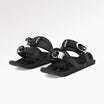
Snowfeet* WALKSKI Backcountry Touring Skis | 100 CM
Quick Comparison
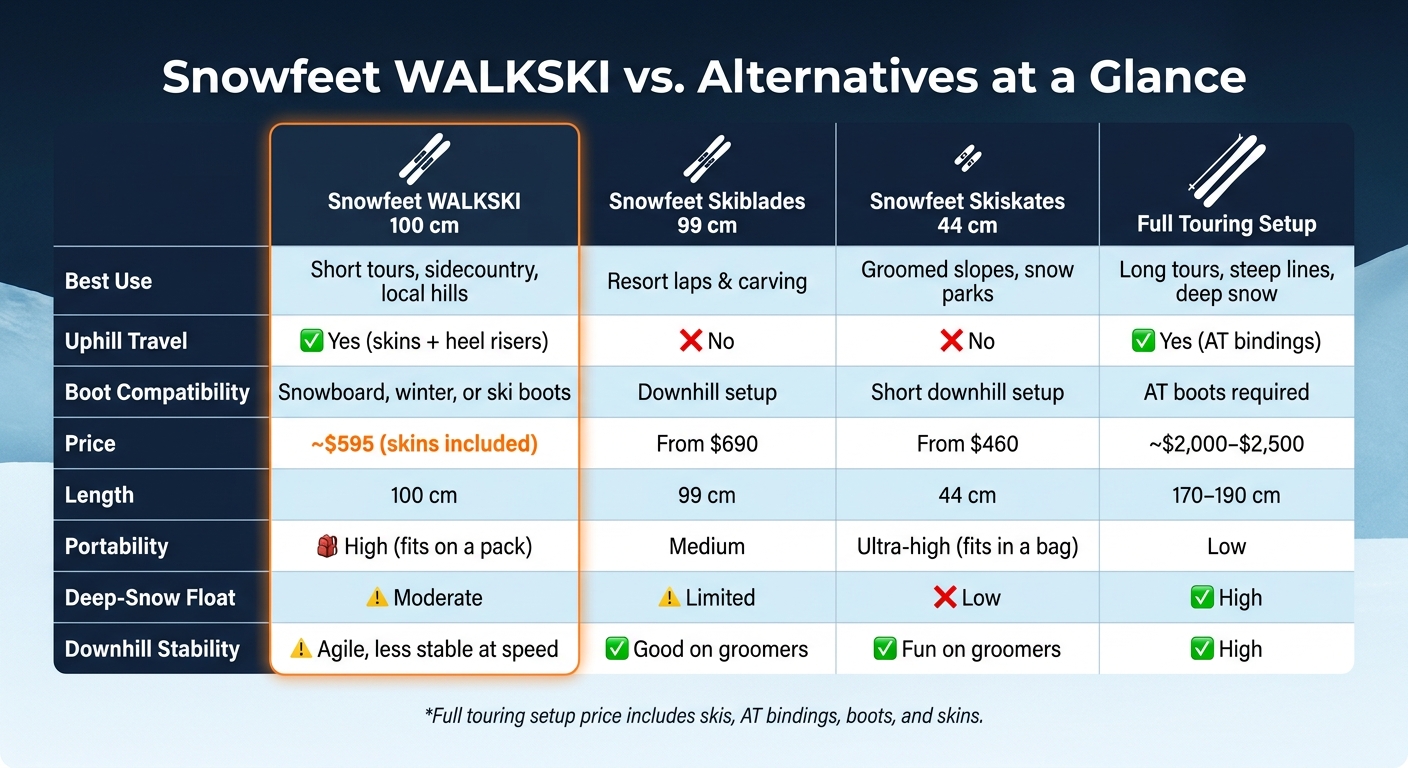
Snowfeet WALKSKI vs. Full Touring Setup vs. Skiblades vs. Skiskates
| Option | Best Use | Uphill Travel | Boot Setup | Price |
|---|---|---|---|---|
| Snowfeet WALKSKI 100 cm | Short tours, sidecountry, local hills | Yes | Snowboard, winter, or ski boots | ~$595 |
| Snowfeet Skiblades 99 cm | Resort runs, carving, groomers | No | Downhill setup | From $690 |
| Snowfeet Skiskates 44 cm | Groomed slopes, snow parks, fun laps | No | Short downhill setup | From $460 |
| Full touring setup | Long tours, steep lines, deep snow | Yes | AT boots required | ~$2,000–$2,500 |
What I like most is simple: you get uphill access without the usual wallet pain, gear pile, and garage drama :)
What I’d watch out for is just as simple: 100 cm skis have limits. In deep snow and at speed, you’ll feel them.
If your goal is easy access and short missions, the WALKSKI makes sense. If your goal is big mountain touring, stick with a full setup.
How the WALKSKI Performs Going Up and Coming Down
Uphill Travel: Good for Short Tours, Rolling Terrain, and Tight Approaches
For short tours and tight terrain, the big question is simple: does the WALKSKI climb well enough to make its small size worth it?
Yes - within the right use case.
Its walk mode, low riser, and high riser make climbing practical on flat approaches, moderate grades, and steeper pitches. It’s not trying to be a full-length touring ski. That’s kind of the point. It’s built for short tours, rolling terrain, and narrow approaches where a small ski can feel like a cheat code.
The 100 cm length helps most in tight terrain, where kick turns in trees or narrow skin tracks take less effort. If you’ve ever fought a long ski in a cramped uphill line, you know how nice that can feel. Less wrestling. More moving.
That also makes the WALKSKI a strong fit for riders with snowshoeing or Nordic experience who want an easier first tour. It feels less intimidating, and that matters.
On longer tours, though, the gap versus a full-length touring ski starts to show. Shorter skis give up some glide per stride and float in deeper snow. Over a long day, that adds up. Bit by bit, stride by stride.
That same short length flips into a bigger plus on the way down, where agility matters more than glide.
Downhill Control: Agile on Short Descents, Less Stable at Speed
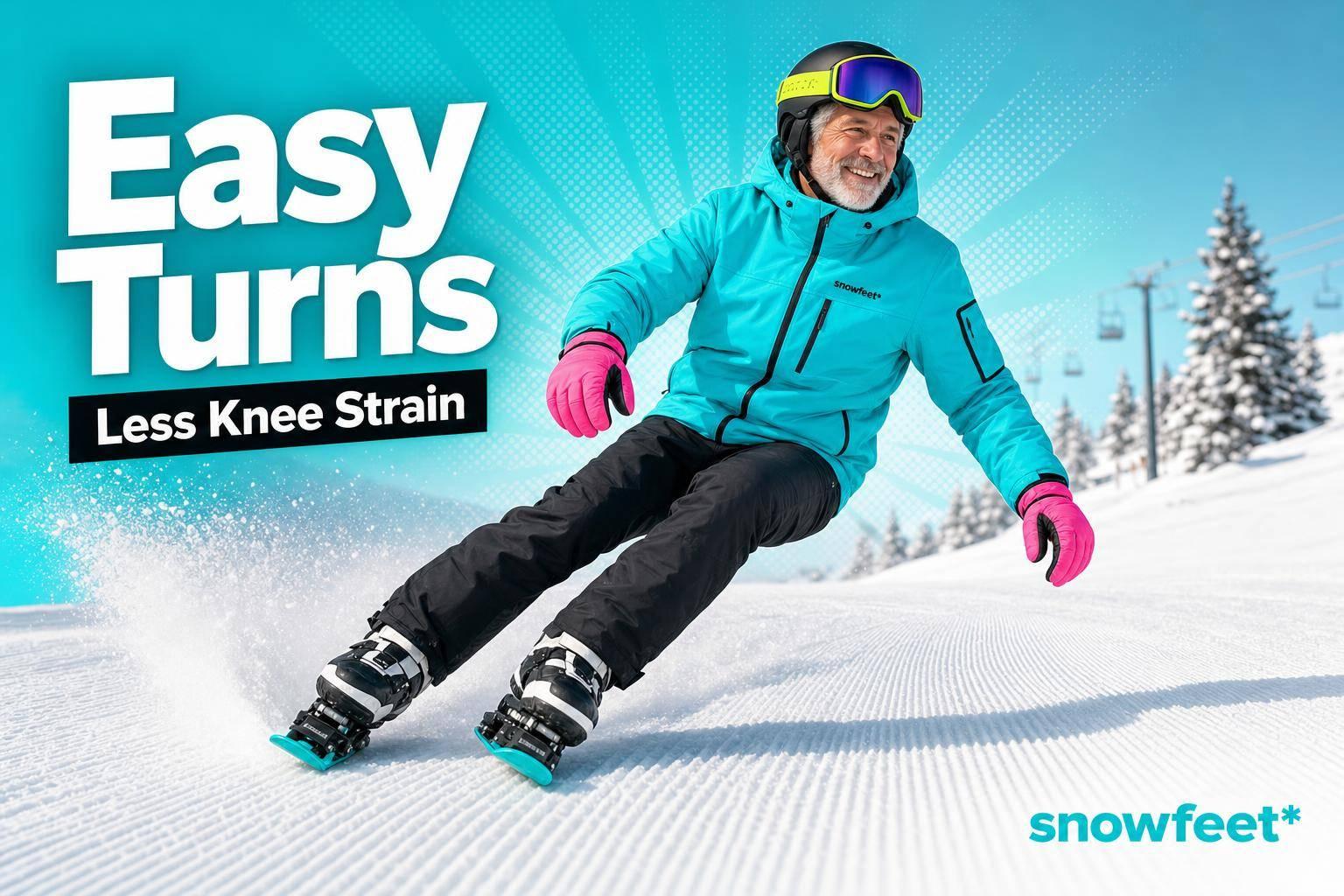
In Ski mode, the WALKSKI feels quick and responsive on packed trails and groomed snow, especially for newer riders. Turning feels easy. The ski comes around fast, which can be a lot of fun on short descents.
But there’s no magic here: a 100 cm ski won’t feel as planted as a full-length touring ski once speed climbs.
The trade-off shows up at speed. A short ski is easier to throw around, but it gives up stability on fast or steep descents. That’s the deal.
"Only trade-off is at higher speeds, where longer skis still feel more stable - but for overall fun and maneuverability, these are hard to beat." - Brad Tolin
That quote nails it. The WALKSKI is a blast for short descents after a compact approach, but full-length touring skis still have the edge when the line gets fast, steep, or deep.
Snow texture plays a big part in how far that quick, nimble feel can take you.
Best and Worst Snow Conditions for WALKSKI
The WALKSKI performs best on packed trails, groomed snow, and tighter backcountry routes where maneuverability matters more than top-end speed. That’s where the short platform makes the most sense.
Where it struggles is pretty much where most 100 cm skis struggle:
- Very deep snow
- High-speed terrain
If your tours usually mean big alpine descents or long stretches where stability and float matter most, a full-length touring ski will still do that job better. No sugarcoating there.
| Snow Condition | WALKSKI Performance |
|---|---|
| Packed trails / groomed snow | ✅ Strong |
| Powder snow | ✅ Manageable |
| Deep powder | ⚠️ Limited float |
| High-speed descents | ⚠️ Less stable than longer skis |
That compact performance profile also helps with the one thing touring gear usually gets wrong: portability.
sbb-itb-17ade95
Portability, Boot Compatibility, and Day-to-Day Use
Why 100 cm Skis Are Easier to Carry, Pack, and Travel With
Beyond how it rides, the WALKSKI's biggest win is simple: it's easy to move, pack, and stash. The WALKSKI is 100 cm long, while standard backcountry skis usually land in the 170 to 190 cm range. That’s a big gap, and you feel it fast when you’re loading a car, packing for a winter trip, or trying to find a spot for gear at home.
A 100 cm ski fits in a trunk and can strap right onto a backpack. That’s a lot less hassle than wrestling with full-length skis. Weight helps too. The wood-core version comes in at 6.9 lb (3,116 g), and the fiberglass-core version weighs 8.8 lb (3,980 g). So if you’ve got a dry patch, a rocky approach, or a bit of hiking before the snow starts, carrying them doesn’t feel like a chore.
Storage is easier too. A 100 cm ski can slide into a closet, sit in the corner of a cabin, or live in a small apartment without taking over the whole room. For anyone short on space, that’s a nice little win.
Using WALKSKI With Snowboard Boots or Regular Winter Boots
One of the best parts of the WALKSKI setup is that you can skip dedicated touring boots. The universal binding works with snowboard boots, regular winter boots, and ski boots. It covers US sizes 6 to 14.5 for snowboard and winter boots, and 4.5 to 14.5 for ski boots.
That means less stuff to buy, less stuff to pack, and less stuff to drag around. If you travel a lot or just want a simple setup, that matters.
Boot choice still changes how the ski feels:
- Snowboard boots give you better control and more stability on descents.
- Regular winter boots work well for mellow terrain or short outings.
It’s a pretty friendly setup. You’re not locked into one boot system, which lowers the barrier a lot.
How WALKSKI Fits Into a Typical Winter Day
Here’s what a normal day can look like: drive to the trailhead, strap the skis to your pack for a rocky section, put on the included climbing skins for the uphill, then lock the heel and ski a short descent before hiking back to the car.
That kind of flow is the whole point. The setup is simple. The carry is easy. And there’s a lot less fuss than you get with a full touring kit. Users say the WALKSKI is easy to turn and forgiving, even for riders with basic Nordic or casual snow experience.
That’s where the day-to-day appeal shows up. It’s not just about how the ski performs on snow. It’s about how easy it is to bring along, use, and put away when the day’s done.
Is the WALKSKI Worth the Price for Different Riders?
Price and Value Compared to Full Touring Ski Setups
At about $595 with skins included, the WALKSKI comes in way below a full touring setup, which usually lands around $2,000 to $2,500. That gap is huge.
But price alone doesn't tell the whole story.
What matters more is what kind of ride you want. If you're after touring access without buying a full ski system, WALKSKI starts to make a lot of sense. It hits the sweet spot for riders who want simple, short, low-commitment touring without turning their gear closet into a science project.
| Feature | WALKSKI 100 cm | Standard Touring Setup |
|---|---|---|
| Approx. Cost (USD) | ~$595 | ~$2,000–$2,500 |
| Upfront Gear Needed | Boots you likely already own | Specialized AT boots + bindings + skis + skins |
| Downhill Stability | Agile and easy to turn; less stable at speed | More stable at speed and in variable snow |
| Deep-Snow Float | Moderate | High |
| Best Use Cases | Casual touring, local hills, travel, narrow trails | Big alpine missions, deep powder, long expeditions |
So, yeah, the lower price matters most when you're not trying to replace a full touring rig. It's a better match for riders who want to get out, have fun, and keep things simple.
Best Fits: Travelers, Beginners, Casual Tourers, and Local Hill Riders
WALKSKI fits a pretty clear group of riders.
- Beginners: a good entry point for touring, with forgiving handling and a lower buy-in
- Travelers: easy to pack for winter trips when space is tight
- Casual tourers and local hill riders: a nice match for rolling terrain, narrow trails, and short backcountry approaches
- Snowboarders: a clean fit since they can use boots they already own
That's the charm here. You don't need to go all-in from day one. You can just get out there and see if this style of touring is your thing.
The catch? That value drops fast once your tours get longer, steeper, or deeper.
Who Should Skip It and Buy Traditional Touring Skis Instead
If your goals include long couloirs, big vertical, deep powder, or fast descents in tough terrain, standard touring skis are the better call. The 100 cm length starts to show its limits when snow gets deeper and speeds go up. Float and stability just aren't on the same level once things get serious.
That puts WALKSKI in a strong spot for casual touring. The next step is figuring out whether a shorter Snowfeet option makes even more sense.
Snowfeet* Alternatives and the Final Verdict
If you're picking between Snowfeet* models, the main thing to sort out is simple: do you need to go uphill, or not?
That one question clears up most of the decision.
WALKSKI vs. Snowfeet* Skiblades 99 cm
WALKSKI and Skiblades 99 cm are close in size, but they’re built for different days on snow.
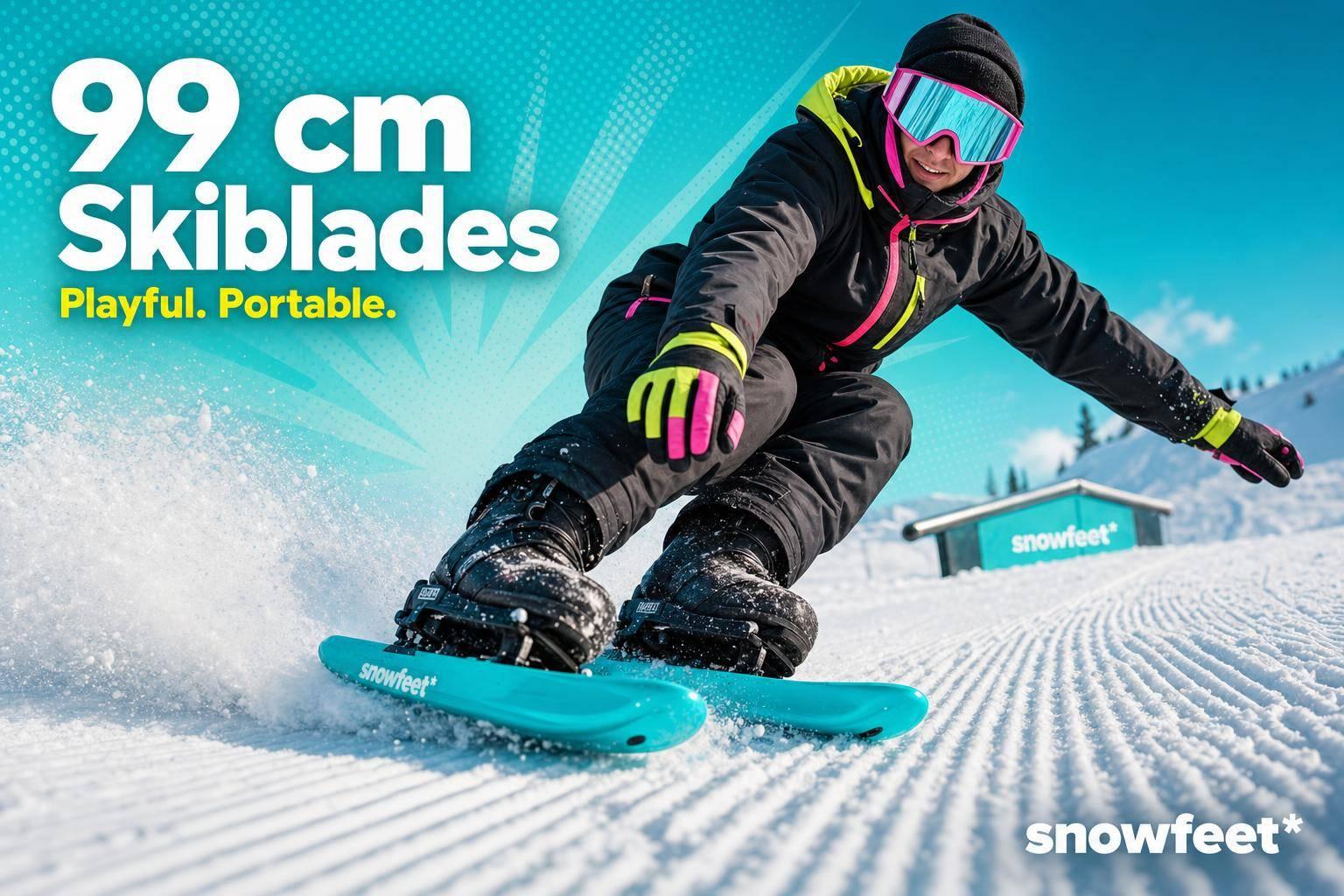
Skiblades lean hard toward downhill riding. They make sense for resort laps, groomers, and tight, busy runs where a short ski feels easier to handle. WALKSKI, on the other hand, is built for touring first. It comes with skins and climb modes, so it can handle uphill travel in a way Skiblades simply can’t.
As Brad Tolin put it:
"They're great for carving and navigating crowded slopes without feeling bulky. I felt comfortable on them within just a few runs."
| Feature | WALKSKI 100 cm | Skiblades 99 cm |
|---|---|---|
| Primary Use | Backcountry touring & approaches | Resort laps & carving |
| Binding System | 4-mode (free heel + risers) | Fixed downhill binding |
| Climbing Skins | Included | Not included |
| Best Terrain | Unmarked trails, powder, woods | Groomed slopes, crowded runs |
| Price (from) | From $595 | From $690 |
So, here’s the short version: pick Skiblades for groomed resort runs. Pick WALKSKI if touring is part of the plan.
And if you don’t need skins or an uphill mode at all, Skiskates are the smaller and more stripped-down option.
WALKSKI vs. Snowfeet* Skiskates 44 cm
Skiskates are the smallest Snowfeet* model at 44 cm. They’re made for playful riding on groomed slopes, and at $460, they’re also the lowest-cost option of the three.
But that small size comes with trade-offs. Skiskates don’t have uphill travel, skins, or a touring binding. If hiking or skinning is on your list, WALKSKI is the only one here built for that job.
| Feature | WALKSKI 100 cm | Skiskates 44 cm |
|---|---|---|
| Length | 100 cm | 44 cm |
| Uphill Capability | Yes (skins + heel risers) | No |
| Best Terrain | Backcountry, powder, mixed | Groomed slopes, snow parks |
| Portability | High (fits on a pack) | Ultra-high (fits in a bag) |
| Price (from) | From $595 | From $460 |
That gets you to the real buying call: do you need WALKSKI’s touring setup, or are you just looking for something fun and small for lift-served terrain?
Final Verdict: Worth It for Casual Backcountry Touring, Not for Big Alpine Objectives
For most casual riders, WALKSKI is a yes.
At about $600, it gives you a simple touring setup for far less than a full ski touring kit. That’s the big appeal. It works well for short tours, easy packing, different boot options, and terrain where top speed and max float don’t matter much.
As Jan from Snowfeet* said:
"The 100cm are a great middle ground between freedom of movement and hard stability."
So, if your plan is casual backcountry touring, WALKSKI makes a lot of sense. If you’re aiming for long, steep, or deep days in bigger alpine terrain, stick with standard touring skis.
FAQs
Is WALKSKI good for beginners?
Yes. The WALKSKI is a great pick for beginners.
Its 100 cm length makes it easier to turn and control than longer skis. That can make the learning curve feel a lot shorter. In plain English: it’s less awkward, less intimidating, and easier to get the hang of.
Most new users start to feel more confident within a few minutes to two hours. That’s a pretty friendly starting point :)
It also works with the winter or snowboard boots you already own, so you don’t need to mess with a whole new setup. That makes it a more comfortable, low-stress way to get started.
Can I use WALKSKI with snowboard boots?
Yes - Snowfeet WALKSKI works with snowboard boots thanks to its patented universal free-heel binding.
It also fits regular winter boots and ski boots, including snowboard boots in US sizes 6–14.5 (EU 38–49). So, you can use your comfy snowboard boots and skip the need for specialized alpine touring boots.
How much powder can WALKSKI handle?
The Snowfeet WALKSKI 100 cm works well in a mix of snow conditions, from powder and packed trails to groomed slopes. It feels best on denser snow and moderate-angle terrain, where it stays nimble and easy to turn.
In deep, fluffy powder, longer skis will usually float better. That’s just the tradeoff. Still, WALKSKI makes a lot of sense if you care more about portability and quick handling than top-tier float in deep snow.











Lascia un commento
Questo sito è protetto da hCaptcha e applica le Norme sulla privacy e i Termini di servizio di hCaptcha.