



















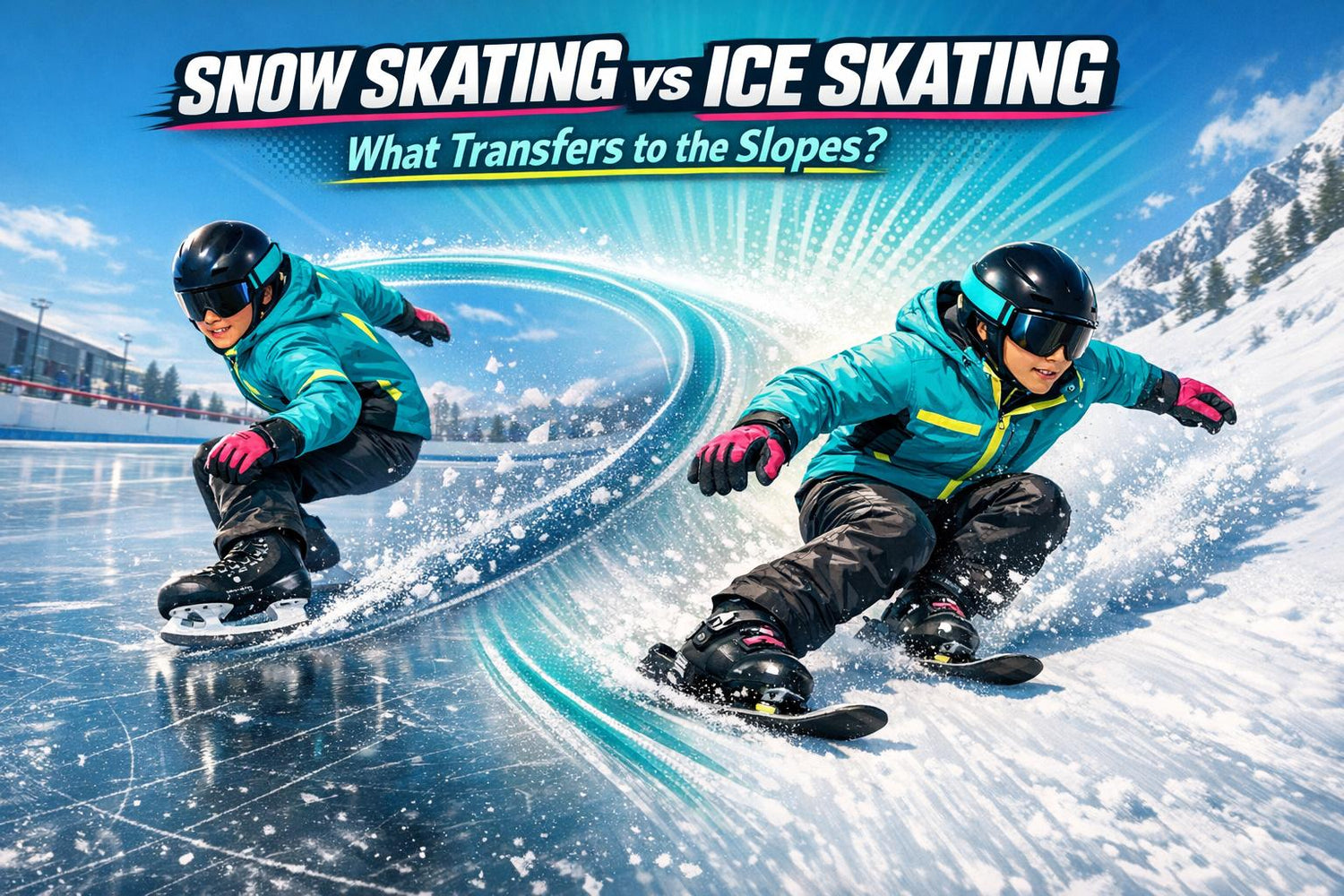
If you’re an ice skater wondering if your skills carry over to snow sports, here’s the good news: they absolutely do - especially with Snowfeet*. These mini ski skates are designed to make the transition from ice to snow smooth and intuitive. Unlike traditional skis or snowboards, Snowfeet* use a stance and movements that feel natural to skaters.
Key Takeaways:
- Balance & Stance: Ice skating skills like centered balance and an athletic stance directly apply to Snowfeet*, unlike the forward-leaning posture of skis or sideways stance of snowboards.
- Edge Control: Your ability to engage edges on ice skates transfers well to Snowfeet*, making turns and stops feel familiar.
- Gliding & Speed Control: Adjust your skating stride slightly, and you’ll glide and brake on snow with ease.
- Gear Simplicity: Snowfeet* work with regular winter or snowboard boots, are lightweight, and fit in a backpack - no bulky rentals or complicated setups.
Quick Comparison:
| Feature | Ice Skates | Snowfeet* Gear | Skis | Snowboards |
|---|---|---|---|---|
| Stance | Upright, athletic | Upright, athletic | Forward-leaning | Sideways |
| Edge Control | High (blade) | High (steel edges) | Variable | Variable |
| Learning Curve | Easy for skaters | Minimal for skaters | Steep | Very steep |
| Portability | Compact | Compact | Bulky | Bulky |
| Beginner Speed Range | Varies (flat ice) | 5–15 mph | 10–20 mph | 8–18 mph |
So, if you’re ready to take your ice skating skills to the slopes, Snowfeet* might just be the perfect gear for you. They’re affordable (around $250), easy to use, and ideal for skaters looking to enjoy the snow without starting from scratch.
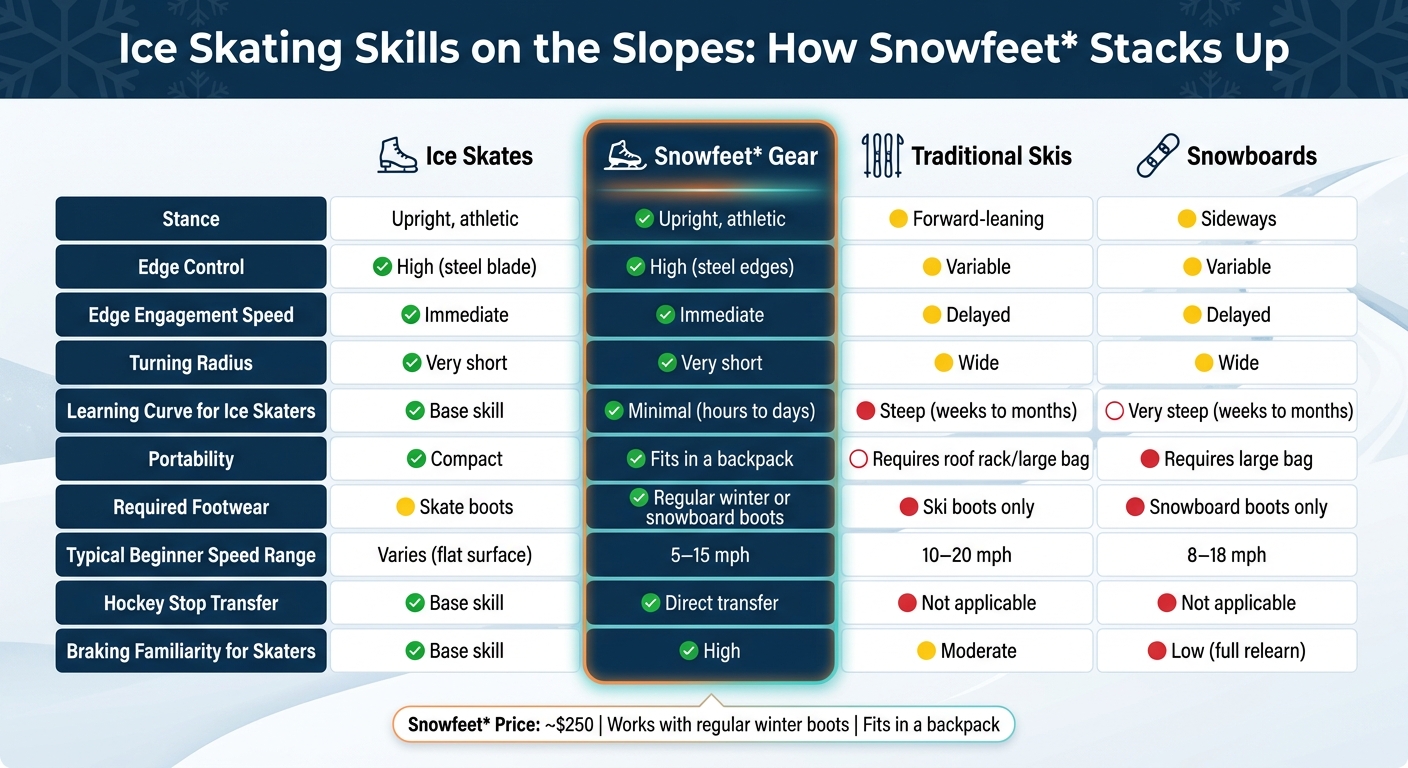
Ice Skating vs Snowfeet vs Skis vs Snowboards: Full Skill Transfer Comparison
Balance and Stance: What Carries Over from the Rink
Stance and Center of Gravity
Snowfeet* gear takes full advantage of your ice skating skills. The basic stance - knees bent, hips aligned over your feet, and weight centered - is almost identical whether you're on the ice or using Snowfeet* gear on snow.
On ice, your weight naturally stays centered over your blades. Snowfeet* Skiskates (44 cm) and Mini Ski Skates are designed to replicate this, making it easy to apply your muscle memory.
Now compare that to traditional skis (150–180 cm) or snowboards. Skis push you into a forward-leaning stance, while snowboards require a sideways position. Both setups make it harder to transfer your skating skills. Snowfeet* gear removes these hurdles, letting you feel right at home from the start.
Thanks to this familiar stance, finding your balance on Snowfeet* gear feels almost second nature.
Learning Balance on Snowfeet* vs Standard Gear
With Snowfeet* Mini Ski Skates (38 cm) and Skiskates (44 cm), the blade-like length allows your feet to respond naturally, carrying over your ice skating balance directly to the snow.
Traditional skis, on the other hand, often leave beginners struggling with stance and control due to their longer base. Snowfeet* gear skips that frustrating phase entirely. Its design encourages movements that feel natural to skaters, making the transition much smoother.
"The principles of balance, edge control, and the rhythmic dance with the surface remain remarkably consistent, creating an instant sense of familiarity for the seasoned ice skater." – ODR Skis
Here’s a quick look at how balance and stance compare across different winter sports gear:
Comparison Table: Balance and Stance
| Feature | Ice Skates | Snowfeet* Gear | Standard Skis | Snowboards |
|---|---|---|---|---|
| Stance | Upright, athletic | Upright, athletic | Forward-leaning | Sideways |
| Center of Gravity | Centered over feet | Centered over feet | Shifted forward | Shifted sideways |
| Learning Curve for Skaters | – (base skill) | Minimal | Steep | Very steep |
| Edge Control | High (blade) | High (steel edges) | Variable | Variable |
| Maneuverability | High (short radius) | High (short radius) | Lower (wider turns) | Lower (wider turns) |
Edge Control and Turning: Rink Skills on the Slopes
Edge Responsiveness: Snowfeet* vs Standard Gear
When it comes to edge control, Snowfeet* gear has a clear advantage over traditional skis and snowboards. If you've spent time ice skating, you're already familiar with the art of shifting your weight to engage the blade edge. That same skill transitions beautifully to Snowfeet* gear. Thanks to its compact design, Snowfeet* places steel edges directly under your feet, giving you immediate edge engagement - just like your ice skates.
In comparison, traditional skis require a more pronounced lean to activate the edges, which can feel slower and less intuitive. Snowboards, on the other hand, position you sideways and demand full-body movements, making it harder to rely on the precise edge instincts developed on the ice. With Snowfeet*, your skating skills find a natural home on the slopes, making the transition feel effortless.
Turning Techniques: Ice Moves on Snow
Ice skating techniques like the hockey stop and crossover carry over seamlessly to Snowfeet*. The gear's short platform allows you to mimic the stepping motion of crossovers while maintaining your rhythm and flow. Whether you're executing slalom turns, hockey stops, or quick maneuvers, Snowfeet* lets you retain the same control and fluidity you've mastered on the rink.
Traditional skis, however, rely heavily on hip movements and pole use, which can disrupt the natural skating rhythm. Snowboards, with their sideways stance, further stray from the edge-focused precision of skating. Snowfeet* bridges the gap, letting skaters bring their ice-edge finesse straight to the snow.
Comparison Table: Edge Control and Turning
| Feature | Ice Skates | Snowfeet* Gear | Traditional Skis | Snowboards |
|---|---|---|---|---|
| Edge Type | Steel blade | Steel edges | Metal edges (long) | Metal edges (wide) |
| Edge Engagement Speed | Immediate | Immediate | Delayed | Delayed |
| Turning Radius | Very short | Very short | Wide | Wide |
| Hockey Stop Transfer | Base skill | Direct transfer | Not applicable | Not applicable |
| Learning Time for Skaters | – (base skill) | Hours to days | Weeks to months | Weeks to months |
Hockey Player Tries Snowfeet* Skiskates | See What He Thinks | Skiboards | Short Ski | Mini Ski
Gliding, Stride, and Speed Control
Building on your ice skating skills, Snowfeet* makes it easier to glide and manage speed when transitioning to slopes. Your balance and edge control from skating adapt naturally, with just a few tweaks required for Snowfeet*.
Gliding and Push-Off: Ice vs. Snow
On ice, a single lateral push can send you gliding 15–30 feet. Snow, however, creates more friction, so each push on Snowfeet* results in a shorter glide. The good news? Your skating stride still works - just with minor adjustments.
Here’s the trick: push softer and let gravity do more of the work. Instead of a strong, side-heavy push like you’d use on the rink, think of a gentle diagonal nudge to get moving. Then, rely on the slope to carry you forward. Keep your knees relaxed, shift your weight slightly forward, and finish each push with your foot close to your hips. This method keeps Snowfeet*’s short steel edges engaged and avoids them catching unexpectedly.
These subtle changes in your stride will help you glide smoothly and prepare you for managing your speed.
Speed Control and Braking
If you’re comfortable controlling speed on ice skates, you’ll find Snowfeet* surprisingly familiar. The easiest way to moderate speed is by carving gentle S-turns, creating wide curves to control your descent - similar to making shallow arcs on the rink. Avoid heading straight downhill; traversing the slope is your friend here.
The hockey stop is another effective technique, though it needs a slight tweak for snow. Snow grips more than ice, so instead of snapping into a full stop, ease into it. Start with a small rotation, let the skid begin, and then gradually apply more edge pressure. For an alternative, try a gentle snowplow: bring the tips of your Snowfeet* slightly together and keep the tails apart. It may remind you of a wide, low hockey warm-up drill.
Compared to skiing or snowboarding, where braking techniques take more time to master, Snowfeet* braking feels intuitive for anyone with skating experience.
Snowfeet* riders typically cruise at speeds of 5–15 mph on green runs, staying below 20 mph for better stability. In contrast, skis and snowboards often reach 20–30 mph for intermediate users because their longer edges feel more stable as speed builds. Snowfeet*’s design, however, provides direct feedback through your ankles and knees, allowing you to sense speed changes quickly and make adjustments naturally. For skaters used to fine-tuning edge control, this is a huge plus.
Comparison Table: Speed and Gliding
| Feature | Ice Skates | Snowfeet* Gear | Traditional Skis | Snowboards |
|---|---|---|---|---|
| Typical Beginner Speed Range | Varies (flat surface) | 5–15 mph | 10–20 mph | 8–18 mph |
| Primary Braking Method | Hockey stop / edge drag | Hockey stop / S-turns / snowplow | Wedge / parallel turns | Heel/toe edge traverse |
| Glide Per Push | Long (15–30 ft on ice) | Short–moderate (slope-assisted) | Long (gravity + edge) | N/A (no push-off) |
| Speed Feedback to Rider | Moderate | High (ankle/knee feedback) | Moderate | Moderate |
| Braking Familiarity for Skaters | - (base skill) | High (direct transfer) | Moderate (new technique) | Low (requires full relearn) |
sbb-itb-17ade95
Gear, Terrain, and Portability
Footwear and Gear Setup
Snowfeet* offers a refreshing alternative to the bulky gear typically needed for skiing or snowboarding. Instead of dealing with costly rentals or specialized boots, you can use the winter boots you already own. For steeper slopes, snowboard boots provide extra ankle support, similar to how a snug skate fit enhances control on ice. Snowfeet* Mini Ski Skates (15–20 inches) and Skiskates (about 17 inches) are designed with adjustable ratchet-strap bindings, making setup at home quick and painless. There's no need for rental lines, technical adjustments, or additional hassle. This setup allows you to focus on the fun part - hitting the slopes - with skills that feel natural if you’re familiar with skating.
Where You Can Ride
With Snowfeet*, a variety of terrains becomes accessible. They perform best on groomed runs and packed snow, like the green and blue slopes found in resorts across states like Colorado, Utah, and Vermont. These conditions offer a predictable surface, much like a freshly resurfaced ice rink, making them ideal for practicing balance and edging.
They’re also great for local sledding hills or smaller ski areas, which are perfect for short sessions or honing your technique. Terrain parks are another sweet spot for Snowfeet*. Their compact size and skating-like movements make it easy to tackle small boxes, rollers, and side hits. However, keep in mind that Snowfeet* are best suited for up to 4 inches of light powder. Anything deeper calls for longer skis or snowboards.
Most U.S. ski resorts allow Snowfeet* since they come with standard metal ski edges, meeting basic safety requirements. That said, it’s always a good idea to check with the resort’s guest services beforehand to confirm their policies regarding short skis or Snowfeet-style equipment, and whether leashes are needed.
Comparison Table: Gear and Portability
| Feature | Snowfeet* Mini Ski Skates | Skiskates (44 cm) | Standard Skis | Snowboards |
|---|---|---|---|---|
| Required Footwear | Winter boots or snowboard boots | Ski or snowboard boots | Ski boots only | Snowboard boots only |
| Setup Time | Quick (home setup, ratchet straps) | Quick (home setup) | Longer (rental fitting, DIN adjustment) | Longer (rental fitting) |
| Portability | Fits in a backpack | Fits in a backpack | Requires roof rack or large bag | Requires a large bag |
| Best Terrain | Groomed runs, sledding hills, small park features | Groomed resort runs, snow parks | All-mountain, deep powder, steep terrain | All-mountain, powder, snow parks |
| Deep Powder | No (up to ~4 in / 10 cm) | No | Yes | Yes |
| Resort Acceptance | Most resorts (check policy first) | Most resorts (check policy first) | Universal | Universal |
| Familiarity for Ice Skaters | High (skating motion, flexible boots) | High (skating motion) | Moderate (new stance and technique) | Low (sideways stance, full relearn) |
Skill Progression: From the Rink to the Slopes
Step-by-Step Progression Guide
Snowfeet* gear blends the precision of ice skating with the agility needed for snow sports, making it a natural fit for skaters. If you're already comfortable on ice, you'll find that your balance, edge control, and muscle memory adapt seamlessly to Snowfeet*. It's like taking what you already know and applying it to a new surface - snow.
The learning curve unfolds in three main stages. Day one is all about getting used to how snow behaves compared to ice. Snow has more friction, so you’ll spend this time gliding and experimenting with how your movements translate. It’s a day of discovery, but your skating instincts will kick in quickly.
By the end of your first weekend, most skaters are confidently carving turns and cruising down blue runs. The edge control you’ve mastered on the rink becomes a huge advantage here. Instead of relying on upper body movements, you’ll naturally use your feet and ankles to control your turns.
"If you can ice-skate, skiing is far easier... [you have an] understanding of body position [and] understanding of edges." - Alasdair, snowHeads Forum
Fast forward to the end of your first season, and you might find yourself exploring terrain parks, trying small jumps, or even experimenting with reverse moves. Figure skaters, in particular, adapt to freestyle features with ease. Meanwhile, beginners on traditional skis often spend their first season just working toward parallel turns. The difference in progression is striking.
Comparison Table: Skill Progression
Here’s a breakdown of how skating skills give you a head start with Snowfeet*, compared to more traditional snow sports:
| Milestone | Ice Skater on Snowfeet* | Beginner on Standard Skis | Beginner on Snowboard |
|---|---|---|---|
| First Day | Immediate balance; intuitive edge feel; green runs | Learning to stand; mastering the snowplow; frequent falls | Learning to stand sideways; toe/heel edge basics; many falls |
| First Weekend | Confident parallel turns; mastering blue runs; small jumps or reverse moves | Linking snowplow turns; basic green runs; learning chairlifts | Basic heel-side and toe-side turns; still on gentle slopes |
| First Season | Terrain park exploration; carving on harder runs; high-speed maneuvers | Transitioning to parallel turns; building confidence on blue runs | Developing consistent linked turns; starting blue runs |
As you can see, having a skating background gives you a major edge (pun intended!) when transitioning to Snowfeet*. It’s a quicker, smoother path to enjoying all the fun the slopes have to offer.
Conclusion: Get on the Slopes with Snowfeet*
If you’ve mastered ice skating, you’re already halfway to conquering the slopes. Skills like balance, edge control, and weight transfer - essential for skating - translate seamlessly to skiing. Snowfeet* takes full advantage of this, making it easy for skaters to transition from the rink to the mountain.
Unlike traditional skis or snowboards, which often require a whole new learning curve, Snowfeet* works with your skating instincts. It allows you to use the skills you already have, turning your skating experience into an advantage.
"If you can ice-skate, skiing is far easier and a lot more fun!" - Alasdair, Forum Member
Snowfeet* Mini Ski Skates come with some serious perks. For just $250, they offer an affordable and portable alternative to traditional ski gear. Forget about renting equipment, signing up for expensive lessons, or buying specialized boots. Snowfeet* attaches to your regular winter boots, letting you hit the slopes right away. It’s a game-changer for skaters looking for a smooth, intuitive way to enjoy the snow.
So, whether you’re a hockey player, figure skater, or someone who just loves the ice, Snowfeet* makes it possible to enjoy skiing without starting from scratch.
FAQs
What’s the safest way to start using Snowfeet* on a ski hill?
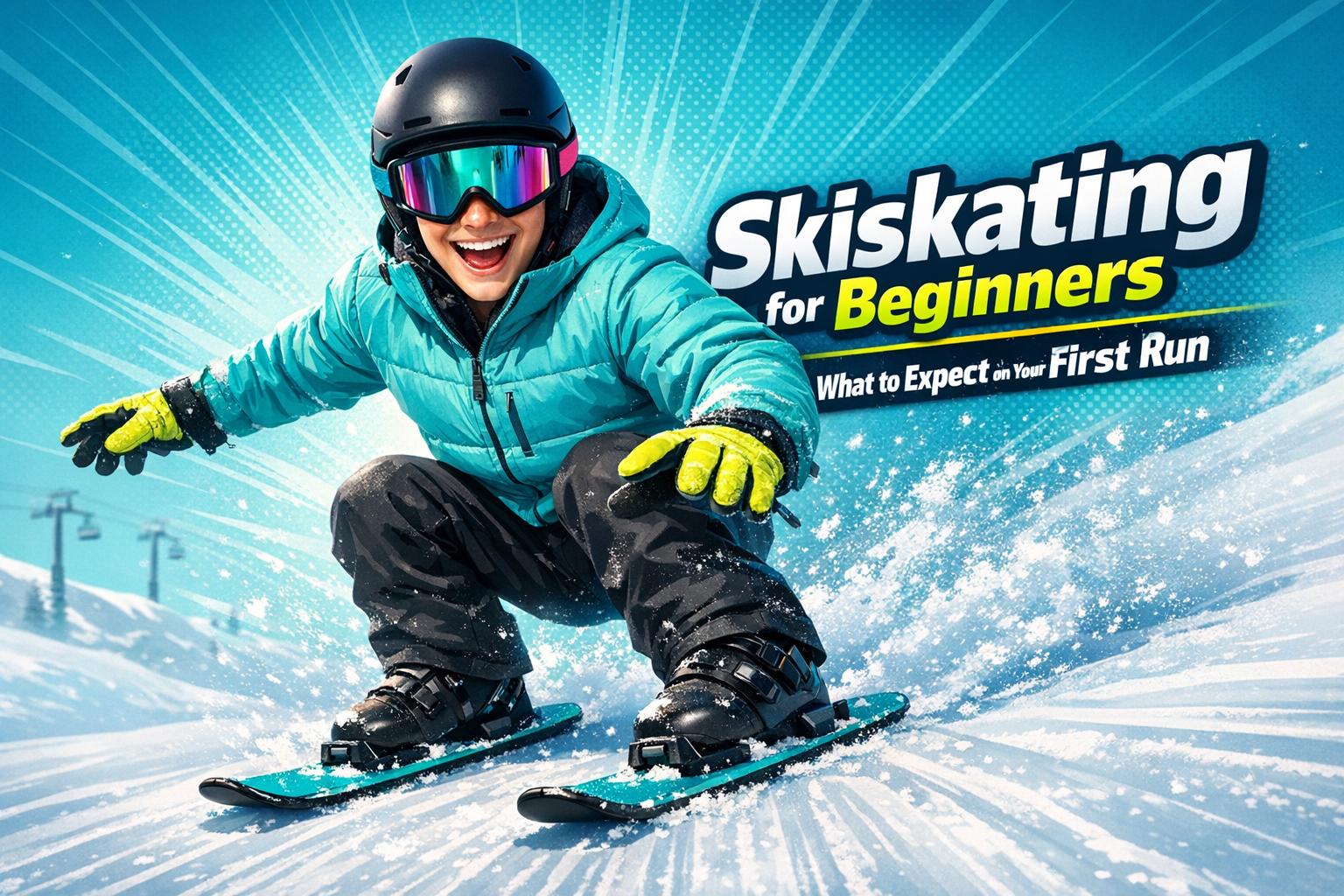
To get started with Snowfeet* on a ski hill, it’s best to begin on flat terrain. This gives you a chance to work on your balance, posture, and how to shift your weight. Once you feel steady, head to gentle slopes where you can practice controlling your speed and stopping. Techniques like the snowplow or hockey stop are great to focus on here.
Make sure you’re geared up with protective equipment, including a helmet and pads. If you’re new to this, getting tips from experienced users or an instructor can help you feel more confident and improve your skills.
Do I need snowboard boots, or will my winter boots work fine?
You don’t need snowboard boots to enjoy snow skating with Snowfeet gear - your regular winter boots will do the trick! Snowfeet Skiskates and Snowfeet (38 or 50 cm) are built for flexibility, making it easy to bring your ice skating skills to the slopes. Unlike skiing or snowboarding, which require specialized boots, Snowfeet products offer a simpler, more comfortable way to dive into snow sports - perfect for beginners or anyone looking for a casual, fun experience.
Can Snowfeet* handle icy patches, moguls, or deeper powder?
Snowfeet* products are crafted to make the shift from ice skating to snow sports seamless. They emphasize balance, edge control, and agility, making them a fun option for those looking to bring their skating skills to the slopes. However, they can fall short in tougher conditions like icy patches, moguls, or deep powder. For those scenarios, traditional skis or snowboards, designed for stability and control, are a better choice. Where Snowfeet* truly shines is in their ease of use and their ability to bridge the gap between ice skating and snow sports.











Lascia un commento
Questo sito è protetto da hCaptcha e applica le Norme sulla privacy e i Termini di servizio di hCaptcha.