







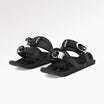












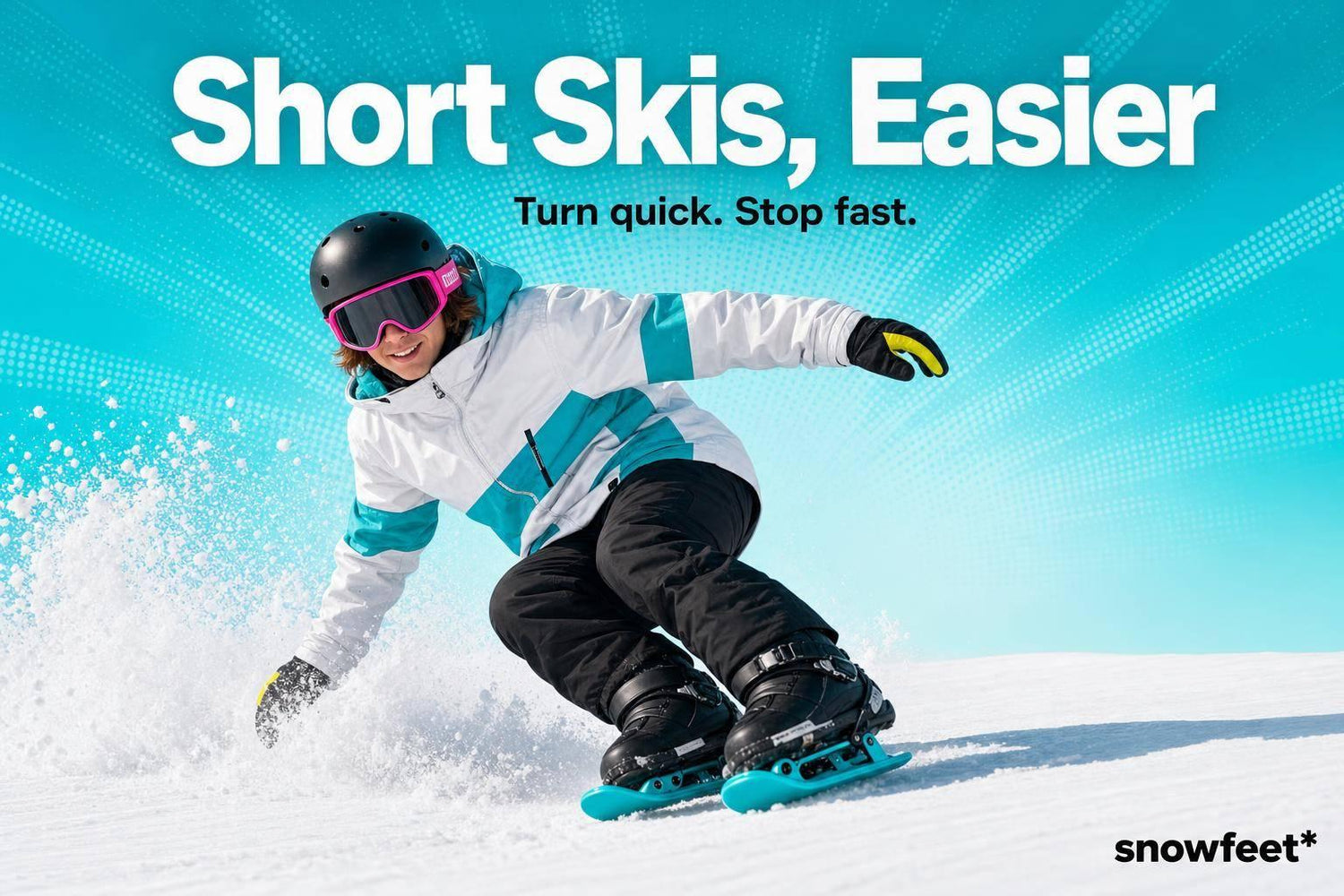
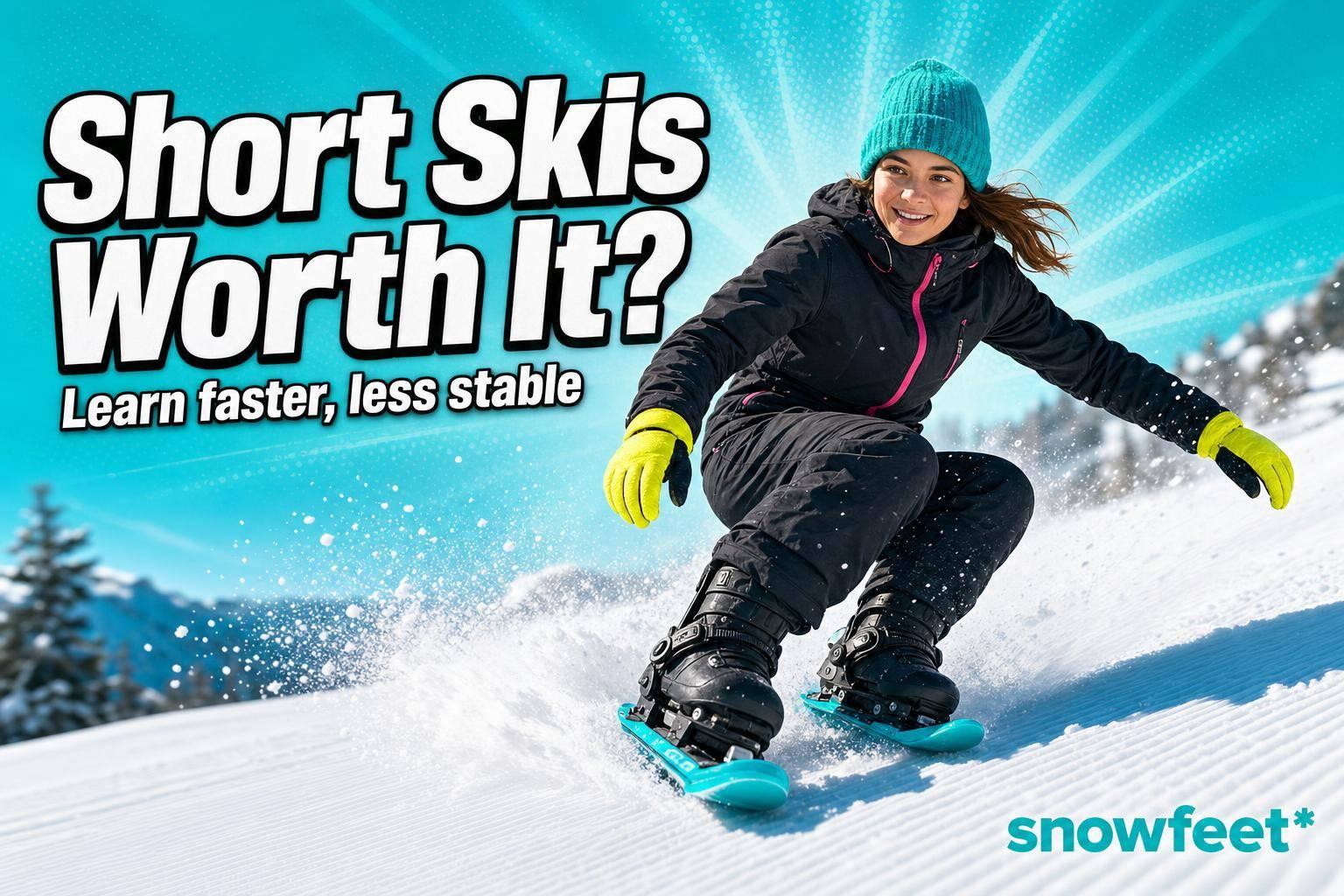
Yes - short skis are usually easier for most casual skiers. If you're new, rusty, skiing with kids, or just want less work on green and blue runs, short skis tend to feel easier to turn, stop, carry, and trust.
Here’s the short version:
- Short skis are easier at low to medium speeds
- Regular skis feel better once speed picks up
- Very short models work best for fun, travel, and first days
- Mid-length short skis like 99 cm to 120 cm give a better mix of ease and control
- Long skis still win in powder, crud, icy spots, and long carved turns
So, if you want the plain answer: short skis help most people learn faster and ski with less stress. But if you ski fast, chase powder, or like long sweeping turns, regular skis still make more sense.
A few numbers help show the gap:
- Short skis in this piece: 44 cm to 120 cm
- Regular adult skis: often 150 cm to 180+ cm
- Kid options mentioned: from $199
- Adult short models mentioned: about $190 to $950
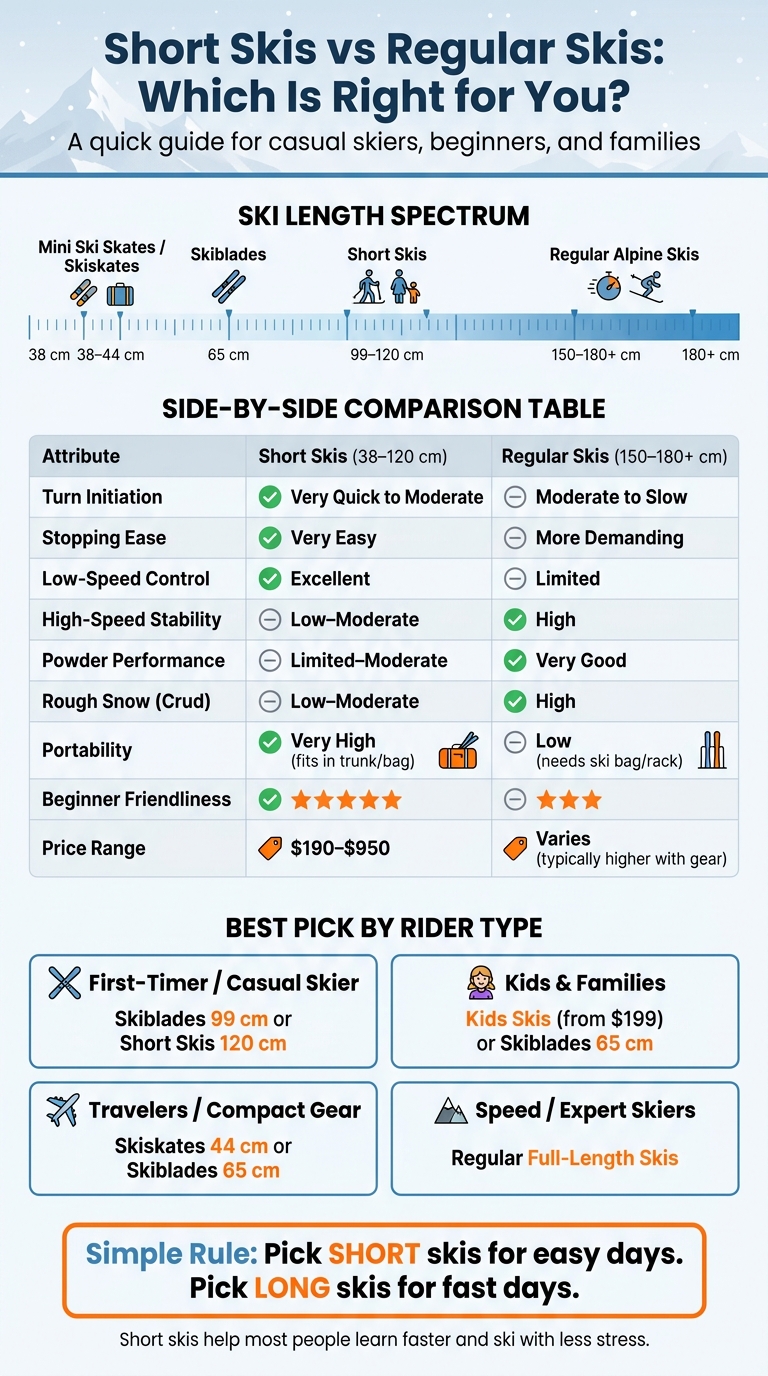
Short Skis vs Regular Skis: Which Is Right for You?
Short Skis vs. Long Skis
Quick Comparison
| Ski type | Best for | Feels like | Main upside | Main drawback |
|---|---|---|---|---|
| 44–65 cm short skis | First-timers, travel, playful laps | Fast-turning, skate-like | Easy to turn and stop | Less steady at higher speed |
| 99–120 cm short skis | Casual skiers, families, blue runs | More ski underfoot, still easy | Good mix of ease and support | Still not as planted as long skis |
| 150–180+ cm regular skis | Faster skiers, powder, rough snow | Smooth and planted | Better at speed and rough snow | Harder for many beginners |
If I were giving ski-shop advice in one sentence, it’d be this: pick short skis for easy days, pick long skis for fast days :)
Why Short Skis Feel Easier on Snow
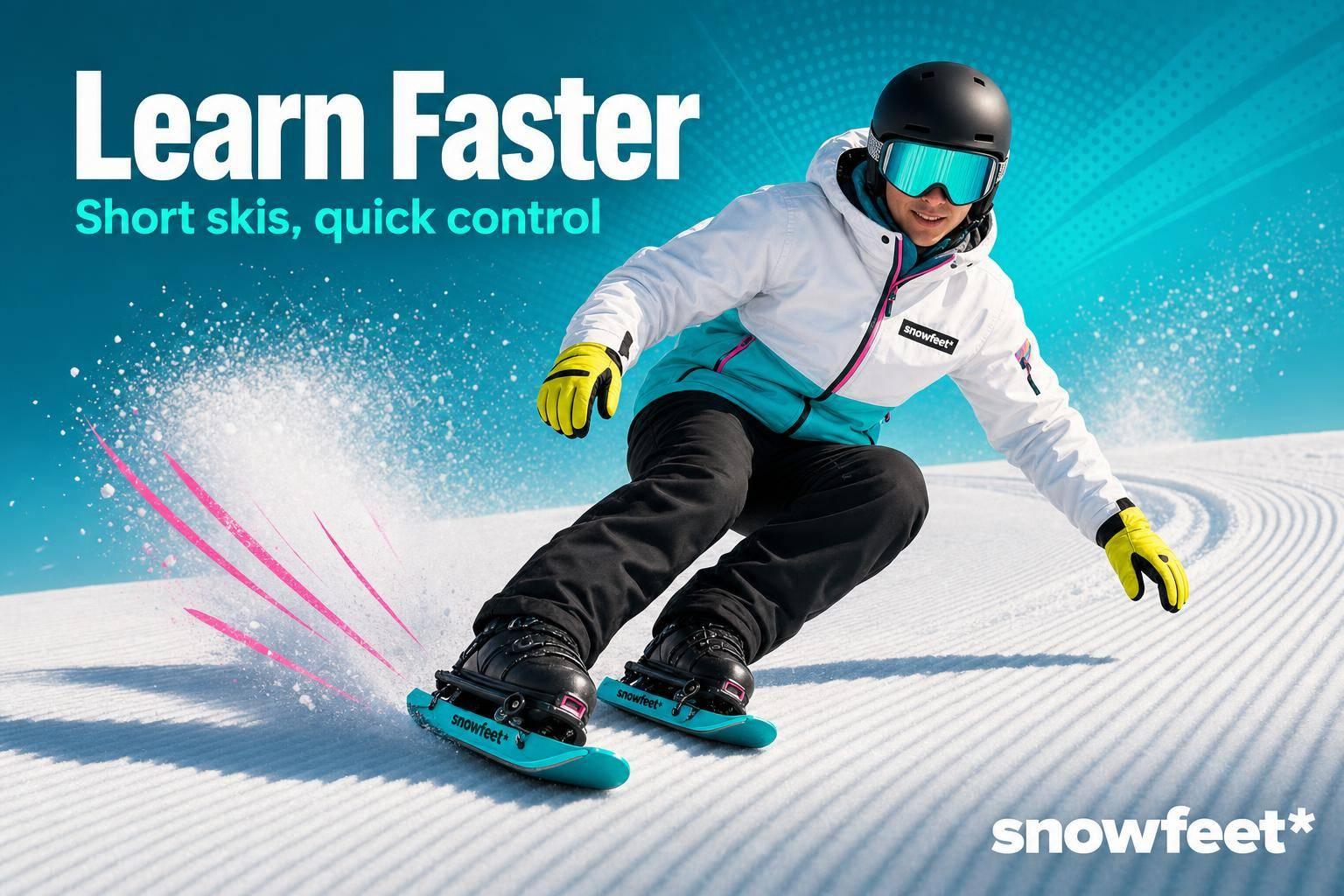
Short skis feel easier because they have less swing weight. That’s the weight you feel when you move the skis side to side. Less swing weight means less effort to steer, correct, and get back on track if you get a bit off balance.
Learning Curve, Balance, and Confidence
That lower swing weight also changes how the skis feel under your feet. Short skis sit more under your body, which helps you stay centered and upright. For beginners, that usually means less fatigue and more time on snow before the legs start yelling at you.
They also feel less intimidating. And that matters a lot. When gear feels less scary, people tend to relax, try more, and learn faster. The 44 cm Skiskates and 65 cm Skiblades are especially easy for first-timers to get used to. Instead of fighting the gear, they can focus on the basics: stance, edging, and shifting weight.
Turning, Stopping, and Speed Control
That same quick feel is also why short skis are easier to steer, brake, and slow down on groomed runs. On groomed U.S. resort runs, shorter skis start turns with smaller ankle and hip movements. The 44 cm and 65 cm models react very fast, which makes them feel more forgiving at slow speeds.
Stopping gets easier too. A basic snowplow or a controlled slide stop takes less leg strength because the ski can pivot across the slope with less effort. The 99 cm and 120 cm Skiblades bring more edge hold and smoother medium-radius turns, while still staying easy to brake on. By contrast, a 170 cm all-mountain ski reacts less fast and can feel sluggish at low speed.
| Model | Turn Initiation | Stopping Ease | Low-Speed Control |
|---|---|---|---|
| Snowfeet* Skiskates 44 cm | Very quick | Very forgiving | Excellent |
| Snowfeet* Skiblades 65 cm | Very quick | Forgiving | Excellent |
| Snowfeet* Skiblades 99 cm | Quick | Easy | Very good |
| Snowfeet* Short Skis 120 cm | Moderate–quick | More stable | Good |
| Typical 170 cm all-mountain ski | Moderate–slow | Demanding | Limited at low speed |
Which Riders Benefit Most From Short Skis
These upsides matter most for people who want simple, easy handling more than full-size ski performance.
- Kids get help right away. Gear that fits their body size means fewer crossed tips, less fatigue, and more time spent skiing instead of wrestling with the skis.
- Adult beginners can work on stance, edging, and basic stops without dealing with long edges and extra speed.
- Casual resort skiers who only ski a few days each year can shake off the rust faster.
- Snowboarders cross-training on skis often find the skate-like feel of Snowfeet* models familiar, so they can use balance and edging skills they already have.
- Travelers get a nice perk too: many Snowfeet* models fit in a car trunk or compact bag, which makes storage and travel a lot easier.
sbb-itb-17ade95
Where Regular Skis Are Still Better
Regular skis still have a clear edge in a few spots. If you want easy handling, Snowfeet* makes a lot of sense. If you want more speed and a smoother ride in rough snow, regular skis still do the job better.
Speed Stability and Long Carves
Longer skis put more edge on the snow. That extra contact helps them hold a straighter line and stay calmer as speed builds. On a wide groomed blue or black run, a 170–180 cm ski lets you settle into a long carve with fewer little corrections. That’s pure performance, not ease of use.
Short skis do the opposite. The 65 cm and 99 cm models feel quick and reactive. That’s fun at slower speeds, and it can make turning feel almost effortless. But once you start moving fast, they can feel twitchy. The 120 cm model lands in the middle. It feels calmer than the shorter versions, but it still doesn’t feel as planted as a full-length ski when an advanced rider leans hard into a long, fast carve.
Most casual riders on green and blue runs won’t hit that limit, which is why this gap often matters less than people think.
The same story shows up once you leave groomers or hit heavier snow.
Crud, Powder, and Rough Terrain
More surface area helps a lot in powder. A 170–180 cm ski spreads your weight across more snow, so you stay higher and your turns feel smoother. On a 65 cm or 99 cm ski, you’ll sink more in deeper snow and work harder to keep the tips from diving. That gets old fast.
Crud, which is chopped-up and uneven snow, is often the toughest spot for short skis. A longer ski tends to ride over ruts instead of dropping into every little mess in the snow. The ride feels calmer and more predictable. Very short models get knocked off line more easily, and at higher speeds that can feel tiring.
Here’s the quick breakdown:
| Equipment | Stability at Speed | Long-Arc Carving | Powder Float | Rough-Snow Comfort |
|---|---|---|---|---|
| Snowfeet* 65 cm | Very low at higher speeds | Playful, short turns only | Limited; sinks in deeper snow | Low; easily knocked off line |
| Snowfeet* 99 cm | Low–moderate; lively and reactive | Good for medium-radius turns | Moderate in light powder | Moderate; handles small chop |
| Snowfeet* 120 cm | Moderate; calmer at resort speeds | Solid short–medium carves | Good in moderate powder | Moderate–good; smoother through chop |
| 170–180 cm regular ski | High; tracks straight, resists deflection | Excellent long, smooth arcs | Very good; more support in deeper snow | High; rides over crud comfortably |
For casual riders, that trade-off often still leans toward Snowfeet* because they’re easier to handle. Where it gets more interesting is when you line up each Snowfeet* model with a certain type of rider.
Snowfeet* vs Regular Skis: Best Choice by Rider Type
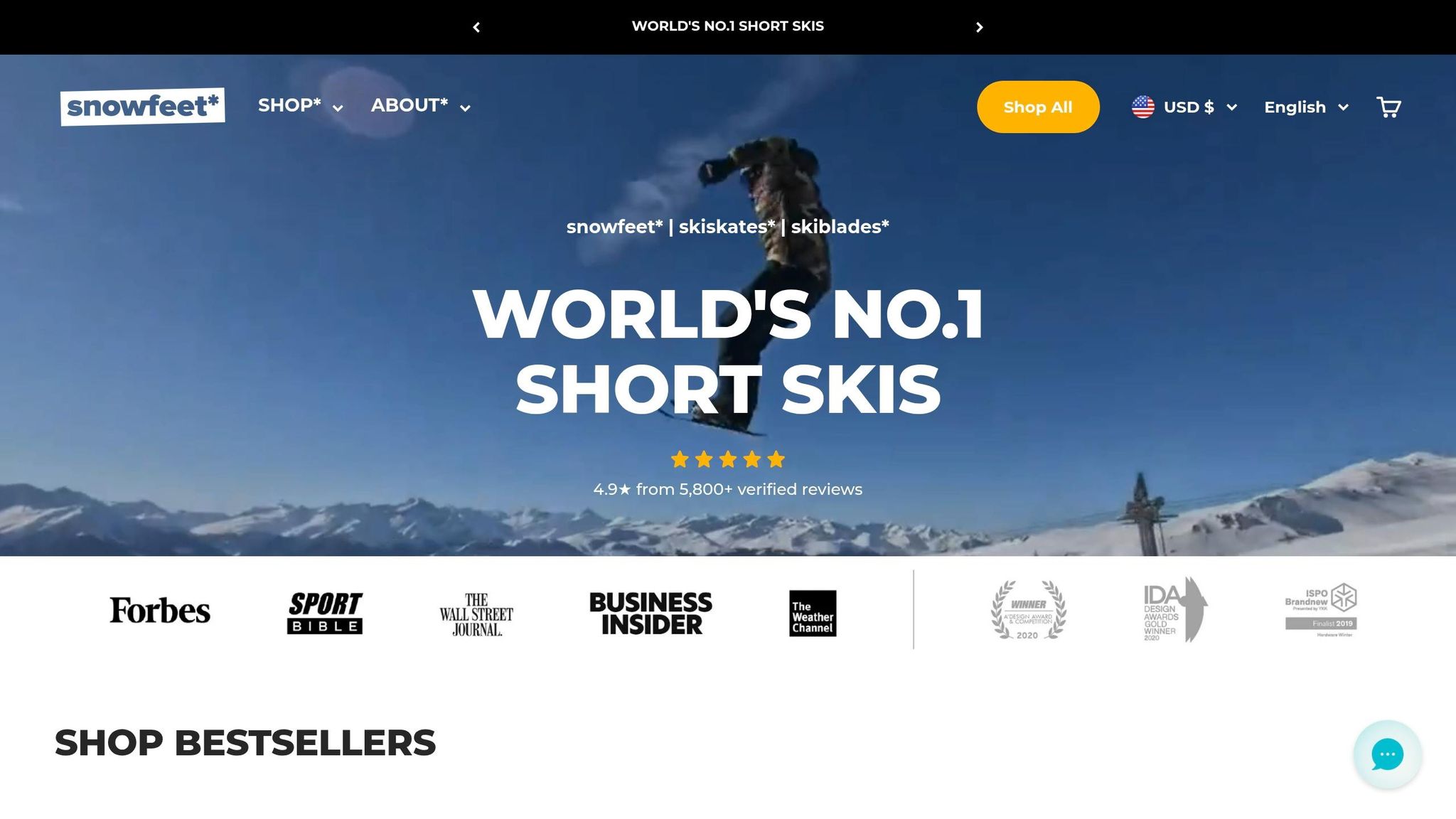
If you want the easiest pick by rider type, this short guide makes it simple.
Best Snowfeet* Options for Beginners, Kids, and Casual Skiers
For kids ages 3–8, MINI KIDS ($250) and Kids Skis (from $199) are the easiest place to start. They’re lighter, less bulky, and much easier for parents to help manage on the snow.
For adult first-timers and casual vacation skiers, Mini Ski Skates 38 cm (from $190) and Skiskates 44 cm (from $460) are the easiest entry point. The short platform helps riders pick up balance and turning fast, so they can work on stance and edging without fighting long skis. If you want a bit more ski under your feet, Skiblades 65 cm (from $590) are the next step. They’re long enough to practice edging and parallel turns, but still easy to control for skiers who feel rusty or a little nervous.
If you want more stability and still want that easy, playful feel, move up to 99 cm or 120 cm.
Best Snowfeet* Options for All-Round Fun and More Stability
If you want more stability without giving up easy turning, go with Skiblades 99 cm (from $690) or Short Skis 120 cm ($950). The 99 cm models track more smoothly at moderate speeds and deal with small bumps better than the shorter versions. The POWDER 99 cm (from $690) has a wider shape, which helps in soft snow, spring slush, and light powder.
The Short Skis 120 cm work well for athletic beginners who want gear they won’t outgrow fast, and for intermediate riders who cruise blue runs and want a playful, lower-fatigue swap for full-length skis. The 99–120 cm range is also easy to pack for travel, which, let’s be honest, is a nice bonus when you don’t want to wrestle with giant ski bags at the airport.
Snowfeet* Compared With Standard Ski Brands and Older Snowblades
Older short-ski ideas like Kneissl BigFoot, Figl, and early Salomon snowblades were fun, but they weren’t as polished as newer options. Snowfeet* models use wood cores and modern edges, and boot compatibility changes by model, which gives riders more choice than older plate-style systems.
Compared with mainstream alpine brands, the big difference is simplicity. A full ski setup means separate skis, bindings, boots, poles, and mounting. Regular skis still come out ahead for speed and powder, but Snowfeet* is easier for most casual riders.
Here’s the quick breakdown:
| Feature | Snowfeet* (38–120 cm) | Standard Alpine Skis | Older Snowblades (BigFoot, Figl, early Salomon) |
|---|---|---|---|
| Portability | Very high - easy to carry and pack | Low - bulky and needs long bags or racks | Moderate - shorter than full skis, but often less compact than modern short skis |
| Beginner friendliness | Tuned for easy learning and casual fun | Versatile, but more demanding at the start | Fun, but sometimes twitchy or specialized |
| Boot compatibility | Boot options vary by model | Alpine ski boots only | Traditional ski boots with older plate bindings or dedicated systems |
| High-speed stability | Moderate at 120 cm; low on 38–65 cm models | High | Low to moderate |
Conclusion: Short Skis Are Easier for Most Casual Riders
Bottom line: short skis are easier for most casual riders, while regular skis still come out on top for speed and deep snow.
For most casual skiers, short skis are just simpler to handle. They turn faster, stop with less effort, and feel less demanding at slow speeds. That shorter length means there’s less ski to control, which usually helps people build confidence faster on green runs and easy blue runs.
Regular skis still do better at high-speed carving, steeper terrain, and powder days. If your goal is fast laps on groomers or big-mountain skiing, full-length skis are still the better tool for the job.
So, the trade-off is pretty simple. If you’re a beginner, a kid, or someone who skis a few resort days a year, Snowfeet* Skiblades 99 cm or Snowfeet* Short Skis 120 cm are the best all-around pick. If you care most about easy travel and a playful feel, Snowfeet* Skiskates 44 cm and Snowfeet* Skiblades 65 cm are the lighter option.
Use this quick rule:
| Your situation | Best pick |
|---|---|
| First-timer or casual resort skier | Snowfeet* Skiblades 99 cm or Snowfeet* Short Skis 120 cm |
| Kids or family fun on beginner runs | Snowfeet* Kids Skis (from $199) or Snowfeet* Skiblades 65 cm |
| Traveling by air, want compact gear | Snowfeet* Skiskates 44 cm or Snowfeet* Skiblades 65 cm |
| Speed-focused intermediate or expert | Regular full-length skis |
Short skis won’t turn you into a racer, and that’s not the point. What they do is make the first days easier, the turns faster, and the whole day more fun. And honestly, for most people on the mountain, that’s what matters most :)
FAQs
How short should my skis be?
Choose ski length based on your skill level and what matters most to you.
- 65 cm: best for beginners, kids, and easy portability
- 99 cm: a strong all-around pick for intermediate skiers
- 120 cm: best for higher speeds and carving, with more convenience than standard 150–200 cm skis
It’s a bit like picking the right tool for the job. Shorter skis feel less intimidating and are easier to carry around. Longer ones give you more stability when you want to ski faster and make cleaner turns.
If you want the simple version, here it is: 65 cm keeps things easy, 99 cm sits in the sweet spot, and 120 cm leans more toward speed and control.
Are short skis safe for beginners?
Yes. Short skis are usually safer and easier for beginners than long, standard skis. Their shorter shape, like Snowfeet skiblades, takes less muscle and less skill for the basics: balance, turning, and stopping.
Because they’re shorter, they’re more forgiving when a beginner messes up. That can help people feel comfortable faster. In many cases, users pick up the basics in one to two hours, not days or weeks like with standard alpine skis.
Can I use short skis in powder?
Yes - short skis can handle light powder.
Snowfeet models like the 99 cm Skiblades do well in lighter powder and mixed terrain. They’re nimble, easy to turn, and fun when the snow isn’t too deep.
For deep, untracked powder over 12 inches, long skis usually work better. They give you more float and more stability, which matters when the snow gets deep and soft.
If you care more about agility and convenience for everyday resort use, Snowfeet is still a great pick. It’s a bit like choosing a quick little hatchback over a big truck - less float in deep snow, but a lot more fun and easy to handle on most days.











Lascia un commento
Questo sito è protetto da hCaptcha e applica le Norme sulla privacy e i Termini di servizio di hCaptcha.