



















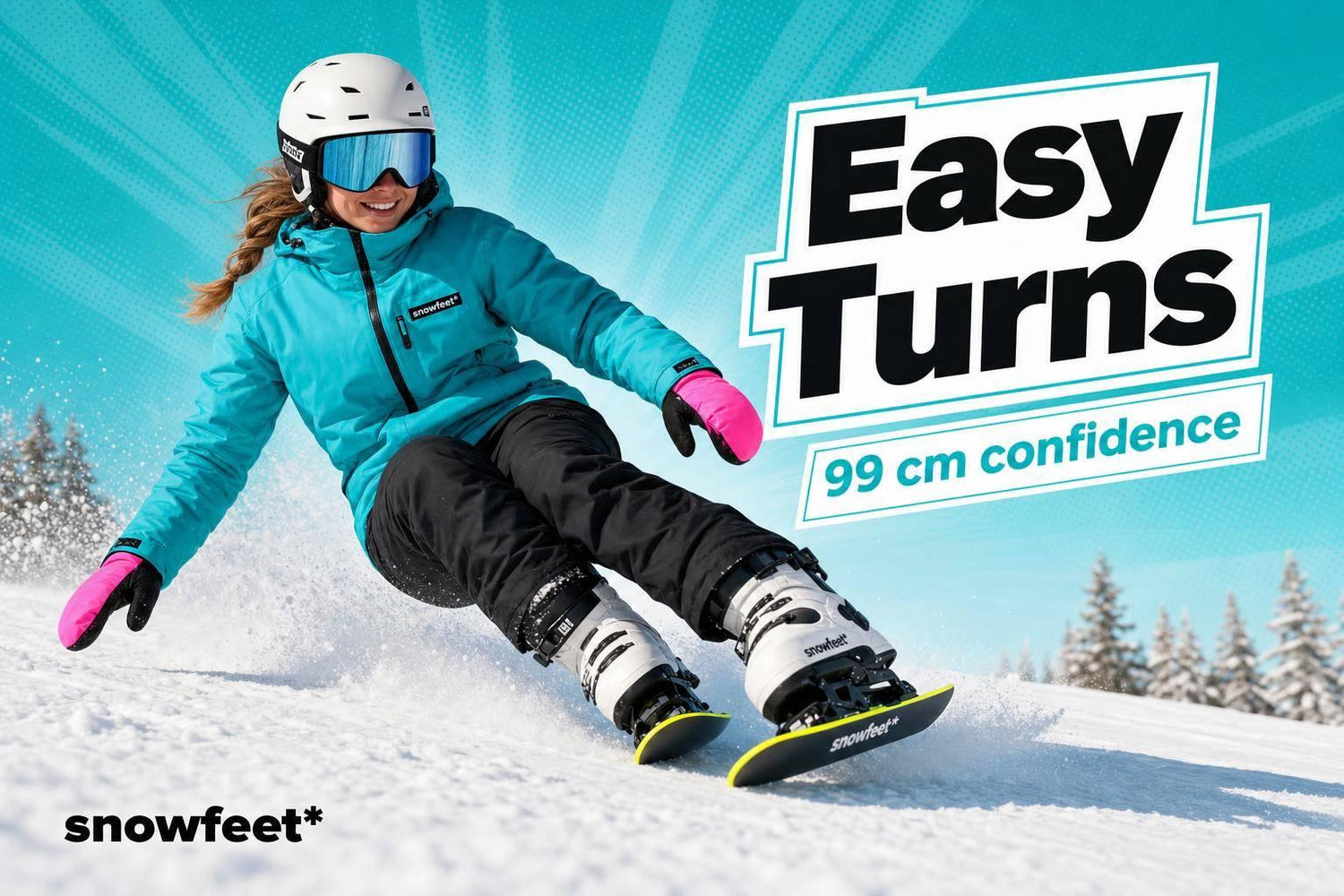
If you ski a few days a year, short skis often make more sense than long ones. I’d boil it down like this: skiblades around 39 inches (99 cm) feel easier to turn, easier to stop, and less annoying to carry than skis in the 63–71 inch (160–180 cm) range.
For casual riders, that changes a lot:
- First runs feel less harsh
- Control comes sooner
- Fear stays lower
- Storage and carrying are less of a pain
- Boot choices can be simpler, depending on the setup
So, if I were helping a weekend skier, a parent, or someone heading out on a ski trip, I’d frame it like this:
- Long skis: best if you care most about high speed and tougher terrain
- Skiblades 99 cm: best if you want a more ski-like feel with easier turns
- Skiskates 44 cm: best if you want the smallest setup for short laps and easy carrying
One stat tells the story: 99 cm is about 38%–44% shorter than many adult skis at 160–180 cm. That shorter platform often means less tip to catch, fewer clunky turns, and a smoother first day on snow. And for casual riders, that’s the whole game.
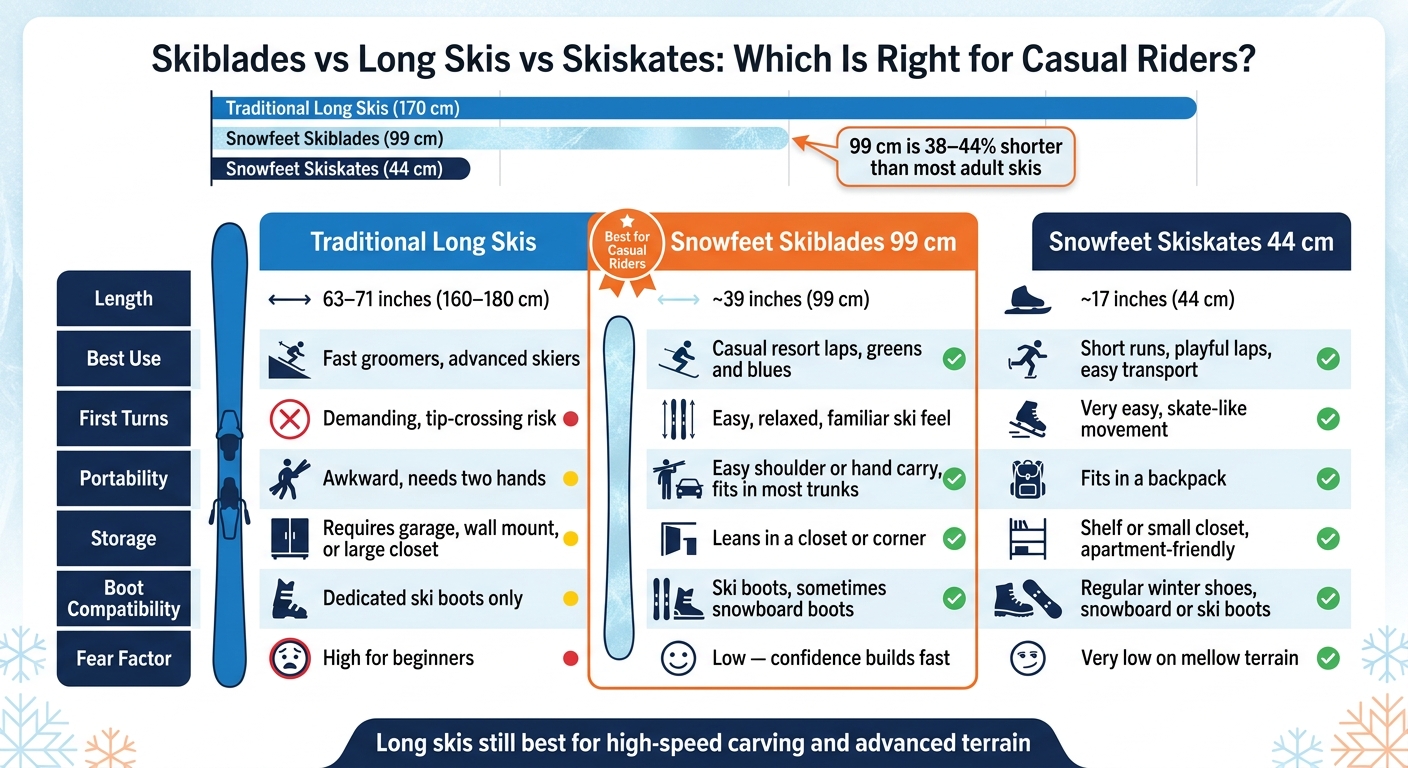
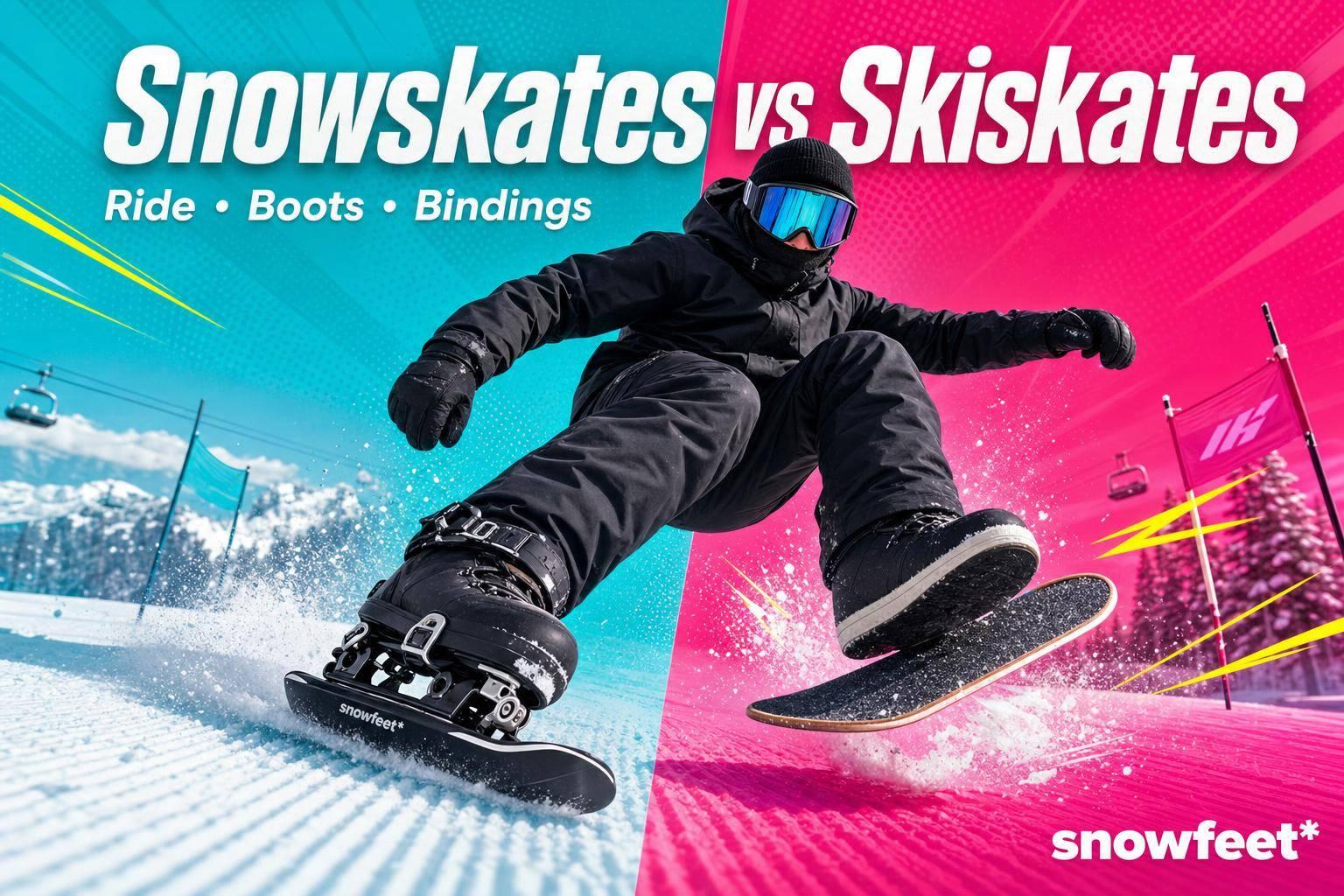
Skiblades vs Long Skis vs Skiskates: Which Is Right for Casual Riders?
Snowboarder tries Snowfeet* | Which Snowfeet* Short Ski is the Best? | Snowblades 44, 65, 99 Review
Quick Comparison
| Setup | Best use | Main upside | Main limit |
|---|---|---|---|
| Long skis | Fast groomers, stronger skiers | More calm at high speed | Harder first turns, more bulk |
| Skiblades 99 cm | Casual resort laps, greens and blues | Easy turning with a ski feel | Less suited to top-speed skiing |
| Skiskates 44 cm | Short runs, playful laps, easy transport | Very small and easy to carry | Not meant for long, fast resort runs |
If you want simple gear that helps you relax and have fun, shorter setups usually win. That’s why many casual riders end up choosing skiblades over full-length skis.
For a quick visual, these videos can help:
- Skiblades overview on YouTube
- Skiskates riding examples on YouTube
- Beginner ski vs skiblade comparison on YouTube
Common Problems Casual Skiers Face
Long skis can work well for hard-charging skiers. But for casual riders, they often mean more length, more weight, and more hassle. And yep, the trouble usually starts right away, on those first few turns.
First Turns Feel Hard and Unforgiving
On 63–71 inch skis (160–180 cm), small balance mistakes get amplified. A tiny lean can turn into a wobble fast. Early turns also feel slower and tougher to steer.
Even a basic snowplow stop gets harder when there’s that much ski sticking out in front of you. That delayed response can make casual riders stiffen up almost at once. And once you get tense, skiing tends to feel harder, not easier.
Fear Builds Fast When Speed and Control Feel Mismatched
When casual riders point downhill, speed can build faster than they expect. That’s where things start to go sideways.
If speed feels ahead of control, people tense up. Then that tension makes turning, stopping, and balancing harder. It’s a rough little loop: more speed, more fear, less control.
The Gear Is Bulky, Awkward, and Limited by Stiff Ski Boots
Then there’s the whole gear situation. Traditional ski boots are rigid by design. That’s great for sending power into the ski, but pretty miserable when you have to walk in them.
Now add a pair of 67 inch (170 cm) skis over your shoulder, poles in the other hand, and a gear bag. Suddenly, a basic walk from the car feels like a clunky mini-expedition. Not fun. Not graceful. Definitely not casual.
At home, long skis need room too. You need a wall, a rack, or a garage corner with enough clearance. That’s a lot of setup for a hobby you might just want to enjoy on a relaxed weekend.
Those tradeoffs are exactly what shorter setups are built to reduce. That mismatch is what skiblades are designed to simplify.
sbb-itb-17ade95
How Skiblades Fix Those Problems for Most Casual Riders
Skiblades work well for casual riders because they make skiing feel simpler from the first run. Their short length makes those first few laps easier to handle, and that changes a lot once you're out on the snow.
Short Length Makes First Runs Easier to Control
At 99 cm, skiblades are easier to steer, balance, and stop than full-length skis. There’s less ski in front of you, so there’s less tip to catch and fewer awkward falls that can rattle a beginner early on.
Turns also come easier. You don’t need a big, committed lean to get the ski moving. A small hip shift is often enough. That makes speed feel more predictable on easy green and blue runs, which is a big deal when you’re still getting your bearings. A lot of casual riders start linking turns sooner on skiblades than they do on full-length skis.
That easier control is what cuts down the fear factor.
Less Fear Leads to Faster Confidence and More Fun
Shorter skis close that gap fast. Speed control feels easier, and quick corrections - like dodging an icy patch or another skier - happen almost right away instead of with that lag longer skis can have.
And once people feel more in control, they ride more. Simple as that. They’re more likely to try new terrain, take extra laps, and come back next season instead of calling it quits after one rough day. If you only get a few days on snow each year, that day-one confidence boost matters a lot.
Long Skis vs Generic Skiblades vs Snowfeet* Skiblades 99 cm
Here’s how the three options compare on the stuff casual riders care about most:
| Problem | Traditional Long Skis | Generic Skiblades | Snowfeet* Skiblades 99 cm |
|---|---|---|---|
| First turns | Demanding; tip crossing and edge control are tricky | Much easier; balance and pivoting feel natural | Easy first-turn feel with easy, relaxed turns and a familiar ski progression |
| Stability at casual speeds | Can feel like overkill on crowded greens | Stable on gentle terrain, can feel loose at higher intermediate speeds | Planted and predictable at typical weekend rider speeds |
| Best for weekend riders | Best for high-speed carving and advanced terrain | Great for short, playful laps; limited for all-mountain cruising | Versatile enough for most groomed terrain without expert-level technique |
Long skis still have the edge for high-speed carving. But for most casual riders, Snowfeet* Skiblades 99 cm are the easier pick.
Next up, the setup gets even simpler once you factor in carrying, storage, and boot choices.
When Snowfeet* Skiblades 99 cm and Skiskates 44 cm Make the Most Sense
Snowfeet* Skiblades 99 cm for New Riders and Relaxed All-Mountain Days
Once control starts to click, the next step is simple: pick the short setup that matches how you like to ride.
The 99 cm Skiblades give you a ski-like feel without the hassle of full-length skis. They’re about half the length of many adult skis, so they stay steady on groomers but still feel easy to turn and handle. That makes them a nice fit for riders who want confidence without charging at race speed.
They work best on groomed green and blue runs, with enough range for the odd bump run or easy park lap. If you want to cruise around the mountain and have fun without needing expert technique, this setup makes a lot of sense.
Snowfeet* Skiskates 44 cm for Short Runs, Playful Laps, and Easy Carrying
The 44 cm Skiskates are made for short, fun laps on mellow terrain. Think quick runs near the base, side hits, small jumps, and park features where a short platform feels more natural than a long ski edge.
A lot of skaters and snowboarders get used to these faster than they do to normal skis. Why? Because the movement feels more familiar. Short strides, fast pivots, and quick weight shifts feel closer to inline skating or freestyle snowboarding than classic skiing.
There is a trade-off, though. Keep speeds low and stick to mellow terrain. The 44 cm platform isn’t built for fast, top-to-bottom resort laps.
Transport, Storage, and Boot Options Compared
For many casual riders, this choice isn’t just about how things feel on snow. It’s also about how easy the gear is to carry, store, and use.
| Traditional Long Skis | Snowfeet* Skiblades 99 cm | Snowfeet* Skiskates 44 cm | |
|---|---|---|---|
| Portability | Awkward; often needs two hands and clear space | Easy shoulder or hand carry; fits in most trunks | Fits in a backpack or carries easily by hand |
| Home storage | Needs a garage, closet, or wall mount | Leans in a closet or corner without much fuss | Shelf or small closet; apartment-friendly |
| Boot compatibility | Dedicated ski boots only | Ski boots, and sometimes snowboard boots | Regular winter shoes in many setups; also snowboard or ski boots depending on binding |
That boot flexibility is a big part of the draw. Snowfeet* Skiskates 44 cm can work with regular winter shoes in many setups, which keeps things comfortable and low-hassle. Snowfeet* Skiblades 99 cm sit in a nice middle ground: more ski feel, less bulk, and bindings that work with ski boots and, in some setups, snowboard boots.
Conclusion: Why Skiblades Keep Winning Casual Riders
Skiblades keep winning over casual riders for a simple reason: they make skiing feel less like work and more like fun. You get easier first turns, less fear, more fun on short runs, and less gear to lug around. That’s a pretty nice trade, especially if you’re out there to enjoy the day and not chase top speed.
Sure, long skis still shine in a few spots. They’re better for speed, powder, and advanced terrain. But for casual riders, a shorter setup often means more confidence right away. And honestly, that matters a lot. If your gear feels easier to control, you’re more likely to relax and have a good time.
So, the choice comes down to how you like to ride:
- Snowfeet* Skiblades 99 cm are a strong fit for casual riders who want easy turns and laid-back all-mountain use.
- Snowfeet* Skiskates 44 cm work best for short runs, fast laps, and max portability.
- Long skis still make sense if your main goal is advanced speed.
Both Snowfeet* options cut down on boot hassle without locking you into a full ski setup. If you want easy casual skiing, go with Snowfeet* Skiblades 99 cm. If you want the smallest, easiest gear to carry, pick Snowfeet* Skiskates 44 cm. For most casual riders, that puts Snowfeet* out front.
FAQs
Are skiblades good for complete beginners?
Yes. Skiblades are a great pick for complete beginners because their shorter length makes them easier to turn and control than regular skis.
Snowfeet* skiblades and skiskates are made to feel intuitive. That means new riders can learn basic turns and stops faster, without fighting long skis the whole way down. They also work with regular winter boots or snowboard boots, which makes the setup simpler and a lot less intimidating.
Can I use skiblades all day at a resort?
Yes - skiblades work well at a resort.
They’re a fun, practical swap for standard skis, especially on groomed slopes. Since they’re lighter and easier to turn, they feel playful under your feet and less like a chore when you’re heading to the lift or stopping for a break.
That lighter setup also makes a full day on the mountain feel easier. You can enjoy groomers, moguls, and terrain parks without dealing with big, bulky gear. In short: less hassle, more fun :)
Do I need ski boots for Snowfeet* skiblades or skiskates?
No. Snowfeet* skiblades and skiskates work with footwear you may already own, like regular waterproof winter boots or snowboard boots.
Rigid ski boots are optional. If you like harder, more aggressive carving, you can use them. But for most people, that’s the nice part: the adjustable bindings fit a range of footwear, so you can skip the extra cost and bulk of old-school ski boots.











Lascia un commento
Questo sito è protetto da hCaptcha e applica le Norme sulla privacy e i Termini di servizio di hCaptcha.