



















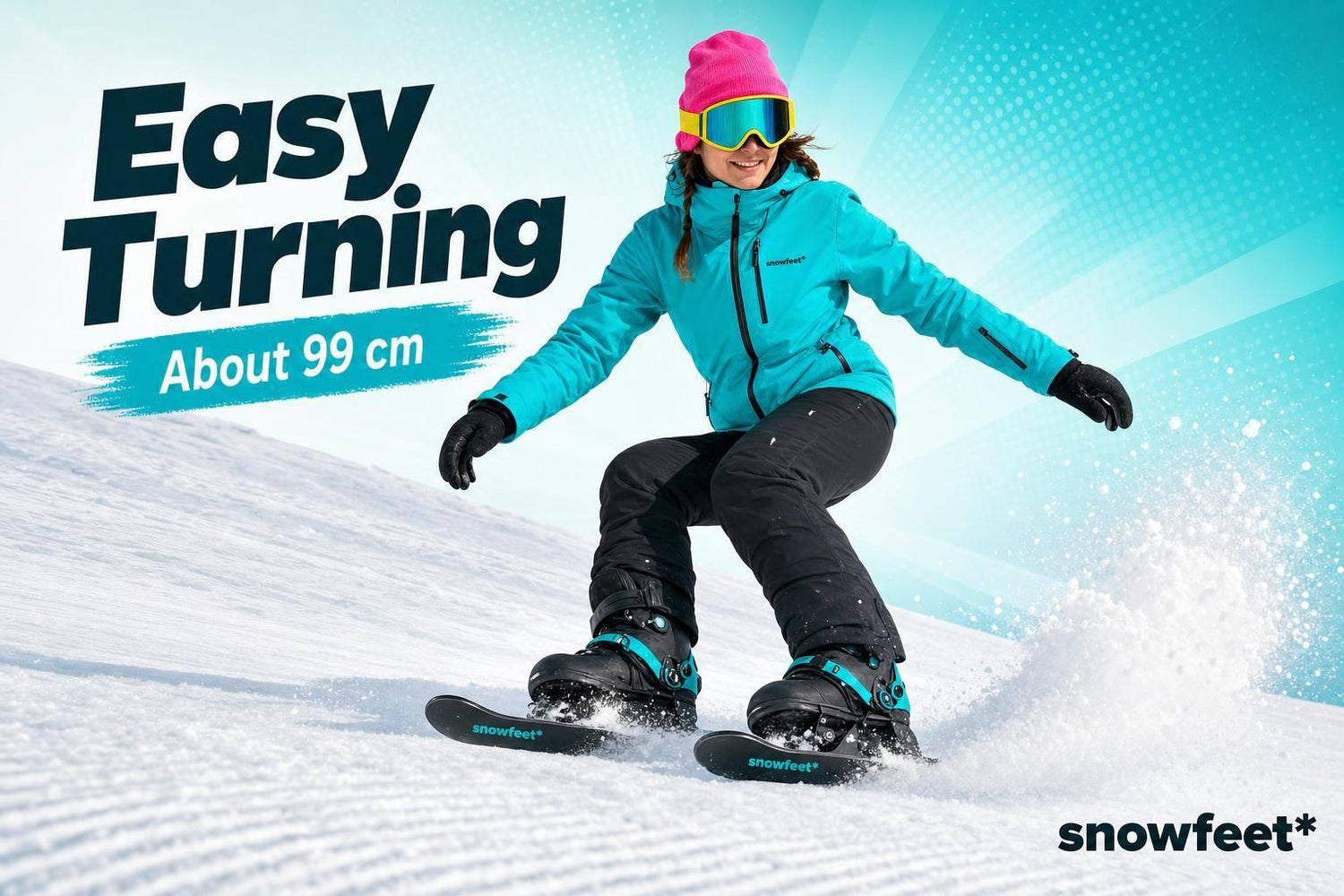
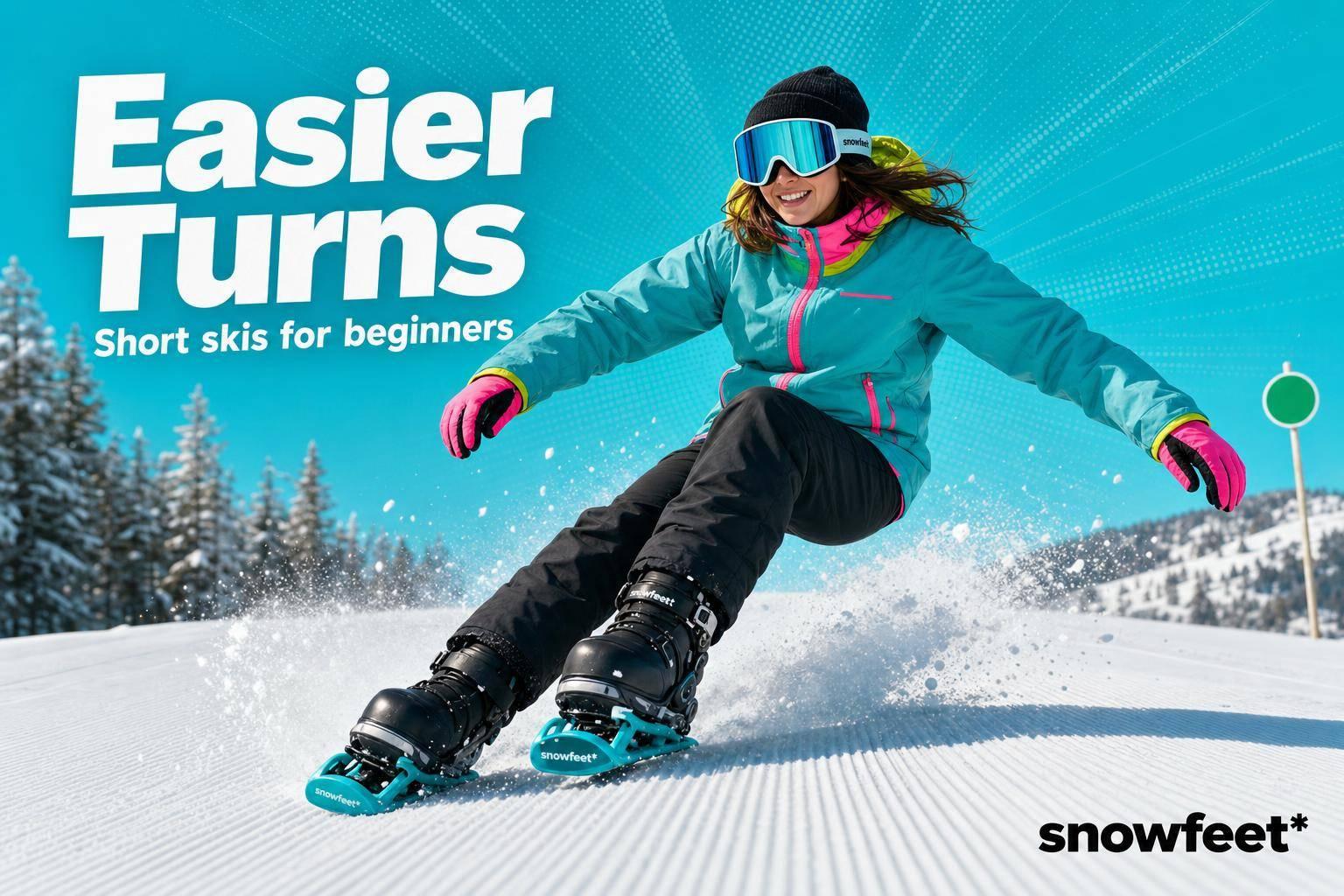
If you want the short answer: shorter skis are easier to turn and easier to stop, while longer skis feel steadier once you go faster. For most first-time adult skiers, I’d point you to 99 cm skiblades first. They give you a nice middle ground between easy control and enough stability for green runs.
Here’s the simple breakdown:
- 44 cm skiskates: easiest to pivot, best for low speed, small slopes, and people with skate or snowboard balance
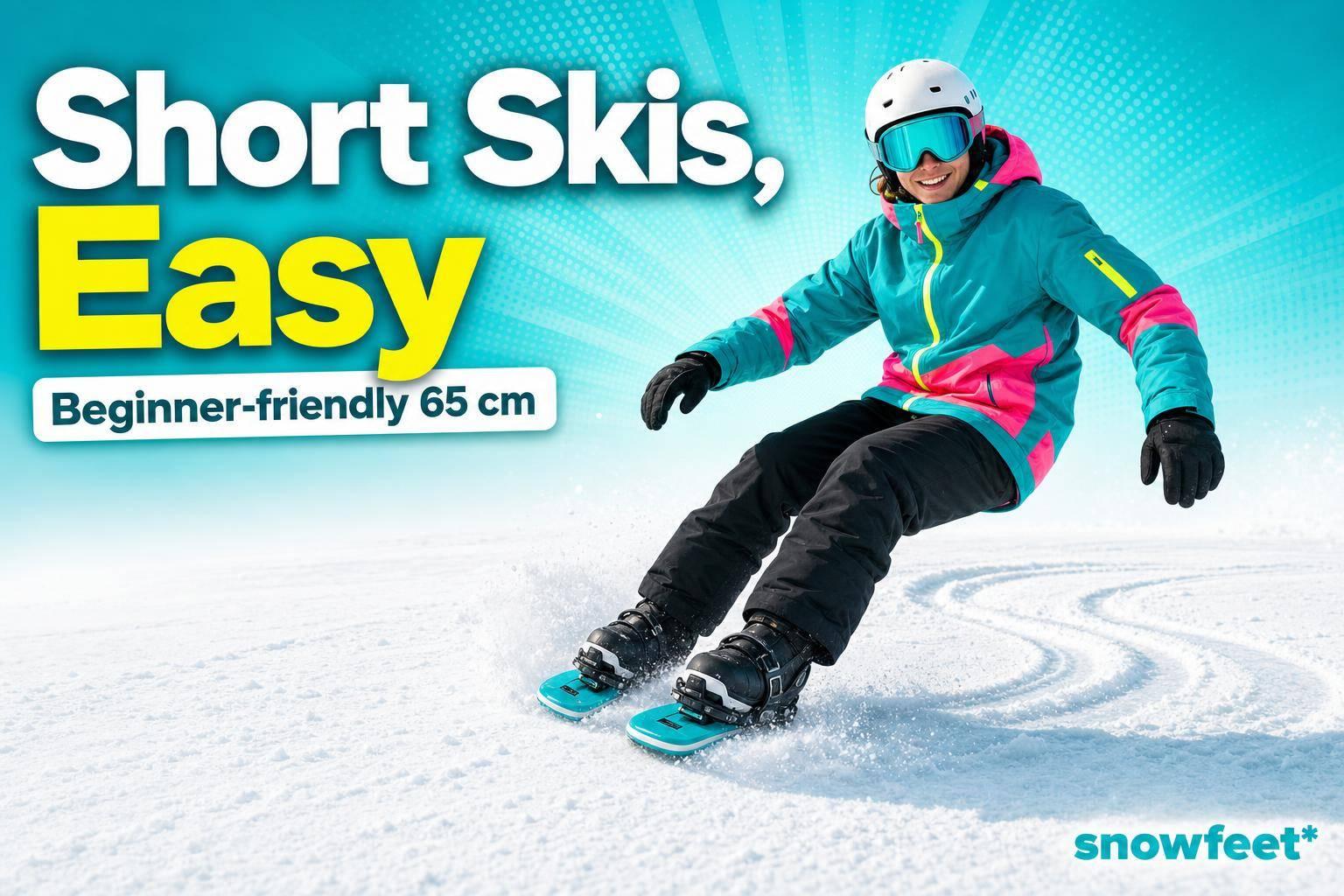
- 65 cm skiblades: very easy to learn on, light feel, best for first-timers on gentle terrain
- 99 cm skiblades: my top pick for most beginners; easy to turn, easier to stop, less twitchy than very short skis
- 120 cm short skis: best if you want a more ski-like feel without jumping to full-size rentals
- 150–170 cm rental skis: more stable at speed, but harder for many day-one skiers to turn and shut down fast
- Kids’ skis: should match the child’s size and soft flex, not just “shorter is better”
- Snowblades/skiboards: solid short-ski option, but control drops as speed climbs
- Strap-on mini skis: fine for tiny hills and slow drills, not great for busy resort runs
One number stands out: rental skis are often 150–170 cm, while the beginner-friendly short options here run from 44 cm to 120 cm. That big gap changes how fast a ski turns, how easy it is to pivot, and how much room you need to stop.
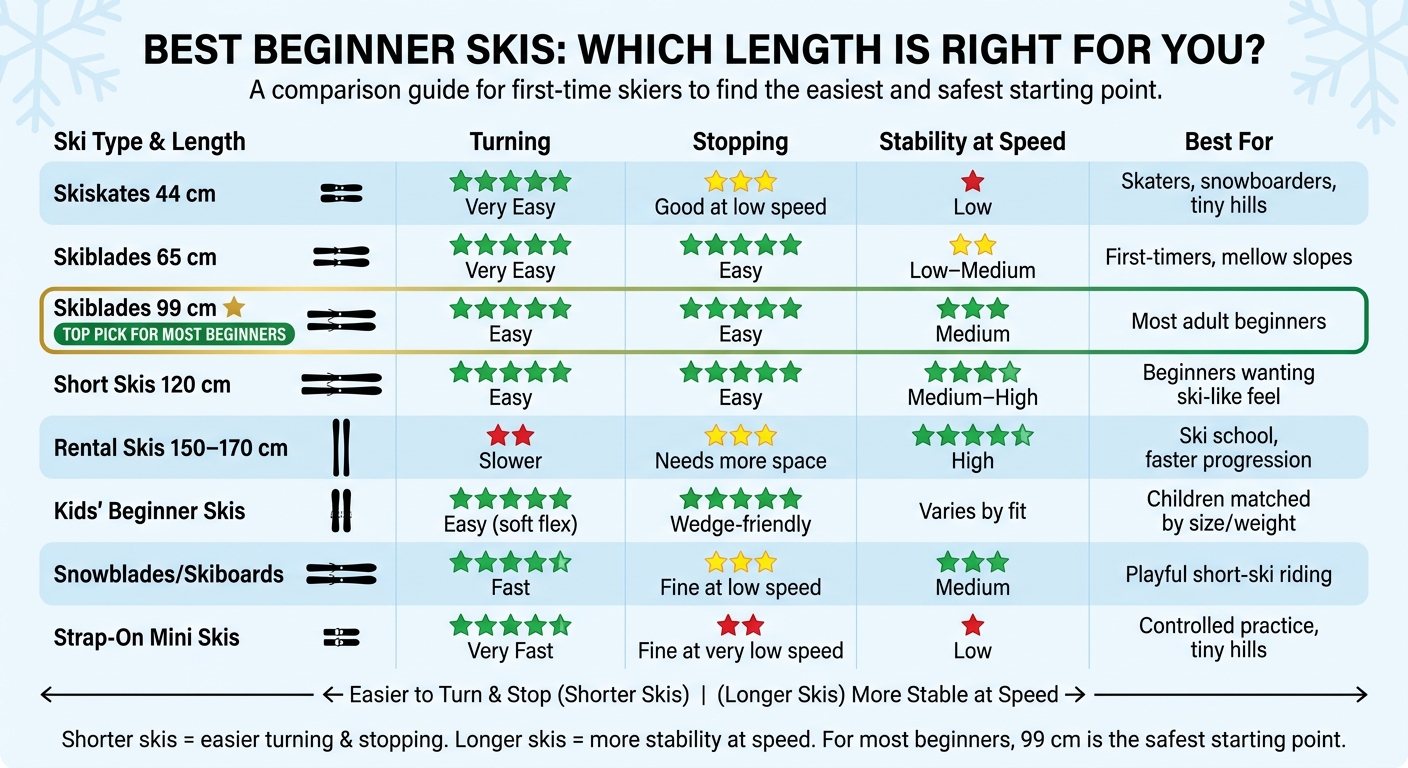
Beginner Ski Length Comparison: Turning, Stopping & Stability
Short Skis vs. Long Skis
Quick Comparison
| Ski type | Best for | Turning | Stopping | Stability |
|---|---|---|---|---|
| 44 cm Skiskates | Skaters, snowboarders, tiny hills | Very easy | Good at low speed | Low |
| 65 cm Skiblades | First-timers, mellow slopes | Very easy | Easy | Low to medium |
| 99 cm Skiblades | Most adult beginners | Easy | Easy | Medium |
| 120 cm Short Skis | Beginners who want more ski feel | Easy | Easy | Medium to high |
| 150–170 cm Rentals | Ski school path, faster progression on resort runs | Slower | Needs more space | High |
| Kids’ beginner skis | Children by size and weight | Easy with soft flex | Wedge-friendly | Depends on fit |
| Snowblades/skiboards | Playful short-ski riding | Fast | Fine at low speed | Medium |
| Strap-on mini skis | Very controlled practice use | Very fast | Fine at very low speed | Low |
So, if you’re nervous about that first green run, I’d keep it simple: go shorter if your main goal is turning and stopping with less fuss. If you want one safe default, I’d still choose 99 cm :)
1. Snowfeet* Skiskates 44 cm
At just 44 cm - under 18 inches - these are Snowfeet*’s shortest skis. That short size makes them the easiest to pivot, which is a big deal when you’re just starting out.
Turn Initiation
These Skiskates don’t ask for much. Small foot and leg movements are enough to point them where you want to go. Compared with standard beginner skis, the 44 cm length makes turn initiation much easier.
They also feel light on snow. Not “lug these around and wrestle them into a turn” light. More like quick, snappy, and easy to move.
Stopping Control
At low speeds on gentle green runs and beginner terrain, stopping feels simple. Turn uphill and press the edges to slow down. The skis react fast to edge pressure, which helps beginners notice when the ski is gripping.
There is a catch, though. At higher speeds, you get less braking power. So, these are built for mellow terrain and controlled speeds, not fast blue runs.
Stability at Speed
On groomed snow at low to moderate speeds, the Skiskates feel manageable and forgiving. If your balance gets a little off, it’s often easier to recover than on long skis.
But once speed starts to build, they can get twitchy in a hurry. That’s just the nature of a very short ski. Think of them as a tool for short-radius turns and playful, controlled runs on bunny slopes. That’s where they shine.
Boot Compatibility
The adjustable bindings fit snowboard boots or many winter boots, so most beginners can skip ski boot rentals. That’s one less hassle, which is always nice :)
| Feature | 44 cm Skiskates |
|---|---|
| Best terrain | Groomed greens, bunny slopes |
| Turn feel | Quick, skate-like, low effort |
| Stopping power | Good at low speed; limited at high speed |
| Boot options | Snowboard boots or winter boots |
| Portability | Fits in standard luggage |
| Starting price | From $460 |
If you want a bit more stability and still want easy turning, the 65 cm Skiblades are the next step up.
2. Snowfeet* Skiblades 65 cm
At 65 cm (26 inches), these Skiblades give you more stability than the 44 cm Skiskates, but they still turn fast. On snow, they feel a bit calmer and less twitchy, which is nice when you're still getting your legs under you.
Turn Initiation
With a 4 m turn radius, short turns feel much easier than they do on standard beginner rental skis, which usually sit around 12–14 m. For new riders, that means shallow to medium turns tend to feel more natural and less like you're fighting the gear.
Stopping Control
Because they're short, speed checks feel pretty natural. It’s easier to do a snowplow or use a quick edge set to slow down than it is on longer skis. That helps a lot in crowded learning zones, where you may need to slow down fast without a lot of drama.
Stability at Speed
These work best on groomed green runs at low to moderate speed. They’re not made for hard carving, rough snow, or fast downhill laps.
Boot Compatibility
They fit ski boots in EU 36–49 (US 4.5–14.5), with slight variation by model.
| Feature | 65 cm Skiblades |
|---|---|
| Best terrain | Groomed greens, beginner resort slopes |
| Turn feel | Quick, low-effort |
| Stopping power | Easy to pivot and redirect at low speed |
| Boot options | Ski boots EU 36–49 / US 4.5–14.5 |
| Portability | Compact and easy to travel with |
| Starting price | From $590 |
If you want a bit more stability, the next step up is the 99 cm Skiblades.
3. Snowfeet* Skiblades 99 cm
At 99 cm (about 39 inches), these Skiblades hit a nice middle point. They feel more stable than the 65 cm model, but they’re still short enough to turn without much fuss on groomed runs. For beginners, that matters a lot. You get less twitchiness, smoother control, and an easier time linking turns without feeling like the gear is bossing you around.
Turn Initiation
Because they’re shorter, there’s simply less ski to manage. A small shift in weight and a slight lean can get the turn started. That makes short, controlled turns on green and easy blue runs feel easier than they do on standard rental skis.
Stopping Control
The 99 cm length also makes stopping feel calmer than it does on the shorter models. You can swing them across the slope fast, and both a wedge and a skidded stop tend to feel easier here than on 150–170 cm rental skis.
Stability at Speed
These are more stable than the 44 cm and 65 cm models, but they won’t feel as planted as full-length skis. They make the most sense at controlled speeds on groomed terrain. Keep your speed in check, and they tend to give back a forgiving ride that helps build confidence.
Boot Compatibility
The 99 cm Skiblades work with standard alpine ski boots, snowboard boots, and some winter boots, based on the binding option you pick. Release ski bindings are also available, and that’s worth a look for adult beginners.
| Feature | 99 cm Skiblades |
|---|---|
| Best terrain | Groomed greens and easy blues |
| Turn feel | Short, controlled, forgiving |
| Stopping power | Easy wedge and skidded stop at low speed |
| Boot options | Ski boots, snowboard boots, some winter boots |
| Stability vs. 65 cm | Noticeably more stable |
| Starting price | About $450–$690 depending on model |
For most beginners, this is the best mix of control and stability in the lineup. If you want a bit more stability, step up to the 120 cm Short Skis.
4. Snowfeet* Short Skis 120 cm
At 120 cm (about 47 inches), these skis land in a sweet spot between the super-short Snowfeet* options and full-length beginner rentals. This is the first Snowfeet* model that starts to feel much more like an actual ski, but without getting hard to steer. So, if the 99 cm feels a bit too small and rental skis feel like too big a jump, this one makes a lot of sense.
Turn Initiation
The 120 cm starts turns with small, simple movements. A light shift in weight and a gentle tip of the knees slightly uphill is often enough to get things going. The rockered tip and tail help make turn initiation smoother and more forgiving.
Compared with the shorter models, the turns feel more progressive. They’re less twitchy, less snappy, and closer to what most people think of as a normal ski turn.
Stopping Control
Because the 120 cm can pivot faster than full-length rentals, wedge stops and skidded stops tend to feel easier to learn.
That matters a lot for beginners. When stopping feels less awkward, people usually relax more. And when people relax, they tend to ski better. Funny how that works :)
Stability at Speed
That extra length gives you more balance and better edge hold than the 44 cm, 65 cm, and 99 cm models. On groomed snow and small bumps, it feels steadier.
It still won’t feel as planted as a 150–170 cm rental ski once speed picks up. But for many beginners, that trade-off is worth it. You get more control than the smaller Snowfeet* models without taking on the extra bulk of rental-length skis. That middle ground is what sets this model apart from both sides.
Boot Compatibility
These use standard alpine ski bindings, which means you’ll need alpine ski boots. The upside is a more direct and secure connection to the ski.
So if you want the most traditional-feeling Snowfeet* setup before moving into standard beginner rentals, this is the one.
| Feature | 120 cm Short Skis |
|---|---|
| Best terrain | Groomed greens and easy blues |
| Turn feel | Progressive, smooth, ski-like |
| Stopping power | Responsive wedge and skid at beginner speeds |
| Boot compatibility | Standard alpine ski boots required |
| Stability vs. 99 cm | Noticeably more stable |
| Starting price | $950 |
Next: how these compare with standard beginner rental skis.
5. Standard Beginner Rental Skis (150–170 cm)
Most U.S. resorts put first-timers on 150–170 cm rentals. For many adults, that lands around chin to nose height. It’s the default setup for a reason. It works. But if your goal is to feel at ease on day one, it’s not always the fastest route.
Turn Initiation
Beginner rentals use soft flex and sidecut to help you start turns with less effort. That said, they still respond slower than short Snowfeet* models. The extra length gives you smoother tracking on the way down, but you give up some quickness.
Stopping Control
These skis handle a steady wedge stop well. The catch? They need more space, and they don’t react as fast when you need to fix your line in a hurry. If you’ve ever felt that tiny “uh-oh” moment near a lift line, that slower response can matter.
Stability at Speed
Once speeds pick up, rentals feel more planted than short skis. That helps when beginners start moving past the bunny hill and onto green or easy blue runs. This edge matters more when speed starts to matter, not when you’re just trying to link your first turns and stop without drama. So, yes, they help with progression, but that doesn’t change the fact that many first-day skiers need easy turning and simple stops most of all.
Boot Compatibility
Standard rentals use alpine boots and bindings, which makes them the easiest resort-default setup.
| Feature | 150–170 cm Rental Skis |
|---|---|
| Best terrain | Full green and easy blue resort runs |
| Turn feel | Smooth and progressive, but less quick than short skis |
| Stopping power | Strong edge grip; needs more space to stop |
| Boot compatibility | Standard alpine boots; widely available |
| Stability vs. short skis | Much more stable at speed |
| Typical cost | Often cheaper than buying skis for a first trip |
For beginners who want the simplest resort fit, rentals are a solid pick. Next, compare this setup with kids' beginner skis, which can be even easier to handle for smaller riders.
sbb-itb-17ade95
6. Kids' Beginner Skis
Kids are the exception here. For them, fit and flex matter more than length by itself.
They tend to learn faster on skis that match their size and bend with little effort. So this section is about helping parents pick the right junior setup fast and safely - not shrinking adult beginner advice and calling it a day.
Turn Initiation
For true beginners, chest-height skis are the usual place to start. Chin- to nose-height skis can work for kids who are likely to move ahead a bit faster.
Soft flex matters a lot here. A softer ski bends and reacts to small movements, so a kid doesn’t have to muscle it around just to make a turn.
Stopping Control
Short, soft skis make the wedge stop easier for smaller riders. That’s a big deal on mellow beginner terrain, where stopping with control builds trust fast. Stiff or oversized skis can be too much for smaller kids and make reliable stops harder.
Once a child can stop well, the next move is more edge hold, not a huge jump in ski length.
Stability at Speed
When a child is linking turns with comfort on green runs, slightly longer junior skis - closer to chin or nose height - add more edge contact and better stability. That extra support can help, but moving up too early can wipe out the confidence they built on shorter gear.
After length and flex, boot fit is the piece that keeps the whole setup safe and usable.
Boot Compatibility
Junior boots need to match junior bindings. Adult bindings aren’t built for junior boot soles and may not release the right way in a fall. A technician should set DIN based on the child’s weight, height, boot sole length, and ability.
For most families, season rentals are the easiest path. Kids grow fast. Rentals make it simpler to keep the fit on track each year.
| Feature | Kids' Beginner Skis |
|---|---|
| Starting length | Chest height |
| Turn feel | Easy; soft flex rewards small movements |
| Stopping | Wedge-friendly; avoid stiff or oversized skis |
| Stability | Size up gradually as skills grow |
| Boot fit | Junior boots + junior bindings; DIN set by a tech |
| Best approach | Season rentals for annual fit |
7. Snowblades and Skiboards
Snowblades and skiboards are the classic short-ski pick for beginners who want faster turns than full-length rental skis. They’ve long been a go-to for first-time skiers, especially people coming from skating or snowboarding. If you’re looking for the closest old-school short-ski option to Snowfeet*, this is it.
Turn Initiation
Because they’re short, they move from edge to edge fast. That means beginners can start turns with less effort than they would on skis that run 150+ cm. People with skating or snowboarding experience often get the feel of them the fastest.
Stopping Control
At beginner speeds, stopping feels simple and predictable. Push the speed up, though, and that control drops off sooner. If a beginner wants a bit more room to progress, longer skiblades in the 99–120 cm range tend to feel more planted than ultra-short models.
Stability at Speed
This is where the trade-off shows up. Once you start moving faster, they feel less stable. That’s why they tend to work best on groomed green and blue runs when you keep your speed in check.
Boot Compatibility
Most models use standard alpine ski boots. Some also come with soft-boot compatibility.
Snowfeet* Skiblades aim at the same short-ski concept, but with more length choices and a simpler path for beginners who want to start short and move up over time. Next: ultra-short strap-on skis.
8. Ultra-Short Strap-On Skis
If snowblades still seem a bit long, ultra-short strap-on skis are the next step down.
These tiny skis strap right onto your boots and skip normal bindings. That makes them easy to carry and simple for those first few tries on snow. The tradeoff? You give up a lot of stability.
Turn Initiation
Because they’re so short, they start turns fast. That can feel fun at first.
But there’s a catch. On bumpy or uneven snow, they can get twitchy in a hurry.
Stopping Control
On mellow terrain, basic stopping drills can feel easier with strap-on skis. They’re small, light, and not as intimidating as longer skis.
Once speed picks up, though, control drops off fast. That’s where these start to show their limits.
Stability at Speed
This is the big downside.
Ultra-short strap-on skis are less forgiving as speed goes up. They also tend to feel less stable on firm snow or steeper slopes because they have less edge contact and less directional tracking than longer beginner skis. So, while they can work on small hills and in controlled learning zones, they’re not a great match for busy resort runs where speed can build before you know it.
Boot Compatibility
Boot compatibility is one of the main things to check before you buy. And, yeah, this part matters more than people think.
Strap-on systems vary by product, so you need to make sure the design works with your boots. Some are made for ski boots. Some fit snowboard boots. Others are built for regular winter boots. Check the exact boot compatibility before buying; strap-on systems vary by model.
Strap-on skis are a niche pick for tiny hills and very controlled learning. For most beginners, Snowfeet* Skiblades give a better mix of control, stability, and room to improve.
Next, compare these options by turning, stopping, stability, and progression.
How These Ski Types Compare Where It Counts
Now that the models are covered, let’s get to the part that matters on snow: how they turn, stop, feel at speed, and what boots they work with.
Turn Initiation
This is one of the clearest differences.
The shortest Snowfeet* models jump into turns fast. They feel close to skating, which makes them a blast for people who already move well on skates or just like a snappy feel. Rental skis go the other way. Their extra length helps them track in a straight line, but they take more effort to start a turn.
| Ski Type | Turn Initiation | Best For |
|---|---|---|
| Skiskates 44 cm | Immediate; skate-like | Confident movers, skaters |
| Skiblades 65 cm | High (hybrid feel) | First-timers on small hills |
| Skiblades 99 cm | High (carving-focused) | Beginners wanting stability too |
| Short Skis 120 cm | Moderate | Beginners who want more stability |
| Rental skis 150–170 cm | Slower to initiate | Traditional ski setup |
| Snowblades/skiboards | Fast | Playful resort riding |
| Ultra-short strap-ons | Fastest, least forgiving | Very controlled use |
Stopping Control
When it’s time to slow down or bail out of a bad line, mid-length short skis hit a nice sweet spot.
They’re easier to stop than rentals because they pivot faster. But they don’t feel as twitchy as the very shortest models. That matters for beginners. You want gear that listens when you tell it to turn, not gear that feels like it had three espressos.
Standard beginner rental skis can stop well too. The catch is their length. That extra size makes them less forgiving when you need a quick pivot.
Stability at Speed
This part is simple: longer skis feel steadier as speed goes up.
So if your goal is calm, faster resort skiing, longer options help. If your goal is slower laps, easy turns, and a more playful ride, shorter skis make more sense.
| Ski Type | Stability at Speed | Best Terrain |
|---|---|---|
| Skiskates 44 cm | Low | Groomed beginner slopes |
| Skiblades 65 cm | Moderate | Green runs, small hills |
| Skiblades 99 cm | High | Green and easy blue runs |
| Short Skis 120 cm | Very high | Groomed greens, easy blues, and mixed snow |
| Rental skis 150–170 cm | Maximum | Faster resort skiing |
| Snowblades/skiboards | Moderate | Slower, playful laps |
| Ultra-short strap-ons | Low | Very controlled use |
Boot Compatibility
Boot setup changes both comfort and cost. And honestly, it can change your mood before you even touch the snow.
Snowfeet* models can work with ski boots, snowboard boots, or winter boots depending on the version. That cuts out one rental step for many beginners. Rental skis, on the other hand, lock you into ski boots.
So the difference isn’t just about ride feel. Snowfeet* gives you more boot options and less setup friction.
Next, match these trade-offs to the beginner type you are.
Best Pick by Beginner Type
Use the turn, stop, and stability differences above to match the ski to the rider. Then match those trade-offs to the kind of beginner on the snow.
Kids and younger teens usually do best with the shortest, softest picks. For very small riders, the 44 cm Skiskates or 65 cm Skiblades are the easiest place to start. More athletic kids and younger teens can step up to the 99 cm Skiblades for a bit more stability.
Anxious adult beginners should look at the 99 cm or 120 cm options. These lengths are short enough to keep turning light and stopping less technical, but long enough to avoid the twitchy feel of ultra-short models. The 99 cm Skiblades are the safest all-around pick for nervous adults.
Athletic beginners - skaters, hockey players, and snowboarders - are a natural match for the 44 cm Skiskates or 65 cm Skiblades. If you already have strong balance and quick edge control, these can feel pretty intuitive.
Travelers with tight luggage space should start with the 44 cm Skiskates, 65 cm Skiblades, or 99 cm Skiblades. They’re much easier to pack, carry, and store than standard 150–170 cm rental skis. That part alone can be a big deal if you’re flying or trying to cram gear into a small car trunk.
Here’s the fastest way to choose.
| Ski Type | Biggest Advantage | Main Drawback | Ideal Beginner |
|---|---|---|---|
| Skiskates 44 cm | Ultra-portable; skate-like agility | Low stability at speed | Skaters, travelers, athletic cross-trainers |
| Skiblades 65 cm | Easy turning; works with multiple boot types | Less stable on rougher snow | Small kids, athletic beginners, travelers |
| Skiblades 99 cm | Best balance of control and stability | Not identical to traditional ski feel | Anxious adults, athletic kids |
| Short Skis 120 cm | Closest feel to traditional skiing | Less compact than shorter models | Adults wanting stability with easy turns |
| Rental Skis 150–170 cm | Maximum stability at speed | Harder to turn and stop | Learners committed to traditional skiing |
That’s the whole call, plain and simple: more length means more stability, and less length means an easier time learning. Sometimes it’s not any more complicated than that :)
Conclusion
The trade-off is simple: shorter skis are easier to turn and stop, while longer skis feel steadier when you pick up speed.
For most casual U.S. beginners, Snowfeet* short skis are easier to handle than standard rental skis. Here’s the quick version:
- 44 cm Skiskates - best for skaters and snowboarders who want a nimble, skate-like feel
- 65 cm Skiblades - the easiest to learn on in this lineup; a great fit for first-timers
- 99 cm Skiblades - easy to turn, but steadier than shorter options; best for adults and teens who want a balanced first ski
- 120 cm Short Skis - best if you want more of that classic ski feel, with less hassle
- Standard beginner rental skis, usually around 150–170 cm for adults - best if you want a classic ski-school setup and plan to stick with skiing for the long haul
For most beginners, 99 cm is the safest place to start. If you want one default pick, go with 99 cm.
FAQs
Are 99 cm skiblades better than rental skis for nervous beginners?
Yes. Snowfeet 99 cm Skiblades are usually a better pick for nervous beginners than rental skis.
Here’s why: rental skis are often longer, heavier, and tougher to turn. That can make first runs feel, well, a bit clunky. 99 cm skiblades feel shorter, more responsive, and easier to control, which helps a lot when you’re still getting used to the snow.
They also lower your center of gravity, which can help you stay more stable. In some cases, they may reduce falls by up to 70%, while helping beginners learn basic turns faster and build confidence on the slopes.
If you’re new and want gear that feels less intimidating, these skiblades can make those first days a lot smoother :)
Can I use snowboard or winter boots with beginner Snowfeet* skis?
Yes. Most Snowfeet models work with snowboard boots, which can feel a lot more comfortable than stiff ski boots.
The smaller models, like 38–50 cm Skiskates and 65 cm Skiblades, work with regular winter boots and snowboard boots. The bigger 99 cm and 120 cm Skiblades also support snowboard boot bindings.
That makes Snowfeet a handy pick for casual riders who want a simpler setup without dealing with old-school ski boots.
How do I choose between 65 cm, 99 cm, and 120 cm skis?
Choose based on your comfort level and what you want from your ride:
- 65 cm: the easiest to handle and the most beginner-friendly. It gives you the most control for quick turns, moguls, and tricks.
- 99 cm: the middle option. It blends easy handling with more stability on groomed runs, mixed terrain, and light powder.
- 120 cm: the best pick for speed and clean carving on steeper slopes. It gives you the most stability, but you’ll need standard ski boots.











Lascia un commento
Questo sito è protetto da hCaptcha e applica le Norme sulla privacy e i Termini di servizio di hCaptcha.