



















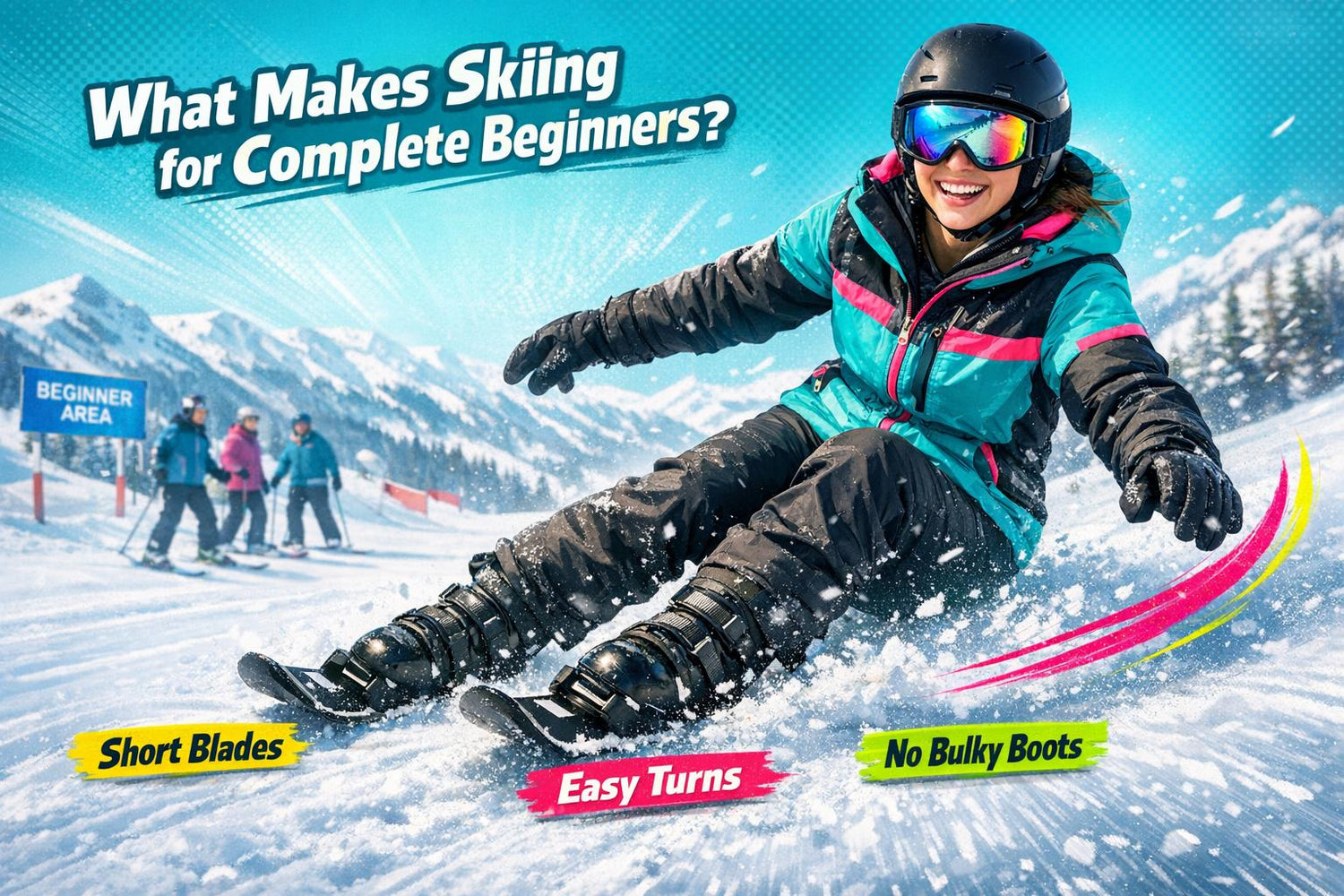
Skier pour la première fois peut sembler intimidant : un équipement peu pratique, la peur de perdre le contrôle et une courbe d’apprentissage exigeante découragent souvent les débutants. Mais s’il existait un moyen de rendre le ski plus simple, plus sûr et plus amusant dès le départ ? Découvrez Snowfeet* : un équipement de ski compact et léger, conçu pour résoudre les principaux défis auxquels sont confrontés les nouveaux skieurs.
Voici pourquoi Snowfeet* rend le ski plus facile :
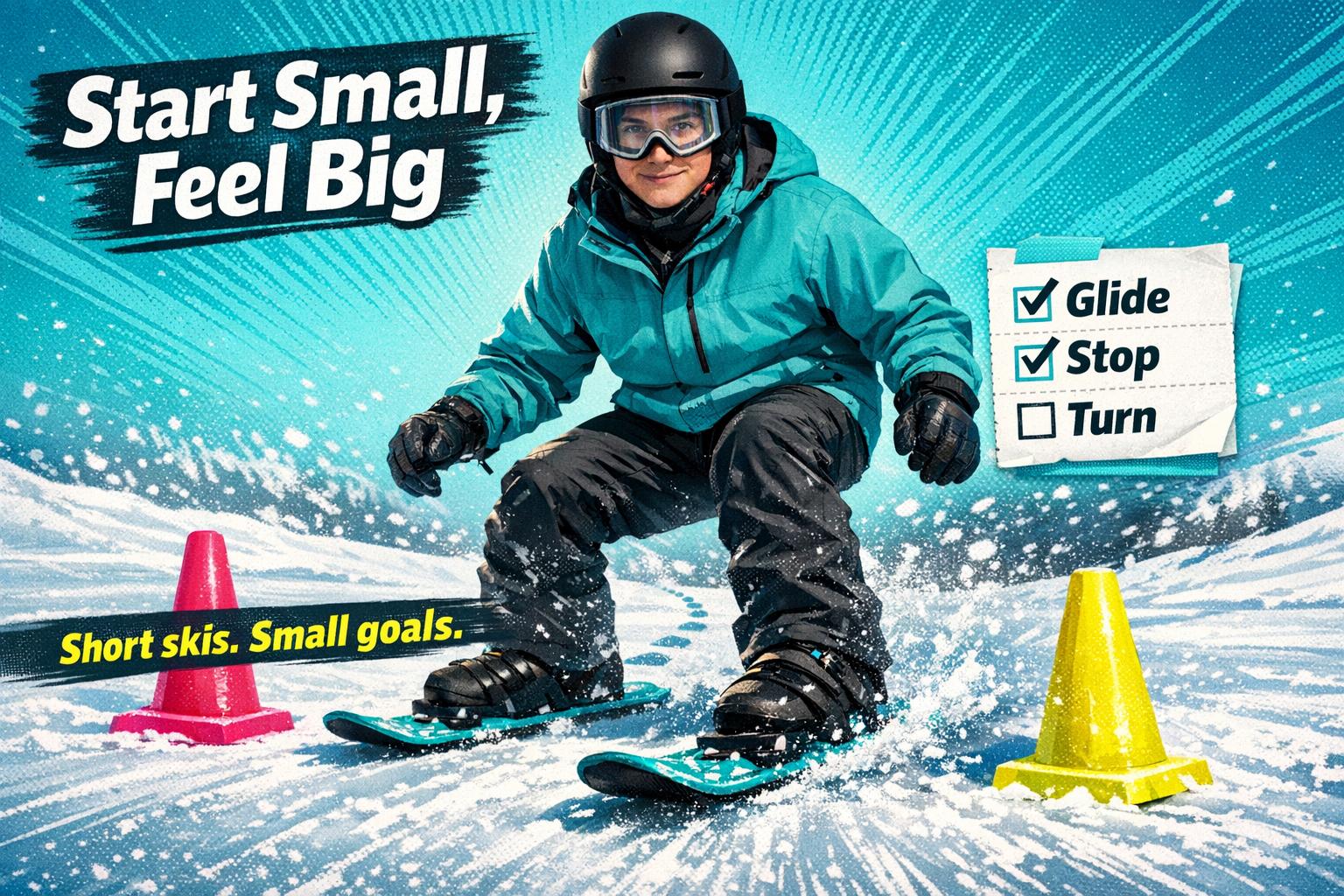
- Longueur réduite : plus facile à contrôler, à faire tourner et à arrêter.
- Vitesses réduites : gagnez en confiance sans avoir l’impression de perdre le contrôle.
- Design léger : moins de fatigue, plus de plaisir.
- Chaussures classiques : pas besoin de chaussures de ski encombrantes.
Si les skis traditionnels vous semblent trop difficiles, Snowfeet* pourrait être votre raccourci pour profiter des pistes. Examinons cela plus en détail.
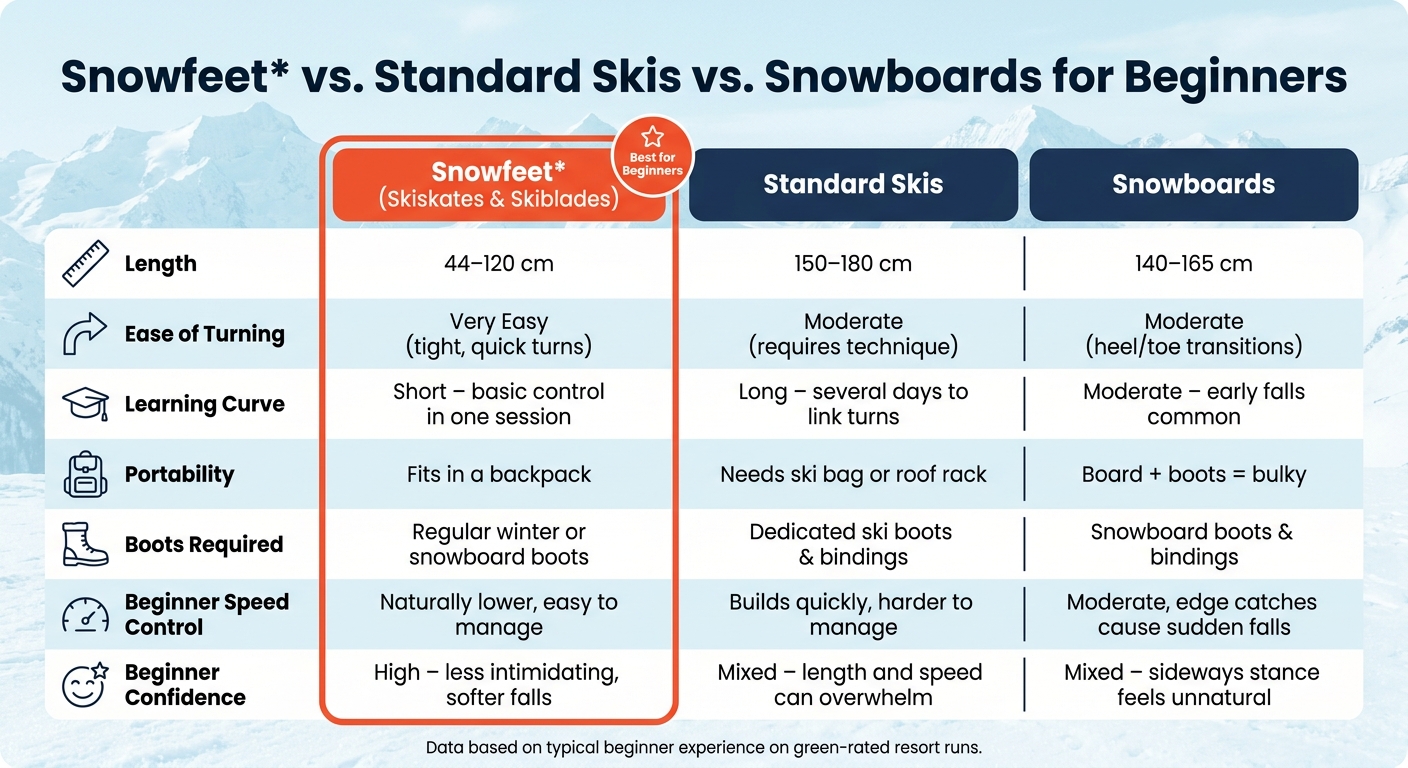
Snowfeet* contre les skis classiques et les snowboards : comparaison pour débutants
Les principaux défis auxquels les débutants sont confrontés lorsqu’ils apprennent à skier
Peur de la vitesse et perte de contrôle
Pour les débutants, prendre de la vitesse à ski peut être franchement terrifiant. La réaction naturelle ? Se pencher en arrière. Malheureusement, cet instinct déplace le poids vers l’arrière des skis, ce qui réduit le contrôle et rend la situation encore plus effrayante. Les skis longs ne font qu’aggraver le problème, car ils retardent les virages et donnent aux débutants l’impression de dévaler la pente plus vite qu’ils ne peuvent le maîtriser. En réalité, les moniteurs de ski soulignent souvent que la peur de la vitesse est l’un des principaux obstacles psychologiques chez les adultes qui apprennent à skier — parfois même plus difficile à surmonter que le manque de condition physique.
Snowfeet* s’attaque à ce problème grâce à un design plus court qui limite naturellement la vitesse, donnant ainsi aux débutants davantage de confiance et de contrôle.
Un équipement lourd et encombrant vous ralentit
Soyons honnêtes : l’équipement de ski n’est pas vraiment léger ni facile à manipuler. Pour beaucoup de débutants, arriver simplement sur la piste avec tout ce matériel ressemble déjà à une séance de sport. Entre le transport de chaussures et de skis lourds, les espaces bondés et les longues files d’attente aux remontées mécaniques, les débutants se sentent souvent épuisés avant même de commencer à skier.
Et puis, il y a l’équipement lui-même. Les chaussures de ski alpin sont rigides et lourdes, conçues pour la performance plutôt que pour le confort. Marcher avec est peu pratique, et le manque de mobilité des chevilles fatigue rapidement les jambes. Sur les pistes, le poids des skis longs rend chaque petit mouvement — comme pivoter ou se rétablir après un déséquilibre — plus difficile. La fatigue s’installe vite, la concentration diminue et les chutes deviennent plus fréquentes.
Un client de Snowfeet* l’a parfaitement résumé :
"Ces lames de ski sont vraiment géniales à utiliser. Elles sont très faciles à contrôler, permettent de tourner rapidement et pardonnent bien davantage les erreurs que les skis traditionnels. Elles sont parfaites pour carver et se déplacer sur des pistes fréquentées sans se sentir encombré." - Brad Tolin
Snowfeet* offrent une alternative rafraîchissante grâce à leur conception légère et compacte, qui rend le ski moins laborieux et bien plus amusant.
La courbe d’apprentissage abrupte de l’équipement de ski classique
L’équipement de ski traditionnel ne facilite pas les débuts. Le premier jour ressemble souvent à un cours accéléré sur tout à la fois : la position, le contrôle des carres, les transferts de poids, le déclenchement des virages, la gestion de la vitesse et même l’utilisation du télésiège. Si un seul élément vous échappe, vos skis peuvent sembler imprévisibles et difficiles à contrôler.
Le snowboard n’est pas plus simple. Avec les deux pieds fixés sur une seule planche, les débutants doivent rapidement maîtriser les carres côté orteils et côté talons, ce qui peut sembler totalement contre-intuitif. Ajoutez à cela une multitude de termes techniques — rayon de courbure, cambre et rocker — et l’on comprend facilement pourquoi le ski et le snowboard peuvent sembler intimidants.
Conscientes de ces difficultés, de nombreuses écoles de ski recommandent désormais aux débutants des skis plus courts et profilés, car ils sont plus faciles à faire tourner et offrent un meilleur contrôle à faible vitesse. Snowfeet* vont encore plus loin dans cette approche. Leur conception intuitive simplifie l’apprentissage, afin que les débutants puissent consacrer moins de temps à se soucier de leur technique et davantage à profiter de la glisse.
Snowfeet* Snowblades | Skiboards | Skiblades | Skis courts - Guide complet | Tout ce qu’il faut savoir
Comment les produits Snowfeet* facilitent le ski pour les débutants
L’équipement Snowfeet* est conçu avec des caractéristiques qui répondent aux difficultés courantes rencontrées par les skieurs débutants, ce qui en fait un excellent choix pour ceux qui commencent.
Une longueur réduite signifie un contrôle plus facile
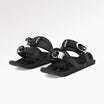
L’une des caractéristiques les plus remarquables des produits Snowfeet* est leur longueur réduite, qui les rend beaucoup plus faciles à manier. Les skis traditionnels pour adultes mesurent généralement entre 150 et 180 cm (59–71 pouces), tandis que les Skiskates Snowfeet* ne mesurent que 17 pouces (44 cm), et que leurs Skiblades mesurent 65 cm et 99 cm. Cette taille compacte offre plusieurs avantages.
Avec moins de carres de ski en contact avec la neige, il est plus facile d’effectuer des virages rapides et réactifs. Cela réduit également considérablement le risque de croisement des spatules — une cause fréquente de chute chez les débutants. S’arrêter devient aussi un jeu d’enfant. Un simple chasse-neige ou un virage serré suffit pour s’immobiliser, puisqu’une longueur de ski moindre s’oppose à votre mouvement. De plus, leur conception plus courte vous ralentit naturellement, créant une expérience d’apprentissage plus sûre et mieux maîtrisée.
Des vitesses plus faibles aident les débutants à prendre confiance
L’équipement Snowfeet* est idéal pour maintenir une vitesse raisonnable. La longueur réduite et le rayon de courbe plus serré favorisent des virages fréquents, qui permettent de réduire la vitesse avant qu’elle ne devienne incontrôlable. Sur les pistes vertes adaptées aux débutants dans les stations américaines, vous pouvez facilement rester à une vitesse confortable sans lutter constamment contre la pente.
"Pas aussi rapides que les skis classiques, ce qui peut être une bonne chose en vieillissant." - heyjerz, client
Cette vitesse maîtrisée réduit la peur de perdre le contrôle, permettant aux débutants de se concentrer sur l’amélioration de leurs compétences et le développement de leur confiance.
Léger et facile à transporter
Autre avantage majeur : l’équipement Snowfeet* est léger et facile à transporter. Contrairement aux skis traditionnels, qui peuvent être encombrants et difficiles à transporter, les Skiskates et les Skiblades Snowfeet* sont suffisamment petits pour tenir dans un sac à dos. Se rendre sur les pistes — en voiture ou avec la navette de la station — devient ainsi beaucoup plus simple.
La conception légère réduit également la tension exercée sur vos hanches et vos genoux, ce qui est particulièrement important pour les personnes qui ne skient pas régulièrement ou qui débutent dans ce sport. Moins de fatigue signifie davantage de descentes, plus d’entraînement et une journée globalement plus agréable.
"Beaucoup plus facile à transporter sur les pistes et en vacances que des skis traditionnels !" - heyjerz, client
"Je n’ai ressenti aucune douleur musculaire après les avoir utilisés, car je peux changer la position de mes jambes, contrairement au snowboard qui reste fixe." - Sunshine Straiges, cliente
Contrairement aux snowboards, qui maintiennent vos jambes dans une position fixe, l’équipement Snowfeet* vous permet de bouger librement. Cette flexibilité évite à vos muscles de se fatiguer trop rapidement, ce qui vous permet de rester plus longtemps en montagne et de continuer à progresser.
sbb-itb-17ade95
Snowfeet* face aux skis et snowboards standard
Comparaison côte à côte : Snowfeet* et équipement standard
Lorsque l’on compare Snowfeet* aux skis et aux snowboards traditionnels, les différences sont évidentes, surtout pour les débutants. Ces distinctions vont bien au-delà de la taille : elles influencent la rapidité d’apprentissage, l’énergie dépensée et le plaisir ressenti lors de votre première journée sur les pistes.
| Critère | Snowfeet* (Skiskates et skiblades) | Skis standard | Planches de snowboard |
|---|---|---|---|
| Longueur | 44–120 cm | 150–180 cm (adultes) | 140–165 cm |
| Facilité à tourner | Très facile ; virages serrés et rapides à faible vitesse | Modérée ; nécessite davantage de technique | Modérée ; les transitions talon/orteils demandent du temps |
| Courbe d’apprentissage | Courte ; le contrôle de base s’acquiert souvent en une seule session | Longue ; plusieurs jours sont nécessaires avant d’enchaîner les virages avec assurance | Modérée ; les premières chutes sont fréquentes pendant l’apprentissage des carres |
| Facilité de transport | Se range dans un sac à dos ; aucune galerie de toit nécessaire | Encombrant ; nécessite un sac à skis ou une galerie de toit | Encombrant ; la planche et les bottes prennent rapidement beaucoup de place |
| Bottes requises | Bottes d’hiver classiques ou bottes de snowboard | Bottes et fixations de ski dédiées | Bottes et fixations de snowboard |
| Vitesse pour débutants | Naturellement plus lent ; plus facile à contrôler | Peut rapidement prendre de la vitesse ; plus difficile à maîtriser | Modéré ; les carres peuvent accrocher et provoquer des chutes soudaines |
| Confiance des débutants | Élevé ; équipement moins intimidant, chutes moins rudes | Mitigé ; la longueur et la vitesse peuvent submerger les nouveaux skieurs | Mitigé ; la position de côté semble inhabituelle au début |
La longueur réduite de Snowfeet* (44–120 cm) change véritablement la donne par rapport aux skis ou snowboards classiques. Cette conception les rend beaucoup plus accessibles aux débutants, comme expliqué ci-dessous.
Pourquoi les skis plus courts sont plus adaptés aux débutants
Les skis plus courts, comme Snowfeet*, offrent un avantage considérable aux débutants. Leur conception compacte réduit l’effet de levier qui peut rendre les skis longs difficiles à contrôler. Avec des skis traditionnels, même de petits déplacements du poids peuvent provoquer des mouvements amplifiés et difficiles à corriger. Snowfeet* élimine une grande partie de cette instabilité en maintenant l’équipement plus près de vos pieds, ce qui facilite la récupération après de petites erreurs avant qu’elles n’entraînent une chute.
Cette conception plus courte permet également des virages plus rapides et plus réactifs. Les débutants peuvent diriger naturellement leur équipement sans devoir maîtriser immédiatement des techniques avancées. Cela renforce la confiance et vous aide à vous sentir maître de vos mouvements dès le départ. Si vous avez déjà pratiqué le patinage sur glace ou le roller, vous trouverez probablement les Skiskates Snowfeet* familiers et intuitifs.
Si les skis et snowboards traditionnels sont parfaits dans des conditions avancées, ils peuvent intimider les débutants. Snowfeet* comble cet écart en offrant une manière plus simple et plus rapide de profiter des pistes. En passant moins de temps à lutter pour apprendre, vous pouvez vous concentrer sur le plaisir dès le départ.
Conseils pratiques pour débuter avec Snowfeet*
Snowfeet* sont réputés pour être faciles à utiliser, mais bien démarrer peut rendre votre expérience encore meilleure. Voici quelques conseils pour vous lancer.
Commencez sur un terrain plat ou une pente douce
Commencez votre aventure Snowfeet* sur un terrain plat ou une pente douce — par exemple, des pistes vertes adaptées aux débutants ou des zones équipées d’un tapis roulant. Ces endroits vous offrent suffisamment d’espace pour vous entraîner à un rythme maîtrisable. Concentrez-vous sur la maîtrise des bases : glisser, s’arrêter et effectuer des virages simples. S’arrêter est la compétence la plus importante à apprendre dès le début. Une fois que vous saurez ralentir et vous arrêter avec assurance, vous vous sentirez beaucoup plus maître de vos mouvements, ce qui vous aidera à réduire votre appréhension.
Un bon exercice ? Entraînez-vous à glisser sur quelques mètres, puis à vous arrêter, et répétez l’exercice. Une fois que vous maîtrisez cela, passez à de doux virages en S. Évitez au début les zones verglacées ou très fréquentées, car les skis courts peuvent être difficiles à manier sur des surfaces irrégulières ou glissantes.
Lorsque vous maîtrisez les bases, il est temps de choisir le modèle Snowfeet* adapté à votre niveau d’assurance.
Choisir le bon modèle Snowfeet*
Le modèle que vous choisissez peut faire une grande différence dans la rapidité avec laquelle vous prendrez vos marques. Voici un guide simple pour vous aider à faire votre choix :
| Modèle | Longueur | Idéal pour |
|---|---|---|
| Skiskates | 44 cm (17 po) | Maniabilité facile sur les pentes douces |
| Skiblades | 65 cm (26 po) | Virages serrés et plaisir dans les snowparks |
| Skiblades | 99 cm (39 po) | Stabilité et contrôle équilibrés sur les pistes aménagées |
| Skiblades de 120 cm | 120 cm (47 po) | Davantage de stabilité pour atteindre des vitesses plus élevées et progresser |
Pour les débutants, les Skiskates (44 cm) ou les Skiblades de 65 cm sont d’excellents choix : ils sont plus faciles à contrôler et parfaits pour prendre confiance. Si vous recherchez quelque chose de polyvalent qui évoluera avec vos compétences, les Skiblades de 99 cm constituent un choix fiable. Comme l’explique Snowfeet* :
"Des skis plus courts sont plus faciles à contrôler, à faire tourner et à arrêter, ce qui les rend parfaits pour les débutants."
Équipement de sécurité et précautions de base
La sécurité avant tout ! Avant de vous lancer sur les pistes, assurez-vous d’être correctement équipé. Un casque bien ajusté est indispensable : selon la National Ski Areas Association (NSAA), 89 % des blessures à la tête liées au ski et au snowboard concernent des personnes ne portant pas de casque.
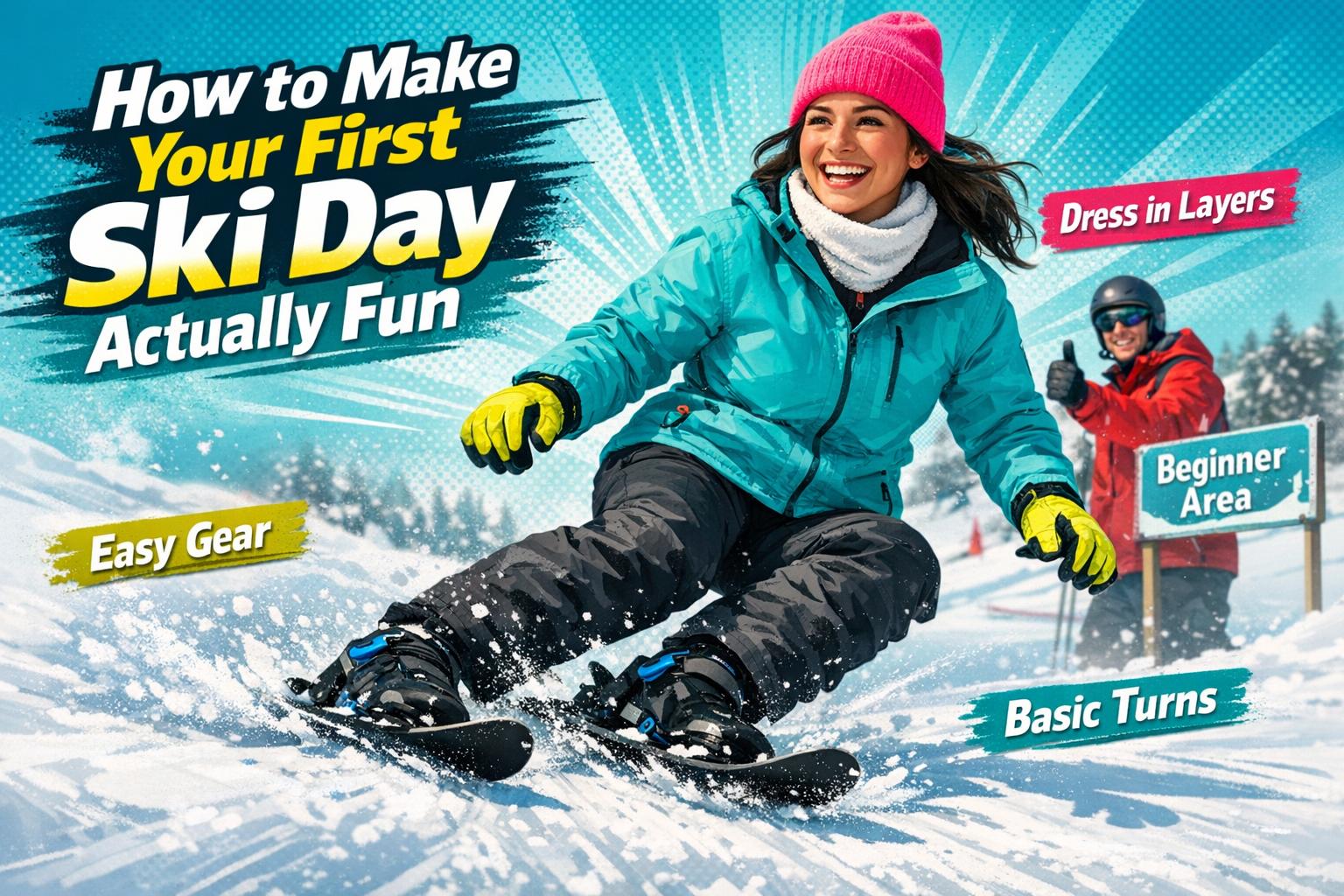
Vous devrez également vous habiller judicieusement. Optez pour des vêtements imperméables superposés : une première couche évacuant l’humidité pour rester au sec, une couche intermédiaire en polaire pour avoir chaud et une couche extérieure coupe-vent. N’oubliez pas les gants imperméables ainsi que des lunettes de ski ou de soleil, selon la météo. Si vous avez tendance à tomber sur les mains, les protège-poignets peuvent vous sauver la mise, tandis qu’un short rembourré protégera vos hanches et votre coccyx.
Enfin, respectez toujours le Code de responsabilité de la NSAA. Gardez le contrôle, cédez le passage aux personnes situées en aval et, lorsque vous vous arrêtez, rangez-vous sur le côté de la piste au lieu d’en bloquer le milieu. Ces précautions vous protègent et rendent également l’expérience plus agréable pour tout le monde autour de vous.
Conclusion : pourquoi Snowfeet* est le choix idéal pour débuter le ski
Skier ne signifie pas forcément lutter avec des skis longs et lourds ni devoir affronter une courbe d’apprentissage abrupte. Les produits Snowfeet* répondent aux difficultés courantes des débutants : les lames plus courtes facilitent le contrôle de la vitesse, la conception légère réduit la fatigue et la sensation proche du patinage rend l’équilibre et les virages naturels dès le départ. Cette conception réfléchie réduit le stress lié à l’apprentissage.
Snowfeet* propose une option adaptée à chaque débutant : les Skiskates maniables de 44 cm à partir de 575 $, les Skiblades de 65 cm à 635 $, le modèle polyvalent de 99 cm à 675 $, et les Skiblades de 120 cm à 775 $, idéales pour ceux qui recherchent un équipement qui évolue avec leurs compétences.
Les moniteurs de ski soulignent souvent qu’un équipement plus court permet aux débutants de mieux contrôler leurs carres et de s’arrêter en toute sécurité. Comparées aux skis traditionnels, les lames plus courtes et plus légères des Snowfeet* offrent un meilleur contrôle et un meilleur équilibre : un équipement qui vous accompagne au lieu de vous compliquer la tâche.
Et voici le meilleur : il n’est pas nécessaire d’être un grand sportif pour apprécier le ski. Que vous ayez 20, 40 ans ou plus, la conception compacte et légère des Snowfeet* réduit les exigences physiques et rend le ski plus accessible. Ajoutez un casque, des vêtements chauds et une pente douce, et votre première journée sur la neige pourra être agréable plutôt que décourageante.
Avec les Snowfeet*, vous pouvez vous élancer sur les pistes en toute confiance et faire de vos premiers virages un moment placé sous le signe du plaisir et de la facilité, plutôt que de la frustration.
FAQ
Puis-je utiliser les Snowfeet* avec mes bottes d’hiver habituelles ?
Les Snowfeet* sont conçus pour fonctionner parfaitement avec vos bottes d’hiver habituelles. Contrairement aux skis traditionnels, qui nécessitent des chaussures lourdes et spécialisées, les Snowfeet* se fixent directement sur des chaussures d’hiver imperméables ou des boots de snowboard que vous possédez probablement déjà. Pour en profiter au maximum, choisissez des chaussures offrant un bon maintien de la cheville. Vous éviterez ainsi les équipements encombrants et coûteux tout en profitant d’une expérience confortable et épurée sur les pistes.
Les Snowfeet* sont-ils autorisés dans la plupart des stations de ski américaines ?
Oui, les produits Snowfeet sont généralement autorisés dans la plupart des stations de ski aux États-Unis. Leur petite taille et leur conception légère en font une excellente option, notamment pour les débutants qui recherchent quelque chose de plus simple que des skis traditionnels. Parfaits pour les pistes vertes et bleues, ils sont faciles à utiliser, évitent les contraintes des chaussures de ski et offrent une manière amusante et accessible de profiter des pistes de la station.
Quelle longueur de Snowfeet* convient le mieux à un débutant complet ?
Pour les personnes qui débutent sur les pistes, les mini-skis patins de 38 cm ou les Skiskates de 44 cm sont d’excellentes options pour commencer. La version de 38 cm est très légère et convient particulièrement aux terrains plats ou aux pistes pour débutants peu pentues. Si vous recherchez un meilleur contrôle des carres et des virages plus faciles sur les pistes des stations, les Skiskates de 44 cm sont tout indiqués. Les deux options sont bien plus faciles à manier que des skis traditionnels, ce qui permet aux débutants d’assimiler les bases plus facilement sans s’épuiser.
Articles de blog associés
- Skis courts pour débutants : pourquoi de plus en plus de skieurs passent aux Skiblades
- Skis courts ou Snowblades : quelle option semble la plus naturelle pour les débutants ?
- Skiblades : l’avenir du ski pour les débutants et les skieurs qui veulent s’amuser
- Qu’est-ce qui est le mieux pour apprendre le ski plus rapidement











Laisser un commentaire
Ce site est protégé par hCaptcha, et la Politique de confidentialité et les Conditions de service de hCaptcha s’appliquent.