



















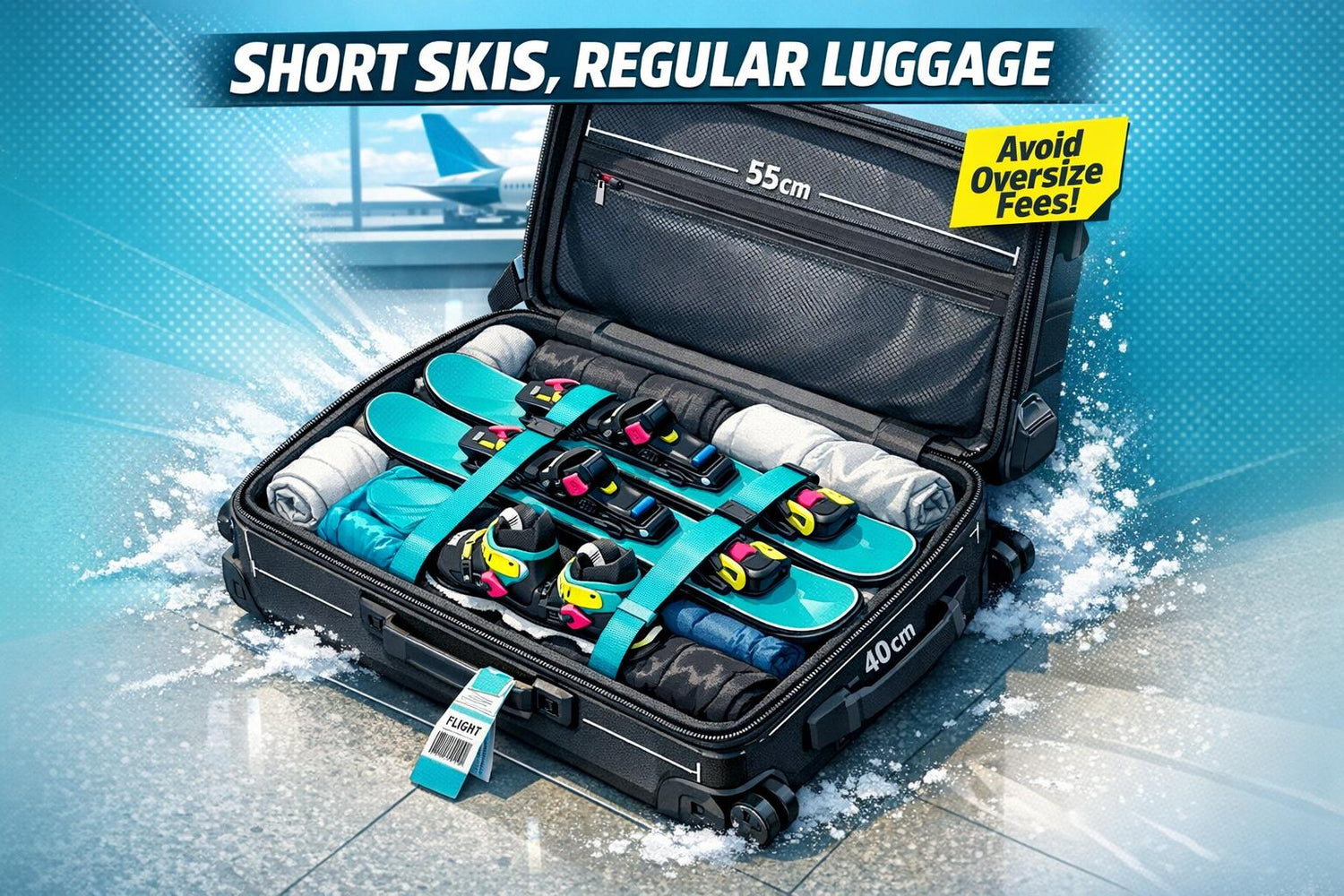
Oui, c’est possible ! Les skis courts comme les Snowfeet* Skiblades et Skiskates sont parfaits pour les voyages en avion. Contrairement aux skis classiques, qui dépassent souvent les limites de taille des compagnies aériennes et entraînent des frais de surdimension, ces modèles compacts tiennent dans des valises standard, ce qui vous permet d’économiser de l’argent et d’éviter les tracas. Voici pourquoi ils constituent un choix judicieux :
- Aucun frais de surdimension : les skis courts (44–120 cm) sont bien en dessous de la limite de 182 cm appliquée par les compagnies aériennes aux équipements sportifs.
- Rangement facile : ils tiennent dans des bagages ordinaires, sans avoir besoin de sacs de ski encombrants.
- Voyage sans stress : évitez les retards, la manutention des bagages surdimensionnés et la perte de votre équipement.
Les skis courts rendent les voyages en avion avec du matériel d’hiver simples, abordables et pratiques. Que vous vous rendiez dans une station de ski ou que vous profitiez d’une rapide session sur les pistes pendant un séjour en ville, ils sont faciles à transporter et à ranger.
Vous voulez éviter complètement la récupération des bagages ? Les Skiskates (44 cm) sont si compacts qu’ils peuvent tenir dans votre bagage cabine. Aucun frais supplémentaire, pas de sacs encombrants : prenez votre équipement et partez. :)
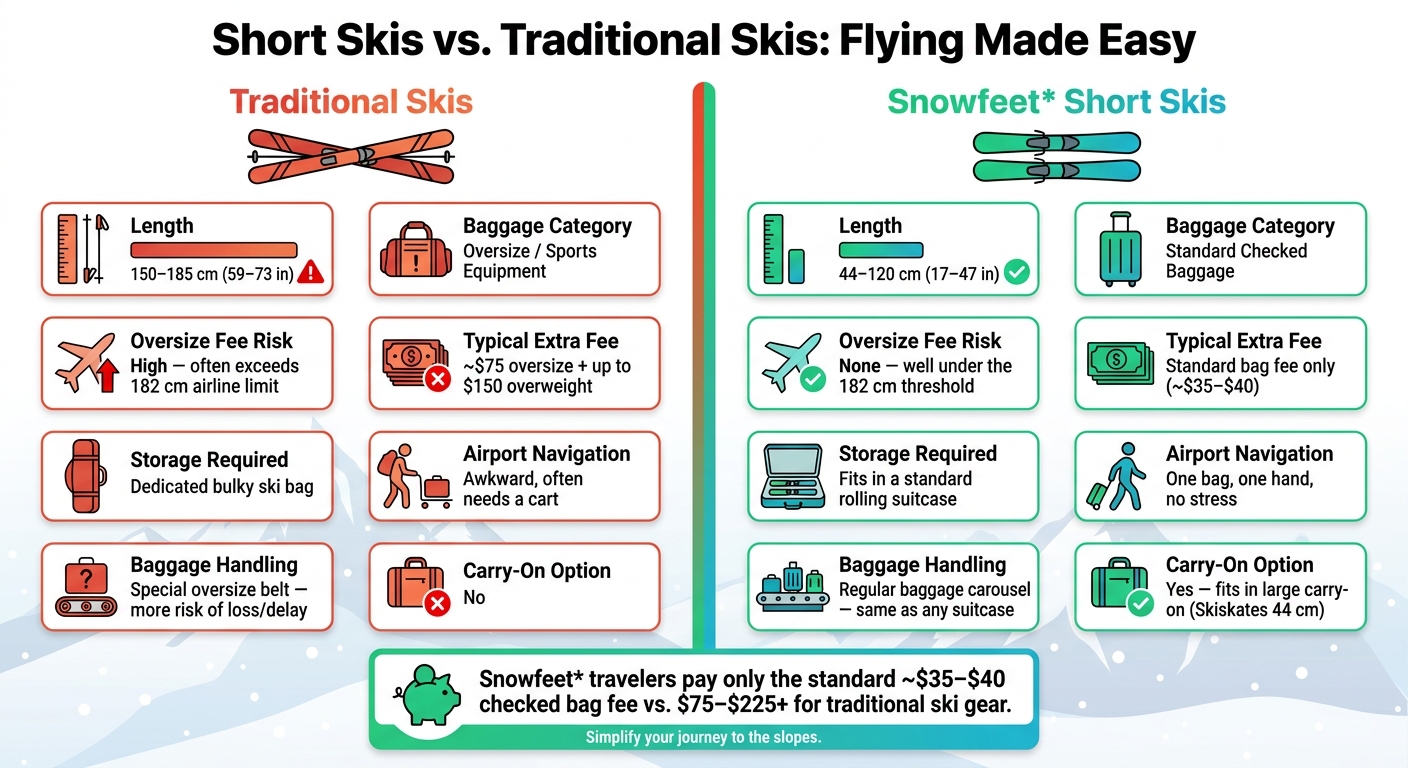
Skis courts contre skis traditionnels : comparaison pour les voyages en avion
Politiques des compagnies aériennes et intégration de Snowfeet*

Comment les compagnies aériennes gèrent les équipements de ski
Prendre l’avion avec du matériel de ski peut coûter cher. La plupart des compagnies aériennes considèrent les skis comme des équipements sportifs et, si vos skis sont plus longs que 182 cm (environ 72 pouces), vous devrez probablement payer des frais de surdimension d’environ 75 $ par trajet. Si l’on ajoute le risque d’avoir un bagage en surpoids (plus de 50 lb pour la plupart des compagnies aériennes nationales), vous pourriez devoir payer 50 à 150 $ supplémentaires. Aïe.
Les politiques varient selon les compagnies aériennes. Par exemple, Delta et JetBlue incluent les skis dans les bagages enregistrés standard, mais facturent tout de même des frais de surdimension pour tout équipement de plus de 182 cm. United ajoute des frais de 75 $ pour les bagages supplémentaires, tandis que Southwest se montre plus souple : la compagnie renonce aux frais de surdimension et compte les skis et les chaussures comme un seul article s’ils pèsent moins de 50 lb. C’est là que Snowfeet* fait la différence : leur format compact permet d’éviter entièrement ces restrictions, ce qui simplifie considérablement les déplacements.
Pourquoi les skis courts Snowfeet* sont plus faciles à transporter
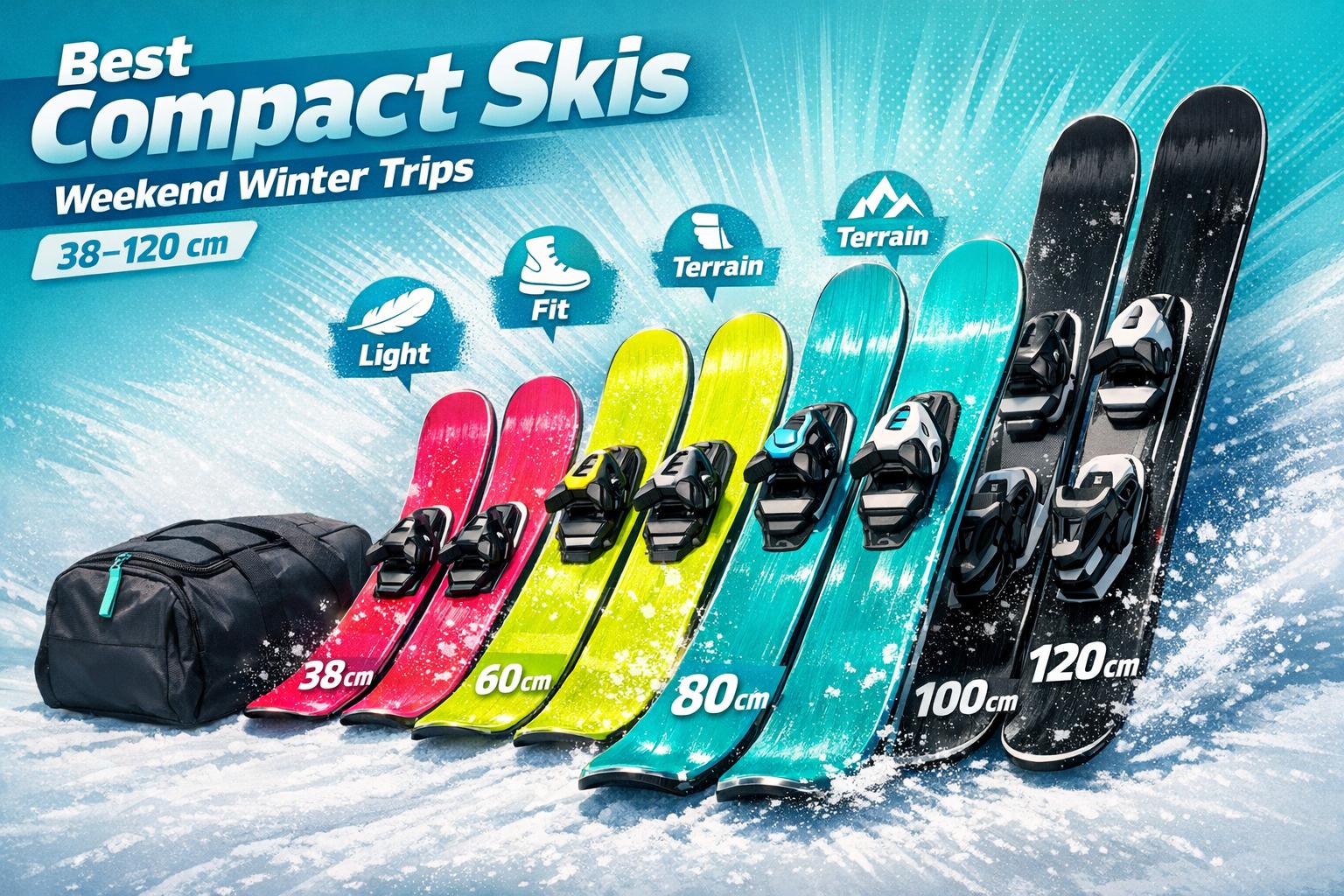
Snowfeet* facilite grandement la préparation de votre séjour au ski. Ses Skiblades les plus courts mesurent seulement 65 cm (~25 pouces), et même l’option plus longue de 120 cm (~47 pouces) reste bien en dessous de la limite de 182 cm pour les bagages hors format. Résultat : aucun frais supplémentaire et pas besoin de sacs à skis volumineux et spécialisés. L’équipement Snowfeet* est conçu pour simplifier votre voyage, de l’enregistrement jusqu’aux pistes.
Prenons les Skiskates Snowfeet*, par exemple. Avec seulement 44 cm (~17 pouces), ils se rangent facilement dans une valise classique à côté de vos vêtements. Une valise rigide standard de 65 litres pèse environ 8,4 livres, ce qui vous laisse 35 livres de marge sous la limite habituelle de 50 livres : largement assez de place pour l’équipement Snowfeet* et une semaine de vêtements d’hiver. En comparaison, les skis traditionnels nécessitent un sac séparé et lourd qui réduit rapidement votre franchise de poids.
Snowfeet* contre skis standard : comparaison côte à côte
Voici un aperçu rapide de la comparaison entre Snowfeet* et les skis traditionnels pour les voyages en avion :
| Caractéristique | Skis traditionnels | Snowfeet* Short Skis |
|---|---|---|
| Longueur typique | 150–180 cm (59–71 pouces) | 44–120 cm (17–47 pouces) |
| Catégorie de bagage | Bagage hors format / équipement sportif | Bagage enregistré standard |
| Risque de frais de bagage hors format | Élevé : dépasse souvent la limite de 182 cm | Aucun : bien en dessous du seuil |
| Rangement | Nécessite un sac à skis dédié | Se range dans une valise standard ou un sac à dos |
| Facilité de transport à l’aéroport | Encombrant, nécessite souvent un chariot | Aussi facile à transporter qu’un bagage classique |
Ce tableau le montre clairement : Snowfeet* change la donne pour tous ceux qui en ont assez des tracas et des coûts supplémentaires liés aux voyages avec des skis traditionnels.
Problèmes courants lors des voyages que Snowfeet* vous aide à éviter
Frais de bagage hors format et en surpoids
Les sacs à skis traditionnels dépassent souvent la limite de 62 pouces, ce qui entraîne des frais de bagages élevés. De plus, les compagnies aériennes ajoutent fréquemment des suppléments pour les équipements sportifs. Snowfeet* vous épargne ces tracas. Comme l’équipement se range parfaitement dans une valise classique, vous évitez les frais de bagage hors format, les suppléments pour équipements sportifs et les complications liées à la manutention. Et soyons honnêtes, l’équipement de ski encombrant n’est pas seulement coûteux : il est aussi pénible à transporter.
Bagages encombrants et tracas à l’aéroport
Traîner un énorme sac à skis dans un aéroport bondé n’a rien d’amusant. Ils sont encombrants dans les escalators, difficiles à manœuvrer et demandent souvent un effort supplémentaire ne serait-ce que pour aller d’un point A à un point B. Snowfeet* change la donne en se glissant dans une valise à roulettes ou un sac de voyage standard. Vous traversez ainsi l’aéroport comme pour n’importe quel voyage : un sac, une main, aucun stress.
Sacs à skis perdus ou retardés
Les housses de ski surdimensionnées passent souvent par des tapis réservés aux bagages nécessitant une manutention spéciale plutôt que par le carrousel à bagages habituel. Davantage de points de contact signifie plus de risques de retard, voire de perte. L’équipement Snowfeet* évite complètement cela en voyageant dans vos bagages enregistrés habituels. Votre sac reste sur le même tapis, arrive sur le même carrousel et suit le même processus que toutes les autres valises. Vous voulez avoir l’esprit encore plus tranquille ? Ajoutez un traceur Bluetooth comme un AirTag. Avec Snowfeet*, vous évitez les tracas des bagages surdimensionnés et profitez d’un voyage fluide et sans stress.
Comment ranger les skis courts Snowfeet* pour prendre l’avion
Ranger les skis courts Snowfeet* est un jeu d’enfant grâce à leur conception compacte. Avec un peu de préparation, vous pouvez facilement vous assurer que votre équipement arrive en toute sécurité et soit prêt à l’action.
Choisir le bon sac
L’un des grands avantages de l’équipement Snowfeet* est que vous n’avez pas besoin d’une housse de ski encombrante. Les Skiskates (44 cm) et les Skiblades (65 cm) tiennent parfaitement dans une valise à roulettes standard ou un sac polochon moyen. Même les Short Skis de 120 cm peuvent se glisser dans un grand sac polochon. Si vous craignez pour leur protection, une valise rigide est une excellente option : elle protège votre équipement sans ajouter de poids inutile.
Pour ceux qui aiment voyager léger, une valise à roulettes peut contenir votre équipement Snowfeet* et quelques jours de vêtements. Une fois votre sac choisi, il est temps de réfléchir à la protection de vos skis pendant le voyage.
Protéger vos skis courts pendant le transport
Vous n’avez pas besoin de matériaux d’emballage sophistiqués comme du papier bulle pour protéger vos skis. Enveloppez-les dans une couche intermédiaire ou votre pantalon de ski pour créer un coussin protecteur. Placez les skis enveloppés au centre de votre valise, puis rangez autour des vêtements plus souples comme les premières couches, les pulls ou les chaussettes. Cette disposition aide à absorber les chocs et les chutes éventuels pendant le transport.
« La clé d’un rangement efficace est de commencer par les objets les plus volumineux. Trouvez des moyens de remplir leurs recoins et décidez d’abord où ils seront rangés. » — Steven Reale, contributeur de PeakRankings
Voici une astuce de pro : utilisez votre casque comme espace de rangement supplémentaire. Glissez-y de petits objets comme des chaussettes, un tour de cou ou des sous-vêtements. Vous pouvez même y emboîter vos lunettes de ski pour gagner de la place et les protéger.
Tout faire tenir dans un seul sac
Une fois votre équipement bien sécurisé, concentrez-vous sur l’organisation du reste de votre sac. L’équipement Snowfeet* est suffisamment compact pour vous permettre de ranger tout — skis, accessoires et vêtements — dans un seul sac. Utilisez les poches latérales ou même votre parka de ski pour y glisser les petits objets.
Vous voulez éviter complètement les bagages enregistrés ? Les Skiskates (44 cm) et les Mini Ski Skates (38 cm) sont si compacts qu’ils peuvent tenir dans un grand bagage cabine. Vous pouvez ainsi voyager léger et éviter les tracas liés à l’attente au retrait des bagages.
sbb-itb-17ade95
Pourquoi Snowfeet* est la meilleure option pour les skieurs qui voyagent
Taille, poids et facilité de manipulation
Soyons réalistes : les skis traditionnels sont volumineux et lourds. La plupart des skis pour adultes mesurent entre 150 et 185 cm (59 à 73 pouces) et pèsent entre 8,8 et 13,2 lb par paire avec les fixations. Comparez cela aux Skiskates Snowfeet*, qui ne mesurent que 17,3 pouces (44 cm), ou aux Skiblades Snowfeet*, qui atteignent au maximum 47,2 pouces (120 cm). La différence est énorme ! Avec Snowfeet*, vous pouvez ranger tout votre équipement dans une seule valise à roulettes. Fini les frais de bagages hors format et les difficultés avec les sacs à skis encombrants.
Voyager avec Snowfeet* est un jeu d’enfant. Dans les navettes ou les voitures de location, nul besoin de vous soucier de la place : votre équipement tient parfaitement dans un coffre. Et à votre arrivée, vous n’aurez pas besoin d’un casier à skis ni d’un espace de rangement dédié. Un petit placard ou même un rangement sous le lit fera l’affaire. Pour les longues journées de voyage, cette simplicité peut vraiment tout changer.
Idéal pour des voyages hivernaux variés
Snowfeet* n’est pas réservé aux séjours au ski : c’est l’équipement idéal pour toutes sortes d’aventures hivernales. Que vous passiez un week-end à Denver, exploriez une ville enneigée avec une visite rapide sur les pistes ou rentriez chez vous pendant les vacances d’hiver, transporter des skis grandeur nature peut être fastidieux. Snowfeet* résout ce problème.
Grâce à leur conception compacte, vous pouvez ranger l’équipement Snowfeet* dans un bagage enregistré standard. Cela permet de partir spontanément sur les pistes pendant un déplacement professionnel ou une escapade en ville. De plus, ils sont performants sur les pistes damées, les petites collines et dans les snowparks, ce qui en fait un choix polyvalent pour les voyageurs occasionnels en hiver.
Comparaison complète pour les voyages
Snowfeet* ne facilite pas seulement les voyages : la marque les rend meilleurs. Voici une comparaison rapide avec les skis traditionnels dans des situations de voyage courantes :
| Scénario de voyage | Skis standard | Skis courts Snowfeet* / Skiskates |
|---|---|---|
| Déplacements dans l’aéroport | Sac long et encombrant nécessitant souvent un chariot | Tient dans une valise à roulettes standard : aucun souci |
| Place dans une voiture de location | Peut nécessiter un véhicule plus grand ou un coffre de toit | Se range facilement dans le coffre d’une berline |
| Rangement à l’hôtel | Nécessite un casier à skis ou un grand placard | Se range dans un placard standard ou sous le lit |
| Voyages polyvalents | Limité aux destinations axées sur le ski | Idéal pour les aventures en ville comme en station |
Pour les voyageurs qui préfèrent passer leur temps sur les pistes plutôt qu’à se débattre avec leur équipement, Snowfeet* offre une commodité inégalée. Que vous traversiez des aéroports, prépariez un voyage polyvalent ou cherchiez simplement à voyager léger, Snowfeet* rend votre trajet plus fluide du début à la fin.
Conclusion : prendre l’avion avec les skis courts Snowfeet*
Voyager avec un équipement de ski traditionnel peut être un vrai casse-tête, mais l’équipement Snowfeet* vous épargne ce stress. Comme l’explique l’autrice de récits de voyage Evie Carrick :
« Prendre l’avion est déjà assez stressant quand on n’a qu’un bagage cabine. Ajoutez-y une ou deux paires de skis et des chaussures… et le voyage peut vite devenir véritablement angoissant. »
Voici le principe : les skis traditionnels de plus de 182 cm entraînent d’importants frais de bagage hors format : 75 $ auxquels peuvent s’ajouter des frais de surpoids. En revanche, les Snowfeet* Skiskates (44 cm) et les Skiblades (65 à 120 cm) respectent les limites standard des bagages. Vous ne payez donc généralement que les frais habituels de bagage enregistré, soit 35 à 40 $. C’est clairement un avantage pour votre portefeuille et votre tranquillité d’esprit.
Mais il ne s’agit pas seulement d’économiser de l’argent. Les aspects pratiques du quotidien sont également beaucoup plus simples. Plus besoin de véhicule surdimensionné, de casier à skis ni de lutter avec un équipement encombrant à la récupération des bagages.
Que vous choisissiez l’ensemble Snowfeet* Skiskates à partir de 575 $ ou les skis courts de 120 cm à 775 $, vous bénéficiez d’un équipement conçu pour être pratique et performant. Ils se rangent parfaitement dans une valise à roulettes, ce qui facilite l’enregistrement et vous permet de vous concentrer sur l’essentiel : dévaler les pistes.
Les skis courts ne sont pas seulement une alternative : c’est une façon plus intelligente et sans tracas de voyager avec votre équipement d’hiver. Entre les économies réalisées et la praticité, ils rendent votre prochaine aventure beaucoup plus agréable.
FAQ
Les Snowfeet* Skiskates peuvent-ils être emportés en cabine ?
Les Snowfeet* Skiskates sont incroyablement faciles à emporter en voyage : ils mesurent seulement 17 pouces (44 cm) de long. Leur taille compacte leur permet de se glisser facilement dans la plupart des sacs à dos ou bagages cabine. Ils passent ainsi sans difficulté les contrôles de sécurité de l’aéroport, pour profiter des plaisirs de l’hiver sans transporter un équipement traditionnel lourd.
Les skis courts sont-ils considérés comme des équipements sportifs ?
Les skis courts, comme les Snowfeet* Skiblades et Skiskates, sont souvent considérés comme des équipements sportifs lorsqu’ils sont transportés en avion. Grâce à leur taille compacte, de 44 à 120 cm, ils peuvent généralement être enregistrés comme des bagages standard ou même emportés en cabine, selon les règles de la compagnie aérienne. Contrairement aux skis traditionnels, qui mesurent généralement entre 150 et 180 cm, l’équipement Snowfeet* est beaucoup plus facile à transporter. Ses dimensions réduites permettent de respecter les limites de taille et de poids de la plupart des compagnies aériennes, ce qui réduit le risque de frais de bagage hors format.
Quelle est la manière la plus sûre de ranger les Snowfeet* dans une valise ?
Pour emballer vos Snowfeet* en toute sécurité, enveloppez-les dans des vêtements doux comme des vestes ou des pulls. Cela les protège des dommages et permet de gagner de la place dans vos bagages. Les Skiskates, qui mesurent 44 cm de long, se glissent facilement dans une valise standard enregistrée. Pour des articles plus grands comme les Skiblades (65 cm) ou les skis courts (jusqu’à 120 cm), un grand sac de voyage ou une valise surdimensionnée est votre meilleure option. Veillez à sécuriser les fixations, à serrer les sangles et à couvrir les parties métalliques pour éviter les rayures.
Articles de blog associés
- Prendre l’avion avec des skis [2025] : règles des compagnies aériennes, frais et conseils d’emballage
- Prendre l’avion avec des skis en [2025] : règles des compagnies aériennes, frais et astuces d’emballage mis à jour
- Comment rendre les séjours au ski moins stressants et plus amusants
- Comment transporter des skis de fond : porte-skis pour voiture, sacs de voyage et astuces











Laisser un commentaire
Ce site est protégé par hCaptcha, et la Politique de confidentialité et les Conditions de service de hCaptcha s’appliquent.