
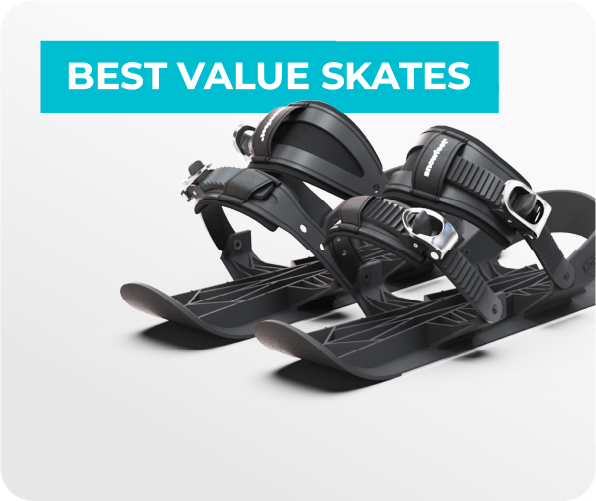
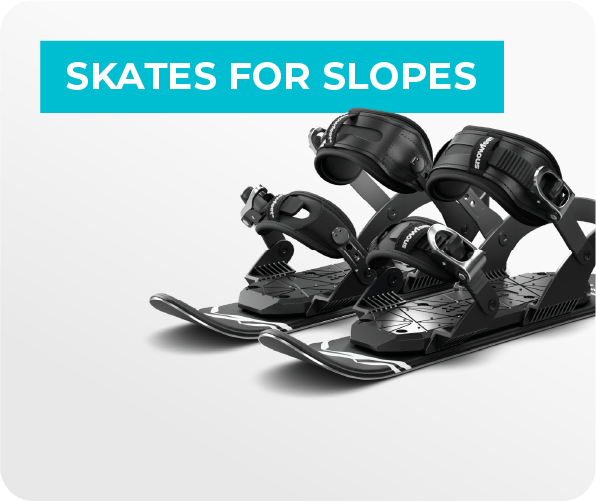
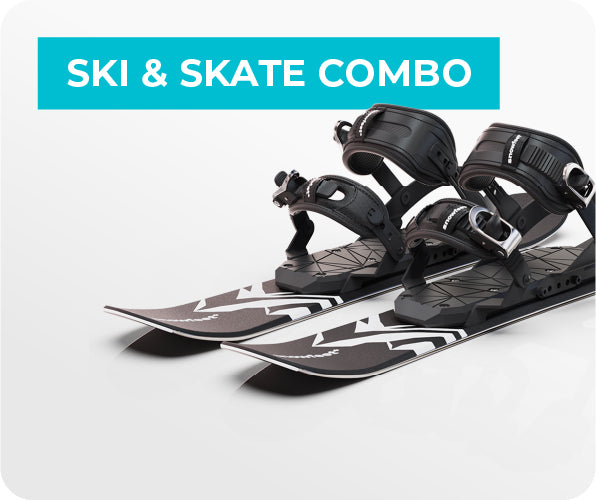
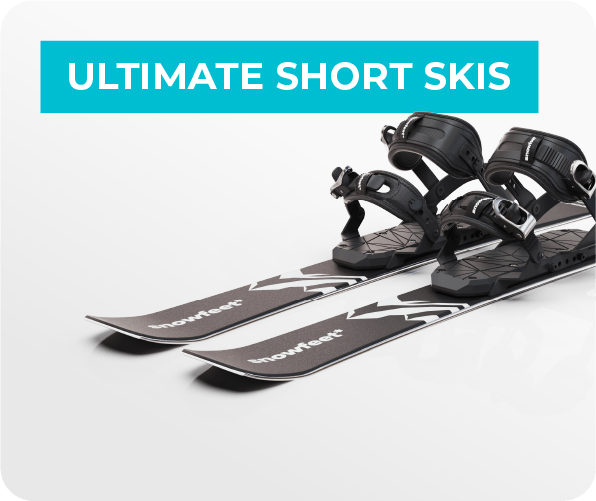
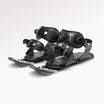
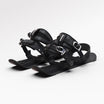
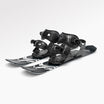
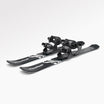
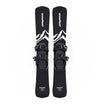
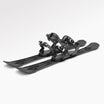
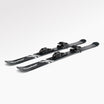
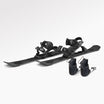
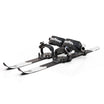
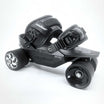
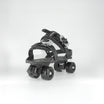
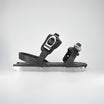
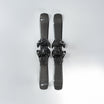
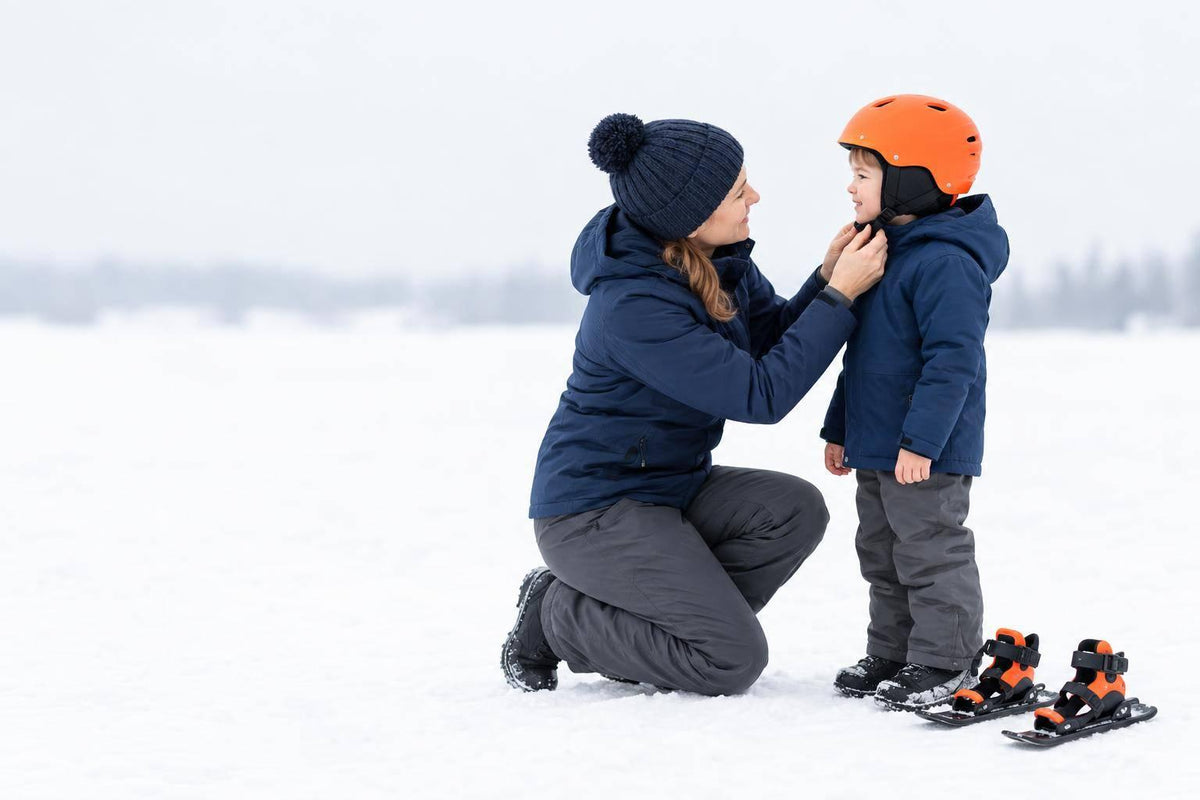
I’d skip mini ski skates if your child still needs help standing or walking. Short gear still takes balance. If your child can walk, bend their knees, and stop on cue without help, a brief try on flat snow may be an option.
Here’s what I’d check first:
- Readiness: Some wobbles are normal. Needing full support to stay upright means it’s time to wait.
- Fit: Snowfeet* MINI KIDS lists sizes US Kids 10–US Adult 6, with a foot length of 6.7–9.1 inches. Check the boot fit and model’s instructions, too.
- First try: Use flat, packed snow, a helmet, and close adult supervision. Start with standing and tiny steps - no pushing or towing.
- When to stop: Call it a day if your child feels scared, cold, tired, or keeps falling.
My rule: <u>balance first, glides second</u>. For downhill skiing, I’d choose lessons and children’s skis with professionally fitted release bindings - not treat a flat-snow glide as a green light for slopes.
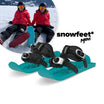
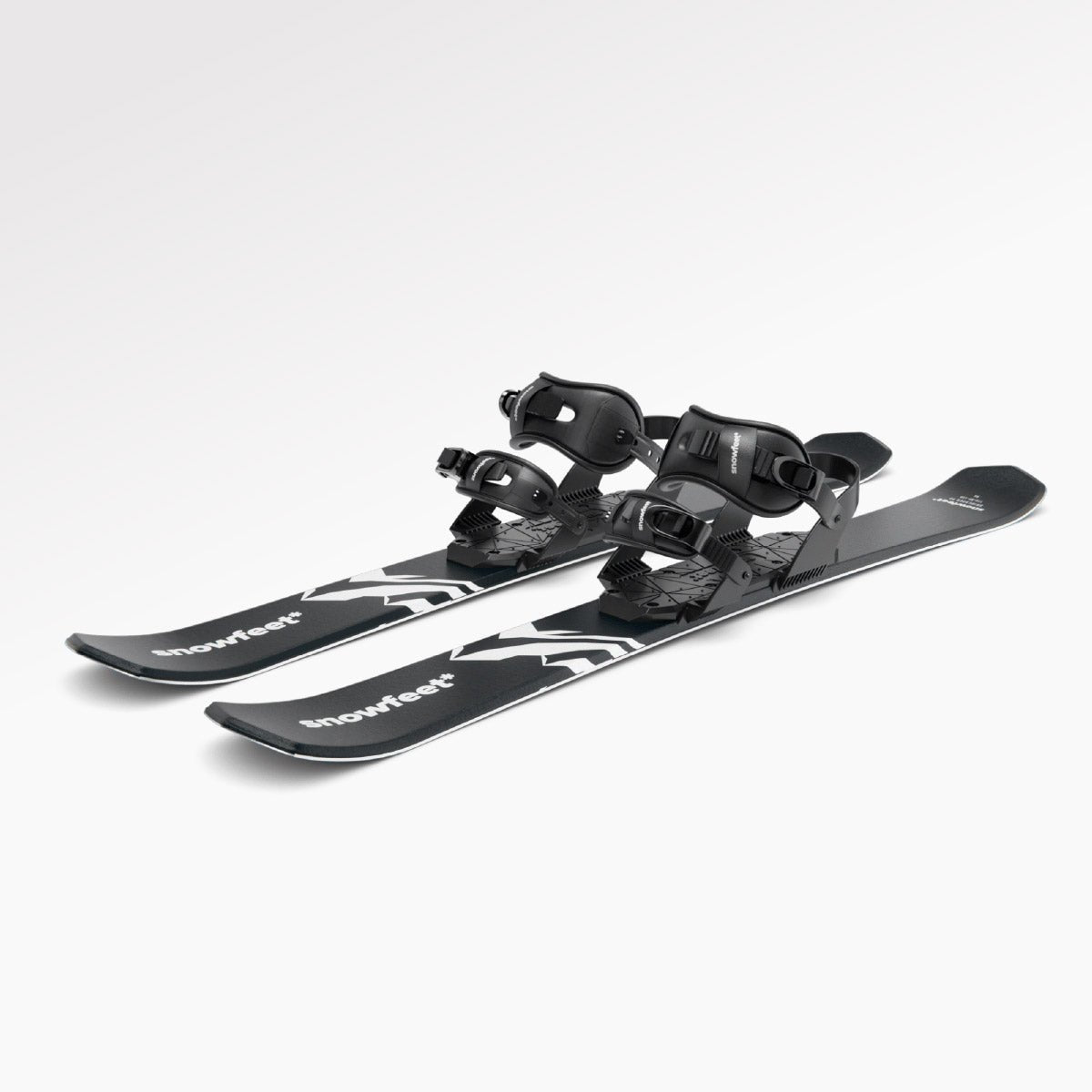
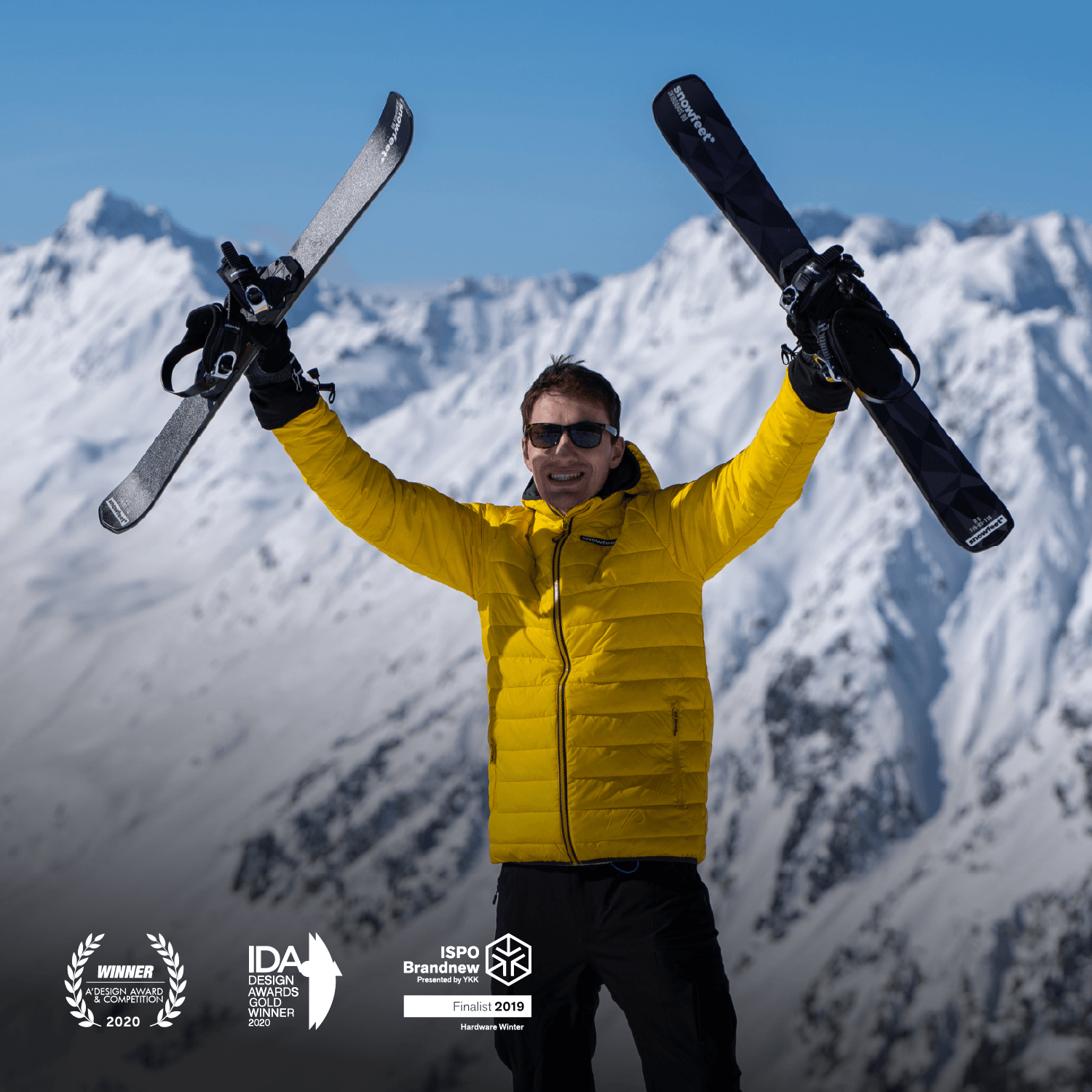
Snowfeet Mini hit the slopes | for Kids & Adults with small feet
Check Your Child’s Readiness
Mini Ski Skates for Kids: Try or Wait?
A proper Snowfeet* MINI KIDS fit doesn’t mean your child is ready to use them. First, check the fit against the product instructions. Then use these checks to tell normal beginner wobbles from trouble standing or walking steadily.
Check Standing, Stepping, and Following Directions
Without skates, ask your child to stand on their own for a few seconds, bend their knees a little, and return to standing without help. Watch for steady steps in all directions. Then check the same moves in winter boots.
Use “Red Light, Green Light” to check stop-and-go control. Have your child wear boots and a helmet, and stay close to you.
When to Try and When to Wait
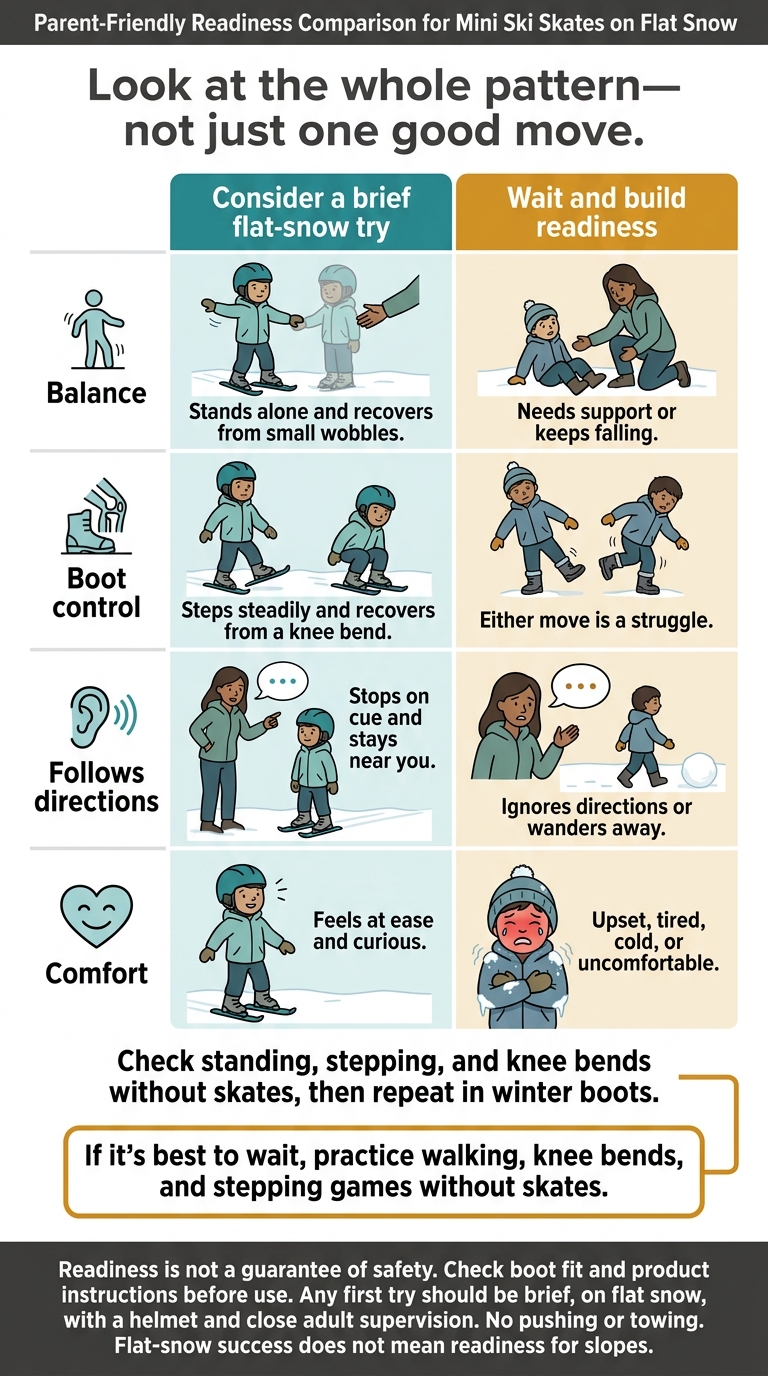
Look at the whole pattern - not just one good move.
- Balance: Try if your child stands alone and recovers from small wobbles. Wait if they need support or keep falling.
- Boot control: Try if they step steadily and recover from a knee bend. Wait if either move is a struggle.
- Follows directions: Try if they stop on cue and stay near you. Wait if they ignore directions or wander away.
- Comfort: Try if they feel at ease and curious. Wait if they’re upset, tired, cold, or uncomfortable.
If it’s best to wait, practice walking, knee bends, and stepping games without skates.
Check Snowfeet* MINI KIDS Fit and Features
If your child passes the readiness check, the next step is finding the right fit.
Check Shoe Size, Boot Fit, and Product Instructions
Snowfeet* MINI KIDS fits US Kids 10 to US Adult 6, EU 27–38, or feet 6.7–9.1 inches long (17–23 cm). Check the MINI KIDS sizing guide before buying, and make sure your child’s boots meet the model’s fit instructions.
The right size won’t fix poor balance, but it does determine whether your child can use the skates.
Choose waterproof winter boots with firm ankle support. Snowboard boots in sizes EU 27–33 also work; larger snowboard boots may be too wide. Stick to the MINI KIDS fit chart - other Snowfeet* models fit differently.
Set the boot fully on the footbed. Tighten the straps for a snug, comfortable fit, then check for heel lift or side-to-side movement. Don’t try to fix a loose or oversized boot by pulling the straps tighter.
Compare Mini Ski Skates With Children’s Skis
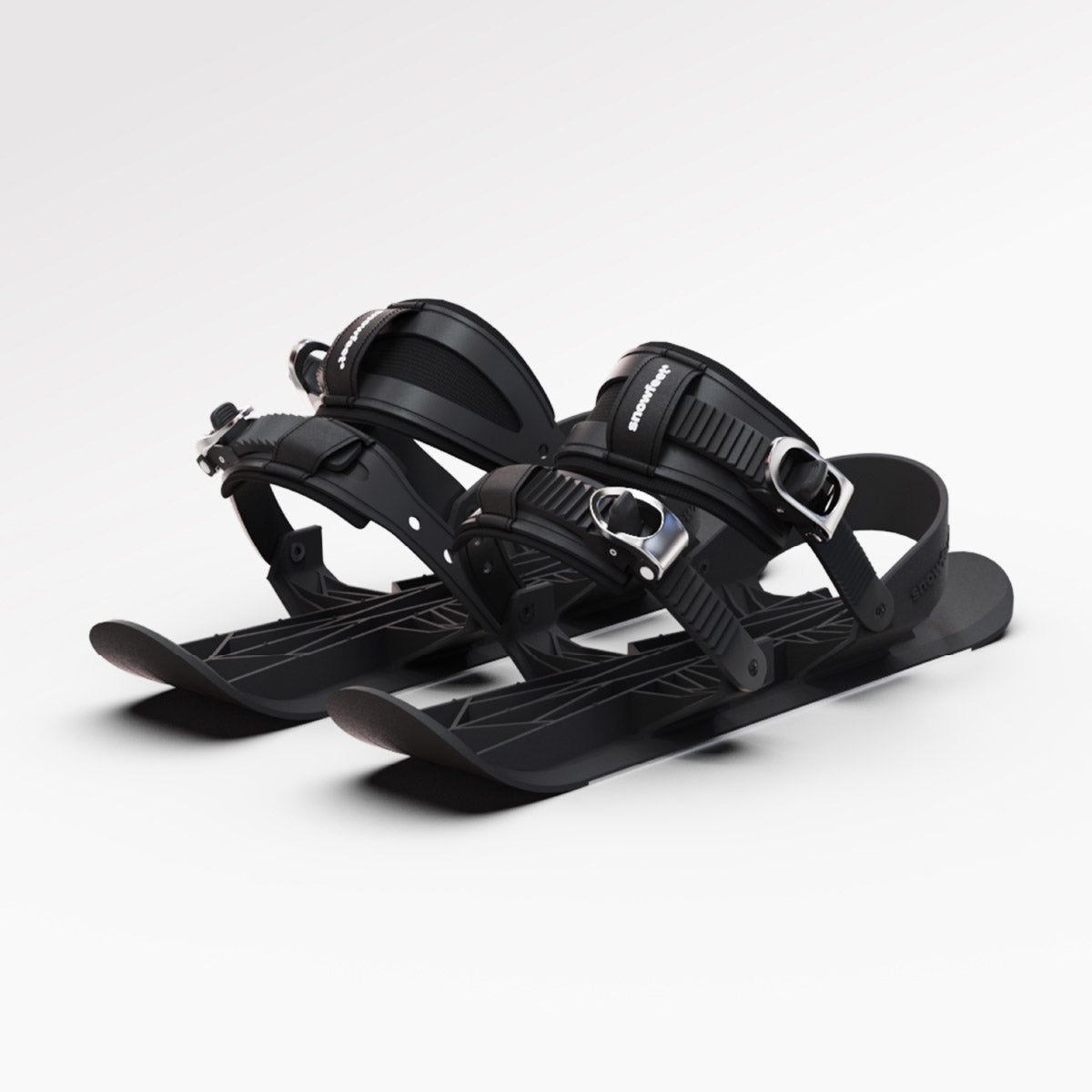
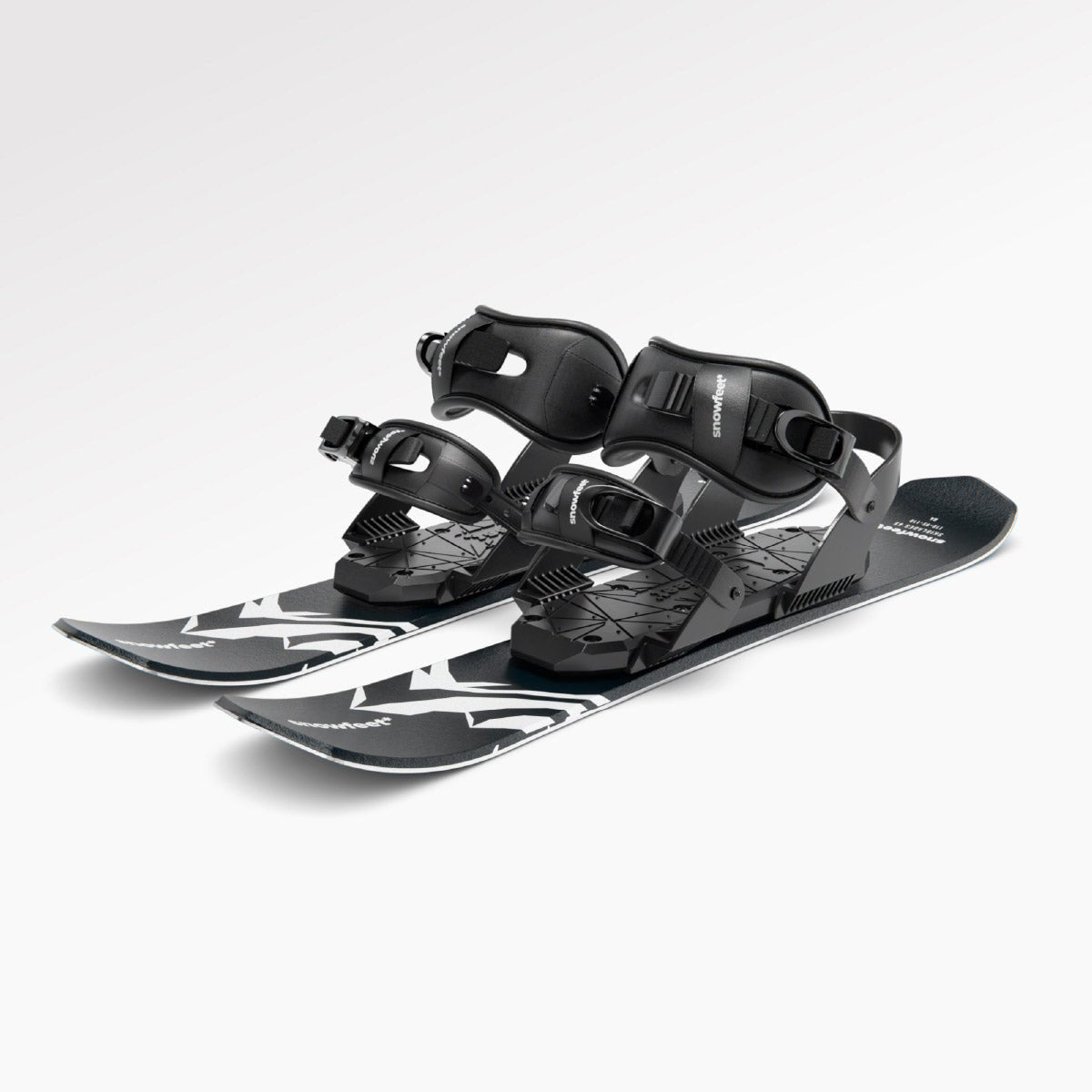
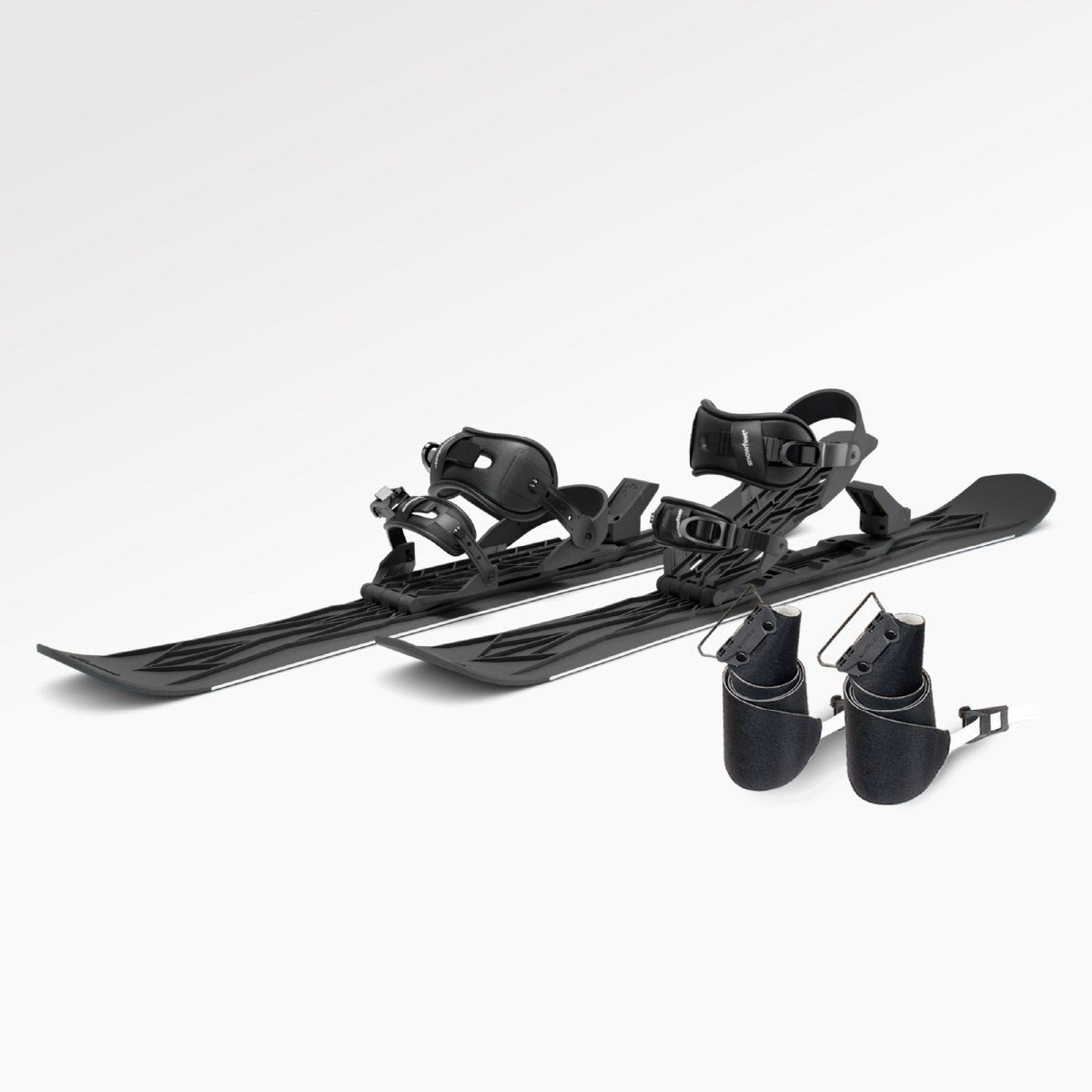
At about 2.5 lb per pair, MINI KIDS fits in a backpack. The short length lets children make small, skate-like movements during casual use on flat snow.
Fit helps determine whether MINI KIDS works as a toy for your child or is a poor match.
| Factor | Snowfeet* MINI KIDS | Standard children’s skis | Longer short-ski models |
|---|---|---|---|
| Carrying convenience | Compact; fits in a backpack | Bulky to carry | Moderate |
| Balance demand | High; requires skating balance | Moderate | Moderate |
| Best use | Casual, flat-snow glides | Lessons and downhill skiing | Groomed slopes |
For lessons or downhill skiing, children’s skis with professionally fitted release bindings make more sense. For short, casual glides on flat snow, Snowfeet* MINI KIDS is the simpler choice.
If readiness and fit check out, begin with supported standing on flat snow. Have your child wear a helmet, and keep an adult close by to supervise.
sbb-itb-17ade95
Keep the First Session Flat and Brief
If your child passed the readiness and fit checks, keep the first session short and on flat ground. Pick an open area with packed or groomed snow and little traffic. A level backyard, driveway, or resort beginner zone can work. Stay clear of ice, obstacles, slopes, and downhill runouts.
Check the bindings and the skates’ condition. Dress your child in waterproof layers and gloves, and stay within arm’s reach.
Start With Supported Standing and Tiny Steps
Start with regular winter boots. Let your child stand and take a few steps on the snow before putting on the skates. Then, support your child as you attach one skate at a time, following the manufacturer’s instructions. Keep this first try brief - the goal is to test balance safely with Snowfeet* MINI KIDS.
Practice standing still first. If your child needs full support to stay upright, stop there.
Add Gentle Glides Only When Steady
Once your child can stand steadily, try tiny steps. Wait until they can move with ease on flat ground - taking big steps, turning in place, or sliding one foot forward - before trying one very short glide on flat snow to check their comfort.
Let your child start the glide. Don’t push or tow them. Stop at the first sign of fear, repeated falls, cold, discomfort, or fatigue.
Conclusion: Try Snowfeet* or Build Balance First
Mini ski skates are an option only when your child can stand, walk, and follow directions without help. Boots and bindings must also fit as the manufacturer directs. If your child isn’t there yet, work on balance first.
Snowfeet* MINI KIDS works well for short glides on flat snow when your child is ready and wears a helmet. The lightweight design and simple setup suit short sessions. Adult supervision is still required, and shorter gear can’t replace balance or instruction.
Treat downhill skiing as a separate step, with suitable lessons and equipment. Success on flat snow doesn’t mean your child is ready for a slope.
FAQs
Does my child’s age matter as much as balance?
Readiness matters more than age. Many kids start around age 3 or 4, but balance, following directions, and feeling at ease on snow matter more than a birthday.
Look for signs that your child can balance on one foot for 5–10 seconds, squat and stand without tipping over, and take small slips in stride.
Snowfeet MINI KIDS give kids a shorter, lighter starting point than standard ski gear. They're easier to get the hang of, which can help learning go more smoothly.
What balance games can prepare my child for mini ski skates?
Help your child get ready for Snowfeet MINI KIDS with games that build balance and confidence. Play tag or set up an obstacle course to see how well they coordinate their movements.
On flat ground, have them stand on one foot for 5 to 10 seconds, squat and stand back up, or march in place. A game of red light, green light helps them practice stopping and following cues.
On flat snow, try side-stepping and shuffling so they get used to the movements they’ll use on mini ski skates.
What if my child’s boots slip despite matching the size chart?
If your child’s boots slip, the fit is not safe for use. At home, strap on the Snowfeet MINI KIDS. Have your child stand and bend their knees while you check for shifting, rocking, or twisting.
Make all manual binding adjustments at home. Aim for a snug fit that doesn’t pinch. If the boots still slip, check that they provide strong ankle support.


Jätä kommentti
Tämä sivu on suojattu hCaptcha-tunnistuksella, ja hCaptchan tietosuojakäytäntöjä ja käyttöehtoja sovelletaan.