



















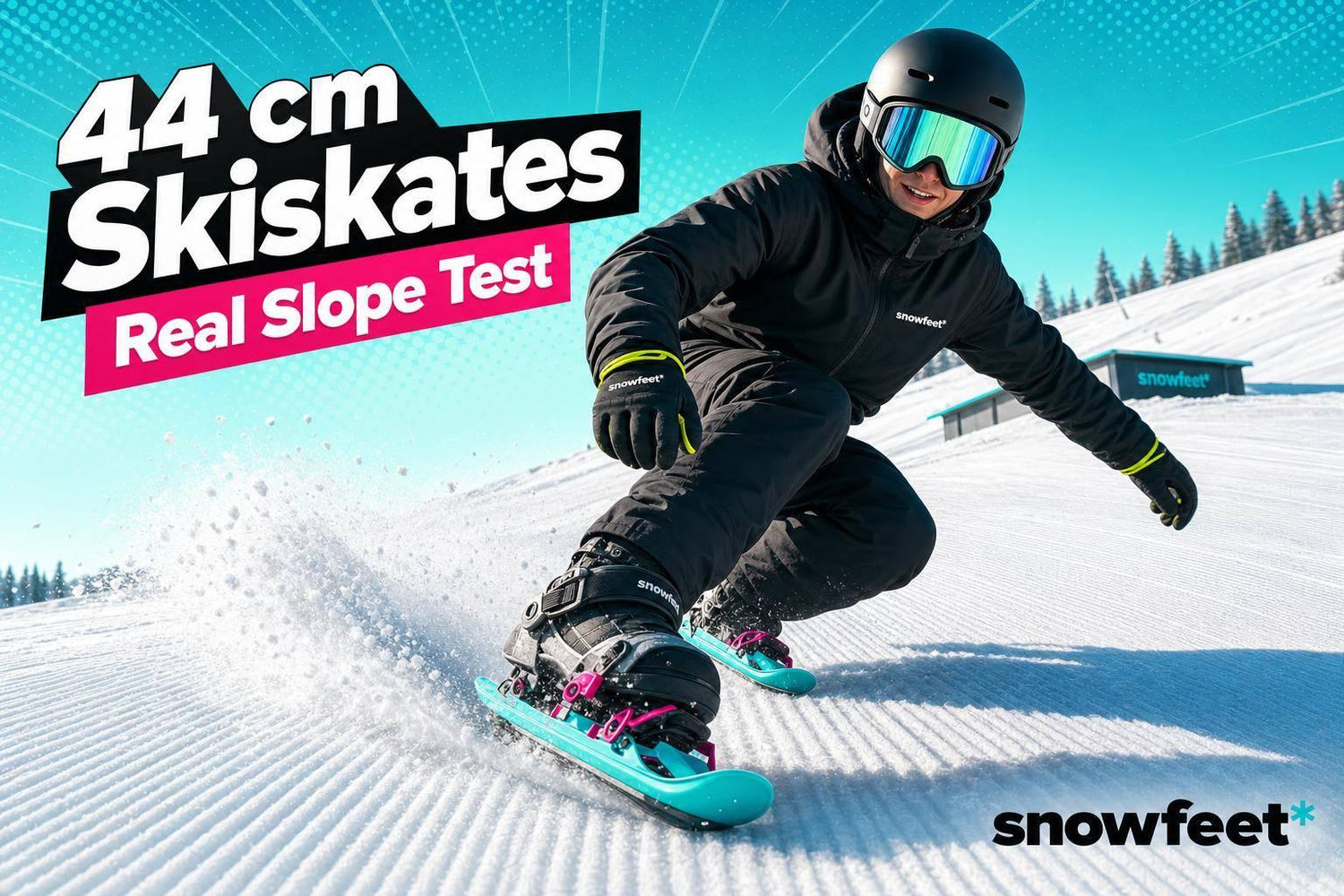
Short answer: yes - if you want a fun, compact setup for groomed runs and small park laps, but no - if you want speed, chop control, or powder help.
I came away with a pretty simple take after 4 days, 3 riders, and about 20 hours on snow: the 44 cm Snowfeet* Skiskates are at their best on green and blue groomers, in tight turns, and on small features. They’re easy to carry, easy to stash, and less intimidating than full skis. But once speeds push past about 25 mph, or the snow gets rough, their limits show up fast.
If you’re deciding between the 44 cm Skiskates and longer Snowfeet* options, here’s the plain-English version:
- Buy the 44 cm if you want the smallest setup, skate-like turns, and backpack-level portability
- Pick 65 cm if you want a bit more calm underfoot
- Pick 99 cm if you want the best all-around resort option
- Pick 120 cm if you want the closest feel to normal skis
Snowboarder tries Snowfeet* | Which Snowfeet* Short Ski is the Best? | Snowblades 44, 65, 99 Review
Quick Comparison
| Model | Best For | Main Upside | Main Downside | Starting Price |
|---|---|---|---|---|
| 44 cm | Groomers, park, travel | Smallest and easiest to carry | Less calm at speed | $460 |
| 65 cm | Beginner/intermediate resort use | More support underfoot | Less skate-like feel | $590 |
| 99 cm | Mixed resort riding | Better balance of fun and control | Less portable than 44 cm | $690 |
| 120 cm | Short-ski feel with more control | Most ski-like ride | Highest price, more bulk | $950 |
My take in one glance
- Best boot match: snowboard boots
- Best terrain: groomed runs, rollers, boxes, small jumps
- Weak spots: powder, crud, steep fast runs
- Learning curve: short for skaters and snowboarders
- Worth it? Yes, for the right rider :)
If you want a playful slope tool that fits your trip instead of taking over your trip, the 44 cm makes sense. If you want one setup for almost everything on the mountain, I’d go longer.
Test Setup and Slope Conditions
We tested over 4 full days at a Colorado resort on green, blue, and black runs, plus a small park. Each day meant about 5 hours on the hill. Roughly two-thirds of that time went to the 44 cm Skiskates. The rest was split between the Snowfeet* Skiblades 99 cm and a standard pair of alpine skis, so the comparison stayed direct and fair.
The routine stayed pretty steady. We started on greens, moved to blues, and wrapped with afternoon laps once the snow got chopped up. That matters, because short skis can feel one way on smooth morning groomers and like a whole different animal by 2:00 p.m. :) It also helped show how much rider skill and boot choice change the ride.
Rider Profiles Used in This Review
Three riders tested the 44 cm, and each brought a different point of view:
- Rider 1: intermediate skier, comfortable on blues and occasional easy blacks
- Rider 2: experienced snowboarder new to skiskating
- Rider 3: beginner with mostly magic-carpet and green-run experience
That mix made the results more useful. You’re not just getting one strong skier’s take.
Boots, Bindings, and Setup Notes
We tested all three boot setups:
- alpine ski boots with ski bindings
- medium-flex snowboard boots with Snowfeet-compatible bindings
- regular insulated winter boots with the adjustable skiskate bindings
Ski boots gave the best edge hold and speed control. No surprise there. But they also felt stiff, heavy, and kind of annoying for a laid-back day on the mountain.
Snowboard boots hit the sweet spot. They gave enough support for solid edge control, felt familiar for the snowboarder in the group, and were much easier to walk in.
Regular winter boots were the easiest on your feet off the snow. On snow, though, they felt loose. They worked for slow, casual laps, but lower ankle support made the skiskates feel twitchy on firmer sections.
Snow and Terrain Conditions
The test included:
- morning corduroy on green and blue runs
- refrozen hardpack on shaded blue sections
- chopped-up afternoon snow on busier runs
- small terrain-park features like rollers, a low box, and a couple of small jumps
One session also added a short section of untracked soft snow off the side of a groomed blue, just to see where the 44 cm started to tap out.
That soft-snow stretch said a lot. A few inches of ungroomed powder made them sink and get knocked off line. The 44 cm is built for groomed and lightly variable terrain, not powder days.
Those conditions set up the real question: how the 44 cm actually rides on the hill.
sbb-itb-17ade95
How the 44 cm Skiskates Perform on Resort Slopes
Learning Curve, Turning, and Stopping
The 44 cm Skiskates feel a lot like skating from your first few turns. If you already skate or snowboard, there’s a good chance they’ll make sense fast. The movement is similar: quick weight shifts, edging, and tight footwork.
In our test, the skater and snowboarder felt fine on green runs after 1–2 laps. Blue runs started to feel natural within 1–2 hours. The intermediate skier felt fully dialed in by midday.
Turning is more about quick pivots than long carved turns. You move your feet under your hips with almost no swing weight, which makes tight turns and fast edge changes feel natural once you stop trying to ski them like full-length skis. The full steel edges hold well when you tip them over.
Stopping comes down to two solid options:
- A skidded hockey-style stop with strong edge pressure on the downhill foot
- Short zig-zag turns across the fall line to scrub speed
Both work well at resort speeds. The big thing is stance: stay centered. If you lean back, the 44 cm punishes you fast. It’s a short platform, and it doesn’t forgive a back-seat stance. Once that part clicks, the next limit shows up when speed goes up.
Stability, Speed, and All-Day Comfort
On fresh morning groomers at 10–20 mph, the 44 cm Skiskates feel more planted than you might expect. Their short length makes line changes easy, which is great when you’re slipping around slower traffic.
Once you get above ~25 mph - like on steeper blues or easy blacks - the short running length starts to show. You get less edge contact, so there’s less ski on snow to calm things down. The ride feels lighter and less settled than it does on 99 cm Skiblades or full-length skis.
Afternoon chop is where the trade-off hits home. The short tips don’t smooth over ruts like longer skis can, so you have to do more of the work with your knees and ankles. It’s doable, but yeah, it asks more from your body than cruising the same run on longer gear.
For all-day comfort, snowboard boots are far better than soft winter boots. And that compact, nimble feel carries right into small park features.
Park Use and Where the 44 cm Falls Short
That same quick, low-swing feel is a big part of why the 44 cm is fun in the park. On boxes and wider rails, there’s less tip and tail to catch, which helps on takeoffs and landings. They feel fast and precise on boxes and rails, and spins come easier than they do on longer skiblades.
On small jumps - beginner tabletops, rollers, and side hits - the lower swing weight makes spins up to 360° easier than they would be on 99 cm or 120 cm skiblades. Riding switch is forgiving too, especially at park speeds. The short platform makes weight shifts simpler and cuts down on edge catches when you land.
The weak spots are pretty clear too. On long, fast groomers, speeds above the moderate range bring chatter and a nervous feel that longer gear handles with less drama. In rough snow or heavy crud, the short length has a hard time smoothing out uneven surfaces, so your legs end up doing a lot more work.
Think of the 44 cm as a resort-play tool. It shines on groomers, side hits, and small park features. It’s not the pick for high-speed carving.
Next: why the 44 cm is easier to carry, store, and live with than longer skis.
Portability, Storage, and Model Comparisons
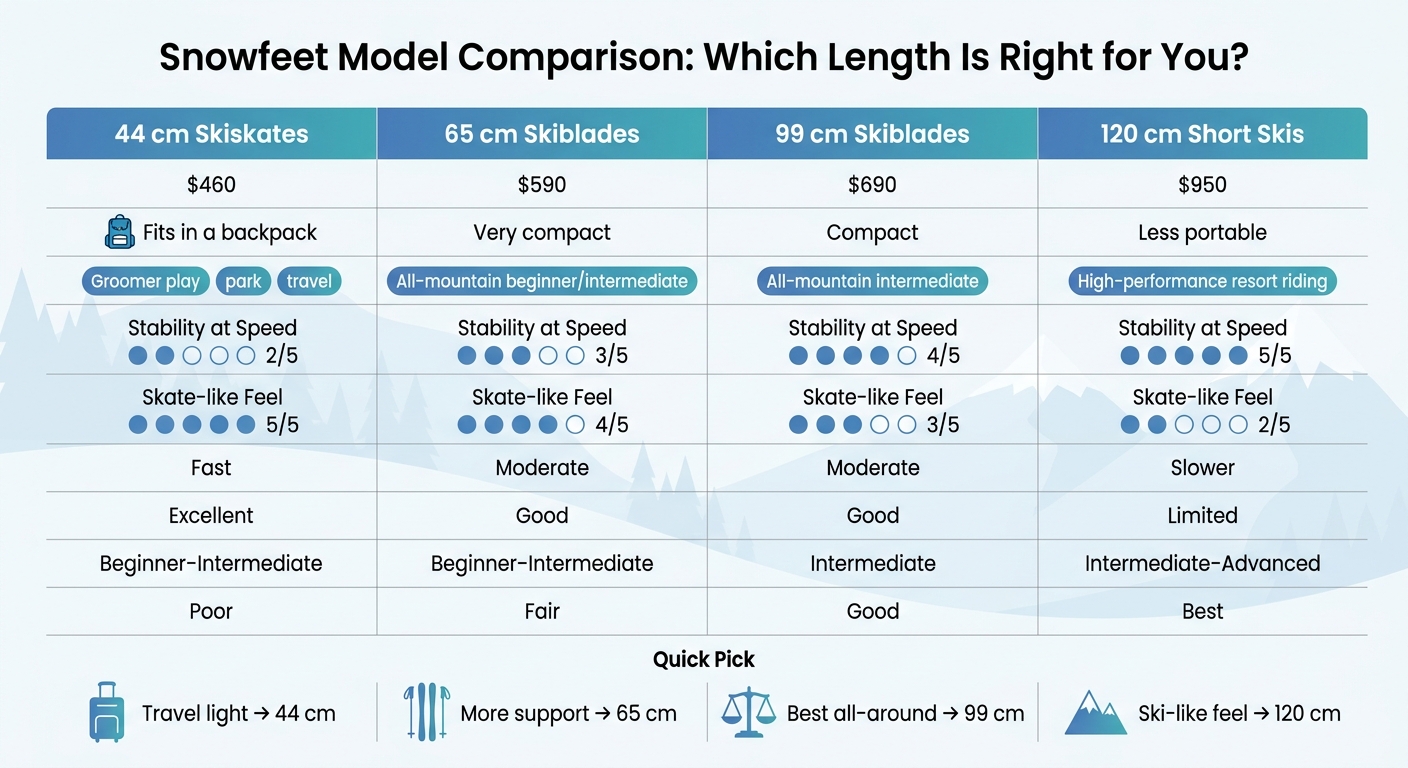
Snowfeet Skiskates & Skiblades: Model Comparison Guide
After ride feel, the next thing people usually care about is simple: how easy are these to live with?
Why the 44 cm Is Easier to Store and Travel With
At 44 cm (17.3 in), these Skiskates are small enough to fit in a backpack. That alone changes a lot. They’re far easier to store and travel with than a full pair of long skis, which is great if you like to keep your setup light and simple.
For trips, the 44 cm size is much easier to pack than standard skis. You skip a lot of the usual hassle, like bulky ski bags or roof-rack setups. At home, they’re just easy. A closet shelf, space under a bed, or a gear bag will usually do the job.
44 cm vs Snowfeet* 65 cm, 99 cm, and 120 cm
The Snowfeet* lineup covers a few different riding styles. The 44 cm is the smallest and most playful of the bunch. As the length goes up, you get more stability, better carving, and better soft-snow use. The flip side? You lose some of that quick, skate-like feel, plus some of the easy, toss-it-in-a-backpack appeal.
| Feature | 44 cm Skiskates | 65 cm Skiblades | 99 cm Skiblades | 120 cm Short Skis |
|---|---|---|---|---|
| Portability | Fits in a backpack | Very compact | Compact | Less portable |
| Best use case | Groomer play, park, travel | All-mountain beginner/intermediate | All-mountain intermediate | High-performance resort riding |
| Starting price (USD) | From $460 | From $590 | From $690 | $950 |
That’s the main trade-off. More length gives you more stability, while the 44 cm keeps the easiest carry-and-store setup.
The 65 cm Skiblades are the natural next move if you want more edge contact without giving up much portability. The 99 cm hits a nice middle ground for riders who want to handle most resort terrain with confidence, including some off-piste. The 120 cm is aimed at riders who want the most ski-like feel in a shorter format.
44 cm vs Long Skis and Other Short-Ski Brands
Long skis still come out on top for high-speed carving, deep powder, and long, fast runs.
But for a lot of casual resort riders, the 44 cm Skiskates offer something that standard skis and most short-ski rivals don’t: real portability and a learning curve that feels less intimidating.
| Feature | 44 cm Skiskates | Long Skis | Salomon Snowblades | Bigfoot / Figl / ODR |
|---|---|---|---|---|
| Learning curve | Fast | Slower | Moderate | Moderate |
| Terrain range | Groomers, park, travel | Full mountain | Groomers, park | Groomers, park |
| Travel friendliness | Backpack-portable | Least portable | Least portable | Least portable |
| Park use | Excellent | Limited | Good | Good |
| Skill-level fit | Beginner to intermediate | Intermediate to advanced | Intermediate | Intermediate |
That trade-off matters most when you’re figuring out who the 44 cm is best for. It won’t beat long skis everywhere. That’s not the point. The point is that it’s easy to carry, easy to stash, and easy to bring along without turning your trip into a gear puzzle.
Who Should Buy Them and Final Verdict
Best-Fit Riders and When to Choose a Longer Model
Based on the slope test, the 44 cm Skiskates make the most sense for riders who stick to groomed green and blue runs and want a small, skate-like setup. In testing, snowboarders and skaters picked them up the fastest. Their balance and edge control carried over well. True beginners also had an easier time with them because they felt less intimidating than full-length skis. And, yeah, the easy storage and travel side is a big plus too.
If you want more stability or plan to ride on harder snow, go longer. The same goes if you spend a lot of time on steeper black runs, want stronger edge hold on firm snow, or expect to ski in deeper snow.
Here’s the simple version:
- 65 cm: more stability
- 99 cm: the best middle-ground option
- 120 cm: the closest feel to regular skis
Are the Snowfeet* Skiskates 44 cm Worth the Price?
At $460–$690, the 44 cm model costs less than many full ski setups. If you ride at resorts often, it can also beat paying rental fees over and over. For casual riders who care about convenience and fun on groomers, that price can make a lot of sense.
On the flip side, if you only ski once every few years, or if you care most about speed and stability, rentals or a longer Snowfeet* model may be the better call.
Conclusion: Key Takeaways From This Slope Review
After four days on groomers, park features, and chopped snow, the verdict is pretty clear. The 44 cm Skiskates do what they promise on groomed slopes. They’re small, easy to pack, and work with boots many riders already have. That’s a nice combo.
But they do have limits. Powder, higher speeds, and rough, mixed-up terrain all show where the short platform gives up ground. That trade-off is the whole story here: great portability and playful control, but less stability and a smaller speed window.
Verdict: worth it for groomer-focused riders who want portability and playful control. Use the 44 cm page if you want the shortest and most portable option. If you want more stability, compare the longer Skiblades. For the 44 cm model, use the product page below. Browse the Snowfeet* skiblades collection to compare the 65 cm, 99 cm, and 120 cm options side by side.
FAQs
Can I use them all day?
Yes. Snowfeet Skiskates can feel comfortable all day because you use flexible snowboard boots instead of stiff plastic ski boots. That usually means less foot pain and less fatigue.
They’re also lightweight, so your legs don’t work as hard. And since they’re easy to carry, it’s much simpler to walk around the lodge or resort without that clunky ski-boot shuffle :)
Are they good for first-timers?
Yes, Snowfeet Skiskates are a solid pick for first-timers. In many cases, they’re easier to learn than long skis.
Their short 44 cm length makes them easy to turn and control. That also helps prevent crossed tips, which can drive beginners nuts.
The movement tends to feel natural, so a lot of people start to feel comfortable after just a few hours. Another nice perk: they work with regular winter boots or snowboard boots, so you can skip those stiff, heavy rental ski boots. Much nicer on your feet :)
Should I get 44 cm or a longer Snowfeet* model?
It depends on your riding goals.
The 44 cm Skiskates are best for beginners and riders who want a playful, skating-like feel. They offer the most maneuverability and are the easiest to carry around.
If you want more stability, more speed, or stronger carving, go longer. The 65 cm and 99 cm Skiblades give you a nice middle ground between agility and stability, while the 120 cm Short Skis feel closest to regular skis but still stay compact.
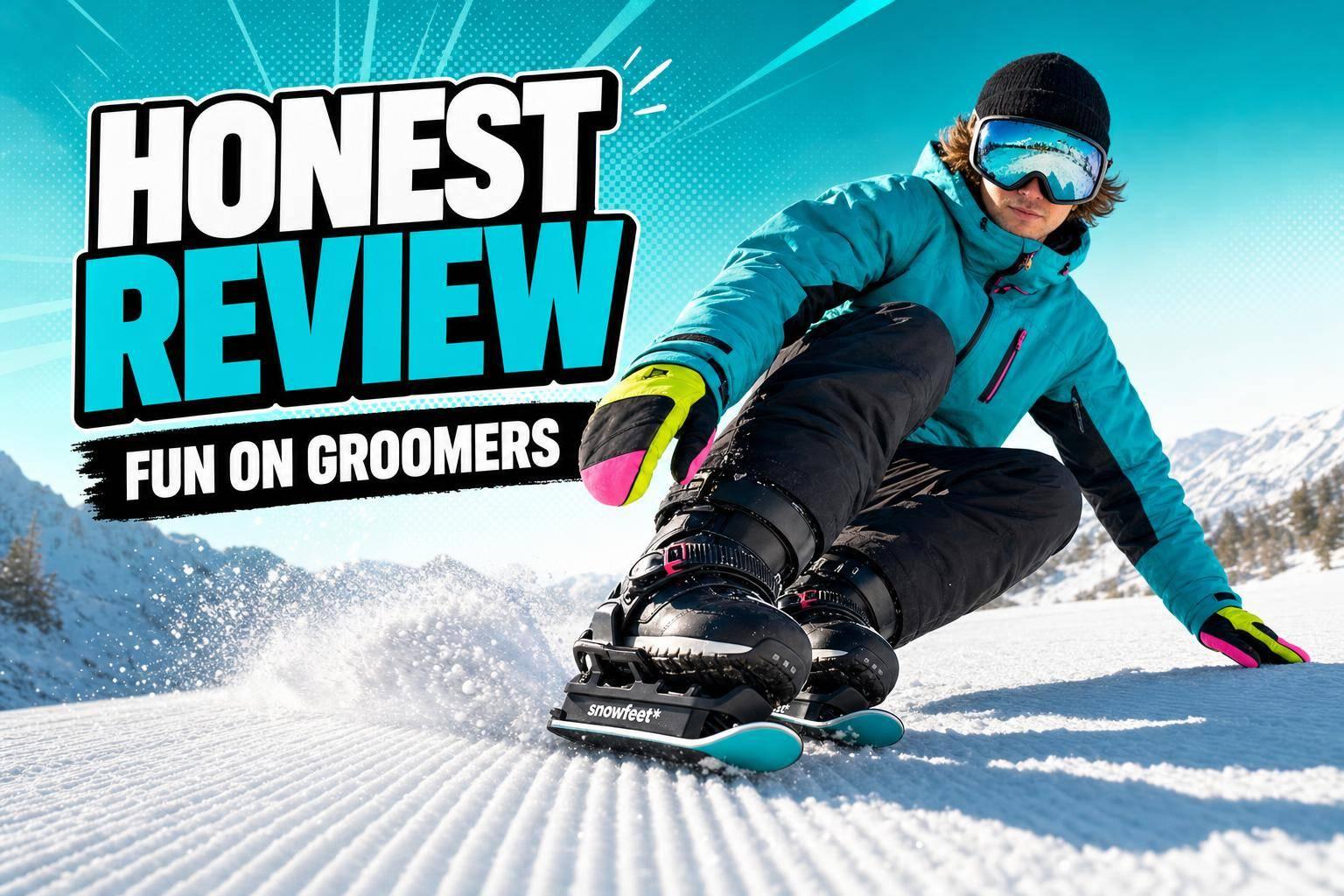











Jätä kommentti
Tämä sivu on suojattu hCaptcha-tunnistuksella, ja hCaptchan tietosuojakäytäntöjä ja käyttöehtoja sovelletaan.