



















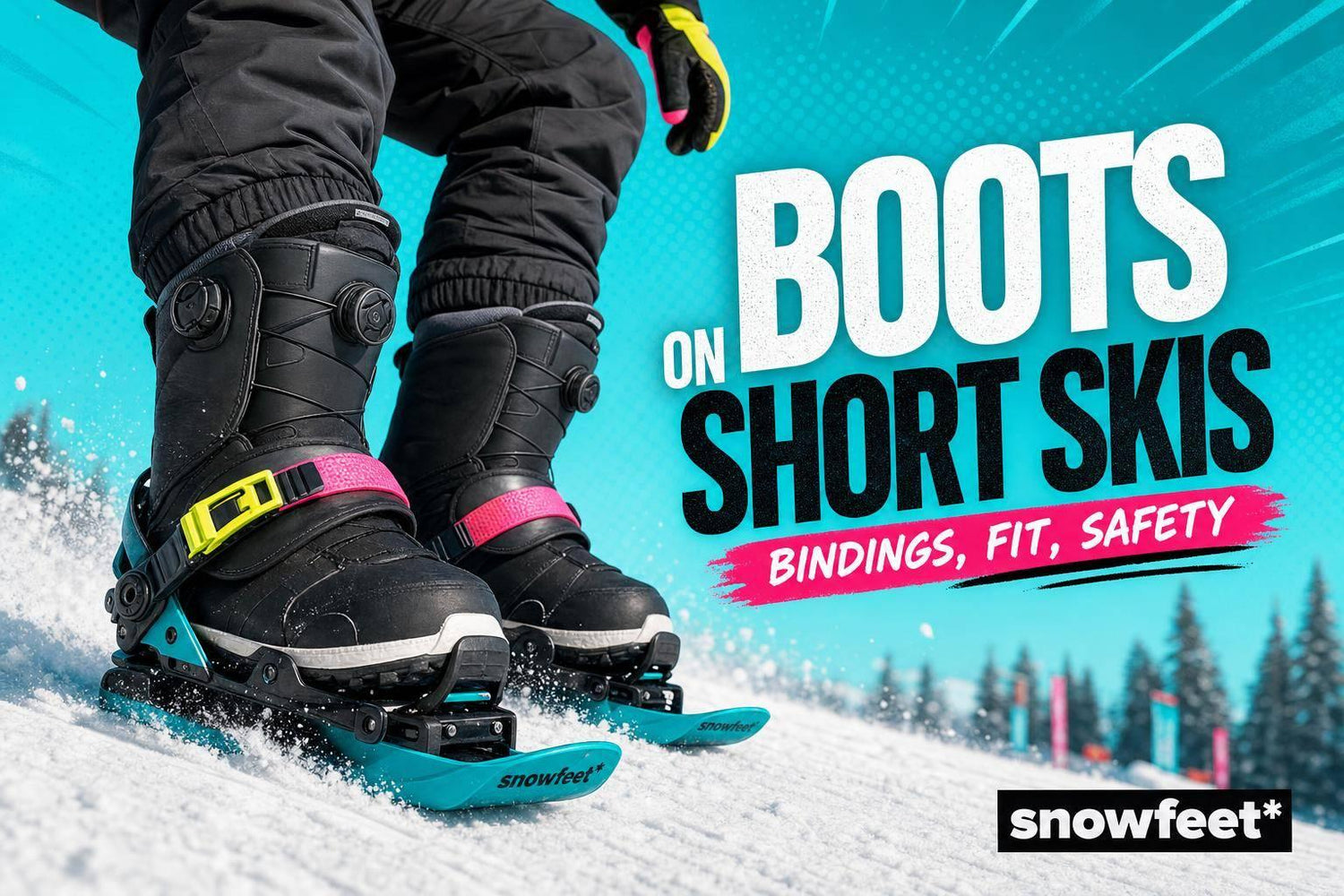
Yes - but only if the short skis use bindings made for snowboard boots. Ski length doesn’t decide this. The binding does.
If I had to boil the whole article down into a few fast points, it’d be this:
- Snowboard boots work with strap or snowboard-style bindings
- They do not work with alpine ski bindings
- 44 cm to 65 cm skis feel more playful
- 99 cm to 120 cm skis feel more stable
- Some short skis use non-release bindings, so resort rules matter
- Boot size still matters, especially if you wear about US 12–14.5
So, if you already own snowboard boots, you may be able to skip buying ski boots. That can save you $200+ to $600+, depending on what you’d have bought. It also means warmer feet and less of that stiff robot walk in the parking lot :)
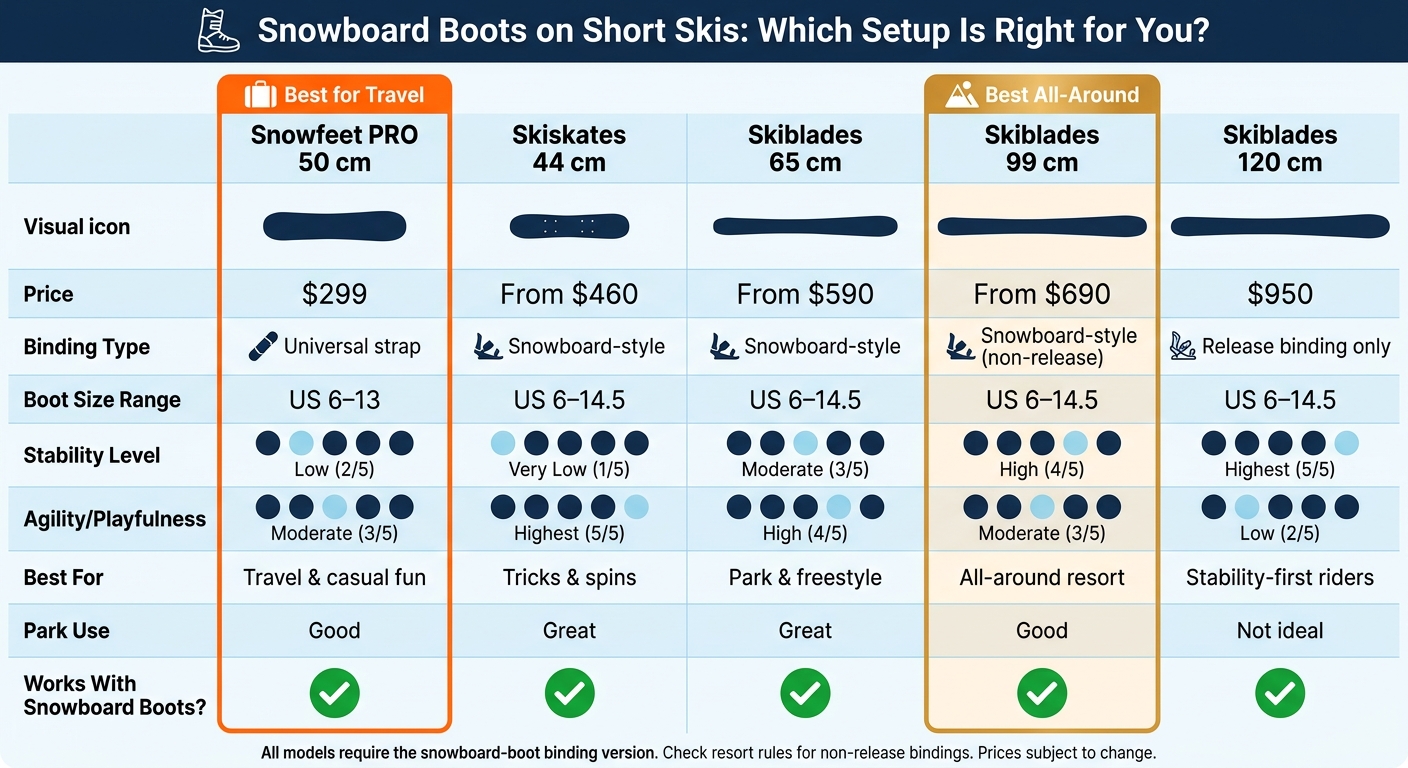
Snowboard Boots on Short Skis: Which Setup Is Right for You?
Bindings for Short Skis | All You Need to Know
Quick Comparison
| Setup | Works With Snowboard Boots? | Best For | Main Watch-Out |
|---|---|---|---|
| Short skis with strap bindings | Yes | Casual laps, travel, park use | Check boot size and strap fit |
| Short skis with snowboard-style bindings | Yes | Groomers, tricks, mixed resort use | Pick the snowboard-boot version |
| Short skis with alpine bindings | No | Riders using ski boots | Snowboard boots won’t lock in |
| 44–65 cm short skis | Yes, if binding matches | Spins, tight turns, playful riding | Less stable at speed |
| 99–120 cm short skis | Yes, if binding matches | Smoother resort riding | Less loose, more ski-like feel |
My short take: check the binding first, then pick the length based on how you ride. If you want a fun, simple setup, snowboard boots can work well on short skis. If the skis have alpine bindings, though, it’s a hard no.
Here’s the part that helps most people: if you want one setup for easy resort laps, I’d look first at a 99 cm option. If you want the smallest, easiest-to-pack setup, I’d look at 44 cm to 50 cm models.
And yep, that’s the whole story without the fluff.
What Determines Compatibility: Bindings, Release Systems, and Ski Length
Binding type is the first gate. It tells you whether your boots will work. After that, ski length shapes how the setup feels on snow, from quick turns to straight-line stability.
Binding Types Found on Short Skis
Short skis usually come with three binding styles. Each one is made for a different boot setup.
Traditional alpine bindings use toe-and-heel clamps and work with hard ski boots only. They are not a safe match for snowboard boots.
Snowboard-style bindings can work with snowboard boots when the brand says they can. Snowfeet* does this on models like the 44 cm Skiskates and 65 cm and 99 cm Skiblades.
Universal strap bindings, like the Snowfeet PRO 50 cm, fit many soft boots, including snowboard boots. That said, don’t guess. Check the brand’s size chart before you buy. If you wear larger snowboard boots, around US 12–13, it’s smart to confirm strap length for the exact model you want.
A lot of short Snowfeet* models use non-release bindings, which means they don’t pop off in a fall. The 99 cm and 120 cm Skiblades use release bindings. Some U.S. resorts want leashes or brakes on non-release gear, so it’s worth checking the resort’s gear rules before you head out.
How Ski Length Changes the Ride
Length changes the ride a lot. More than most people expect, honestly. Once you know your boots will fit, length becomes the next big call.
At 44 cm (17 in.), the ride feels ultra-quick. These are great for spins, tricks, and tight spaces.
At 65 cm (26 in.), you get a nice middle ground. They stay nimble but give you more edge hold on groomers.
At 99 cm (about 39 in.), things start to feel more like skiing. You get more stability at speed, better directional control, and a smoother feel on longer runs.
At 120 cm (about 47 in.), you get the most stability in this group, plus a feel that’s closer to a standard carving ski.
If you ride in snowboard boots, the shorter lengths lean more playful and surfy. The longer short skis calm things down and deal with mixed resort snow a bit better. Think of it like the difference between a skateboard and a longboard - same idea, different vibe :)
What to Check Before You Buy
Before you click “buy,” give these three things a hard look.
- Boot fit. Check both the boot size range and the strap length for your snowboard boots. Snowfeet* models usually fit US 6–14.5 (EU 38–49).
- Release vs. non-release. Non-release bindings make more sense for moderate slopes, beginner and intermediate terrain, terrain parks, and quick resort laps. Release bindings on the 99 cm and 120 cm Skiblades fit faster and steeper riding better.
- Resort rules. Some resorts require leashes or brakes on non-release gear.
sbb-itb-17ade95
Best Snowfeet* Short Skis for Snowboard Boots
Snowfeet* has a few short-ski options that work with snowboard boots. The main thing to choose is length and binding type. Shorter models lean more toward park laps, messing around, and easy travel. Longer Skiblades feel calmer and more planted for resort riding.
Snowfeet* Mini Ski Skates and Snowfeet PRO 50 cm
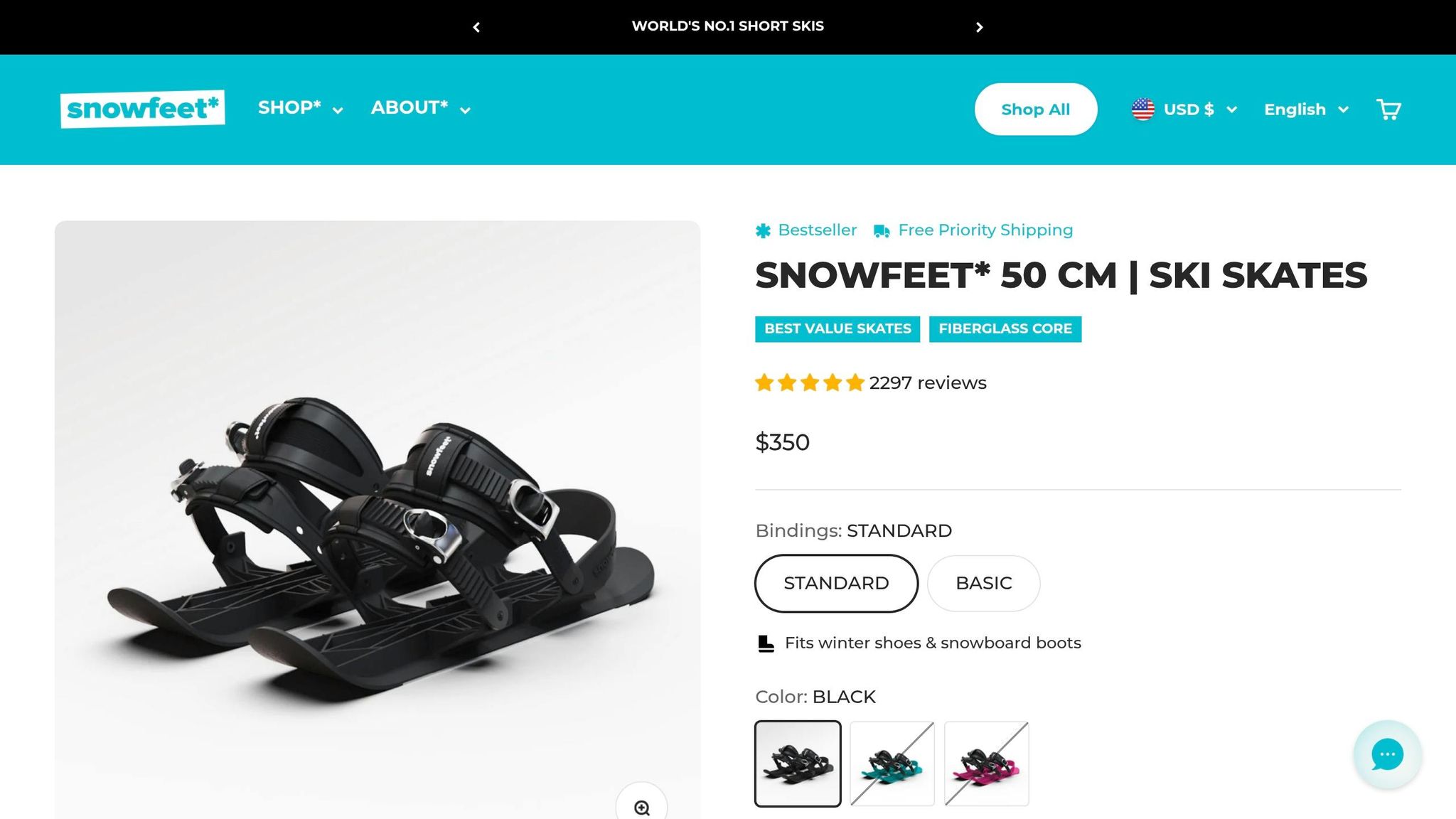
The Snowfeet PRO 50 cm is the easiest place to start. It uses a universal strap binding that fits both winter shoes and snowboard boots, covers US 6–13 (EU 38–47), and starts at $299.
It’s small, easy to pack, and a nice fit for quick laps, trips, and smaller hills. If you want something simple that doesn’t take over your whole trunk, this one makes a lot of sense.
One small heads-up: if your snowboard boots are big and bulky - say US 12–13 - check the strap length before you buy. Very wide boots can sometimes be a snug fit.
If you want an even more skate-like ride, the 44 cm Skiskates go one step shorter.
Snowfeet* Skiskates 44 cm
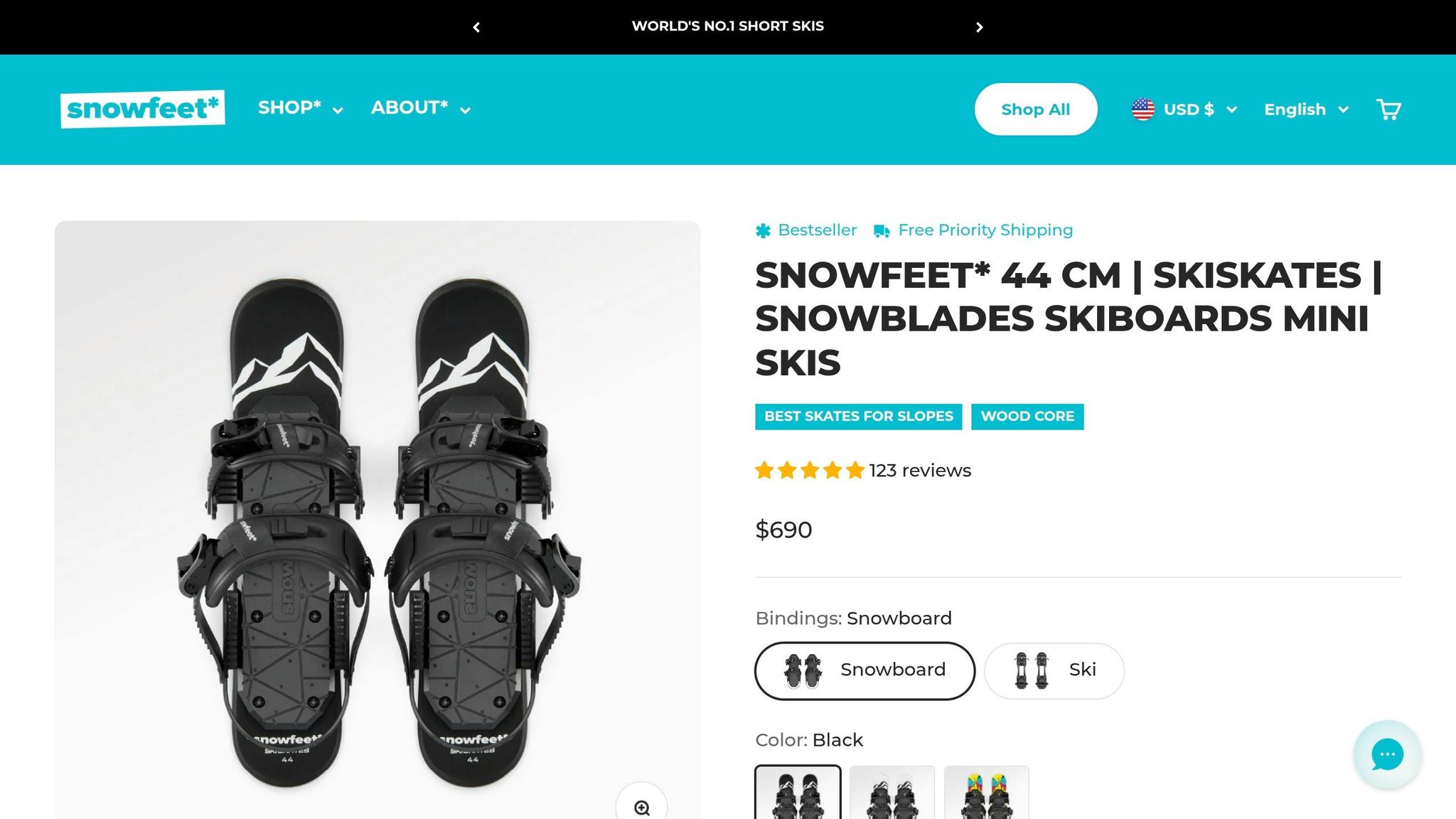
At 44 cm (about 17 in.), the Skiskates are the most skate-like pick in the lineup. In the snowboard-boot binding version, they fit US 6–14.5 (EU 38–49). Pricing starts at $460 and changes by setup.
They’re built for groomers, terrain parks, side hits, and quick spins. The ride feels nimble and reactive, almost like skating on snow. That’s the fun part.
The trade-off is pretty simple:
- Less stability at speed
- More agility in tight spots
Snowboard boots feel softer and are easier to walk in. Ski boots give you more precision, but they’re not as comfy.
If you like the idea of snowboard boots but want more stability under you, that’s where the Skiblades come in.
Snowfeet* Skiblades 65 cm, 99 cm, and 120 cm
The Skiblades come in three lengths, and each one has its own feel. All three work with snowboard boots in the snowboard-boot binding version.
| 65 cm | 99 cm | 120 cm | |
|---|---|---|---|
| Price | From $590 | From $690 | $950 |
| Stability | Moderate | High | Highest |
| Turning feel | Quick, agile | Balanced | Smooth, carvy |
| Park use | Great | Good | Less park-friendly |
| Ideal rider | Park-focused, freestyle | Casual all-mountain | Stability-first riders |
The 65 cm is the park pick. It’s quick for spins and fast edge changes, but still holds together well on groomers.
The 99 cm is the best all-around choice for most casual riders. It gives you a nice middle ground: more stable than the 65 cm, still easy to turn, and solid in mixed resort snow. It also feels much less intimidating than full-length skis, which is a big plus for a lot of people.
The 120 cm is the most stable option here. It tracks better at moderate speeds and feels the closest to a normal carving ski, just in a shorter package that’s easier to travel with.
So, at this point, the choice isn’t much about whether snowboard boots will work. They will. It’s more about how much stability you want, and how far you want to move away from that loose, playful short-ski feel.
Snowboard Boots on Short Skis vs. Standard Ski Setups
Once boot fit is sorted out, the next thing is simple: does this setup match the way you ride?
Where Long Skis and Ski Boots Still Win
Long skis with stiff ski boots still come out on top for high-speed carving, icy steeps, deep powder, and racing or hard-charging all-mountain skiing. More ski length means more edge on the snow, which gives you better grip and more stability than short skis can offer.
And that stiff boot-to-ski link matters too. It gives you edge control that a softer snowboard boot just can't match at that level.
That’s why Snowfeet* short skis tend to make more sense for casual resort riders, not people chasing top speed or razor-sharp carving.
Why Snowfeet* Makes More Sense for Casual Riders
For most riders lapping groomed green and blue runs, hitting small park features, or just cruising around and having fun, top-end performance usually isn’t the point. Comfort, ease, and not dealing with a bunch of gear? That’s often the bigger deal.
If you already ride in snowboard boots, Snowfeet* lets you keep that comfort without pushing you into a full ski-boot setup. Here’s how the two compare in the stuff casual riders usually care about:
| Long Skis + Ski Boots | Snowfeet* Short Skis + Snowboard Boots | |
|---|---|---|
| Comfort | Strong support, but stiff and less comfortable for many casual riders | Soft, flexible, and easy to wear all day |
| Control | Top precision at high speeds and on icy steeps | Nimble and responsive at moderate speeds |
| Portability | Bulky; needs roof racks or large bags | Compact and easy to travel with |
| Speed | Built for fast, demanding descents | Best for moderate, playful riding |
| Learning curve | Can take days or weeks to feel comfortable | Very fast to learn |
| Best use | Racing, steep icy runs, deep powder | Groomed resort runs and park features |
For most casual riders, those trade-offs aren’t a big deal. Comfort and convenience usually win out. The next step is picking the right length and bindings for how you like to ride.
How to Choose the Right Setup
Best Picks by Riding Style
Start with how you ride. Then pick ski length. If your boot fit is already sorted, this chart makes the choice a lot easier.
| Riding Style | Best Pick | Why |
|---|---|---|
| Travel, day trips, casual fun | Snowfeet PRO 50 cm or Mini Ski Skates | Small enough to pack with ease and simple to bring along |
| Playful resort laps, quick turns | Skiskates 44 cm (snowboard-boot version) | The most agile feel, fits US 6–14.5 |
| Park features, tricks, tight spaces | Skiblades 65 cm (snowboard-boot version) | Compact and easy to spin, pivot, and control |
| All-around groomed resort riding | Skiblades 99 cm | Best all-around choice for most casual riders |
| More stability at speed | Skiblades 120 cm | Best for riders who want the most stability without moving to full-length skis |
Use this chart to line up length, stability, and boot fit with your riding style.
If you want the short version, go with the 99 cm Skiblades for all-around resort use or the PRO 50 cm if packing light matters most.
Key Points to Remember Before Ordering
Before you order, check these three things.
- Confirm snowboard-boot compatibility first. For Skiskates and Skiblades, pick the snowboard-binding version instead of the ski-boot version. If you wear a US size 12 or 13, double-check strap length on the Snowfeet PRO 50 cm. Bulkier boots can sometimes be too wide for the standard straps.
- Know the difference between release and non-release bindings. Choose release or non-release based on your resort rules and how much hold you want. Most Snowfeet* models for snowboard boots use non-release bindings with safety leashes. The 120 cm Skiblades are the one exception and come in a release-binding version only.
- Match length to your goal. Shorter models feel more playful and are easier to pack. Longer short skis feel steadier and give you more confidence when you pick up speed. Snowfeet* has options for travel, park laps, and steady all-around resort riding in one lineup.
FAQs
Are snowboard boots safe on short skis?
Yes - snowboard boots are safe on short skis when the setup is built for them, like Snowfeet* models.
Here’s the key thing: standard ski bindings don’t work with snowboard boots. The fit is different, so mixing them is a bad idea.
Snowfeet* gets around that by using adjustable bindings with anti-slip surfaces and secure straps made for snowboard boots.
On shorter setups like 44 cm Skiskates and 65–99 cm Skiblades, these non-release bindings keep your boots locked in well. And if you take a spill - which, hey, happens - always use the included safety leash.
What short ski length is best for beginners?
For beginners, 65 cm Snowfeet Skiblades are the best pick. They’re short, light, and easy to handle, which helps with balance and quick turns. For most riders, that means learning the basics takes just minutes.
If you want a bit more stability underfoot, Snowfeet PRO 50 cm is a solid option too. Both are much easier to control than long skis, and both work with comfy snowboard boots.
Do resorts allow short skis with non-release bindings?
Yes, resorts generally allow short skis with non-release bindings if you follow the resort’s safety rules. At most U.S. resorts, that means using the included safety leashes so the skis stay attached if you fall.
Snowfeet* products use non-release, tool-free bindings on skis under 100 cm. That gives riders a secure, convenient option instead of the heavier release systems found on longer skis. Just make sure your safety leashes are attached before you ride.











Efterlad en kommentar
Denne side er beskyttet af hCaptcha, og hCaptchas Politik om beskyttelse af persondata og Servicevilkår er gældende.