



















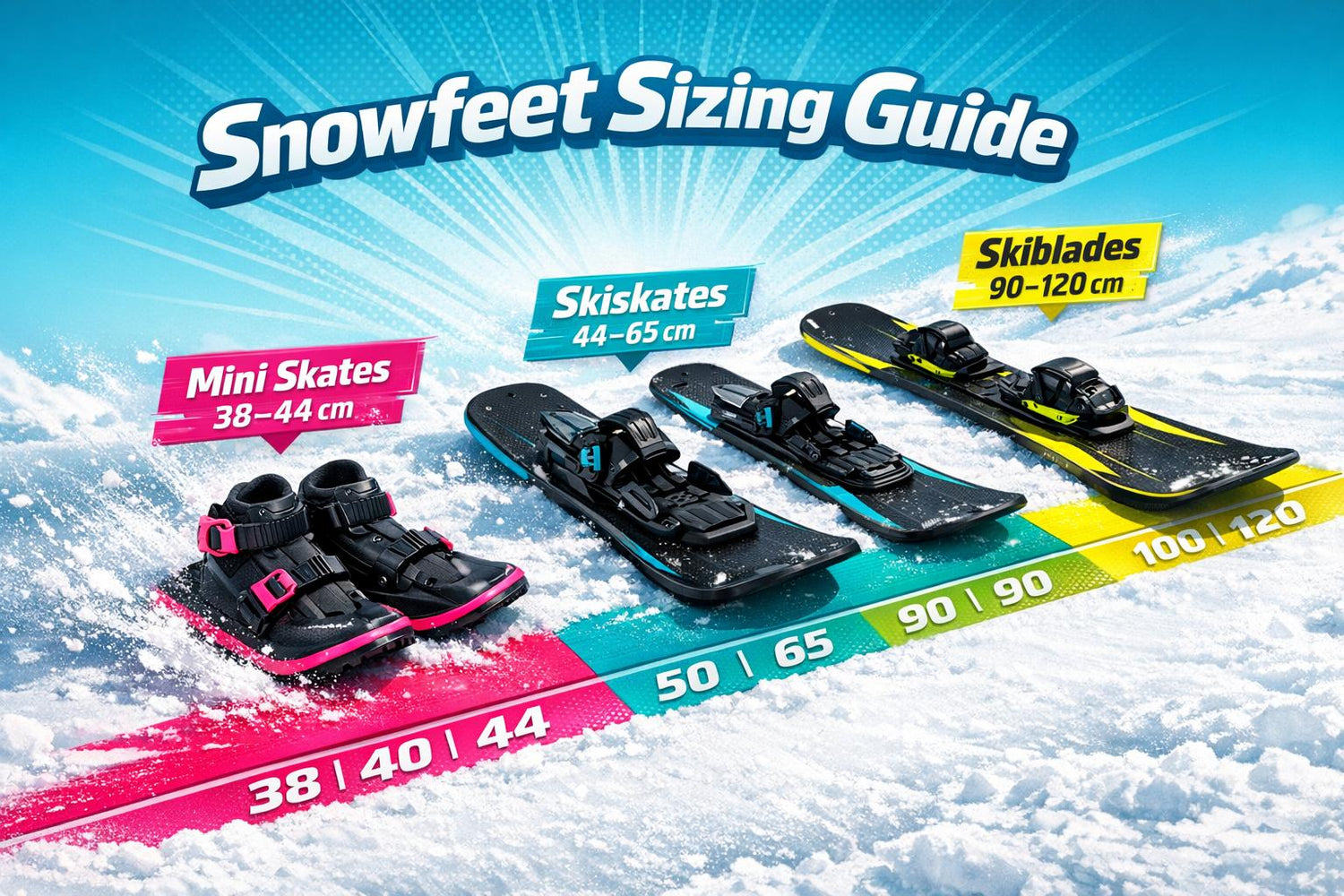
Looking for the perfect Snowfeet size? Here’s the quick rundown: Snowfeet products are compact and lightweight snow gear, ranging from 38 cm to 120 cm. Unlike standard skis (160–180+ cm), Snowfeet focus on fun, control, and portability. Choosing the right size depends on your skill level, riding style, and terrain preferences - not just your height or weight.
Key Takeaways:
- Beginners: Start short. Mini Ski Skates (38–50 cm) or 65 cm Skiblades are great for easy control and quick learning.
- Intermediate/Experienced Riders: Go longer. Skiblades (99–120 cm) offer more stability and better performance on mixed terrain.
- Skaters (Hockey/Inline): Skiskates (44 cm) mimic skating motions, perfect for icy or groomed slopes.
- Heavier Riders: Opt for slightly longer models for extra support.
Pro Tip: If unsure, shorter models are easier to handle and more forgiving for new users. Snowfeet gear works with regular winter boots, so no need for extra gear. Most riders get the hang of it in just 5 minutes!
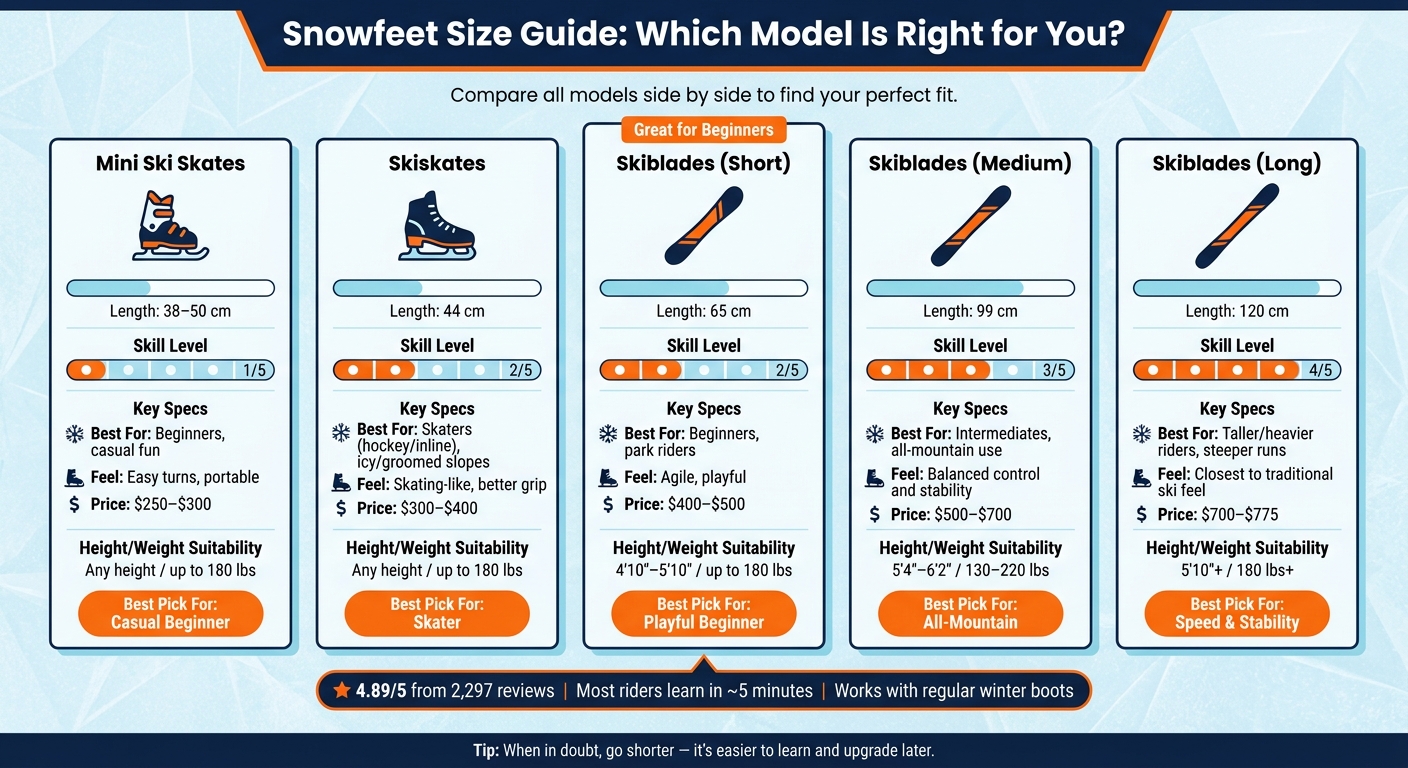
Quick Comparison Table:
| Model | Length | Best For | Feel | Price Range |
|---|---|---|---|---|
| Mini Ski Skates | 38–50 cm | Beginners, casual fun | Easy turns, portable | $250–$300 |
| Skiskates | 44 cm | Skaters, icy/groomed slopes | Skating-like, better grip | $300–$400 |
| Skiblades (Short) | 65 cm | Beginners, park riders | Agile, playful | $400–$500 |
| Skiblades (Medium) | 99 cm | Intermediates, all-mountain use | Balanced control, stability | $500–$700 |
| Skiblades (Long) | 120 cm | Taller/heavier riders, steeper runs | Closer to ski-like feel | $700–$775 |
Want more confidence on the slopes? Go shorter to start. You’ll enjoy a smoother learning curve and more fun right out of the gate. :)
Snowfeet Size Guide: Which Model Is Right for You?
How to choose Snowfeet* Snowblades | Skiblades | Skiboards | Short Ski
How Snowfeet Sizing Works
Snowfeet sizing doesn’t follow the traditional height-to-length formula you might be used to. Instead, you’ll pick your model based on your skill level, riding style, and the terrain you plan to tackle. While height and weight do play a role, they’re not the main factors. Let’s break down what makes Snowfeet sizing so different.
Key Sizing Principles for Snowfeet
Shorter Snowfeet models offer agility, while longer ones focus on stability. For example, shorter models like the Mini Ski Skates and Skiskates are easy to use and super portable - perfect for beginners or casual fun. On the other hand, longer options, such as the 99 cm or 120 cm skiblades, provide better edge control, smoother rides at higher speeds, and improved performance on steep or uneven terrain. This balance makes Snowfeet a great choice for newcomers.
Here’s how the Snowfeet team sums it up:
"Short skis are lighter, more fun, and easier to control - long skis are heavier and less playful."
If you’re a heavier rider, a slightly longer model might give you the extra support you need. Lighter riders, however, can stick with shorter sizes without losing control. Ultimately, your skill level and riding goals should guide your choice.
Snowfeet vs. Traditional Skis and Snowboards
Unlike traditional skis, which are typically sized based on height and range from 160–180+ cm, Snowfeet products are much shorter. This makes their sizing logic completely different. With Snowfeet, you’re prioritizing fun, control, and portability over race-level performance or technical precision.
Another big difference? Boot compatibility. Traditional skis require specialized ski boots and bindings, but most Snowfeet models work with regular winter boots or snowboard boots. That means you don’t need to invest in extra gear to hit the slopes.
Here’s a quick comparison to show how Snowfeet stack up against traditional skis and snowboards:
| Feature | Snowfeet (38–65 cm) | Traditional Skis / Snowboards |
|---|---|---|
| Sizing Approach | Skill level, style, and terrain | Height, weight, and skill level |
| Portability | Fits in a backpack | Requires roof racks or large gear bags |
| Learning Curve | Very fast (~5 minutes) | Moderate to long; often needs lessons |
| Boot Compatibility | Regular winter boots or snowboard boots | Specific ski or snowboard boots only |
| Maneuverability | High; great for tight turns and tricks | Lower; designed for long arcs and speed |
| Stability at Speed | Lower | Higher |
| Approx. Price | $250–$775 | $500–$800+ for skis with bindings |
This comparison highlights how Snowfeet focus on simplicity, portability, and quick learning. They’re all about making the slopes accessible and fun for everyone.
Choosing the Right Snowfeet Product
Now that you’re familiar with Snowfeet’s sizing system, let’s dive into the different product families. Each Snowfeet product is designed to suit specific riding styles and conditions, so here’s a breakdown to help you find your best match.
Snowfeet Mini Ski Skates (38–50 cm)
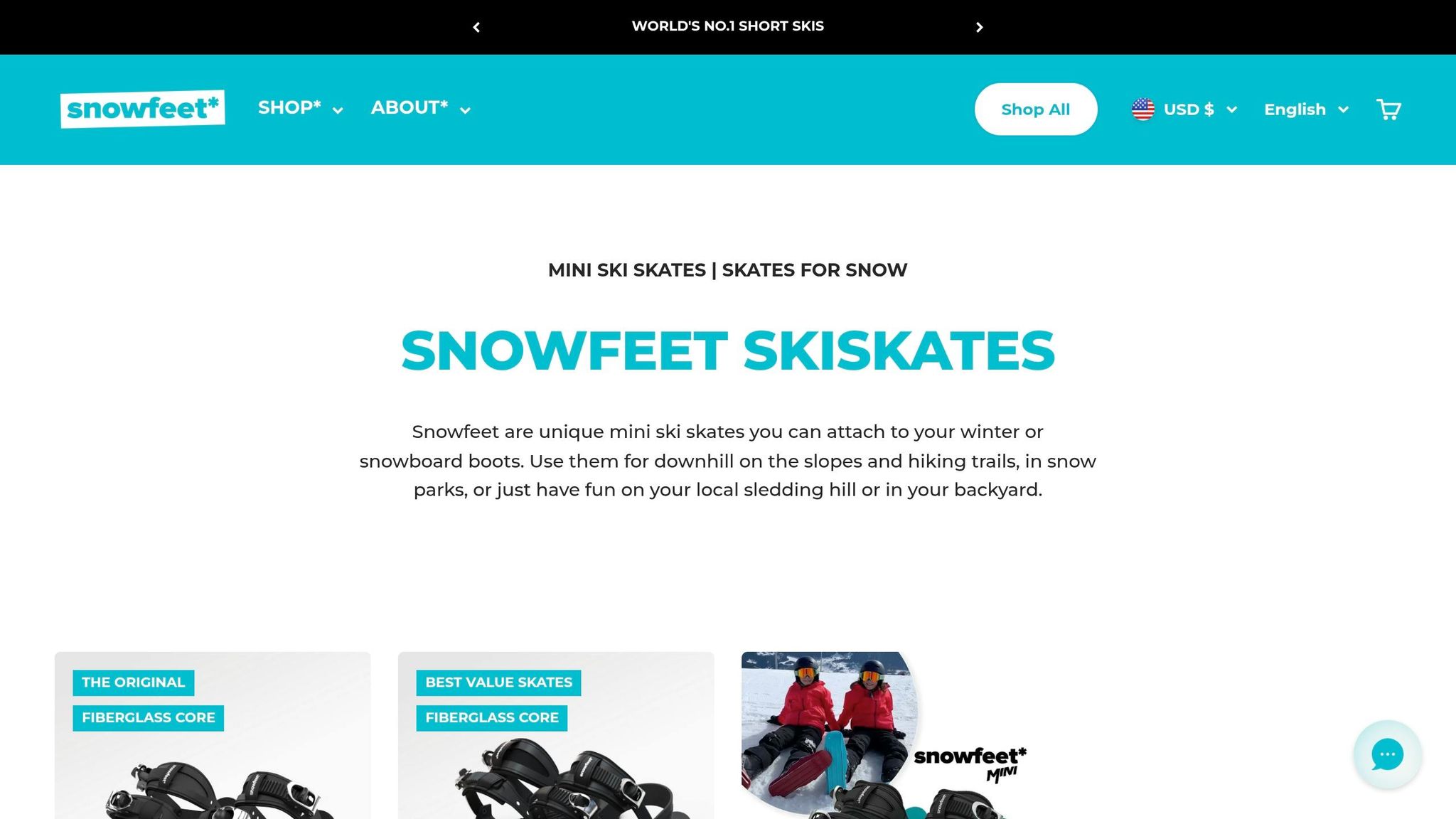
Mini Ski Skates are the easiest way to get started with Snowfeet. These models, ranging from 38 to 50 cm, strap right onto your regular winter boots - no need for special footwear. Their short length makes turning a breeze, which is perfect for beginners or those sticking to bunny hills and learning zones at resorts.
Before purchasing, double-check that your U.S. boot size falls within the binding range. These skates are ideal for groomed slopes. However, if you’re planning to tackle deeper snow or pick up speed, you might want something with a bit more length.
Skiskates (44 cm)
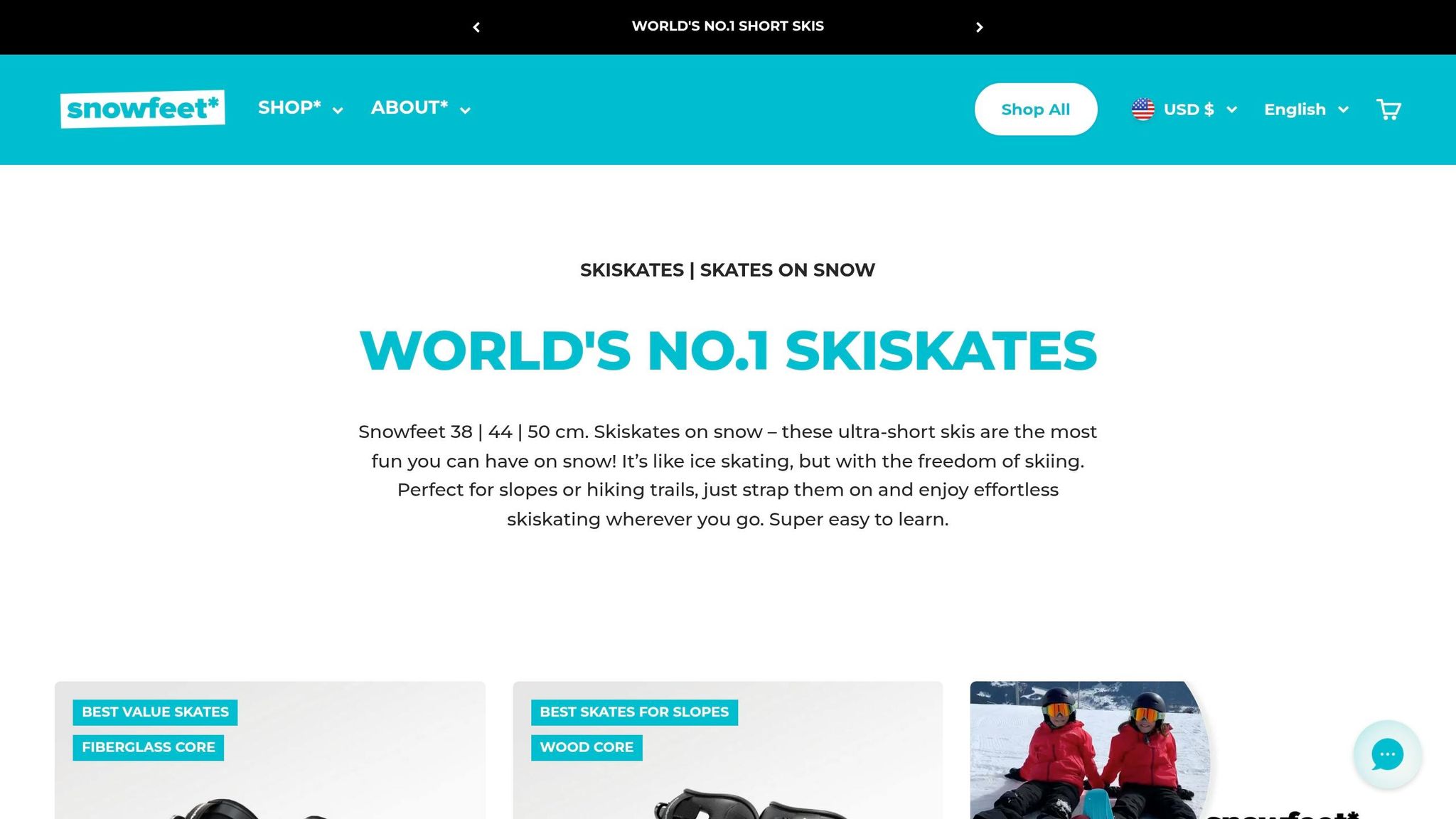
Skiskates are all about delivering that “skating on snow” experience. Unlike the Mini Ski Skates, these 44 cm models feature a wood core and metal edges, offering better grip and control on hardpacked or icy terrain - common conditions at many U.S. resorts.
As Snowfeet founder Zbyněk explains:
"In my opinion, Skiskates is the best product for slopes we developed so far. I love how easy they are to ski and skate and how many different kinds of tricks I can perform without much effort and almost no restrictions."
If you’ve got experience with ice skating, inline skating, or hockey, the side-to-side motion will feel second nature. Lighter riders will find these versatile on groomed trails, while heavier or more aggressive riders seeking higher speeds might prefer stepping up to a longer 65–99 cm skiblade for added stability.
Looking for a more traditional ski feel but in a compact size? Check out the Skiblades and Short Skis below.
Skiblades and Short Skis (65 cm, 99 cm, 120 cm)
This lineup bridges the gap between compact fun and traditional ski performance. The length you choose depends on your riding goals:
| Length | Best For | Feel |
|---|---|---|
| 65 cm | Beginners, park riders, playful carving | Quick turns, maximum agility |
| 99 cm | Intermediates, all-mountain use | Balanced control and stability |
| 120 cm | Confident intermediates, taller/heavier riders, mixed terrain | Closest to traditional skis |
The 65 cm model is the easiest to maneuver, making it great for cautious beginners or anyone who wants effortless turning. One buyer raved that the 65 cm skis are "super easy to control, quick to turn, and way more forgiving than traditional skis."
The 99 cm strikes a balance between agility and stability, making it a solid choice for most average-height U.S. adults (around 5'4"–6'2"). It’s playful enough for carving but stable enough for higher speeds.
If you’re a taller or stronger skier, the 120 cm model is your go-to. It offers the most traditional ski-like feel, handles steeper runs, and performs well in varied snow conditions. Starting at $775, it’s also the priciest option in the lineup.
Not sure which length to pick? Go shorter. It’s easier to gain confidence on a shorter ski and upgrade later than to wrestle with a longer one that feels overwhelming.
sbb-itb-17ade95
Matching Snowfeet Length to Your Height, Weight, and Skill Level
Snowfeet founder Zbyněk has a refreshing take on ski length:
"When it comes to the length of skis, your height or weight is not that important... recreational skiers should only consider the skiing style they prefer, how much maneuverability and fun you want to have."
That said, your body size and experience can still help guide your choice, especially when buying online. These guidelines will help you match Snowfeet’s unique design to your physical traits and skill level.
Height and Weight Guidelines
While height and weight aren’t everything, they can provide a helpful starting point. Here's a quick reference for U.S. riders:
| Product | Length | Height Range | Weight Range | Core Type |
|---|---|---|---|---|
| Skiskates | 44 cm | Any height | Up to ~180 lbs | Wood |
| Skiblades | 65 cm | 4'10"–5'10" | Up to ~180 lbs | Wood |
| Skiblades / Short Skis | 99 cm | 5'4"–6'2" | 130–220 lbs | Wood or Fiberglass |
| Skiblades / Short Skis | 120 cm | 5'10"+ | 180 lbs+ | Wood |
If you’re on the heavier side, go for a longer length to ensure better support, especially at higher speeds. But if you’re unsure, shorter options offer more agility and are easier to handle. Picking the right size ensures you’ll enjoy Snowfeet’s quick learning curve, control, and playful feel.
Adjusting for Skill Level
Your experience level also plays a big role in finding the perfect fit:
- Beginners: The 65 cm model is a great choice. It’s forgiving and easy to turn, making it ideal if you’re just starting out.
- Skaters (hockey or inline): The 44 cm Skiskates are a natural fit. They take advantage of your existing edge control and stance, giving you an intuitive ride.
- Experienced Skiers: For balanced control on groomed runs, go with the 99 cm. If you’re after something closer to the feel of traditional skis, the 120 cm length is your best bet.
"Short skis provide more fun and freedom of movement... they are playful, responsive, lightweight on your feet, easier to stop, and for many skiers easier to ride as opposed to cumbersome long skis." - Snowfeet Team
If you’re still figuring things out, start with a shorter length to build confidence. As your skills improve, you can always upgrade to a longer model for more speed and stability.
Conclusion: Picking the Right Snowfeet for You
When it comes down to it, the main question is whether you value agility or stability more. Shorter lengths make it easier to learn and feel playful, while longer models offer more speed and stability as you gain experience. While factors like height and weight can help fine-tune your decision - taller or heavier riders often feel steadier on longer lengths - the way you want to ride matters most.
This is where everything clicks: understanding the product differences and how they fit you personally. Let your confidence on the slopes guide you. If you're new to snow sports, go for a shorter size. If you're already cruising down blue runs or have a background in skating, a longer size might feel just right. At the end of the day, your comfort and confidence on snow will be your best guide. As one rider put it, these blades are easy to control and much more forgiving than traditional skis.
With an impressive 4.89/5 rating from 2,297 reviews and a learning curve that most riders master in about 5 minutes, the real challenge isn’t picking the "wrong" size - it’s overthinking the decision. Start with the size that matches your current skill level and confidence. You can always upgrade as you improve.
FAQs
Can I use my regular winter boots with Snowfeet?
Yes, Snowfeet are made to fit with your regular winter boots or snowboard boots, thanks to their adjustable or universal bindings. For the best results, go with waterproof boots that provide solid ankle support. Snowboard boots are a great choice if you're hitting the slopes or trying out tricks - they offer more comfort and flexibility. On the other hand, sturdy winter boots work well for casual activities like hiking trails or cruising down sledding hills.
Which Snowfeet length is best for deeper snow?
For deeper snow, the 120 cm Snowfeet short skis are a great choice. Thanks to their larger surface area, they provide better flotation, helping you stay on top of the snow and reducing the chance of sinking. While the 99 cm model works nicely in light powder, the 120 cm version is built for off-piste adventures. It strikes a balance between the float you need and the lightweight maneuverability that makes Snowfeet different from heavy, traditional skis.
Do I need different sizes for park vs. all-mountain?
When it comes to Snowfeet models, you don’t have to invest in separate gear for park and all-mountain riding - unless you’re chasing a very specific style. The 65 cm models are perfect if you’re all about agility. They’re great for pulling off tricks in the park and making quick, sharp moves. If you’re looking for something that handles both park fun and all-mountain adventures, the 99 cm option strikes a nice balance. It offers smooth maneuverability without the extra weight of traditional skis.











Efterlad en kommentar
Denne side er beskyttet af hCaptcha, og hCaptchas Politik om beskyttelse af persondata og Servicevilkår er gældende.