



















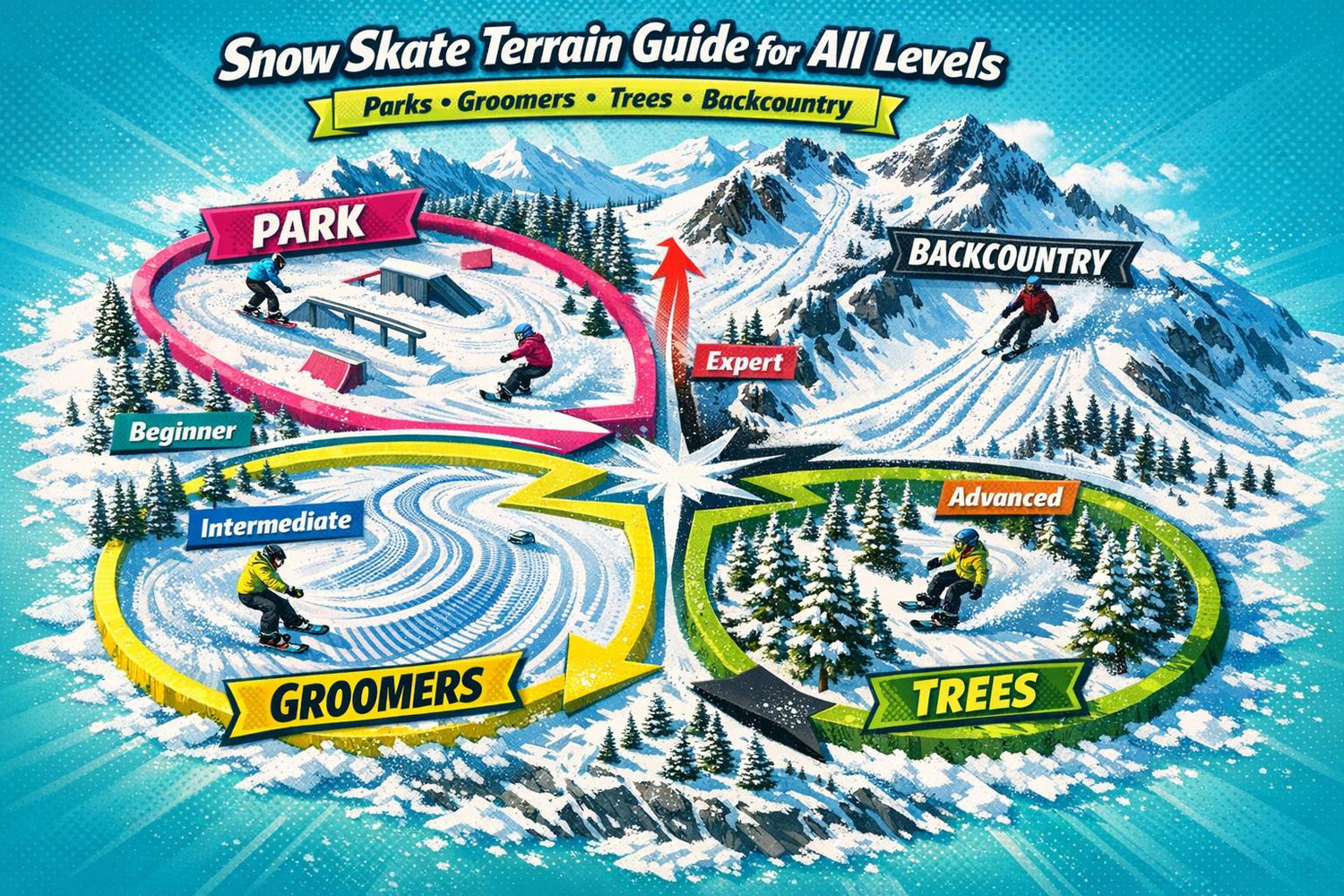
Snow Skate Terrain Guide
Finding a good place to ride isn’t always as simple as spotting snow and hoping for the best. The right terrain depends on your skill level, the setup you’re riding, and the kind of environment you actually enjoy. A solid Snow Skate Terrain Guide helps narrow that down fast, so you can focus on spots that feel fun, manageable, and worth the trip.
Match Terrain to Skill and Setup
New riders usually do best on flat, groomed areas where balance and board control come easier. Intermediate snow skaters can start exploring mellow slopes, park features, or select urban terrain with smoother run-ins and clean exits. Advanced riders often want steeper lines, rougher snow, or more natural backcountry features, especially when conditions allow for technical riding.
Why Location Matters
Your preferred location changes the equation too. Urban areas can offer creative features, but access rules and local enforcement matter. Parks tend to be more predictable and easier to session. Backcountry zones open up bigger terrain, though they also demand stronger judgment and better awareness.
A practical Snow Skate Terrain Guide makes those choices clearer. By combining riding ability, gear type, and location preference, it gives snow skaters terrain suggestions that feel tailored instead of generic.
FAQs
How does the tool decide which terrain is right for me?
It uses simple, practical matching based on skill, equipment, and location preference. Beginners are pointed toward flat, groomed, predictable areas where it’s easier to build control. Intermediate riders get recommendations that may include mild slopes, park zones, or basic urban features. Advanced riders can see steeper, more technical, or rugged terrain, especially if they’re looking at backcountry options.
Do hybrid snow skates really change the terrain recommendations?
Yes, they can. Hybrid setups usually handle mixed conditions better than standard snow skates, so the tool can suggest more varied terrain when that makes sense. That might include transitions between groomed sections and rougher snow, or areas where surface consistency changes. Standard setups tend to work best where the snow is smoother and more predictable.
Why are there tips about urban rules and local access?
Because a good spot isn’t just about rideability. Urban snow skating can involve property rules, pedestrian traffic, security concerns, or city restrictions. Park zones may have designated use policies, and backcountry areas bring avalanche, weather, and access considerations. The tool includes these tips so your recommendations are useful in the real world, not just on paper.












Efterlad en kommentar
Denne side er beskyttet af hCaptcha, og hCaptchas Politik om beskyttelse af persondata og Servicevilkår er gældende.