



















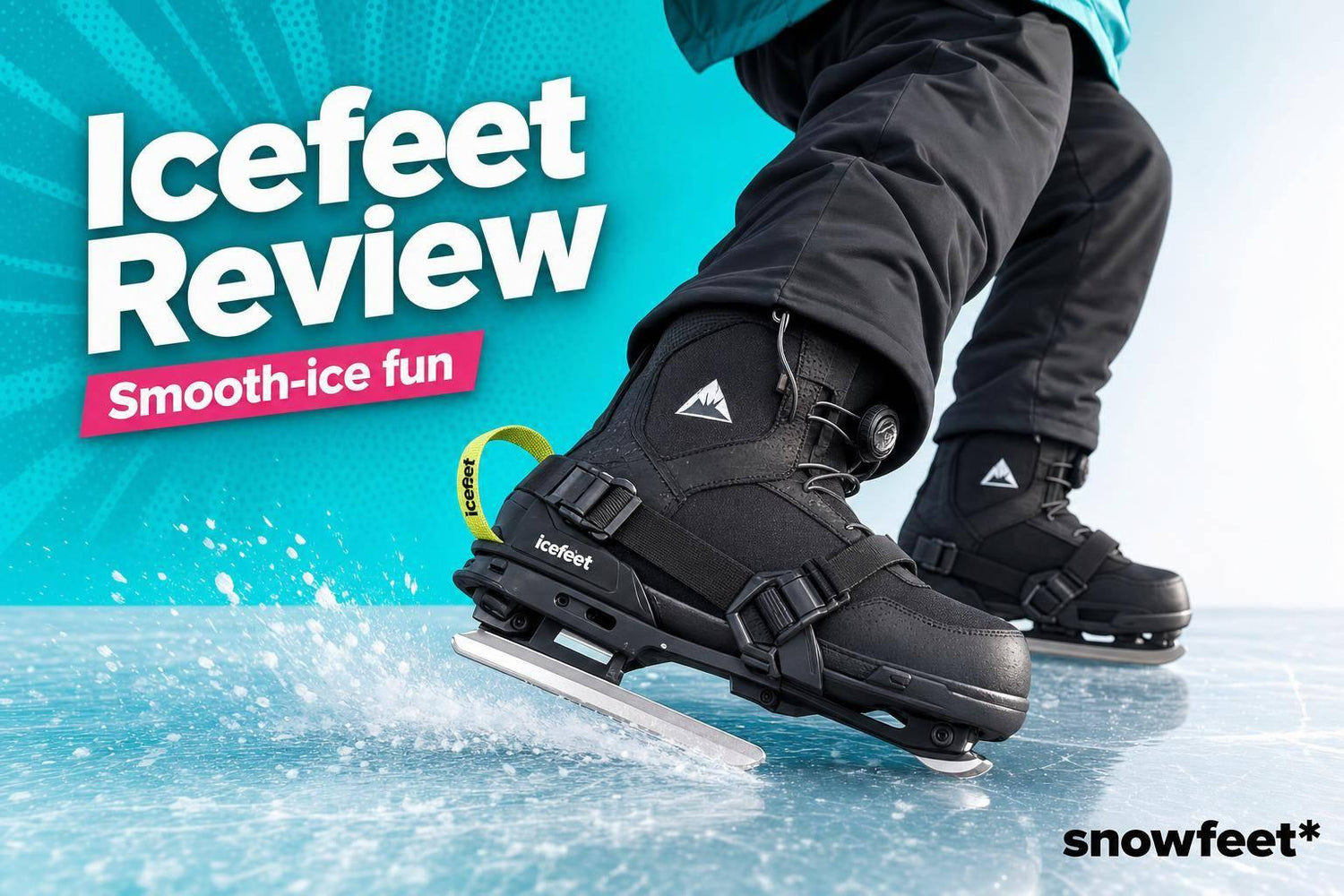
Short answer: yes, but only for a small group of buyers. If I just want easy skating on smooth ice a few times each winter, Icefeet can make sense at $199. If I want better control, more support, or use beyond clean ice, I’d skip them.
Here’s the whole article in plain English:
- Icefeet is built for casual use, not rink-level skating
- The double-blade setup feels more stable for first-timers
- It works with my winter boots, so I don’t need full skate gear
- It’s best on backyard rinks, small rinks, and clean frozen ponds
- It falls off fast on rough ice, slush, or snow
- Regular ice skates still win for speed, turns, and foot hold
- Snowfeet PRO 50 cm ($299) and Skiskates 44 cm ($460) cost more, but work on snow and ice, so they cover more winter days
If I had to boil it down to one line, it’s this: Icefeet is a low-fuss, ice-only tool. Nice for family pond days. Not the pick for hard skating, rink laps, or mixed winter terrain.
Finally… Ice Skates Anyone Can Use!
Quick Comparison
| Option | Price | Best Use | Main Upside | Main Downside |
|---|---|---|---|---|
| Icefeet | $199 | Casual skating on smooth ice | Stable feel, small to pack, uses winter boots | Less control, ice only |
| Regular ice skates | Varies | Rinks, hockey, figure skating | Better speed, turns, and support | Need skate boots, more bulk |
| Snowfeet PRO 50 cm | From $299 | Snow + ice fun | Works on more surfaces, backpack-sized | Costs more |
| Skiskates 44 cm | From $460 | Snow + ice with more range | Same small form, more use cases | Highest price here |
A few numbers stand out fast:
- Icefeet costs $100 less than Snowfeet PRO
- Icefeet costs $261 less than Skiskates
- But it also covers 1 surface type instead of 2: ice and snow
So, if I skate on a frozen pond twice a year, Icefeet is a fair pick. If I want one compact setup that gets used more often, I’d lean toward Snowfeet PRO or Skiskates.
If you want a quick look at how small skates like these ride on snow and mixed terrain, these videos can help:
- Snowfeet official videos on YouTube
- Skiskates videos on YouTube
That’s the simple version. Icefeet isn’t bad. It’s just narrow in what it does. :)
What Icefeet Is and How It Works
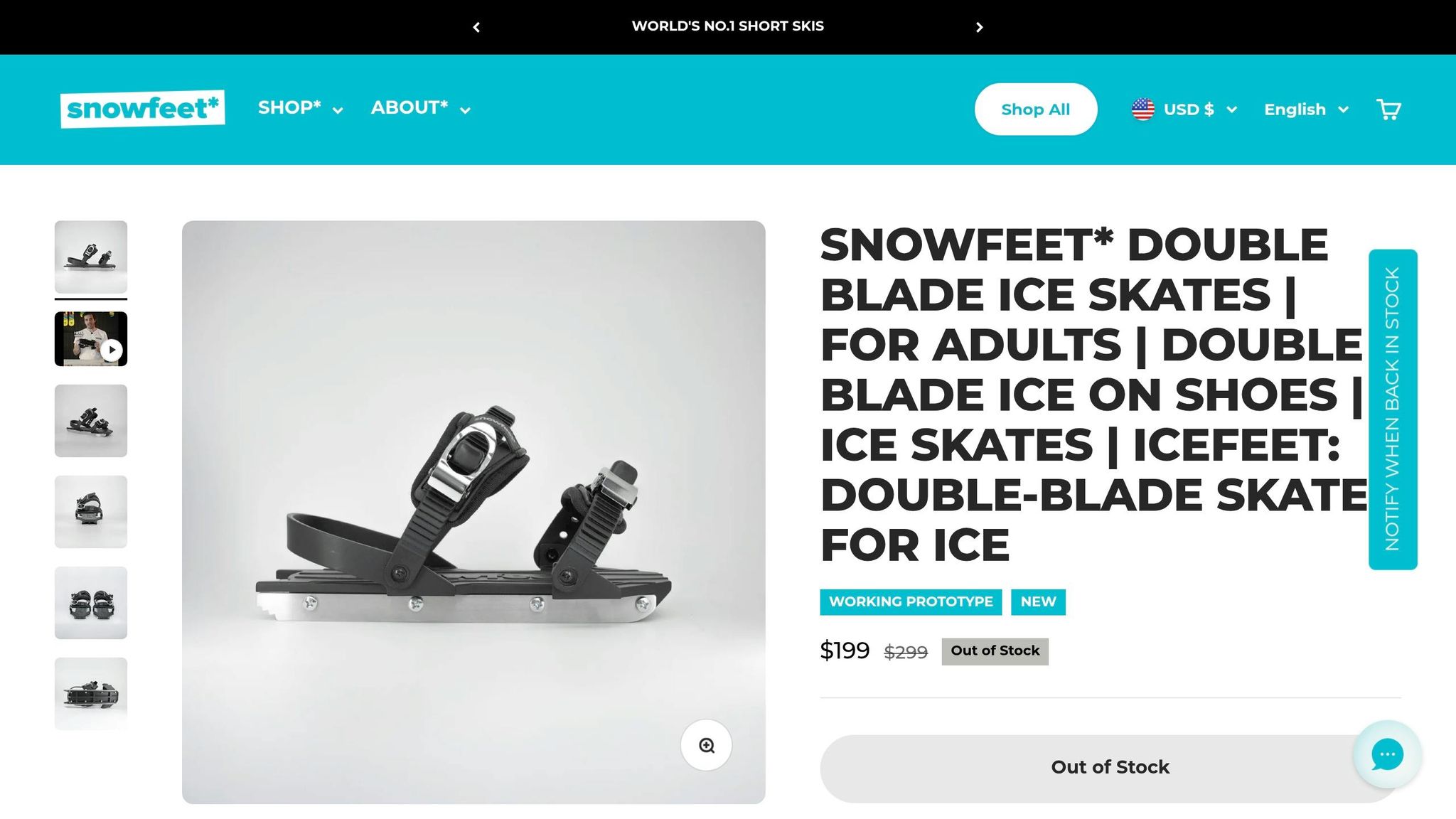
Icefeet is Snowfeet*'s $199 strap-on skate for ice. Unlike the Snowfeet PRO 50 cm or Skiskates 44 cm, which are built for snow, Icefeet is made just for ice. That single-purpose setup is the big plus here. It's also the tradeoff.
Double-Blade Design, Strap-On Fit, and Boot Compatibility
Icefeet uses two parallel runners, which gives beginners a more stable platform. In plain English, it feels less twitchy and a bit easier to trust on day one.
It works best with stiff winter boots that hold your foot in place. The strap-on binding is adjustable, so you don't need a dedicated skate boot. Tighten the straps until the boot feels locked in with very little movement, then test the setup on dry ground before you step onto the ice.
The boot makes a big difference. A stiff sole, decent ankle coverage, and enough structure for the straps to grip the boot well are the best match. Soft boots can let your foot slide around inside the binding. When that happens, steering gets dull and edge control drops off fast.
Best Surfaces and Conditions for Use
Icefeet works best on smooth frozen surfaces, like:
- backyard rinks
- small community rinks
- flat frozen ponds with clean ice
On those kinds of surfaces, the double-blade design does its job. It makes casual skating feel steadier and easier to get into.
Rough snow or deep slush are a different story. Once the surface gets bumpy, snowy, or slushy, that edge fades fast. You feel the change right away when skating.
sbb-itb-17ade95
Honest Performance Review: What Icefeet Gets Right and Where It Falls Short
Icefeet is easy to carry and skips the stiff break-in period that comes with dedicated skate boots. That’s the big draw. You can toss them in a bag, head to a frozen pond or backyard rink, and get on the ice without hauling extra gear.
The catch? You give up a lot of the control that makes regular ice skates feel steady and dialed in. So, yes, they’re simple. But that simplicity comes with a pretty clear tradeoff.
What Casual Users Will Like
The biggest practical plus is portability. There’s no separate pair of skate boots to pack, no extra bulk, and no break-in phase. For a last-minute skate session, that kind of low-fuss setup is hard to beat.
If you’re skating now and then for fun, Icefeet can make a lot of sense. They’re easy to bring along, easy to put on, and a lot less of a production than full skates.
What You Give Up Compared With Regular Ice Skates
Here’s the plain truth: you get convenience, but you lose that locked-in feel. Regular ice skates hold your foot in place better, which helps with precision, balance, and control. Icefeet doesn’t match that.
That matters more once you skate a bit faster, turn harder, or spend more time at the rink. At that point, the gap starts to feel pretty obvious. It’s the old story: easy in, less control out.
That convenience-first tradeoff also stands out more when you stack Icefeet up against regular skates and Snowfeet* options.
Who Should Skip Icefeet
Icefeet probably isn’t the right pick if you want:
- maximum performance
- sharper control
- frequent rink skating
They’re built for convenience first. If your main goal is better handling and a more secure ride on the ice, regular skates or Snowfeet* options will likely fit better.
That tradeoff gets even easier to judge once you compare Icefeet side by side with regular skates and Snowfeet* products.
Icefeet vs Regular Ice Skates vs Snowfeet* Products
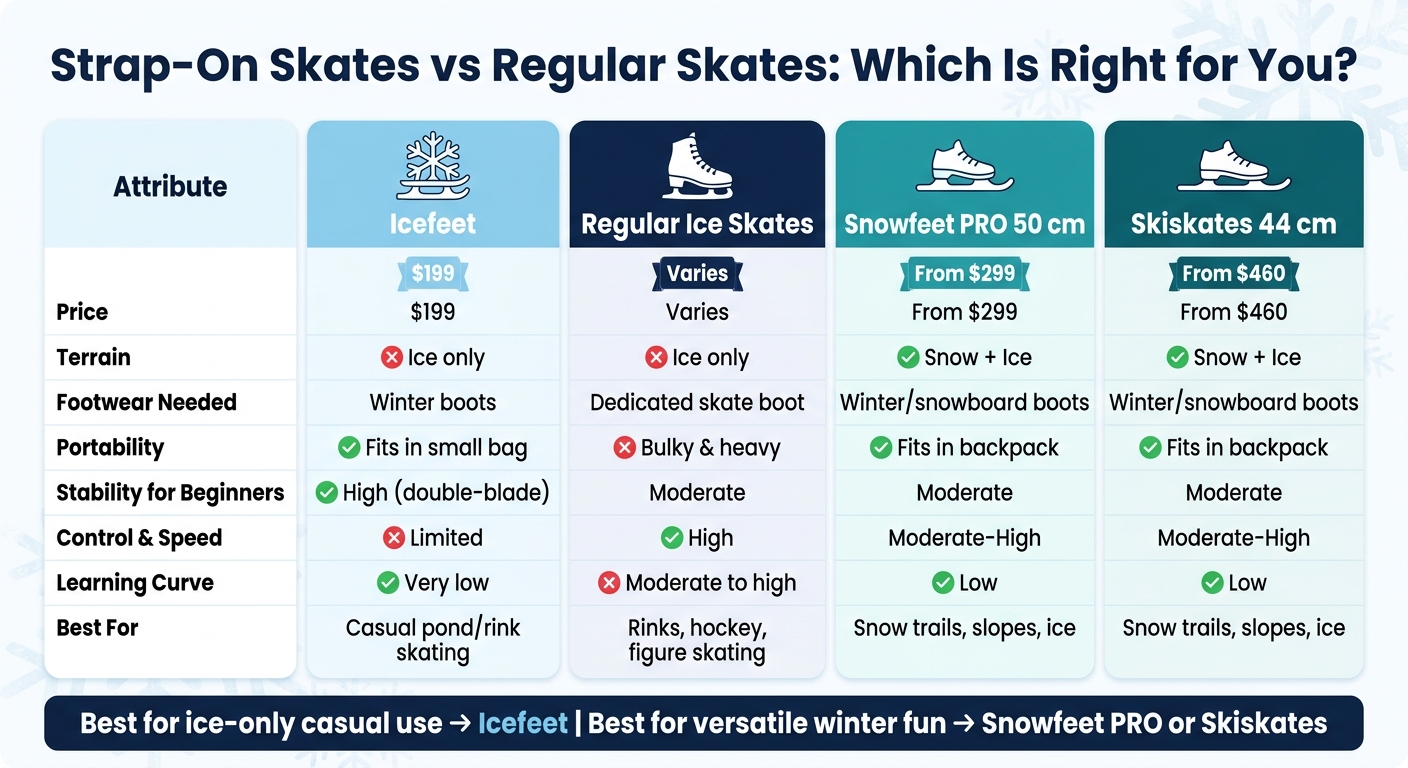
Icefeet vs Regular Skates vs Snowfeet PRO vs Skiskates: Side-by-Side Comparison
Icefeet vs Regular Ice Skates
You can see the tradeoff fast when you line up Icefeet next to regular skates and Snowfeet*.
With regular ice skates, performance comes first. With Icefeet, ease and convenience come first. If you're skating at a rink or want better speed, tighter turns, and more support, regular skates still do that job better. But if your goal is simple pond skating without buying a separate skate boot, Icefeet makes life a lot easier.
It’s kind of the classic trade: more performance vs less hassle.
| Feature | Icefeet | Regular Ice Skates |
|---|---|---|
| Stability | More stable for beginners | Moderate (requires balance) |
| Learning Curve | Very low | Moderate to high |
| Footwear Required | Your own winter boots | Dedicated skate boot |
| Portability | Fits in a small bag | Bulky and heavy |
| Control & Speed | Limited | High precision |
| Best For | Casual pond skating | Rink performance, hockey, figure skating |
Icefeet vs Snowfeet PRO 50 cm and Skiskates 44 cm
The big split here is terrain.
Icefeet is made for ice only. Snowfeet PRO 50 cm and Skiskates 44 cm go way beyond that. They work on snow-covered slopes, trails, parks, and ice.
That matters because Snowfeet* keeps the same small, strap-on style, but gives you more places to use it. So instead of packing gear for one surface, you get one setup that can handle more of winter.
Snowfeet PRO 50 cm starts at $299, and Skiskates 44 cm start at $460. Both fit in a backpack, which is a big plus if you travel light or don’t want to drag around a pile of gear.
| Feature | Icefeet | Snowfeet PRO (50 cm) / Skiskates (44 cm) |
|---|---|---|
| Terrain | Ice only | Snow-covered slopes, trails, parks, and ice |
| Portability | Excellent | Excellent (fits in a backpack) |
| Boot Compatibility | Winter boots or shoes | Winter boots or snowboard boots |
| Price (USD) | Lower-priced | From $299–$460 |
| Flexibility | Ice only | Multi-use (snow + ice) |
Where Snowfeet* Offers More for the Money
This is where the value side gets pretty clear.
If you travel, have a family, or just want one small piece of gear for both ice and snow, Snowfeet* gives you more use from the same setup. You don’t need a second set of winter gear, and that can save space, time, and a bit of headache too.
For most casual users, Snowfeet PRO or Skiskates make more sense for the money because one compact setup works across more winter conditions.
Final Verdict: Is Icefeet Worth Buying?
The tradeoff leads to a pretty simple call. Icefeet are worth buying for a narrow use case only. If you skate a few times each winter on smooth ice - like a backyard rink, a community rink, or a frozen pond with a clean surface - and you want the lightest, simplest setup, Icefeet do that job well.
But once you move past clean ice, the value starts to slip. Icefeet are a niche buy: useful on smooth ice, limited elsewhere.
Buy Icefeet If Your Winter Fun Stays on Ice
Icefeet make the most sense for beginners, casual skaters, or parents who want a quick, low-fuss way to get out on the ice. If you skate only on smooth ice and care most about portability, they fit that use case well.
They’re good at one thing. They’re just not the most flexible pick.
Choose Snowfeet* If You Want One Portable Option for More Conditions
If value matters more than ice-only convenience, the better buy changes. _Snowfeet PRO 50 cm ($299) or Snowfeet Skiskates 44 cm ($460)_* strap onto your own boots and work on snowy trails, small slopes, parks, and mixed winter terrain - not just clean ice.
Icefeet solve one problem. Snowfeet* solve more than one.
For most casual buyers who want one compact setup for more than ice, the choice is pretty clear: choose Icefeet if you only skate on smooth ice; choose Snowfeet if you want one compact setup that works on more winter surfaces and gets used more often.*
FAQs
Are Icefeet good for beginners?
Yes. Snowfeet products are a great pick for beginners.
They’re easier to get into than skis or ice skates because the movement feels more like ice skating, inline skating, or hockey. That makes the learning curve feel less steep. You’re not dealing with long skis, heavy gear, or that awkward “how do I even stand up?” phase :)
Their small, light build also helps a lot. You stay closer to the ground, which gives you better balance and control. And the adjustable bindings fit the waterproof winter boots or snowboard boots you already own, so you don’t need a whole new setup.
What boots work best with Icefeet?
You don’t need special footwear for Snowfeet products. The adjustable strap-on bindings work with the boots you already have, from US men’s and women’s sizes 4.5 to 14.5.
For casual riding, waterproof winter boots are the best pick. They’re simple, comfy, and make the whole setup easy.
If you’re heading to ski slopes, snowboard boots are the better match. They give you more ankle support and a bit more flex, which helps a lot once you start turning and stopping.
Ski boots work too, but you don’t need them. They fit, sure, though for most people they’re not the go-to choice.
When should I choose Snowfeet* instead?
Choose Snowfeet* if you want a more portable, beginner-friendly, and versatile way to enjoy snow without the bulk, cost, or complexity of old-school skis or snowboards.
They’re a great fit if you care about easy travel, a simple learning curve, and the option to use your own winter or snowboard boots on all kinds of terrain, like groomed runs, hiking trails, and frozen lakes.











Efterlad en kommentar
Denne side er beskyttet af hCaptcha, og hCaptchas Politik om beskyttelse af persondata og Servicevilkår er gældende.