



















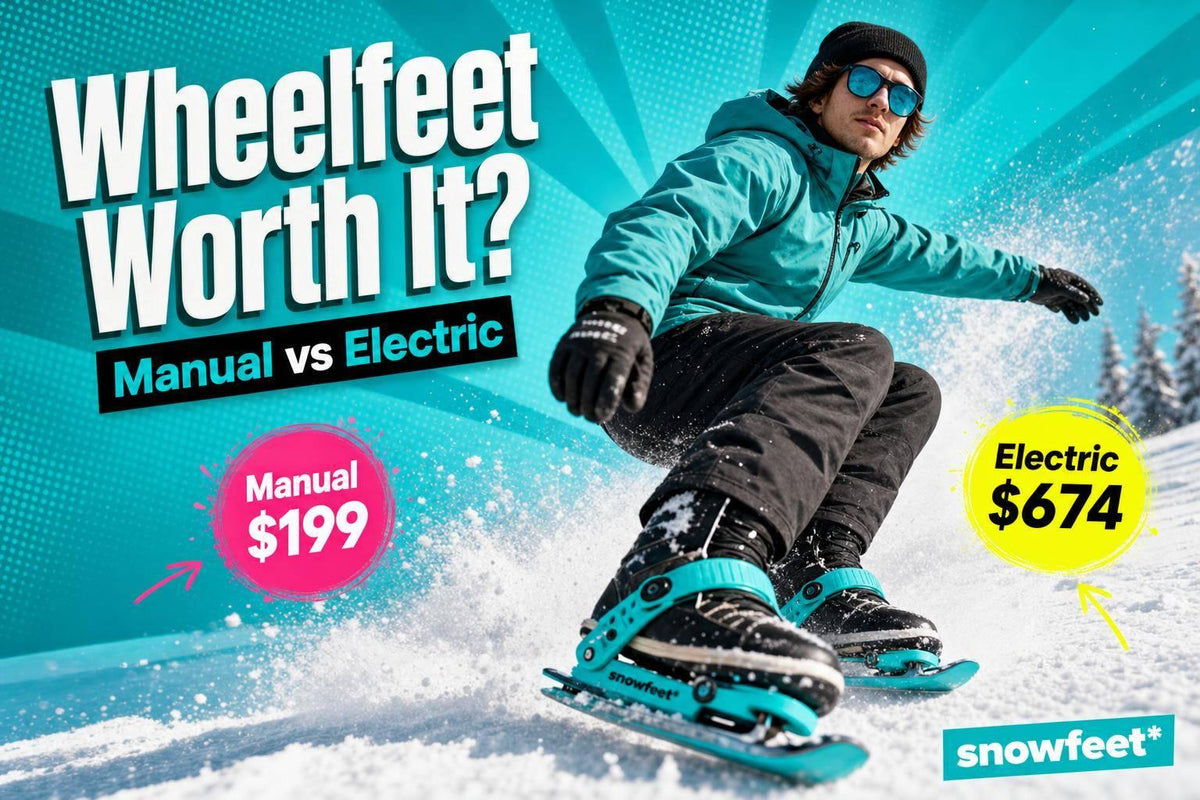
Short answer: mostly no for casual buyers. At $199 for the manual pair and $674 for the electric one, Wheelfeet make sense only if you care a lot about small size, easy carry, and city use. If you want the best mix of control, comfort, and low hassle, they’re a tough sell.
Here’s the plain-English takeaway:
- Manual Wheelfeet ($199): okay for casual urban rides if you want something tiny
- Electric Wheelfeet ($674): hard to justify unless you’ll use them a lot
- Main drawback: less support and stability than full skates
- Main upside: they’re small and easy to pack
- For snow: skip Wheelfeet and look at Snowfeet* gear instead
-
Best snow picks from this review:
- Snowfeet* PRO 50 cm ($299) for most beginners
- Snowfeet* Skiskates 44 cm ($460) for travel and resort laps
If I were giving a quick shop-floor answer, I’d say this: Wheelfeet are more of a niche buy than an easy yes. They can be fun, but fun alone doesn’t make $674 hurt less :) For most people, the manual version is the only one that makes sense, and even then, only if portability is your top goal.
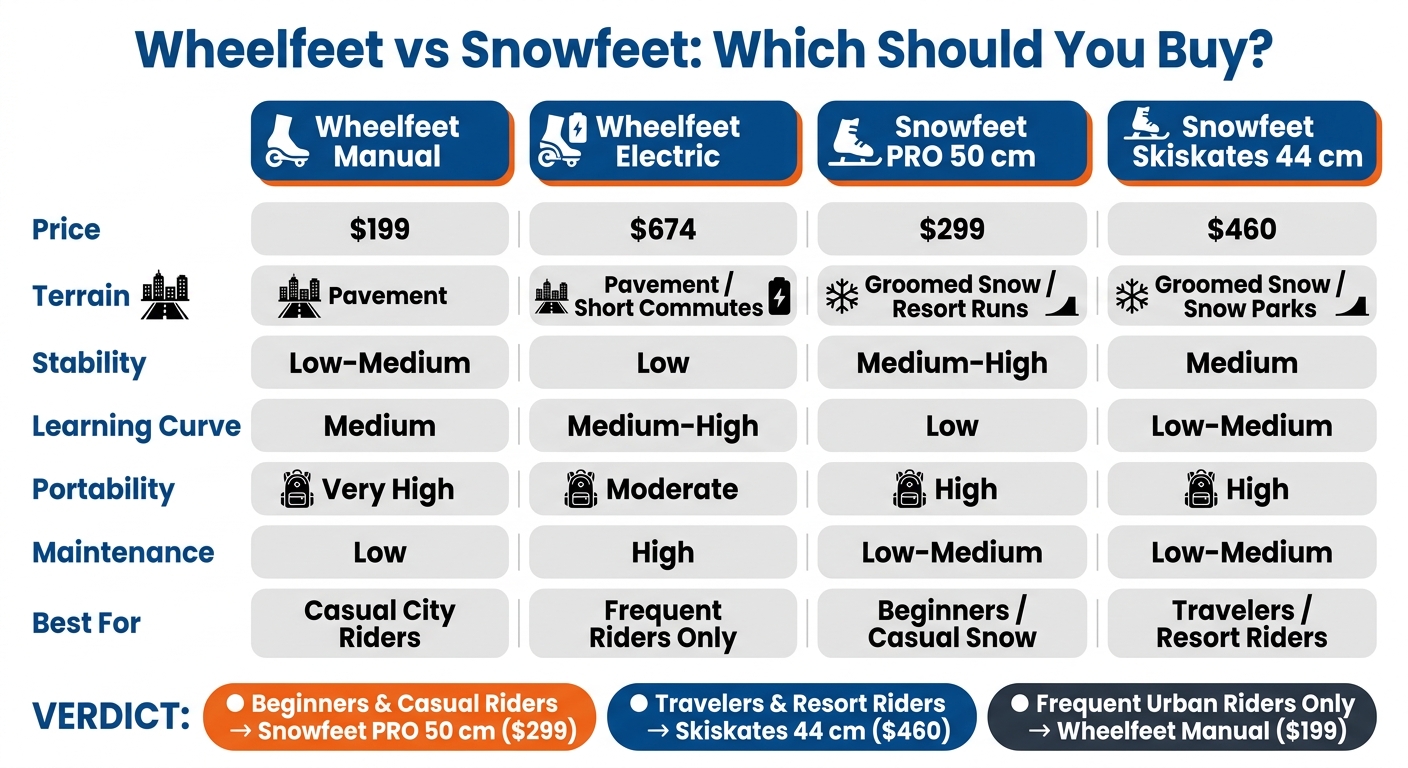
Wheelfeet vs Snowfeet: Full Product Comparison Guide
Wearable Skates | Roller Blades | Skate on Shoes | Wheelfeet | Non-electric

Quick Comparison
| Product | Price | Best Use | Stability | Learning Curve | Best For |
|---|---|---|---|---|---|
| Wheelfeet (Manual) | $199 | Pavement | Low to medium | Medium | Casual city riders |
| Wheelfeet (Electric) | $674 | Pavement, short commutes | Low | Medium to high | Frequent riders only |
| Snowfeet* Skiskates 44 cm | From $460 | Groomed snow, parks | Medium | Low to medium | Travelers, resort riders |
| Snowfeet* PRO 50 cm | From $299 | Groomed snow, resort runs | Medium to high | Low | Beginners, casual snow riders |
So, if you want my honest take: buy Wheelfeet only for compact urban use, skip the electric pair unless you’ll ride often, and choose Snowfeet* if your fun happens on snow.
If you want a feel that’s more locked in, more stable, and less sketchy on day one, Wheelfeet probably won’t be your thing.
What Wheelfeet Are and the Problem They Solve
Wheelfeet are strap-on roller skates that attach to your shoes. The big draw is simple: they’re small. So instead of hauling around bulky rollerblades, you get a compact setup that’s much easier to carry through a city, toss in a bag, or stash at home.
That matters a lot for travelers and urban riders. Full-size skates can be a pain to pack. Wheelfeet take up less space, weigh less on your day, and feel far less annoying to bring along. Of course, that only counts if they still feel steady enough to ride without turning every sidewalk into a balancing act.
Snowfeet* follows that same compact idea on snow.
Non-Electric vs. Electric Wheelfeet
There are two main versions, and the difference is pretty clear.
- The $199 non-electric version is the basic manual model. You push, glide, and stop on your own. It keeps things simple and costs a lot less.
- The $674 electric version adds motor help. That sounds fun, and it can be, but it also brings more cost, more upkeep, and more moving parts.
For a lot of casual riders, the manual version makes more sense. It’s the easier way in and doesn’t ask you to deal with extra tech. The electric model may appeal more to people who specifically want powered help. That trade-off shows up fast once you look at control and the learning curve.
Who Usually Buys Them
Wheelfeet tend to fit:
- beginners
- casual riders
- travelers who care more about compact gear than top-end ride quality
In plain English, they’re built for people who put convenience first. If your top goal is easy carry, easy storage, and a setup you can bring almost anywhere, that’s where Wheelfeet make the most sense.
That trade-off gets easier to spot once you look at ride feel, comfort, and safety. Next up is the part most people care about: how Wheelfeet feel on pavement.
Honest Review: Ride Feel, Comfort, Learning Curve, and Safety
Ride Feel and Control on Pavement
Wheelfeet feel more nimble than long-frame inline skates on pavement. They turn with less effort, and that can be fun right away. But there’s a trade-off. Because they strap onto your shoes instead of locking your feet into a full boot, they feel less stable and less locked-in than booted skates.
That’s the big fork in the road with Wheelfeet. For some people, the small size and easy carry make them feel worth it. For others, that same compact setup feels like a compromise. You gain portability, but you give up some stability. And if you go with the electric version, things get tougher fast. The added acceleration can make control feel twitchier, especially on plain old pavement where small wobbles show up right away.
Comfort, Fit, and How Long It Takes to Learn
Comfort comes down to fit. Simple as that. If the strap-on setup holds your shoe firmly, Wheelfeet feel more controlled. If the fit shifts even a bit, comfort and handling can fall off fast. Since there’s no boot around your ankle, you don’t get that extra support that many skaters rely on.
The learning curve is there, and it’s not small. Most beginners will have an easier time with the non-electric model. It gives you more room to figure out balance, foot placement, and stopping without adding motor power into the mix. The electric version asks more from you from the start: better balance, faster reactions, and a steadier stance.
Safety Basics Before You Decide
Wheelfeet reward balance and control, not speed by itself. So, don’t rush it. Start with the non-electric model and get comfortable braking before you even think about the electric version.
A few smart moves help a lot:
- Start slow
- Use a controlled space
- Focus on braking first
- Build confidence before adding speed
Because the fit feels less secure than boot-based skates, caution matters here more than with a full skate boot. Think empty parking lot, smooth path, low pressure. Not crowded sidewalks and hero moves on day one :) Once you get a feel for how they ride and how safe they feel under you, the next step is looking at whether the price and durability make sense for that trade-off.
sbb-itb-17ade95
Value and Durability: Are Wheelfeet Worth the Price?
Price-to-Fun Ratio for Casual Riders
If the ride already feels like a trade-off, the next thing that matters is simple: price and upkeep.
At $199, the non-electric Wheelfeet land in a fair range for casual gear. That price is a lot easier to swallow if you ride now and then and want something small, simple, and easy to carry. No battery. No motor. Less stuff to worry about.
The electric version at $674 is a much bigger ask. That kind of price starts to make sense only if you ride often, especially if you want motor help on hills or for longer trips. If you're just rolling around once in a while, it's tough to make the math work.
And that leads to the next piece of the puzzle: how well each version holds up over time.
Durability, Upkeep, and What to Expect Over Time
Wheelfeet take wear in the usual spots: wheels, bearings, and straps. Rough asphalt and gritty ground can chew through those parts, so you'll want to clean them and check them on a regular basis. Nothing wild, but you can't just toss them in a closet and forget about them forever.
The electric version adds more moving parts and more things that can fail. Battery care matters. Motor checks matter. Electronics can need repairs. If something goes wrong after the warranty ends, the bill can sting.
Snowfeet* Skiskates 44 cm wear in a different way. Their wear points are tied to snow use, like edges and the base. So if your riding is mostly winter-focused, Snowfeet* Skiskates 44 cm make more sense for that job.
Here’s the side-by-side view.
Comparison Table: Non-Electric vs. Electric Wheelfeet
| Feature | Non-Electric Wheelfeet | Electric Wheelfeet |
|---|---|---|
| Price | $199 | $674 |
| Speed & Range | User-dependent (manual) | Motor-assisted, faster assisted speed |
| Ease of Learning | Moderate | Steeper - requires throttle control |
| Maintenance | Low (wheels, straps, bearings) | High (battery, motor, electronics) |
| Portability | Very high - lightweight | Moderate - heavier due to battery |
| Best For | Casual riders, fitness seekers | Daily riders, regular commuters |
| Best Value For | Occasional use | Dedicated, frequent riders only |
When Snowfeet* Skiskates 44 cm or Snowfeet PRO 50 cm Are the Better Buy

Once snow enters the picture, the decision flips fast. If you want to ride on snow, Wheelfeet just aren’t the right pick.
Sure, long skis still do better at high-speed carving and deep powder. But for most casual resort riders, Snowfeet* make more sense. They’re small, easy to carry, and a lot less of a hassle.
Why Skiskates 44 cm Work Well for Beginners and Resort Riders
Skiskates 44 cm are made for groomed slopes and snow parks. They’re compact, simple to pack, and feel closer to skating than skiing. That makes them a good match for first-timers, travelers who care about packing light, and casual resort riders. They also work with ski or snowboard boots, so you don’t need to bring extra footwear.
For travel days and casual ski trips, that changes things. Instead of being stuck on pavement, you can bring a small setup and ride on snow. At $460, they cost more up front than non-electric Wheelfeet. But they give you access to snow terrain you can come back to season after season.
Why Snowfeet PRO 50 cm Suit Riders Who Want More Stability
Snowfeet PRO 50 cm are the better pick if you want a bit more support under your feet. That extra length helps with stability and makes faster riding feel more controlled. They fit riders who like the short-ski feel but want more support than the smallest option gives. At $299, they’re also the most budget-friendly way into the Snowfeet* lineup if you want actual snow use.
One thing to know: both Snowfeet* models work best on groomed snow and light powder up to about 4 inches (10 cm) deep. Once you get into deep backcountry snow, long skis still float better and feel steadier.
Comparison Table: Wheelfeet vs. Skiskates 44 cm vs. Snowfeet PRO 50 cm
Here’s the short side-by-side view.
| Feature | Wheelfeet (Non-Electric) | Skiskates 44 cm | Snowfeet PRO 50 cm |
|---|---|---|---|
| Price | $199 | $460 | $299 |
| Terrain | Urban pavement only | Groomed slopes, snow parks | Groomed slopes, resort runs |
| Learning Curve | Moderate | Low to moderate | Low |
| Portability | Very high | High | High |
| Stability | Low to moderate | Moderate | Moderate to high |
| Footwear Compatibility | City shoes only | Ski or snowboard boots | Ski or snowboard boots |
| Best For | Urban casual skating | Beginners, travelers, resort riders | Riders who want more stability on snow |
That’s the cleaner head-to-head with Wheelfeet. And yeah, it makes the buy-or-skip call a lot easier.
Verdict: Who Should Buy Wheelfeet and Who Should Choose Snowfeet*
After ride feel, safety, and price, this mostly comes down to where you ride.
Wheelfeet make sense for frequent urban riders who want compact gear for pavement and don’t mind dealing with battery care, local rules, and safety gear. The $199 non-electric version is the easier buy, but only if you plan to use it on a regular basis.
For most casual riders, the downsides stack up fast. And for winter sports? They’re just not a good match.
Here’s the simple breakdown:
- Beginners and most casual riders: Snowfeet PRO 50 cm ($299)
- Travelers and resort riders: Skiskates 44 cm ($460)
- Frequent urban riders only: Wheelfeet
FAQs
Are Wheelfeet hard to stop safely?
Yes. Wheelfeet and similar off-brand gear can be tough to stop in a safe, controlled way. The big reason is simple: they often miss the purpose-built engineering you get in better-made products.
By contrast, genuine Snowfeet models use premium metal ski edges and an integrated heel brake. That setup gives you better control and more stopping power.
Budget options often cut corners on materials and build quality. And when that happens, performance can feel less steady and less predictable.
What shoes work best with Wheelfeet?
Wheelfeet work with the footwear you already have, which is a big part of the appeal. Their adjustable bindings make it easy to swap between different boot styles without a bunch of hassle.
They pair well with:
- Waterproof winter boots for casual outings, sledding hills, or light trails
- Snowboard boots for more serious slope use, with better support and control
- Ski boots for aggressive carving on groomed runs
They also fit a broad size range, usually US 4.5–14.5 (EU 36–49).
Are Wheelfeet worth it if I only ride occasionally?
If you only ride once in a while, Wheelfeet usually don’t make the most sense. Sure, they can be fun, and the price can look pretty tempting. But they still need specific gear and upkeep, which can feel like a hassle if you’re not using them much.
In that same $80 to $200 price range, a sturdy set of skates may be a smarter buy over time if you want to keep riding. For most casual riders, Snowfeet* offer more flexibility, are easier to carry, and are simpler to use on snowy ground.
Related Blog Posts
- Best Affordable Strap-On Skates: Skate on Any Shoes (2026 Guide) ← Snowfeet positioning
- What Are Strap-On Skates and How Do They Work? (Snowfeet & Wheelfeet Explained)
- Best Electric Inline Skates in 2026 (Wheelfeet vs. Alternatives)
- Best Ice Skates for Family Fun (Affordable Strap-On Skates for Everyone)












Zanechte komentář
Tento web je chráněn službou hCaptcha a vztahují se na něj Zásady ochrany osobních údajů a Podmínky služby společnosti hCaptcha.