




















Snow sports are fun, but they come with a cost - the planet pays the price. From travel emissions to gear waste, the impact adds up fast. Here's the good news: small changes can make a big difference.
Key Tips for Greener Snow Sports:
- Gear Smarter: Pick durable equipment that lasts longer and uses fewer materials. Brands like Snowfeet offer compact, eco-conscious options.
- Travel Better: Ditch solo car trips. Opt for trains, buses, or carpools to cut emissions.
- On the Slopes: Stay on trails, avoid waste, and pack reusable items.
- Community Action: Join or organize clean-up events at ski resorts to tackle litter and promote recycling.
This guide dives into how you can enjoy snow sports while reducing your footprint. Let’s keep the slopes ready for future generations.
The Impact of Snow Sports on the Environment
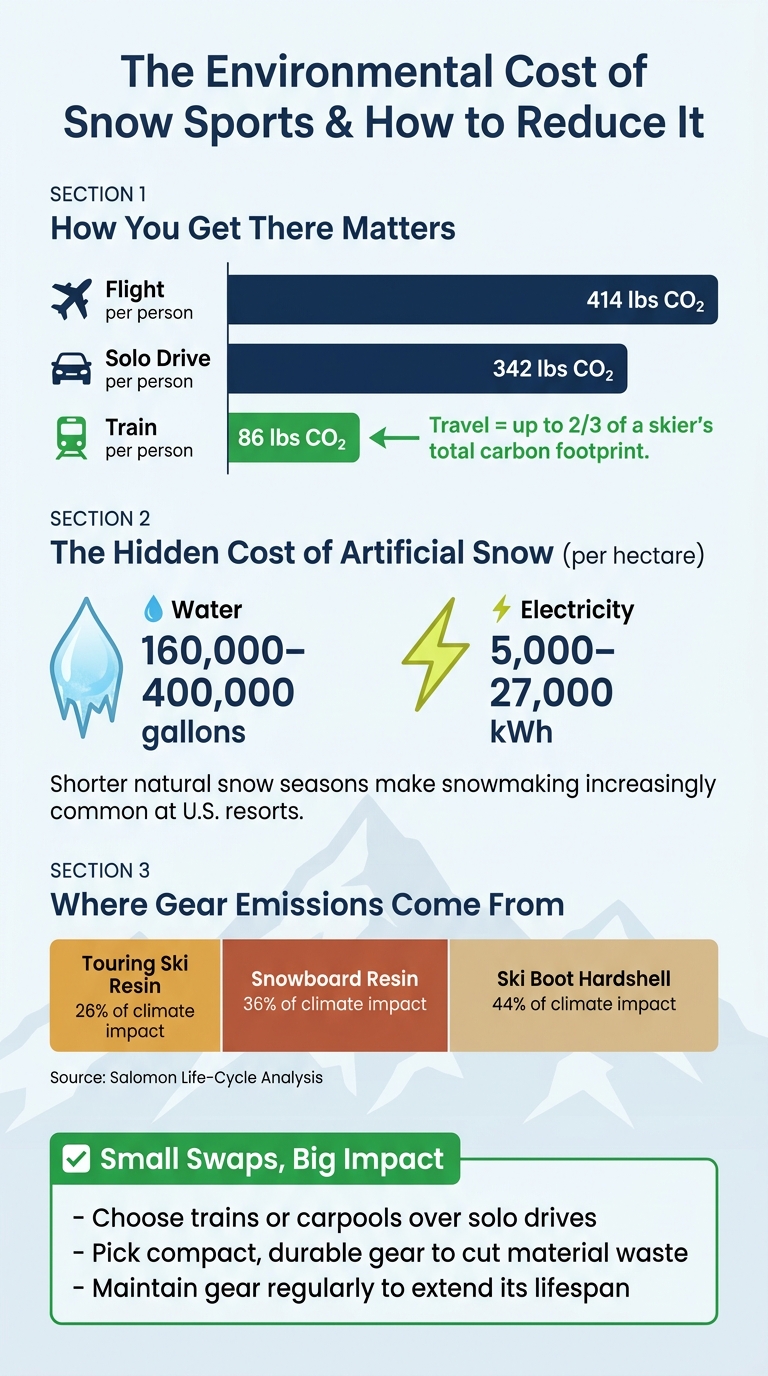
CO₂ Emissions & Eco-Impact: Traditional vs. Sustainable Snow Sports
Where the Damage Comes From
Snow sports take a toll on the environment, and the effects come from multiple sources.
Travel is the biggest contributor. Getting to and from ski resorts makes up as much as two-thirds of a skier's carbon footprint. Many skiers still drive solo, even though trains produce far fewer emissions compared to cars or planes.
Once on the mountain, resort operations add to the problem. Artificial snowmaking, which has become essential at many U.S. resorts due to shorter natural snow seasons, uses enormous amounts of resources. To cover just one hectare, snowmaking can require between 160,000 and 400,000 gallons of water and anywhere from 5,000 to 27,000 kWh of electricity.
Gear manufacturing is another factor. Traditional ski and snowboard gear relies heavily on petroleum-based materials like resins, plastics, and laminates. For example, Salomon’s life-cycle analysis shows that resin accounts for 26% of a touring ski’s climate impact and 36% of a snowboard’s. Even the hardshell of a typical ski boot represents 44% of its total climate impact. As Xavier Le Guen, Salomon's Vice-President, explained:
"Our goal is to develop a methodology for calculating the environmental impact of all winter sports equipment. This could be the foundation of a future product environmental performance labeling system."
Snowfeet*, by comparison, uses lightweight and durable materials designed to lower both production and transport emissions.
Chemical pollution is another issue. Fluorinated ski waxes release PFAS - nicknamed "forever chemicals" - into the snow, which then accumulate in soil, waterways, and aquatic life. Stefan Reimann from Empa summed it up:
"It simply makes no sense to release such stable substances into the environment for a few minutes' advantage in a race."
These challenges highlight the importance of developing smarter, more sustainable gear solutions, like compact equipment, to reduce the overall environmental burden.
Compact Gear vs. Full-Size Equipment
Choosing smaller, more efficient gear can help address many of these environmental issues. The size of your equipment plays a surprisingly big role in both production and transportation impacts.
Traditional skis and snowboards require a lot of raw materials, including wood cores, resin layers, metal edges, plastic surfaces, and intricate bindings. Each component adds to the environmental footprint. On the other hand, Snowfeet* offers compact gear built to reduce material use from the beginning. Their products are made with fiberglass-reinforced polyamide, which is stronger than the wood cores used in traditional skis. This durability means fewer replacements and less waste over time.
Compact gear also has clear transport benefits. Full-size skis often require roof racks (which increase fuel consumption) or lead to oversized luggage fees on flights and trains. Snowfeet* products, however, fit easily into a standard backpack, making it more practical to choose public transit, carpooling, or buses over solo driving. As Jenn Swain, Burton’s Global Senior Sustainability Manager, put it:
"The most sustainable product is the one that lasts."
Here’s a quick look at CO₂ emissions by travel method:
| Travel Method | CO₂ Emissions (per person) |
|---|---|
| Flight | 414 lbs |
| Solo Drive | 342 lbs |
| Train | 86 lbs |
Compact gear that fits in a backpack makes eco-friendly travel options, like trains or carpooling, much easier to choose.
How to Choose Gear That Reduces Waste
What to Look for in Low-Impact Gear
Not all gear is built with the same level of care for the planet. Some products may appear eco-friendly but don’t hold up under scrutiny. Here’s what to focus on when selecting gear that genuinely reduces waste:
Durability is key. The longer your gear lasts, the less often you’ll need to replace it, cutting down on waste. Look for features like full metal edges, sintered bases, and sturdy core materials. These aren’t just about better performance - they also mean your gear can handle more seasons. Replacing gear every couple of years creates a much bigger environmental footprint than using gear that lasts for a decade.
Materials matter. Opt for equipment made from certified sustainable wood cores or fiberglass-reinforced materials. Steer clear of products that heavily depend on virgin petroleum-based plastics if alternatives are available. Also, prioritize gear that’s easy to repair - this can add years to its life. (Check out the maintenance tips below for more on this.)
Lastly, think about boot compatibility. Gear that works with standard winter shoes or snowboard boots saves you from buying a separate pair of rigid ski boots. That’s one less item to manufacture, ship, and eventually toss out.
When brands combine these features with thoughtful design, the benefits multiply.
Why Snowfeet* Is a Greener Choice

Snowfeet* is an excellent example of a brand that aligns with these low-impact principles. Unlike traditional ski gear that often uses bulky and resource-heavy materials, Snowfeet* focuses on streamlined designs that prioritize both durability and reduced material use.
Take their product range, for instance. Snowfeet* offers gear that’s between 44 cm and 120 cm in length - far shorter than standard skis, which often exceed 140 cm. This means they use significantly fewer raw materials. Their Snowfeet PRO model is a standout, made with fiberglass-reinforced polyamide. According to the Snowfeet team, this material offers better durability than traditional wood-core skis:
"Snowfeet PRO are more durable than skis with woodcore. Trust me, we make both. The main reason is the material - fiberglass reinforced polyamide." - Snowfeet Team
Some of their models also incorporate certified sustainable wood cores, and the company manufactures in the Czech Republic, reducing emissions from long-distance transportation. Even their packaging reflects their commitment to sustainability:
"We use small family-owned manufacturers... Our packaging is eco-friendly. We try to use as little packaging as possible." - Snowfeet Team
Another plus? Most Snowfeet* models are compatible with standard winter shoes or snowboard boots, so you don’t need to invest in dedicated ski boots. This eliminates the need for another piece of gear in the manufacturing and waste cycle. With over 5,500 verified reviews averaging 4.9/5 stars, their durability claims are backed by real-world use.
How to Maintain Gear So It Lasts Longer
Buying sustainable gear is a great start, but how you care for it is just as important. Proper maintenance ensures your gear delivers on its promise of longevity and keeps its performance sharp.
The simplest habit? Dry your edges after every use. Metal edges can rust fast if stored wet, and rust is a quick way to shorten your gear’s lifespan. A quick wipe with a dry cloth before packing up takes just a minute. For long-term storage, apply a thin layer of oil to the edges to prevent rust while your gear sits unused.
For the base, wax it every 4–6 days of skiing - or even daily during multi-day trips. This prevents the base from drying out or cracking, keeps your glide smooth, and protects the material underneath. Snowfeet suggests using liquid wax for quick touch-ups between sessions when a full hot-wax job isn’t practical.
Here’s a quick maintenance guide to keep your gear in top shape:
| Maintenance Task | Frequency | Why It Matters |
|---|---|---|
| Dry metal edges | After every use | Prevents rust and corrosion |
| Wax the base | Every 4–6 ski days | Protects base material and improves glide |
| Sharpen edges | When control decreases | Maintains grip on packed or icy snow |
| Check bindings | Before every trip | Prevents wear from loose fittings |
| Oil edges | Before seasonal storage | Long-term rust prevention |
One extra tip: Adjust your bindings at home with the boots you’ll actually use. This ensures a proper fit and reduces mechanical stress on the hardware, helping it last longer.
Taking these steps not only keeps your gear in great shape but also supports the eco-friendly mission of brands like Snowfeet*. It’s a win-win for you and the planet!
Cutting Your Impact on the Slopes
Getting to Ski Areas with Less Emissions
How you get to the slopes plays a huge role in reducing the environmental footprint of your ski trip. Private cars, especially with roof racks or ski carriers, can guzzle more fuel due to increased aerodynamic drag. A better option? Carpooling or taking public transit. Both significantly cut emissions per person. Many top U.S. ski spots, like Park City, Utah, and Breckenridge, Colorado, even offer free or low-cost shuttles from nearby towns. With compact gear that easily fits into a backpack, you can skip the hassle of lugging bulky equipment. Once you're at the mountain, every small choice you make can further reduce your impact.
Responsible Behavior on the Mountain
After opting for greener travel, how you behave on the slopes matters just as much. Staying on marked trails is essential - not just for your safety, but also to protect delicate mountain ecosystems and wildlife, especially during breeding seasons. Plus, groomed trails help save your gear from unexpected damage caused by hidden rocks in thin snow, often called "sharky" conditions. Beyond that, simple habits make a big difference: pack out all your trash, carry a reusable water bottle, and pick snacks that don’t involve single-use wrappers. These small actions help keep the mountain as pristine as you found it.
How Snowfeet* Supports Low-Impact Travel
Snowfeet* gear takes low-emissions travel to the next level. Thanks to its compact design, Snowfeet* simplifies transportation logistics. Unlike traditional skis, Snowfeet* Skiskates are just 44 cm (about 17 inches) long and fit neatly into a standard backpack. That means no need for a roof rack, no extra drag on your car, and a breeze to bring along on public transit.
"Snowfeet are made in heart of Europe, the Czech Republic. Thus we reduce the need for transport." - Snowfeet
Customers love the convenience. Many reviews highlight how much easier Snowfeet* gear is to carry compared to full-size skis. For anyone aiming to ski sustainably without compromising on performance, this portability represents a game-changer in how you travel to and from the slopes.
sbb-itb-17ade95
How to Organize a Community Clean-Up at Your Local Ski Area
Why Community Clean-Ups Make a Difference
When the snow melts after ski season, it reveals a surprising amount of hidden litter - tiny bits of trash like cigarette butts, gum wrappers, and pieces of lift tickets. These can harm wildlife and pollute nearby water sources. One particularly concerning issue is ski wax scrapings left in parking lots. Many traditional fluoro waxes contain PFAS, also known as "forever chemicals", which can contaminate snowmelt and eventually flow into rivers and streams.
But it’s not just about cleaning up the environment. These events also give volunteers a unique opportunity to experience the mountain in its natural state - without the snow. Seeing the terrain’s natural features, vegetation, and contours can help deepen their appreciation for the environment in a way that’s impossible on a groomed ski day.
Step-by-Step: Planning a Clean-Up Event
Pulling off a successful clean-up event takes planning, strong partnerships, and clear organization. Here's how to make it happen:
-
Get Permissions First
Start by contacting your local ski resort’s operations or sustainability team. You’ll need their permission to access the mountain after the season ends, especially in higher-altitude areas. Partnering with the resort can also give you access to key resources like parking, trash bins, and transportation. -
Recruit Through Trusted Voices
People are more likely to join when the invitation comes from groups they already know. Spread the word through local ski clubs, outdoor organizations, and groups like Protect Our Winters (POW), which already have active volunteer networks. Keep communication digital to align with the event’s eco-friendly goals. -
Handle Logistics Carefully
After the lifts close for the season, you’ll need to arrange transportation for volunteers to reach high-altitude cleanup spots. Vans or minibuses work well for this. Make sure volunteers have access to gloves and small bags for picking up microtrash, and set up clearly labeled bins for recycling, compost, and trash to make sorting easier.
A great example of this kind of event is the "YUKIGOI Mountain Clean" held in April 2025 at Maiko Snow Resort in Niigata Prefecture. During that event, 28 volunteers were transported by van to the Nagamine and Maiko areas, where they spent two hours collecting trash - especially under lift lines. By the end, they had filled the bed of a pickup truck with litter. The event ended with a communal lunch featuring local Minamiuonuma koshihikari rice, cooked using rice husks as fuel. Now in its fourth year, this event has become a community favorite.
"Small steps toward sustainability can have transformative impacts when adopted widely and integrated into larger initiatives. Think of this as the 'snowball effect.'" - FIS (International Ski and Snowboard Federation)
Want to take your event to the next level? Add a gear recycling drive to your clean-up day.
Adding Gear Recycling to Your Clean-Up
Pairing a gear recycling drive with your clean-up is a simple way to keep old equipment out of landfills. Set up a drop-off point where participants can bring unwanted skis, snowboards, poles, and boots. Some companies, like Jones Snowboards, already have recycling programs you can partner with to ensure the gear is processed responsibly.
Usable gear can be donated to local youth programs or community ski clubs. Broken items? Those can often be sent to recycling facilities that specialize in repurposing materials. You could even host a ski swap during the event, which adds a fun, social element while promoting gear reuse.
"The most sustainable product is the one that lasts. Seek out high-quality, durable gear that's produced using fair labor practices and environmentally preferred materials." - Jenn Swain, Global Senior Sustainability Manager, Burton
And if you’re looking for gear that minimizes waste, consider compact options like Snowfeet*. These require far fewer materials to produce compared to traditional skis, making them a lower-impact choice overall.
Conclusion: Building Better Habits in Snow Sports
Let’s bring it all together - eco-friendly gear, smarter travel, and sustainable habits can make a real difference on the slopes.
Key Takeaways
Consistency is the name of the game. Choose gear that's built to last, reduces environmental impact, and helps cut down waste. Travel smarter by keeping emissions in mind, and don’t forget to be mindful about waste on the mountain. Small habits, like drying your edges to prevent rust or taking part in clean-up events, can add up over the course of a season.
How Brands Like Snowfeet* Are Changing the Industry
Traditional skis often come with bulky designs, requiring more raw materials and creating challenges for transport. Snowfeet* is flipping the script. Their products - like 44 cm (about 17 inches) skiskates and 99 cm (about 39 inches) short skis - are made in the Czech Republic using small, family-owned factories. This approach not only supports local businesses but also keeps transport emissions in check.
"Snowfeet are made in heart of Europe, the Czech republic. Thus we reduce the need for transport. We use small family-owned manufacturers. Our packaging is eco-friendly." - Snowfeet Team
Their fiberglass-reinforced polyamide models are built to last longer than traditional wood-core skis, meaning fewer replacements are needed. Plus, all their products fit into a standard backpack, making it easier to embrace low-impact travel - like hiking to a local hill instead of driving to a major resort. With over 50,000 riders worldwide and a 4.9/5 rating from more than 5,500 verified reviews, it’s clear that this approach is striking a chord with snow sports enthusiasts who care about sustainability. These innovations show how small changes can lead to a big impact.
Start Making Changes Today
Why wait? Start small. Keep your gear in top shape with regular waxing and oiling. When it’s time to upgrade, look for compact, locally made options like Snowfeet*. Get involved in local clean-ups and make sustainable choices part of your routine. Every choice - whether it’s swapping gear, joining a clean-up, or simply sparking a conversation - can help build a better future for snow sports. Let’s make it happen, one step at a time.
FAQs
What’s the biggest way to cut my ski trip emissions?
The best way to make your ski trip more eco-friendly is by cutting down on transportation emissions and choosing gear that's compact and lightweight. Snowfeet* skiskates and skiblades are a game-changer here. They ditch the need for bulky equipment and oversized bags. Plus, they’re crafted in family-run European factories and come with eco-conscious packaging. That means you can travel lighter and greener compared to lugging around traditional, resource-intensive ski gear.
How can I avoid PFAS in ski wax and gear?
To steer clear of PFAS in ski wax, look for products specifically labeled as PFAS-free or fluoro-free. If you're getting your gear serviced, double-check that your shop uses non-fluorinated wax alternatives. For those waxing at home, make sure to work in a well-ventilated area and wear a mask to minimize inhalation risks.
For a greener option, consider Snowfeet* gear. Their compact designs aim to reduce environmental impact while still delivering great performance and plenty of fun on the slopes.
Do short skis like Snowfeet* really reduce my footprint?
Snowfeet* gear is all about keeping things green and simple. Manufactured in the Czech Republic, they focus on working with small, local producers to keep transport emissions low. Their packaging? It's eco-friendly and minimal, helping to reduce waste. Plus, the compact design means you can skip the hassle of lugging around huge ski bags or installing roof racks. It’s a win for both you and the environment.












Zanechte komentář
Tento web je chráněn službou hCaptcha a vztahují se na něj Zásady ochrany osobních údajů a Podmínky služby společnosti hCaptcha.