



















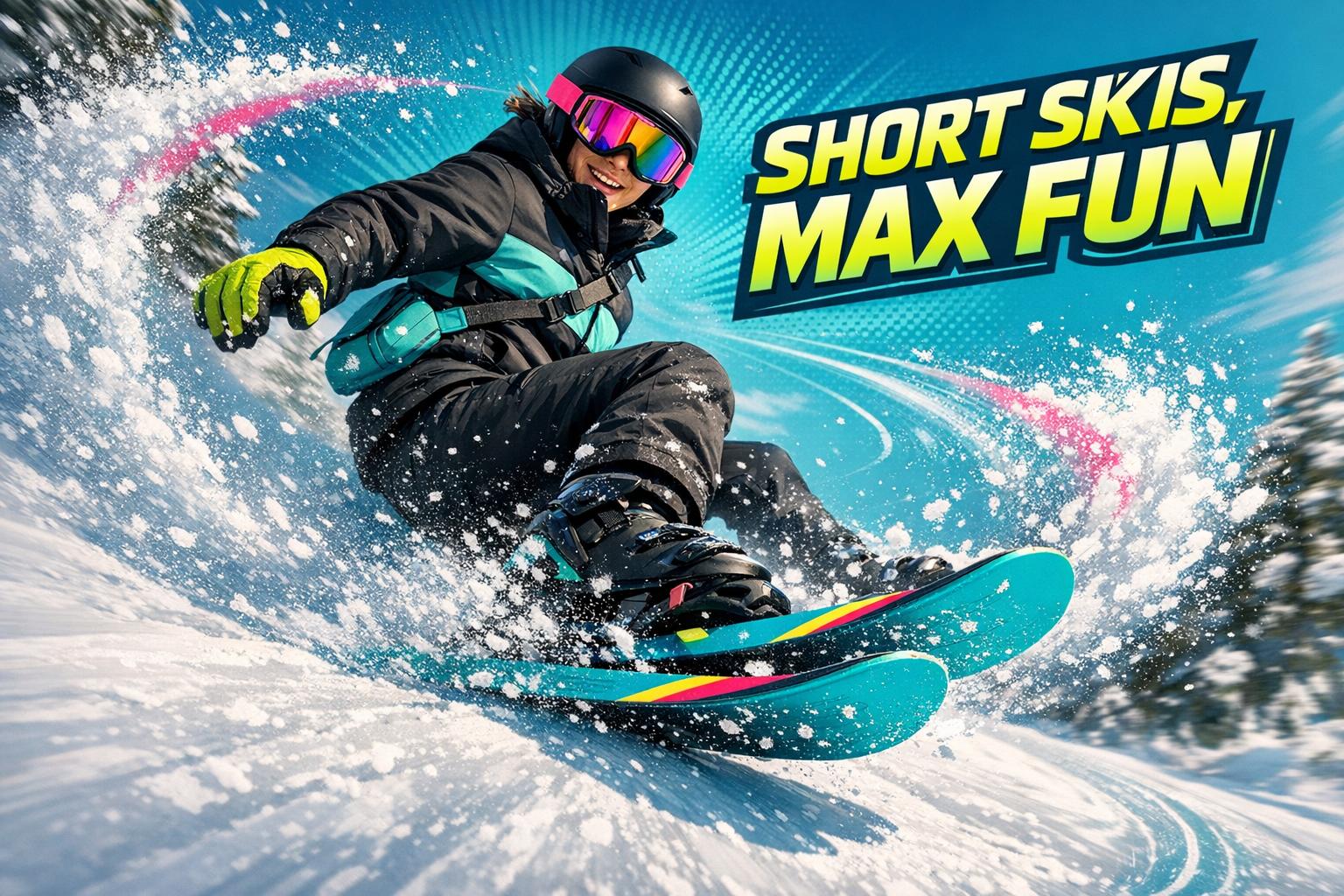
Imagine hitting the slopes with gear so compact it fits in your backpack. That’s what Snowfeet* Mini Ski Skates bring to the table. These 17-inch mini skis attach to your regular boots, offering a lightweight, playful alternative to bulky skis or snowboards. Perfect for groomed trails and small hills, they’re easy to learn, responsive, and way easier to carry around. Plus, starting at $250, they’re budget-friendly compared to traditional setups.
Why Snowfeet*?
- Portability: Fits in a backpack - no roof racks or oversized bags needed.
- Ease of Use: Skate-like feel makes them beginner-friendly.
- Control: Great for sharp turns and tricks, though not ideal for deep powder or high-speed runs.
- Cost: Cheaper than most ski or snowboard setups, and they work with boots you already own.
If you want quick, hassle-free fun on the slopes, Snowfeet* is worth a shot. For speed demons or powder chasers, skis or snowboards might still be your go-to. Either way, these mini skates are a fun addition to any winter gear lineup.
1. Snowfeet* Mini Ski Skates
Portability
Snowfeet* Mini Ski Skates are a game-changer when it comes to portability. Measuring between 15 and 50 inches, they’re a breeze to carry compared to traditional skis that range from 60 to 73 inches. These mini skis can fit into a standard backpack, slide into any car trunk, and make public transit a hassle-free experience - no need for bulky roof racks or oversized ski bags.
"Snowfeet are incredible! Super fun in so many situations! I loved how easy they are to carry in a backpack with their handy waterproof bag!" - Michele, verified customer
For folks in the U.S., this means you can grab them for a quick after-work session or toss them in your carry-on for a spontaneous weekend adventure.
Learning Curve
If you’ve ever skated before, you’ll probably pick up Snowfeet* in about five minutes. Their short length eliminates one of the biggest headaches for beginners - crossing ski tips. Start on a mellow green run, and don’t forget your protective gear to stay safe while you get the hang of things.
Control and Versatility
The compact size of Snowfeet* makes them incredibly responsive. You’ll notice how easy it is to make sharp slalom turns, pull off small jumps, or even try spins. Thanks to their full metal steel edges and parabolic shape, they handle groomed runs and hardpack like a pro. They can even manage light powder up to 4 inches (10 cm). While they’re perfect for playful, agile riding at moderate speeds, they’re not designed for high-speed carving or tackling big-mountain terrain. For those kinds of adventures, traditional skis or snowboards might still be the better choice.
Cost
One of the best parts? The price. Entry-level Snowfeet* models start at around $250, which is much less than a full beginner ski setup that can easily exceed $500. Most models fall between $250 and $690, depending on size and materials. Plus, they work with winter or snowboard boots you might already have, saving you even more. Maintenance is straightforward too - wood-core models come pre-waxed, and fiberglass ones only need occasional waxing. It’s an affordable and low-maintenance way to hit the slopes.
2. Standard Skis
Portability
Standard adult skis, which typically range from 4.6 to 6.2 feet in length, can be a hassle to travel with. Airlines often charge extra fees for oversized gear, and if you're driving, you'll likely need a roof rack or cargo box to transport them. Once you're back in the city, finding storage for these bulky items can also be a challenge.
Learning Curve
Getting the hang of standard skis takes time. Beginners often need a full day of lessons just to grasp the basics like turning and stopping. Their longer length and stiff boots can make tight turns feel tricky and exhausting, especially for those just starting out. In comparison, Snowfeet* mini skis simplify the learning process and can help cut down on both time and costs.
Control and Versatility
Standard skis excel when it comes to grip and stability, especially at higher speeds. Their longer edges make them great for carving on groomed trails, handling icy patches (like those often found in the Northeast), or even gliding through light powder in places like Utah. All-mountain skis, the most popular type in the U.S., are built to handle a variety of terrains, making them a solid choice for skiers looking for one setup that can adapt as their skills improve. However, their length can be a downside in tight spaces or when trying to pull off quick pivots and playful tricks.
Cost
A complete adult ski setup, including skis, bindings, boots, and poles, usually runs between $600 and $900 or more, with high-end gear easily exceeding $1,000. Rentals aren't exactly cheap either, costing around $40–$70 per day. Add in the ongoing expenses for tune-ups, waxing, and storage, and it’s clear why some skiers are opting for more compact and budget-friendly alternatives.
3. Snowboards
Portability
An all-mountain snowboard typically measures 57 to 65 inches long and weighs about 15–20 pounds when you include bindings and boots. Transporting one can be a hassle - it requires a dedicated board bag and often racks up oversize luggage fees when flying. In contrast, Snowfeet* Skiskates are just 17.3 inches long and fit easily into a standard backpack. No need for a roof rack, extra airline costs, or awkwardly lugging gear through the lodge.
Learning Curve
Snowboarding comes with a steep learning curve. Both feet are locked to the board, making balance tricky and complicating tasks like getting off chairlifts or coming to a stop. Beginners often need 2–3 days of lessons to get the hang of it, and common injuries include wrist fractures and tailbone bruises.
Control and Versatility
Snowboards excel on groomed runs, carving smoothly and floating well in powder thanks to their wide nose. But they’re not as user-friendly in flat areas or tight spaces. Riders often have to unstrap a foot to maintain balance or push forward. Snowfeet* Skiskates, on the other hand, allow independent leg movement and feature a short edge that makes quick pivots and spins a breeze. One Snowfeet* user shared:
"I had no muscle soreness after using these because I can change my leg position, unlike the snowboard which is set. I won't be getting much use out of my snowboard anymore." - Sunshine Straiges
Cost
A beginner snowboard package will set you back $400–$600, while mid-range options can climb to $700–$1,000 or more. Rentals cost around $40–$60 per day, and seasonal tune-ups add another $30–$60. For someone who doesn’t hit the slopes often, this can add up quickly - making the portability and simplicity of Snowfeet* products an appealing alternative.
sbb-itb-17ade95
Snowboarder tries Snowfeet* | Which Snowfeet* Short Ski is the Best? | Snowblades 44, 65, 99 Review
Pros and Cons at a Glance
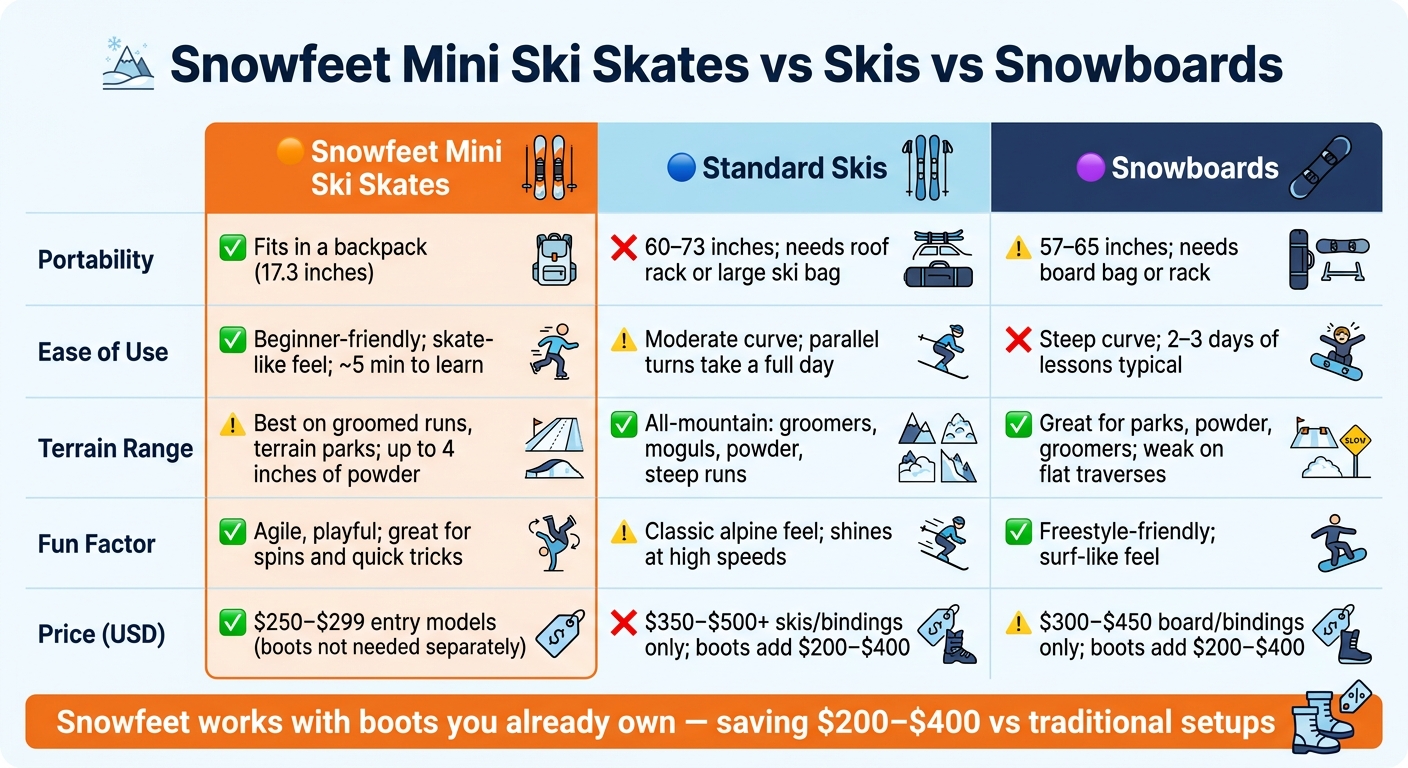
Snowfeet Mini Ski Skates vs Skis vs Snowboards: Full Comparison
Let’s break down how Snowfeet* Mini Ski Skates, standard skis, and snowboards stack up in four key areas: portability, ease of use, terrain range, and price.
| Snowfeet* Mini Ski Skates | Standard Skis | Snowboards | |
|---|---|---|---|
| Portability | ✅ Compact enough to fit in a backpack; no roof rack needed | ❌ Long and bulky; requires a roof rack or large ski bag | ⚠️ Easier than skis but still needs a board bag or rack |
| Ease of Use | ✅ Beginner-friendly with a skate-like feel | ⚠️ Moderate learning curve; parallel turns take time to master | ❌ Steeper learning curve; locked-in sideways stance can feel awkward at first |
| Terrain Range | ⚠️ Best for groomed runs, small hills, and terrain parks; struggles in deep powder or steep icy slopes | ✅ Handles everything: groomers, moguls, powder, and steep runs | ✅ Great for parks, powder, and groomers; less ideal for flat traverses |
| Fun Factor | ✅ Agile and playful; perfect for spins and quick tricks | ⚠️ Classic alpine vibe; shines at high speeds | ✅ Freestyle-friendly with a surf-like feel |
| Price (USD) | ✅ $250–$299 for entry models | ❌ Starting at $350–$500+ for skis and bindings (boots not included) | ⚠️ Around $300–$450 for board and bindings (boots not included) |
Snowfeet* stands out for its portability and lower overall cost. Unlike traditional skis and snowboards, which require separate boots and bindings that can add $200–$400 or more, Snowfeet* keeps things simple and budget-friendly.
While standard skis offer the best performance for all-mountain adventures, Snowfeet* shines on groomed trails and terrain parks. Plus, when it comes to travel, their compact size is a game-changer.
Here’s what one happy customer had to say:
"Easier to haul on hills & vacations than traditional skis!" - heyjerz, Snowfeet* Customer
Conclusion
When it comes to winter sports gear, Snowfeet* Mini Ski Skates hit the sweet spot for most riders by offering unmatched portability, easy control, and instant fun on the slopes. These features combine to create a hassle-free alternative that stands out from traditional options.
Think of it this way: if you’re after quick winter thrills on groomed trails, small hills, or terrain parks - and don’t want to deal with bulky equipment - Snowfeet* is a no-brainer. For high-speed downhill runs or precision carving, traditional skis still take the lead. And if you’re all about powder days and a sideways stance, a snowboard is the better fit.
What sets Snowfeet* apart is how they simplify the whole winter sports experience. They’re compact enough to toss in your trunk, no roof rack required, and they work with the boots you already own. With over 2,297 reviews and an impressive 4.89 out of 5 rating from verified users, it’s clear that riders love how these mini ski skates deliver on their promise.
Even if you’re already a skier or snowboarder, Snowfeet* Mini Ski Skates make a great addition to your gear lineup. They’re ideal for those days when you just want a quick, playful session without the hassle of lugging everything around. For most casual and recreational riders in the US, this kind of versatility is tough to pass up.
FAQs
What boots do Snowfeet* Mini Ski Skates work with?
Snowfeet* Mini Ski Skates (38 cm) are built to pair with your regular, sturdy winter boots. No need to invest in pricey, specialized ski boots like you would for traditional skiing. Depending on the specific model and bindings, they even work with snowboard boots. This setup gives you more flexibility, added comfort, and makes learning quicker and easier - plus, you can skip the hassle of renting gear.
Are Snowfeet* safe for beginners, and what protective gear should I wear?
Snowfeet* are perfect for beginners because of their small size, which makes them less daunting and easier to handle compared to traditional skis. Their design feels similar to ice skating or rollerblading, allowing most people to get the hang of gliding in just a few minutes.
For safety, it’s a good idea to wear a helmet. Plus, you get the convenience of using your own winter boots. Snowfeet* also come equipped with metal edges for better grip and often include heel brakes to help with stopping.
Can I use Snowfeet* at most U.S. ski resorts, or are they restricted?
Yes, Snowfeet are allowed at many ski resorts across the U.S. Thanks to features like full metal edges, heel brakes, and safety leashes, they meet the safety standards established by groups like the National Ski Areas Association. Resorts such as Vail and Breckenridge typically allow them, but policies can vary. It’s always a good idea to review the resort’s equipment guidelines online or reach out to mountain management for confirmation before heading out.











Zanechte komentář
Tento web je chráněn službou hCaptcha a vztahují se na něj Zásady ochrany osobních údajů a Podmínky služby společnosti hCaptcha.