







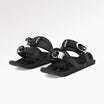












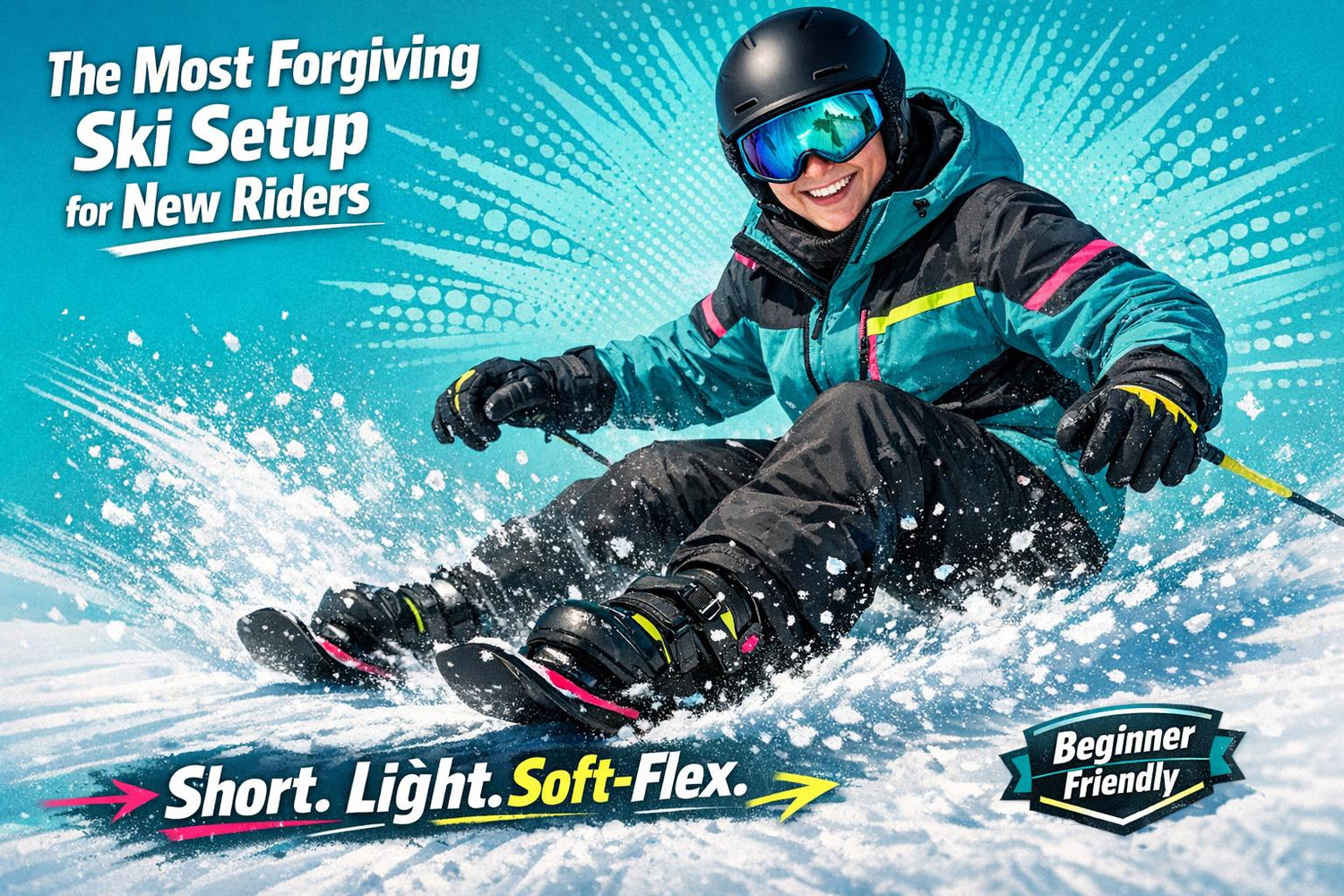
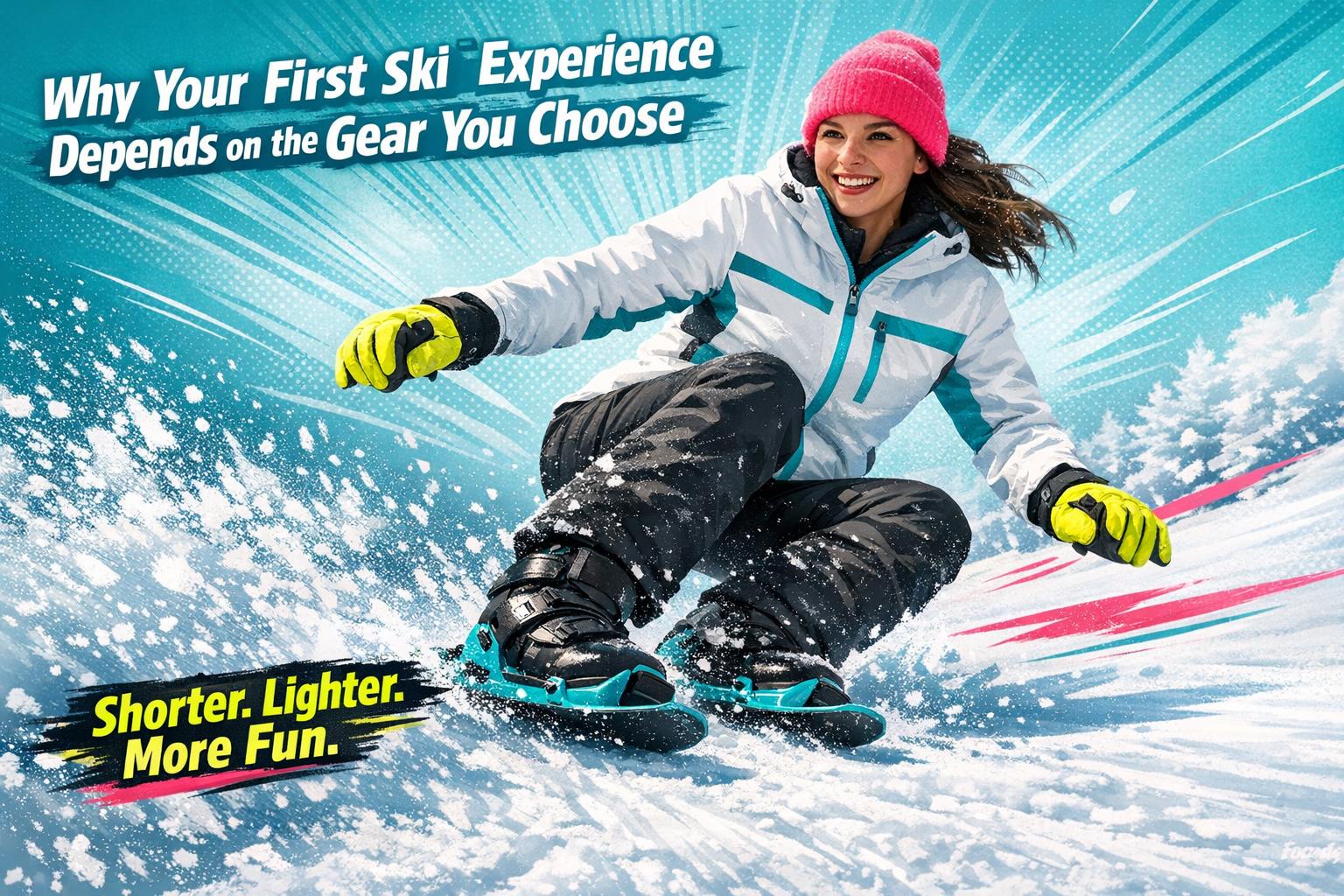
If you’re new to skiing, the right gear can make or break your experience. Most rental skis are long and heavy, making it harder to turn, stop, and stay balanced. That’s why shorter, lighter skis - like those from Snowfeet* - are a game-changer for beginners. They’re easier to control, less intimidating, and help you learn faster.
Here’s the scoop:
- Shorter skis (44–120 cm) make turning and stopping smoother.
- Lightweight designs reduce strain and keep you balanced.
- Soft flex means the skis respond to small movements, perfect for learning.
- Portable gear is easier to carry and store, saving you hassle.
Snowfeet* offers options like Skiskates (44 cm) for a skate-like feel, Skiblades (65–99 cm) for stability, and Short Skis (120 cm) for a more classic ski vibe. Whether you’re hitting local hills or beginner slopes, these setups are built to help you gain confidence and actually enjoy your time on the snow.
Want to spend less time falling and more time skiing? Stick with something light, short, and forgiving. Snowfeet* has you covered.
Snowboarder tries Snowfeet* | Which Snowfeet* Short Ski is the Best? | Snowblades 44, 65, 99 Review
What Makes a Ski Setup Easy to Learn On?
When you're just starting out, the right ski setup can make all the difference. Four key factors - length, weight, flex, and portability - are what set beginner-friendly gear apart. These are also the reasons Snowfeet* designs are so beginner-oriented.
Short and Lightweight Skis
Shorter, lighter skis are much easier to control. They let you pivot quickly, slow down smoothly, and recover without much effort. That’s why many ski schools suggest beginners use skis that reach about chin height. This keeps the focus on learning and building confidence instead of wrestling with oversized gear. Plus, lighter skis mean less strain on your legs, which is a big deal when you're practicing those first turns and stops over and over.
Softer Flex for Easier Turns
Flex, or how much a ski bends under pressure, is another game-changer. Softer flex skis are perfect for beginners because they respond to even small, imprecise movements. If you're just starting to shift your weight to initiate a turn, a soft-flex ski will follow your lead instead of fighting back. On the other hand, stiff skis - built for speed - can feel uncooperative and even harsh when you're moving at slower speeds.
"These ski blades are a blast to use. Super easy to control, quick to turn, and way more forgiving than traditional skis." - Brad Tolin, User
Another benefit of a softer flex? It absorbs bumps and uneven terrain better, helping you stay balanced even on trickier surfaces. Snowfeet* skis are designed with this in mind, offering a forgiving flex that’s ideal for new skiers.
Portability and Convenience
Let’s face it - lugging around heavy, bulky gear can be a real buzzkill, especially for beginners. Portable equipment is easier to handle, whether you’re packing it in the car, carrying it up stairs, or hopping on a chairlift. This kind of convenience lowers stress and makes it easier to hit the slopes more often. And the more time you spend on the mountain, the faster your skills grow. Snowfeet* stands out here, offering gear that’s not just beginner-friendly but also hassle-free to transport and store.
Why Snowfeet* Works Better for Beginners
Snowfeet* takes the idea of beginner-friendly skiing gear and runs with it. By focusing on shorter lengths, lightweight materials, and unmatched versatility, it’s designed to make learning simple and fun rather than overwhelming.
Shorter Length for Better Control
With Snowfeet* Skiblades measuring 65 cm and Skiskates coming in at just 44 cm, beginners get a huge advantage. The shorter length means fewer chances of catching an edge or crossing your tips - two common rookie mistakes. These compact skis let you make smooth, controlled turns almost right away. Plus, with less ski extending beyond your boots, even small movements from your ankles or knees translate into immediate response. Compare that to traditional 165 cm skis, which can take several outings to master, and it’s clear why this design speeds up the learning curve.
Lightweight Design for Faster Learning
The lightweight construction of Snowfeet* isn’t just about comfort - it’s about making every movement easier. Whether you’re pivoting, stepping, or recovering your balance, having less weight underfoot means less effort. This allows beginners to focus on practicing techniques without tiring out too quickly. With lighter gear, you can confidently work on turns and drills, building muscle memory faster and making those early sessions more effective.
Works on More Than Just Ski Slopes
One of the coolest perks of Snowfeet* is their versatility. You’re not limited to ski resorts. Their compact size makes them perfect for groomed runs, sledding hills, parks, or even your own backyard - anywhere there’s packed snow. This means you can practice and have fun wherever you find snow, turning almost any location into your personal training ground. For beginners, this flexibility is a game-changer, offering more opportunities to build confidence and skills without needing a lift ticket.
Snowfeet* Models: Which One Fits Your Needs?
Snowfeet* offers four models, each tailored to different preferences and skill levels. Choosing the right one comes down to how much stability you want, how portable you need your gear to be, whether you’re after a skate-like or ski-like experience, and the type of terrain you plan to tackle.
Mini Ski Skates (38 cm): Compact and Convenient
Mini Ski Skates are the most portable option, starting at $250. They work with regular winter boots, making them an easy choice for quick, casual snow adventures. Perfect for backyard hills or smaller slopes, these skates are all about convenience and fun without the hassle of bulky equipment.
Skiskates (44 cm): Playful and Skate-Inspired
Skiskates bring a skating-like feel to the snow, thanks to their wood core and metal edges. If you’re familiar with inline skating, the motion will feel natural. Snowfeet* founder Zbyněk shares his enthusiasm:
"In my opinion, Skiskates is the best product for slopes we developed so far. I love how easy they are to ski and skate and how many different kinds of tricks I can perform without much effort."
Priced from $575, these skates are a hit with beginners looking for something fun, portable, and versatile. With a 4.9 out of 5-star rating from 123 reviews, it’s clear users love the playful experience they offer.
If Mini Ski Skates are all about ultra-portability, Skiblades offer a balance between compactness and the feel of traditional skiing.
Skiblades (65 cm and 99 cm): Stability Meets Control
The 65 cm Skiblades are ideal for beginners who want something forgiving and easy to control at slower speeds. On the other hand, the 99 cm version provides more edge grip and stability, making it great for carving on groomed runs. As Brad Tolin puts it:
"These ski blades are a blast to use. Super easy to control, quick to turn, and way more forgiving than traditional skis."
The 65 cm model starts at $635, while the 99 cm version is priced at $675. Both options are available with bindings for either ski or snowboard boots.
Short Skis (120 cm): A Step Closer to Traditional Skis
Short Skis, priced at $775, offer a skiing experience that feels closer to standard skis. Their design helps users develop proper technique - from parallel turns to edge control - without the intimidation of full-length skis. One user, heyjerz, sums it up:
"Not as fast as regular skis, which might be a good thing as you get older." – heyjerz, Verified User
Quick Comparison
Here’s a side-by-side look at the four models to simplify your decision:
| Model | Length | Starting Price | Best For |
|---|---|---|---|
| Mini Ski Skates | 38 cm | $250 | Casual fun, regular boots |
| Skiskates | 44 cm | $575 | Skating feel, tricks, portability |
| Skiblades | 65 cm | $635 | Beginners, slow-speed practice |
| Skiblades | 99 cm | $675 | Stability, carving, groomed runs |
| Short Skis | 120 cm | $775 | Traditional ski feel, skill building |
Up next, we’ll see how Snowfeet* compares to traditional beginner skis.
sbb-itb-17ade95
Snowfeet* vs. Standard Beginner Skis
Snowfeet vs. Standard Beginner Skis: Side-by-Side Comparison
For beginners, the right gear can make all the difference in building confidence on the slopes. Snowfeet* and standard beginner skis both aim to ease the learning process, but they take very different approaches. Here’s a closer look at why Snowfeet* often gives beginners an edge when it comes to control and ease of use.
Side-by-Side Comparison
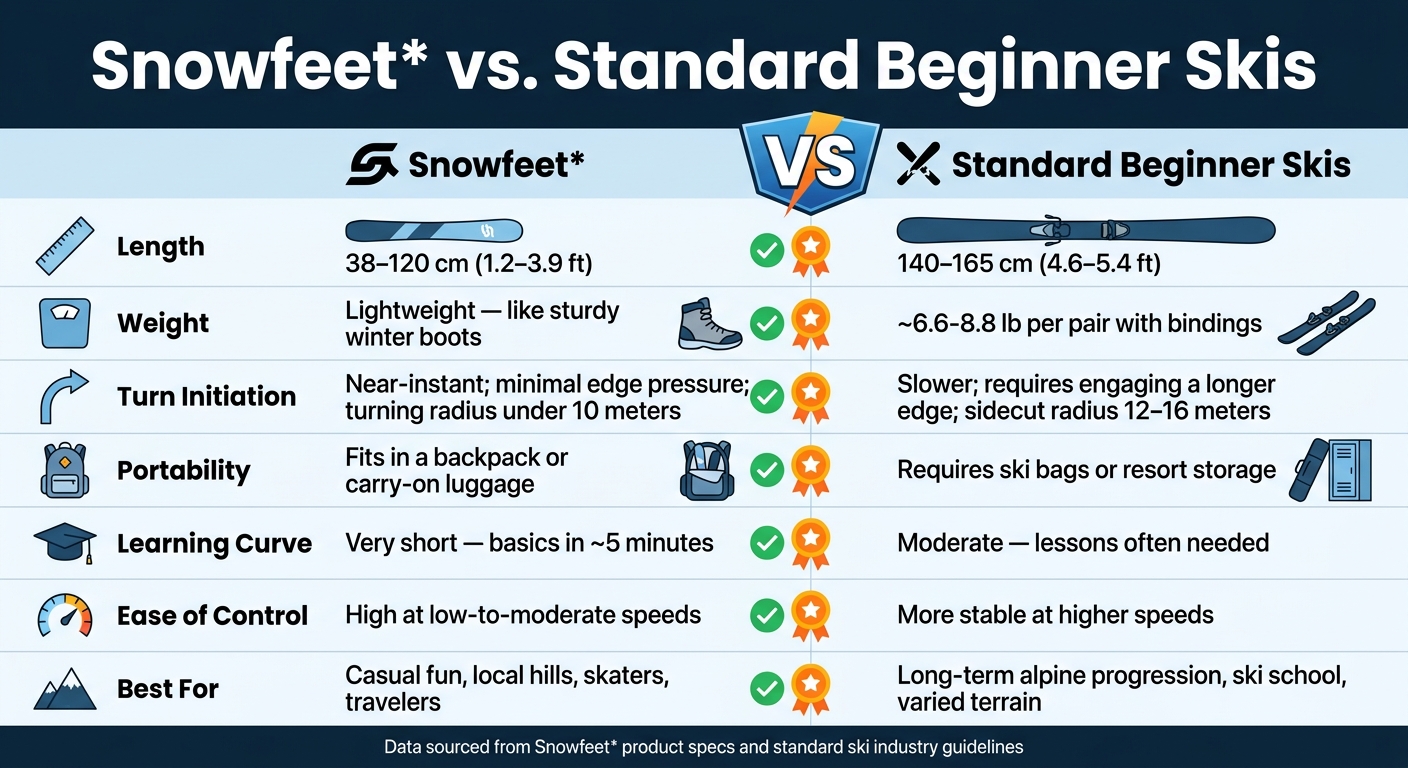
The most noticeable difference between Snowfeet* and standard beginner skis is their length. Standard adult beginner skis usually measure between 140–165 cm (roughly 4.6–5.4 ft), while Snowfeet* models range from just 38 cm to 120 cm (about 1.2–3.9 ft). This size difference impacts everything - how easy it is to turn, how much gear you need to handle, and how quickly you feel comfortable on the snow.
Snowfeet* are designed to respond instantly to even small weight shifts, thanks to their tight turning radius of under 10 meters. This makes it easier to control speed and direction, especially on beginner-friendly green runs or in crowded areas. In contrast, standard beginner skis typically have a sidecut radius of 12–16 meters, meaning turns take longer and require more edge engagement.
Portability is another standout feature of Snowfeet*. A typical beginner ski setup, including bindings, weighs around 6.6–8.8 lb per pair. Snowfeet*, on the other hand, are much lighter - comparable to a pair of sturdy winter boots. Many models are compact enough to fit in a backpack, eliminating the need for bulky ski bags or roof racks.
| Factor | Snowfeet* | Standard Beginner Skis |
|---|---|---|
| Length | 38–120 cm (1.2–3.9 ft) | 140–165 cm (4.6–5.4 ft) |
| Weight | Lighter; like sturdy winter boots | ~6.6–8.8 lb per pair with bindings |
| Turn Initiation | Near-instant; minimal edge pressure | Slower; requires engaging a longer edge |
| Portability | Fits in a backpack or luggage | Requires ski bags or resort storage |
| Learning Curve | Very short - about 5 minutes to basics | Moderate; lessons often needed |
| Ease of Control | High at low-to-moderate speeds | More stable at higher speeds |
| Best For | Casual fun, local hills, skaters, travelers | Long-term alpine progression, ski school, varied terrain |
While standard skis are better suited for faster, longer runs and advanced progression, Snowfeet* shine at beginner-friendly speeds. They offer a forgiving, easy-to-control experience that helps new skiers feel comfortable and confident in no time.
How to Pick the Right Snowfeet* Setup
Choosing the right Snowfeet* setup boils down to three key factors: the boots you already own, the terrain you’ll ride most often, and how important portability is to you.
Boot Compatibility
Start by looking at the boots you already have.
- For winter boot wearers, the 44 cm Skiskates are a great choice. They don’t require ski boots, so you can use your regular winter footwear and still walk comfortably to and from the slopes.
- For snowboard or alpine ski boot owners, you’ve got more options. Several Skiskates and Skiblades models work with these boots, giving you solid ankle support without needing extra purchases. If you’re thinking long-term or want to transition into traditional skiing, the Skiblades (65 cm or 99 cm) and Short Skis (120 cm) with standard ski bindings are smart picks.
Terrain and Stability
Once you’ve matched your boots, think about where you’ll be riding.
| Model | Length | Best Terrain | Stability Level |
|---|---|---|---|
| Skiskates | 44 cm | Small hills, snow parks, flat runs | Playful; less stable at speed |
| Skiblades | 65 cm | Beginner resort slopes, terrain parks | Balanced agility and control |
| Skiblades | 99 cm | Groomed green and blue resort runs | Higher stability, better edge grip |
| Short Skis | 120 cm | Groomed resort slopes, longer runs | Closest to traditional skiing |
Shorter models are more playful and easier to maneuver, while longer models provide greater stability. If you’re nervous about speed or plan to stick to groomed resort runs, the 99 cm or 120 cm models will give you more control. On the other hand, if you’re hitting local sledding hills or terrain parks at slower speeds, the 44 cm Skiskates are easier to handle and more fun. Snowfeet* models are designed to provide stability and responsiveness, which is especially helpful for beginners who want a smoother learning experience.
Portability Preferences
Finally, think about how you’ll transport your gear.
The 65 cm and 99 cm Skiblades are much easier to pack than traditional skis - they’ll fit in your car trunk but not in a carry-on. The 120 cm Short Skis, on the other hand, require about the same storage space as regular skis, so they’re better for those with a garage or dedicated gear space who want that classic ski feel. For maximum portability, the 44 cm Skiskates are the way to go. They’re perfect for air travel and tight storage spaces.
"A lot easier to haul around the hills & on vacation than traditional skis!" - heyjerz, Verified User
If you often fly to ski destinations like Park City, Breckenridge, or Mammoth, the 44 cm Skiskates can save you money by avoiding oversized baggage fees.
Conclusion: The Right Setup for a Strong Start
Getting into skiing as a beginner is so much easier - and way more fun - when you’ve got the right gear. Shorter, lighter, and more maneuverable equipment can make all the difference, which is exactly what Snowfeet* designs are all about.
If you’re just starting out, here’s the scoop: 65 cm or 99 cm Skiblades are ideal for stability and a forgiving ride on resort slopes. Want something playful and super easy to carry? Go for the 44 cm Skiskates. And if you’re looking for a taste of traditional skiing without the hassle of full-length rentals, the 120 cm Short Skis are a great choice.
These recommendations build on the benefits we’ve covered earlier - quick edge response, lightweight design, and unmatched portability. Snowfeet* gear helps you spend less time struggling with your setup and more time actually learning and enjoying the slopes.
At the end of the day, the best setup is one that works with your boots, suits your local terrain, and feels comfortable right from the start. Start with something easy to handle, gain confidence, and then explore more of the Snowfeet* range as you improve. Choose gear that feels right for you, and you’ll be setting yourself up for a lifelong love of snow sports.
FAQs
Will short skis feel stable enough for me?
Short skis are incredibly stable and often a great choice for beginners. Thanks to their lower center of gravity, they’re more forgiving when it comes to common mistakes, like leaning back too much. This design helps reduce the chances of catching an edge or losing your balance. Many first-time skiers have shared that Snowfeet's short skis feel surprisingly easy to handle, especially on groomed trails and mild slopes.
Do Snowfeet* work with my boots?
Most Snowfeet models are designed to work with your regular footwear - no need for stiff alpine ski boots. Many of them are compatible with standard winter boots, hiking boots, or snowboard boots, thanks to their universal step-in or strap-on bindings. For the best results, go with sturdy, waterproof boots that have firm soles and provide solid ankle support.
Important: If you're using the longer models (99 cm or 120 cm), traditional alpine ski boots are required to ensure safety.
Can I use Snowfeet* outside ski resorts?
Snowfeet aren’t just for ski resorts. Thanks to their lightweight and portable design, you can use them almost anywhere there’s snow. Think groomed slopes, terrain parks, cross-country trails, sledding hills, or even your own backyard. They’re perfect for exploring open, obstacle-free areas without the hassle of bulky gear or the cost of lift passes.











Zanechte komentář
Tento web je chráněn službou hCaptcha a vztahují se na něj Zásady ochrany osobních údajů a Podmínky služby společnosti hCaptcha.