



















Yes - sometimes. But not for big days. If you tour on short, mellow routes, a 100 cm WALKSKI can work. If you want 5–8 mile days, deep powder, steep lines, or long sidehills, full touring skis still do the job better.
Here’s the short version:
- WALKSKI fit short tours, hut approaches, local hills, and travel
- They weigh about 6.9–8.8 lb per pair
- They work with winter boots, hiking boots, snowboard boots, or ski boots
- Their short length makes kick turns and tight trees easier
- Full touring skis, usually 160–190 cm, give you more glide, float, and downhill calm
- WALKSKI start at $595, so the cost to get started is lower than many full setups
So, if you want a small, simple setup for low-stress backcountry days, WALKSKI make sense. If you chase powder or spend long days in the mountains, I’d stick with full touring skis.
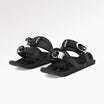
Snowfeet* WALKSKI Backcountry Touring Skis | 100 CM
Quick Comparison
| Feature | WALKSKI 100 cm | Full Touring Skis |
|---|---|---|
| Best for | Short tours, travel, hut access | Long tours, deep snow, steep terrain |
| Length | 100 cm | 160–190 cm |
| Weight | 6.9–8.8 lb/pair | Heavier full setup |
| Boots | Many boot types | Usually AT boots |
| Climbing in tight spots | Easier | Harder |
| Long flat approaches | Less efficient | Better |
| Deep snow float | Less | More |
| Fast descents | Less stable | More stable |
| Price entry point | Starts at $595 | Often higher |
My take: WALKSKI can replace touring skis for some people, on some days - not as an all-around swap. That’s the whole story in one line :)
Uphill Performance: WALKSKI vs Touring Skis
WALKSKI shine on short, technical climbs. Full-length touring skis still do better on long approaches and steady skin tracks. You feel that split most on tight, stop-and-go terrain.
Where Short Skis Make the Climb Easier
At 100 cm (39 in), WALKSKI are much easier to manage in tight places. Kick turns take less work, trees feel less like a maze, and switchbacks on narrow skin tracks get a lot less clunky. The lower swing weight also helps. You waste less energy moving the skis around with each step.
The four-mode binding system - Walk, Ski, Climb 1, and Climb 2 - adds to that ease. You can move to climbing risers on steeper pitches, then flatten the ski on rolling terrain. That keeps your stride feeling more natural, not stiff or choppy. On short local tours, resort sidecountry laps, or wooded approaches with lots of direction changes, that can cut down on fatigue.
So, if your uphill track twists through trees or keeps asking for quick little adjustments, WALKSKI feel like the easier tool for the job.
That’s why WALKSKI stand out for short tours, wooded climbs, and resort-accessed laps.
Where Touring Skis Climb Better
On long, low-angle approaches, full-length touring skis are usually more efficient. The big reason is simple: they give you more glide with each step. A longer ski carries momentum better on flat terrain and makes it easier to hold a smooth rhythm.
Sidehills and long traverses also lean in favor of longer skis. More running length gives you a more planted feel underfoot, better edge leverage on firm snow, and more confidence when you need to hold a line across an icy slope. Short skis can feel quick and easy in tight terrain, but that same quickness can work against you when the route calls for long, precise diagonal travel. On bigger tours, that gap in efficiency starts to add up fast.
That uphill edge is only one part of the story; the descent shifts the trade-off again.
sbb-itb-17ade95
Downhill Performance and Snow Conditions
Where WALKSKI Work Well on the Descent
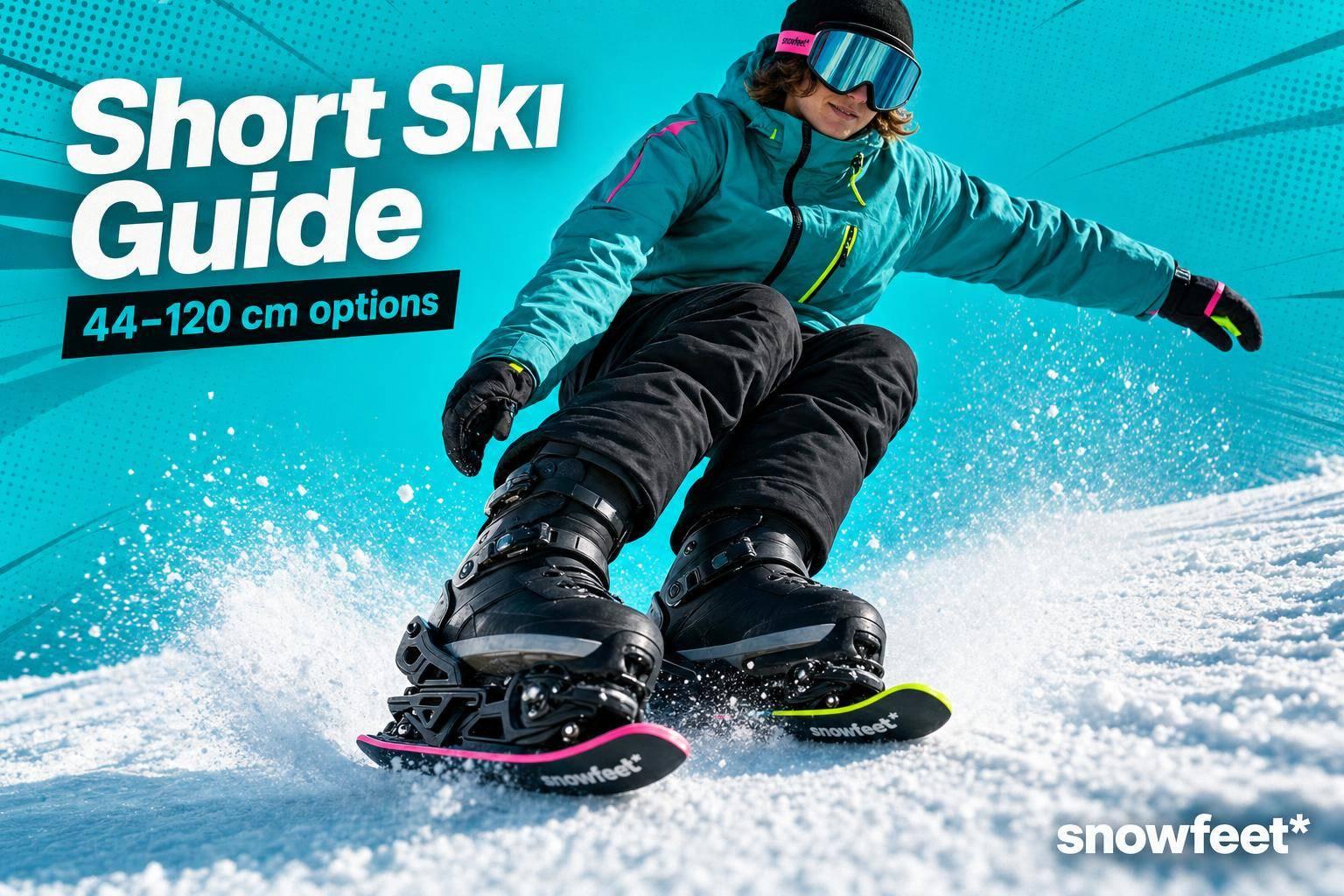
On mellow terrain - about 10–25° slopes, forest roads, meadows, and easy tree runs - WALKSKI feel quick and easy on the way down. Their short length makes them simple to pivot, bleed speed, and slip through tight corners without much fuss.
If you’re coming from a snowboard boot background, or long skis just make you tense up a bit, that fast edge-to-edge feel can help a lot. It feels less like wrestling gear and more like making small, clean moves when you need them.
You’re mostly making quick corrections and keeping your speed in check. In shallow powder over a firm base, they still feel fairly buoyant at controlled speeds. That light, easy feel shows up most on short descents where control matters more than top-end stability.
Where Full-Length Touring Skis Still Win
Once the snow gets deeper or the descent gets faster, longer skis start to pull away. Full-length touring skis have more surface area, so they float better in deep or unconsolidated snow.
On long, fast descents - open bowls, big gullies, or straight fall-line runs - they also stay calmer under you. WALKSKI can start to feel twitchy if you push past moderate speeds. And on firm or icy traverses, the short edge contact of a 100 cm ski becomes a real limit. Longer skis hold an edge on a sidehill with more confidence and less effort.
The trade-offs show up most clearly in the side-by-side comparison that follows.
Side-by-Side: WALKSKI vs Traditional Touring Skis
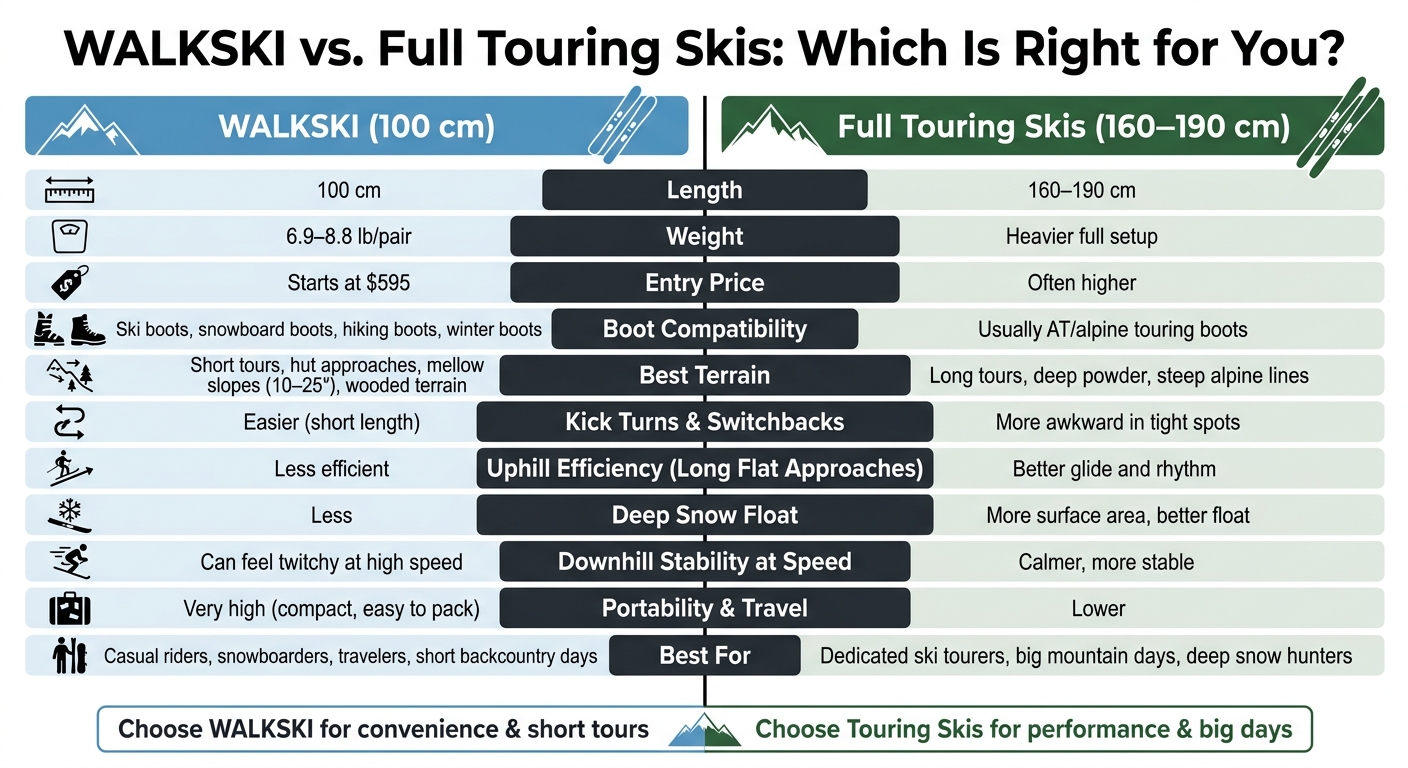
WALKSKI vs. Full Touring Skis: Which Is Right for You?
Comparison Table: Key Touring Trade-Offs
Here’s the trade-off at a glance.
| Feature | WALKSKI 100 cm | Traditional Touring Skis |
|---|---|---|
| Terrain performance | Best on short tours and moderate descents; full touring skis are better for long climbs, deep snow, and faster downhill runs | Better for sustained climbs, flotation, and high-speed stability |
| Kick turns & switchbacks | Easier - short length helps | More awkward on tight turns |
| Easy to pack and transport | Very high | Lower |
| Easier for beginners and snowboarders | Yes - especially for snowboarders | Steeper learning curve |
| Boot compatibility | Works with ski boots and snowboard boots | Usually needs a dedicated touring setup |
| Best use case | Short tours, hut approaches, travel, casual backcountry | Dedicated ski tourers, deep snow, and steep terrain |
Which Option Fits Your Touring Goals
The main question isn’t whether WALKSKI are good. It’s whether they can take the place of a full touring setup for your kind of days in the mountains.
WALKSKI start at $595, which makes the buy-in pretty reasonable for riders who want to try backcountry travel without going all-in on a full touring kit. If your plans look more like rolling terrain, hut approaches, or tossing a setup in the car for a road trip, WALKSKI make a strong case. They’re simple, compact, and less of a hassle to bring along.
Full touring skis still win when backcountry skiing is your main winter sport. If you spend your season in big Western or Alaskan ranges, hunt for deep powder, ski steep lines, or sign up for guided hut trips or avalanche courses, a full setup still gives you more float, better edge hold, and stronger downhill control. That stuff matters. Short skis can do a lot, but they don’t fully close that gap.
For casual riders, snowboarders, and travelers, WALKSKI offer a lower-commitment way to get into touring.
The final section breaks down who WALKSKI fit best, and who should stick with full touring skis.
Who Should Buy WALKSKI and the Final Verdict
Best Fit: Casual Backcountry Riders, Travelers, and Snowboard Boot Users
WALKSKI can stand in for touring skis on short, mellow tours and the occasional backcountry day. But for long days, deep snow, or steep lines, they’re not the tool you want.
So, the choice comes down to how you tour. If your usual day looks like short laps on local hills, a hut approach on moderate terrain, or tossing skis in the car for a weekend road trip, WALKSKI make a lot of sense. The 100 cm length and 6.9–8.8 lb per pair weight help on the packing and carrying side. That trade-off works best for riders who care more about convenience than top-end climbing efficiency or downhill power.
They’re also easy to carry and stash, which makes them a nice match for travel. And if you ride in snowboard boots and don’t want to build out a full alpine touring setup, WALKSKI fill that gap pretty well.
Final Verdict by Use Case
There are two simple paths here: get WALKSKI for short, flexible tours, or stay with full touring skis for bigger missions.
- Buy WALKSKI if: short tours, easy travel, boot flexibility, and convenience matter most.
- Stick with touring skis if: you need long-range efficiency, deep-snow float, and better downhill stability on steep alpine terrain.
WALKSKI are a practical option when portability, simplicity, and short tours matter more than flotation, speed, or long-climb efficiency.
FAQs
Are WALKSKI enough for my usual tours?
It depends on your goals, but for most casual riders, WALKSKI tend to feel simpler and easier to live with.
They’re made for the backcountry, and their shape makes skins easier to attach and reattach. That may sound like a small thing, but out on the trail, it matters. Less fumbling. Less hassle. More time moving.
Their biggest edge is portability and comfort:
- They fit in a standard backpack
- They work with regular winter boots or snowboard boots
Traditional skis still give you more flotation in deep powder. If you’re chasing big snow days, that can be a real plus. But WALKSKI are easier to handle on tight trails and switchbacks, which makes them a strong pick for casual riders who want a lighter, more nimble setup.
What snow conditions are too much for WALKSKI?
WALKSKI Backcountry Touring 100 cm skis do a nice job in a lot of snow conditions, but deep, untracked powder is where they start to show their limit.
Once the snow gets deeper than 4 inches, the shorter length and smaller surface area mean you have to pay closer attention to your front-to-back balance. If your weight drifts too far one way, the skis can sink more than you'd like.
That said, they still give you better maneuverability and flotation than standard cross-country skis in 4 to 10 inches of snow. So, for light backcountry use, they hold their own pretty well.
In very deep or heavy powder, though, expect to work harder than you would on much longer and wider powder skis. That's just the tradeoff: you get a nimble ski, but not one built to surf bottomless snow :)
Do I need special boots or bindings?
No. Snowfeet* WALKSKI uses a universal binding system, so you can use your current winter boots or snowboard boots.
The adjustable, tool-free bindings fit a wide range of boot sizes. That makes WALKSKI a handy, cost-saving option compared with touring setups that need special boots and bindings.











Zanechte komentář
Tento web je chráněn službou hCaptcha a vztahují se na něj Zásady ochrany osobních údajů a Podmínky služby společnosti hCaptcha.