



















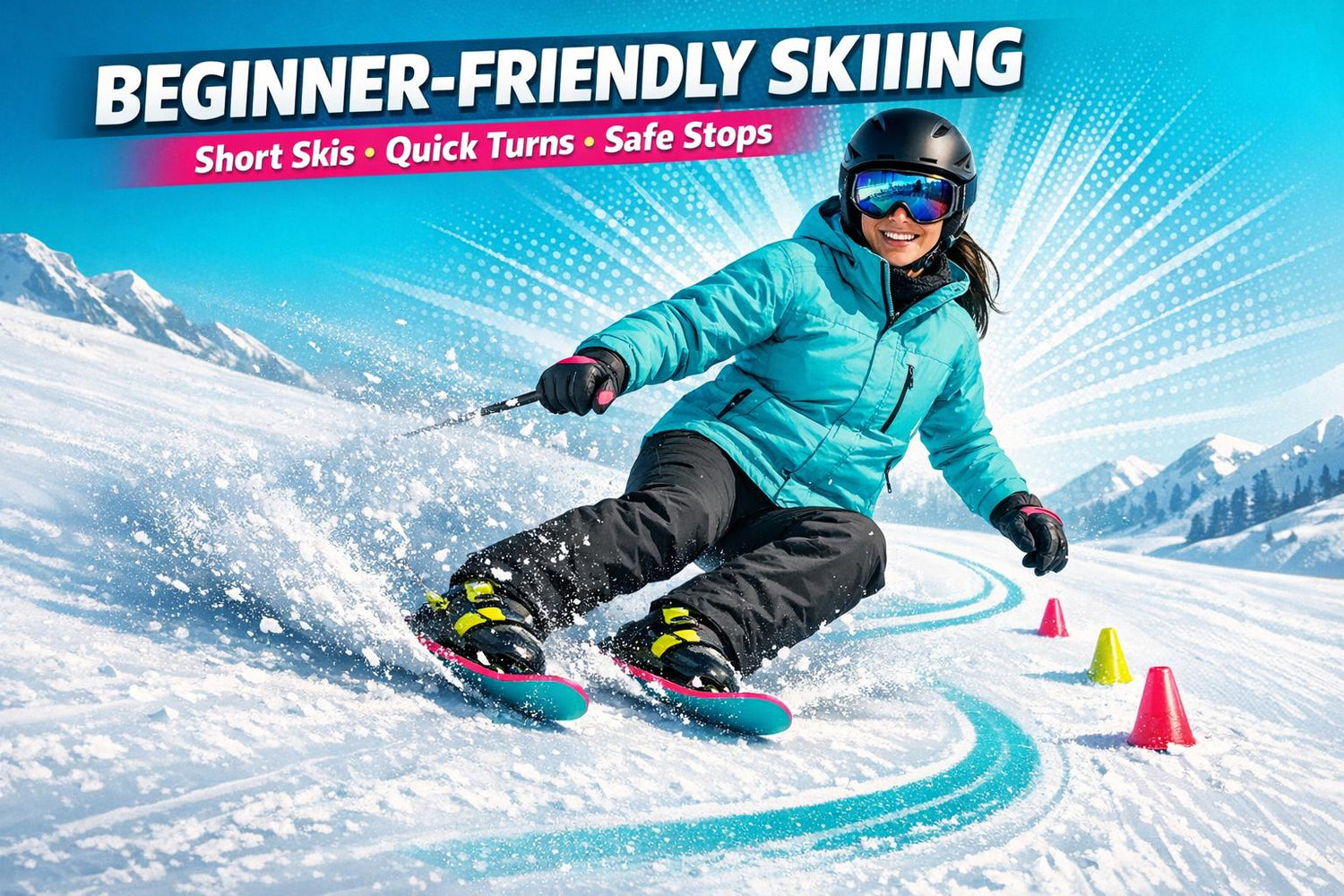
Standing at the top of a ski slope for the first time can feel overwhelming. But here’s the good news: short skis like Snowfeet* make learning way easier. Why? They’re lighter, shorter, and more forgiving than regular skis or snowboards. You’ll feel more in control, turn with less effort, and stop confidently - even if you’re a total beginner.
Here’s the quick breakdown of Snowfeet* options:
- Skiskates (44 cm): Perfect for skating fans, super compact, and easy to carry.
- Skiblades (65–99 cm): Great for balance and control on beginner slopes.
- Short Skis (120 cm): A smoother ride for those transitioning to full-size skis.
Most beginners can start turning in just a few hours. Plus, Snowfeet* gear is portable and simple to use, making your first ski trip less stressful and more fun. Ready to hit the slopes? Let’s dive into how to pick the right gear and get started with confidence!
How to Ski in One Day | Beginner Learns Basic Turns
Why Short Skis Are Better for Beginners
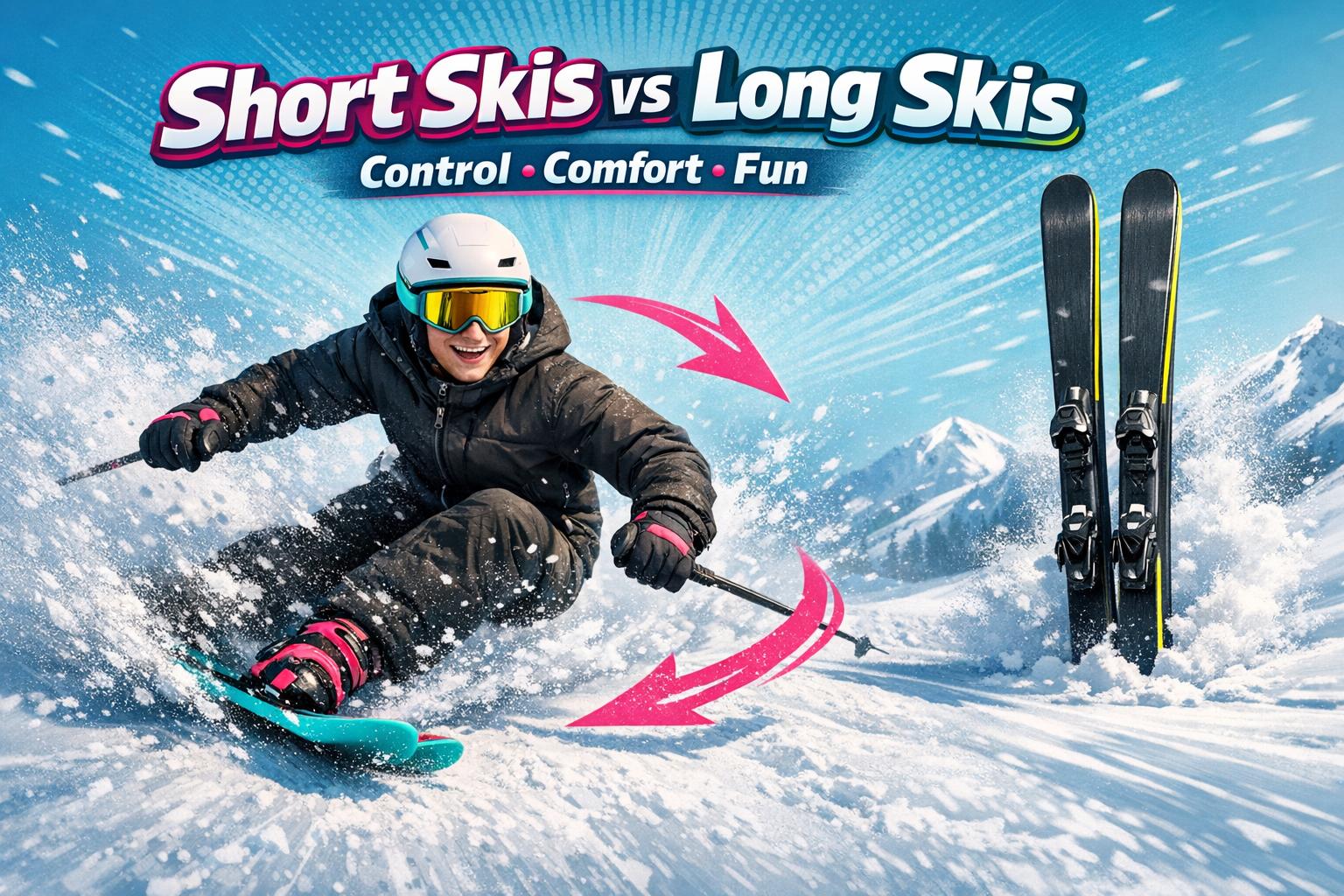
Short Skis vs. Long Skis vs. Snowboards: Beginner Comparison
Let’s dive into why shorter skis and Snowfeet* products are ideal for anyone just starting out on the slopes.
For beginners, the size of your equipment can make or break your experience. Traditional skis, which range from 150–180+ cm, require precise technique to turn and stop. This can make those first few runs feel like a struggle. Shorter skis, like those in the Snowfeet* lineup, have a much smaller turning radius. What does that mean? It takes less effort to initiate turns, and you can correct mistakes quickly - before they lead to a wipeout. Plus, shorter skis are lighter, which means they respond faster to even slight shifts in balance. That quick feedback helps build confidence, especially on gentle green slopes where speeds are lower. With shorter skis, turning and stopping become easier, making it much simpler to gain control and feel comfortable.
Another bonus? Portability. Traditional skis can be a hassle to transport - you’ll often need a roof rack or a massive bag. Short skis, on the other hand, are compact and easy to carry, making every trip to the mountain less of a chore. Together, these features create a smoother, less intimidating learning curve.
Short Skis vs. Long Skis and Snowboards
Now, let’s see how short skis compare to long skis and snowboards in terms of what matters most to beginners.
Snowboards bring their own set of challenges. Standing sideways with both feet locked onto one board can feel awkward, especially for adults who are new to the sport. Short skis let you face forward, move your legs independently, and focus on learning one skill at a time - like turning or stopping. This makes the process feel more natural. Sunshine Straiges, a Snowfeet* user, shared her experience:
"I had no muscle soreness after using these because I can change my leg position, unlike the snowboard which is set."
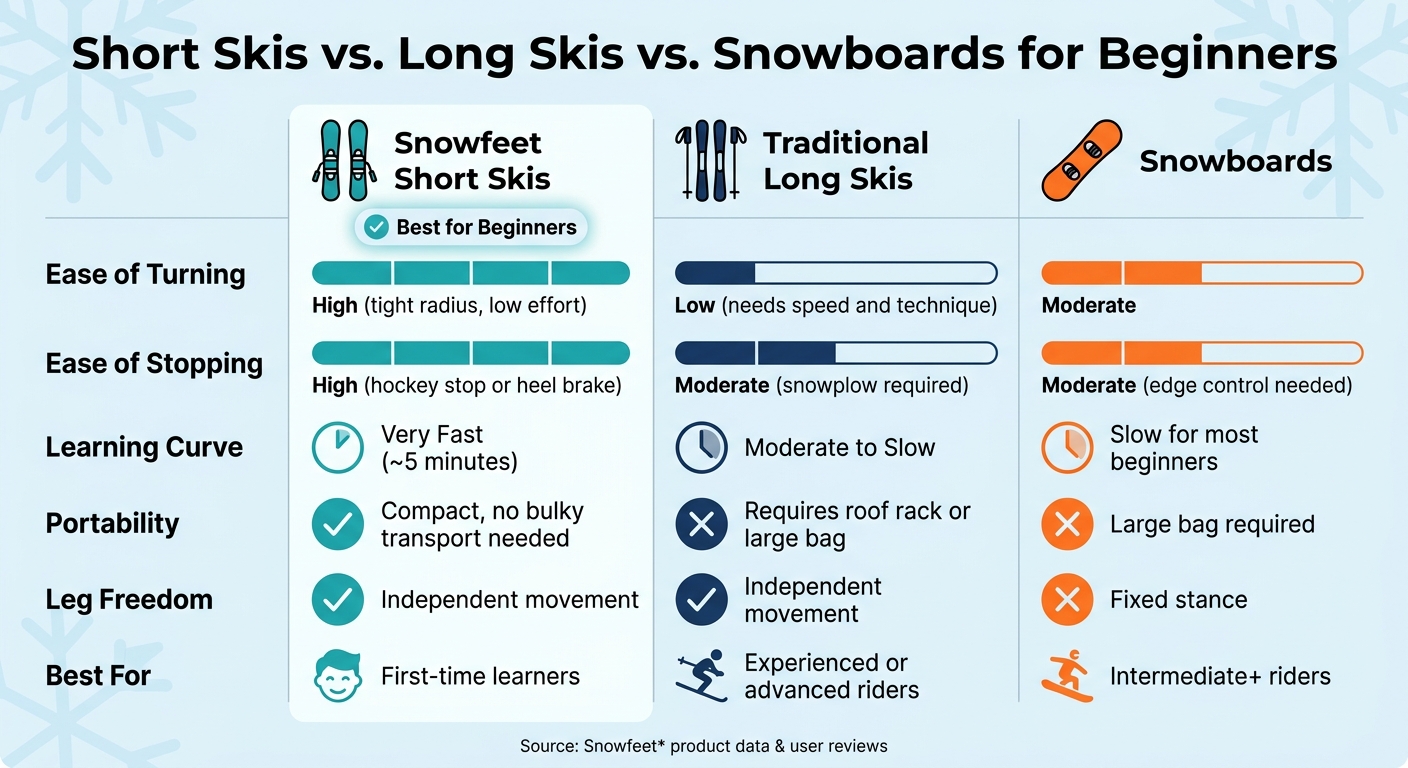
Here’s a quick breakdown of how the three options stack up:
| Feature | Snowfeet* Short Skis | Traditional Long Skis | Snowboards |
|---|---|---|---|
| Ease of turning | High - tight radius, low effort | Low - needs speed and technique | Moderate |
| Ease of stopping | High - hockey stop or heel brake | Moderate - snowplow required | Moderate - edge control needed |
| Learning curve | Very fast (~5 minutes) | Moderate to slow | Slow for most beginners |
| Portability | Compact, no bulky transport needed | Requires roof rack or large bag | Large bag required |
| Leg freedom | Independent movement | Independent movement | Fixed stance |
| Best for | First-time learners | Experienced or advanced riders | Intermediate+ riders |
Clearly, short skis and Snowfeet* gear cater directly to beginner needs.
What Makes Snowfeet* Different
Snowfeet* isn’t just a scaled-down version of traditional ski gear - it’s designed specifically with beginners in mind. The shorter lengths, ranging from 44 cm to 120 cm, reduce the lever effect on your knees and legs. This makes the gear more forgiving when your weight shifts slightly off-center. That extra forgiveness is exactly what beginners need to stay relaxed and keep improving.
With over 50,000 riders around the globe and an impressive 4.89 out of 5 rating from 2,297 verified reviews, the message is clear: beginners feel in control sooner. And that’s no accident - it’s the result of designing equipment that works with how new skiers naturally move, instead of expecting them to master expert techniques right away.
How to Pick the Right Snowfeet* Product
If you're all about easy control and quick learning, Snowfeet* has a product for you. Choosing the right gear depends on your comfort level, how much stability you want, and the kind of terrain you usually tackle. Let’s break it down so you can find the perfect match for your skiing adventures.
Snowfeet* Skiskates (44 cm): Compact and Fun
Skiskates are like a blend of skiing and skating - great for anyone who’s used to inline or ice skating. These are super compact, easy to carry in your backpack, and perfect for gentle slopes or local hills. They let you make quick, dynamic moves and are a blast for beginners who already have a skating background. The 44 cm Wood Core model is priced at $690, while the 50 cm Fiberglass Core version starts at $299.
"In my opinion, Skiskates is the best product for slopes we developed so far. I love how easy they are to ski and skate and how many different kinds of tricks I can perform without much effort." - Zbyněk, Snowfeet* Founder
Snowfeet* Skiblades (65 cm and 99 cm): Control Meets Stability
Skiblades offer a great mix of control and ease, making them a solid choice for beginners. The 65 cm model is forgiving at slower speeds, which makes it ideal for resort beginner zones or groomed green slopes. If you’re taller, heavier, or planning to tackle longer green runs, the 99 cm version provides better edge grip, smoother turns, and more stability. Prices start at $590 for the 65 cm Wood Core model, while the 99 cm Wood Core option starts at $690. The 100 cm Fiberglass variant is available from $499.
"These ski blades are a blast to use. Super easy to control, quick to turn, and way more forgiving than traditional skis." - Brad Tolin
Snowfeet* Short Skis (120 cm): Traditional Ski Feel
If you want something that feels closer to standard skis but with added stability, the 120 cm Short Skis are your go-to. They handle well at higher speeds and are a great choice for anyone transitioning from regular skiing. While they’re easier to turn and stop than full-size skis, they do require a bit more attention to your stance and edging. These are priced at $775.
Quick Reference
| Product | Length | Best For | Starting Price |
|---|---|---|---|
| Skiskates | 44 cm (Wood Core) / 50 cm (Fiberglass) | Skating enthusiasts seeking ultra-portable rides on gentle slopes | $690 / from $299 |
| Skiblades | 65 cm (Wood Core) | Beginners looking for easy turning on groomed slopes | From $590 |
| Skiblades | 99 cm (Wood Core) / 100 cm (Fiberglass) | Beginners wanting enhanced stability for longer runs | $690 / from $499 |
| Short Skis | 120 cm | Riders seeking a familiar, traditional ski feel | $775 |
sbb-itb-17ade95
Step-by-Step Guide to Riding Down a Ski Slope
Once you've got your Snowfeet* gear ready, it’s time to hit the snow. The shorter equipment makes learning so much easier. In fact, Snowfeet* says most beginners can grasp the basics in just 5 minutes. Let’s walk through how to make your first runs smooth and enjoyable.
How to Start on Gentle Slopes
Before diving into the slopes, take a moment on flat ground to get a feel for your Snowfeet*. Strap them on, walk around a bit, try some side steps, and practice sliding one foot at a time. This helps you get comfortable with how the edges work.
When you’re ready, head to a wide, open green slope or a beginner’s area with a gentle incline and a flat runout at the bottom. If there's a magic carpet lift, even better - they’re slow and easy to use. Start just a few yards up the slope and practice straight glides. Keep your feet hip-width apart, bend your knees, and lean slightly forward with your shins. Look downhill (not at your feet!) and focus on staying balanced. Repeat this glide-and-stop drill until you feel steady, then you’re good to move higher and start turning.
How to Turn and Link Movements
Turning with Snowfeet* is super intuitive. Thanks to their shorter length, they pivot easily with minimal effort, making movement feel natural. To turn, simply look in the direction you want to go and shift your weight onto the outside foot while gently pivoting your legs. Smooth, steady movements are key - sudden twists can make you skid.
A helpful exercise is the "one turn at a time" method: Pick one side, make a gentle turn, come to a stop, and reset. Then do the same on the other side. Once you’re comfortable turning both directions, start linking them together. Think of it like a flowing rhythm - finish one turn across the slope, flatten your Snowfeet* briefly, shift your weight to the new outside foot, and ease into the next turn. Focus on creating slow, rounded "S" shapes rather than sharp, jerky movements.
How to Control Speed and Stop Safely
Managing your speed is all about turn shape. Wide, rounded turns naturally slow you down without requiring extra effort.
To stop, start with simple drills. Use the terrain to your advantage by gliding onto a flat area to come to a halt. Next, try "J-turns": from a straight glide, gradually curve across the slope and slightly uphill. This will naturally bring you to a smooth stop - often called a "C-turn". Once you’ve got that down, you can move on to more advanced techniques like the hockey stop. On soft snow, pivot both feet across the fall line and press into the downhill edges while keeping your knees bent. Snowfeet* offers this tip:
"Make sure you distribute your weight evenly over both of your Snowfeet to make you stop easier and slower."
Common Beginner Mistakes and How to Avoid Them
Even with Snowfeet*'s beginner-friendly gear, a few missteps can slow down your progress - but don’t worry, they’re easy to fix. Snowfeet* gear is designed to keep you balanced and in control, helping you sidestep these common pitfalls.
Leaning Back and Locking Your Legs
Leaning back - often called the "armchair position" - is one of the most frequent mistakes beginners make. When you start picking up speed, it’s natural to want to pull away from the slope. But here’s the thing: leaning back shifts your weight too far behind you, reducing your edge grip and making turns harder. On top of that, locking your knees can leave you unable to absorb bumps, which leads to instability.
The good news? Snowfeet*’s shorter design helps you stay naturally centered. A quick tip to keep in mind: "nose, knees, toes in one line." Before hitting the slopes, practice flexing and extending your ankles and knees on flat ground while wearing your Snowfeet* gear. This quick warm-up builds the muscle memory you need to stay relaxed and balanced as you glide downhill.
Once you’ve got your stance right, it’s equally important to choose the right terrain for your skill level.
Starting on Slopes That Are Too Steep
Tackling slopes that are too steep too soon is another common error. It’s tempting to jump into challenging terrain, but steeper slopes can cause you to lose control quickly. This often leads to panic, leaning back, and locked legs - making it even harder to turn or stop.
Snowfeet* gear works best on gentle, groomed green slopes, where their compact design helps you maintain slower speeds and better control. A handy rule: if you can’t stop comfortably within a short, planned distance, the slope is likely too steep for you right now. Stick to easier runs to master the basics before moving on to steeper challenges.
Start Your First Run with Confidence
Now that you know the perks of Snowfeet* and have the basics down, it’s time to hit the slopes. With their shorter design, Snowfeet* gear eliminates many of the challenges beginners often face. They’re easier to turn, simpler to stop, and far less intimidating than traditional skis or snowboards.
To make your first glide even smoother, pick the Snowfeet* product that suits your comfort level. Here’s a quick rundown of the options:
- 44 cm Skiskates: Perfect for playful freedom and quick maneuverability.
- 65–99 cm Skiblades: A great middle ground offering balanced stability.
- 120 cm Short Skis: Ideal for those looking for an easier transition to traditional skiing.
Before you take off, double-check that you’re ready to roll. Here’s a quick checklist:
- Make sure your bindings are secure.
- Wear your helmet.
- Start on a green (beginner) slope.
- Keep your knees soft and your weight slightly forward.
- Keep your hands in front for balance.
Don’t stress about getting it perfect - just focus on staying safe and enjoying yourself.
According to the NSAA, fewer than 20% of first-time skiers or snowboarders return for a second season. Why? Because their first experience is often overwhelming. Snowfeet* gear is designed to take the stress out of learning, so you can actually have fun instead of struggling with bulky equipment. A 30–60 minute session on an easy slope with the right setup can turn a one-time outing into a hobby you’ll look forward to every winter.
Ready to find your perfect fit? Check out the full Snowfeet* lineup at snowfeetstore.com.
FAQs
Can I use Snowfeet* with regular ski boots?
Yes, Snowfeet products are designed to work with regular winter boots and snowboard boots. Their bindings are adjustable and don’t require tools, so you can use your own comfy footwear. That means no need for those stiff, pricey ski boots. Plus, it’s way easier to walk around the resort between runs - no more awkward ski boot shuffle!
Are Snowfeet* allowed at most ski resorts?
Snowfeet* products are generally welcomed at most ski resorts since they fall under the category of ski equipment. Built with groomed slopes in mind, their small and nimble design makes them an excellent fit for resort conditions. Unlike traditional ski gear, which can be bulky and cumbersome, Snowfeet* provide a more compact, easy-to-use option that enhances the experience for skiers, no matter their skill level.
Which length should I choose for my first day?
For those just starting out, Snowfeet Skiskates (measuring 44 cm/17 inches) are a fantastic option. Their small size helps beginners by providing a lower center of gravity, which improves balance and makes stopping easier. Compared to traditional skis, which can be over 150 cm (59 inches) long, these shorter skates are much easier to control. That means fewer tumbles and a more natural learning experience - perfect for first-time skiers looking to build confidence on the slopes.











Zanechte komentář
Tento web je chráněn službou hCaptcha a vztahují se na něj Zásady ochrany osobních údajů a Podmínky služby společnosti hCaptcha.