



















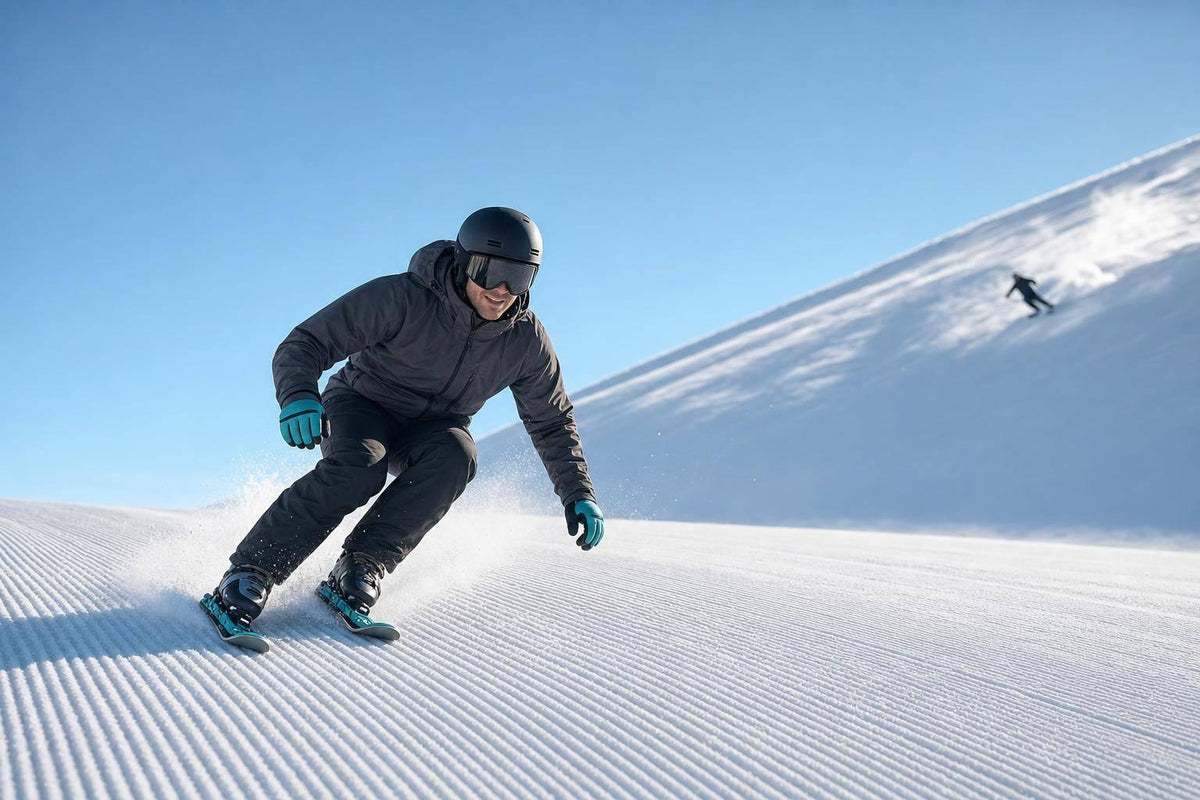
Yes - if you already ice skate, skiskates are often worth a look.
I’d put it this way: your balance, edge feel, and comfort on slick surfaces give you a head start on snow. But skiskates don’t feel like rink skates with snow stuck on them. The big learning gap is stopping, speed control, and dealing with changing snow.
If you want the short answer, here it is:
- Ice skating helps a lot with turning and balance
- Snow changes the game with grip, surface feel, and stance
- Skiskates shine on groomers, short resort laps, and playful runs
- Long skis still win for speed, steeps, and powder
- 44 cm skiskates feel closest to ice skates
- 50 cm and 65 cm options give you more stability
So, if you love the feel of skating and want a small, easy-to-carry setup, skiskates make sense. If your goal is bombing steep runs or skiing deep powder, uh, stick with longer skis.
Here’s the quick breakdown:
| Option | Best For | Main Trade-Off | Starting Price |
|---|---|---|---|
| Snowfeet* Skiskates 44 cm | Closest ice-skate feel | Less stable at speed | $460 |
| Snowfeet* PRO 50 cm | More control, casual resort days | Slightly less skate-like | $299 |
| Snowfeet* Skiblades 65 cm | More ski-like ride | Less nimble than shorter models | $590 |
| Long skis (150–180 cm) | Speed, steeps, deeper snow | Bulkier, less playful in tight spaces | Varies |
A few numbers matter here: 44 cm is 17.3 inches, 50 cm is 19.7 inches, and 65 cm is 26 inches. That short length is why skiskates feel so nimble - and why they’re easy to toss in a backpack :)
My take? If you already skate and mostly ride groomed snow, skiskates can be a fun buy with a short learning curve. The rest comes down to how much stability you want under your feet.
If you want a feel check before buying, these videos can help:
Let’s get into what transfers from ice, what doesn’t, and which size makes the most sense for you.
Snowfeet* & Skiskates Complete Guide | All you need to know about Skiskating
Ice Skates vs Skiskates: What Feels the Same and What Does Not
Step onto skiskates for the first time and, yeah, part of it feels familiar. But snow doesn’t behave like rink ice. It changes under you, and sometimes it changes fast.
What Carries Over: Balance, Edges, and Lateral Movement
The biggest thing ice skaters bring over is edge awareness. You already know how to pressure an inside or outside edge to change direction, and that carries over well to skiskate turns on groomed snow.
Ice skaters also tend to adapt faster because edge control and lateral movement transfer well to groomed snow. That’s the good news.
The catch? That similarity starts to fade when you turn harder or try to stop. On snow, the response feels a bit less exact.
What Changes on Snow: Grip, Surface, and Body Position
The main shift is surface consistency. A groomed run can go from firm corduroy to softer snow or a patch of ice, and each texture changes how your edges grip. Rink skating doesn’t prep you for that.
A centered stance helps a lot:
- Hips over your feet
- Knees bent
- Weight balanced through the whole foot
That body position helps keep skiskate tips from diving into soft snow and helps stop the tails from washing out on firmer patches.
The main gaps come down to three things: grip changes with snow conditions, stance needs more active fore-aft balance than rink ice, and stopping takes more adjustment than turning.
Skiskates also sit differently underfoot than ice skates, so those first turns feel familiar, but not quite as precise.
Control, Stopping, and Learning Curve for Ice Skaters on Skiskates
Turning and Edge Control on Groomed Snow
Skiskates are short, so they react fast. On groomed runs, that’s a big plus. You can make tight turns at moderate speeds without wrestling a long ski around.
For ice skaters, this part often feels pretty natural. A bent-knee, centered stance with your feet about shoulder-width apart helps you stay balanced and keeps the tips from diving or the tails from sliding out. In plain English: stay loose, stay centered, and don’t lean too far forward or back.
Turning is usually the part that feels fun right away. Stopping is where the snow starts to talk back a little.
Stopping on Skiskates vs Stopping on Ice
A hockey stop on ice doesn’t transfer neatly to snow. On skiskates, you slow down with snow braking - push your heels out into a V shape and bring your knees inward to scrub speed bit by bit.
It’s not as instant as an ice hockey stop. That means you can’t wait until the last second and expect magic. You need to control speed early, especially on the first few runs.
A simple way to think about it:
- Ice stop: sharp, fast, and snappy
- Snow stop on skiskates: more gradual and planned
- Best habit: start slowing down before you feel like you have to
Once that movement starts to feel normal, the rest tends to get easier in a hurry.
How Fast Will an Ice Skater Learn Skiskates?
For ice skaters, the big question usually isn’t turning. It’s how much snow-specific stance and braking work you’re ready to pick up. Turns often come faster for skaters, but balance on mixed snow and speed control still need practice.
That trade-off is pretty simple:
- Skiskates favor quick redirection
- Longer skis favor stability
So, the main shift isn’t learning how to turn. It’s learning how to manage speed and hold your stance as snow conditions change. That quick first-day payoff is a big reason skiskates appeal to ice skaters who want fun runs without a long learning curve.
sbb-itb-17ade95
When Skiskates Are Worth Buying and When Longer Skis Make More Sense
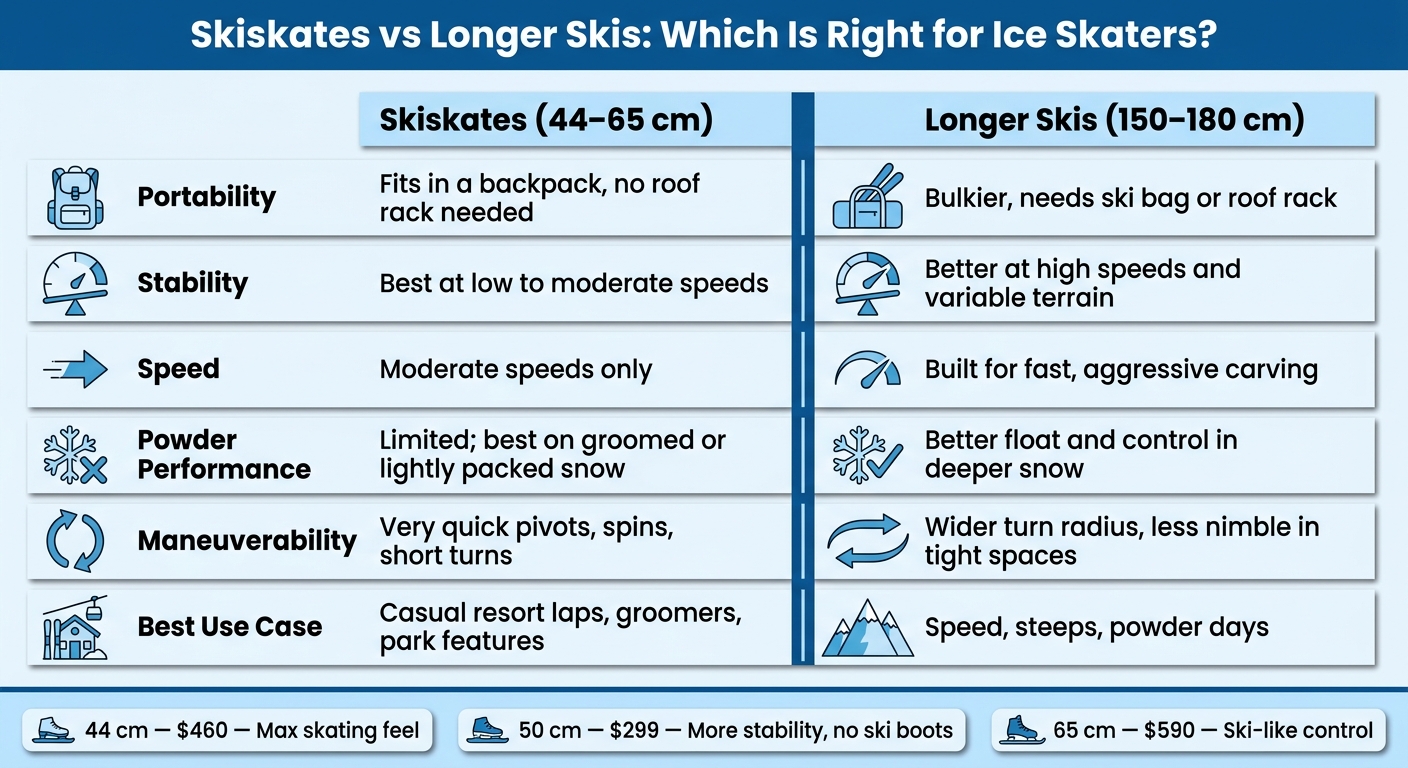
Skiskates vs Longer Skis: Which Is Right for Ice Skaters?
Best Fit: Casual Resort Days, Short Runs, and Playful Riding
Once you can turn and stop with some control, the next step is simple: do skiskates match how you like to ride?
For most ice skaters, skiskates are worth buying if you want a fun, easy-to-carry, low-commitment way to ski groomers. They’re not a stand-in for full skis. At 44 cm (17.3 inches) long, they fit in a backpack, which means no roof rack and way less hassle getting to the hill.
They make the most sense for short resort laps, small park features, and mellow groomers. Here’s the difference at a glance:
| Factor | Skiskates (e.g., Snowfeet* 44 cm / PRO 50 cm) | Longer Skis (150–180 cm) |
|---|---|---|
| Portability | Very high: short, light, easy to carry, and simple to pack | Lower: bulkier, heavier, and usually need a ski bag or roof rack |
| Stability | Better at low to moderate speeds | Better at higher speeds and on variable terrain |
| Speed | Best at moderate speeds | Built for faster, more aggressive carving |
| Powder performance | Limited; best on groomed or lightly packed snow | Better float and control in deeper snow |
| Maneuverability | Very quick; easy pivots, spins, and short turns | Wider turn radius; less nimble in tight spaces |
Where Longer Skis Still Win: Speed, Steeps, and Deep Snow
Longer skis still take the lead when the mountain gets fast, steep, or soft. They stay steadier at speed and float better in deep snow. That’s the plain deal.
Snowfeet’s short-ski products do best on groomed snow. Powder is a weak spot, and their limit is usually just a few inches of fresh snow. So if your dream day means cruising blue runs, messing around on side hits, and keeping things light, skiskates can be a blast. If you want to charge hard, ski steeps, or chase storm days, longer skis make more sense.
Mellow groomers lean skiskates. Speed, steeps, and powder lean longer skis. That trade-off leads straight to the next step: which Snowfeet* model gives you the right mix of stability and skating feel?
Best Snowfeet* Models for Ice Skaters
If skiskates already sound like your kind of thing, the next step is simple: pick the Snowfeet* length that matches how you want to ride.
Snowfeet* Skiskates 44 cm - Closest to Ice-Skate Feel on Snow
If you want the snow version of ice skates, go with the Snowfeet Skiskates 44 cm*. They’re the closest match in feel. At just 44 cm (17.3 in) long, they’re tiny enough to fit in a backpack. Price starts at $460, and you can get them with either ski-boot or snowboard-boot bindings.
Put bluntly: if skating feel is your top goal, start with 44 cm. If you want a bit more room for error, move up to 50 cm.
Snowfeet* PRO 50 cm and Skiblades 65 cm - More Stability With a Similar Short-Ski Feel
The Snowfeet PRO 50 cm* gives you more stability without losing that short, skate-like ride. One big plus: it straps right onto regular winter boots or snowboard boots in roughly US sizes 6–13, so you don’t need ski boots. Price starts at $299.
The Snowfeet Skiblades 65 cm* are a better match if you want something closer to a ski underfoot, with easier control at speed, while still keeping that short, nimble feel. They measure 65 cm (26 in) and work with both ski-boot bindings and snowboard-boot bindings. These are best for cruising and extra stability, not tight tricks. They do best on groomed runs and in parks, not deep snow. Price starts at $590.
Here’s the quick side-by-side:
| Model | Length | Starts At | Boot Compatibility | Best For |
|---|---|---|---|---|
| Skiskates 44 cm | 44 cm / 17.3 in | $460 | Ski or snowboard boots | Maximum skating feel, tight turns, playful riding |
| PRO 50 cm | 50 cm / 19.7 in | $299 | Regular winter boots or snowboard boots | More stability, no ski boots needed, casual resort days |
| Skiblades 65 cm | 65 cm / 26 in | $590 | Ski boots or snowboard boots | More stability, ski-like feel, varied resort terrain |
Conclusion: Should Ice Skaters Buy Skiskates?
For most ice skaters, yes. Skiskates 44 cm give you the closest crossover feel, PRO 50 cm adds easier stability, and Skiblades 65 cm give you the most ski-like control.
FAQs
Do skiskates feel natural right away for ice skaters?
Yes. For ice skaters, skiskates often feel natural right away because they tap into the same balance, muscle memory, and edge control.
The centered stance and steel edges under your feet feel familiar fast. Moves like hockey stops, crossovers, and tight turns usually carry over well too. That said, most skaters still need a bit of time to get used to the feel of snow. It’s close to skating, but not the exact same ride.
Are skiskates hard to stop on compared with ice skates?
No. For ice skaters, stopping on skiskates usually feels natural because it’s a lot like a hockey stop.
Skiskates are short, so you can pivot both feet across the fall line and get onto your edges fast. But snow pushes back more than ice. That means it’s smart to ease into the stop instead of slamming into it all at once.
If that feels a bit twitchy at first, no big deal. Use short zig-zag turns to scrub speed and stay in control.
Which Snowfeet* length is best if I already ice skate?
If you already ice skate, the 44 cm Skiskates are usually the best place to start. They feel the most like skating on snow, with quick edge control, sharp turns, and a snappy response that makes balance and weight shifts feel familiar.
If you want a little more stability, the 50 cm Snowfeet PRO is still easy to control. And if you want more support on resort runs, the 65 cm Skiblades give you that extra help without losing their fun, playful feel.











اترك تعليقًا
This site is protected by hCaptcha and the hCaptcha Privacy Policy and Terms of Service apply.