




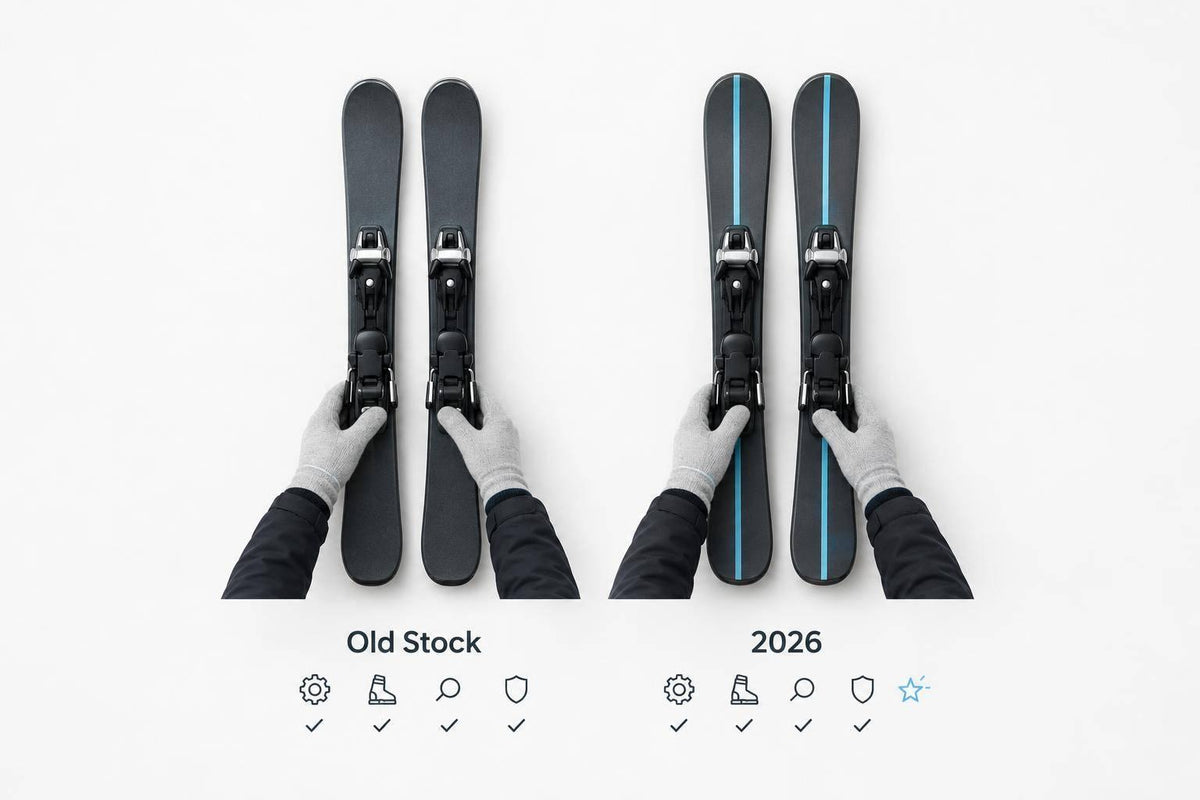
I’d buy older stock if the specs, boot fit, condition, and warranty match. As of October 7, 2026, the supplied sources don’t show a Snowfeet* redesign for 2026. I’d pay more only for a documented change that helps my setup - not a year on the label.
Here’s how I’d narrow down the three lengths:
| Model | Best suited to | Main trade-off |
|---|---|---|
| 65 cm (25.6 in) | Compact storage and playful turns | Less front-to-back stability |
| 99 cm (39 in) | Casual slope riding with a short-ski feel | Less ski-like handling than 120 cm |
| 120 cm (47.2 in) | A longer platform and more ski-like handling | Takes more room to carry and store |
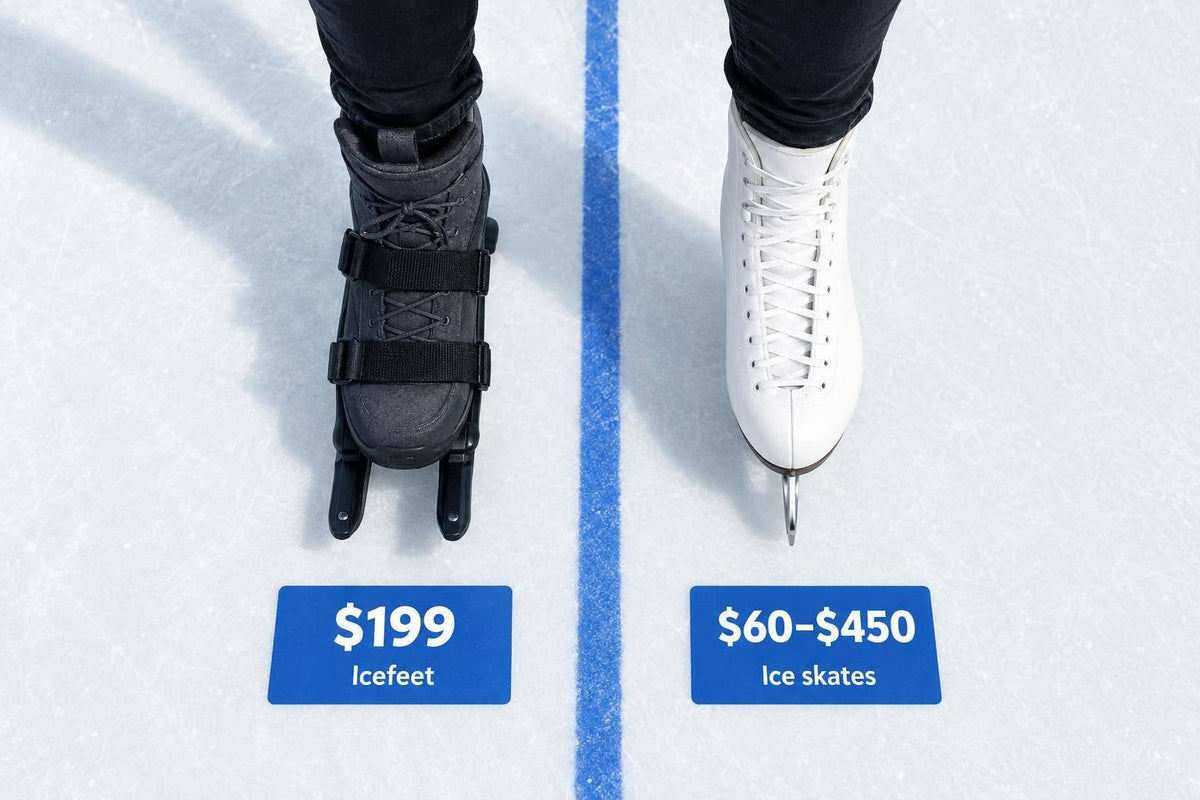
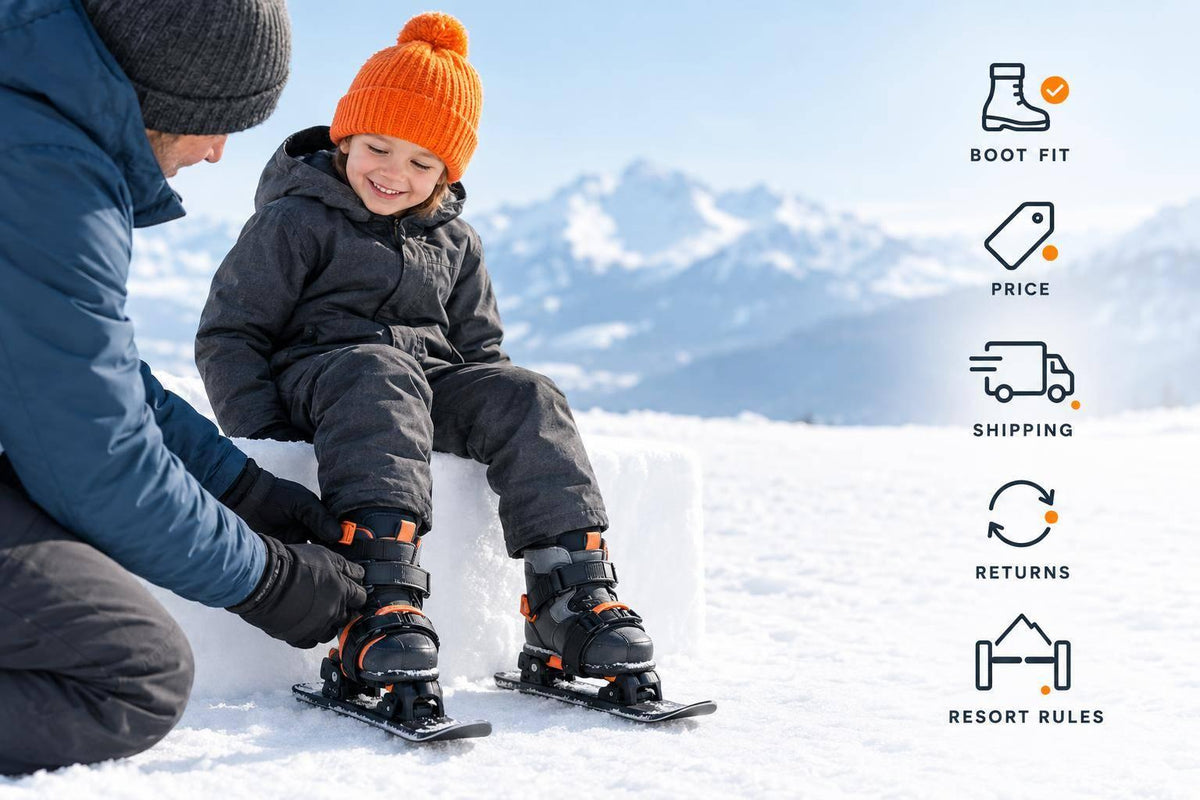
Before I buy, I check the exact bindings, boot fit, included parts, and written return terms. Then I compare the checkout totals, including shipping, U.S. sales tax, fitting, and any missing parts. Listed prices conflict, so I don’t use a blog price as my budget.
My rule: <u>compare the package, not the year</u>. Factory-new older stock can save you money without changing what you get on the snow.
All you need to know - Snowfeet* | Skiskates | Skiboards | Snowblades | Skiblades FAQ
Snowfeet* Listings: Current Prices and Model Years
Start with the official product pages, but check the price for your chosen setup at checkout. The listings are current; they don’t document a 2026 redesign. Next comes length: 65, 99, or 120 cm.
Match the bindings to your boots before you compare prices.
| Product | Length | Verified price | Binding option | Boot compatibility | Listing status | Seller/source |
|---|---|---|---|---|---|---|
| Snowfeet* Skiblades | 65 cm / 26 in | Price not verified | Ski boot or snowboard boot setup | Ski boots or snowboard boots, depending on configuration | Current listing; 2026 generation not documented | Official Snowfeet* product page |
| Snowfeet* Skiblades | 99 cm / 39 in | Price not verified | Ski boot or snowboard boot setup | Ski boots or snowboard boots, depending on configuration | Current listing; 2026 generation not documented | Official Snowfeet* product page |
| Snowfeet* Skiblades / Short Skis | 120 cm / 47–48 in | Price not verified | Pro ski boot / release binding setup | Ski boots | Current listing; 2026 generation not documented | Official Snowfeet* product page |
If an older listing has the same build and bindings, go with the lower price.
As of October 7, 2026, Snowfeet* says shipping is free to most countries and usually takes 3–5 business days. Your U.S. checkout still sets the final cost.
Ask Snowfeet* for dated specs before paying extra for a 2026 label. For most casual riders, a confirmed boot-and-binding match matters more than a year label with no specs to back it up. Choose your length before weighing feature changes or clearance discounts.
Snowfeet* 65 vs 99 vs 120 cm: Choose Your Length
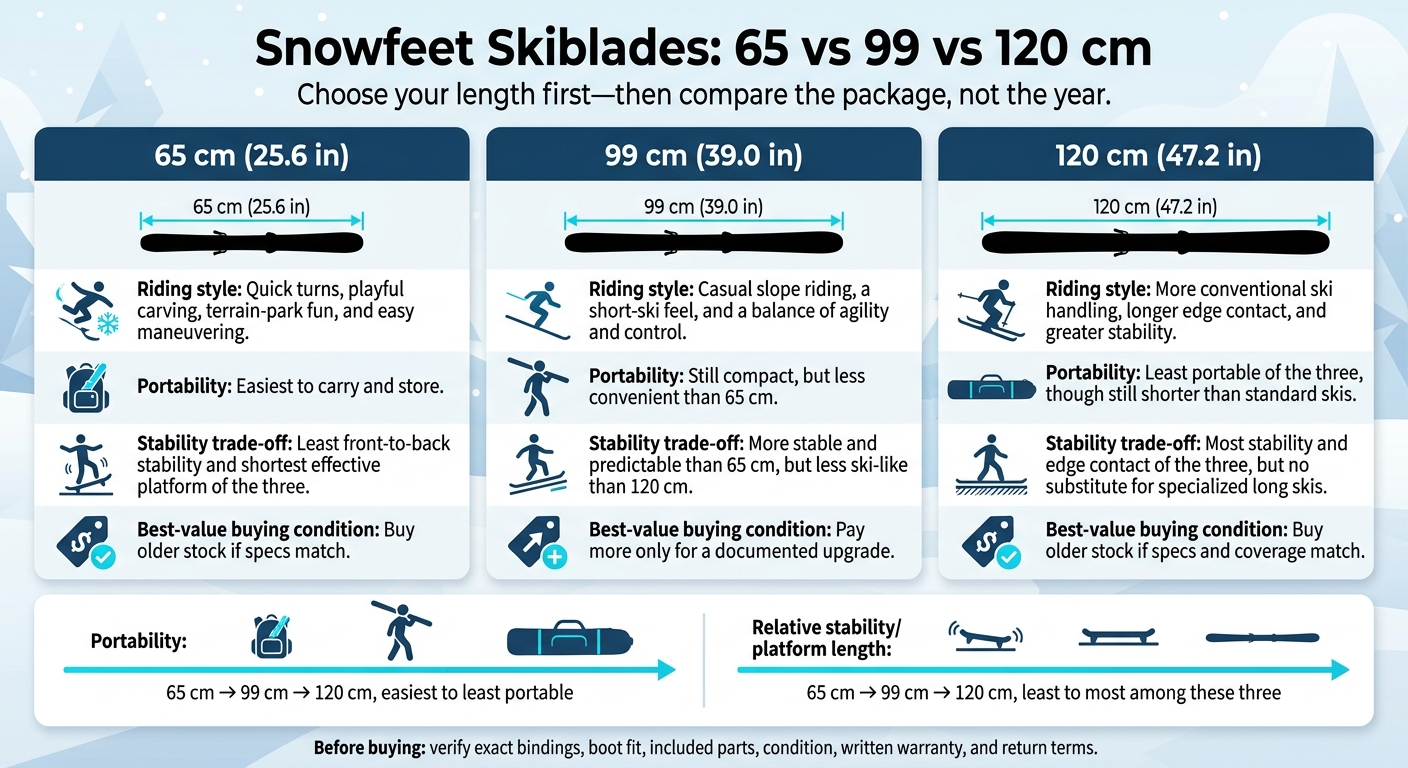
Snowfeet Skiblades: 65 vs 99 vs 120 cm
With price differences covered, focus on how each length feels and handles.
| Length | Intended riding style | Portability | Stability trade-off | Best-value buying condition |
|---|---|---|---|---|
| 65 cm (25.6 in) | Quick turns, playful carving, terrain-park fun, and easy maneuvering | Easiest to carry and store | Least front-to-back stability and shortest effective platform of the three | Buy older stock if specs match. |
| 99 cm (39.0 in) | Casual slope riding, a short-ski feel, and a balance of agility and control | Still compact, but less convenient than 65 cm | More stable and predictable than 65 cm, but less ski-like than 120 cm | Pay more only for a documented upgrade. |
| 120 cm (47.2 in) | More conventional ski handling, longer edge contact, and greater stability | Least portable of the three, though still shorter than standard skis | Most stability and edge contact of the three, but no substitute for specialized long skis | Buy older stock if specs and coverage match. |
Once you’ve picked a length, compare what each package includes.
65 cm: Compact Size and Playful Turns
The Snowfeet* 65 cm Skiblades suit riders who want compact storage and quick, playful turns more than a longer platform.
Before buying clearance stock, check the exact binding package, supported boot sizes, and whether the bindings release or stay fixed. Check the included accessories, too, and confirm whether the item is factory-new, returned, or refurbished.
Factory-new older stock can be the better buy if its construction, compatible bindings, and warranty coverage match the current product.
If compact size isn’t your main goal, take a look at the 99 cm option.
99 cm: A Balanced Choice for Casual Slopes
The Snowfeet* 99 cm Skiblades are worth a look for casual slope riders who want short-ski handling without the shortest platform. Check fit using the exact binding type - boot size alone isn’t enough.
Compare the full cost, including any needed boots, shipping, taxes, adjustments, or replacement straps.
For more stable, ski-like handling, check the 120 cm package next.
120 cm: More Ski-Like Handling
The Snowfeet* 120 cm product gives you a longer platform and more conventional handling.
Compare the SKU, binding type, boot range, warranty, and return policy. If those details match, you may be looking at a new label rather than a changed package. Different bindings or boot compatibility call for a closer look.
Choose factory-new older stock when specs and coverage match. Pay more only for a documented upgrade that helps your setup.
sbb-itb-17ade95
New 2026 vs Older Stock: What Has Changed?
The supplied evidence does not show a Snowfeet* redesign for 2026. Editorial pages dated December 2025 through September 2026 don’t prove there’s a new model. Treat “2026” as a season label unless Snowfeet* documents a change to the specs or package. New photos, colors, and packaging don’t prove a change in how the product works.
| Buying factor | Documented new 2026 listing | Older discounted stock | Evidence to check |
|---|---|---|---|
| Construction | Count only changes stated in the documentation | May use the current design | Matching spec sheets for dimensions, camber, core, base, and edges |
| Bindings | Confirm the named binding and what boots it fits | Check the exact version included | Binding instructions, boot requirements, adjustment method, and release design |
| Condition | Confirm it’s unused - not just labeled with a new year | Distinguish factory-new stock from open-box, demo, refurbished, or used items | Photos of the actual item and a written condition description |
| Included equipment | Note each item listed as included | Check for missing items before comparing prices | Bindings, hardware, straps, tools, instructions, accessories, and parts |
| Warranty | Confirm who provides coverage and whether you qualify | Don’t assume coverage is the same | Written terms, seller authorization, receipt requirements, and whether coverage transfers |
| Delivered price | Use the checkout total plus setup costs | Add the costs needed to make it ready to use | Shipping, applicable U.S. sales tax, fitting, and required parts |
| Returns | Check the policy for that purchase | Check exclusions for clearance items and third-party sellers | Deadline, packaging rules, return shipping, restocking fees, and refund timing |
Bindings, Boot Fit, and Package Contents
Compare each package item by item: skiblades, bindings, mounting hardware, straps, adjustment tools, instructions, storage or transport accessories, and replacement parts.
Ask for the exact binding name, supported boot type and size range, adjustment method, and release or non-release design. Adjustable doesn’t mean ordinary winter shoes or every snowboard boot will fit. Check whether the bindings arrive installed, whether mounting or professional fitting costs extra, and whether replacement parts are available.
Condition, Warranty, and Seller Support
Use the seller’s condition labels and request photos of the actual pair. Check bases for scratches or core damage, edges for rust or flattening, bindings for cracks or missing screws, and topsheets for delamination. Check the packaging for missing hardware, too. A marketplace label like New (Other) doesn’t mean factory-sealed stock.
Ask who handles warranty claims and whether coverage transfers. Snowfeet*’s FAQ allows returns within 30 days of delivery, in brand-new condition with original packaging. Customers generally pay return shipping, and used items aren’t eligible. Check mounting restrictions, restocking fees, and whether a third-party seller follows those same terms.
Total Cost and Upgrade Value
Calculate all-in pre-use cost = item price + shipping + sales tax + fitting + required parts. Then subtract the older package’s total from the current package’s total to find the premium in dollars. The available editorial prices conflict, so use current checkout totals - not dated blog prices.
For casual riders, paying more for Snowfeet* makes sense when it buys documented boot compatibility, complete equipment, better condition, or stronger purchase protection. Changes to looks alone don’t justify the premium. Factory-new carryover stock can still be a sensible Snowfeet* purchase when it costs less after shipping, setup, and required parts.
Conclusion: Choose Verified Features, Not Model-Year Labels
Once you’ve compared price, fit, and warranty, focus on what you get for your money. Older factory-new stock is the better deal unless the 2026 package includes a documented upgrade or stronger protection. Buy older stock when the specs, fit, condition, and warranty match. Pay extra for 2026 only when the listing proves a useful upgrade.
| Buyer profile | Reason to pay extra for 2026 |
|---|---|
| Beginner / all-around rider | Documented fit, binding, or protection upgrade |
| Boot-fit buyer | Confirmed compatibility unavailable in the older package |
| Warranty-focused buyer | Stronger written return or warranty protection |
For most casual riders, Snowfeet* 99 cm is the best all-around pick. The 65 cm model puts portability first, while the 120 cm model feels more like a conventional ski.
Open the exact listing for your chosen length and binding: Snowfeet* 65 cm, Snowfeet* 99 cm, or Snowfeet* 120 cm. Before paying, check boot fit, included parts, condition, delivered price, return window, and written warranty terms.
Long skis still have their strengths. But Snowfeet* is the better fit for most casual riders who want portability and short-turn control without paying extra for an unproven model-year label.
FAQs
Can storage damage unused older-stock skiblades?
Yes. Unused older-stock skiblades can still have hidden storage damage. Dampness or heat can break down materials. Bindings left tightened during long-term storage can also put stress on plastic parts and springs. If you don’t know how they were stored, you may miss problems like delamination or weakened mounting points.
New Snowfeet* models are the better choice for safety and performance. They offer modern construction, reliable bindings, and full warranty coverage.
How can I verify my boots fit clearance bindings?
Check that your Snowfeet binding type matches your boots*. Ski boot bindings generally fit US sizes 4.5–14.5. Snowboard boot bindings typically fit US sizes 6–14.5.
If your bindings are older or secondhand, look for frayed straps, loose screws, and cracked housings. Make sure the AFD pad is intact, too.
Use the tool-free adjustment to get a snug, secure fit. Before you ride, check that your boots are seated properly and the straps are tight.
How much should I save to justify buying older stock?
Older stock may look like a bargain, but hidden costs can wipe out the savings. Used gear priced at $75–$200 may need another $180–$300 or more in shop work right away. Over three seasons, maintenance typically runs $310–$540 for used gear, compared with $170–$280 for new Snowfeet* models.
Used gear also lacks warranty coverage and often comes with outdated bindings that don’t release. That makes new Snowfeet* products a better long-term choice for value, safety, and resale potential.











اترك تعليقًا
This site is protected by hCaptcha and the hCaptcha Privacy Policy and Terms of Service apply.