




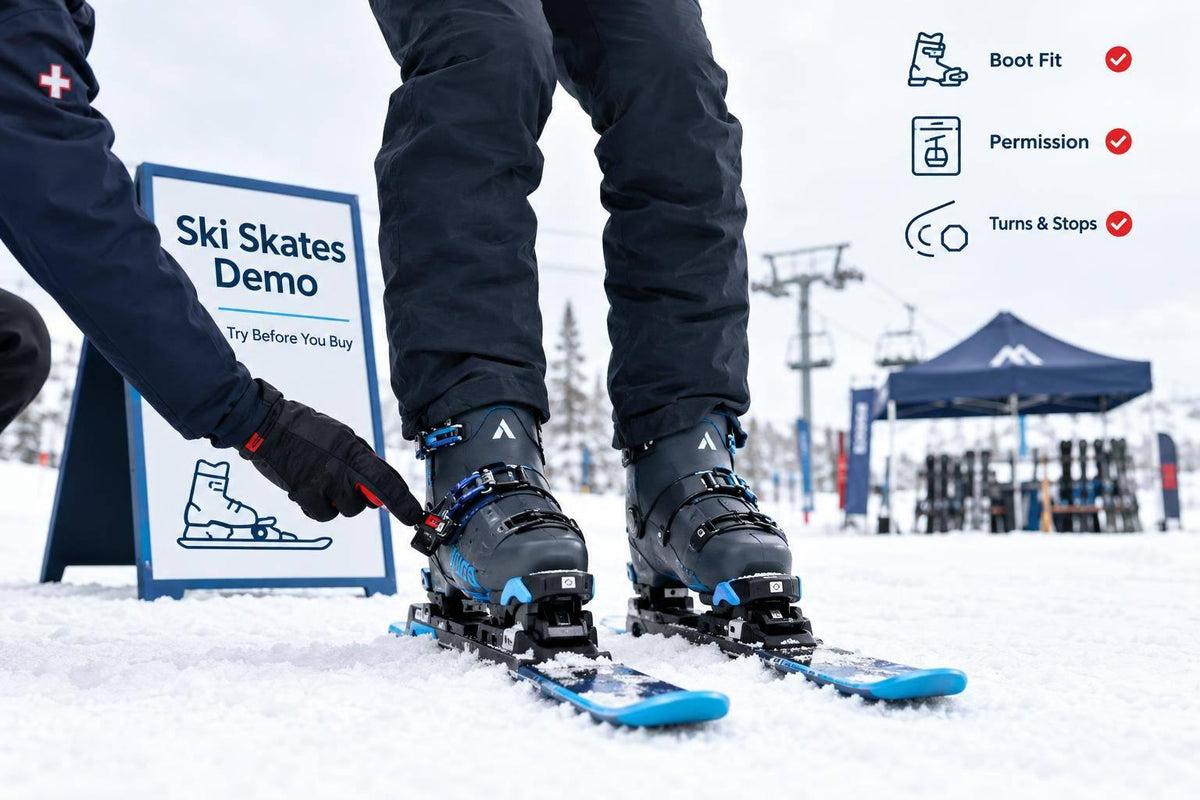
Want to try ski skates near you? I’d start by calling resort rental desks, ski shops, and demo events. Ask for Snowfeet* Skiskates 44 cm (17.3 inches) - not just “short skis” - and get your trial confirmed in writing.
Here’s my checklist before you book:
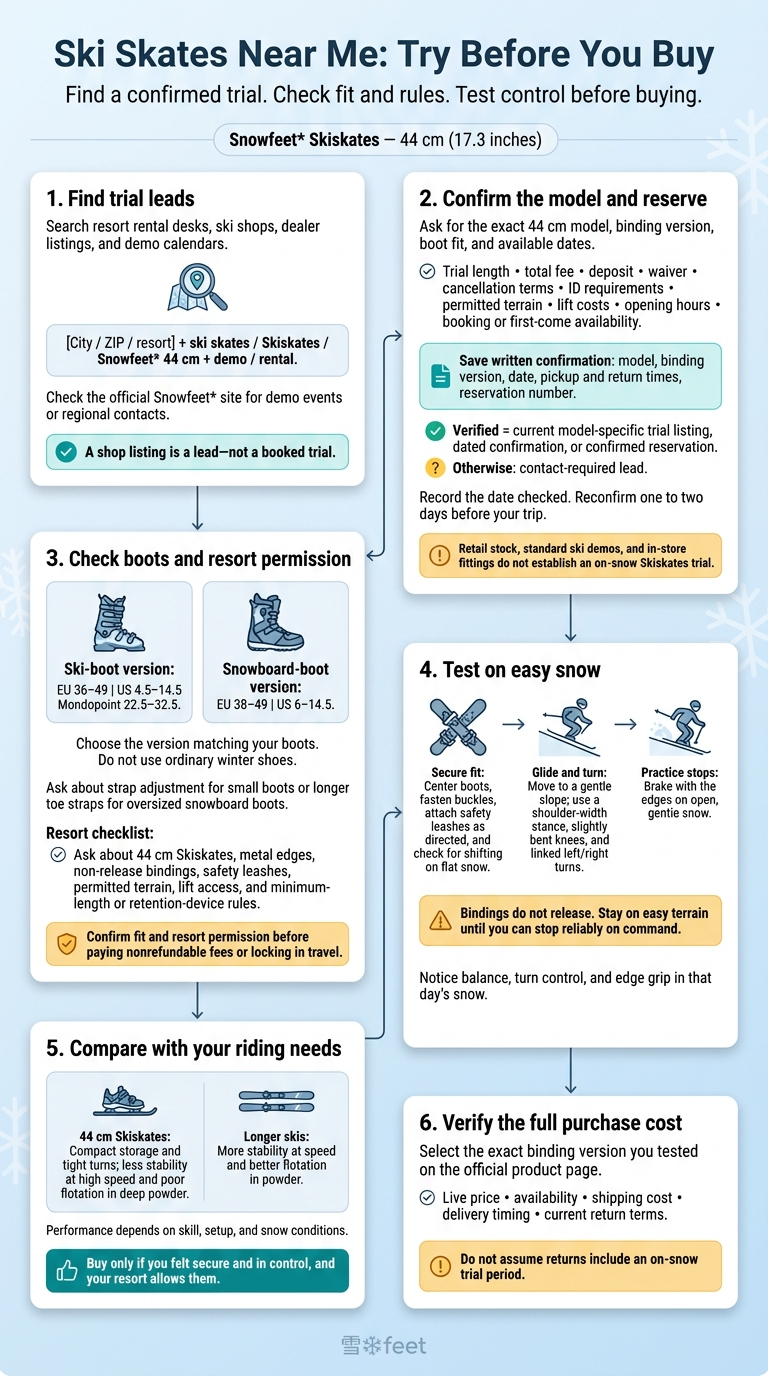
- Check the fit: Choose the binding version for your ski boots or snowboard boots.
- Check the rules: Ask whether the resort allows Skiskates and what lift access costs.
- Test on easy snow: Work on balance, turns, and stops. These bindings don’t release.
- Compare your options: Skiskates pack small and make tight turns; longer skis offer more stability at speed and better float in powder.
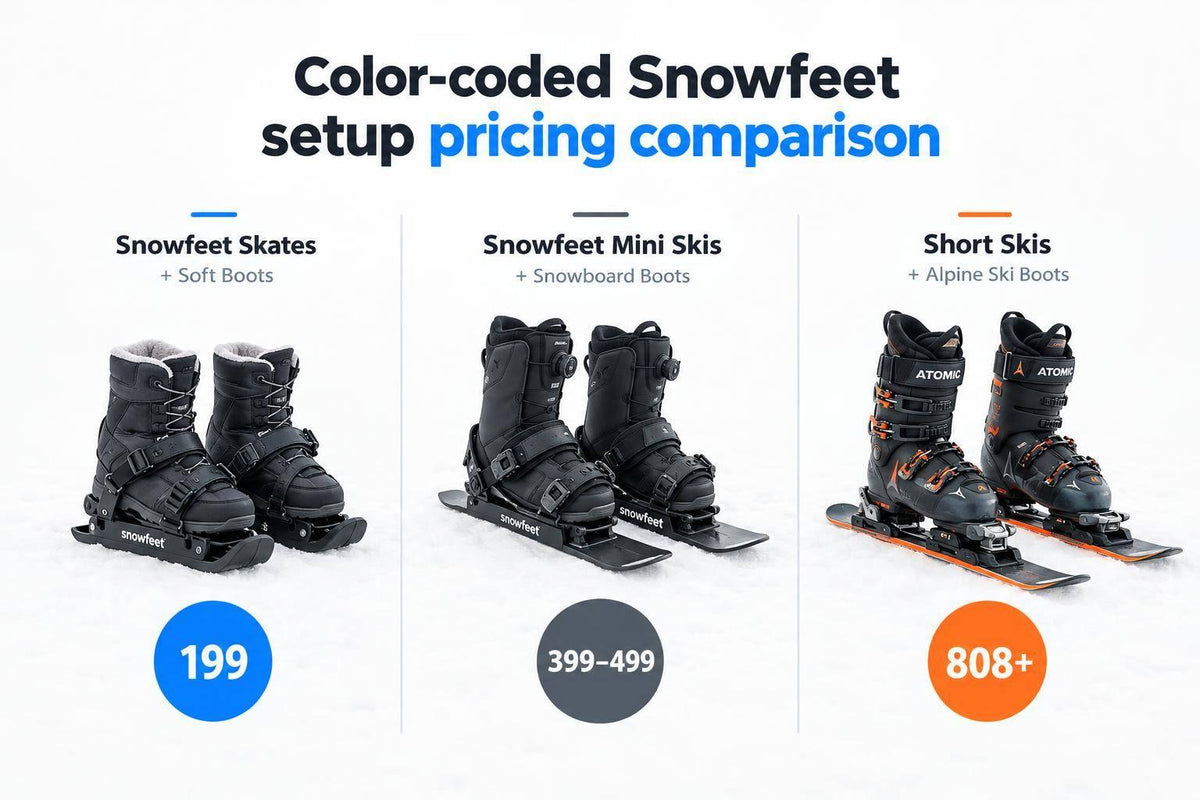
- Check the full cost: Confirm trial fees, then review the live purchase price, shipping, and return terms.
My advice: <u>try before you commit</u>. A shop listing is a lead, not a booked trial - and a good fit in the store isn’t the same as feeling in control on snow. :)
Ski Skates Near Me: Try Before You Buy
Find and Book a Snowfeet* Skiskates Trial
Search Resorts, Rental Shops, and Dealers
Search for demo listings, not just product pages. Pair your city, ZIP code, or resort name with ski skates, Skiskates, or Snowfeet* 44 cm, then add “demo” or “rental.” Start with resort rental pages and demo calendars. Next, check independent ski shops and local dealer listings. Broader searches may help, but some results will be for other short skis.
Check the official Snowfeet* site for demo events or regional contacts. Treat each listing as a lead until you get written confirmation. For events, ask if Snowfeet* is taking part and if the 44 cm Skiskates will be available to test on snow.
Confirm the Model and Reserve Your Trial
Ask for the exact model, binding version, boot fit, and available dates. Share your boot type and size so staff can check the fit. Before booking, confirm:
- Trial length, total fee, deposit, waiver, cancellation terms, and ID requirements.
- Permitted terrain and any extra cost for lift access.
- Opening hours and whether you need a booking or gear is first-come, first-served.
Get written confirmation that includes the model, binding version for your boots, date, pickup and return times, and reservation number. Save it and bring the boots you discussed with the provider. Before you go, check your boots and the resort’s rules.
Check Which Trial Options Are Confirmed
Only mark a trial as verified when you have a current, model-specific trial listing, dated confirmation, or confirmed reservation. Note the date you checked. Until then, label it a contact-required lead. Retail stock and standard ski demos don’t prove that a Skiskates trial is available.
Reconfirm one to two days before your trip. If no trial is confirmed, ask about future demos or loaners. An in-store fitting doesn’t count as a trial. Once you have a confirmed trial, you can move on to fit, turns, and stopping on snow.
Check Your Boots and Resort Rules
Choose the Binding Version for Your Boots
Snowfeet* Skiskates 44 cm (17.3 in) come in two versions: one for ski boots and one for snowboard boots. Choose the version that matches your boots.
- Ski-boot version: Fits EU 36–49, US 4.5–14.5, or Mondopoint 22.5–32.5.
- Snowboard-boot version: Fits EU 38–49 or US 6–14.5.
Use ski boots or snowboard boots - not ordinary winter shoes.
Both versions have tool-free, non-release bindings. If you have small boots, ask whether the straps adjust to fit. For oversized snowboard boots, ask whether you can swap in longer toe straps.
Confirm Resort Permission and Lift Access
Contact guest services or mountain operations before you go. Ask whether the resort allows 44 cm (17.3 in) Skiskates with metal edges, non-release bindings, and safety leashes.
Check access to chairlifts, surface lifts, beginner carpets, terrain parks, and tubing zones. Also ask about leash rules and any minimum length, binding, or retention-device requirements.
Confirm boot fit and resort permission before paying nonrefundable trial fees or locking in travel plans. Once both are confirmed, head to the snow to test fit, turns, and stops.
All you need to know - Snowfeet* | Skiskates | Skiboards | Snowblades | Skiblades FAQ
sbb-itb-17ade95
Test Fit, Turns, and Stops on Snow
Once you’ve checked your boots and resort rules, start on flat snow. Check your balance and make sure the bindings hold firm before moving to a gentle slope. Snowfeet* Skiskates measure 17.3 inches (44 cm), so they’re compact and respond fast - but you still need active balance.
Check Boot Fit and Binding Security
Center each boot on the non-slip platform, fasten the buckles firmly, and attach the safety leashes as directed. Rock forward and back to check that nothing shifts.
Test Gliding and Linked Turns
On a gentle slope, keep your feet shoulder-width apart and bend your knees slightly. For more stability, place one foot a bit ahead of the other and lean forward a little. Start with a short glide, then use the metal edges to link left and right turns. The short length lets you turn fast; longer skis feel steadier at speed.
After a few runs, check whether starting turns feels natural and easy to control. Notice how well the edges grip in that day’s snow. Once your turns feel smooth, try a simple stop drill before leaving gentle terrain.
Practice Stopping Before Moving to Steeper Runs
Practice braking with your edges on open, gentle snow. Stay on easy terrain until you can stop reliably on command. That time on snow gives you a basis for comparing Skiskates with other options and weighing the current price.
Use Your Trial to Decide Whether to Buy
If you felt stable on groomed snow during your trial, compare Skiskates with longer skis before buying. Buy only if you felt secure and in control, and your resort allows them.
Compare Skiskates With Other Ski Options
How each option performs depends on your skill, setup, and snow conditions.
| Feature | Snowfeet* Skiskates 44 cm (about 17 in) | Longer short skis / snowblades, about 99 cm (39 in) | Full-length skis |
|---|---|---|---|
| Portability and storage | Fit in a backpack; take up little space | Easier to carry than full-length skis; need moderate storage space | Bulkiest to carry and store |
| Tight turns | Highly agile | Very agile | Moderate |
| Learning curve | Very short, though balance takes practice | Short and approachable | Moderate to long |
| Speed stability | Less stable at high speeds | Moderate | High |
| Powder flotation | Poor in deep powder | Low to moderate | High |
| Best use | Casual skiskating, tricks, parks | Carving, crowded slopes | Speed, backcountry, powder |
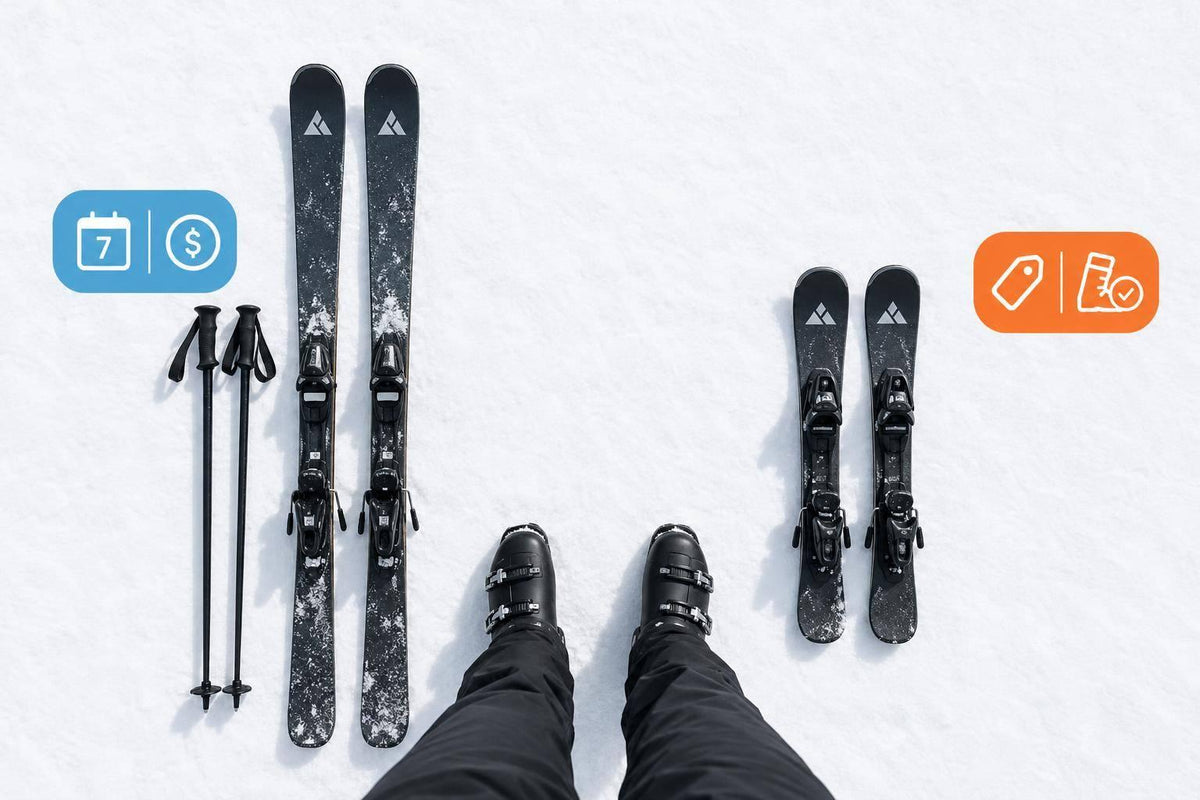
Long skis make more sense if you want speed or better flotation in powder. For casual riders who want compact gear and tight turns, Snowfeet* Skiskates are the better fit.
If Skiskates match your needs, check the official page for the current price and the exact binding version you tested.
Verify the Official Price and Purchase Details
Open the official Snowfeet* Skiskates 44 cm product page. Select the binding version you tested: Ski Boots, US 4.5–14.5, or Snowboard Boots, US 6–14.5.
Check the live price and availability before you buy. At checkout, confirm shipping and delivery timing. Read the current return terms, too - don’t assume they include an on-snow trial period.
FAQs
What if no nearby shops offer Skiskates trials?
The official Snowfeet store is the safest place to buy genuine gear, with clear sizing details and support you can count on. Local shops can help you check the fit, but their stock is often limited.
Snowfeet Skiskates are easy to carry and work with standard ski or snowboard boots. For most casual riders, buying a pair is simpler and more convenient than renting each time - and usually costs less over time.
Should I take a lesson before trying Skiskates?
Yes - if you’re a beginner, a short lesson is safer. Snowfeet Skiskates are often easier to learn than long skis, but you’ll still need active balance and ankle control. A lesson helps you build technique and avoid braking too late.
If you already skate or snowboard, you can usually learn in your first session. Before your first run, though, check the resort’s rules and make sure your boots and bindings fit.
How do non-release bindings affect fall safety?
Snowfeet* Skiskates use non-release bindings, which means they won’t automatically detach from your boots during a fall. Stay in control, keep your stance centered, and wear a helmet. Consider wrist guards, too - your hands often hit the snow first when you fall while skiskating. Always use the included safety leashes to keep the skates attached to you if they come off.











اترك تعليقًا
This site is protected by hCaptcha and the hCaptcha Privacy Policy and Terms of Service apply.