



















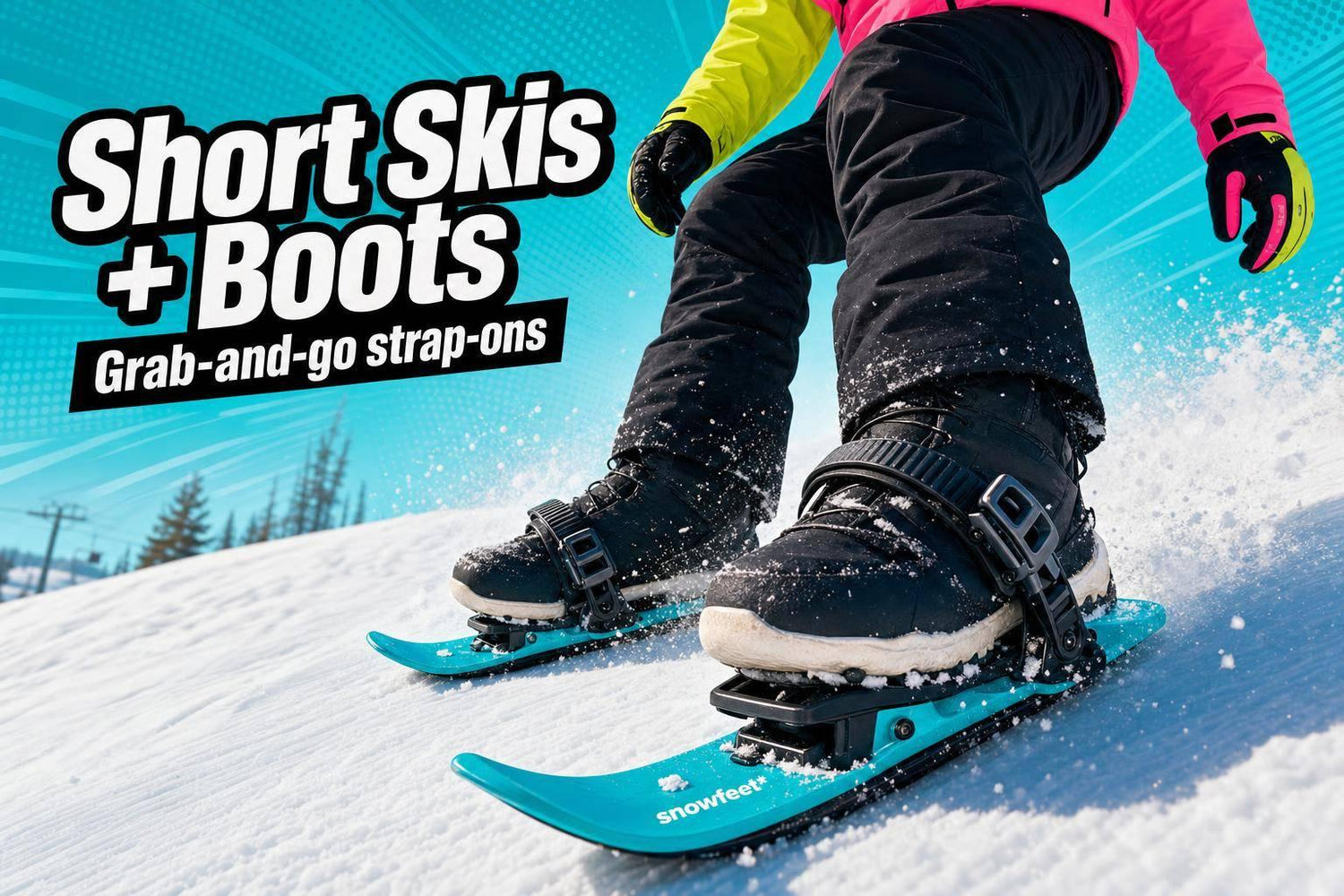
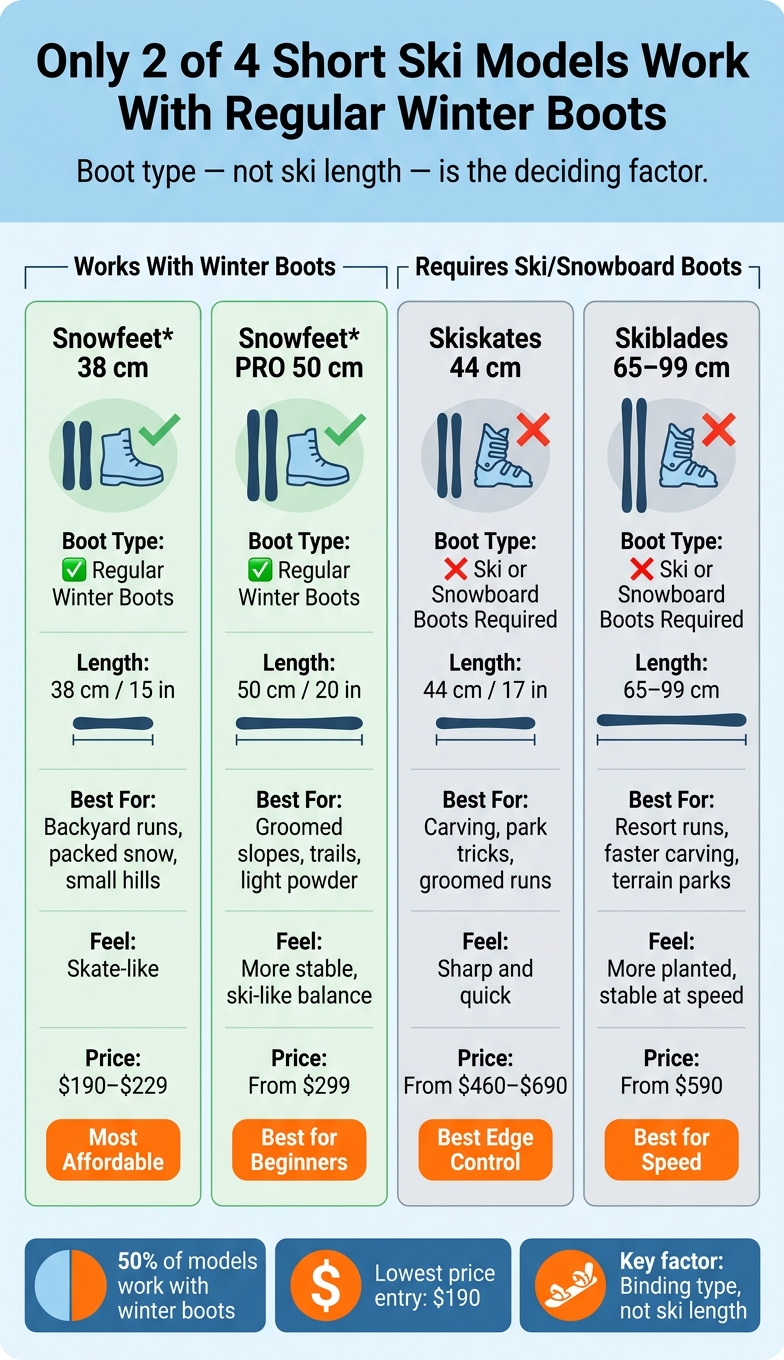
Yes - but only a few. If you want short skis that work with your regular winter boots, the main picks in this article are Snowfeet* 38 cm (15 in) and Snowfeet* PRO 50 cm (20 in). Most other short skis, including Skiskates 44 cm and Skiblades 65–99 cm, still need ski boots or snowboard boots.
So if you’re asking, “Can I skip ski boots?” the short answer is: sometimes, but not with most short skis.
Here’s the quick take:
- Use regular winter boots: Snowfeet* 38 cm and PRO 50 cm
- Need ski or snowboard boots: Skiskates 44 cm and Skiblades 65–99 cm
- Lowest price in the group: about $190–$229
- Most stable winter-boot option: PRO 50 cm at from $299
- Best for more control on resort runs: boot-based models
About 50% of the models covered here work with winter boots. That’s the big split. Not ski length. Binding type.
If I were keeping it simple for a friend, I’d say this:
- Pick 38 cm if you want the smallest, easiest grab-and-go setup.
- Pick PRO 50 cm if you want more balance and slope use without buying ski boots.
- Pick Skiskates or Skiblades only if you’re okay with changing boots for more control.
Short Skis Compared: Boot Type, Terrain & Price
Snowfeet* - Skates For Snow - Mini Skis | Next Big Winter Sport | Official
Quick Comparison
| Model | Works With | Best Use | Feel | Price |
|---|---|---|---|---|
| Snowfeet* 38 cm | Winter boots, snowboard boots | Backyard runs, packed snow, small hills | Skate-like | $190–$229 |
| Snowfeet* PRO 50 cm | Winter boots, snowboard boots | Groomed slopes, trails, light powder | More stable | From $299 |
| Skiskates 44 cm | Ski boots, snowboard boots | Groomers, carving, park laps | Sharp and quick | From $460–$690 |
| Skiblades 65–99 cm | Ski boots, snowboard boots | Resort runs, parks, faster riding | More planted | From $590 |
A couple quick notes before you buy:
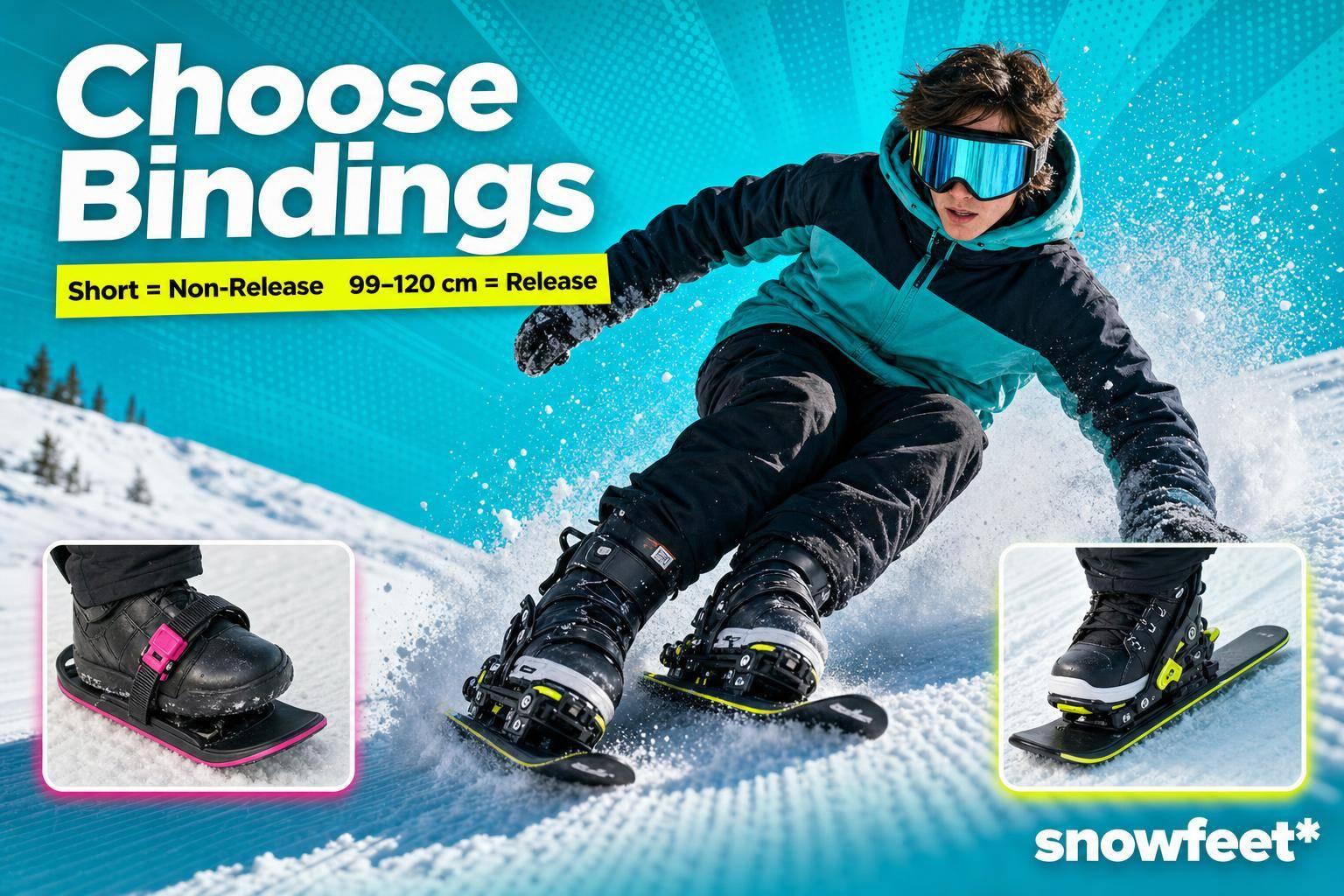
- Firm, waterproof boots with ankle support work best on strap-on models.
- Very big boots, around US men’s 12–13, can be a tight fit with some bindings.
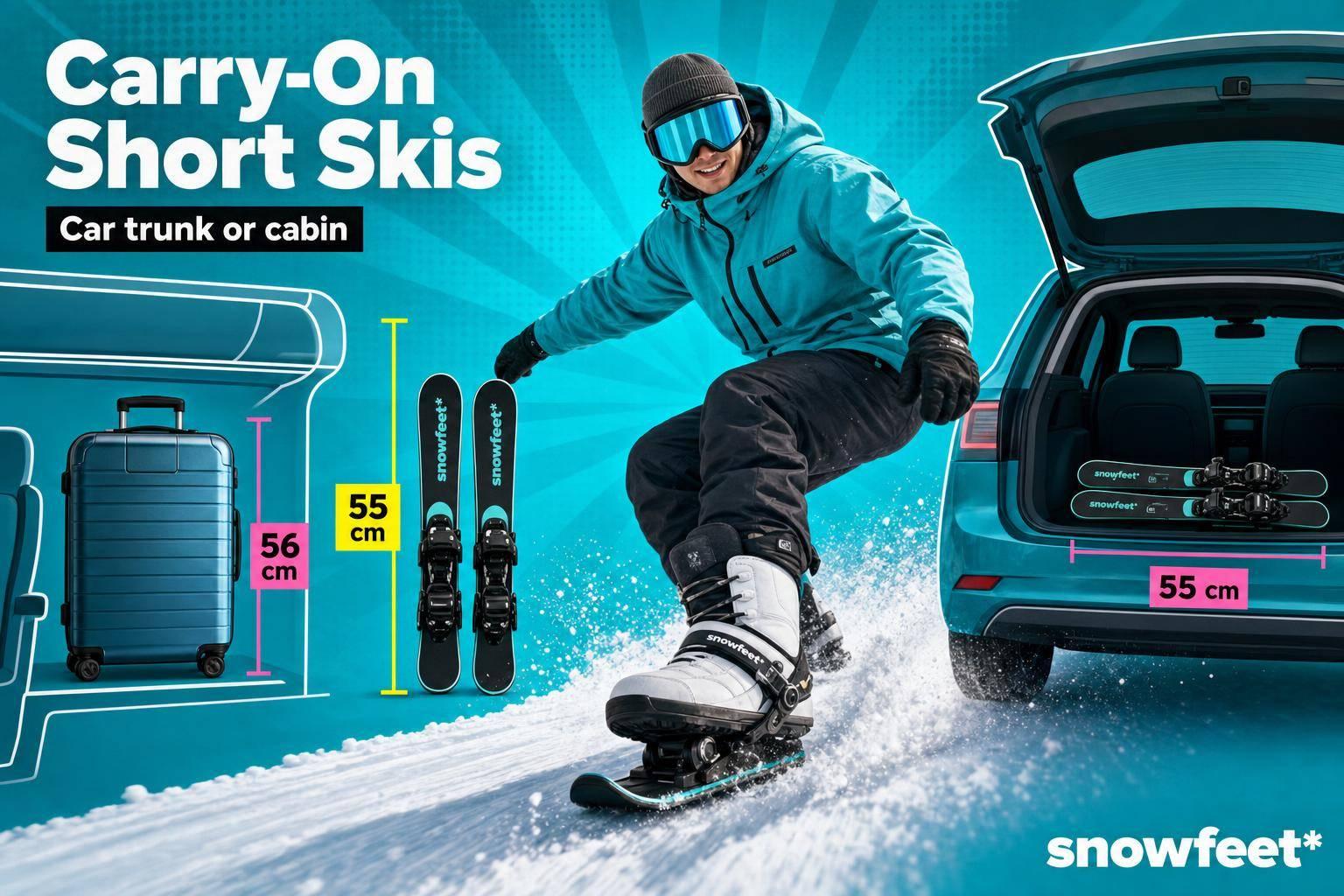
- Shorter gear is easier to carry, but it can feel less steady once you pick up speed. No magic there :)
If you want, I can also turn this into a buying guide, product comparison page, or SEO intro + meta description next.
Snowfeet* models that work with regular winter boots
If you want short skis that work with regular winter boots, Snowfeet* 38 cm and PRO 50 cm are the clear picks. The rest of the lineup moves over to ski or snowboard boots. So if ease and grab-and-go use matter most, these are the ones to look at.
Snowfeet* 38 cm: the simplest strap-on option for casual use
At 15 inches long, the 38 cm model is Snowfeet*’s smallest option and the easiest to toss in a bag. It feels more like skating than skiing.
It works best on groomed slopes, packed snow, and backyard runs. Since it’s so short, it takes more balance than longer skis. So, yeah, it’s smart to skip deep powder and rough or steep terrain. At $190 to $229, it’s the lowest-cost way into the Snowfeet* lineup.
Snowfeet* PRO 50 cm: more stability while keeping winter-boot convenience
The PRO adds 12 cm, bringing the total length to 50 cm / 20 inches. Snowfeet* also made the base wider and lifted the tip and tail to make turning easier and help with balance.
For resort use, the PRO is the stronger pick. It handles light powder and rougher snow better than the 38 cm model, and the added stability makes it easier on beginners. It’s still easy to carry, and pricing starts at $299.
| Feature | Snowfeet* 38 cm | Snowfeet* PRO 50 cm |
|---|---|---|
| Boot Compatibility | Winter boots & snowboard boots | Winter boots & snowboard boots |
| Learning Curve | Short (requires more balance) | Very short (more forgiving) |
| Stability | Moderate - skate-like feel | High - ski-like balance |
| Portability | Maximum - fits in a small backpack | High - 20 in / 50 cm length |
| Ideal Terrain | Groomed slopes, backyards, trails | Slopes, parks, light powder |
| Price (USD) | $190–$229 | From $299 |
The trade-off is pretty simple: more control usually means giving up the ease of using regular winter boots.
What kind of winter boots work best with Snowfeet*
Snowfeet* recommends firm, waterproof winter boots with solid ankle support. High-top, lace-up boots tend to feel better on uneven or slick ground, and deep-tread soles help when you’re walking to and from the snow.
A couple of things matter most:
- Firm build so the boot doesn’t flex too much
- Waterproofing to keep feet dry
- Ankle support for better control
- Deep tread for grip off the snow
Very large snowboard boots in US sizes 12–13 may not fit the standard bindings, since the straps can come up short on oversized footwear.
If you want more edge control and don’t mind switching to ski boots, the next step is Snowfeet* Skiskates and Skiblades.
sbb-itb-17ade95
Short ski options that usually require ski or snowboard boots
If you want more control than strap-on models can give, Snowfeet's next step moves into ski- and snowboard-boot territory. These are built more for slope performance, so you trade some grab-and-go ease for sharper handling.
Snowfeet* Skiskates 44 cm: better edge control, less everyday convenience
The 44 cm Skiskates use a wood core, metal edges, and a sintered base, so they feel much closer to actual skis on snow.
Here’s the trade-off: boot fit. Skiskates need ski or snowboard boots, with ski boot bindings in sizes 4.5–14.5 US and snowboard boot bindings in sizes 6–14.5 US. So, no, these aren’t the pair you throw on with winter shoes and head out the door.
What you get back is more precision. If you like quick carving, park tricks, and a strong bite on the edge, this is where Skiskates start to make sense. They’re priced at $690 and hold a 5.0/5 rating from 123 reviews.
If that sounds fun but you want a bit more calm at speed, Skiblades are the next move.
Snowfeet* Skiblades: short skis for riders ready to use proper boots
Skiblades bump the length up to 65 cm or 99 cm, which gives you more stability as speed picks up. They work well for resort laps, terrain parks, and groomed runs. Pricing starts at $590 for the 65 cm and $690 for the 99 cm.
Customer Brad Tolin summed up the experience well:
"These ski blades are a blast to use. Super easy to control, quick to turn, and way more forgiving than traditional skis... Only trade-off is at higher speeds, where longer skis still feel more stable."
That quote pretty much nails it. Skiblades keep the playful feel of short skis, but they give you more support when the hill opens up.
How Snowfeet* compares with snowblades and other short-ski brands
Brands like Salomon snowblades, Bigfoot, and ODR skiboards are well-known names in the short-ski space. Some of those setups do offer more stability once speeds get very high, and that’s a fair point.
Where Snowfeet* stands out for most riders is flexibility and portability. In this group, many competing setups work with ski boots only. Snowfeet* Skiskates and Skiblades also support snowboard boot bindings. That gives riders more choice instead of locking them into one boot type.
| Feature | Snowfeet* Skiskates 44 cm | Snowfeet* Skiblades 99 cm | Typical Competitors (Salomon, Bigfoot, ODR) |
|---|---|---|---|
| Required Boot | Ski or snowboard boots | Ski or snowboard boots | Mostly ski boots only |
| Control | High - responsive carving | Very high - stable carving | High - speed stability |
| Speed | High | Very high | High |
| Comfort | Moderate | Moderate | Lower - rigid ski boots |
| Portability | High - fits in a backpack | Medium - easy to carry | Low to medium |
| Ideal Rider | Park riders, trick enthusiasts | Resort carvers, intermediates | Speed-focused riders |
From here, the choice comes down to where you ride and how much you want to spend.
How to pick the right option for your budget and terrain
At this point, it comes down to how you like to ride and which boots are already sitting by your door.
Best pick for beginners, families, and travel
Snowfeet 38 cm* is the easiest way in for casual use on mellow snow. You can wear the winter boots you already own, and the setup fits in a backpack. That’s hard to beat if you want something simple and low-hassle.
For most adults, Snowfeet PRO 50 cm* gives you more for the money. It feels more stable, turns with less fuss, and still works with winter boots. It fits US shoe sizes 6–13 and gives you more balance without losing that grab-and-go feel.
Best pick for groomed slopes, parks, and higher speeds
If you want more control than strap-on models can give, step up to boot-based short skis. Skiskates 44 cm start at $460 and fit riders who want a skate-like feel with quick response on groomed runs and in terrain parks. Skiblades 65–99 cm start at $590 and bring more length and stability for faster carving on resort slopes. The tradeoff is simple: less convenience, more control.
| Model | Boot Type | Best For | Terrain | Price (USD) |
|---|---|---|---|---|
| Snowfeet 38 cm* | Winter boots / snowboard boots | Casual riders, travelers | Sledding hills, backyard, light trails | ~$190–$229 |
| Snowfeet PRO 50 cm* | Winter boots / snowboard boots | Adult beginners, families | Groomed slopes, trails, light powder | From $299 |
| Skiskates 44 cm | Ski or snowboard boots | Intermediate, park riders | Groomed slopes, terrain parks | From $460 |
| Skiblades 65–99 cm | Ski or snowboard boots | Resort carvers, intermediates | Groomed slopes, moguls, parks | From $590 |
Conclusion: The best short skis for regular winter boots
Here’s the short version: Snowfeet* 38 cm and Snowfeet* PRO 50 cm are the only short-ski picks here that work with regular winter boots. That’s the big selling point. No ski boots. No extra gear. Just strap in and go.
The 38 cm model is the easiest to toss in a bag and bring anywhere. It’s a great fit for casual fun, like backyard runs, sledding hills, and quick snow-day sessions.
The PRO 50 cm is the better all-around choice if you want more stability but still want the same winter-boot setup. Prices start at $299.
On the other hand, Skiskates and Skiblades give you more edge control and better slope performance. But there’s a catch: you’ll need dedicated boots, and that takes away some of the grab-and-go ease.
So, for beginners, families, and travelers, a winter-boot-compatible Snowfeet* model makes the most sense. If you want more speed and edge control later on, Skiskates or Skiblades are the next step once you’re ready for ski or snowboard boots.
For casual riders, Snowfeet* keeps things simple. For riders who care more about performance, the boot-based options are the better fit.
FAQs
Are short skis with winter boots safe for beginners?
Yes - short skis with regular winter boots are usually safe and beginner-friendly.
Their light, compact shape often means less edge-catching than long, standard skis. That can make a big difference when you're new. Fewer awkward catches usually means more confidence and an easier time learning how to turn.
For better safety, use waterproof winter boots with solid ankle support. They won’t be as stiff as ski boots, but that’s okay for this setup. Snowfeet models also come with heel brakes and metal edges, which help with stopping and control.
A helmet and wrist guards are smart too. Falls happen, even on the fun days :)
Can I use these on resort slopes without ski boots?
Yes. Most Snowfeet models, including Mini Ski Skates, Skiskates, and some Skiblades, can be used on resort slopes without ski boots.
For casual riding, regular waterproof winter boots work well. If you want more ankle support, snowboard boots are a better pick.
The big win? You skip the cost and hassle of heavy, stiff ski boots. And honestly, that alone makes a big difference for a lot of riders :)
How do I choose between 38 cm and PRO 50 cm?
It comes down to portability vs. stability.
The good news: both work with regular winter boots or snowboard boots, so you won’t need special ski boots.
Choose 38 cm if you want max portability and a more natural, walking-style feel. It’s a great fit for groomed slopes, backyard hills, and mellow trails.
Choose PRO 50 cm if you want more stability, more control, and better performance on mixed or ungroomed terrain, including powder.











اترك تعليقًا
This site is protected by hCaptcha and the hCaptcha Privacy Policy and Terms of Service apply.