



















Yes - once short skis get longer, faster, or see mixed terrain, release bindings become the smart default. I’d keep it simple: 44–65 cm can work with non-release or strap bindings at controlled speeds, 99 cm should lean release, and 120 cm+ should use alpine release bindings.
Here’s the short version:
- 44 cm skiskates: non-release or strap is usually fine
- 65 cm skiblades: non-release can work, but release starts to make more sense if you ski faster
- 99 cm skiblades: go with release bindings
- 120 cm+ short skis: treat them like regular skis and use release bindings
A big reason? Releasable bindings helped cut tibia fracture rates from about 12.9% of alpine ski injuries in 1961 to about 2.1% by 1997. That said, they don’t fully prevent knee injuries. They lower risk. They don’t make crashes harmless.
So, if you stay on easy runs at low speed, a fixed setup can still make sense on the shortest models. But if you can’t say that with a straight face - uh, or you know you’ll end up going faster than planned :) - release bindings are the safer call.
Quick comparison:
| Ski length | Best default | Best for |
|---|---|---|
| 44 cm | Non-release or strap | Slow, easy terrain |
| 65 cm | Non-release or strap; release if skiing faster | Controlled resort use |
| 99 cm | Release | Mixed snow, resort runs, more speed |
| 120 cm+ | Alpine release | Steeper runs, higher speed |
I’d sum it up like this: short skis reduce leverage, but they don’t remove injury risk. Once you move past the ultra-short stuff, the case for release bindings gets a lot stronger.
If you want a quick visual before you buy, these can help:
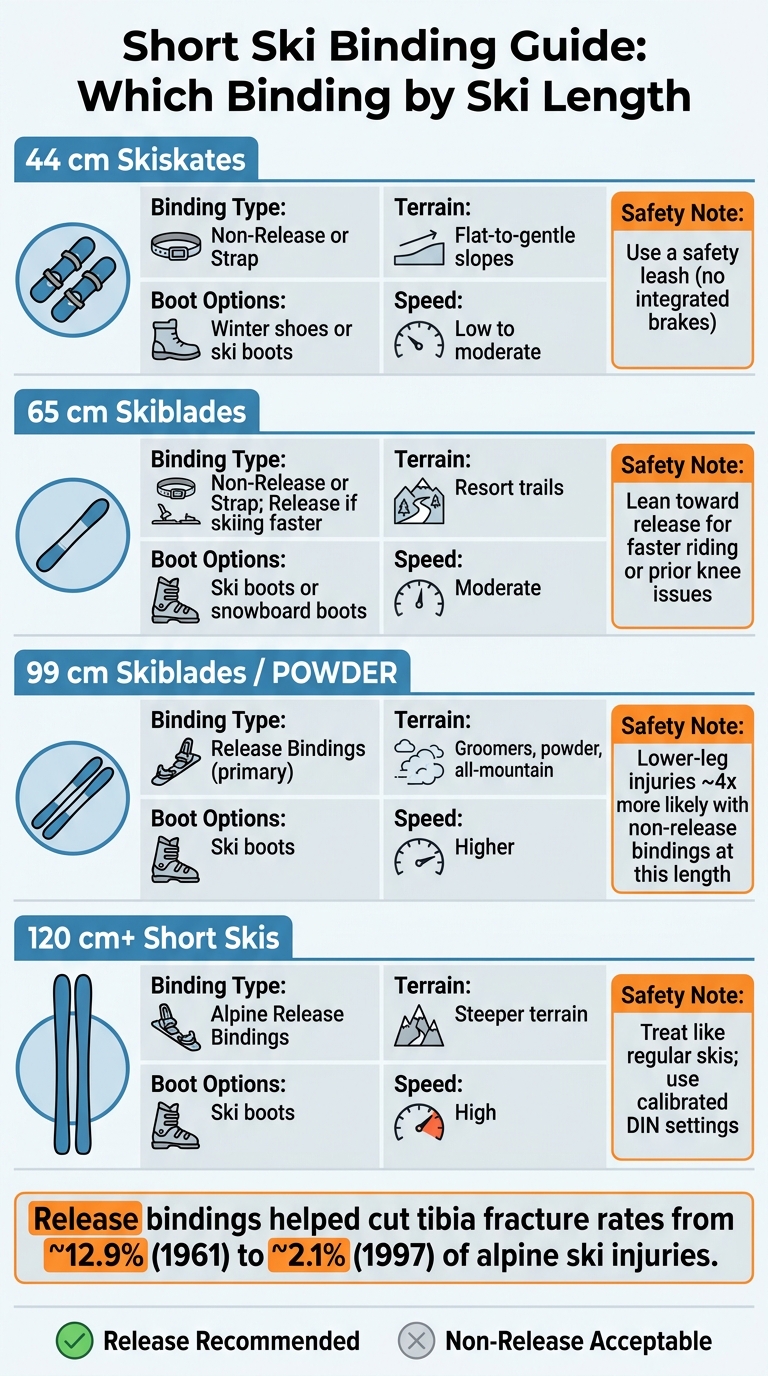
Short Ski Binding Guide: Which Binding by Ski Length
Bindings for Short Skis | All You Need to Know
When Release Bindings Are Recommended on Short Skis
The rule of thumb is pretty simple: the shorter, slower, and more boot-friendly the setup is, the more a non-release binding can make sense. As skis get longer, speeds go up, and snow gets less predictable, release bindings start to make a lot more sense. The main things shaping that call are ski length, your usual speed, how much terrain and snow change during the day, and your skill level.
40–50 cm Skis: When Non-Release Bindings Are Acceptable
On ultra-short skis like the Snowfeet* Skiskates 44 cm, non-release or strap-style bindings are usually fine when you use them more like skates than full skis. That means gentle resort slopes, beginner runs, terrain parks, and other lower-speed spots.
At this size, a non-release setup can work well for experienced riders who stay controlled and stick to that slower, more predictable style of riding. But two safety steps matter a lot:
- Use a safety leash so the ski doesn’t shoot downhill if you fall.
- Wear protective gear like a helmet, wrist guards, and knee pads, since the binding won’t pop open for you.
Once you go past 50 cm, though, the argument starts to shift fast toward release bindings.
65–99 cm Skis: Why Release Bindings Are the Better Default
At 65 cm, non-release bindings can still work for skilled riders on steady, predictable terrain. But for day-to-day resort use, release bindings are the better default. By 99 cm, that default gets much stronger because mixed snow, changing conditions, and skier traffic make crashes less forgiving.
Once you get to 99 cm - including Snowfeet* Skiblades 99 cm and POWDER 99 cm - release bindings make a lot more sense. One study on skiboards in the 80–90 cm range found that lower-leg injuries were about four times more likely with non-release bindings than with standard rental gear that used releasable systems.
By 120 cm, short skis stop getting a pass on bindings.
120 cm and Up: Treat Them Like Regular Skis
Snowfeet* Short Skis at 120 cm and up should use alpine release bindings. At that length, the ski starts acting much more like a standard ski. In a fall, the same twisting forces that can lead to lower-leg and knee injuries come into play.
That’s why industry practice uses calibrated DIN settings here, based on rider weight and ability. Once a short ski behaves like a regular ski during a crash, release bindings are the sensible everyday pick.
Release vs. Non-Release Bindings: Safety Trade-Offs for Short Skis
The right pick comes down to three things: ski length, speed, and the boots you plan to wear.
Use this as a quick filter before you match your setup to a specific Snowfeet* model.
| Binding Type | Typical Short-Ski Length Range | Boot Types | Main Advantages | Key Safety Limitations | Recommended Use Cases |
|---|---|---|---|---|---|
| Release Bindings | 99 cm and up | Alpine ski boots | Detach during excessive force; usually include brakes, which reduces the need for a leash; better stability at high speeds | Heavier and more expensive; requires professional DIN calibration | Best for faster resort skiing and more aggressive riding |
| Non-Release Bindings | Best for very short to mid-short skis used at controlled speeds; release becomes the better default as you approach 99 cm | Alpine ski boots | Lightweight; affordable; easier to adjust at home | Won't release in a fall; safety leash recommended | Casual riding, moderate speeds, and lower-cost setups |
| Strap Bindings | 65–99 cm | Snowboard boots or winter shoes | Most comfortable and easiest to use | No mechanical release; less precise edge control than ski boots | Casual riders; people who find ski boots uncomfortable or have larger calves |
That’s the core trade-off. The next section gets into the model-by-model fit based on boot type and riding style.
Why Riders Choose Release Bindings
On 99 cm and longer models, the safety edge matters more. Release bindings are made to let your boot come free when force on your leg passes a set limit. That can lower the risk of lower-leg and knee injuries. They also usually come with brakes, which cuts down on the need for a leash.
For plenty of Snowfeet* riders, part of the appeal is the light, skate-like feel of shorter skis. In that case, the extra bulk of a release binding can seem like overkill. But once you move to longer skis and resort speeds, the added protection starts to make a lot more sense.
Why Some Riders Still Choose Fixed or Strap Bindings
On the shortest Snowfeet* setups, low weight and simple use often matter more than a release feature. With very short models, fixed or strap bindings still make sense because speeds are lower and the leverage on your legs is lower too.
Strap bindings also give you more boot options on models like the Snowfeet* Skiblades 65 cm. You can use snowboard boots or even winter shoes, which is a big comfort plus for casual riders. That’s a nice deal if ski boots make your feet miserable by lunch :) These bindings do not release, so use a safety leash to help prevent runaway skis.
sbb-itb-17ade95
Best Binding Setup by Snowfeet* Model, Boot Type, and Riding Style
Use this guide to match the right binding to your Snowfeet* setup. The short version is simple: shorter models can use simpler bindings, while 99 cm and up should use release bindings.
| Model | Recommended Binding | Typical Boot Setup | Typical Terrain & Speed | Why It Fits |
|---|---|---|---|---|
| Skiskates 44 cm | Strap or non-release | Winter shoes or ski boots | Flat-to-gentle slopes; low-to-moderate speed | Compact, low-force design makes simple bindings practical |
| Skiblades 65 cm | Non-release or strap | Ski boots or snowboard boots | Resort trails; moderate speed | This keeps the setup light and skate-like at controlled speeds |
| Skiblades 99 cm / POWDER 99 cm | Release (primary) | Ski boots | Groomers, powder, all-mountain; higher speed | Higher forces at play; release bindings better protect knees and ankles during crashes |
| Short Skis 120 cm | Release | Ski boots | Steeper terrain; high speed | Treat these like regular skis; release bindings are the right safety standard |
Snowfeet* Skiskates 44 cm and Skiblades 65 cm: Binding Options
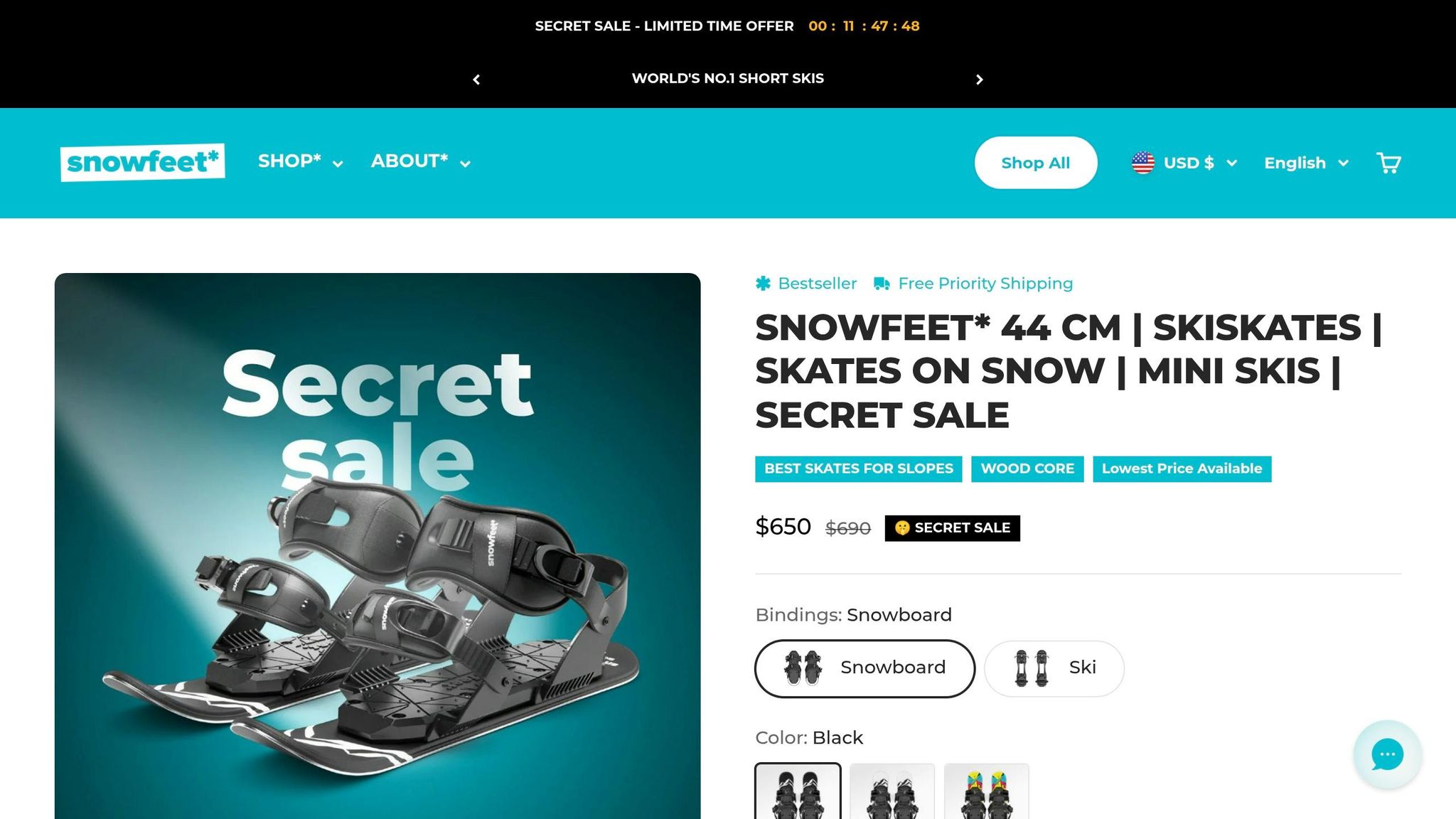
The Skiskates 44 cm are made for playful, skate-style movement at controlled speeds. That’s why strap or non-release bindings make sense here. If you go with non-release bindings, use a safety leash, since there are no integrated brakes.
The Skiblades 65 cm give riders two solid options. If you want a nimble, low-profile feel, non-release bindings with ski boots are a good match. If comfort matters more, strap-style bindings with snowboard boots or winter shoes can work well. That boot choice changes the ride quite a bit: ski boots give you more edge control, while softer boots lean more toward comfort.
From 99 cm and up, release bindings should be the default.
Snowfeet* Skiblades 99 cm, POWDER 99 cm, and Short Skis 120+ cm: Binding Options
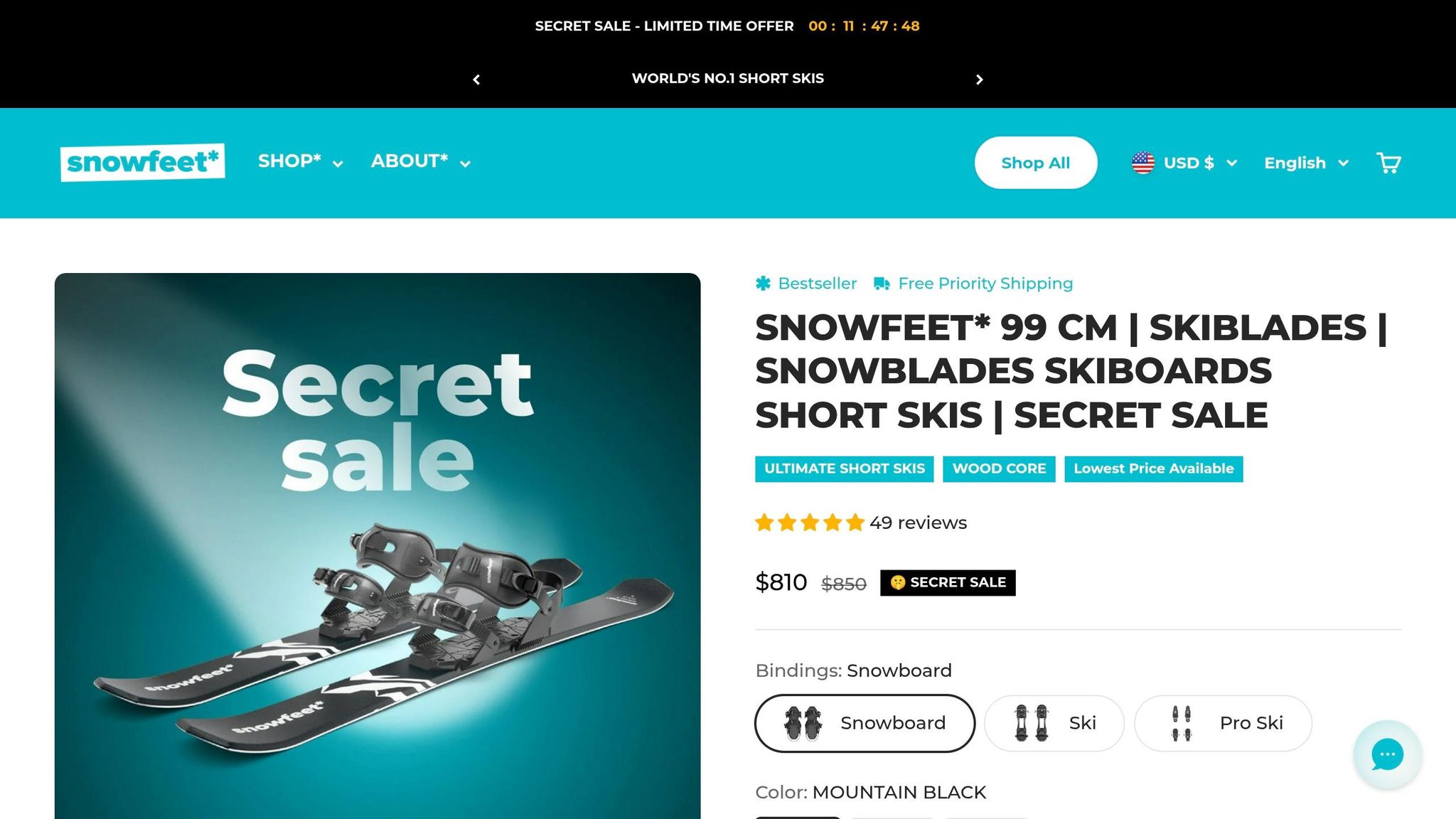
The Skiblades 99 cm and POWDER 99 cm use release bindings as the main pick.
The Short Skis 120 cm should be treated like regular skis when it comes to bindings. That means release bindings are the right call for safety and control. Same rule as full-length alpine skis.
How Experience, Terrain, and Boot Type Change the Right Answer
A good rule of thumb:
- Use non-release or strap bindings on 44–65 cm models
- Use release bindings on 99 cm and 120 cm models
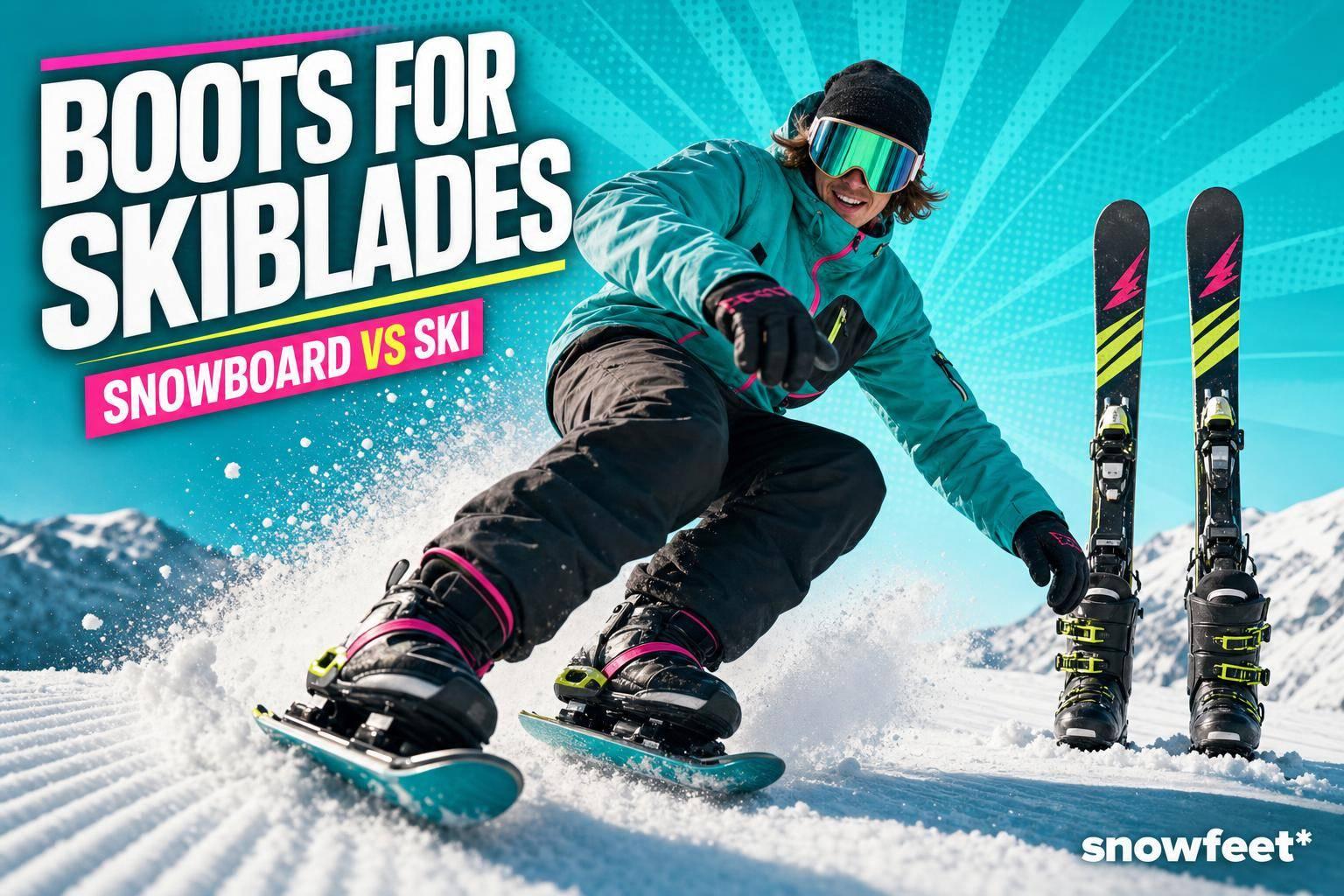
Boot choice matters too. Ski boots give you more precision and work with both release and non-release setups. Snowboard boots or winter shoes make more sense when comfort is the main goal.
Conclusion: A Simple Rule for Picking the Right Binding Setup
Start with ski length. Then make small changes based on speed, terrain, boots, and skill. That simple rule gets you most of the way there.
| Ski Length | Default Binding Choice | Key Condition |
|---|---|---|
| 44 cm Skiskates | Non-release or strap | Stay slow, stick to easy terrain, and use stable boots or ski boots |
| 65 cm Skiblades | Non-release for controlled riding; release for faster or mixed terrain | Lean toward release if you ride faster or have prior knee issues |
| 99 cm Skiblades / POWDER | Release bindings | Best default for resort skiing and mixed conditions |
| 120 cm+ Short Skis | Alpine release bindings | Treat like regular skis and use proper DIN settings |
So, here’s the plain-English version: the shorter and slower the setup, the more simple the binding can be. As ski length, speed, and leverage go up, release bindings start making a lot more sense.
That’s why Snowfeet* is a better match for many casual riders, while 120 cm+ models sit in the same safety lane as regular skis.
Release bindings reduce risk, but they don’t erase it. That’s the big point. The safest default shifts from simple bindings on the shortest models to release bindings as length and speed climb.
If you can’t say with confidence that you’ll stay slow and on easy terrain, go with release bindings. For most casual riders, Snowfeet* hits the sweet spot: simple bindings on the shortest models, release bindings once speed and leverage start to climb.
FAQs
How do I know if my short skis are too long for non-release bindings?
Non-release bindings are usually the best fit for skis under 100 cm.
Once your skis hit 100 cm or longer, it’s smart to move to release bindings. They give you more safety and better protection when carving faster or throwing bigger moves, where the forces on your legs go up.
Snowfeet* non-release bindings work well for casual riding on shorter models. But on 120 cm setups, release bindings are the better pick for injury prevention.
Can beginners safely use short skis with fixed or strap bindings?
Yes. Beginners can use short skis with fixed or strap bindings in a safe way. Short skis put less force on the body than full-length skis, so release systems matter less for casual riding.
Snowfeet* fixed and snowboard-style bindings are light, lower-cost, and simple to use with winter shoes or snowboard boots. They also give direct feedback, which can help new riders learn turns and balance faster.
Do release bindings help with snowboard boots or winter shoes?
Yes - if you use gear built for that setup.
Snowfeet offers adjustable release bindings that work with different types of footwear, including snowboard boots.
Just like regular ski bindings, these bindings can release during a fall, which may help lower the risk of ankle and tibia injuries. If you're riding casually on shorter skis, non-release or snowboard-style bindings can be enough. But if you plan to go faster and want more safety, go with a release-compatible Snowfeet model.











اترك تعليقًا
This site is protected by hCaptcha and the hCaptcha Privacy Policy and Terms of Service apply.