



















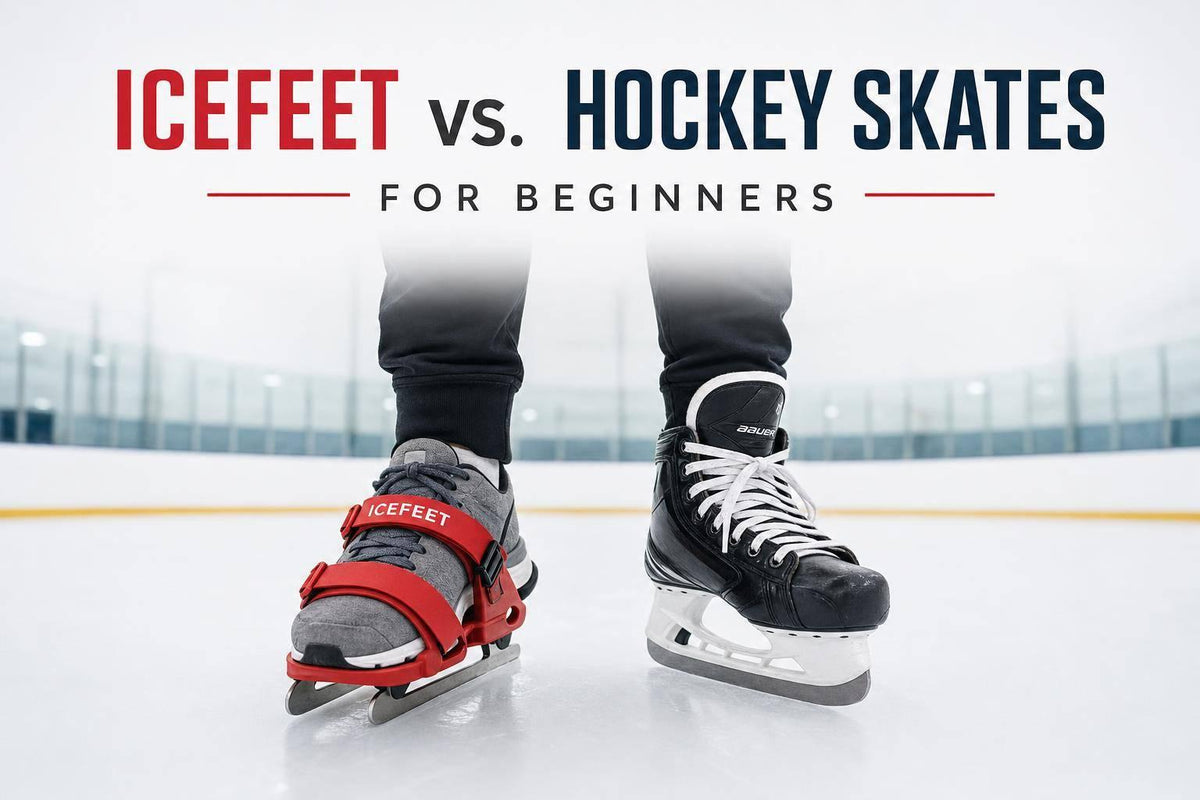
If you want the easiest first day, I’d pick Icefeet. If you want rink skills from the start, I’d pick hockey skates.
That’s the whole call in one line. Icefeet use a double blade and strap onto your winter boots, so most beginners feel steady sooner. Hockey skates use a single blade and a skate boot, so they feel more shaky at first, but they’re the better match for rink skating, lessons, and hockey.
Here’s the short version:
- Best for first-day balance: Icefeet
- Best for rink progress: Hockey skates
- Lower first-season cost: Icefeet at about $250–$300 with a helmet
- Higher first-season cost: Hockey skates at about $300–$450+
- Best for casual winter fun: Icefeet
- Best for stops, crossovers, and hockey moves later on: Hockey skates
- Check rink rules: some indoor rinks may not allow strap-on skates
A few numbers stand out:
- Icefeet price: $199 sale price
- Beginner hockey skates: $150–$300
- Helmet: about $40–$80
- Sharpening for hockey skates: about $5–$10 each time
So, if you just want to get on the ice without feeling like a baby deer in socks, Icefeet are the easier start :). If your goal is rink laps, lessons, or hockey, hockey skates are the better long-term bet.
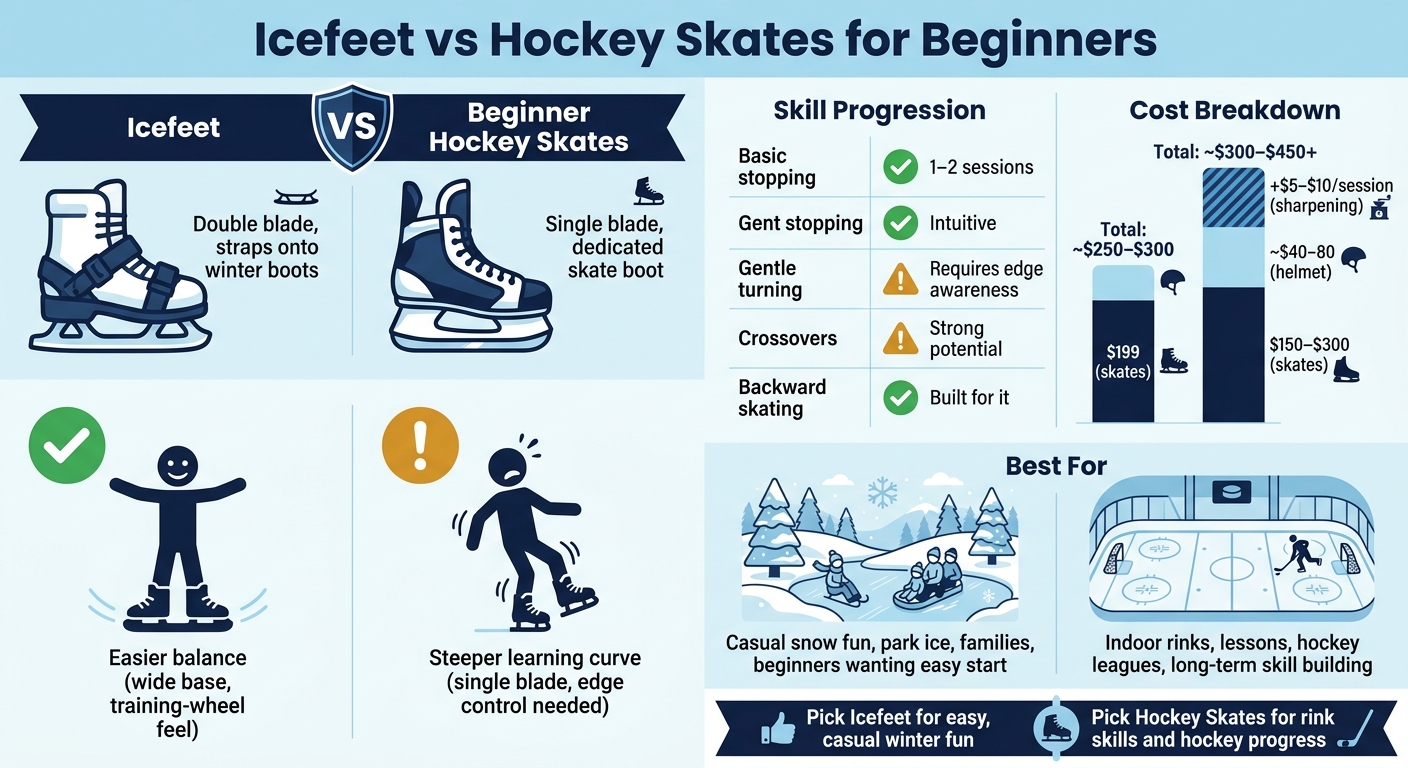
Icefeet vs Hockey Skates: Beginner's Visual Comparison Guide
Finally… Ice Skates Anyone Can Use!
Quick Comparison
| Criteria | Icefeet | Beginner Hockey Skates |
|---|---|---|
| Blade setup | Double blade | Single blade |
| First-day balance | Easier | Harder |
| Learning curve | Lower at the start | Steeper at the start |
| Stops and turns early on | Easier for basic control | Takes more practice |
| Long-term rink skills | Limited | Better path |
| Footwear | Uses your own winter boots | Needs skate boots |
| Break-in | None | A few sessions |
| Maintenance | Low | Needs sharpening |
| Best place to use | Casual ice and winter play | Rinks and smooth ice |
| First-season cost | $250–$300 | $300–$450+ |
If you want a quick look at beginner skating basics, these videos can help:
I’d keep it simple: pick Icefeet for easy fun, or pick hockey skates if you already know the rink is your place.
Side-by-Side Comparison for First-Time Skaters
Balance, Stability, and First-Day Confidence
Icefeet usually feel more stable on day one. The reason is simple: the double blade spreads your weight and keeps you lower to the ice. Beginner hockey skates use one curved blade under each foot, so you have to keep your weight centered or you can tip forward or backward fast. If you've never stepped on ice before, that can feel like a rude welcome.
Here’s the plain-English version: Icefeet feel more like training wheels. Hockey skates feel more like the real bike.
| Factor | Icefeet (Double-Blade) | Beginner Hockey Skates |
|---|---|---|
| Standing still | Easy - wide base feels secure | Harder - single blade requires balance |
| First steps / marching | Natural, low intimidation | Wobbly until edge control clicks |
| Basic gliding | Comfortable within minutes | Takes several sessions to feel smooth |
| Ankle support | Higher with supportive winter boots | Consistent, built-in support |
That steady first session changes something big: how soon beginners can stop, turn, and feel in control.
Stopping, Turning, and How Fast Skills Build
With Icefeet, most beginners can do a basic drag stop or snowplow stop in their first one or two sessions. That’s a big win early on. You feel like you're doing the thing, not just surviving it.
Hockey skates usually take more time. Stops and tight turns depend on edge work, which means shifting pressure and using the edge of the blade with control. Most first-timers struggle with that in the first 1–3 sessions. Early rink time in hockey skates often goes into T-stops, wide turns, and just getting used to gliding without looking panicked.
So, Icefeet give you faster early control. Hockey skates, though, have more room for crossovers, backward skating, and hockey-style agility once your skills start to build.
| Skill | Icefeet | Beginner Hockey Skates |
|---|---|---|
| Basic stopping | Often within the first 1–2 sessions | Usually after the first few sessions |
| Gentle turning | Intuitive, ski-like feel | Requires edge awareness |
| Tight turns / crossovers | Limited by platform design | Strong long-term potential |
| Backward skating | Possible but limited | Built for it with practice |
Fit and gear matter too, and this is where the gap gets even more clear.
Comfort, Fit, and Gear Needed
Icefeet clip onto your own boots, so there’s no break-in time. That’s a nice perk. Most 30–60 minute sessions feel comfortable right away. The trade-off is that softer boots may not give you the side-to-side support you’d want for sharper edging.
Hockey skates work the other way around. The boot is stiff, and it holds your ankle and lower leg in place well. That helps with posture and control once the skates break in. But, uh, that break-in period can mean pressure spots and mild discomfort for the first few wears. Fit also matters a lot more here. If the size is off, you can end up with blisters or a sloppy feel, so getting fitted at a hockey shop is the smart move. On top of that, hockey skates need blade sharpening now and then, which adds another task and cost that Icefeet users don’t have.
| Consideration | Icefeet | Beginner Hockey Skates |
|---|---|---|
| Footwear needed | Your own winter boots | Dedicated skate boot (extra cost) |
| Break-in time | None | Several sessions |
| Ankle support | Depends on boot quality | Consistent, built-in support |
| Blade maintenance | Minimal | Periodic sharpening required |
| Protective gear | Helmet, gloves, optional pads | Helmet, gloves; pads advised for rinks |
That split also shapes where each option works best and what beginners end up paying.
sbb-itb-17ade95
Where You Can Use Each and What You Pay
Once fit is settled, location and total cost usually make the choice a lot easier.
Best Places to Use Icefeet and Hockey Skates
After stability and fit, where you plan to skate matters a ton. Hockey skates are made for smooth, maintained ice - think indoor public rinks and smooth natural ice. They do their best work when the surface stays even. Put them on a rough park lagoon or a snow-covered slope, and a lot of that edge control goes out the window.
Icefeet-style mini ski skates like Snowfeet* Skiskates 44 cm and Snowfeet PRO 50 cm work well on snow-covered hills and packed park snow. For beginners who want playful sliding, not formal rink technique, that range is a big part of the draw.
So, location becomes the next filter. Some indoor rinks restrict unusual gear like Icefeet, so it’s smart to check rink rules before you head out. Hockey skates are accepted at more rinks and fit right into lessons, open skate sessions, and pickup games.
Portability, Upkeep, and Total Cost for Beginners
Icefeet are built to be easy to carry. They strap onto the winter boots you already own, so your starter setup is mostly one buy: Snowfeet* Icefeet at $199. Toss them in a gym bag, strap them on, and go. Upkeep is light. Wipe them dry after use and check the straps now and then. For most beginners, the total cost lands around $250–$300, including a helmet.
Beginner hockey skates often cost $150–$300. Then you add a helmet ($40–$80), maybe some pads, and blade sharpening at about $5–$10 per session. That means a first season can easily hit $300–$450 or more. If you want the simpler path, Icefeet ask for less work and less gear.
| Factor | Icefeet ($199) | Beginner Hockey Skates ($150–$300) |
|---|---|---|
| Extra footwear needed | No - uses your own boots | Yes - you still need separate footwear for walking |
| Portability | Fits in a backpack | Usually needs a skate bag and blade guards |
| Terrain flexibility | Snow-covered hills and packed park snow | Rinks and smooth natural ice |
| Blade maintenance | Infrequent, low cost | Regular sharpening |
| Estimated first-season total | ~$250–$300 | ~$300–$450+ |
That’s the trade-off in plain English: Icefeet fit casual winter fun, while hockey skates make more sense for rink-based progress.
Who Should Pick Icefeet and Who Should Pick Hockey Skates
Choose Icefeet for the Easiest, Most Casual Start
If you want the simplest way to get on ice, Snowfeet* Icefeet are the clearer pick. They strap onto boots you already own, stay small, and cut setup time. That makes them a nice fit for families, casual riders, and first-timers who want to enjoy winter without turning it into a whole project.
That’s the big draw here: less hassle, more fun. For new skaters, that can matter a lot. You’re not dealing with a pile of gear or a big learning barrier right out of the gate.
By contrast, hockey skates make more sense for beginners who want to start learning rink technique from day one.
Choose Hockey Skates for Rink Progression and Hockey Skills
Hockey skates are the right tool if your goal is rink-specific skill development. If you want to join a hockey league, take lessons, or work on edge control, they’re built for that. Think crossovers, power strides, and stopping.
The trade-off is pretty simple. Hockey skates win when it comes to technical skating growth, but they’re not always the easiest first step for someone who just wants a fun winter afternoon. A complete beginner hockey setup can run $300–$500 in new gear, and the learning curve is steeper than most casual riders want.
So, it comes down to this:
- Pick Icefeet if you want an easy, low-gear start and casual fun
- Pick hockey skates if you want rink skills and hockey progress from the start
That leaves the choice pretty clear: casual confidence or rink-focused progression. Hockey skates fit beginners who already know they want rink technique and hockey skill development.
Conclusion: Match Your Choice to Your Goal
After looking at balance, stopping, comfort, and total cost, this choice comes down to where you want to skate.
If you want laid-back winter fun on snow, Snowfeet* Icefeet make the most sense. They’re the simpler option, and they help new skaters feel steady fast. That means less time fighting the gear and more time just having fun.
If your plan is to skate at the rink and build hockey habits, go with beginner hockey skates. They’re the better fit for rink technique and long-term hockey progress.
| Your goal | Better starting point |
|---|---|
| Casual snow fun | Snowfeet* Icefeet |
| Rink skating and hockey skills | Beginner hockey skates |
For most first-time skaters, Snowfeet* Icefeet offer the easiest start and the lowest barrier to fun.
FAQs
Are Icefeet allowed at my local rink?
Yes, you can use Snowfeet Skiskates at ice rinks. Their double-blade design gives you solid stability on groomed rink ice, and it also works well on frozen ponds and natural lake ice.
They also have a wider base than standard single-blade skates. That helps them deal with small surface flaws, which can make it easier for beginners to stay balanced and feel more confident. Just check your local rink’s rules before you head out.
What kind of boots work best with Icefeet?
Icefeet and Snowfeet products work best with boots you already own, so in most cases, you won’t need special boots. For casual riding, waterproof winter boots are usually the best pick. They’re comfy, easy to wear, and you already know how they fit. Nice and simple.
If you’re heading onto steeper slopes, snowboard boots are a better match. They give you more ankle support and the right amount of flex for turning and edge control. Some models also work with ski boots, but ski boots can feel a bit stiff and restrictive. Whatever you wear, the big thing is this: make sure the fit feels secure.
Can I switch from Icefeet to hockey skates later?
Yes - you can switch to traditional ice skates later.
Snowfeet Icefeet are easier to use, more comfortable, and more stable for beginners and casual riders. They’re a great fit if you want simple fun without a big learning curve.
Traditional ice skates make more sense once your goals change. If you want to learn advanced moves, take formal lessons, or nail fast hockey stops, that’s when they start to shine.
So, a simple way to think about it is this:
- Stick with Snowfeet Icefeet for casual fun, easy setup, and portability
- Move to traditional ice skates when you want more technical performance and sharper edge control











اترك تعليقًا
This site is protected by hCaptcha and the hCaptcha Privacy Policy and Terms of Service apply.