




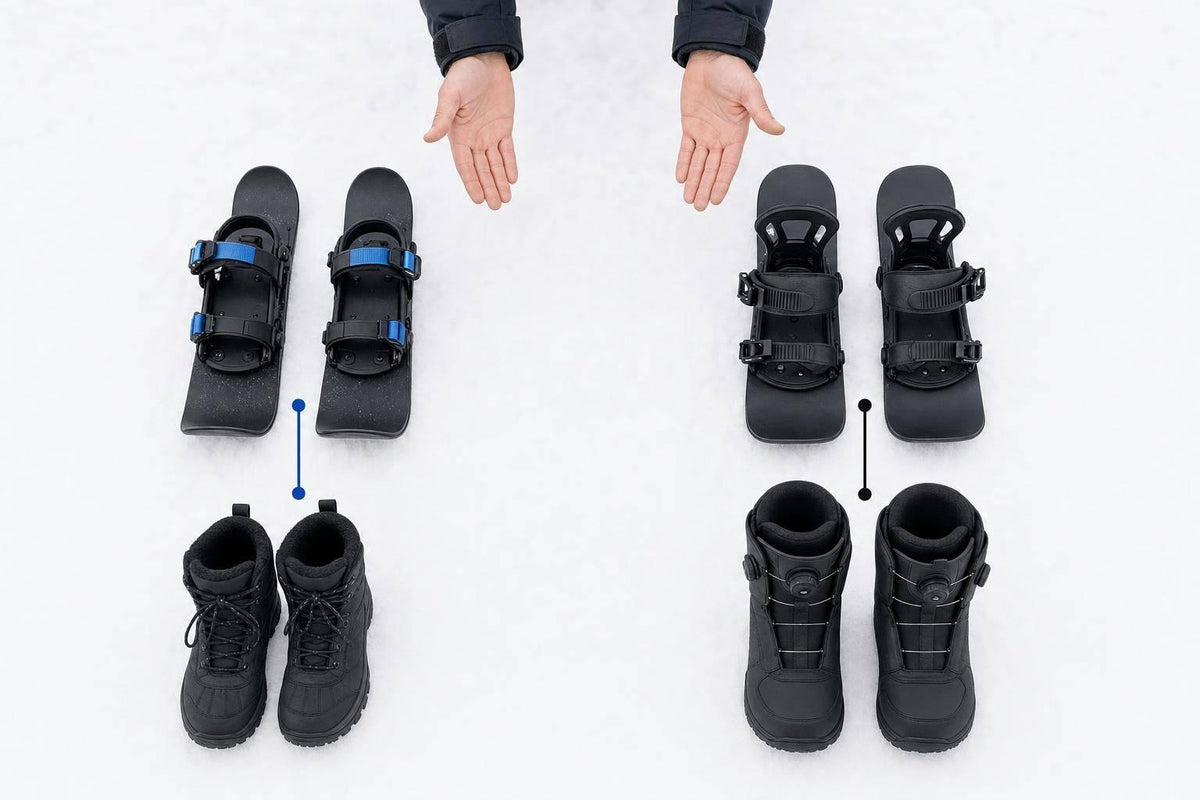
No - most Snowfeet models do not need special boots_. If you pick Snowfeet 38 cm or PRO 50 cm, you can ride with firm winter shoes or snowboard boots. But if you pick Skiskates 44 cm or Skiblades 65 cm, you need the right binding version for either ski boots or snowboard boots. Get that part wrong, and the setup won’t fit. Simple as that.
Here’s the fast answer:
- Snowfeet 38 cm: winter shoes or snowboard boots
- Snowfeet PRO 50 cm: winter shoes or snowboard boots
- Skiskates 44 cm: ski boots or snowboard boots, based on the version you buy
- Skiblades 65 cm: ski boots or snowboard boots, based on the version you buy
A few numbers matter too:
- 38 cm and PRO 50 cm fit most U.S. sizes 6–13
- Skiskates 44 cm ski-boot version: about U.S. 4.5–14.5
- Skiskates 44 cm snowboard-boot version: about U.S. 6–14.5
- Boot choice changes control, comfort, and walking ease
If I had to boil it down to one line, it’d be this: buy the model that fits the boots you already own, not the other way around. That saves money, cuts gear clutter, and keeps your setup fun instead of fussy :)
All you need to know - Snowfeet* | Skiskates | Skiboards | Snowblades | Skiblades FAQ
Quick Comparison
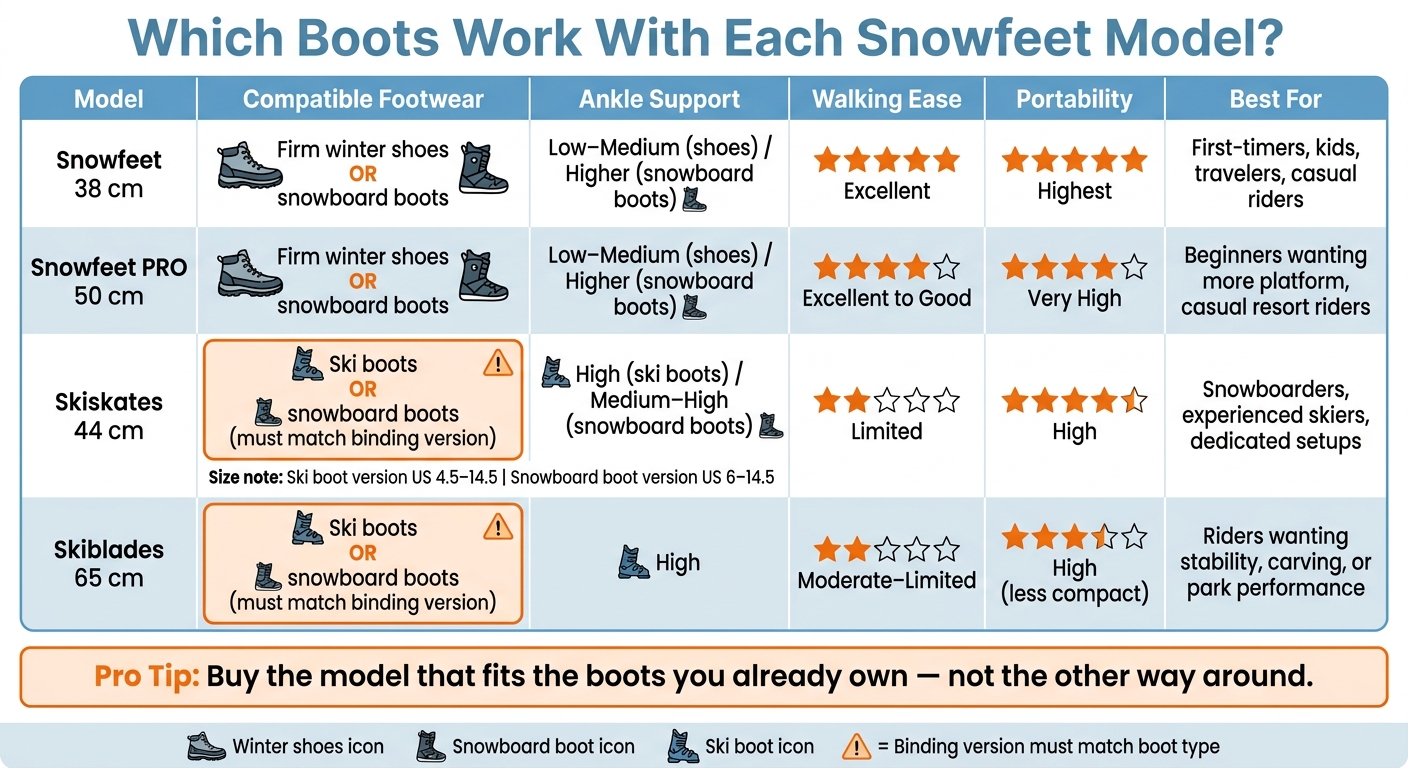
Snowfeet Model vs. Boot Compatibility Guide
| Model | What you can wear | Best for | Main trade-off |
|---|---|---|---|
| Snowfeet 38 cm | Winter shoes, snowboard boots | First-timers, kids, trips | Less steady at higher speed |
| Snowfeet PRO 50 cm | Winter shoes, snowboard boots | Riders who want more platform | More gear than the 38 cm |
| Skiskates 44 cm | Ski boots or snowboard boots | Riders who want more control | You must match the binding version |
| Skiblades 65 cm | Ski boots or snowboard boots | More stability and carving feel | Less compact than shorter models |
So, I’d keep it simple:
- Want the lightest, easiest setup? Go with 38 cm or PRO 50 cm
- Already own snowboard boots? The snowboard-boot version makes sense
- Already own ski boots and want the most direct feel? Pick the ski-boot version
- Don’t buy extra boots first and hope it works out later. That’s how gear ends up in the closet collecting dust
If you want, I can also turn this into a full rewritten article, a SEO intro + meta description, or a FAQ section.
Which Boots Work With Each Snowfeet* Model
Here’s the quick fit-and-feel guide. Then we’ll get into what each setup feels like on snow.
| Model | Compatible Footwear | Ankle Support | Walking Ease | Portability | Slope Control | Best For |
|---|---|---|---|---|---|---|
| Snowfeet* Skiskates 44 cm | Ski boots or snowboard boots, depending on the binding version | High with ski boots; medium to high with snowboard boots | Limited compared with regular winter shoes | High | Quick, skate-like control | Riders choosing a dedicated setup, snowboarders, experienced skiers |
| Snowfeet 38 cm | Firm winter shoes; snowboard boots | Low to medium with winter shoes; higher with snowboard boots | Excellent | Highest | Less stable at speed | First-time riders, kids, casual beginners, travelers |
| Snowfeet PRO 50 cm | Firm winter shoes or snowboard boots | Low to medium with winter shoes; higher with snowboard boots | Excellent to good | Very high | Better stopping and edging than the 38 cm model, thanks to metal edges | Beginners wanting more platform, casual resort riders |
| Snowfeet* Skiblades 65 cm | Ski boots or snowboard boots, depending on the binding version | High | Moderate with snowboard boots; limited with ski boots | High, but less compact than the shorter models | Most stable and best for carving | Riders wanting more stability, carving, or park performance |
Snowfeet 38 cm and Snowfeet PRO 50 cm: Winter Shoes or Snowboard Boots
These two models work with firm winter shoes or snowboard boots. That makes them easy to pack, easy to walk in, and less of a whole production than ski boots.
The PRO 50 cm adds metal ski edges, which gives you better stopping and edging control than the 38 cm model. So if the 38 cm feels a bit like the fun, tiny option, the PRO 50 cm gives you a bit more platform under you.
If you already own snowboard boots, that setup can feel like a sweet spot. You get more ankle support and a more secure connection on snow, but without the stiff feel of ski boots.
Snowfeet* Skiskates 44 cm: Pick the Right Binding Version Before You Buy
With Skiskates, the binding version matters a lot. It changes both comfort and control. Skiskates come in ski-boot and snowboard-boot versions, so you’ll want to choose the one that matches the boots you already use.
If you want the firmest support and the sharpest edging, go with the ski-boot version. It gives you the most locked-in feel.
If you want a setup that’s softer and easier to walk in, the snowboard-boot version is the more comfortable pick. Think less race boot, more all-day ride.
Snowfeet* Skiblades 65 cm: More Stability, Still Shorter Than Skis
Skiblades follow the same boot-choice logic, but the longer platform changes the feel in a big way. The 65 cm model is the longest one in this lineup, and it gives you the most stability and carving potential of the four.
So if you want more stability and a more ski-like feel than the shorter models, this is the setup to look at. It still stays shorter than full skis, but on snow it feels more planted and less twitchy.
sbb-itb-17ade95
Regular Winter Shoes vs. Snowboard Boots vs. Ski Boots
Once you’ve found the right model, the next call is pretty simple: comfort, control, and how much gear you want to haul around. Skiskates 44 cm come in ski-boot and snowboard-boot versions, so the boot needs to match the binding. Here’s the quick side-by-side view.
| Footwear | Precision | Walking Ease | Bulk & Cost | Best Use Case |
|---|---|---|---|---|
| Regular winter shoes | Lowest; adequate for gentle terrain | Easiest | Lightest; no extra gear needed | Beginners, kids, family trips, travel, and short casual sessions |
| Snowboard boots | Moderate to high; comfortable, flexible feel | Good | Bulkier; added cost if purchased separately | Riders wanting a balance of comfort and downhill control |
| Ski boots | Highest; most direct edge control | Hardest | Heaviest setup; may require a separate purchase | Experienced skiers on firmer, steeper groomed slopes |
Start with the option that makes life easiest.
Regular Winter Shoes: Best for Convenience and First-Time Riders
Regular winter shoes are the best default for the Snowfeet 38 cm and PRO 50 cm. You don’t need extra gear, they’re the easiest to walk in, and they work well for casual rides. That’s why they make so much sense for kids, travel, and short sessions.
For most casual riders, winter shoes should stay the default. They keep the setup light, simple, and easy to carry. That matters more than people think. Nobody wants to drag a bunch of gear around for a short run :)
The trade-off is control. A softer shoe gives you less direct feedback and less control on snow. On gentle slopes, that’s usually no big deal. On steeper or firmer terrain, though, you’ll feel the gap.
Snowboard Boots: A Good Middle Ground Between Comfort and Control
Snowboard boots make sense for riders who already own a pair and want more support than winter shoes without the stiff feel of ski boots. They give you a nice middle option: more control, but still pretty comfortable.
There is a catch. They’re bulkier than winter shoes, so they take up more room in a bag. And if you don’t already have them, that’s extra cost. Their softer flex also means less precise edge transfer than ski boots, especially on firm snow or steep groomed slopes.
So, if winter shoes feel a bit too loose and ski boots feel like overkill, snowboard boots sit right in the middle.
Ski Boots: Best for Precision, Not for Every Rider
If you want the most direct feel, ski boots are at the top of the list. They give you the sharpest connection between your movements and the skiskates. The rigid shell gives the most direct edge control and the most stability at speed. That makes them the best pick for experienced skiers on firmer, steeper groomed slopes.
But let’s be honest: they’re not fun to walk in. They’re heavier to carry, stiff on your feet, and add more gear to manage. If you don’t already own a pair, they’re usually not worth buying just for skiskating.
For casual riders and first-timers, that extra control often doesn’t make up for the hassle. Sometimes the best setup is the one you’ll actually want to use.
Best Boot Setup by Rider Type
Now let’s match the setup to the rider. Beginners and travelers should stick with shoe-friendly Snowfeet. Skiskates 44 cm make more sense for riders who already own snowboard or ski boots. Simple enough :)
Beginners, Kids, and Casual Riders
Start with the easiest setup. Snowfeet 38 cm with firm winter shoes is the simplest way to get on snow. No fuss. Just strap in and go.
If the rider already has snowboard boots, those can give more support without the stiff feel of ski boots. Snowfeet PRO 50 cm is the next step for riders who want a longer platform and a bit more underfoot.
For kids, check sizing first. Snowfeet also makes a MINI KIDS model for feet under US size 6.
If easy packing matters more than extra support, the travel setup below is the better pick.
Travelers and Riders Who Want the Lightest Setup
Snowfeet 38 cm and PRO 50 cm are the easiest to pack and carry. They’re the grab-and-go picks.
If you want a longer platform but still need something easy to travel with, PRO 50 cm is the smart middle ground.
If you already own dedicated boots, the next setups give you more control.
Snowboarders and Experienced Skiers
If you already own snowboard boots, Snowfeet Skiskates 44 cm with the snowboard-boot binding version is the natural fit. It’s the setup that lines up best with gear you already have.
If you want more stability than Skiskates 44 cm, Skiblades 65 cm are worth a look.
Experienced skiers who already own alpine ski boots can go with the ski-boot version of Skiskates 44 cm for the most direct edge control. Ski boots make sense here only if you already own them for skiing.
Conclusion: Get the Right Setup, Not More Gear Than You Need
No - most Snowfeet* models don’t need special boots. Snowfeet 38 cm and PRO 50 cm work with regular winter shoes, so you can skip extra gear. The basic rule is simple: pick the model that fits the boots you already have.
Skiskates 44 cm is the one model where boot choice matters most. The ski-boot and snowboard-boot versions are not interchangeable, so make sure you choose the right binding version before you order. The size ranges are different too: US 4.5–14.5 for ski boots and US 6–14.5 for snowboard boots. That’s an easy detail to miss, but also an easy one to get right.
From there, it comes down to control versus convenience. Winter shoes are the easiest option. Snowboard boots give you a nice middle ground between comfort and control. Ski boots give you the most precise feel.
That’s a big reason Snowfeet* is easier to buy, pack, and use than a full ski setup. For most casual riders, the best part is simple: you can skip compatible boots altogether.
FAQs
How do I choose the right binding version?
Choose based on your Snowfeet* model and the boots you plan to wear. Skiskates 44 cm and Skiblades 65 cm need ski or snowboard boots. PRO 50 cm and 38 cm work with regular waterproof winter boots or snowboard boots.
Here’s the quick breakdown:
- Basic: fits most standard boots
- Standard: comes with extra-long straps for larger or bulky boots
- Pro X: the toughest and most adjustable option, made for a snug fit in larger sizes
Are winter shoes safe enough for beginners?
Yes - winter shoes can work well for beginners if you pick the right Snowfeet* model.
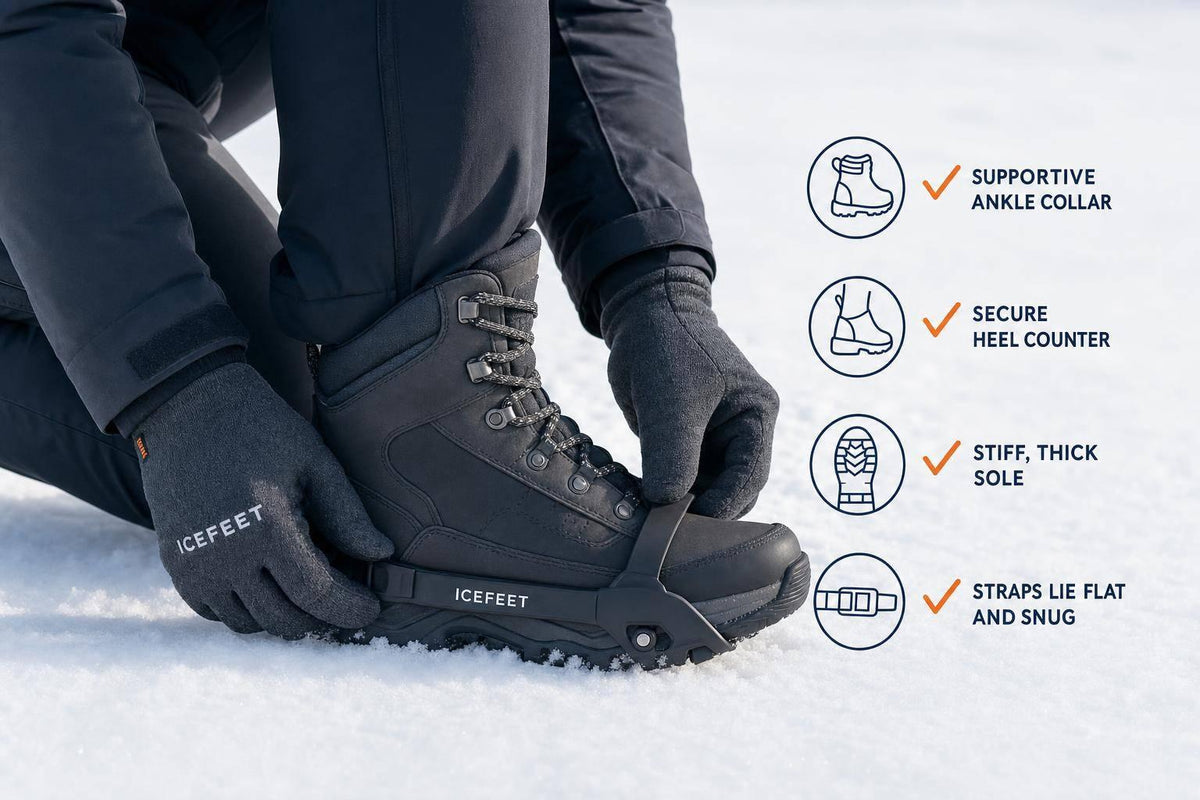
Snowfeet* 38 cm and Snowfeet* PRO 50 cm are made to work with regular waterproof winter boots. That means you can skip ski boots, which is a nice little win for comfort and convenience :)
For better safety and control, go with boots that have:
- a firm sole
- solid ankle support
Soft fashion boots are a bad bet here. They may feel comfy for walking around town, but on snow, they can leave you wobbly.
If you plan to ride steeper resort runs, snowboard boots are the better call. They give you more support and a tighter, more secure fit.
What size should kids or small-foot riders get?
For kids and riders with smaller feet, Snowfeet MINI KIDS is the best pick. It’s made for younger riders and fits up to US size 6.
If you want a bit more range, Snowfeet 38 cm is a solid option for kids and teens. It fits kids’ sizes 10–6. Both are light and compact, which makes them easier to control than bigger gear.











اترك تعليقًا
This site is protected by hCaptcha and the hCaptcha Privacy Policy and Terms of Service apply.