



















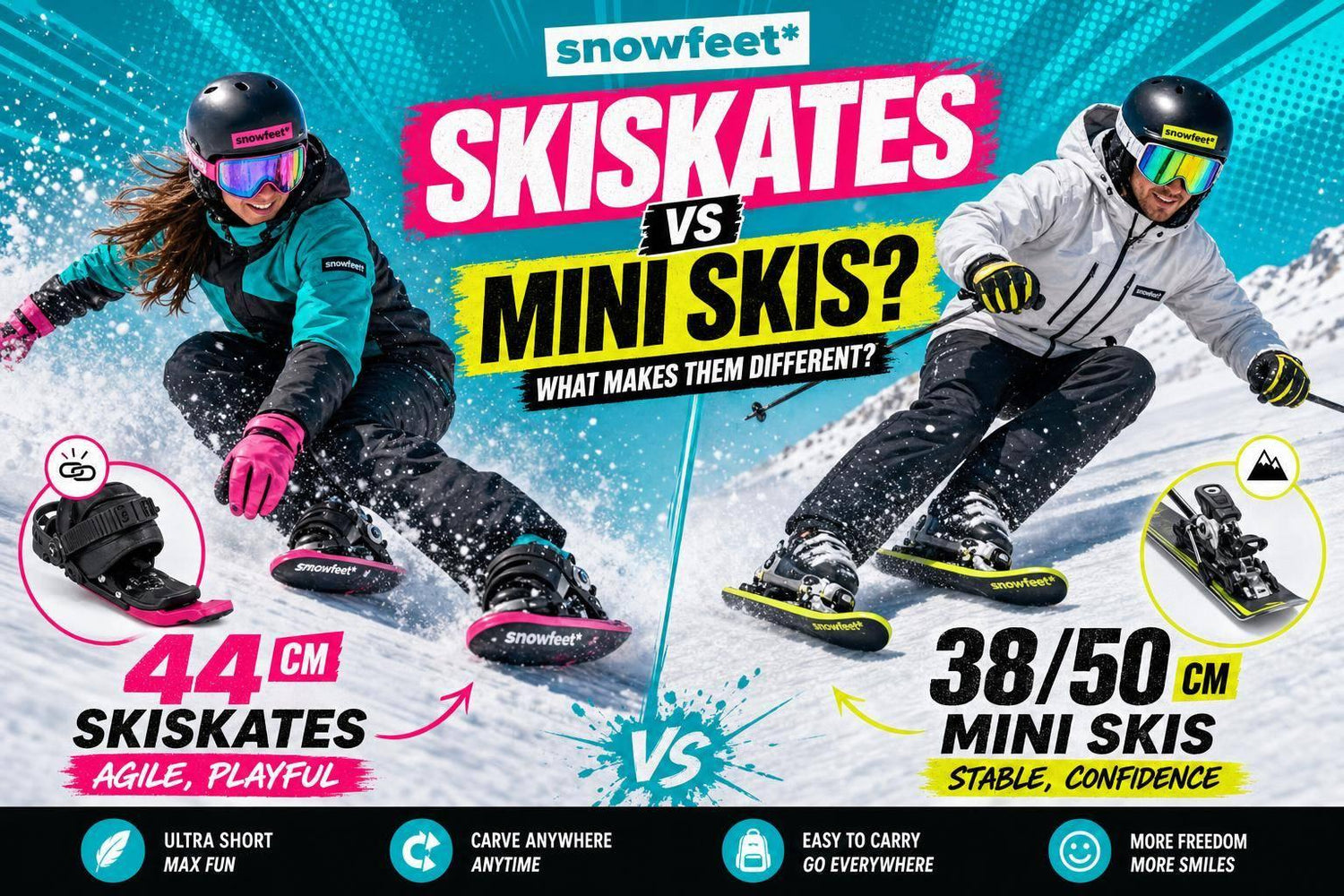
If you want the short answer: skiskates feel more like skating, and mini skis feel more like skiing.
I’d put it this way: the 44 cm (17.3 in) skiskates are the most skate-like, the 38 cm (15.0 in) mini skis are the smallest and most trick-focused, and the 50 cm (19.7 in) mini skis give you the most balance and control for everyday slope use. That’s the whole decision, in plain English.
Here’s what matters most:
- Ride feel: skiskates = skate feel; mini skis = short-ski feel
- Length: 38 cm, 44 cm, and 50 cm each change stability and turning
- Bindings: some work with winter boots, some with snowboard boots, some with ski boots
- Best use: park laps, groomers, low-speed fun, or general resort riding
- Learning curve: skaters often like skiskates first; many beginners do better on 50 cm mini skis
About the numbers: going from 38 cm to 50 cm adds 12 cm (4.7 in) of platform under your feet. That may not sound like much, but on snow it changes a lot. You get more support, a smoother line, and less twitchy movement at speed.
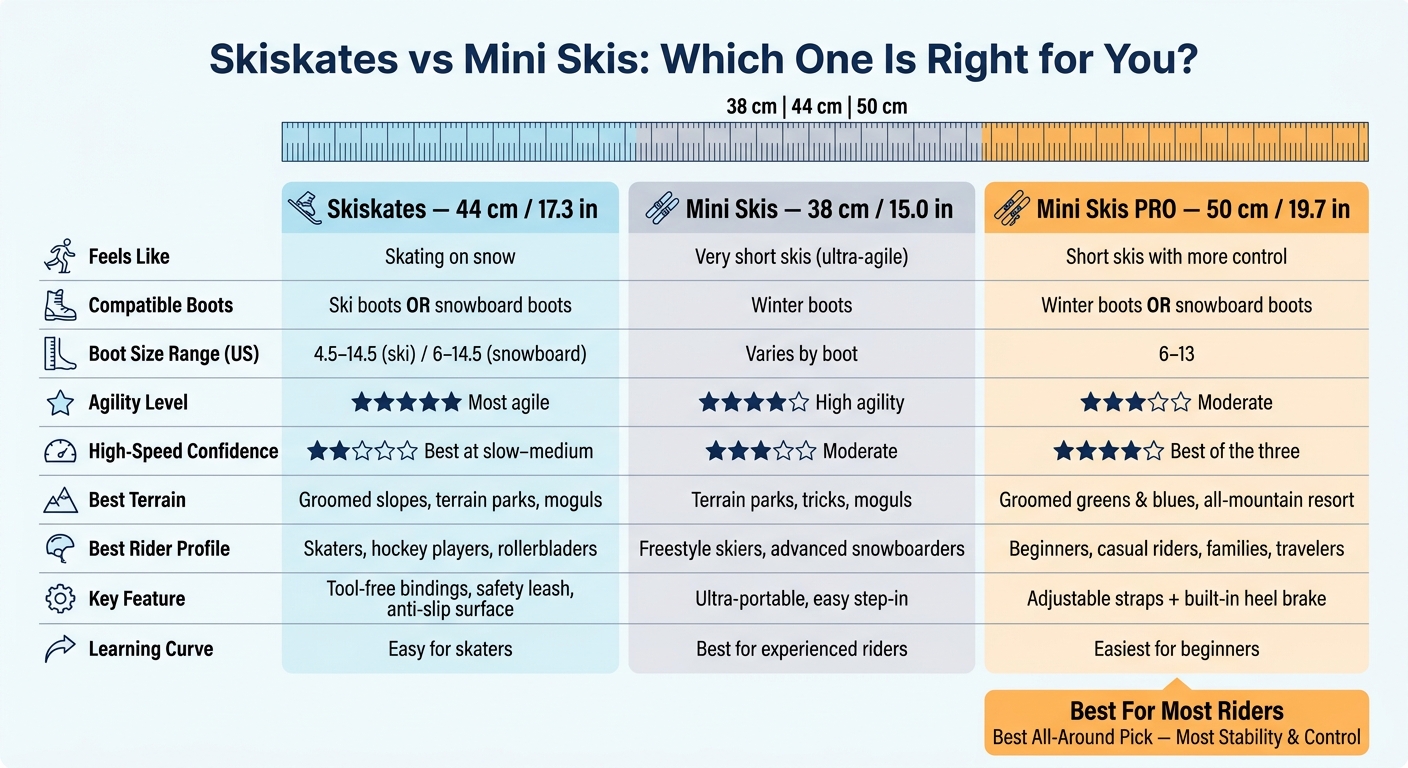
Skiskates vs Mini Skis: Side-by-Side Comparison Chart
Snowfeet* & Skiskates Complete Guide | All you need to know about Skiskating
Quick Comparison
| Option | Length | Boot Match | Feels Like | Best For |
|---|---|---|---|---|
| Skiskates | 44 cm / 17.3 in | Ski boots or snowboard boots | Skating on snow | Tight turns, playful riding, park use |
| Mini Skis | 38 cm / 15.0 in | Winter boots | Very short skis | Tricks, hops, super-small setup |
| Mini Skis PRO | 50 cm / 19.7 in | Winter boots or snowboard boots | Short skis with more control | Beginners, cruising, all-around resort use |
So, if you’re asking me at the shop counter, coffee in hand :) I’d say this:
- Pick 44 cm skiskates if you want the closest thing to skating on a slope.
- Pick 38 cm mini skis if you want the smallest setup and like messing around with tricks.
- Pick 50 cm mini skis if you want the easiest all-around option for most days.
That’s the short version. Now let’s get into what those changes mean once you’re on snow.
Size, Shape, and Binding Differences
Length and Shape: 44 cm Skiskates vs. 38 cm and 50 cm Mini Skis
The main difference comes down to one simple thing: how much ski is under your foot.
At 44 cm, 38 cm, and 50 cm, all three are much shorter than full-length skis. That makes them easier to pivot, carry, and steer. And yeah, that shorter size changes the way each one turns and feels on snow.
The 44 cm Skiskates use a parabolic shape, which helps them carve tighter turns. The 38 cm Mini Skis are the fastest to react and lean more toward tricks. The 50 cm PRO gives you a bit more length, so you get more stability while still keeping that fun, loose feel.
| Product | Length | Shape | Feel | Best For |
|---|---|---|---|---|
| Snowfeet* Skiskates (44 cm) | 44 cm (17.3 in) | Parabolic, narrow waist | Skate-like, responsive | Slopes & terrain parks |
| Snowfeet* Mini Skis (38 cm) | 38 cm (15.0 in) | Compact, ski-like | Ultra-agile | Quick turns & tricks |
| Snowfeet* Mini Skis (50 cm / PRO) | 50 cm (19.7 in) | Slightly elongated | Stable, balanced | Cruising & versatility |
| Traditional Full-Length Skis | 160–180 cm (63–71 in) | Sidecut, camber | Longer, more planted, less portable | All-mountain downhill |
So, size shapes the ride. But bindings? That’s what decides which boots you can click in and go with.
Bindings and Boot Compatibility
After length and shape, the next big split is boot compatibility.
The 44 cm Skiskates come with dedicated bindings. You choose either a ski boot version or a snowboard boot version, based on what you already have. The ski boot setup fits US 4.5–14.5, while the snowboard boot setup fits US 6–14.5. Both are tool-free, adjustable, and come with safety leashes plus an anti-slip surface.
The 38 cm Mini Skis use a simple adjustable binding made for winter boots. The 50 cm PRO steps it up with universal bindings that work with winter boots or snowboard boots, and it also includes a built-in heel brake for added control.
Traditional alpine skis are more locked-in here. They use ski-boot-only bindings. Snowfeet keeps things simpler, with boot-based setups that match different riding styles. That changes not just fit, but also how easy they are to pack, share, and use.
| Product | Binding Type | Compatible Boots | Boot Size Range (US) | Key Feature |
|---|---|---|---|---|
| Snowfeet* Skiskates (44 cm) | Dedicated ski-boot or snowboard-boot binding | Ski boots OR snowboard boots | 4.5–14.5 (ski) / 6–14.5 (snowboard) | Tool-free, safety leash |
| Snowfeet* Mini Skis (38 cm) | Adjustable strap binding | Winter boots | Varies by boot | Easy step-in, ultra-portable |
| Snowfeet* Mini Skis (50 cm / PRO) | Universal strap binding | Winter boots OR snowboard boots | 6–13 | Adjustable straps, heel brake |
| Traditional Alpine Skis | Fixed alpine binding | Ski boots only | Varies by brand | Power transfer, release safety |
sbb-itb-17ade95
How They Ride on Snow
Length and bindings set the setup. Once you get on snow, though, ride feel is what you notice first.
Riding Feel and Turning Style
On snow, the difference shows up fast.
44 cm Skiskates feel a lot like ice skating on snow. You stand upright, with your knees bent right over your feet. The stance stays centered, and the short platform makes them feel closest to skating. Because they’re so short, pivots and fast edge changes come easy. Snowfeet* describes Skiskates as its most playful slope option, especially for skating moves and tricks.
The 38 cm Mini Skis feel quick and reactive too, but you get a bit more ski underfoot. That gives them a touch more tracking than Skiskates.
The 50 cm PRO feels more like a ski. It tracks smoother, feels more stable, and makes carving easier. That extra length pushes it closer to normal ski control, just without the bulk.
Here’s the short version:
| Feature | 44 cm Skiskates | 38 cm Mini Skis | 50 cm Mini Skis |
|---|---|---|---|
| Turning behavior | Very pivoty, easy to smear/skid | Quick, mixes pivots with short arcs | Smoother, more arced turns |
| Agility | Most agile - very reactive | High - slightly more stable | Moderate - more directional |
| Low-speed control | Excellent | Very good | Good; prefers a bit more speed |
| High-speed confidence | Limited; best at slow–medium speeds | Moderate | Best among the three |
That turning style has a big effect on where each one feels best on the mountain.
Best Terrain for Each Option
Skiskates make groomers feel playful. The 50 cm Mini Skis make longer turns easier and less twitchy.
The 50 cm Mini Skis also do the best in hardpack and chopped snow. Skiskates still stay fun there, but they depend more on quick, skidded turns. Think of it like this: the shorter the platform, the more you dance with the snow instead of driving through it.
Midwest hills are a sweet spot for the 38 cm and 44 cm options. Runs are short, speeds stay moderate, and the compact size pays off. You’re not hauling around more ski than you need.
For terrain parks and side hits, the 44 cm Skiskates and 38 cm Mini Skis are the most fun. Spins, switch landings, and small airs feel natural at lower speeds. The 50 cm PRO can handle park laps too, but it leans more toward all-mountain play than park-first trick riding.
That shift in control is what makes ease of learning the next big thing to look at.
Learning Curve and Who Each Product Fits Best
Ride feel changes how fast each model starts to make sense. Snowfeet* is easier to learn than full-length skis because the short, light setup is simpler to control. You’re not fighting big, bulky gear. You can get right to the fun part: balance, turns, and control.
What Feels Easier for Beginners, Skaters, and Skiers
Your background plays a big role here.
Skaters and rollerbladers tend to get the hang of 44 cm Skiskates faster. The stance feels natural, and the centered position plus quick pivots feel a lot like skating.
Skiers and snowboarders often click faster with 50 cm Mini Skis. The turn mechanics feel closer to standard snow gear. That extra length also makes edging and short carving turns feel more familiar.
For total beginners, 50 cm Mini Skis are usually the easiest place to start. The extra length gives you more balance at low speed, which is a nice little safety net. On the flip side, the 38 cm model is a better match for riders with experience who want the smallest, fastest setup for tricks.
Choosing Between 44 cm, 38 cm, and 50 cm
A simple way to choose is to look at what you already know. If you come from skating, go with Skiskates. If you come from skiing, 50 cm Mini Skis will likely feel more familiar. If you want a freestyle setup, the 38 cm Mini Skis make the most sense.
| Rider Profile | Terrain Focus | Ride Feel | Best Fit |
|---|---|---|---|
| Ice skaters, hockey players, rollerbladers | Groomed slopes, snow parks, moguls | Skate-like, agile, playful | Skiskates 44 cm |
| Freestyle skiers, advanced snowboarders | Terrain parks, spins, moguls, tricks | Ultra-compact, quick edge-to-edge | Mini Skis 38 cm |
| Beginners, casual riders, families, travelers | Groomed greens and blues, resort runs | Stable, smooth, easy to control | Mini Skis 50 cm |
Once you line up the model with your background, a few simple setup habits can make learning even smoother. Start on flat ground first. And on Skiskates, keep one foot slightly ahead of the other.
Conclusion: The Main Difference and the Best Pick for Most Riders
After looking at size, bindings, and ride feel, the choice comes down to one thing: how you want to ride.
The main difference is simple: Skiskates feel like skates on snow; mini skis feel like short skis.
All three are much easier to carry, store, and pack than full-length skis or snowboards. That alone makes them a nice fit for riders who want less bulk and less hassle.
So the final call is pretty straightforward:
- Choose 44 cm Skiskates if you want the most skate-like feel.
- Choose 38 cm Mini Skis if maximum portability is your top goal.
- Choose 50 cm Mini Skis if you want the best mix of stability and maneuverability.
For most riders, the 50 cm Mini Skis are the best all-around pick. They offer the most stability of the three, which makes them the easiest option for beginners and for anyone who wants a more ski-like feel.
FAQs
Can I use them on all resort slopes?
Yes - in general, Snowfeet skiskates and mini skis are allowed on most resort slopes in the U.S. Many ski resorts treat them much like regular skis.
They work best on:
- Groomed runs
- Ski parks
- Light powder up to about 4 inches
Where they don’t shine is pretty simple. Skip extremely steep, ungroomed terrain or deep powder. In those spots, regular skis or a snowboard are often the better call.
Which option is easiest to learn on?
Snowfeet* Skiskates, especially the 44 cm model, are usually the easiest to learn on. They’re short, light, and playful, which makes balance, turning, and control feel much simpler for beginners.
Compared with skis or snowboards, they’re often easier to get used to and tend to have a shorter learning curve.
What boots do I need for each model?
Snowfeet* Skiskates 44 cm work with ski boots (EU 36–49 / US 4.5–14.5) or snowboard boots (EU 38–49 / US 6–14.5), thanks to adjustable, tool-free bindings.
Snowfeet* PRO mini skis 50 cm fit regular winter shoes, snowboard boots, or ski boots (US 6–13 / EU 38–47). For most people, snowboard boots or waterproof winter shoes feel best for casual use and all-around comfort.











ฝากความคิดเห็น
เว็บไซต์นี้ได้รับการคุ้มครองโดย hCaptcha และมีการนำนโยบายความเป็นส่วนตัวของ hCaptcha และข้อกำหนดในการใช้บริการมาใช้